
Business
up to 4,000 roles as minister refuses bailout

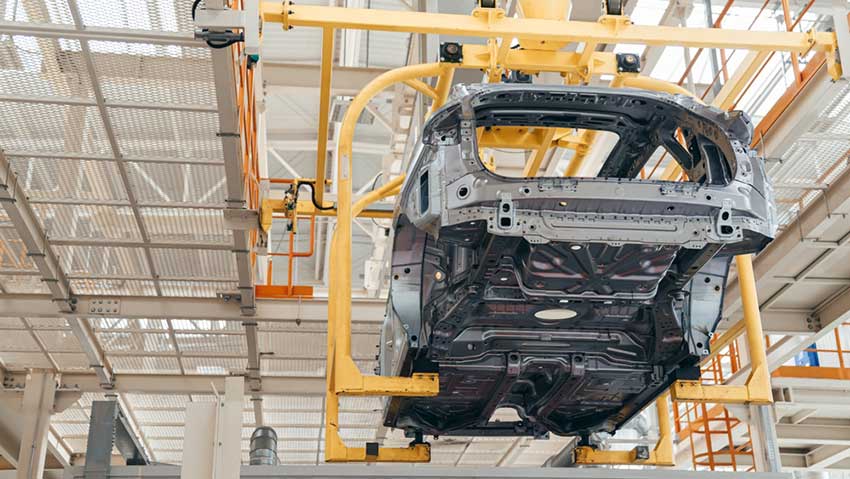
Jaguar Land Rover is to cut as many as 4,000 jobs over two years as it targets about £1.7bn of savings, and the government has said it will not step in with a bailout.
Business secretary Jonathan Reynolds said he had already spoken to PB Balaji, JLR’s chief executive, and would meet the company’s leadership team and Sharon Graham, general secretary of the Unite union, for talks on Tuesday.
JLR is expected to confirm its redundancy programme today after The Sunday Times revealed the scale of the cuts. The carmaker confirmed it was opening a voluntary redundancy programme offering staff, including members of the management team, the opportunity to leave the business.
A JLR spokesperson said: “As we deliver the next phase of our strategy, we need to adapt to evolving global market conditions while targeting approximately £1.7 billion of savings over the next two years … To achieve this, we must further simplify our organisation, improve efficiency and build greater resilience.”
Asked by the BBC whether the government might offer financial support to JLR, Reynolds said: “Not if it’s to bail people out. If it’s about long-term investment in the future, we do invest alongside industry on that.”
Speaking on Laura Kuenssberg’s Sunday morning BBC programme, he described JLR as “a huge British success story”. He said a company of its size would change the number of people it employs at times in its business cycle “if this is about making sure over time that the workforce is right to make the business as competitive as possible”. He added: “Of course, you want to mitigate any job losses.”
Reynolds also told LBC radio that imposing tariffs on Chinese electric vehicles would not be a sensible move. “The crucial thing, not just for Jaguar Land Rover but for all of our automotive sector, is we are an export-led industry,” he said. “If you put tariffs on foreign products coming into the UK, you obviously risk your position relative to that country.” He added that “Jaguar Land Rover sells a lot to China”.
A government spokesperson said: “We understand that this will be an uncertain and concerning time for affected workers, their families and wider communities.”
The spokesperson said the government had taken action to back the UK automotive industry by lowering electricity bills for manufacturers, providing £4bn of capital and research and development funding to manufacture zero-emission vehicles and launching a £2bn electric car grant to encourage people to buy them.
JLR employs more than 30,000 people in Britain across three sites in the West Midlands and one on Merseyside. Balaji is under pressure from Tata Motors, JLR’s Indian owner, to cut costs after a sales downturn led to a drop in profits.
The company, like other manufacturers, faces competition from lower-priced Chinese electric vehicles and the effect of President Trump’s 10 per cent tariffs on cars imported into the United States. America is JLR’s biggest market, accounting for 29 per cent of its sales. The tariffs were cited when JLR moved to cut 500 UK management jobs in 2025.
JLR was also hit by a cyberattack last year that halted production for five weeks and was later assessed at a cost of £1.9bn by the Cyber Monitoring Centre.
Graham, Unite’s general secretary, said: “Death by a thousand cuts has been going on under the nose of successive governments. Years of underinvestment, unsustainable zero-emission mandates and high industrial energy costs are crippling the industry. There must be further action.”
The government’s electricity support for manufacturers, the British Industrial Competitiveness Scheme, exempts eligible energy-intensive firms from three levies on their bills, with the discount due to take effect from April 2027 and backdated to April 2026.

Amy Ingham
Amy Ingham is a reporter at Business Matters, covering UK business news with a focus on breaking news, business policy, late payments and insolvency. She joined the magazine in 2026 after completing the NCTJ Diploma in Journalism at Harlow College’s journalism school. Her recent reporting includes British Steel’s nationalisation and its impact on SME suppliers, the decline in late payments by large firms, and Insolvency Service director disqualifications. Reach her at aingham@cbmeg.co.uk.

Business
Sun International Limited 2026 Q2 – Results – Earnings Call Presentation (OTCMKTS:SVUFF) 2026-09-07


Seeking Alpha’s transcripts team is responsible for the development of all of our transcript-related projects. We currently publish thousands of quarterly earnings calls per quarter on our site and are continuing to grow and expand our coverage. The purpose of this profile is to allow us to share with our readers new transcript-related developments. Thanks, SA Transcripts Team

DHT Holdings: Doing All The Right Things As Leverage Declines And The Fleet Grows
Mader Group has announced an on-market share buy-back scheme of up to $30 million, as it aims to further allocate its capital efficiently.
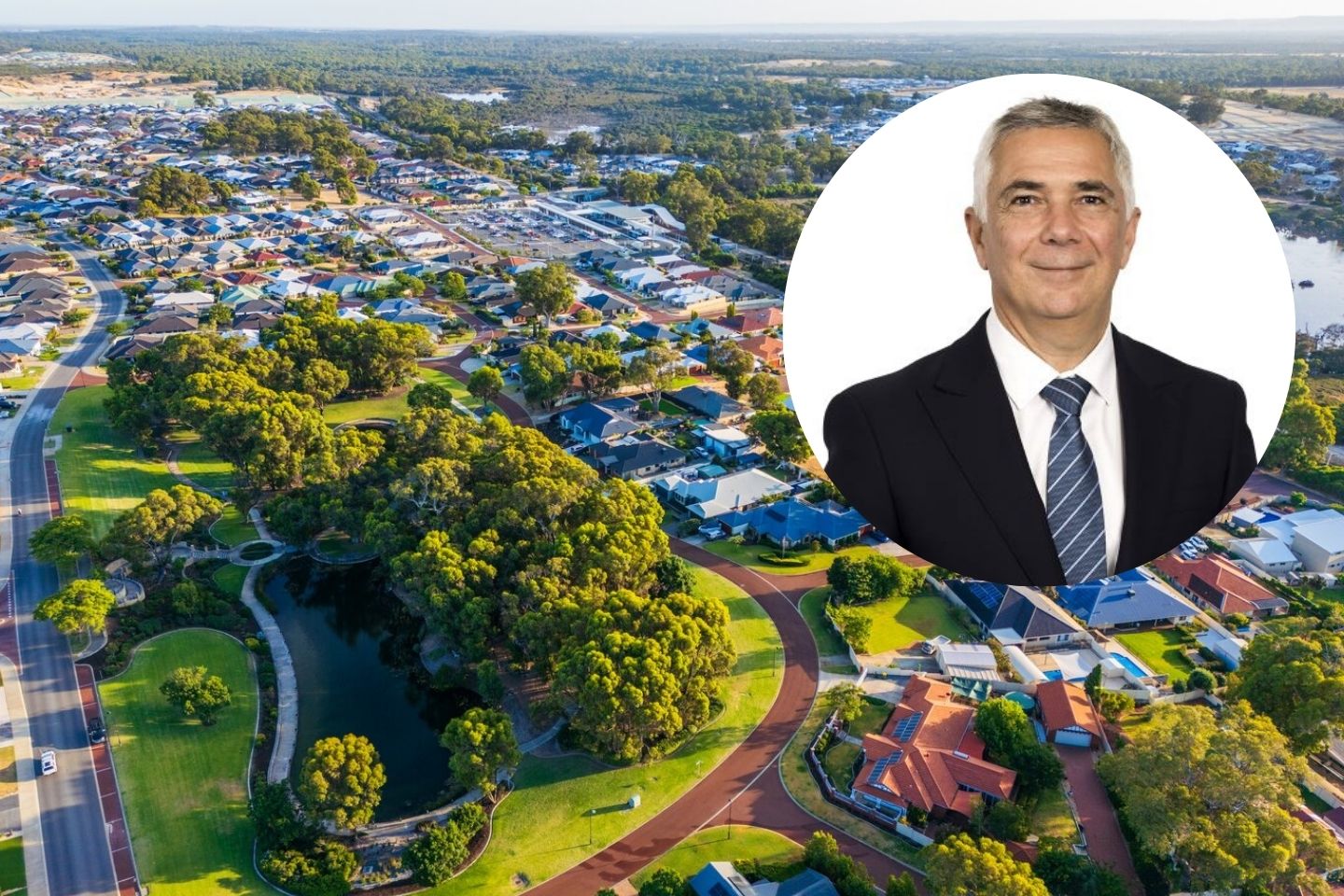
The company set to acquire Peet in a $1 billion deal says it intends to retain the brand and keep its headquarters in Perth.

Earnings call transcript: CPI Property Group posts stable H1 2026 results, shares slip

IHS Holding validates Fair Value analysis with 84% return over 29 months

More than one in five family-owned manufacturers are considering a sale to overseas buyers in response to changes to inheritance tax, according to a report from Make UK, the manufacturers’ organisation, and the accountancy firm Bishop Fleming.
The report, based on responses from companies surveyed in May and June 2026, found that 22 per cent of family-owned manufacturers were weighing a sale to a foreign buyer because of the tax changes, with a further 18 per cent considering a sale to a UK buyer.
Among family-owned businesses, 78 per cent said they were worried about the effect of recent inheritance tax (IHT) reforms on succession planning. The 2024 budget changed the IHT regime to bring more assets within the scope of the tax, including a cap on business property relief.
Of the companies surveyed, 65 per cent identified as family-owned, and 89 per cent of those were also managed by a family member. From this the report extrapolated that family-owned businesses contribute an estimated £94bn to the UK economy and support about a million jobs.
The report said the tax changes raised the concern that “ownership and investment decisions become driven primarily by tax considerations rather than commercial objectives”.
It added: “This could lead some manufacturers to sell their businesses to third parties, alter ownership structures, or divert capital away from productive investment in order to manage future IHT liabilities.
“While the full long-term impact is difficult to quantify, such decisions risk weakening productivity growth and increasing the transfer of strategically important manufacturing assets to owners whose long-term priorities may not align with the UK’s economic interests.”
Across all manufacturers surveyed, high energy costs were the most commonly cited barrier to growth, mentioned by 59 per cent of respondents. The report said UK industrial electricity prices are the highest in the G7 and that 90 per cent of manufacturers have seen energy prices rise since 2022.
Economic uncertainty was cited by 53 per cent, while 47 per cent pointed to taxation. Make UK has previously warned that rising employment and energy costs were putting manufacturing investment at risk.
Fhaheen Khan, senior economist at Make UK, said: “Reducing energy costs, reviewing inheritance tax changes, strengthening apprenticeship funding and turning the Industrial Strategy into practical support on the ground are now essential if Britain is serious about securing the future of its manufacturing base.
“Family-owned manufacturers are not a niche part of the economy. They anchor skilled jobs, long-term investment and the industrial know-how Britain needs to make reindustrialisation a reality, something the prime minister is right to put back at the centre of the economic debate.”
Neil Davy, chief executive of Family Business UK, said the research added to “a growing body of evidence showing that changes to business property relief are having real-world consequences for family-owned businesses and the wider economy”.
Business groups have argued since the reforms were announced that the cut in business property relief to 50 per cent could force some families to sell their companies.
“Family Business UK has consistently warned that these reforms risk undermining the very businesses that drive long-term investment, create skilled jobs and sustain local economies,” Davy said.
“It is particularly concerning to see so many family-owned manufacturers reporting that succession plans are being disrupted and that investment decisions are being delayed as a result.”
Analysis published by CBI Economics has separately argued that the reforms could cost the exchequer more than they raise. The government has said the changes will affect about 2,000 estates a year, and in December 2025 it raised the combined relief threshold to £2.5m ahead of the reforms taking effect on 6 April 2026.
A government spokesperson said: “The chancellor is prioritising giving businesses breathing space to invest, grow and manage cost pressures.
“On Monday the chancellor will be setting out his vision for growth and how he will work with business to unlock their latent potential.
“We have cut business rates, saving thousands of businesses over £1,000 a year, capped corporation tax, are providing a £4 billion access to finance boost for SMEs and taking action to tackle late payments to help businesses invest and hire across the UK.”
Amy Ingham
Amy Ingham is a reporter at Business Matters, covering UK business news with a focus on breaking news, business policy, late payments and insolvency. She joined the magazine in 2026 after completing the NCTJ Diploma in Journalism at Harlow College’s journalism school. Her recent reporting includes British Steel’s nationalisation and its impact on SME suppliers, the decline in late payments by large firms, and Insolvency Service director disqualifications. Reach her at aingham@cbmeg.co.uk.

The asset marks the second purchase in the private credit provider’s alternative accommodation fund.

Jackie DeAngelis reports on parents campaigning lawmakers to restore and increase recess time in schools across the country. They raise concerns over student burnout, social development, and the benefits of outdoor play.
School districts across the country continue to struggle to recruit and retain enough school bus drivers, forcing them to compete with other employers for a limited pool of qualified workers despite higher wages.
School bus driver employment remained 9.5% below 2019 levels in August 2025, even as inflation-adjusted hourly wages rose 4.2% over the previous year, according to an Economic Policy Institute analysis. The employment figures are based on 12-month rolling averages of federal survey data.
“The wages are simply too low,” Hilary Wething, an economist at the Economic Policy Institute told FOX Business, identifying pay as the primary reason the workforce has not returned to pre-pandemic levels.
The job can also present scheduling challenges. School bus drivers often work split shifts, with an early-morning route followed by several hours off before an afternoon route, making the position less attractive than trucking, delivery, transit or other jobs offering higher pay or more predictable hours.
AI INFRASTRUCTURE INVESTMENT PROJECTED TO TOP $31T BY 2050

School buses are lined up in the bus yard after the first day of school on August 12, 2026. (Gina Ferazzi / Los Angeles Times via Getty Images)
Wething also cautioned against assuming that people classified as outside the labor force are available to fill those positions. The category can include retirees, students, caregivers and people with disabilities.
The East Greenbush Central School District in New York experienced those staffing pressures firsthand during the 2025-2026 school year.

East Greenbush Central School District Superintendent Kurtis Kotes sits in the driver’s seat of a school bus after completing training for his commercial driver’s license. (East Greenbush Central School District)
When Superintendent Kurtis Kotes took over in July 2025, the district was short nearly 14 bus runs. Mechanics, dispatchers and other employees with the required licenses had to help cover routes.
“We had to consolidate runs,” Kotes told FOX Business. “It meant students were late being picked up from home. Sometimes it meant they were late getting back home again, and it would impact instructional time.”
JOB GROWTH REBOUNDED IN AUGUST WITH SOLID GAINS
The district responded with a “bus rodeo” recruitment event that allowed prospective drivers to try operating a school bus with trainers, even if they did not yet have a commercial driver’s license. Kotes said the event resulted in approximately five to eight hires.

East Greenbush Central School District Superintendent Kurtis Kotes helps students aboard a school bus during a route after earning his commercial driver’s license. (East Greenbush Central School District)
East Greenbush pays drivers approximately $28 an hour and offers health benefits, which Kotes said can be an important recruiting and retention tool as the district competes with an Amazon warehouse, other public-sector employers and seasonal work such as snowplowing.
“The issue becomes… health benefits behind that for people that are looking at this as a primary source of income,” he said.
The district also tries to provide drivers with opportunities for additional hours during the middle of the day, including field trips and custodial or cleaning assignments. Some drivers take other part-time jobs to supplement their income.
UBER TO CUT THOUSANDS OF JOBS IN SWEEPING RESTRUCTURING EFFORT
The district has also sought to give administrators a better understanding of the job. Kotes and the district’s interim human resources director obtained their own licenses to support the transportation department and better understand the work.
Kotes spent five weeks training before earning a Class B CDL with school bus and passenger endorsements. His training covered defensive driving, student management, safety procedures, emergency response and vehicle inspections before he completed a road test. He drove his first student route in December 2025.

East Greenbush Central School District Superintendent Kurtis Kotes, who earned his commercial driver’s license, stands with school transportation staff in front of a school bus. (East Greenbush Central School District)
LOWE’S LAUNCHES MAJOR EFFORT TO HELP CLOSE AMERICA’S SKILLED TRADES GAP
Kotes does not drive a daily route but helps cover sports and after-school runs when needed. He said the district is now in a better staffing position, though competition for workers remains.
Wething said the expiration of federal pandemic-relief funding has put additional pressure on school systems. The funding helped districts hire support staff, including bus drivers, but districts now must maintain transportation services with tighter budgets.
For families, a shortage of drivers can mean late pickups, longer rides, consolidated routes and other transportation disruptions. For districts, filling the gap may require more than higher hourly wages, with benefits, additional hours, training support and retention efforts all playing a role in competing for workers.
CLICK HERE TO GET FOX BUSINESS ON THE GO
Kotes said compensation is only part of the equation, with workplace culture also playing a role in keeping drivers on staff.
“When people feel like they’re valued, they’re going to want to work here,” he said.

Business News has expanded its political coverage with the appointment of experienced journalist Adrian Rollins as its first reporter based at Parliament House in Canberra.
Rollins started with Business News today and will cover federal politics with a particular focus on decisions in Canberra that affect Western Australian businesses and the state’s economy.
He will also play a key role in expanding Business News’ coverage of defence, an industry expected to become increasingly important to WA as spending associated with AUKUS and the federal government’s broader defence strategy flows through the economy.
That coverage will extend beyond defence policy to the companies, contracts, investment, infrastructure and supply chains associated with the sector, as well as the opportunities for WA businesses seeking to participate in it.
Rollins brings extensive experience covering federal politics and economics, including two stints at The Canberra Times and six years as economics correspondent for The Australian Financial Review. At the AFR he covered federal politics, Treasury, the Reserve Bank, federal budgets and the economic and political response to the Global Financial Crisis.
Earlier in his career, Rollins spent several years in The Age’s Canberra bureau, including as a federal political reporter and later chief of staff, where he managed the newspaper’s 11-person federal politics bureau.
More recently, he returned to The Canberra Times as economics correspondent, covering economics, politics, monetary and fiscal policy, Treasury, the Reserve Bank and federal budgets.
His experience outside journalism includes a stint last year as a speechwriter in government. He has also worked on Australian government programs in Papua New Guinea and Indonesia.
Business News executive editor Sean Cowan said establishing a permanent reporting presence in Canberra was a significant step in the publication’s continued growth.
“Western Australia is enormously exposed to decisions made in Canberra, whether they relate to resources, tax, energy, infrastructure, trade or defence,” he said.
“We want to be much closer to those decisions and the people making them, rather than looking at federal politics solely through a Perth lens.
“Adrian has spent much of his career covering politics and economics in Canberra and understands how government policy translates into consequences for businesses and the economy.
“Defence will be a particularly important part of his brief. The scale of investment planned through AUKUS and the broader build-up of Australia’s defence capability has the potential to create substantial opportunities for WA businesses.
“We will be following that investment closely; who is winning the contracts, where the money is being spent, what infrastructure is being built and which Australian businesses are positioning themselves to participate.”
Rollins holds a PhD in politics, trade and public policy from the Australian National University’s Crawford School of Public Policy, as well as a Master of International Business from the University of Melbourne.
His appointment continues a period of significant investment in Business News’ journalism, data and intelligence capabilities.
Veteran journalists Gary Adshead and Neale Prior joined the newsroom last year, adding to a reporting team that includes former editors Mark Beyer and Mark Pownall, deputy editor Jack McGinn and senior journalists Claire Tyrrell and Tom Zaunmayr.
The expansion has occurred at a time when many commercial media organisations have reduced editorial staffing, with Business News continuing to invest in journalism and data as its subscription business has grown.
The publication has also increasingly expanded its coverage beyond traditional WA business sectors, including greater reporting on defence, technology, local government, property and federal policy.
Business News was this year recognised with three Alliance of Area Business Publishers awards in the United States, including being named the best website among more than 60 business publishers across Australia, Canada and the US.

Julia Stiles Joins TikTok Trend To Dispel Rumors

TRAVEL STYLE

Ripple Explained: What You Need to Know About XRP, RLUSD, and Ripple’s $25M Power Play





-

 Fashion3 days ago
Weekend Open Thread: Beyond Yoga
-

 Crypto World3 days ago
Bitcoin price stalls near $82K as key resistance holds
-

 Politics3 days ago
Best Gaming Laptops, CPUs, TVs, And Keyboards To Upgrade Your Set Up For GTA VI
-

 Tech3 days ago
The Birds Outside, Drawn For You Automatically
-

 Crypto World3 days ago
IMF Says El Salvador’s Post-Review Bitcoin Purchases Used No Public Funds
-

 Crypto World3 days ago
U.S. added stronger than expected 162,000 jobs in August as labor market bounced back
-

 Sports3 days ago
Alexandre Pato consortium’s Northampton Town investment approved
-

 Sports3 days ago
Commanders’ Chig Okonkwo is a top breakout fantasy football candidate
-

 Sports3 days ago
Golden Eaglets Drawn in Group B for 2026 WAFU B U17 Championship
-

 Crypto World3 days ago
XRP price breaks falling channel as bulls target $1.53
-

 Politics3 days ago
A new European chapter for Gibraltar
-

 Politics3 days ago
How To Avoid Winter Colds: 4 Everyday Habits That Spread Germs, Says Pharmacist
-

 Politics3 days ago
The House | Bin the lectures, bring gossip and be ready to banter: how the new PM should prepare for his Trump encounter
-

 Crypto World3 days ago
From warning to listing: UK’s largest retail investment platform opens access to crypto ETNs
-

 Crypto World3 days ago
FinCEN flags $12.7B tied to Southeast Asia crypto investment scams
-

 Tech3 days ago
A Worthy Android Ereader, With Some Tradeoffs
-

 Tech3 days ago
How To Edit Claude’s Memory
-

 Crypto World3 days ago
Trezor Data Breach Impacts 67,000 More US Customers
-

 Politics3 days ago
33 Cosy Autumn Home Decor Ideas: Blankets, Pumpkin Decorations, And Candles
-

 Tech3 days ago
beyerdynamic AVENTHO Y Debuts at IFA 2026 and Makes Wireless Headphones Less Disposable
You must be logged in to post a comment Login