



Connect with us

Business

US Fed chair Kevin Warsh explains why the Federal Reserve raised interest rates

Published

on

US Fed chair Kevin Warsh explains why the Federal Reserve raised interest rates
The strengthening of US economy and geopolitics pushing inflation higher were key reasons for the Federal Reserve to raise interest rates, its chair Kevin Warsh said on Wednesday. Reiterating his commitment not to give forward guidance on the rate path, he pointed to trends in the economic data to deliver the Fed’s stated objective of price stability.

The American economy appears to be strengthening. New hirings, private sector earnings and business capital investment have improved in recent months. Credit flows have been robust, he said at a press conference, adding, “I would be hard pressed to describe broad financial conditions as restrictive. So we removed the dose of accommodation, so that financial and credit conditions would be more consistent with our ultimate objectives.”

The Federal Reserve raised the interest rate range by 0.25% to 3.75%-4%. “Economic activity is expanding at a solid pace. While uncertainty remains elevated owing, in part, to geopolitical developments, domestic spending has been resilient. Productivity growth is strong, and capital investment is robust. Job gains have kept pace with the workforce, and the unemployment rate has changed little,” the Fed said in a statement.

Also Read: A 25 bps hike: US Federal Reserve raises interest rates for first time since 2023

Advertisement

Warsh however said that despite the geopolitcal landscape, one would appreciate the resilience of the US economy. And while the job market also remains resilient, inflation has stubbornly remained above the Fed 2% target for years.


“So our predominant focus is on the price stability side of our mandate. Plain fact is that inflation is too high, and has been for too long. This summer’s inflation readings do not tell me that underlying trends have meaningfully improved,” he said.
Follow US market live updates hereOn the rise in bond yields, Warsh said that they are not a function of a loss in confidence in the central bank.

Instead, the rise in real-world borrowing costs is due to economic strength, surging capital expenditures that have increased the competition for capital, and geopolitical factors, Warsh said in a press conference following the Fed’s latest meeting.

(Disclaimer: This article is based on inputs from agencies. These do not represent the views of The Economic Times)

Advertisement
Continue Reading
Click to comment

You must be logged in to post a comment Login

Leave a Reply

Business

Latin American markets fall after Fed raises interest rates

Published

on


Latin American markets fall after Fed raises interest rates

Continue Reading

Business

How rising bond yields impact American consumers

Published

on

A split screen of a pair of hands pushing money on a table and a woman standing on Wall Street.

The BBC’s Samira Hussain explains why some could see increased interest rates for mortgages and business loans.

Continue Reading

Business

Shorter-dated US Treasury yields surge in anticipation of another Fed rate hike

Published

on

Shorter-dated US Treasury yields surge in anticipation of another Fed rate hike
Shorter-dated U.S. Treasury yields rose on Wednesday after the Federal Reserve raised interest rates and flagged further increases in borrowing costs in the coming months to control inflation.

Two-year Treasury yields extended gains as Fed chief Kevin Warsh spoke and hit 4.738%, their highest level since July 2024. The benchmark 10-year yield turned higher.

The decision on the rate increase, which was the Fed’s first in over three years, was unanimous.

New policy projections showed 16 of 18 policymakers anticipate at least one more quarter-percentage-point hike by the end of this year. Warsh did not submit a rate projection.

Advertisement

Also Read: A 25 bps hike: US Federal Reserve raises interest rates for first time since 2023


“I’m looking at the two-year here, though, and … it’s coming back up higher here. So, maybe it helps the long end a little bit, but the front end’s still worried about another hike later this year, and then who knows what for 2027,” said JP Powers, chief investment officer at RWA Wealth Partners in Boston.
Market bets on a rate hike at the Fed’s next meeting in late October ticked higher to 56.5% from 54% prior to the hike, according to CME Group’s FedWatch Tool.The two-year U.S. Treasury yield, which typically moves in step with interest rate expectations for the Fed, was last up 5.1 basis points at 4.715%.

Also Read:US Fed chair Kevin Warsh explains why the Federal Reserve raised interest rates

The yield on the benchmark U.S. 10-year Treasury note was last down 0.2 basis points at 4.994% after briefly turning higher.The yield on the 30-year bond fell 2.5 basis points to 5.338%.

A closely watched part of the U.S. Treasury yield curve measuring the gap between yields on two- and 10-year Treasury notes, seen as an indicator of economic expectations, was at a positive 27.5 basis points, the flattest since June 30.

Advertisement

The breakeven rate on five-year U.S. Treasury Inflation-Protected Securities (TIPS) was last at 2.366% after closing at 2.417% on Tuesday.

The 10-year TIPS breakeven rate was last at 2.344%, indicating the market sees inflation averaging about 2.3% a year for the next decade.

Continue Reading

Business

Chair named for review of Welsh universities

Published

on

Business Live

The independent review has been commissioned by the Welsh Government

Cefin Campbell

Deputy Minister for Skills and Tertiary Education, Cefin Campbell.(Image: Plaid Cymru)

The chair of a Welsh Government commissioned independent review of the hard-pressed university sector has been revealed.

Professor Patrick Prendergast is the former provost and president of Trinity College Dublin and current chair of Southeast Technological University in Ireland. Having spent his career in the Irish higher education sector he brings an independent, external perspective to the review.

Advertisement

He will be supported by a small panel of experts in higher education policy, finance and governance. Full membership of the panel will be confirmed shortly.

The review will examine how higher education in Wales is funded and organised, including student support, institutional funding, research and the sustainability of the sector.

Universities across Wales have seen significant redundancies over the last two years, fuelled in part by a fall in higher fee paying international students. Voluntary mergers, and back office collaboration, will be considered.

Professor Prendergast said:“I’m delighted to be leading the review of higher education in Wales. This review presents an excellent opportunity to establish what kind of higher education system Wales needs for the coming decades.

Advertisement

“I look forward to working with the expert panel and stakeholders in and around the sector, and to learn more about the challenges they are facing and the opportunities that this review might seize.

“Working together, I’m confident that we can recommend a way forward which will ensure a sustainable and successful higher education system in Wales.”

Deputy Minister for Skills and Tertiary Education, Cefin Campbell, who commissioned the review, said:“Our universities are among Wales’ most valuable institutions, shaping generations of learners, driving innovation and enriching our communities and culture. But they are facing serious challenges that demand serious action

“I am delighted that Professor Prendergast has agreed to chair this review. He brings a wealth of experience and his background in higher education will be invaluable.

Advertisement

“This review is our chance to be honest about the challenges ahead and make sure investment in higher education delivers real value for learners, communities and the country.”

The panel is expected to meet for the first time next month. An interim report will be delivered next summer, with a full final report the following winter.

Continue Reading

Business

Traffic, tourism and economy among election concerns

Published

on

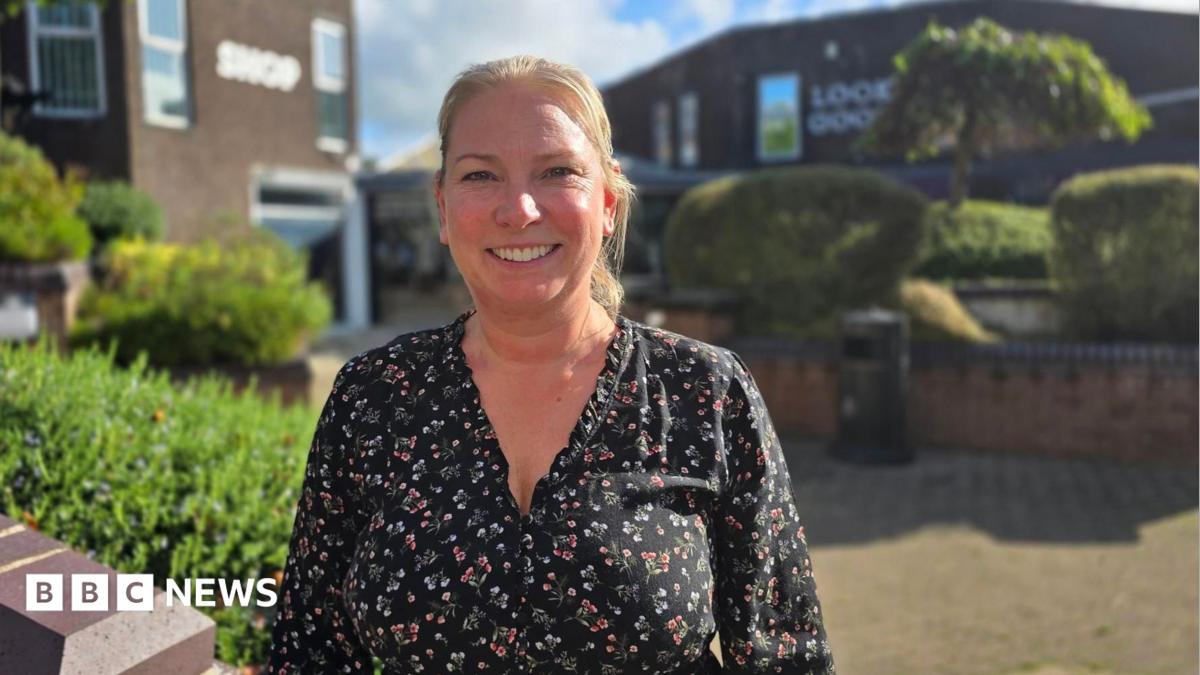
Sally Hellwich has blonde hair tied back and is smiling. She's wearing a black blouse with a colourful floral pattern. She is standing outside in a pedestrianised street with bushes and trees around brown buildings, on a sunny and cloudy day.

Residents and business owners in Onchan discuss key concerns ahead of the House of Keys election.

Continue Reading

Business

CDC Report Finds 71.5% of U.S. Adults Felt Fatigued in 2024 as Women and Young Adults Lead Rates

Published

on

GSK Shares Jump 3.83% as Twin Lung Cancer Drug Trial

WASHINGTON — Nearly three in four U.S. adults said they felt very tired or exhausted on at least some days in a three-month span in 2024, according to a National Center for Health Statistics report released this month, with frequent fatigue highest among women and adults under 35.

The findings, drawn from the 2024 National Health Interview Survey, put overall fatigue at 71.5 percent: 54.9 percent some days, 10.7 percent most days and 5.9 percent every day. Only 28.5 percent said they never felt that way. Researchers defined “frequent fatigue” as most days or every day. That group was 16.6 percent of adults, about one in six.

The survey asked how often people felt very tired or exhausted in the past three months. Authors Natalie A.E. Young, Julie D. Weeks and Nazik Elgaddal wrote that the work describes symptoms in the general population rather than tying them to a single diagnosis. “Despite the association with health and well-being, the frequency of fatigue symptoms in the general U.S. population is an underexplored topic,” they said.

Women reported frequent fatigue at 20.0 percent, compared with 13.0 percent of men. The age pattern ran opposite to the usual picture of declining energy in later life. Frequent fatigue was 19.5 percent among adults 18 to 34, 17.4 percent at 35 to 49, 16.0 percent at 50 to 64 and 12.9 percent at 65 and older.

Advertisement

By race and Hispanic origin, American Indian and Alaska Native adults had the highest frequent-fatigue rate at 25.5 percent, followed by White adults at 18.0 percent, Black adults at 17.3 percent and Hispanic adults at 12.9 percent. Asian adults were lowest at 9.1 percent. The report also found higher frequent fatigue among adults with lower family incomes and among those in the South, the Midwest and less urban areas.

Among people with frequent fatigue, 45.3 percent said symptoms lasted some of the day, 34.5 percent most of the day and 20.2 percent all day. Intensity was “a little” for 14.5 percent, between a little and a lot for 46.8 percent and “a lot” for 38.8 percent.

Functioning gaps were large. About half of adults with frequent fatigue reported difficulties in at least three functioning domains, compared with 16.9 percent of adults without frequent fatigue. Seeing difficulty was more common in the fatigue group (29.8 percent versus 15.6 percent). Adults with frequent fatigue were more than three times as likely to report depression symptoms and about twice as likely to report anxiety symptoms or trouble remembering or concentrating. Work limits and cutbacks in social activity tracked with the same pattern. Separate coverage of the report cited work limitations for about 36 percent of those surveyed in connection with fatigue and reduced social activity for about 29 percent.

The survey did not assign causes. It did not test sleep, work hours, caregiving, long COVID, anemia, thyroid disease or medication. It also did not say whether national fatigue has risen or fallen; comparable earlier NHIS snapshots used slightly different age cuts. A 2022 QuickStats brief found 13.5 percent of adults felt very tired or exhausted most days or every day that year, with the same female and younger-adult tilt.

Advertisement

The Washington Post summarized the 2024 numbers on Wednesday. USA Today and other outlets repeated the same NCHS tables. None of those stories replace the PDF: National Health Statistics Reports No. 221, dated Sept. 3, 2026.

Clinicians already treat fatigue as a common primary-care complaint. The new tables give it a population frame. A 20 percent frequent-fatigue rate among women and a 19.5 percent rate among 18- to 34-year-olds is not a diagnosis. It is a signal that tiredness severe enough to be called “most days or every day” is not rare in the groups least expected to report it.

The report’s authors stop at description. People whose exhaustion lasts despite sleep or blocks work and daily tasks are told, in secondary coverage, to see a clinician. The government numbers do not name a treatment. They name a scale: 71.5 percent at least some days, 16.6 percent most days or every day, and a gap that runs by sex, age, income, region and race.

Advertisement
Continue Reading

Business

Hundreds of homes planned for petrol station and car park site

Published

on

Business Live

Beech Holdings plans two blocks of 286 flats

CGI of the proposed 286 flats in Chester Road, Old Trafford.

CGI of the proposed 286 flats in Chester Road, Old Trafford(Image: Beech Holdings)

Almost 300 new homes could be built on the site of a disused petrol station and multi-storey car park in Old Trafford.

Advertisement

The scheme, recommended to be approved by Trafford council’s planning committee next week, would see the existing structures demolished and two blocks of 286 flats built in their place. One of the blocks would reach 16-storeys in height and contain 192 homes.

The second would have 94 flats and be six-storeys at its tallest point. Concerns have been raised by residents over a lack of parking provision on the land, which sits off Chester Road.

Just seven vehicle spaces are proposed, which would be disabled spaces. Some 286 cycle spaces would also be offered.

Residents have branded this offering ‘insufficient’, saying there is already a ‘lack of parking’ in the area. They fear the development would bring an ‘influx of on-street parking’ which could cause obstruction and poor visibility on the surrounding roads.

Advertisement

They have also raised concerns about illegal parking and traffic congestion. Trafford council would typically expect around 425 parking spaces to be delivered for a scheme of this size.

However, developer Beech Holdings has said it expects the future residents to be recent graduates, typically in their early 20s, who are looking to be connected to employment opportunities. There would be ‘lower levels’ of car ownership among this cohort, Beech Holdings believes.

The developer said the site has good public transport connections, including buses and the Metrolink.

Officers at Trafford council said it considered the lack of parking to be acceptable given the other benefits of the scheme. The project will create necessary new homes on a brownfield – previously developed – site, they said.

Advertisement

Officers said: “The application site will utilise a significant area of previously developed land, which is derelict and unkept and is located close to local amenities.”

Beech Holdings has also agreed to fund a review and potential implementation of new parking restrictions in the area to help reduce any impacts on the local roads.

Access to the site would be via Stretford Road, documents state. Pedestrian access would also be created from Chester Road. Some 29 of the new homes would be classed as ‘affordable’.

Councillors are set to meet next week to debate and decide on the plan.

Advertisement

To find all the planning applications, traffic diversions, road layout changes, alcohol licence applications and more in your community, visit the Public Notices Portal.

Continue Reading

Business

Shoplifters carrying shopping lists, says M&S manager

Published

on

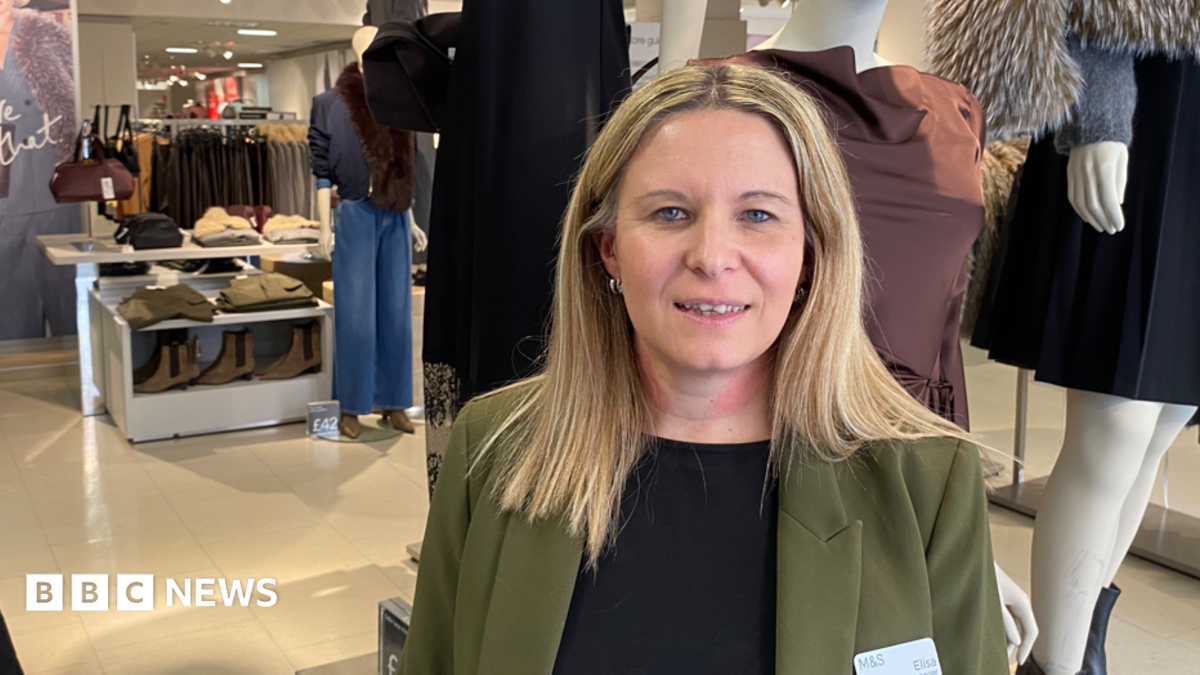
A woman with long blonde hair and wearing a black top and green jacket is standing inside a clothes shop with dressed mannequins and rows of clothes on hangars in the background.

The Marks and Spencer area manager for Shropshire says shoplifting is a “really large issue”.

Continue Reading

Business

B Corp digital agency founder Lawrence Harmer of Solve

Published

on

B Corp digital agency founder Lawrence Harmer of Solve

Lawrence Harmer is the founder and managing director of Solve, the digital agency he started in a spare bedroom in north Cornwall in 2014 and now runs from Nansledan in Newquay. It works with Toyota, Lexus, Cornwall Council, the Duchy of Cornwall and Cornwall Air Ambulance, and it is a certified B Corp. He tells Business Matters how a travel blog turned into an agency.

What do you currently do at Solve?

I see myself as a digital alchemist. I spot patterns and formulas naturally, so I lead our strategic direction and shape the formulas behind our clients’ success.

In practice that covers everything from web design and optimised builds through to SEO, AI SEO, paid media, content and PR, plus green hosting and WordPress maintenance for the clients who want us to keep the lights on. Around 90 per cent of our new business comes through referral, which tells you most of what you need to know about how we work.

Free newsletters
Advertisement

The stories that matter to UK business, straight to your inbox.

Advertisement

What was the inspiration behind your business?

I built my first website in 1998, the year Google started. I love exploring the world and sharing it with others. My first proper website was Soulventure. For 14 years it was a log of my travels and adventures, before the word “blog” existed. Over time it grew into a web business, and it took off quickly.

I did not want my soul ventures to become a business, so I set up Solve Web Design. I soon realised we did more than web design, so it became Solve Web Media, and now simply Solve. The name still carries a piece of Soulventure in it.

Along the way I realised I could help people and the planet through business. I did not want to just give to charity or feel helpless about the world’s problems. I could use my skills for good. One of my goals is to show businesses that they can make money while helping people and the planet. I love seeing the positive impact we have.

Solve is a B Corp. What does that mean day to day?

We first certified in 2020 and were reassessed in June 2024 with a score of 145.8, which puts us in the top 1 per cent of UK B Corps and, we are told, makes us the highest-scoring web design agency in the world. B Lab UK reports that there are now more than 2,600 B Corps in this country, so it is a bigger movement than it was when we joined it.

Advertisement

Day to day it is unglamorous. The office runs on renewable energy and so do the servers we host client sites on. We are a living wage employer. We committed to serving at least 75 per cent local and independent clients and we are currently at 99 per cent. We back Surfers Against Sewage and Protect Our Winters UK, which matters when you work 10 minutes from the water.

I would say the commercial case has caught up with the ethical one. Small B Corps grew revenues faster than the national average over the last couple of years, and that is the argument I make to clients who think this is a cost rather than a strategy. The true growth of a business is when it influences growth around it, our team, our clients, our community.

Who do you admire?

I do not have just one role model. I take inspiration from many places: audiobooks, podcasts and the business leaders I meet. Simon Sinek’s Start With Why is a big influence. So are Robert Cialdini’s Influence, with its focus on the psychology of persuasion, and Donald Miller’s Building a StoryBrand. Together they go a long way.

Most of all, I admire my wife. She gives me clarity and helps me find my centre when I drift off track.

Advertisement

Looking back, is there anything you would have done differently?

Probably, yes. But I believe challenges make you stronger. When I look back at my low points, I learned a lot from them, and that has made me and others stronger.

I left university after a year because the structure did not suit the way I learn. I am dyslexic, and I taught myself instead. At the time that felt like a failure. It was not.

What defines your way of doing business?

I trust my gut feeling above anything else. I take a holistic view and weigh up a wide range of factors, including people and the planet, to set our direction. That comes before money. I have found that when you hold strong values, the universe provides in magical and mysterious ways. So I trust the process, knowing I am doing good.

That shows up internally as much as externally. We were named one of Cornwall’s Best Places to Work in 2025 by Business Cornwall and Best Companies Group, and three quarters of that assessment came straight from employee feedback, which is the part I care about. It is a testament to our team’s dedication to creating a workplace where everyone can thrive.

Advertisement

What advice would you give to someone starting out?

Carve your own path and believe in yourself. That can be hard, and I am only now starting to realise my own superpowers. Listen to others, but do not let them decide your path. Everyone has different opportunities, and what did not work for them might work for you.

Opportunity is everywhere. The world is your lobster. Everything will be OK.

Advertisement
Continue Reading

Business

Sugar supplies improve this year but tighten next season

Published

on

Sugar supplies improve this year but tighten next season


Advertisement


Sugar supplies improve this year but tighten next season | Food Business News

Advertisement

Advertisement


Skip To Content

Advertisement

Continue Reading

Trending

Copyright © 2025