

Business
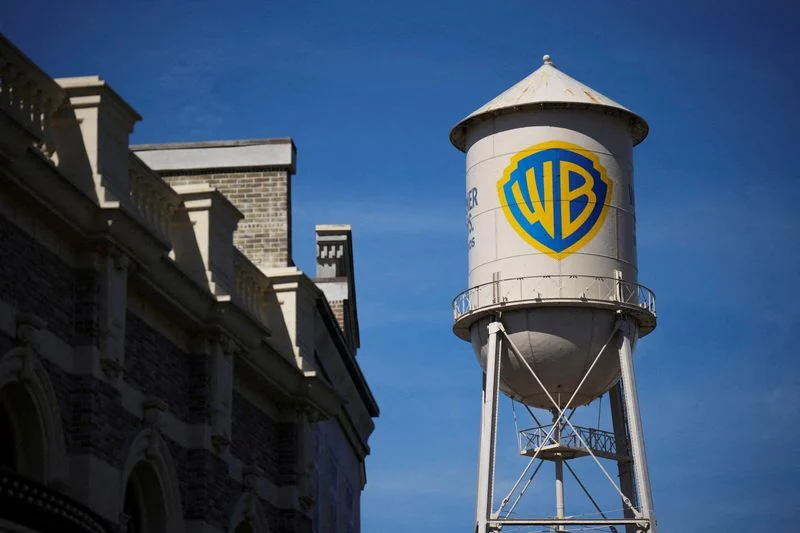
US Justice Department clears Paramount’s acquisition of Warner Bros



Business
(VIDEO) Who Will Win the 2026 3M Open? Rookie Jackson Koivun Leads Into Sunday’s Final Round

BLAINE, Minn. — A 21-year-old who turned professional barely a month ago is on the verge of one of the more improbable breakthrough wins of the PGA Tour season, holding a three-shot lead entering the final round of the 3M Open at TPC Twin Cities.
Jackson Koivun, playing in just his 13th career PGA Tour start and third as a professional, fired a bogey-free 10-under 61 in Saturday’s third round, highlighted by a tournament-record back-nine 28 that included two eagles. The performance vaulted him to 20 under par through 54 holes, tying the 3M Open’s 54-hole scoring record of 193 set by wire-to-wire 2023 champion Lee Hodges.
Koivun’s meteoric rise
Koivun enters Sunday having already established himself as one of the most decorated amateurs in recent college golf history. At Auburn, he became the first player ever to win college golf’s three most prestigious individual honors — the Jack Nicklaus Award, the Ben Hogan Award and the Fred Haskins Award — in back-to-back years, cementing his reputation before he ever teed it up as a pro. He turned professional last month, forgoing his senior season, and earned his PGA Tour card through PGA Tour University Accelerated.
Despite the lack of professional experience, Koivun has shown no signs of nerves under pressure. Describing his mindset after Saturday’s record-setting round, he kept things simple. “It felt great. It’s what you work for,” Koivun said, acknowledging he felt some nerves but leaned on his experience competing in high-stakes moments during his college career at Auburn.
Who’s chasing him
Koivun doesn’t have the final round to himself. Emiliano Grillo and Ben Kohles are tied for second at 17 under after each carding bogey-free 65s on Saturday. Grillo, a two-time PGA Tour winner, brings experience at TPC Twin Cities specifically, having posted three previous top-10 finishes at the 3M Open. He capped his third round with an eagle on the 18th hole, giving him momentum heading into Sunday even after several missed putting opportunities earlier in the round.
Kohles, meanwhile, is chasing his first career PGA Tour title in his 122nd start. The five-time Korn Ferry Tour winner opened the tournament with a first-round 62 to take the early lead and has remained near the top of the leaderboard throughout the week. He has said he plans to attack the course aggressively from the start of Sunday’s round, aiming to apply pressure on Koivun early rather than playing a more conservative, wait-and-see approach.
Michael Brennan and Chandler Phillips share fourth place at 16 under, while a trio of Denny McCarthy, Billy Horschel and Michael Kim sit in a tie for sixth at 15 under. Kim, notably, produced one of the week’s signature moments on Friday, carding a 12-under 59 to become just the 15th player in PGA Tour history to break 60 in a round. He cooled off with a 70 on Saturday, dropping him five shots off the lead, but remains within striking distance heading into the final 18 holes.
Scheffler still lurks, six back
World No. 1 Scottie Scheffler entered the week as the tournament’s biggest draw, marking his first-ever appearance at the 3M Open. Scheffler struggled with his putter through the opening two rounds before catching fire late in Saturday’s third round, closing with five birdies and an eagle on the back nine for a 7-under 64. That surge moved him into a four-way tie for ninth place at 14 under, alongside Davis Thompson, Seamus Power and Brian Harman — six shots behind Koivun with 18 holes to play.
While six shots is a significant gap, Scheffler’s track record of low final rounds and his status as the sport’s most dominant current player mean he can’t be ruled out entirely, particularly on a course at TPC Twin Cities that has historically rewarded aggressive, birdie-heavy scoring.
A course built for low scores
This year’s 3M Open has reinforced the tournament’s reputation as one of the lowest-scoring stops on the PGA Tour calendar. Between Kim’s 59 on Friday and Koivun’s record-setting 61 on Saturday, the week has already produced two of the most memorable individual rounds of the 2026 season. Grillo pointed to the strength of the young players chasing the title as a defining storyline of the week, noting how difficult it has become to keep pace with the tour’s rising talent, a reflection of how competitive the leaderboard has remained even as scores have plummeted.
What’s at stake Sunday
The tournament carries an $8.8 million purse, with the winner set to collect $1.584 million. Defending champion Kurt Kitayama, who won last year’s edition with a final-round 65 to hold off Sam Stevens, is also in the field looking for his first win of the 2026 season.
Sunday’s final round tees off with Koivun and Grillo in the last pairing at 1:40 p.m. ET, with coverage beginning on Golf Channel at 1 p.m. before shifting to CBS at 3 p.m. If Koivun holds his three-shot advantage, he would become one of the fastest players in recent memory to capture a PGA Tour title, doing so in just his third start as a professional. But with Grillo, Kohles and a hard-charging Scheffler all lurking on a course built for low scores, Sunday’s final round at TPC Twin Cities is shaping up as anything but a formality.
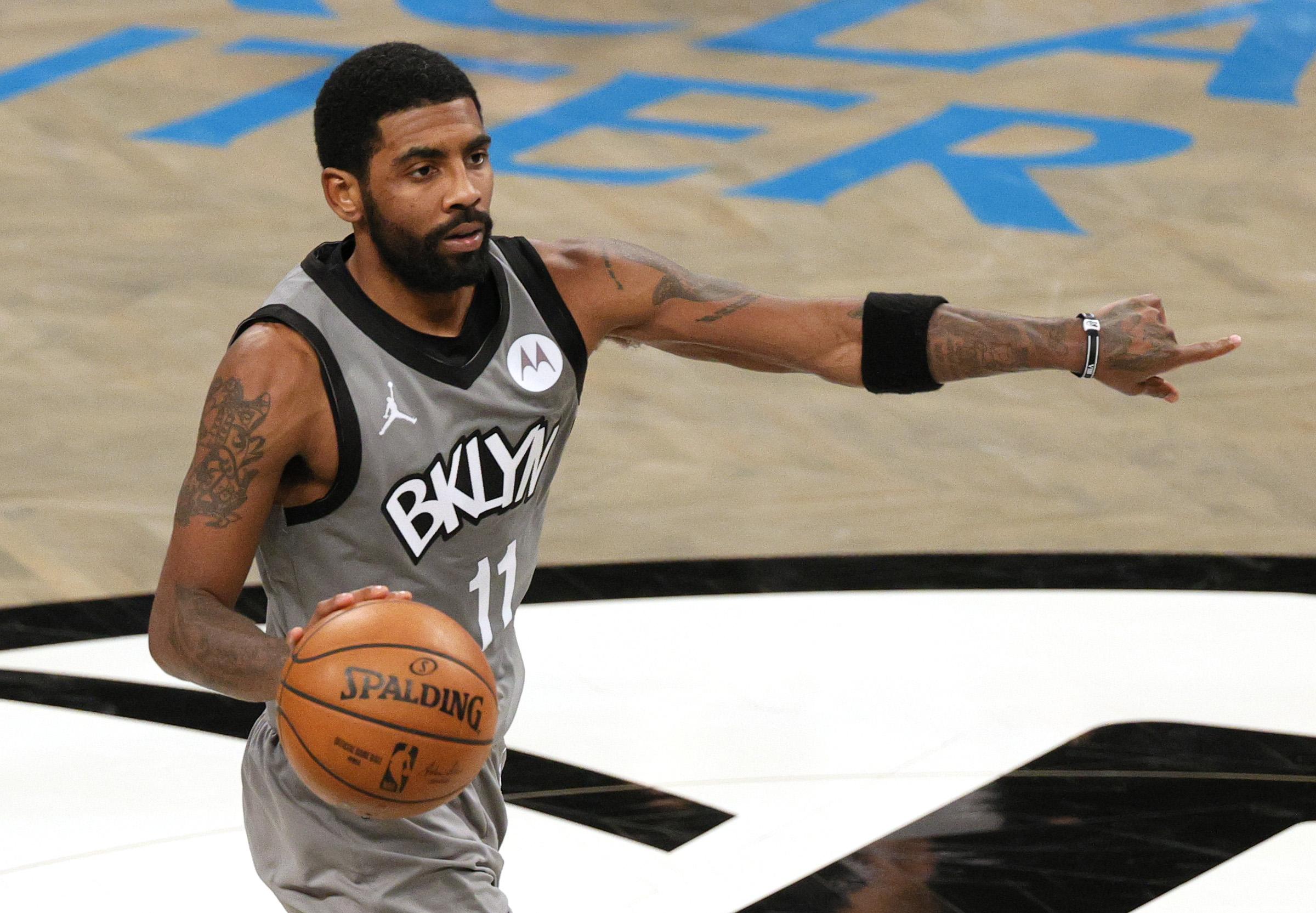
Kyrie Irving trade speculation has followed the Dallas Mavericks through much of this NBA offseason, but as free agency winds down, the team’s message to interested suitors has remained remarkably consistent: Irving isn’t available, and he’s expected back on the roster when the 2026-27 season begins.
Interest from multiple contenders
Irving, a nine-time All-Star who has spent parts of four seasons with Dallas since arriving in a 2023 trade from Brooklyn, has drawn trade interest from around the league this summer despite missing the entire 2025-26 season while recovering from a torn ACL. According to NBA insider Marc Stein, both the Detroit Pistons and Minnesota Timberwolves have shown interest in acquiring the 34-year-old guard, with Minnesota in particular seen as a team that could pair him with All-Star Anthony Edwards in a bid to strengthen its backcourt after consecutive deep playoff runs.
ESPN’s Shams Charania reported in May that multiple contenders were monitoring Irving’s situation closely, a reflection of both his remaining talent and the uncertainty created by his injury recovery timeline. That interest intensified further amid reports tied to LeBron James’ prolonged free agency search, with ESPN’s Vincent Goodwill reporting that James had at one point aimed to have Irving traded to the Cleveland Cavaliers as part of a broader push to reunite with his former championship-winning teammate.
Dallas has repeatedly said no
Despite the steady stream of outside interest, Dallas has consistently rebuffed inquiries. NBA insider Brett Siegel reported this week that the Mavericks have held firm in recent conversations with other front offices. “There’s been no trade talks over the last month regarding Kyrie Irving,” Siegel said, adding that while teams including the Pistons and Timberwolves reached out early in free agency to gauge Irving’s availability, Dallas’ response has been unambiguous: Irving is not on the trade block, and the team has no plans to change that stance.
That position has held even as James’ free agency saga created renewed speculation about a possible Irving trade tied to wherever James ultimately signed. With James choosing the Philadelphia 76ers over Cleveland, Fox Sports characterized the outcome as effectively ending any realistic path toward an Irving-James reunion, since the scenario most likely to pull Irving out of Dallas depended on James landing with the Cavaliers.
New leadership backs an Irving-Flagg pairing
Much of Dallas’ resolve around Irving appears tied to the front office’s plans for the team’s young star, Cooper Flagg, the 2025-26 NBA Rookie of the Year. New Mavericks president of basketball operations Masai Ujiri has publicly expressed interest in seeing Irving and Flagg share the court, a sentiment echoed by ownership. NBA insider Marc J. Spears said he expects Irving to remain with Dallas at least to start the season, citing both organizational and ownership-level support for the pairing. “I do think he’ll be back on the roster,” Spears said, adding that the team’s owner is “really, really high” on seeing Irving and Flagg play together, a vision Ujiri reinforced during his introductory press conference with the organization.
The stakes carry extra significance given both players’ college backgrounds. Irving and Flagg are both former No. 1 overall draft picks out of Duke, a distinction shared by only a handful of players in the program’s history. Seeing two of Duke’s No. 1 picks share an NBA backcourt would mark a first for the program’s alumni base, adding a layer of storyline interest beyond the basketball fit itself.
Irving has already begun building early chemistry within the new-look organization. He appeared courtside alongside Flagg during NBA Summer League action, with Ujiri using the moment to again shut down trade speculation surrounding the veteran guard. New head coach Dusty May has also spoken positively about Irving’s early workouts, expressing enthusiasm about incorporating him into the team’s plans for next season.
A speculative trade idea resurfaces
Even with Dallas’ firm public stance, hypothetical trade scenarios have continued to circulate. One recent proposal floated sending Irving, Daniel Gafford and other pieces to the Philadelphia 76ers in exchange for center Joel Embiid and a 2028 first-round pick, a deal framed as a way for James to reunite with a former teammate now that he has joined Philadelphia. The scenario, described even by those who floated it as unlikely, would pair two players with extensive recent injury histories — Irving and Embiid have combined for just 107 regular-season games since the start of the 2024-25 season — making it a difficult sell for either front office to seriously pursue.
Other Dallas veterans remain more available
While Irving has stayed off the trade block, other Mavericks veterans have not received the same protection. Reports indicate Dallas has continued fielding offers on players including Daniel Gafford, Klay Thompson and P.J. Washington, part of a broader effort by Ujiri’s front office to reshape the roster around Flagg without disturbing its plans for Irving. That distinction has reinforced the sense around the league that Dallas views Irving as central to its rebuilding timeline rather than a trade chip to be dealt for future assets.
Where things stand
With free agency largely settled following James’ decision to sign with Philadelphia, the pressure that had been building around a potential Irving trade tied to James’ free agency has eased considerably. Barring a dramatic change in Dallas’ approach, Irving appears positioned to open the 2026-27 season with the Mavericks, working to return to full strength after his ACL recovery while the organization builds its long-term plans around the pairing of its veteran point guard and its reigning Rookie of the Year.

Israeli strike kills a top Hamas security official in Gaza, medics and police say

Buy 4 Barron's Better Bets (Than T-Bills) Out Of 11 'Safer' July DiviDogs

Berlin Pride attack prompts grief and solidarity with LGBTQ community
Business
(VIDEO) Wildfires Force 250,000 to Flee Homes in France and Spain as Tour de France Final Stage Is Cut Short
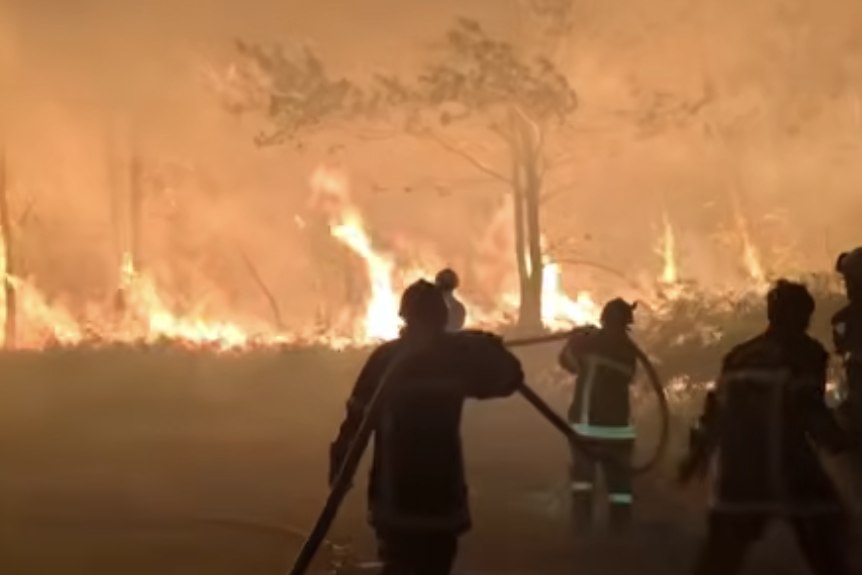
LEGE-CAP FERRET, France — France dispatched a military cargo plane to douse wildfires with tons of flame retardant on Saturday, while organizers shortened the final stage of the Tour de France to redirect security personnel toward the blazes, as wildfires across France and Spain forced more than 250,000 people from their homes this week.
The fires, among the most severe to strike southern Europe this summer, have displaced roughly 70,000 people in central Spain alone. One person has died so far: a man in the municipality of Manises, part of Spain’s wildfire-hit Valencia region, according to a statement from local officials.
A giant aircraft joins the fight in France
In southwestern France, an A400M military transport plane specially converted for firefighting swept low over drought-stricken woodland, trailing a long plume of ochre-colored retardant as ground crews battled flames authorities feared could reach the wine-producing city of Bordeaux. The aircraft joined at least 18 other water- and retardant-dropping planes and helicopters working in rotation through smoke-filled skies over the Gironde region, according to French Interior Minister Laurent Nunez.
The scale of the response prompted race organizers and the Paris police department to shorten Sunday’s 21st and final stage of the Tour de France, France’s marquee annual sporting event. Rather than starting from Thoiry, west of Paris, as originally planned, riders will race a circuit inside the capital covering 89 kilometers, cut by roughly a third from the previously scheduled 133-kilometer route. Organizers said part of the race’s security detail would instead reinforce emergency response efforts in the fire-affected areas, describing the change as one of several “exceptional measures made necessary by the situation.”
Shifting winds threaten Bordeaux
Nunez said winds were expected to shift from west to east on Saturday afternoon, potentially pushing flames closer to Bordeaux. Fire crews and authorities responded by digging containment trenches, applying retardant and taking other measures to slow the fire’s advance. Nunez predicted a “long and very difficult” fight ahead, noting the blaze remained about 30 kilometers west of the city, though it had lost some intensity overnight.
The regional prefect overseeing Gironde said the fire had grown into “a firestorm” on Friday after igniting earlier in the week, adding that it “remains dangerous” even as firefighters made incremental progress. French Prime Minister Sébastien Lecornu called the fires unprecedented, saying the Gironde blaze had grown so intense by Friday that it began generating its own wind patterns. The government mobilized soldiers to support fire crews and rushed 1.5 million face masks into the region to protect residents and responders from choking smoke.
Authorities ordered evacuations for people caught between the fire and Bordeaux, including residents in parts of the city’s western suburbs and surrounding towns and villages. Alerts instructing people to leave were sent directly to residents’ mobile phones, according to Gironde prefect Sophie Brocas, who said the fire had already destroyed approximately 140 homes in the region.
In Bordeaux itself, officials opened an exhibition center to shelter evacuees, offering food and temporary housing, with the city’s mayor saying the facility could accommodate as many as 10,000 people if needed. The city’s airport remained open, though its bus and tram services were suspended.
Spain faces its own fast-moving crisis
West of Madrid, Spanish authorities deployed 2,600 firefighters, police officers and other emergency personnel to battle two separate blazes, supported by 19 water-dropping aircraft and helicopters. Firefighters described the fires as moving too fast and violently to confront directly.
Among the hardest-hit communities was El Tiemblo, where flames tore through a historic chestnut grove and left residents scrambling to protect their town. “We’ve never seen anything like this,” said Javier Organista, a resident of El Tiemblo. “When we saw the flames coming into our town, surrounding us, leaving us with practically no way out, all the neighbors joined together to try to stop its advance.” Reflecting on the damage, he added simply, “It’s just really sad.”
Spanish Prime Minister Pedro Sánchez, visiting a command post west of Madrid on Saturday, said improving weather conditions offered “a window of opportunity” for crews to gain control of the fires. Officials in Madrid’s regional government said the blazes had already begun decreasing in intensity as winds and temperatures eased somewhat over the weekend.
Sánchez noted that wildfires have already burned roughly 130,000 hectares of forest in Spain so far this year, well above the country’s annual average of about 100,000 hectares over the past decade.
Climate change fuels a dangerous pattern
Officials and fire crews across both countries pointed to an unusually early and intense series of heat waves this year as a key driver behind the fires’ speed and severity. Successive record-breaking temperatures have dried out forests and scrubland across the region, turning them into tinderboxes vulnerable to rapid ignition and spread.
In France, 1,400 firefighters were deployed to the Gironde blaze, with hundreds more sent to a separate wildfire farther south in the Landes region. Authorities said dozens of firefighters had suffered injuries amid chaotic evacuation scenes, with police going door to door urging residents to leave and some people fleeing coastal tourist towns by boat as flames approached.
International support mobilizes
Several other European nations have stepped in to help contain the fires. Italy, Greece, the Netherlands, Portugal, Croatia, the Czech Republic, Sweden, Slovakia, Germany and Switzerland have either sent or pledged to deploy water-dropping aircraft and helicopters to reinforce firefighting efforts in both France and Spain.
With winds shifting and weather conditions offering only a narrow opening for progress, officials in both countries cautioned that the fight was far from over, even as crews pressed to take advantage of any lull before conditions could worsen again.

Labour would be the largest party in the House of Commons but fall 117 seats short of an overall majority if a general election were held now, according to a seat projection published by UK Polling Report, as Prime Minister Andy Burnham ruled out going to the country before 2029.
The projection puts Labour on 209 MPs, 202 fewer than the 411 the party won at the 2024 general election, and short of the 326 seats needed to command a majority.
Reform UK would come second on 149 seats, with the Conservatives on 133 and the Liberal Democrats on 72. The SNP would take 44 seats, the Greens seven and Plaid Cymru four.
The seat numbers are drawn from an average of opinion polls that puts Reform on just under 25 per cent, Labour on 22 per cent and the Conservatives on 20 per cent.
Reform therefore leads on votes but trails on seats. UK Polling Report’s analysis attributes that to the first-past-the-post system, which rewards Labour for a wider geographical spread of support.
Burnham, who entered Downing Street on 20 July as Britain’s seventh prime minister in a decade, was asked about the polling in an interview with the BBC’s Laura Kuenssberg.
He ruled out an early contest. “There is no general election,” he said. “And the thing I would say to you is 20 million people voted for a manifesto. We’re in a parliamentary democracy, so that is what people voted for, and I will honour that manifesto.”
Pressed on whether that was a firm commitment, he said: “Well I’m going to rule it out. There’s no early general election. I don’t think people want it.
“The opinion polls might say some people do, some people don’t. I just think what I most need to do is get Britain focused on getting the country back where it should be, getting it working.”
The findings come less than a week into Burnham’s premiership. He became Labour leader on 17 July following Sir Keir Starmer’s resignation, and was appointed prime minister the following Monday.
Burnham has said he will honour Labour’s 2024 manifesto commitments not to raise VAT, income tax or national insurance. “I stick by the manifesto and the promises that it made,” he said before taking office. “So, let me be absolutely clear about that, but there is some room within that manifesto for movement on tax.”
He has since removed VAT from electricity bills, a measure most businesses do not qualify for.
Reform’s standing in the polls has already prompted calls for closer examination of its economic programme by companies. Liam Byrne, the Labour chairman of the Commons business and trade select committee, said in December that businesses were right to be worried about Reform UK.
“If Reform is set to become the predominant party of the right, then businesses absolutely are going to need to understand where they’re coming from,” Byrne said. “Particularly when the economic evidence says that populist, interventionist administrations are pretty catastrophic for the economy.”
Reform’s deputy leader Richard Tice has rejected that characterisation, saying both Labour and the Conservatives had “wrecked the public finances” and that his party would cut spending, borrowing costs and regulation before cutting taxes.
A general election is not due until 2029. Burnham’s first Budget is due in the autumn.

Paul Jones
Harvard alumni and former New York Times journalist. Editor of Business Matters for over 15 years, the UKs largest business magazine. I am also head of Capital Business Media’s automotive division working for clients such as Red Bull Racing, Honda, Aston Martin and Infiniti.

Normandy’s D-Day World War Two beaches become UNESCO heritage site
Israeli settlers set fire to West Bank mosques after deadly clash
Business
YouTube Cracks Down on Mass-Produced AI Content, Cutting Off Ad Revenue for Low-Quality ‘Slop’ Channels

YouTube has tightened the rules governing which creators can earn advertising revenue from artificial intelligence-generated videos, moving to strip monetization from channels that mass-produce low-quality AI content, use manipulative tactics to boost views, or deploy AI avatars to dispense advice in sensitive fields such as medicine, law and finance.
The revised guidelines, updates to the company’s YouTube Partner Program policies, took effect July 16 and were confirmed this week by outlets tracking the platform’s ongoing effort to curb what YouTube and much of the industry have taken to calling “AI slop” — low-effort, formulaic content produced at scale with minimal human involvement.
Three categories now off-limits for ad revenue
YouTube outlined three specific types of content that will no longer qualify for advertising payouts. The first covers videos that are mechanically mass-produced with little substantive variation between uploads, whether generated using AI tools or computer-generated imagery. The second targets content designed primarily to provoke a strong emotional reaction or shock value in order to drive views, including staged rescue or crisis videos, regardless of whether AI was used to create them. The third category applies to channels using AI-generated avatars modeled on real people to offer guidance on financial investments, medical diagnoses or legal matters, areas where YouTube has said the risk of misleading viewers is especially high.
Matt Halprin, YouTube’s head of trust and safety, said the company’s underlying concern is less about the use of AI itself and more about how that technology is being deployed. “While AI tools can assist creators in producing high-quality content, we will apply strict criteria to channels that rely on automated systems to churn out content lacking narrative structure and human creativity,” Halprin said.
Building on a policy shift from last year
The latest changes build on a foundation YouTube laid roughly a year earlier. In July 2025, the platform renamed its long-standing “duplicate content” policy to “mass-produced content,” a shift aimed at capturing a broader range of formulaic AI-assisted videos beyond simple copy-paste duplication. That earlier revision established the groundwork for restricting monetization on channels built around repetitive templates, recycled clips or scripts read verbatim from other sources.
According to reporting on the policy’s rollout, YouTube’s enforcement typically follows a graduated approach for channels flagged under the mass-produced or repetitive content rules, beginning with a warning before escalating to a temporary suspension and, eventually, permanent removal from the Partner Program for repeat violations. Channels affected by enforcement decisions are generally given a window to appeal, with the platform recommending appeals include a short video demonstrating genuine human creative involvement in the disputed content, rather than relying solely on a written explanation.
A platform-wide quality concern
YouTube’s push against AI slop follows growing internal and public concern about the volume of low-effort automated content flooding the platform’s recommendation systems. Earlier this year, the company removed a wave of channels from the Partner Program in a single enforcement action, targeting accounts that had collectively built enormous audiences and generated substantial advertising income through formulaic, templated video production rather than original creative work.
The stakes tied to content quality are also financial for YouTube itself. The platform generated $9.88 billion in advertising revenue during the first quarter of 2026, according to Alphabet’s earnings report, an increase of nearly 11% year-over-year but a figure that fell short of Wall Street’s expectations. Maintaining advertiser confidence in the quality of content surrounding their ads has become an increasingly central part of YouTube’s strategy as competition for ad dollars across video platforms intensifies.
AI use itself remains permitted
YouTube has been careful to frame the updated rules as targeting a narrower category of behavior rather than restricting AI-assisted content broadly. Halprin has said the company recognizes that AI tools can meaningfully expand what individual creators are able to produce, provided the resulting videos retain a genuine creative and narrative contribution from the person behind the channel. The distinction YouTube is attempting to draw, according to Halprin, is between creators using AI to enhance original work and operators using automation to generate large volumes of near-identical videos purely to capture advertising revenue.
Under the current framework, AI-generated or AI-assisted videos remain eligible for monetization so long as they offer original value to viewers, are not repetitive or templated, and are properly labeled when required. YouTube has also implemented disclosure requirements for altered or synthetic content, requiring creators to flag AI involvement through settings in YouTube Studio in certain circumstances.
Industry reaction and what comes next
The policy update has drawn attention across the creator economy, given how significantly automated AI production tools have lowered the barrier to launching new monetized channels in recent years. Industry estimates cited in coverage of the shift suggest a substantial share of newly monetized YouTube channels now operate without an on-camera host, relying instead on AI-generated narration, imagery or avatars — a trend the platform’s updated guidelines appear directly aimed at reshaping.
For creators and channel operators who have built businesses around high-volume automated content production, the revised rules are likely to force a reassessment of how they use AI tools going forward. YouTube has signaled it intends to continue refining its enforcement approach as AI production tools evolve, positioning the update as an ongoing effort rather than a one-time policy change.
The company has not indicated whether further revisions are planned in the near term, but its repeated policy updates over the past year suggest the platform intends to keep adjusting its monetization standards as the volume and sophistication of AI-generated video content continues to grow across the industry.
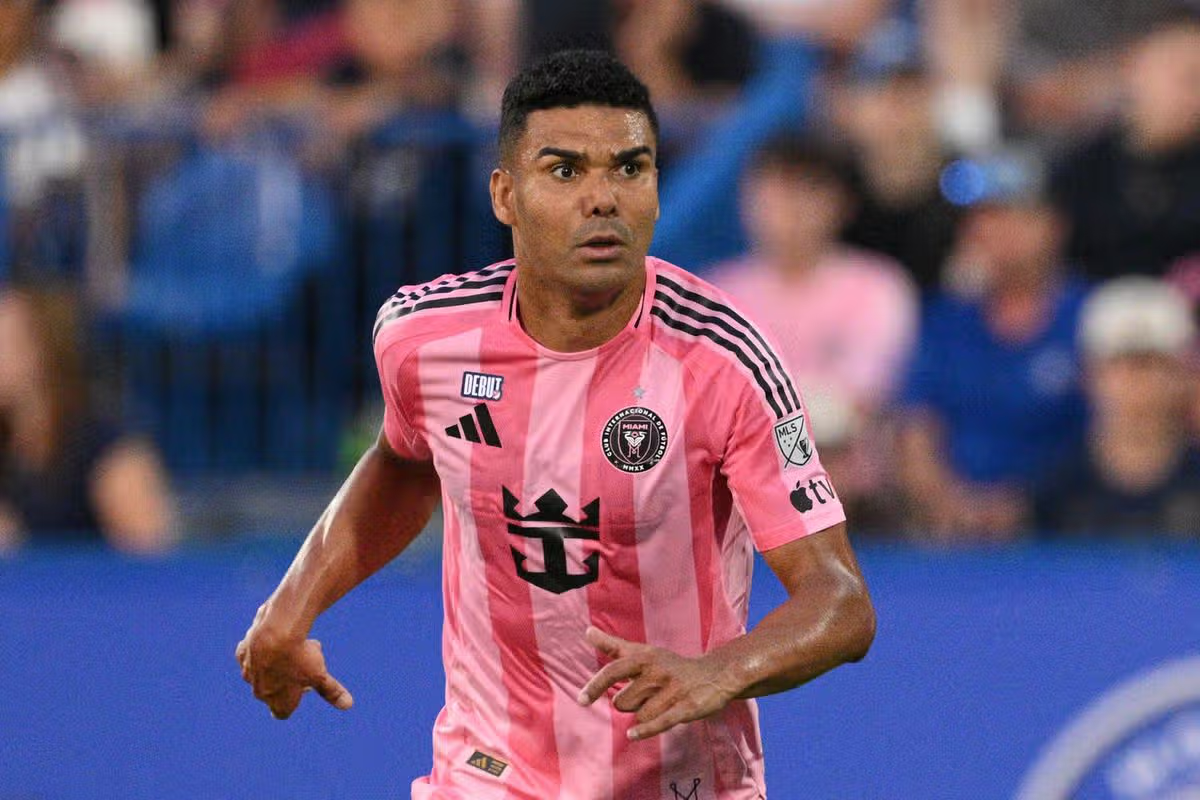
Casemiro’s Inter Miami debut marred by serious injury as ex-Man United star’s ‘investigation’ continues

Tablets for work, entertainment and more

York – A64 delay near Tadcaster heading towards the A1(M)


-

 Fashion2 days ago
Weekend Open Thread: Brooks Brothers
-

 Politics7 days ago
Democrats look to World Cup watch parties to register thousands of voters
-

 News Videos7 days ago
Big Money Is Entering XRP
-

 Tech5 days ago
Sail Virtually Aboard The “Itanic” With IA-64 Emulator
-
 Tech5 days ago
Turtle Beach Command Series KB7 review: a nifty screen-equipped gaming keyboard
-

 Crypto World5 days ago
Grayscale Files For Worldcoin ETF, WLD Registers Sharp Rise
-

 NewsBeat6 days ago
Unregistered fitter used Gas Safe logo on business flyers
-
 Business4 days ago
New Jersey voter registration controversy explained: How 6,600 noncitizens got on the rolls, and what happens next
-
 Entertainment5 days ago
Johnny Depp’s R-Rated Gothic Cult Classic Gets New Release Ahead of Sydney Sweeney Remake
-

 Crypto World3 days ago
Ethics, other provisions in crypto Clarity Act to be further discussed
-

 Tech6 days ago
Watch Flock Safety CEO Garrett Langley discuss the future of surveillance at TechCrunch Disrupt 2026
-
 NewsBeat5 days ago
Shanghai science forum photos show China’s AI and robotics advances in rivalry with US
-

 Crypto World6 days ago
Circle’s President Sold Over 360,000 Shares, The Filings Explain Why
-

 Tech6 days ago
Subway Sandwich Computers Get a Second Life as Gaming Machines
-

 Sports2 days ago
2026 3M Open leaderboard: Scottie Scheffler finds putter in Round 1, sits three back
-

 News Videos3 days ago
The Peugeot Family: How 200 Years of an “Old Money” Dynasty Died in A Boardroom
-

 Fashion2 days ago
16 Dresses for the High Summer Event
-

 Tech7 days ago
How To Use Claude’s Reflect Dashboard And Learn When It’s Time To Touch Grass
-

 Tech6 days ago
The 35 Best Board Games for Family Game Night
-

 Entertainment6 days ago
Stephen Colbert Returns to Social Media After Late Show End
You must be logged in to post a comment Login