The U.S.-Israeli war with Iran is rattling businesses worldwide, driving up energy prices, squeezing supplies of critical raw materials and raising questions about the reliability of trade routes critical to the flow of goods from food to car parts.
The widening conflict has choked major air and sea transport corridors through the Middle East. Shipping through the Strait of Hormuz, a conduit for one-fifth of the world’s oil, slowed to a near-halt as Iran retaliated with drone strikes against U.S. and Israeli attacks. Busy air transit routes in the Gulf have gone dark.
Soaring oil and gas prices have pushed up costs for companies, threatening their margins, and raised the spectre for policymakers and investors of a fresh bout of inflation.
“If these effects last longer, everyone will start to feel them,” Young Liu, chairman of Foxconn, the world’s largest electronics maker and a key partner to Nvidia, said on Friday.
Advertisement
A KNOCK-ON EFFECT ON EVERY COMPANY
Live Events
Even before last Saturday’s strikes, companies were struggling with U.S. President Donald Trump’s trade war, after hefty U.S. import tariffs drove up costs, upended supply chains and hurt consumer confidence. A spike in gas pump prices is another blow to U.S. consumers: a gallon of regular gasoline cost an average $3.32 nationwide on Friday, up from $2.98 a week ago. Brent crude futures have spiked to $90 per barrel but remain below levels of 2022 when Russia invaded Ukraine. “Any time you see an increase in oil price or gas price, it’s got a knock-on effect further down on every company, on every industry,” Simon Hunt, CEO of Italian drinks maker Campari , told Reuters after the firm’s results this week.
PAIN IN EUROPE STILL RECOVERING FROM 2022 CRISIS
In Europe, still recovering from 2022’s energy crisis, the pain is acute for energy-intensive industries like chemicals.
The IW German Economic Institute said on Thursday that oil at $100 per barrel could cost Germany’s economy 0.3% of GDP this year and 0.6% next year – a loss of economic output amounting to around 40 billion euros ($46 billion) over two years.
Advertisement
Campari’s Hunt said the firm has some long-term contracts in place to protect against big energy price increases. Reckitt Benckiser CFO Shannon Eisenhardt told analysts the consumer goods firm has hedged about 55% of its oil and gas price exposure for 2026.
But Uniden, which represents energy-intensive French industries including chemicals, autos and agriculture, warned some companies were already cutting back.
“The impact on gas prices in Europe has been immediate, with an 80% increase in the spot price and considerable uncertainty about its future,” it said in a statement. “Some production has therefore been halted or slowed down.”
Airline stocks have also been hammered. European budget carrier Wizz Air, which is hedged, warned that the war would dent its net profit for fiscal year 2026 by about 50 million euros ($58 million).
Advertisement
ALUMINIUM, HELIUM AND SULPHUR
The disruption to sea freight affected specialised industrial inputs like sulphur and led major aluminium producers to invoke force majeure clauses. Shippers and insurers have hiked some prices dramatically in response to the conflict.
Qatari smelter Qatalum began shutting down operations this week, while Aluminium Bahrain said it had halted shipments and declared force majeure because it could not move metal through the Strait of Hormuz. The Gulf region accounts for about 8% of global aluminium supply.
Aluminium prices on the London Metal Exchange jumped sharply on the news, while physical premiums in Europe and the United States climbed to multi-year highs.
South Korean officials warned that a prolonged conflict could disrupt supplies of key semiconductor manufacturing materials sourced from the Middle East, including helium, which is essential for chip production and has no viable substitute.
Advertisement
Drone strikes that damaged some of Amazon’s data centres in the United Arab Emirates and Bahrain raised questions about technology supply chains and Big Tech’s pace of expansion in the region.
RECESSION PLAYBOOK
A prolonged energy shock could call for the “recession playbook”, Morgan Stanley warned, while Goldman Sachs analysts said a temporary surge in oil prices to $100 per barrel could slow global growth by 0.4 of a percentage point.
Much depends on the length of the conflict, highly uncertain even if many feel that Trump doesn’t want a protracted and costly war ahead of November’s U.S. midterm elections.
“You don’t really want this to last for too long,” said Emmanuel Cau, Head of European Equity Strategy at Barclays. “If it is a few weeks or months, of course you’re going to have earnings expectations starting to be cut.”
Advertisement
British auto distributor Inchcape said the conflict could delay some Japan-Europe shipments by weeks, while online travel agent Loveholidays is preparing to delay its London IPO because of market turmoil and travel chaos.
Markus Krebber, CEO of RWE, Germany’s biggest power producer, said that energy was “once again dominating headlines all over the world”.
“Gas and oil prices are volatile, key shipping routes face geopolitical pressure, and policymakers are concerned about supply risks,” Krebber said.
“The renewed uncertainty is a reminder of an uncomfortable reality: the next energy crisis isn’t an if – it’s a when, and a question of how prepared we are.”
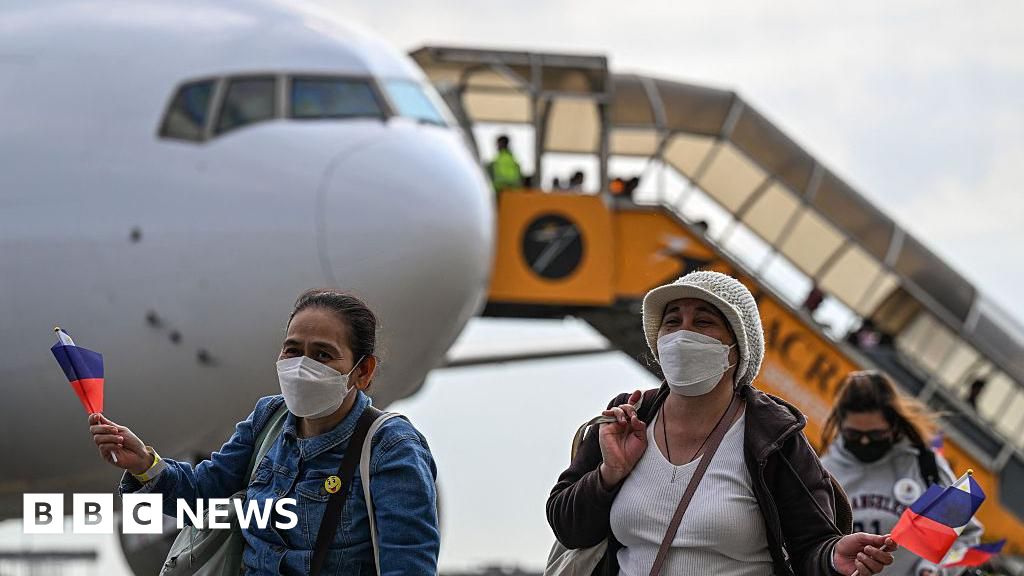
According to the International Labour Organisation (ILO), the region hosts 24 million migrant workers, making it the world’s top destination for overseas labour. Most of them come from Asia – India, Pakistan, Bangladesh, Sri Lanka, the Philippines and Indonesia. Many of these workers take low paid or precarious jobs, and have little access to things like healthcare, the ILO says.
The Big Money Show discusses the potential fallout from President Donald Trump’s proposed credit card interest rate cap.
A new analysis finds that a 10% credit card interest rate cap would shrink access to credit, affecting well over 100 million American cardholders in the process.
Some Republican and Democratic lawmakers have expressed support for capping credit card interest rates at 10%, a measure that also received support from the Trump administration. Other proposals have centered on a higher cap of 15% or 20%.
Advertisement
An analysis by Unleash Prosperity warns that credit card interest rate caps would function as price controls on what is currently a highly competitive market, resulting in significant consequences for consumers and the economy.
“What’s going to happen if you put these interest rate caps on is you’re going to have fewer Americans with either lower incomes or lower credit scores who will have access to credit cards and that will make them worse off, not better off,” Steve Moore, co-founder of Unleash Prosperity and a former Trump administration economist, told FOX Business.
Credit card interest rate caps would affect the access to credit and rewards available to Americans, while the impact would be the greatest on consumers with lower credit scores. (iStock)
“Obviously, the big issue right now for consumers is affordability, and so the politicians are looking for any way to reduce costs to consumers. But what we found in our study is that the interest rate cap would dramatically reduce the number of Americans who would have access to credit,” he said.
Advertisement
The report by economists at Unleash Prosperity noted there is evidence that the vast majority of cardholders would be affected by a 10% rate cap, based on research from the U.S. and internationally.
It noted a large survey of the credit market published by the American Bankers Association in January, which found that 74% to 85% of open credit card accounts would be closed or have credit lines reduced, affecting between 137 million and 159 million cardholders.
Unleash Prosperity’s analysis found that the adverse impact would be the worst among cardholders with lower credit ratings, with it universally affecting subprime borrowers and below, as financial institutions wouldn’t be able to cover lending costs due to the interest rate cap.
Credit card interest rate caps would have an impact on cardholders across the spectrum of credit scores. (iStock)
The analysis estimated that between 71% and 84% of prime borrowers would either lose access to credit cards altogether or have credit lines reduced under a 10% cap.
Super-prime borrowers, who have the highest credit ratings with scores above 780, would also be affected by a 10% rate cap or even a 15% rate cap, as they currently face an average interest rate between 13% to 18% for existing accounts and 17% to 21% for new accounts. One such impact would be that credit card rewards programs could be curtailed through less generous incentives, or such rewards programs could be eliminated altogether.
A 20% interest rate cap would affect about 70% to 75% of all borrowers, or roughly 129 million to 140 million cardholders.
“We need maybe more financial literacy in this country because you are going to pay a very hefty interest rate if you don’t pay your credit card on time and the rates are high, but that’s because you’re not supposed to borrow on your credit card, and a lot of people do that and that’s how they get into financial trouble,” Moore said.
President Donald Trump called for a one-year 10% interest rate cap. (Saul Loeb/AFP via Getty Images)
Moore noted that an unintended consequence of credit card interest rate cap proposals is that it could force consumers who need funds to seek out payday loans, which have an average interest rate of near 400% APR.
“The kind of do-gooders in Washington say they’re going to do this to help people stay out of debt… They don’t want payday lenders, they want to make it harder for people to use credit cards,” Moore said. “Well, what are people going to do, go to a loan shark to get money in a hurry?”
“The alternative to paying a high interest rate on a credit card can be even worse for people,” he added.
Moore also said that credit cards play a significant role in how consumers engage in economic activity and that policymakers shouldn’t risk disrupting an important tool for consumers.
“Credit cards have become pretty ubiquitous in the U.S. and it’s by far the number one way people pay for transactions. The amount of money that people are spending on credit cards continues to escalate,” Moore said. “It’s a very convenient way for people to pay for things, it’s good for merchants, it’s good for customers, it’s good for banks – let’s not interfere with a system that’s working.”
Fast moving industries are at the forefront of trends. They’re there to keep their customers interested, happy, and engaged, and it’s something that all businesses can learn from.
Business agility is the ability to think on your feet and react or even predict trends to steer your business through every hurdle and into a new phase of success.
As digital industries have a significantly shorter production period (they don’t need to find a manufacturer, create products only to then ship them, assess them, ship them back, make changes, and all before major distribution), they can react to trends and new ideas faster. The rise of AI in coding means that digital products are only faster and easier to make than ever.
It’s time to take a page out of the digital industry’s handbook and apply these top business agility lessons to your business:
Add New Features Fast to Keep Up with New Industry Standards
Digital industries move fast, and because they move fast, the standards benchmark is constantly being pushed further and further. Take online casinos as an example. In the past, their offerings were largely fixed to online slot games. While slots are absolutely still a huge part, online casinos today now offer live casino games with video streams of real dealers as standard. Go to Kanuuna.com, and you’ll be able to play live games online just as you would the bigger names in the business.
Advertisement
That’s why it’s so important to keep track of what your competition is doing. One person trying something new isn’t a big deal, but once everyone is doing it, it isn’t a matter of following the leader. The industry benchmarks have shifted, and so too do you.
Continue Updating and Refreshing Content
Content has exploded, and while users may be fatigued by the onslaught of AI-generated content, their appetites have only grown for new things. AI has set a whole new pace for content generation, and while you don’t need to keep pace with a bot farm churning out hundreds if not thousands of posts and new bits of content per day, you do need to create and it has to be consistent.
The good news is that you don’t need to do it alone. Just as online casinos partner with game developers to get their games on their sites, you too can partner with content creators or even other businesses to create mutually beneficial symbiotic relationships that give users new content without compromise.
Stay at the Forefront of Digital Security
One lesson you absolutely (and this is 100% non-negotiable) need to follow from the digital industries is the ongoing push to enhance digital security. Online casinos do this through extensive ID verification, encryption, and fraud prevention measures. This approach works to cut down on spam as seen on other platforms while also boosting protections against outside attacks.
Advertisement
From AI-powered system monitoring to implementing more advanced firewalls to even establishing simple password and identity verification checks, there are many ways you can improve your digital security. The secret, however, is to know you are never done. Security is an action, not a goal. You will need to continually invest in it to remain online and operational, which is the bare minimum to establish true business agility.
A version of this article first appeared in CNBC’s Inside Wealth newsletter with Robert Frank, a weekly guide to the high-net-worth investor and consumer. Sign up to receive future editions, straight to your inbox.
While many wealthy parents are breathing a sigh of relief over estate tax changes in last year’s tax bill, some are questioning whether they gave too much to their children — and how to get some of it back.
Advertisement
Before the passage of the One Big Beautiful Bill Act last summer, the estate tax exemption was set to be cut in half to about $7 million a person at the end of 2025. Many families accelerated gifts to their kids and friends before the deadline in order to take advantage of the higher exemption, which was set during the first Trump administration. Under Trump’s second term, however, the new tax law not only raised the exemption to $15 million but also made it permanent.
Lawyers and advisors told Inside Wealth that some parents are now second-guessing their gifts and considering their legal options for potentially clawing some of it back.
It’s a somewhat unexpected element of the “great wealth transfer,” with more than $100 trillion expected to flow to heirs through 2048, as estimated by Cerulli Associates.
Mark Parthemer of Glenmede said divorce is a common reason for clients to regret transferring vast sums to their kids. Wealthy couples frequently set up spousal lifetime access trusts, or SLATs, to get assets out of their estate but keep indirect access to them through their spouse. After a divorce, the spouse who funded the trust loses the benefit of that cash flow.
Advertisement
“We’re now finding the rubber is hitting the road,” said Parthemer, Glenmede’s chief wealth strategist. “There’s a lot of individuals that are just statistically going to find themselves in that scenario.”
Parents have a few routes to claw back assets that were already transferred to their children. One option is to take a loan from the trust set up for their children’s benefit, though it can strain family ties.
And any route could invite scrutiny by the Internal Revenue Service.
“I’m always advising parents not to overcommit because you don’t want to ever have to be beholden to your kids,” said Robert Strauss, partner at Weinstock Manion.
Advertisement
Strauss said he is currently advising a husband and wife who feel financially stretched after gifting two California homes to their children. The couple wants to sell the Malibu home for at least $17 million and collect the cash, but the home is in a trust for the benefit of their children. Strauss’ plan is to divide the trust, use one offshoot to sell the Malibu property and have it lend money to parents.
“I think their fears are irrational. They could slow down their spending, and they would have plenty left, but they evidently can’t,” he said. “They feel as if they’ve transferred too much, as if they didn’t retain enough, and that they lack economic security.”
While it’s legal for the parents to take a market-rate loan from the trust, the parents risk losing their tax savings, according to Strauss. The IRS could deem that the parents are the true beneficiaries of the trust and count its assets toward their taxable estate, he said. The risk is higher if the parents do not have the assets to repay the loan, he added.
“You can’t get around the fact that they need the money, and so you’re looking to break the fewest number of eggs,” Strauss said.
Advertisement
Get Inside Wealth directly to your inbox
Some parents feel squeezed when gifted assets significantly appreciate, according to Robert Westley of Northern Trust. Clients often use grantor trusts to transfer assets to their kids, meaning they are on the hook for the trust’s income taxes, he said. For instance, if the trust receives dividends or sells stocks, the income or capital gains tax burden falls on the grantor, the person who funds the trust. Over time, “that tax burden becomes overbearing,” said Westley, senior vice president and regional wealth advisor at Northern Trust.
An alternative to taking a loan is swapping the parents’ nonliquid assets with income-producing ones from the trust, which is permissible if they are of equal value, he said.
Todd Kesterson of Kaufman Rossin said his remorseful clients aren’t necessarily strapped for cash, but are frequently displeased when their children’s fortunes exceed theirs.
“The only regret I’ve seen is where they’ve given away a lot of money in trust, and those trusts have done incredibly well for their kids, and now suddenly their kids’ net worth is more than theirs,” said Kesterson, principal of the firm’s family office practice. “It’s happened a number of times, and they say, ‘Well, this isn’t fair. How can we reverse this?”’
Advertisement
While estate planners frequently use irrevocable trusts for wealth transfers, they can be modified or terminated (despite their name), depending on the trust’s terms and jurisdiction. For instance, if the trustee has the authority to do so, an irrevocable trust can be “decanted,” which “pours” the assets from an old trust into a new one with more favorable terms. Depending on the state where the trust is held, it can be terminated altogether if the beneficiaries consent, returning the assets to the parents.
All of these routes risk undesirable tax consequences or, perhaps worse, ire from heirs. When children refuse to cooperate, sometimes their parents take them to court.
Scott Rahn, founding partner of RMO LLP, gets called in when ultra-high-net-worth families can’t see eye to eye. He said inheritance disputes are getting more common as families get richer and people live longer and fall ill with conditions like Alzheimer’s disease or Parkinson’s.
“These disputes are as much about emotion as they are about money,” Rahn said.
Advertisement
“Often the parent wasn’t there for them. Perhaps the parent was creating the wealth, out there plowing the fields and captaining industry and these kinds of things,” he added. “The child feels connected to them financially but perhaps not as emotionally. And they’re going to have a difficult time being asked to give back the thing that meant love to them.”
Rahn said he occasionally brings in psychologists or family therapists to assist during the discussions. Courts tend to be more sympathetic if the trust creator has experienced an unforeseeable life circumstance like illness, he said. Most of Rahn’s cases eventually end in a settlement, he added.
Ultimately, Rahn said he anticipates more conflicts of this nature down the line and advises parents to build flexibility into their estate plans, such as designating a trust protector who can modify the terms of the trust if the grantor falls ill.
“This trend of giving while living isn’t going away. If you’re looking at millennials, Gen Zs, the [Generation] Alphas that are coming up, the cost to get a start in life, whether it’s a business or a home, is only continuing to increase,” he said. “I think the families who are best situated to help avoid disputes like the ones we see and avoid needing these modifications, are going to be the ones who combine that smart planning with clear communication with their heirs and beneficiaries, so that everybody’s on the same page.”
Good morning, ladies and gentlemen, and welcome to the Aevis Victoria SA publication of the 2025 annual results. [Operator Instructions] Let me now turn the floor over to your host, Antoine Hubert.
Antoine Hubert Executive Chairman
Advertisement
Thank you very much. Welcome to the presentation of 2025 annual results. We just published our annual report this morning. And I’m here with Fabrice Zumbrunnen, CEO of Aevis Victoria; and Michel Keusch, CFO of Aevis Victoria. As you know, Aevis Victoria is an investment company and focusing on service to people. Our investments, if you take a look at this slide, our main investments, Swiss Medical Network and VIVA, our insurance product that we have with Visana. They represent 59% of the investment. MRH Switzerland, our hospitality, and Batmaid represents 19% of our investment. And infrastructure, so our 30% shareholding into Infracore, and Swiss Hotel Properties represents 22% of our investment.
This year 2025, if we can highlight some event, it was the takeover in December 2024 of Spital Zofingen. This was the fourth public hospital that Swiss Medical Network has acquired. The first one was in 2012, Hôpital de La Providence in Neuchâtel, and then with Hôpital Générale Beaulieu, the 2 hospitals of Saint-Imier and Moutier, and now in 2024, Spital Zofingen. This has triggered important growth within Swiss Medical Network. Michel Keusch will go into detail. But this also confirms that Swiss Medical Network has the ability to work together with the public sector.
I will hand over to Michel Keusch for the fiscal year 2025 performance. Michel?
JAKARTA, Indonesia — A powerful 7.4-magnitude earthquake struck off eastern Indonesia in the Molucca Sea early Thursday, killing at least one person, damaging buildings and triggering a brief tsunami warning that prompted evacuations before being lifted as small waves reached coastal areas.
The U.S. Geological Survey reported the quake at a depth of 35 kilometers (22 miles) with its epicenter about 127 kilometers (79 miles) northwest of Ternate in North Maluku province. It struck at 6:48 a.m. local time (2248 GMT Wednesday). Indonesia’s meteorology agency BMKG initially recorded it as high as 7.8 before adjusting the figure.
The Hawaii-based Pacific Tsunami Warning Center quickly issued an alert for hazardous tsunami waves possible within 1,000 kilometers (620 miles) of the epicenter, affecting coasts in Indonesia, the Philippines and Malaysia. Residents in North Sulawesi and North Maluku fled homes, offices and hospitals as sirens sounded and authorities urged people to move to higher ground.
Advertisement
Small tsunami waves were observed in several locations. BMKG reported waves up to 0.75 meters (2.46 feet) in North Minahasa, with 0.3-meter (1-foot) waves logged in parts of North Maluku. The Pacific Tsunami Warning Center lifted its advisory just over two hours after the tremor, stating the immediate threat had passed.
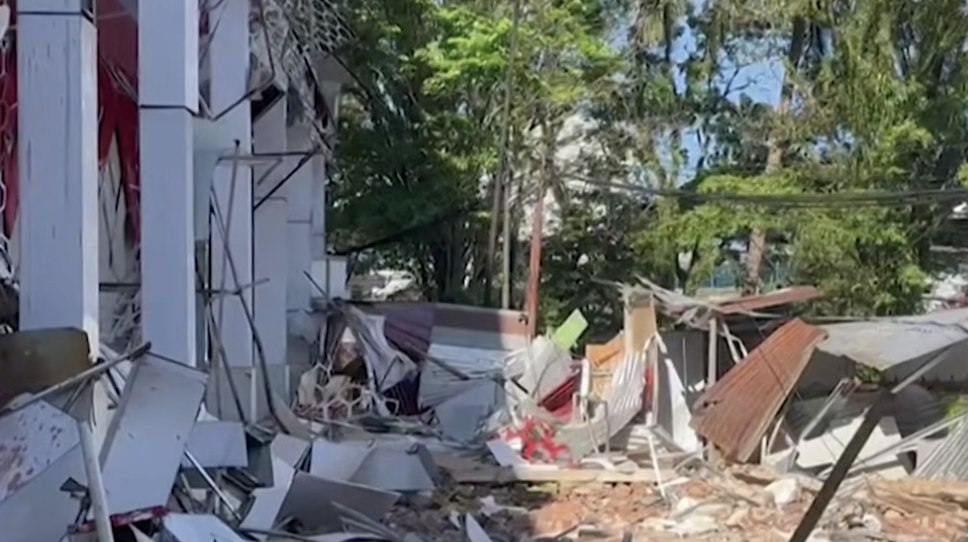
At least one person died after being buried under rubble from a collapsed building in the affected region, local officials said. Damage assessments were ongoing in Ternate and nearby Bitung, where authorities reported cracks in several structures and light to moderate building damage. No widespread destruction or major infrastructure failures were immediately confirmed.
Indonesia lies on the Pacific “Ring of Fire,” where tectonic plates collide, making it one of the most seismically active regions on Earth. The country experiences frequent earthquakes and volcanic activity, and its tsunami early warning system (InaTEWS) has improved significantly since the devastating 2004 Indian Ocean tsunami that killed more than 230,000 people across the region.
Indonesia 7.4 Earthquake Triggers Tsunami Warning; One Dead as Waves Hit North Maluku
Residents described panic as the ground shook violently. In Manado, the capital of North Sulawesi, people ran into streets while some hospitals evacuated patients. Social media footage showed swaying buildings and people gathering in open spaces. Aftershocks followed the main quake, adding to the unease.
The U.S. Embassy in Jakarta issued a natural disaster alert advising American citizens in the region to follow local authorities and monitor updates. No immediate reports of damage or casualties emerged from the Philippines or Malaysia, though the initial warning covered their coastal areas.
Advertisement
President Prabowo Subianto’s office said the government was closely monitoring the situation and coordinating with provincial authorities for rapid assessment and relief if needed. Emergency teams were dispatched to the hardest-hit zones.
This event highlights Indonesia’s ongoing vulnerability to seismic disasters despite advances in warning technology. The 2004 tsunami led to the creation of InaTEWS, which now provides faster alerts through sirens, text messages and apps. However, challenges remain in remote islands with limited infrastructure and in ensuring rapid public response.
Seismologists noted the quake’s relatively shallow depth likely contributed to stronger shaking near the epicenter. The Molucca Sea area, between Sulawesi and the Maluku islands, is tectonically complex with multiple plate boundaries.
No major tsunami inundation occurred, and the lifted warning brought relief to coastal communities. Local officials urged residents to remain vigilant for aftershocks, which can sometimes trigger additional hazards.
Advertisement
The earthquake comes amid heightened global attention to natural disasters, as climate change and tectonic activity continue to pose risks in vulnerable regions. Indonesia has strengthened building codes in recent years, particularly in earthquake-prone areas, but enforcement varies and many older structures remain at risk.
Tourism authorities reported no immediate impact on popular destinations farther west, such as Bali or Java, though travelers in North Sulawesi and Maluku were advised to check local conditions. Flights and ferry services in the region experienced minor disruptions during the initial alert period.
International aid organizations stood ready to assist if requested, though Indonesian officials indicated current needs appeared limited to local response efforts. The Red Cross and other groups monitored the situation closely.
This quake serves as a reminder of the importance of preparedness in Indonesia, which averages several thousand earthquakes annually, many too small to feel but some capable of significant destruction. Public education campaigns on “Drop, Cover and Hold On” and evacuation routes have helped reduce casualties in recent events.
Advertisement
As damage assessments continue, authorities emphasized that while the immediate tsunami threat has passed, residents should avoid beaches and low-lying coastal areas until all-clear signals are confirmed.
The event drew international attention, with governments and organizations expressing solidarity with Indonesia. The Philippines and Malaysia, initially placed on alert, reported no significant impacts.
Indonesia’s disaster management agency (BNPB) activated coordination centers and began compiling detailed reports from affected districts. Preliminary surveys indicated structural damage but no widespread collapse of critical infrastructure.
For many Indonesians, Thursday’s quake evoked memories of past tragedies, including the 2018 Sulawesi earthquake and tsunami that killed thousands. Improved warning systems appear to have limited casualties this time, though the single confirmed death underscores the human cost even in moderate events.
Advertisement
Seismologists continue monitoring the fault system for further activity. The Pacific Tsunami Warning Center and BMKG will provide ongoing updates as needed.
As recovery efforts begin in the affected areas, the focus remains on ensuring safety and supporting communities impacted by the shaking and brief tsunami scare.
Indonesia’s location on the Ring of Fire means such events are part of daily life for millions. Thursday’s quake, while significant, caused limited overall damage thanks to quick warnings and public awareness.
The episode reinforces the value of investment in early warning systems and resilient infrastructure across the archipelago.
Police HQ demolition a ‘major milestone’ for development plans
Hannah Richardson and Local Democracy Reporter
04:00, 02 Apr 2026
Artist’s impression of what the development on the former Talbot Road police site could look like (Image: Trafford council)
Work to tear down a former Greater Manchester Police base has begun.
Advertisement
The Old Trafford site is at the heart of a huge development plan which will see up to 1,200 homes there. A 55-bed hotel, new public park, shops and café are also on the cards for the land, off Talbot Road, White City Way and Chester Road.
The site previously housed the Chester House GMP headquarters. However, it has stood empty since the force relocated to Newton Heath in 2012.
More than a decade on, Trafford council has announced that demolition work has now started. The moment has been lauded by the authority as a ‘major milestone’ for the plans to regenerate the land.
Final details for the project are still to be submitted by the authority, with a planning application expected this summer. A public consultation to help shape the proposals closes on Monday, April 6.
Advertisement
Previous public engagement has revealed a number of local priorities for the scheme. The ‘clearest message’ from respondents was the need for ‘better access to green spaces’ in the borough, developer Far East Consortium previously said.
A new public park now forms part of the plan, proposed to be located at the heart of the space.
Traffic is ‘already a challenge’ locally, particularly on matchdays, the developer added. As such, the new neighbourhood is expected to be ‘predominantly car‐free’ in a bid to not add to those pressures. Some 700 bicycle spaces are suggested to be included, as well as a ‘cycle rental hub’ and ‘safe’ walking and cycling routes.
Residents raised access to ‘good health services’ as a priority for them. Far East Consortium said it would be ‘working closely with the NHS’ to ‘understand what health provision the community may need, both now and in the future’.
Advertisement
‘Flexible’ space is proposed within the development where services like a GP surgery could be set up, ‘if required’. This space could also be used for cafés, shops and other business opportunities. Around 25,000sq ft of commercial space is included in the masterplan.
Also in the plan is an ‘up to’ 255-bed hotel to ‘welcome visitors’ to Old Trafford. Some 25pc of the 1,200 new homes would be classed as ‘affordable’ under current intentions. The homes would be a mix of one-, two- and three-bed properties.
The Ellis Llwyd Jones Hall on the land, as well as the historic gateposts from the blind school formerly based there, will both be spared during the demolition phase.
The hall is expected to be converted into a leisure space under current thinking. The site was previously home to women studying deaf education at the University of Manchester, and is considered a key heritage asset in the area.
Advertisement
The development is expected to create around 500 construction jobs, Trafford council has said.
Liz Patel, executive member for economy and regeneration, added: “I am delighted that demolition work has started on this important site. This scheme, if awarded planning permission, will result in 1,200 homes including affordable on a brownfield site.
“It supports Trafford council’s priorities regarding new and affordable housing for the borough.”
A JetBlue Airways Airbus A321 airplane departs from Los Angeles International Airport en route to New York on Oct. 17, 2025.
Kevin Carter | Getty Images
JetBlue Airways is raising bag fees at least $4 as jet fuel prices soar amid the Iran war.
Advertisement
Airfare has climbed for routes around the world since the U.S. and Israel attacked Iran on Feb. 28. The higher fees for checked bags are the most recent sign of airlines passing steeper fuel costs down to U.S. consumers. Jet fuel is airlines’ biggest expense after labor.
JetBlue now lists the price to check a first piece of luggage for domestic, Caribbean and Latin America flights as $39 for off-peak periods for most economy passengers, up from $35. For peak periods, like much of the summer and major holidays, the fee will go up to $49 from $40.
If paying less than 24 hours before departure, such as at the airport, travelers will pay $10 more. Airlines have charged customers less for prepaying for their checked baggage in recent years.
There are exemptions to the bag fees entirely, however, such as travelers with a co-branded credit card and frequent flyers with elite status.
Advertisement
“As we experience rising operating costs, we regularly evaluate how to manage those costs while keeping base fares competitive and continuing to invest in the experience our customers value,” JetBlue said in a statement to CNBC.
Fuel prices for Chicago, Houston, Los Angeles and New York averaged $4.57 a gallon last Friday, up nearly 83% since the day before the war began, according to data from Argus published by industry group Airlines for America.
“Adjusting fees for optional services used by select customers, such as checked baggage, allows us to continue offering more competitive fares while delivering the onboard experience our customers love, including complimentary snacks and drinks, unlimited, high-speed Wi-Fi and seatback entertainment screens,” JetBlue said. “While we recognize that fee increases are never ideal, we take careful consideration to ensure these changes are implemented only when necessary.”























































You must be logged in to post a comment Login