

Connect with us

Business

US stocks: Microsoft adds $485 billion to investors’ wealth as shares rise 15%. Check why

Published

on

US stocks: Microsoft adds $485 billion to investors' wealth as shares rise 15%. Check why
Microsoft’s shares soared more than 15% on Thursday, putting the company on track for a record one-day gain in market value after it said it expects to keep generating cash through its new fiscal year and forecast cloud growth above Wall Street expectations.

The software giant reportedly added more ⁠than $485 billion to ⁠its market value to reach $3.35 trillion, surpassing chip giant Nvidia’s previous one-day record of $441 billion on April 9, 2025, according to LSEG data.

“Microsoft reported a very strong quarter and it struck the tone markets are looking to hear as the key drivers of growth came from the cloud and AI divisions,” said Brian Mulberry, chief market strategist at Zacks Investment ⁠Management.

The company ‌has lagged some of its “Magnificent Seven” peers this year; its stock was down more than 18%, up to ⁠Wednesday’s close.

Advertisement

At least nine brokerages raised the target price on the stock, with the mean target now $560.90.


The results offered fresh evidence that Microsoft’s massive AI investments are beginning to pay off, helping ease investor concerns that heavy spending on data centers and computing infrastructure could outpace demand.
The company said its spending plans remain unchanged and that it expects capital expenditures of $50 billion ‌for the fiscal first quarter of 2027 and $175 billion for the 2026 calendar year.In its first quarter, Microsoft expects a 45% growth on a constant ⁠currency basis for its Azure cloud computing unit, well above analyst estimates of 40.92%, according to data from Visible Alpha.

“The key question was whether it could shift the conversation from how much it is spending on AI to what it is earning from those investments, and the results suggested meaningful progress,” Direxion’s head of capital markets, Jake Behan, said.

Continue Reading
Click to comment

You must be logged in to post a comment Login

Leave a Reply

Business

FCC bans certain foreign-made robot vacuums under new security rules

Published

on

FCC bans certain foreign-made robot vacuums under new security rules

Certain robotic vacuum cleaners, including some Roomba-style devices, will be banned under the new U.S. policy restricting foreign-made advanced robotics, federal regulators told FOX Business Thursday.

The Federal Communications Commission (FCC) said robotic vacuums fall under its updated “Covered List” rules adopted Tuesday, making certain new foreign-produced models ineligible for FCC equipment authorization due to national security and cybersecurity risks to U.S. critical infrastructure.

Advertisement

While the agency did not identify specific brands, an FCC spokesperson confirmed to FOX Business that robotic vacuums are among the devices covered by the restrictions. 

Major manufacturers including iRobot, SharkNinja, Dyson, Samsung and LG sell robotic vacuums in the U.S., with most production taking place in China, alongside manufacturing operations in Vietnam, Malaysia and Indonesia.

FCC BLOCKS NEW FOREIGN-MADE POWER INVERTERS AND ADVANCED ROBOTS OVER NATIONAL SECURITY RISKS

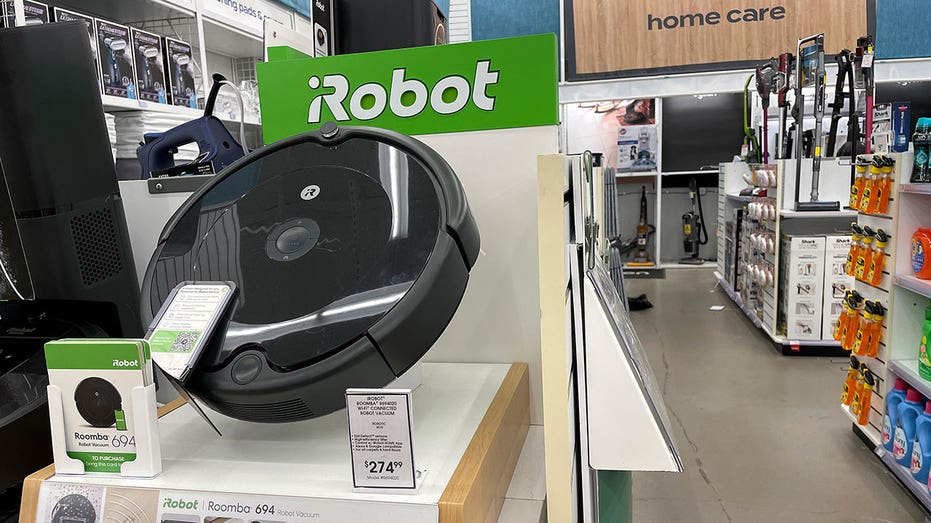
A black Roomba vacuum on display in a store.

A Roomba robot vacuum is displayed on a shelf at a Bed Bath and Beyond store Aug. 5, 2022, in Larkspur, Calif. Certain newly authorized foreign-made robotic vacuums are now subject to expanded FCC national security restrictions. (Justin Sullivan / Getty Images)

However, the restrictions apply only to newly authorized devices and will not affect the many robotic vacuums already in consumers’ homes.

Advertisement

“This action does not impact a consumer’s continued use of devices they previously acquired,” the FCC spokesperson said.  

The agency added that previously authorized models may continue to be sold, imported and marketed in the U.S., and it does not “prevent retailers from continuing to sell, import or market relevant models approved previously through the FCC’s equipment authorization process.”

FCC CHAIRMAN CLIMBS 2,000-FOOT CELL TOWER TO SPOTLIGHT ONE OF AMERICA’S TOUGHEST TRADES

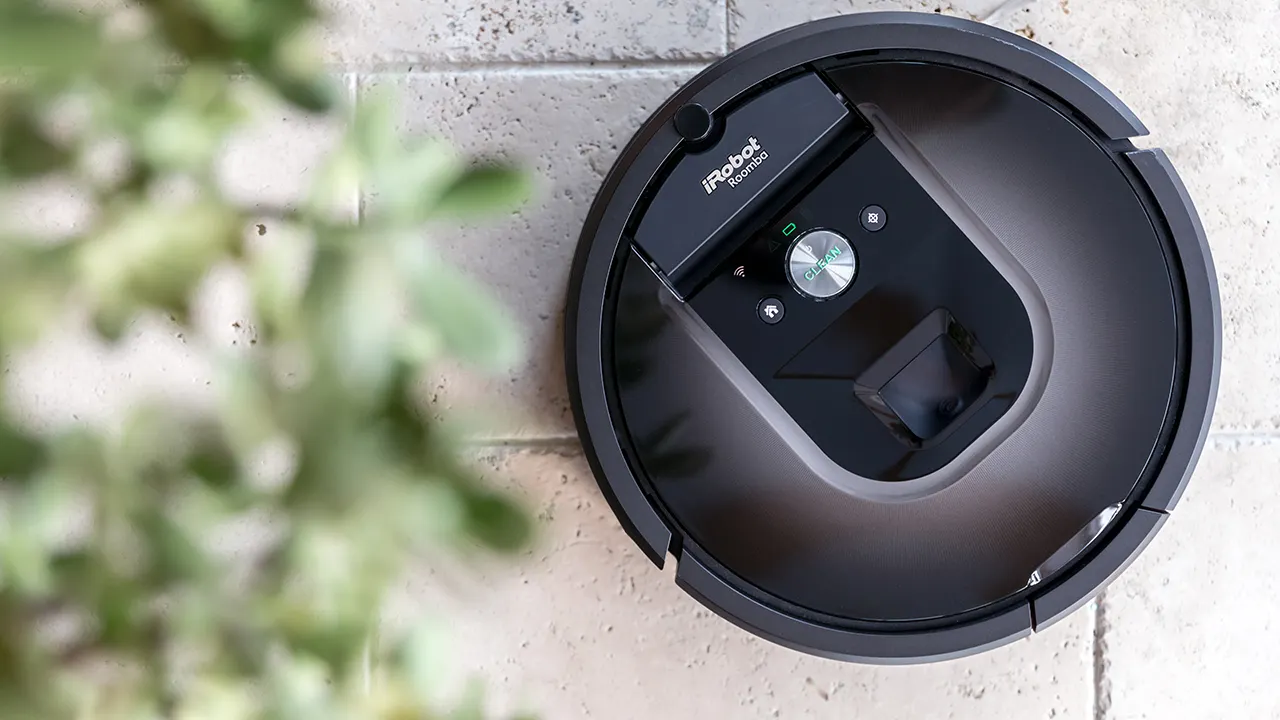
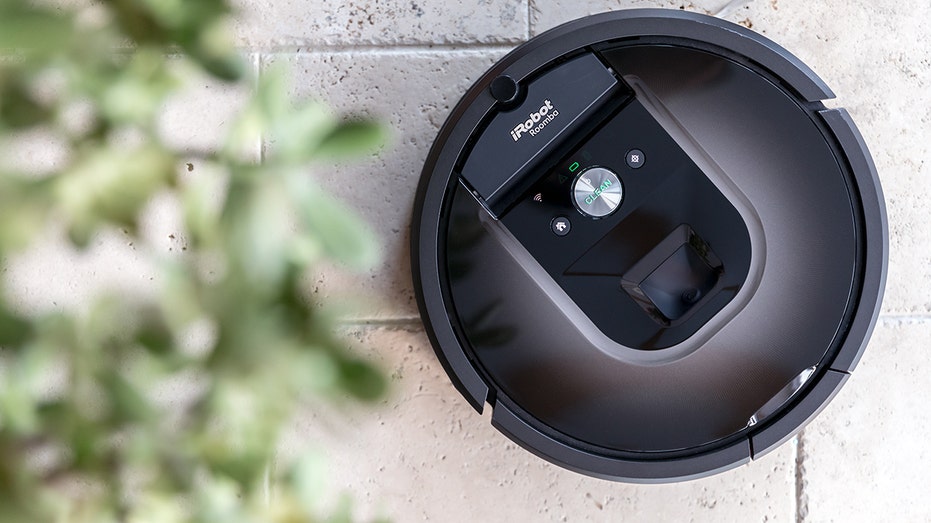
roomba near plant outside

An iRobot Roomba 980 robotic vacuum cleaner sits on a ceramic floor Dec. 10, 2016. It is unclear which models will be affected. (iStock / iStock)

“We are aware of the FCC’s recent action and are working with them to better understand its implementation and potential impact,” iRobot said. “We remain committed to serving our customers and will share updates as more information becomes available.”

Advertisement

Under the FCC’s new rules, many household robotic cleaners qualify as “advanced robotic devices” because they are mechanical mobile devices capable of locomotion, navigation and obstacle avoidance. 

Covered devices generally weigh more than 4.4 pounds and operate near human operators. Their autonomous navigation is either powered by firmware, AI models or sensors via Bluetooth, Wi-Fi or cellular technology. 

That definition could encompass products such as iRobot’s Roomba lineup, SharkNinja’s Shark robotic vacuums, Dyson’s 360 series, Samsung’s Jet Bot line and LG’s CordZero robotic cleaners. 

US BANS NEW FOREIGN-MADE CONSUMER INTERNET ROUTERS OVER SECURITY CONCERNS

Advertisement
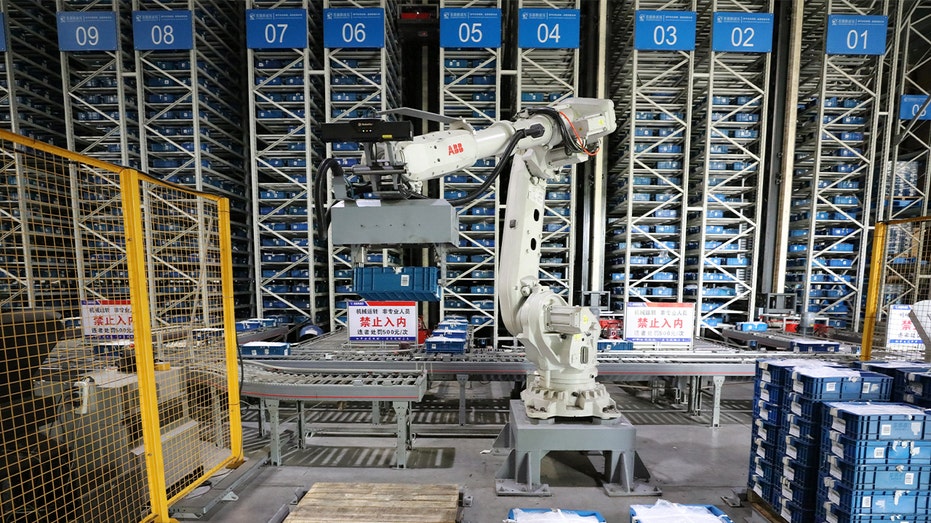
robot arm in manufacturing hub

A robotic arm grabs materials for storage in the workshop of Jiangxi Suqiangge Hydraulic Co., Ltd. July 29, 2026, in Yichun, Jiangxi Province of China. (Zou Zhong/VCG / Getty Images)

Roomba, one of the first robotic vacuum brands to gain widespread popularity in the U.S., was introduced by American company iRobot in 2002 but is now owned by Shenzhen Picea Robotics and Santrum Hong Kong.

Picea Robotics, which operates development and manufacturing facilities in China and Vietnam, sells Roomba models starting at $200.

CLICK HERE TO GET FOX BUSINESS ON THE GO

By comparison, American robotics startup Matic, one of the few U.S.-based competitors that designs and assembles its products domestically in California, sells its robotic vacuums for about $1,245. 

Advertisement

FOX Business reached out to SharkNinja, Dyson, Samsung and LG for comment.

Continue Reading

Business

Andritz AG (ADRZY) Q2 2026 Earnings Call Transcript

Published

on

OneWater Marine Inc. (ONEW) Q1 2026 Earnings Call Transcript