Connect with us
DAPA Banner
DAPA Coin
DAPA
COIN PAYMENT ASSET
PRIVACY · BLOCKDAG · HOMOMORPHIC ENCRYPTION · RUST
ElGamal Encrypted MINE DAPA
🚫 GENESIS SOLD OUT
DAPAPAY COMING

Business

US stocks today: S&P 500, Nasdaq edge lower as tech shares slide

Published

on

US stocks today: S&P 500, Nasdaq edge lower as tech shares slide
U.S. stocks ​finished slightly lower on Wednesday with falling technology shares, but gains in Meta Platforms provided some support along with comments from Federal Reserve Chair Kevin Warsh that inflation risks had eased recently. Warsh also said he will stick firmly to the U.S. central ‌bank’s 2% inflation ⁠target and “disappoint” ⁠anyone who expects loose monetary policy despite President Donald Trump’s call for interest rate cuts.

Oil prices rose sharply at the start of ​the Iran war. Traders slightly pared their rate-hike expectations as Warsh spoke, but they still expect at least one hike ​from the U.S. central bank this year, according to data compiled by LSEG. Shares of Meta Platforms rallied after Bloomberg News reported that it is building a cloud business to sell excess AI computing capacity.

“This does ​seem to be something that is likely to continue to help the ⁠stock,” said ‌Tim Ghriskey, senior portfolio strategist at Ingalls & Snyder in New York. “It has underperformed the ​Mag 7 group” ​of other megacap stocks. Meta shares remain down for the year to date.

An ⁠index of semiconductors was off sharply.

Advertisement

Investors are keeping a close eye ​on talks between the U.S. and Iran and they remain cautious, especially ​with a long U.S. holiday weekend coming up, Ghriskey said.


According to preliminary data, the S&P 500 lost 14.34 points, or 0.19%, to end at 7,485.02 points, while the Nasdaq Composite lost 169.56 points, or 0.65%, to 26,044.16. The Dow Jones Industrial Average fell 3.62 points, or 0.01%, to 52,315.58.
The key monthly U.S. jobs report is due out on Thursday, while the market will be closed Friday ahead of the Fourth ‌of July holiday. U.S. Vice President JD Vance said discussions between the U.S. and Iran were going well as they held indirect technical talks in Qatar about the Strait of ​Hormuz on Wednesday, ​adding Washington would not return to ⁠full combat unless necessary. The U.S. and Iran signed an interim accord last month. Investors are also digesting data from the Institute for Supply Management that showed U.S. manufacturing activity had slowed in June but was ​still solid.The day’s lackluster performance comes after a strong second quarter for the indexes. The S&P 500 and the Nasdaq Composite registered their biggest quarterly gains since 2020, while the Dow marked its best showing since 2022.

Among the day’s decliners, shares of Alcoa fell after Australia’s South32 agreed to sell most of its aluminium assets to Alcoa.

Continue Reading
Click to comment

You must be logged in to post a comment Login

Leave a Reply

Business

Business continuity planning for organisations operating remotely

Published

on

Closeup,Of,A,Wifi,Router,And,A,Man,Using,Smartphone

The rise of remote and hybrid working has transformed business continuity planning, shifting the focus towards digital resilience and operational agility.

Increased dependence on cloud tools and home networks creates new vulnerabilities, making proactive preparation critical for every organisation. Adapting continuity strategies is essential to maintain stability, protect key functions, and manage risk effectively in the modern workplace.

Business continuity planning now requires organisations to address more than just physical premises, as reliance on cloud systems and virtual collaboration increases the need for robust digital safeguards. Critical workflows are often spread across remote locations and third-party vendors, with each link subject to shifting risks. New challenges such as endpoint security and supplier outages can disrupt core services, even if head office remains untouched. As large file transfers become routine in distributed teams, clear protocols, secure access, and reliable recovery systems are increasingly important to maintain daily operations.

Fundamental changes in continuity planning needs

Continuity planning must now recognise the shift from building-centric threats to digital and procedural vulnerabilities. Remote and hybrid operations bring risk factors such as home network weaknesses, device loss, and greater dependency on internet connectivity.

Addressing these issues requires organisations to reassess incident response for cyber attacks or supplier disruptions. Scenarios such as power outages or human error in a distributed context should be factored into the foundation for maintaining essential workflows.

Advertisement

Assessing business-critical operations and services

Identifying which operations must continue without interruption remains a key part of robust business continuity planning. Organisations benefit from mapping dependencies between teams, third-party providers, and essential digital services.

Assigning ownership of recovery tasks and establishing clear recovery time objectives helps ensure all stakeholders understand their responsibilities, reducing confusion and delays if incidents disrupt normal working patterns.

Strengthening access, data protection, and response

Resilient identity and access management are central to protecting core services, particularly when staff operate from multiple locations. Strong authentication, least-privilege controls, and device security policies are essential to prevent unauthorised access to business systems.

In this environment, large file transfers, effective joiner-mover-leaver processes, and regular audits all support sustained operational control. Regular backups, version control, tested restoration, and retention policies further protect key data against loss or corruption.

Advertisement

Ensuring reliable communication and supplier resilience

During an incident, clear and redundant communication channels are vital for swift coordination. Developed escalation routes, messaging templates, and designated roles improve response speed and consistency across the organisation.

Maintaining detailed contingency plans for third-party and supply chain interruptions is also critical. Minimum supplier standards and contractual clarity regarding incident response help safeguard crucial services should an external provider experience issues. Tabletop exercises and simulated disruptions offer valuable opportunities to refine approaches and ensure plans remain relevant as working models and digital tools evolve.

Advertisement
Continue Reading

Business

Centrus Energy stock rises on $900M DOE uranium contract

Published

on


Centrus Energy stock rises on $900M DOE uranium contract

Continue Reading

Business

AlborHill Outlines Its Multi-Tiered Account Structure for Traders Approaching Markets at Different Levels

Published

on

Tracy Brabin leads West Yorkshire trade mission to Switzerland and Germany

Account selection has become a bigger part of the trading decision as participants compare platforms across pricing, instruments, support, and execution conditions.

Traders entering with a smaller capital base usually need education, simpler access, and controlled exposure. Those managing larger positions tend to look for tighter conditions, broader market coverage, and faster account support during active hours.

Against this backdrop, AlborHill has outlined its multi-tiered account structure for traders operating at different levels of capital, experience, and market activity. The structure begins with entry level access and extends toward higher balance accounts where clients may require stronger pricing, wider asset availability, and dedicated account service.

Benjamin A., AlborHill representative, said the account structure has been arranged around the way traders usually progress in real market conditions. “Traders do not all arrive with the same capital base, experience, or operational needs,” he said. “Some are still learning how different instruments behave, while others are already managing larger positions across several markets. The purpose of our tiered structure is to give each level an environment that matches its stage of development.”

A Structured Path from Basic Market Entry to Advanced Trading Needs

The account structure begins with the Beginner tier, giving newer participants exposure to core CFDs such as forex, indices, and commodities. It suits clients still learning platform functions, order types, and the basic discipline needed before increasing activity.

Advertisement

The Basic and Bronze accounts add wider market access, tighter conditions, account manager contact, priority withdrawals, research material, and expanded support. These tiers fit traders who have moved past basic platform use and want a firmer routine around market review and trade planning.

Silver, Gold, and Platinum sit at the heavier end. Silver brings lower spreads and commissions, senior account manager involvement, VPS availability for algorithmic trading, and early research. Gold adds priority liquidity and custom strategy support. Platinum introduces direct contact with senior analysts, portfolio insight, selected opportunity allocation, and VIP networking.

Benjamin A. says this lets traders grow inside one environment. A client can begin with simpler participation, then add deeper pricing, stronger reports, VPS support, or analyst contact as those tools become relevant.

Account Conditions Are Becoming Part of The Trading Decision

Account selection now matters because it shapes how a trader works during real market hours. The tier can influence dealing costs, available tools, speed of support, and how much market material a client can draw on before deciding. Small details at first, they become easier to notice as activity increases.

Advertisement

The point sharpens for clients trading across asset classes. Currency pairs may react to central bank comments or economic releases, while commodities can move on supply news, energy prices, or geopolitical pressure.

AlborHill connects its account model with a multi-asset environment spanning forex, indices, commodities, and equities, an approach the brand has emphasized since its market launch. Institutional style pricing supports cost-sensitive traders, while research tools, platform security, and technical consultants help clients manage activity through global market hours.

Benjamin A. added that shifting conditions also influence how account structures serve clients. “Market conditions have not been standing still, and traders feel that in very practical ways,” he said. “One month they may be dealing with sharper currency movement, the next they may be watching commodities, indices, or digital assets react to news at the same time. Our responsibility is to keep the structure flexible enough to support those changes.”

Looking ahead, Benjamin A. says the brand will keep reviewing the account range against real client usage, aiming to keep the tiers clear, relevant, and responsive as trader needs evolve.

Advertisement

Continue Reading

Business

Palantir Stock Jumps 7% Today as Nvidia Partnership, Trump Disclosure and Meta Cloud Plans Lift AI Software

Published

on

Palantir

Palantir Technologies shares surged more than 7% Wednesday morning, continuing a sharp recovery from their 52-week low as a combination of macro tailwinds, fresh contract momentum and a broader rebound in artificial intelligence software stocks pushed the data analytics company back toward levels not seen since early June.

Shares of the Denver-based company were trading at $125.21 as of 10:05 a.m. EDT, up $8.54, or 7.32%, on the day. The gain extends a recovery that began last week after the stock hit an all-time low of $106.37 and follows a 3.27% advance on June 29 and a 3.55% gain on June 30, suggesting a meaningful reversal of momentum after a seven-session losing streak that had erased nearly 25% of the stock’s value during the month of June alone.

Several converging factors are driving Wednesday’s move. The most significant immediate catalyst was Meta Platforms’ announcement that it is developing plans to sell its AI computing capacity to external customers in a cloud infrastructure business, a development that sent Meta shares up more than 7% and broadly lifted sentiment across AI software and infrastructure names. Palantir, which is simultaneously positioned as an AI software platform and a government data infrastructure operator, benefited from the sector-wide enthusiasm the Meta news generated, with investors interpreting the announcement as further validation that AI-driven enterprise technology spending remains a durable and expanding category.

Separately, President Donald Trump’s financial disclosure report released Tuesday revealed that the president holds a multimillion-dollar stake in Palantir Technologies, a detail that circulated widely among investors Wednesday morning. While the disclosure did not represent any new commercial relationship between the company and the federal government, it added to a narrative of political proximity that has historically amplified attention on Palantir’s defense and intelligence contracts. The stock rose more than 2% in premarket trading Wednesday in response to reports of the disclosure before extending those gains during the regular session.

Advertisement

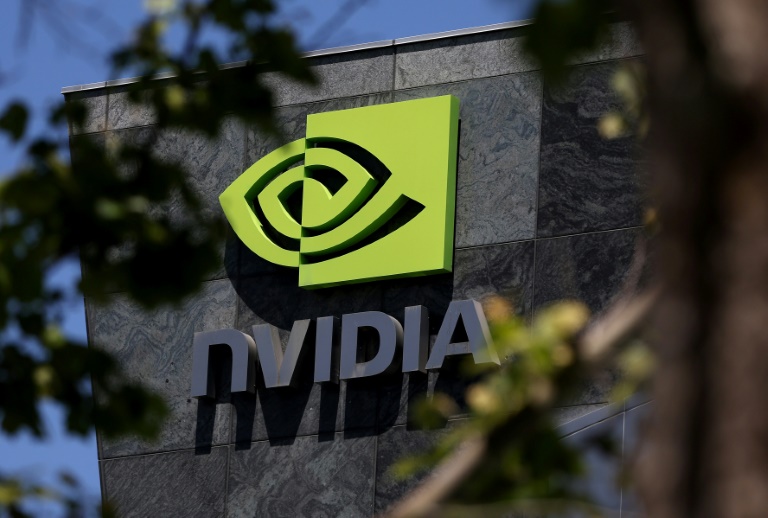
The most substantive company-specific driver of the recovery over the past week was the announcement of a strategic alliance with Nvidia, confirmed in early trading on June 29, that involves embedding Nvidia’s open-source Nemotron AI models into secure, classified computing environments for U.S. government agencies and critical infrastructure operators. The collaboration integrates Nvidia’s AI platform with several of Palantir’s core products, including its Artificial Intelligence Platform, Foundry data operating system and Apollo deployment infrastructure, allowing government customers to train, customize and deploy large language models in environments where sensitive data cannot be exposed to external model providers.

Nvidia CEO Jensen Huang said: “Open-source AI is foundational to national security, public safety, and U.S. technology leadership. Palantir’s Nemotron-powered intelligent engine shows how open models can strengthen America’s leadership in AI, giving U.S. government agencies a secure, customizable, and fully controlled foundation to build mission-critical AI systems.”

That framing has resonated with investors who view Palantir’s government-facing AI business as structurally defensible in ways that consumer-facing AI companies are not, since the barriers to replacing a deeply integrated defense and intelligence software platform are considerably higher than switching between cloud providers or software-as-a-service vendors. Japan’s defense establishment has also been evaluating Palantir’s AI systems for potential military use, according to recent reporting, adding to the sense that the company’s international government business, which has faced headwinds from contract losses in parts of Europe, may be finding new growth vectors elsewhere.

Palantir’s first-quarter 2026 revenue rose 85% year over year and 16% sequentially to $1.63 billion, with CFO David Glazer calling it the company’s “strongest ever Q1 sequential growth rate.” U.S. revenue grew 104% to $1.28 billion, led by 133% growth in U.S. commercial revenue and 84% growth in U.S. government revenue, while customer count rose 31% to 1,007.

Advertisement

Management raised full-year guidance to $7.65 billion to $7.66 billion in revenue, representing a 71% growth rate. Operating margins stayed near the 46% first-quarter mark, validating what analysts have described as a Rule of 40 narrative for the company.

Despite that financial performance, the stock had spent much of June under intense pressure as a combination of high valuation concerns, institutional selling and sector-level rotation away from expensive software names took their toll. Ken Griffin’s Citadel cut its PLTR position by 40%, selling 1.33 million shares, a reduction in institutional backing that coupled with high-profile short-seller commentary criticizing Palantir’s shallow moat and aggressive revenue recognition, exacerbated downward momentum and pushed the stock toward new 52-week lows.

Wedbush has maintained an Outperform rating with a $230 price target throughout the selloff, while Wolfe Research upgraded the stock to Peer Perform from Underperform as the share price approached its lows. ARK Invest’s Cathie Wood purchased approximately 122,000 PLTR shares in late June, a contrarian bet made at prices near the bottom of the recent correction that has proven well-timed given Wednesday’s rally. Rosenblatt Securities analyst John McPeake, who initiated coverage in February with a Buy rating and a $150 price target, has maintained his position that the stock could reach that level by year-end 2026 based on the combination of revenue growth acceleration, margin expansion and the $4.92 billion U.S. commercial backlog already contracted.

According to 32 analysts, the average rating for PLTR stock is “Buy,” with a 12-month stock price target of $182.75, which represents an increase of roughly 56% from recent trading levels.

Advertisement

The stock’s next major fundamental checkpoint arrives August 10, when Palantir is scheduled to report its second-quarter results. Analysts will be closely watching U.S. commercial revenue growth, the pace of new customer additions and whether Palantir has made progress in rebuilding investor confidence following the sharpest single-month decline in the stock’s recent history, even as Wednesday’s rally suggests the market is willing, for now, to look past the recent correction and focus instead on the company’s expanding AI partnerships and accelerating growth trajectory.

Continue Reading

Business

Slideshow: Product innovation gets patriotic, part 2

Published

on

Slideshow: Product innovation gets patriotic, part 2

Limited-time products are being introduced ahead of the country’s 250th anniversary.

Continue Reading

Business

Halifax Brand Scrapped: What It Means for Customers

Published

on

Halifax Brand Scrapped: What It Means for Customers

Few names have loomed larger over the British high street than Halifax, and after 173 years it is being retired. Lloyds Banking Group, which has owned the lender since 2009, has confirmed it will phase out Halifax as a standalone brand and move all customer accounts to Lloyds over time.

For account holders, the headline is reassuring: there is nothing you need to do. Lloyds says customers will be contacted directly about the changes through trusted channels, including the Halifax app, online banking, email and by letter. Crucially, sort codes and account numbers will stay the same, and there is no change to the deposit protection savers rely on.

The move had been trailed for weeks. Reports in May flagged that the group was weighing up whether to drop Halifax altogether, and the decision has now been formalised. The logic, as Lloyds tells it, is simplification. Running four overlapping consumer brands – Lloyds, Halifax, Bank of Scotland and MBNA – has looked increasingly hard to justify as the distinction between them has faded, and as customers migrate en masse to a single app.

That last point is the real engine behind the shake-up. More than 21 million Lloyds Banking Group customers now use its mobile app as their main way of banking, a shift that has already prompted the group to close a further 95 branches across its brands. When most people rarely set foot in a branch, the commercial case for maintaining separate names on separate shopfronts weakens considerably.

Halifax has been part of the national furniture since it was founded in West Yorkshire in 1853. It granted its first mortgage that year and grew into one of the UK’s largest building societies before demutualising and, eventually, being folded into Lloyds during the financial crisis. At its peak in the early 2000s, a customer services adviser named Howard Brown became its most recognisable face, singing his way through a run of television adverts that lodged the brand firmly in the public memory.

Advertisement

Jas Singh, Lloyds Banking Group’s chief executive of consumer relationships, sought to soften the sentimental blow. “As Halifax changes to Lloyds, our Halifax customers will keep everything they know and love today – the same fantastic app design, the same friendly faces in our branches – even the same sort code and account number,” he said. “But as Lloyds customers, they’ll get the best innovation and experiences we offer.”

There is a regional dimension too. Lloyds insists it remains committed to the town of Halifax and the wider Yorkshire and Humber region, where roughly 3,000 staff are based at its Trinity Road office. No job cuts have been announced as part of the transition, and Halifax branches will either be rebranded as Lloyds or their customers moved to a nearby Lloyds site during 2027.

For savers, the most important detail sits in the small print. As the group confirmed in May, and reiterated in its official announcement, account numbers will not change and there is no change to protection under the Financial Services Compensation Scheme, which safeguards eligible deposits up to £85,000 per person, per banking licence. Customers who hold money with both Halifax and Lloyds should, as ever, check how that licence structure affects their own cover.

The disappearance of Halifax is part of a broader rewiring of British retail banking, one that has already seen challengers such as Revolut secure a full UK banking licence and traditional lenders thin out their branch estates. For customers, little changes tomorrow. But the slow fade of a 173-year-old name is a reminder of how quickly the familiar architecture of the high street is being redrawn.

Advertisement

Amy Ingham

Amy is a newly qualified journalist specialising in business journalism at Business Matters with responsibility for news content for what is now the UK’s largest print and online source of current business news.

Advertisement
Continue Reading

Business

Owl’s Brew adds functional mixers

Published

on

Owl’s Brew adds functional mixers

The non-alcoholic mixers are available in four flavors.

Continue Reading

Business

Oberweis adds protein ice cream

Published

on

Oberweis adds protein ice cream

Each pint contains 30 grams of protein.

Continue Reading

Business

Form 4 First Solar Inc For: 1 July

Published

on


Form 4 First Solar Inc For: 1 July

Continue Reading

Business

UK Now World’s Third-Largest Unicorn Nation With Record 80 Start-ups

Published

on

Revolut launches UK bank after PRA approval with FSCS-protected accounts for 13 million customers

Britain has cemented its position as Europe’s undisputed home for high-growth business, with a record 80 “unicorn” companies now valued at more than $1 billion apiece.

The country’s strength in building promising financial technology and artificial intelligence firms has helped it record the third-highest number of unicorns anywhere in the world. Only the United States and China are home to more private companies worth in excess of $1 billion, according to a new global ranking.

The UK now boasts a record 80 unicorns worth a combined £242.4 billion, overtaking India to take third place in the annual index produced by the Hurun Research Institute, the Shanghai-based firm behind the closely watched Global Unicorn Index.

With 23 new unicorns minted over the past 12 months, the research concluded that Britain had reinforced its “position as Europe’s undisputed start-up capital”, noting that it now has more unicorns than Germany, France, the Netherlands and Sweden combined.

The nation’s unicorn count has nearly doubled since 2016, and the “pipeline of new companies entering the billion-dollar club is the strongest it has ever been”, Hurun said. In total, the firm tracked 1,603 unicorns across 52 countries, with the combined value of the world’s unicorns rising 43 per cent to $8 trillion.

Advertisement

The number of unicorns a country produces is watched closely as a barometer of the health of an economy, its appetite for innovation and its ability to create companies with the potential to scale globally.

Britain’s continued strength comes against a backdrop of concern about the appeal of the London Stock Exchange as a home for the most promising businesses, as well as government efforts to nurture emerging domestic technology firms amid questions over the wisdom of relying on a handful of American giants for essential technology.

Ministers have already stepped in to keep home-grown talent listed in the UK, part of a wider push to strengthen the appeal of the London Stock Exchange after a run of de-listings and companies shifting their primary listings overseas. That includes fresh government backing for AI firms weighing a domestic float.

Revolut, the financial services group, remains the UK’s most valuable unicorn with a £57.8 billion valuation, having recently leapfrogged Barclays in value after an Nvidia-backed deal. It is followed by Nscale, the artificial intelligence data centre business, worth £11.6 billion at its last funding round, Hurun said.

Advertisement

Fintech companies account for a third of the UK’s unicorns and more than half of their total value. It is a sector in which fresh names keep emerging, from data platforms to challenger lenders, with recent arrivals such as 9fin reaching unicorn status with British Business Bank support.

Artificial intelligence, meanwhile, was the fastest-growing sector for UK unicorns, with nine such companies worth a combined £40.6 billion, quadrupling in value in a single year. Just ten of the UK’s 80 unicorns are developing physical products, with the rest building software or services.

Rupert Hoogewerf, chairman and chief researcher at Hurun Research Institute, said the UK had shown it was “the best gateway into European tech” for international investors.

Hurun’s broader global report identified a record 1,603 unicorns worldwide, with six of the world’s ten most valuable examples working on AI, an industry that also dominated the list of private companies posting the largest valuation increases.

Advertisement

“The concentration of economic power in a small number of AI companies is unprecedented,” the report said.

The enormous valuations attached to leading AI businesses have prompted concern about a bubble in public markets, and there are signs the boom is reshaping the venture market too. Analysts say the capital-raising environment has tilted towards founders working in AI, while remaining challenging for many entrepreneurs in other sectors.

AI is accounting for an unprecedented share of total deal value in European venture capital, and “non-traditional investors” such as corporations and hedge funds are joining funding rounds at record levels.

Other sectors producing UK unicorns include energy, with four such businesses, among them Octopus Energy, the UK’s largest energy supplier, and its spin-off Kraken Technologies, as well as life sciences, which accounts for eight unicorns.

Advertisement

Hurun’s analysis of the 136 founders behind the UK’s largest private technology companies underlined the industry’s continuing lack of diversity. More than one in four attended Oxford or Cambridge. Only eight are women, prompting Hurun to warn that “the UK is failing to capture the full potential of its female entrepreneurial talent.” More encouragingly, more than half of all the founders were born outside the UK.

The UK’s unicorns have an average valuation of £3.2 billion, Hurun said, and took an average of 3.6 years to reach the $1 billion mark.


Jamie Young

Jamie Young

Jamie is Senior Reporter at Business Matters, bringing over a decade of experience in UK SME business reporting.
Jamie holds a degree in Business Administration and regularly participates in industry conferences and workshops.

When not reporting on the latest business developments, Jamie is passionate about mentoring up-and-coming journalists and entrepreneurs to inspire the next generation of business leaders.

Advertisement

Continue Reading

Trending

Copyright © 2025