U.S. forces conducted airstrikes on dozens of military targets on Iran’s strategic Kharg Island early Tuesday, a senior U.S. official confirmed, escalating pressure on Tehran just hours before President Donald Trump’s deadline for a deal to reopen the Strait of Hormuz and end the five-week-old conflict.
Kharg Island
The precision strikes targeted military bunkers, storage facilities, air defense systems and other installations on the island — Iran’s primary oil export hub handling roughly 90% of the country’s crude shipments — but deliberately spared oil infrastructure, according to the official and White House sources. Iranian media reported explosions and smoke rising from sites on the island in the Persian Gulf.
The operation comes as Trump warned that failure to reach an agreement by 8 p.m. ET Tuesday could result in devastating strikes on Iran’s broader infrastructure, stating “a whole civilization will die tonight, never to be brought back again” if Iran does not comply. “I don’t want that to happen, but it probably will,” he added in a Truth Social post and White House remarks.
U.S. Central Command has not immediately issued a formal statement on the latest Kharg Island action, but officials described it as follow-up or “restrikes” on sites previously hit in March. No U.S. ground troops were involved, and the strikes were carried out from the air along the northern side of the island.
Strategic Importance of Kharg Island
Kharg Island, a small but vital outpost off Iran’s coast in the Persian Gulf, serves as the country’s “crown jewel” for oil exports. The island features extensive terminals, pipelines, storage tanks and supporting military facilities used by the Islamic Revolutionary Guard Corps (IRGC) to protect and project power in the region.
Advertisement
Earlier in the conflict, on March 13, U.S. forces struck more than 90 military targets there, including naval mine storage, missile bunkers and air defenses, while leaving oil facilities intact “for reasons of decency,” Trump said at the time. Tuesday’s action appears aimed at further degrading Iran’s ability to sustain operations in the Strait of Hormuz, through which about one-fifth of global oil passes.
Iranian state media, including Mehr News Agency, reported multiple large explosions on the island, with some accounts claiming U.S. and Israeli involvement. Tehran has not yet provided a detailed damage assessment, but officials previously vowed retaliation for any attacks on the facility, describing it as a red line.
The strikes occurred amid a broader U.S. campaign dubbed elements of “Operation Epic Fury,” focusing on neutralizing Iran’s nuclear ambitions, proxy networks and threats to international shipping. Trump has repeatedly framed the military pressure as necessary to force Tehran back to negotiations on favorable terms, including unrestricted oil transit and verifiable limits on its nuclear program.
Trump’s Escalating Warnings and Deadline
In remarks Monday and Tuesday, Trump ramped up rhetoric, threatening to destroy Iran’s electric generating plants, bridges, oil wells and possibly desalination facilities if no deal materializes. He claimed the U.S. military could “take out” much of the country in a single night and suggested regime change could open the door to a more moderate government.
Advertisement
The 8 p.m. ET deadline centers on reopening the Strait of Hormuz fully and agreeing to de-escalation measures. Trump has expressed optimism that “smarter minds” in Iran could prevail but warned that continued defiance would invite overwhelming force. “We will find out tonight one of the most important moments in the long and complex history of the World,” he posted.
Administration officials stressed that the goal remains a diplomatic resolution that ensures free navigation and prevents Iran from acquiring nuclear weapons. Defense Secretary Pete Hegseth and other Pentagon leaders have coordinated closely with regional allies, including Israel, which has conducted parallel strikes.
Broader Context of the Five-Week Conflict
The war erupted in early March 2026 after escalating tensions over Iran’s nuclear enrichment, attacks on shipping and support for regional proxies. U.S. and Israeli forces have conducted extensive airstrikes on Iranian military and nuclear-related sites, while Iran has launched missiles and drones at U.S. assets and allies, causing casualties and damage.
A previous round of Kharg Island strikes in March degraded IRGC capabilities but did not halt Iran’s efforts to disrupt Hormuz traffic through mines and other means. The U.S. has deployed additional Marines and naval assets to the region, raising speculation about potential ground operations, though officials emphasized Tuesday’s action remained aerial.
Advertisement
Oil markets reacted with volatility to the latest strikes and Trump’s deadline. Futures prices fluctuated as traders assessed risks to global supply. Analysts warned that sustained disruption or direct hits on export infrastructure could spike prices further, affecting inflation worldwide.
Iranian officials rejected the ultimatum, insisting talks cannot proceed under military pressure and demanding an immediate end to strikes. Foreign Ministry spokespeople called the actions “aggression” and threatened that “restraint is over” if red lines are crossed. Tehran has proposed its own frameworks but maintains it will defend its sovereignty.
International Reactions and Humanitarian Concerns
Gulf allies have expressed private worries about escalation and potential retaliation against their own infrastructure, while publicly supporting efforts to secure shipping lanes. European nations and the United Nations called for de-escalation and restraint to avoid a wider regional war.
Critics, including some U.S. lawmakers and international observers, raised concerns about civilian impacts and the legality of targeting dual-use infrastructure. The administration countered that all strikes have focused on military objectives and that allowing Iran a nuclear weapon poses a greater long-term threat.
Advertisement
Civilian casualties have been reported in various provinces from ongoing operations, though precise figures remain disputed. Humanitarian groups urged protection of critical infrastructure like desalination plants that supply drinking water.
What’s Next as Deadline Approaches
As evening falls on April 7, attention centers on whether Iranian leaders will signal concessions or if U.S. forces will execute further strikes. Trump has indicated active talks but prepared contingency plans for “complete demolition” if demands go unmet.
Pentagon sources described the military as ready for multiple scenarios, including intensified bombing campaigns lasting hours or days. No decision on seizing Kharg Island has been announced, though experts debate the risks and benefits of such a high-stakes ground operation.
For now, the strikes on Kharg Island serve as a tangible demonstration of U.S. resolve. They reinforce Trump’s “peace through strength” approach while raising the stakes dramatically ahead of the self-imposed deadline.
Advertisement
The coming hours could prove decisive in determining whether the conflict de-escalates through diplomacy or enters an even more destructive phase with profound consequences for the Middle East, global energy security and international stability.
The war with Iran continues to roil financial markets. At some point the risk will peak, providing context for deciding if the worst has passed. Estimating that point will be useful but also challenging
Today, I’m extremely excited to launchMain Street Alpha. This new investing service on Seeking Alpha was created to help investors focus on long-term wealth creation through macro-driven research, structural market trends, and high-conviction investment ideas.
Main Street Alpha combines deep macroeconomic analysis, geopolitical insights, and company-level research to identify the opportunities that benefit from long-term trends instead of short-term market noise. Members receive exclusive research reports, high-conviction investment ideas, three model portfolios, direct access to me, and a private member chat where members discuss the markets and long-term investment strategies.
For a limited time, the first group of members for Main Street Alpha can sign up for the service at the price of $499. The price increases to $599 after this special offer expires.
Main Street Alpha represents the next stage of the journey my followers and I have been on together for more than 10 years on Seeking Alpha.
Advertisement
Introducing Main Street Alpha
I started investing at the age of 15. That was 15 years ago. As some of you may know (because I have brought it up so much in my research), what I did back then was flat-out gambling. I still remember how I felt when I nearly blew up my account on Christmas Eve and had to pretend everything was fine during the holiday.
This is obviously an incredibly silly story, yet in hindsight, all of these mistakes were terrific building blocks for what turned out to be a career in finance and publication. Moreover, because I experimented with almost every type of investing and trading style/strategy, I was able to early on figure out the best approach that fit my goals and strategy.
Fast forward to 2026. I have spent the past six years working professionally in the industry, advising a hedge fund, working for a number of third-party research companies, and building a dividend growth portfolio that has become the foundation of a serious long-term investment strategy.
That strategy is built around what I like to call the “Big Picture” approach, as it combines macroeconomic research, structural trends, political developments, competitive business models, and durable wealth-building strategies like dividend growth investing.
Advertisement
My goal has always been to help investors filter out the daily market noise and focus on the factors that actually drive long-term returns. Even if some readers disagree with a specific stock pick or a thesis, I want them to walk away with a better understanding of the bigger picture that helps them in their own investment process.
Now, it’s time to take all of this to the next level. I believe that everything I have done so far has led to this big moment, as I get to introduce my new endeavor called “Main Street Alpha,” which I’m launching here on Seeking Alpha with Albert Marko, my business partner, long-term mentor, and friend.
It’s everything we have done over the past 10 years, packaged and brought to a whole new level, to bring institutional-grade research to the masses.
Why We Created Main Street Alpha
The current market environment seems to be louder and more challenging than ever.
Advertisement
Every day is a bombardment of news headlines, economic numbers, and a ton of narratives that have the potential to change everything happening in the markets. Essentially, the financial media cycle is moving faster, which is further worsened by social media-fueled noise and artificial intelligence. It has created a data overload.
In my personal experience, some of the most successful investors are the ones who filter out that noise, maintain a focus on the Big Picture (there it is again), and build portfolios that work for them. One thing a former mentor always told me was, “It’s all noise.”
That philosophy has always been the core of my work here on Seeking Alpha.
However, over time, it became increasingly clear to me that my readers wanted more than just ideas on single stocks. They wanted a place to discuss ideas in a more in-depth way, at a higher frequency, and with more in-depth analysis. And personally, I also wanted more. It was time for a change.
Advertisement
This reminds me of the following quote from the 1987 movie “Wall Street”:
If you’re not inside, you are outside, OK?
We’re going to change that, as we’ll be that helping hand in a noisy market that helps you focus on the drivers that actually matter for long-term returns. To achieve that, we’ll combine macroeconomic analysis, structural investment trends, and individual company research.
To us, the goal is very straightforward:
Help individual investors approach markets with the same big-picture mindset used by professional investors.
Main Street Alpha (Main Street Alpha)
Advertisement
What You’ll Find Inside Main Street Alpha
Main Street Alpha is built on a number of core pillars, all of which have the goal to help you make better long-term decisions.
First of all, our members will receive high-conviction investment ideas. All of these are fully supported by detailed research and Big-Picture analysis. Our research is designed to find the best companies and discuss major macro and geopolitical trends. Essentially, in our service, we go the extra mile and tell you what the “big guys” on Wall Street and in Washington, D.C., are discussing. Suddenly, you’re an “insider” as well.
Second, we publish deep-dive research reports that go beyond the “traditional” articles you may be used to on the Internet. Our research deep-dives into various industries, macroeconomic developments, and niche investment opportunities that often go unnoticed.
Just think about the in-depth research I have written so far, taken to the next level.
Advertisement
Moreover, our members will get access to three portfolios:
Leo’s personal portfolio.
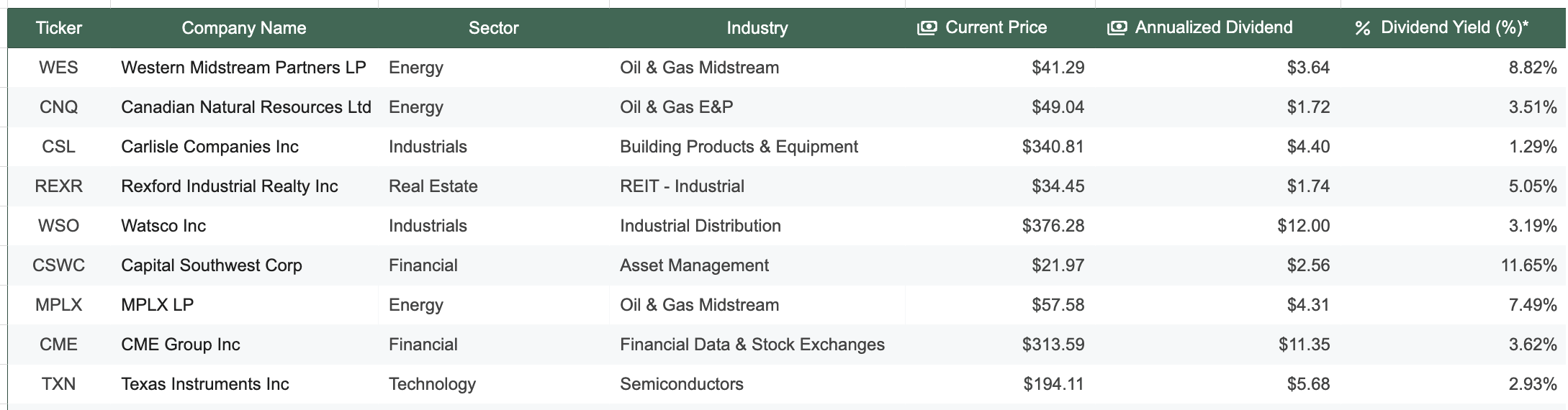
A dividend income portfolio with a >5% average yield and high-single-digit annual dividend growth.
A community portfolio that is funded with service proceeds and directly influenced by members who get a say in what we buy and sell.
Main Street Alpha (For Illustrative Purposes Only)
On top of that, members get full access to a private chat with direct access to me, the community, and any real-time investment alerts we publish.
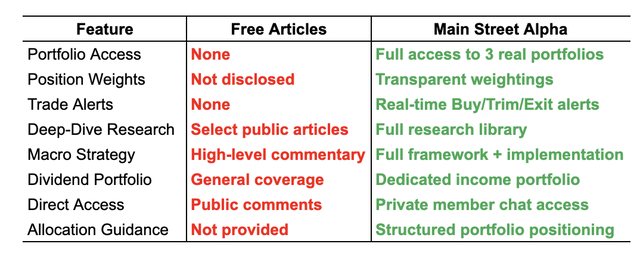
Main Street Alpha
Advertisement
In other words, we’re going exclusive, to a whole new level, and you’re invited!
Who’s Behind Main Street Alpha
This service is run by Albert Marko and myself.
Most of you will be familiar with me. Not only did I just share my story with you, but I also spent the past 10 years sharing way too many details about my personal life. I’m sometimes surprised by how much people know about me and by how much people care.
Albert, however, is a name you may not be familiar with. Until now, of course.
Advertisement
I have worked with Albert for more than six years in various settings. He brings a different but highly complementary skill set, as he’s a political-economic consultant and investor with roughly two decades of experience in foreign affairs and geopolitical analysis.
Moreover, throughout his career, he has advised hedge funds, corporations, and institutional investors on political risk, legislative developments, and international relations. His work has also involved consulting policymakers and members of Congress on geopolitical strategy and economic policy.
For a Big Picture approach, there’s no better partner.
Hence, by integrating political analysis with macroeconomic research and equity strategy, Main Street Alpha aims to give investors a clearer view of the forces that truly drive long-term returns and generate long-term alpha and income for dividend investors.
Advertisement
Who Main Street Alpha Is For
This service is for everyone who has money invested or plans to invest.
However, to narrow it down, it’s especially ideal for readers who:
Focus on long-term wealth creation.
Want to understand macro and geopolitical trends.
Appreciate dividend growth and income investing.
Prefer research-driven investment ideas.
If you’re a short-term trader, this service may not be for you, as we help people achieve long-term goals and do not focus on short-term trading signals. However, even if you’re a trader and want to get a better understanding of the market, this service is for you as well.
After all, even traders need to understand the bigger picture.
A Quick Note on Expectations
Before wrapping things up, I want to make one more thing clear.
Advertisement
I’m a macro/equity strategist, not a salesman. This service is not about chasing the next hot stock or promising you quick gains. Markets do not work that way, and anyone who claims otherwise may be selling you something other than good research.
Some ideas will work extremely well. Others may take a while to unfold. And, occasionally, we’ll be wrong on things. That’s part of investing.
What matters is the process to increase the risk/reward and build something that works for you.
That’s what we are about.
Advertisement
Join Us On The Next Stage Of The Journey
Over the past 10 years, the Seeking Alpha community has played a major role in shaping the way I think about markets and investing.
Main Street Alpha is the next step in the investment journey.
It’s the place where we take everything we have been doing to a whole new level. Better intel, better research, portfolio management, and fruitful community discussions.
If that sounds like the investing approach you are looking for, we invite you tojoin us.
Advertisement
Main Street Alpha is available for $599 per year, with a limited launch discount for the first 400 members who will get the whole package for $499.
The steel castings group enjoyed a strong 2025, accounts show
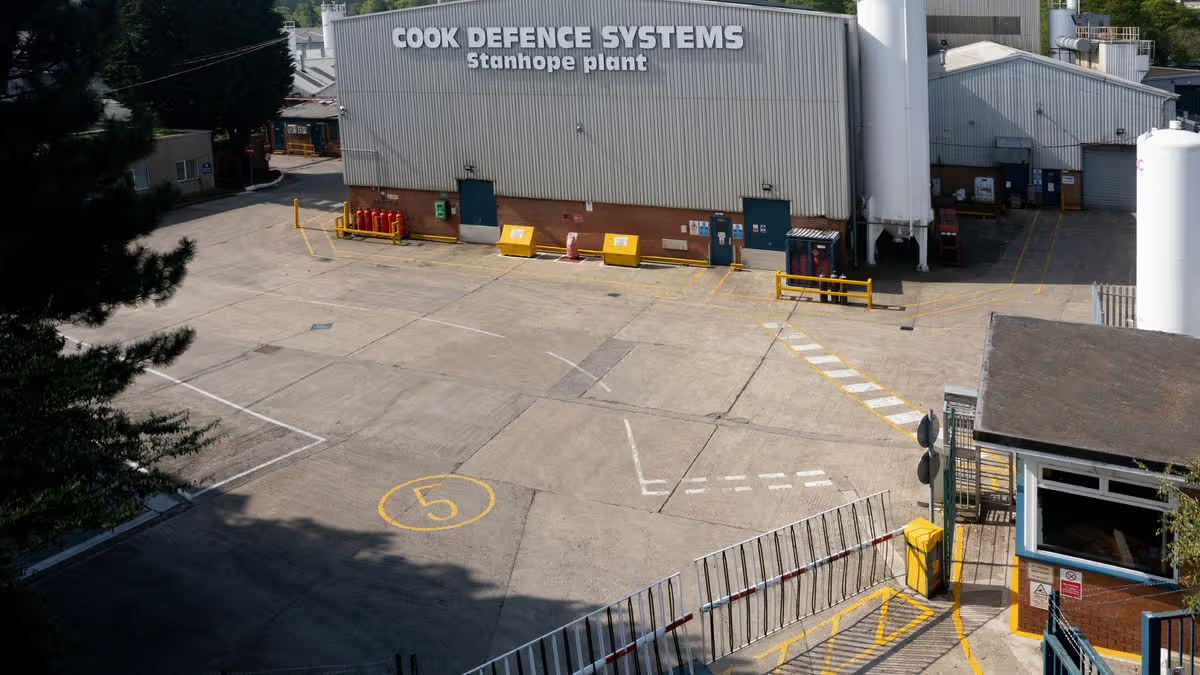
Cook Defence Systems, Stanhope(Image: William Cook Group)
The owner of historic UK steel company William Cook has taken a number of swipes at politicians as his company announced rising turnover and profits.
Sir Andrew Cook, chairman of the County Durham and Yorkshire-based steel castings business used the group’s latest accounts to accuse law makers of “fiddling and flirting with costly and unreliable wind and solar while energy demand increases and black-outs loom”. The remarks came as the group – which supplies the defence, rail, manufacturing and structural engineering sectors – reported turnover of almost £100m and a rise in operating profits from £22.3m to £24.2m in the year to the end of June 2025.
It is not the first time industrialist Sir Andrew has aimed criticism at Westminster, having previously said Government efforts to promote a resurgence of UK manufacturing were “wishful thinking”. His group, which employs more than 600 across sites in the North East, Yorkshire and Cumbria, includes various subsidiaries including Cook Defence Systems Ltd, William Cook Rail and a newly created US-based company, among others.
The buoyant 2025 results were credited to the performance of the group’s defence business, which includes production of tank tracks. Sir Andrew said the “internationally unstable situation” was forcing increased spending by NATO members and allies. In addition to the firm’s work for the British Army, Cook Defence Systems also exported to more than a dozen allied nations during the year, serving more than 6,000 vehicles.
Advertisement
The group’s rail business was also said to have prospered, with separate accounts showing turnover falling from £14.5m to £13.8m but its gross profit margin increasing to more than 23% and operating profits up from about £71,000 to more than £556,000. It has contracts for different rolling stock operating across the country, including underground trains.
Sir Andrew said: “It is a testament to our persistence and determination – my motto – that rail has remained a key component of our business despite the sector’s neglect by successive British governments: a neglect which has led to there being no remaining domestic train-builder at all. Instead, taxpayers’ money is squandered on the absurd and truncated HS2 while the rest of the system, best described as ‘good second world’, labours on.”
The chairman added: “Our industrial business had a difficult year, with low order levels continuing. However, this was expected, which is why considerable investment has continued with the goal of making it fit for the future, manned, equipped and qualified to manufacture the ultra-high specification cast components which inevitably will be required when the nuclear industry finally gets its act together.
“In this respect the vacillation of politicians is beyond disgraceful, fiddling and flirting with costly and unreliable wind and solar while energy demand increases and black-outs loom.
Advertisement
“Appropriately, I reproduce an extract from my letter, first published in the Financial Times in 2003: ‘When in the flickering fight of wind and solar-generated power, the realisation finally dawns that nuclear energy is the only reliable way of supplying this planet with carbon-free electricity, the factories which could make nuclear power stations will be long gone and the engineers who knew how to make them, dead’. To which I have nothing to add, other than to reassure readers that William Cook is still alive and kicking and, thank God and medical science, so am I.”
It has acquired a former Royal Mail building on Mill Street
14:25, 07 Apr 2026Updated 14:28, 07 Apr 2026
The building on Mills Street in Newport that has been acquired by Hedyn.(Image: John Myers)
Housing association Hedyn has confirmed it is creating a new headquarters for its 750 staff in the centre of Newport. Hedyn, formed last year from the merger of social landlords Melin and Newport City Homes, has acquired the 54,000 sq ft former Royal Mail building on Mill Street.
It will relocate staff from its existing offices in Newport and Pontypool into its new HQ. The site, which consists of two adjoining buildings, will be ready for occupancy by the summer of 2028 with fitout work starting shortly.
Advertisement
The investment is a timely boost for the commercial property market in the centre of Newport and an example of the role that housing associations can play in city and town centre regeneration.
Last year housing association Valleys to Coast revealed plans to transform a prime office building in the centre of Bridgend to serve as its new headquarters alongside new apartments and commercial units.
As part of wider efforts to regenerate the town centre the social landlord acquired Wyndham House, which fronts onto the historic war memorial. It will house its workforce of 300.
Paula Kennedy, chief executive of Hedyn, said: “At Hedyn, we know how important home is in creating a sense of belonging and safety. We want the same thing for our colleagues which is why I’m so pleased to announce Hedyn’s new home.
“Now we are a larger organisation (following merger), it’s important for us to balance our commitment to being part of the communities we serve, with ensuring our offices are fit for purpose for our workforce.
“The move to the former Royal Mail building will help more of our colleagues work side by side meaning a more seamless service for our residents.
“Though our HQ will remain in Newport – albeit in a new location – we will continue to strengthen our presence in the other local authority areas we serve. We are committed to investing in the local community and are excited to be part of the local regeneration that will come from the increased footfall and the knock-on boost for shops and cafes.”
Advertisement
Hedyn has a portfolio of 15,000 social homes across the local authorities of Blaenau Gwent, Monmouthshire, Newport, Powys, and Torfaen.
It has not disclosed the value of the acquisition of its new HQ building.
Its new HQ was previously owned by property development firm Garrison Barclays Estates, which acquired the empty building from engineering firm Industrial Automation and Control around a decade ago and revamped the exterior of the building to attract new tenants.
Elevated political uncertainty was front and center during the quarter, with the end of the longest-ever federal government shutdown. The shutdown disrupted economic data flow and added uncertainty to interest-rate expectations and risk markets. In addition, concerns
Three years after stepping into the iconic role of Ariel in Disney’s live-action “The Little Mermaid,” Halle Bailey says the intense racist backlash she faced during the film’s casting and release ultimately became a “beautiful experience” that taught her to listen to her inner voice and “block out the noise.”
Halle Bailey
In a candid new interview with The Independent published this week, the 26-year-old actress and singer reflected on the 2023 project while promoting her upcoming romantic comedy “You, Me & Tuscany.” Bailey described portraying the beloved mermaid as transformative, both professionally and personally, despite the torrent of online criticism that erupted after her casting was announced in 2019 and intensified with the film’s trailer and premiere.
“It was a beautiful experience for me — and I feel like it taught me to listen to myself and the good voices inside. I learnt how to block out the noise,” Bailey told the outlet. She added that being thrust into the center of polarized opinions felt strangely liberating: “It was actually freeing to be in the middle of this conversation where so many different opinions were coming in, and they were so opposite from one another… I felt like I was watching myself inside a cup, seeing how people react to it.”
Although Bailey did not explicitly name the controversy in the interview, much of the “noise” stemmed from racist online backlash. Critics, many hiding behind anonymous accounts and the viral hashtag #NotMyAriel, objected to a Black actress playing the traditionally depicted red-haired, fair-skinned mermaid from Hans Christian Andersen’s tale and the 1989 animated classic. The discourse included boycotts, review-bombing of the trailer on YouTube and hateful comments questioning Disney’s decision.
Bailey has long maintained a graceful stance on the subject. In earlier interviews around the film’s release, she acknowledged that as a Black woman in the spotlight, such reactions were “not really a shock anymore.” She focused instead on the positive impact the role could have for young girls who saw themselves reflected in a Disney princess for the first time.
Advertisement
A Defining Role Amid Division
Disney’s announcement that Bailey would star as Ariel came after an extensive global search. Director Rob Marshall praised her vocal talent and ethereal presence, noting her powerful rendition of “Part of Your World” during auditions. Bailey, already known as one half of the Grammy-nominated R&B duo Chloe x Halle and for roles in “Grown-ish” and “The Color Purple,” brought a fresh, soulful interpretation to the character.
The film, released in May 2023, ultimately grossed over $569 million worldwide despite the pre-release controversy. Critics and audiences praised Bailey’s performance, with many highlighting her emotional depth, vocal range and chemistry with co-stars including Jonah Hauer-King as Prince Eric and Javier Bardem as King Triton. The movie introduced a new generation to the story while sparking broader conversations about representation in Hollywood.
Bailey has repeatedly credited the experience with helping her grow. In the recent interview, she described feeling as though she was observing public reactions from a detached perspective, which reinforced her sense of self. “Growing up in the industry can really develop your sense of self, and for me, it keeps me grounded in a way,” she said. “I know for some people it’s the opposite but I just always think to myself, ‘None of this is real.’”
Her resilience drew admiration from mentors and peers. Bailey has spoken in the past about advice from Beyoncé, who signed Chloe x Halle to her Parkwood Entertainment label. The superstar reportedly told the sisters early on: “Don’t ever read the comments.” That guidance proved valuable during the height of the “Little Mermaid” scrutiny.
Advertisement
Director Rob Marshall and other cast members publicly defended the casting, emphasizing that Ariel’s essence — curiosity, bravery and longing for more — transcended physical appearance. Jodi Benson, the original voice of Ariel in the animated film, offered heartfelt support, stating that heart and spirit matter most in bringing the character to life.
From Backlash to Personal Growth
The backlash was not isolated. Similar debates have surrounded diverse casting in other projects, from “The Lord of the Rings: The Rings of Power” to various superhero films. For Bailey, however, the “Little Mermaid” experience stood out because of the character’s cultural significance as a symbol of youthful wonder and transformation.
In reflecting three years later, Bailey framed the ordeal as a lesson in self-trust. She compared the polarized opinions to being inside a fishbowl, watching external reactions without letting them define her. This mindset has carried into her subsequent work, including her music career and new film projects.
Bailey’s latest project, “You, Me & Tuscany,” pairs her with Regé-Jean Page in a romantic comedy set against the backdrop of Italian countryside. The film marks another step in her evolution as an actress, moving from fantasy to more grounded, adult storytelling. During promotion for the movie, she has spoken about embracing womanhood at 26 and feeling “grown-grown” after navigating high-profile challenges.
Advertisement
She has also balanced motherhood and a high-profile custody situation with rapper DDG, while continuing to release music and appear at major events like the Grammys and NAACP Image Awards alongside her sister Chloe.
Lasting Impact on Representation
Bailey’s casting as Ariel remains a milestone in Disney’s live-action remakes. It signaled a willingness to reimagine classic tales with greater diversity, opening doors for broader storytelling. Young fans, particularly Black girls, expressed joy at seeing a princess who looked like them, with viral videos capturing emotional reactions to Bailey’s performance.
Supporters argued that mermaids are fictional creatures, unbound by real-world racial constraints, and that talent should drive casting decisions. The film’s success at the box office, combined with strong streaming numbers on Disney+, underscored audience appetite for inclusive narratives.
Bailey has avoided fueling further division in her recent comments. Instead, she emphasizes internal validation over external approval. Her ability to emerge from the controversy stronger and more self-assured resonates with many young artists facing public scrutiny in the social media age.
Advertisement
As she continues building her career — with potential projects in horror and other genres on the horizon — Bailey’s reflections on “The Little Mermaid” serve as a testament to resilience. The role that once placed her at the center of heated cultural debate now stands as a pivotal chapter that taught her to tune out negativity and amplify her own voice.
In an industry where public opinion can shift rapidly, Bailey’s approach offers a model of grace under pressure. “It was actually freeing,” she said of the experience — a reminder that even the loudest noise can ultimately clarify what matters most.






















































You must be logged in to post a comment Login