
Business
USDA Recalls Nearly 30,000 Pounds of Argentine Beef Sold in Texas and Florida Over Missed Import Inspection


AUSTIN, Texas — The U.S. Department of Agriculture has recalled nearly 30,000 pounds of raw beef imported from Argentina after the products entered U.S. commerce without a required federal reinspection, the agency’s Food Safety and Inspection Service announced.
The recall covers 29,628 pounds of raw beef products distributed to retailers and distributors in Texas and Florida by Corte Argentino USA LLC, a company based in Aventura, Florida. FSIS said the products originated with Frigorifico Gorina SAIC, a beef producer in Argentina, and were manufactured between May 15 and May 20. The affected items carry use-or-freeze-by dates ranging from Sept. 15 through Sept. 20.
The recalled beef includes several boneless cuts — top sirloin butt, eye round, topside cap off, flat and knuckle — packaged in cardboard boxes under the Frigorifico Gorina SAIC brand. Products subject to the recall bear the Argentine establishment number “EST. N° OF. 2025” and the shipping mark “26644-AA.”
FSIS said the issue was discovered during routine inspection activity, when officials determined the beef had bypassed a mandatory import reinspection step designed to verify that labeling, documentation and the physical condition of imported meat meet federal standards. Despite the nature of the violation, FSIS classified the recall as Class I, its highest-risk category, reserved for situations in which there is a reasonable probability that eating the product could cause serious health consequences or death. The agency’s recall notice did not identify a specific contaminant.
No illnesses or injuries have been confirmed in connection with the beef, according to FSIS. The agency said it is concerned that some of the recalled product may still be sitting in consumers’ refrigerators or freezers, and it urged anyone with the affected beef not to eat it. Consumers were advised to throw the products away or return them to the place of purchase. FSIS said it would post a list of retail locations that received the beef as that information becomes available; as of this week, it remained unclear exactly which stores sold the recalled products.
Corte Argentino directed questions about the recall to Eial Kaplun, the company’s general manager. In addition to Argentine-style cuts, the company also distributes American Angus and Australian Wagyu beef, according to its own materials.
The recall drew a sharp response from outgoing Texas Agriculture Commissioner Sid Miller, who said the lapse should not have happened. “Nearly 30,000 pounds of Argentine beef made it into American commerce without receiving the required federal import reinspection. That is unacceptable,” Miller said in a statement, adding that American consumers “should never have to wonder whether foreign meat slipped through the cracks.” Miller said Texas producers “meet rigorous standards” and called on USDA to determine how the beef bypassed inspection, closing with a message urging Texans to “buy American” and “buy Texas.”
The recall lands at a politically charged moment for the U.S. beef trade. Earlier this year, President Donald Trump moved to expand the amount of Argentine beef eligible to enter the United States at a lower tariff, adding 80,000 metric tons of Argentine lean beef to the import quota in a February proclamation as part of an effort with Argentine President Javier Milei to ease record-high domestic beef prices. That expansion has drawn opposition from segments of the U.S. cattle industry, which argues foreign imports undercut American producers who operate under stricter regulatory requirements. FSIS and industry observers have said the recall itself stems from an isolated import-processing failure and is not tied to the broader policy debate over expanded Argentine imports.
The recall also comes as the U.S. gradually reopens its border to Mexican feeder cattle following a monthslong halt prompted by concerns over New World screwworm, a livestock pest. That reopening is expected to add modestly to U.S. cattle supplies, though officials have said imports will initially remain limited.
FSIS noted that the current episode is not the first time an import reinspection failure has led to a recall. In June 2024, South American Meat Inc., doing business as 5Gogi LLC, recalled frozen raw beef that had also entered the country without the required reinspection, underscoring that the gap in oversight is not unique to Corte Argentino’s shipment.
The agency said it routinely conducts effectiveness checks to confirm that recalling companies have notified their distributors and retailers and that recalled products have been pulled from store shelves. FSIS has not yet detailed how the uninspected Corte Argentino shipment cleared its port of entry before reaching distributors in Texas and Florida.


Northern Ireland’s largest provider of natural gas, SSE Airtricity, is to increase its prices by almost 19% from 1 October for its 200,000 domestic and small business customers.
It means the annual gas bill of a typical household in the greater Belfast and west gas network areas will increase by almost £172.
The company said “unprecedented levels of volatility in global energy markets and higher wholesale gas prices” had led to the price rise.
Wholesale gas prices in the UK have effectively doubled since the US and Israel began their attack on Iran.
Colin Broomfield from the Utility Regulator said the increase would be “difficult news for many households and small businesses, particularly at a time when wider cost pressures remain a concern”.
“The main reason for the increase is the sustained rise in the wholesale cost of gas, due to the ongoing conflict in the Middle East.
“The Iranian conflict has continued to impact energy prices globally for the past six months.
“In recent weeks, we have seen the wholesale price of gas reaching 169 pence per therm. This is twice as high as pre-conflict prices.”
The Middle East conflict sent global oil prices soaring as it effectively closed the Strait of Hormuz – one of the world’s key water transport routes for oil, liquid natural gas and other essential commodities – limiting global supplies.
About 20% of the world’s oil and liquefied natural gas normally passes through the waterway.
The UK is heavily reliant on oil and gas imports, with the majority coming from the US and Norway.
The price of oil on the global market determines how much the UK pays for it.
Although the UK does get some oil from the North Sea, most of that is exported for refining elsewhere.
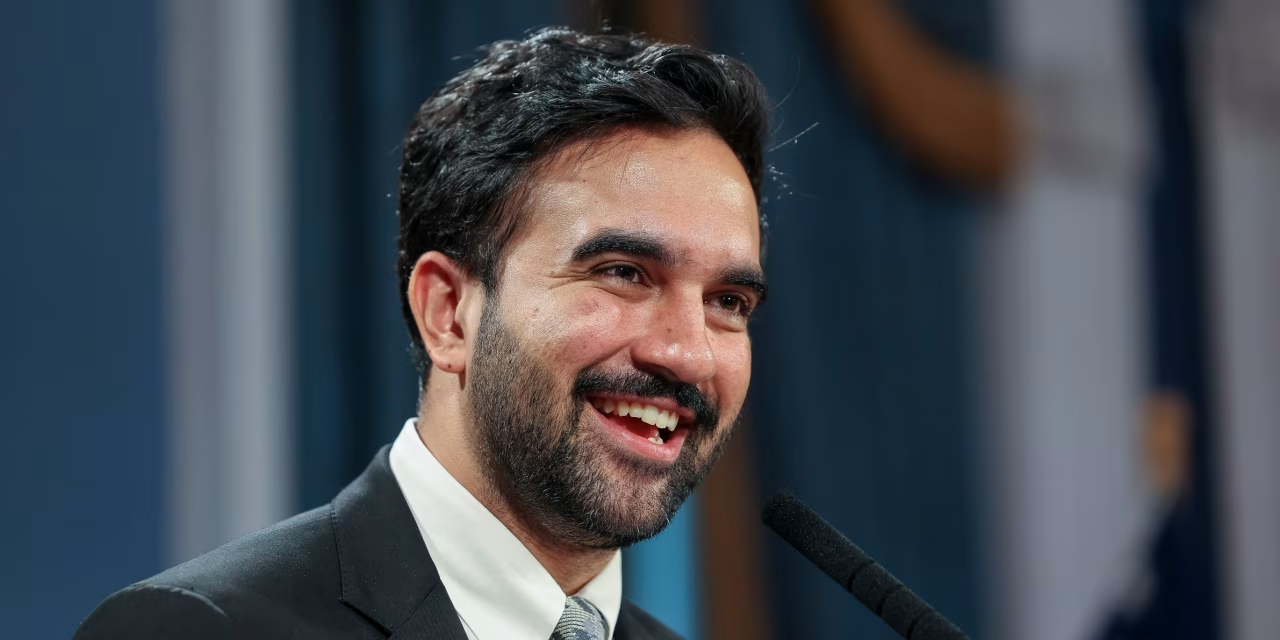
New York City Mayor Zohran Mamdani is expected to unveil on Thursday a new business advisory council with 15 CEOs and other executives. The council represents a chance to reset his relationship with the capitalist class after a rocky start to the year.
The council will be made up of executives across finance, insurance, sports and other industries. It is expected to act as a go-between for two powerful groups who mix about as well as oil and water: the Democratic Socialists who run City Hall and the wider business community.
Copyright ©2026 Dow Jones & Company, Inc. All Rights Reserved. 87990cbe856818d5eddac44c7b1cdeb8

Gaming and Leisure Properties: A High Yield And Deep Discount Too Hard To Ignore (Upgrade)
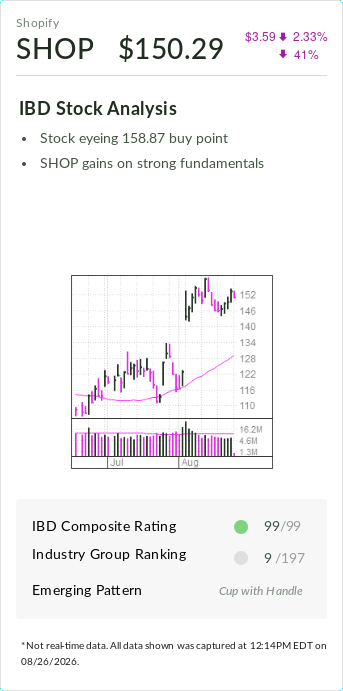
Shopify Shopify SHOP $ 150.29 $3.59 2.33% 41% IBD Stock Analysis Stock eyeing 158.87 buy point SHOP gains on strong fundamentals IBD Composite Rating 99/99 Industry Group Ranking 9/197 Emerging Pattern Cup with Handle Cup with Handle A positive chart pattern named such because it resembles the outline of a coffee cup with a handle. The pattern can last from…
Copyright ©2026 Investor’s Business Daily, LLC. All rights reserved. 87990cbe856818d5eddac44c7b1cdeb8

After an impressive IPO, SpaceX shares are beginning to face the same challenges Tesla once did.
In the first weeks after its listing, SpaceX stock climbed to $225, significantly exceeding the IPO price of $135. Since then, however, the shares have fallen below $110. This has served as the first signal to investors that cutting-edge technology and Elon Musk’s name alone may not be enough to sustain such a high valuation over the long term.
The parallels with Tesla are striking. After going public in 2010, Tesla stock also experienced a sharp post-IPO decline before rebounding a year later as investors embraced a compelling growth narrative. The launch of the Model S helped convince the market that the company’s business could scale successfully. The big question now is whether SpaceX can follow a similar path.
The company has several arguments in its favor. The Starship program is gradually approaching commercial operation, with the recent 13th test flight marking the most successful in the program’s history. The vehicle completed its main tasks, successfully restarted its engine in space, and executed the softest landing to date. Even more notably, the spacecraft maintained the integrity of its hull so well that it remained afloat for several days after splashdown, prompting SpaceX to organize a dedicated recovery mission. Rather than highlighting technical shortcomings, the episode underscored the program’s growing maturity.
Starship is expected to become a key driver of the company’s long-term growth. The rocket will significantly reduce the cost of launching cargo into orbit while accelerating the deployment of the Starlink satellite constellation, which is already SpaceX’s largest source of revenue. The sooner the company can switch to regular commercial operations, the more convincing its long-term financial outlook will become.
However, investors remain primarily concerned about the company’s financial fundamentals. Aside from Starlink, many of SpaceX’s business lines are still unprofitable. Revenue growth has also begun to fall short of what investors expect from a company valued at roughly $1.4 trillion, while large-scale investments in AI continue to weigh on expenses. Intensifying competition across both the space industry and related business sectors is adding further pressure.
The situation is also complicated by SpaceX’s close relationship with Tesla. Recently, the market was stirred by reports that — to facilitate a potential merger between the two companies — Tesla might have to divest its largest Chinese manufacturing facility in Shanghai. Elon Musk quickly dismissed the claims, calling them completely fictional. Nevertheless, the very existence of such speculation shows that investors continue to view SpaceX and Tesla as elements of a single ecosystem. Meanwhile, the Shanghai factory remains one of Tesla’s key assets; the facility can produce more than 950,000 vehicles annually, supplies several international markets at once, and sources over 95% of its components locally.
As a result, SpaceX’s first year as a public company is likely to become a test of investor confidence. The market has already priced in much of the company’s long-term potential. The next phase will depend on tangible financial results and evidence that its capital-intensive projects can evolve into sustainable profit generators. If the Starship program continues to successfully move toward commercial operation and Starlink maintains its strong growth trajectory, the current weakness in the stock could ultimately resemble Tesla’s post-IPO experience. Until then, however, investors are likely to focus less on ambitious promises and more on how quickly technological breakthroughs translate into measurable financial performance.

A late invoice from an Italian customer can create an awkward tension for a UK supplier. The sales team wants to preserve a valuable relationship.
Finance wants a date it can put into the cash forecast. Management wants to know whether the delay is administrative, commercial or a sign of deeper payment risk.
Those priorities do not have to conflict. The practical response is to run two clocks at once.
The customer-resolution clock tracks what the buyer needs to approve and release payment. The internal-escalation clock sets the point at which the supplier must make a deliberate decision, even if the customer continues to offer reassurance.
This approach matters because payment timing in Italy can be longer than UK suppliers expect. The UK Government’s current Italy market guidance warns that business-to-business payments can take several weeks and, in some sectors, months. Atradius reported in its 2026 Italy survey that settlement of overdue invoices takes longer than the Western European benchmark and that customer cash-flow stress is a leading reason for delay.
Those are market signals, not conclusions about a particular customer. The file still has to tell you what is happening in this case.
Start both clocks with a verified invoice
Before chasing, confirm that the invoice could be processed. Check the exact contracting entity, billing address, tax details, currency, bank information, purchase-order reference and agreed payment terms. For goods, connect the commercial invoice to the order, shipping documents, delivery record and any acceptance evidence. For services, preserve the signed scope, milestones, timesheets or approval messages.
UK export guidance stresses that commercial-invoice information should match the related transaction and banking documents. A mismatch can create a real processing delay. Correcting it quickly is better than escalating a preventable error.
Create a one-page status with the invoice number, amount, due date, customer entity, responsible contacts and latest verified explanation. That page becomes the control record for both clocks.
Use the customer-resolution clock to find the blocker
The first conversation should seek a specific operational answer. Has the invoice been received? Is it registered in the customer’s system? Has the relevant manager approved it? Is any part disputed? Has payment been scheduled?
Ask who owns each next step and by what date it will happen. If the customer says the invoice is in process, request the scheduled payment date and reference. If documents are missing, provide them and ask the customer to confirm that the file is complete. If a dispute is raised, ask for the disputed item, amount and supporting reason in writing.
Avoid treating every delay as a cultural difference. Italian companies, like companies anywhere, have different approval structures, financial positions and payment practices. A named owner and dated action are more useful than a broad assumption about the market.
Use the internal-escalation clock to protect options
The second clock belongs to the supplier. It should not reset every time someone promises to “check with accounts.” Set an internal review date based on the amount, evidence, customer importance, length of delay and exposure from continuing to trade.
At that review, choose among four states.
Resolve: there is a specific administrative blocker with an owner and near-term completion date.
Negotiate: the customer accepts the debt but needs time. Require exact instalment amounts and dates, approval by the appropriate manager and written confirmation.
Investigate: the customer has raised a substantive dispute. Separate the disputed and undisputed amounts, assign the commercial owner and preserve the evidence.
Escalate: the claim is clear, the agreed date has passed and the customer has not provided a credible resolution path.
These states make the decision repeatable. They also allow sales and finance to discuss the same facts instead of arguing from different impressions.
Prepare the file before seeking outside help
If escalation becomes proportionate, assemble the contract, invoice, delivery evidence, statement of account, dispute history and communication chronology. Confirm the exact debtor entity and the current amount claimed. Note any part payment, credit or counterclaim.
Companies seeking to recover unpaid invoices from Italian customers can then give local counsel or a collection provider a coherent file. That improves the first assessment and reduces the risk of spending time on missing documents or the wrong entity.
For suppliers trading in several markets, understanding European debt recovery routes can also help management distinguish a repeatable cross-border process from the country-specific advice needed for each claim. The operating model can be standardised; the legal assessment should remain local.
Preserve goodwill through precision
Professional escalation is not the opposite of relationship management. A vague chase can create irritation because neither side knows what will happen next. A precise message identifies the invoice, current issue, agreed action and decision date.
The two-clock method gives the customer a fair opportunity to resolve the problem while protecting the supplier from open-ended delay. The resolution clock keeps the conversation practical. The escalation clock ensures that goodwill has a boundary.
For UK SMEs selling to Italy, that balance is the real discipline: remain constructive, verify every promise and keep the next decision on the calendar.
Author bio
Lars Holdgaard is the founder of Debitura and has 10+ years of experience across debt collection, accounts receivable, technology, and startups. Before Debitura, he co-founded and led product and technology work at startups and scaleups, building software for financial administration and receivables management. Lars studied at the IT University of Copenhagen and the Technical University of Denmark.

The state government has announced it has locked in a three-year deal with WWE without divulging the price tag, as questions over event spending transparency continue to swirl.
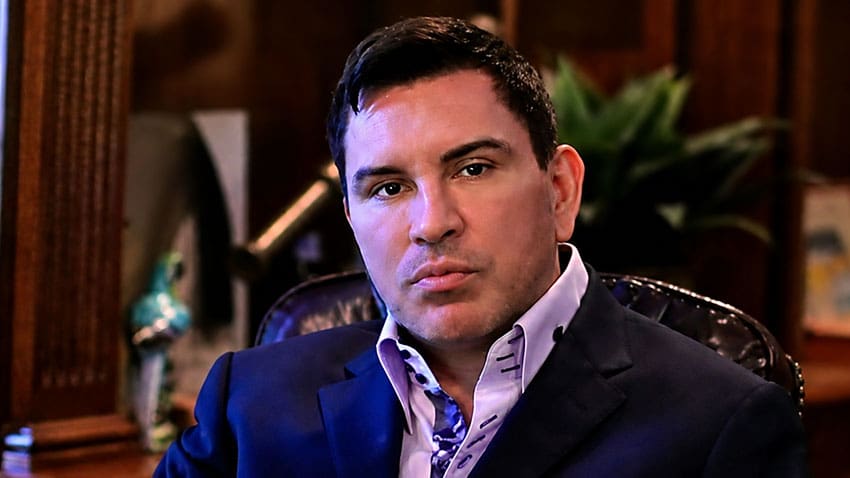
Feliciano Serrano, MD, has built his career around specialized medicine, research, and a commitment to serving the Los Angeles community where he was raised
His path has included advanced training in nephrology and vascular interventions, NIH-supported kidney research, lecturing and research at Harvard Brigham and Women’s Hospital, and years of caring for patients in Southern California. Across each stage, Serrano has maintained a consistent philosophy: patient wellbeing should guide the decisions physicians make and the improvements they pursue.
“People’s health and wellbeing take priority or precedence always. Everything else comes second,” Serrano says. That perspective has influenced both his approach to patient care and his willingness to continue learning throughout his career.
How Los Angeles Shaped Feliciano Serrano’s Medical Career
Growing up in Los Angeles gave Serrano an early understanding of the different challenges families can face when seeking medical care. He credits his parents and family with teaching him the importance of helping those who are less fortunate, a lesson that later became central to his professional life.
Feliciano Serrano began his higher education at the University of Southern California, earning a Bachelor of Science in Biological Sciences. He later completed a master’s degree in Biological Technology and Genetics at California State University, Dominguez Hills before earning his medical degree from the Keck School of Medicine of USC. He then completed his Internal Medicine residency at White Memorial Medical Center in Los Angeles.
During his residency, Serrano remained focused on serving the community that had shaped him. At the same time, he began to recognize that treating patients with more complex illnesses would require additional expertise. That realization led him to specialize in kidney disease and eventually pursue advanced training in vascular interventions.
Advancing From Kidney Care to Medical Research
Serrano continued his training at the University of Vermont School of Medicine, where he completed a fellowship in nephrology and hypertension. He also received NIH-supported fellowship funding to study thrombosis in kidney disease, including research involving platelet dysfunction and the complications associated with renal disease.
His work eventually included research and lecturing at Harvard Brigham and Women’s Hospital. Serrano’s CV lists research involving platelet function, thrombosis, chronic renal failure, hypertension, and cardiovascular concerns, with work appearing in medical journals and at professional conferences. These experiences helped shape the way he approaches difficult medical questions.
Serrano believes physicians should be willing to examine established practices when there is a responsible opportunity to improve patient care. “Do what is right always even if the status quo, political or popular belief says the contrary,” he says. For Serrano, that principle is closely tied to research, careful evaluation, and the willingness to keep learning rather than accepting that an existing method is necessarily the final one.
One experience in particular reinforced that belief. Serrano recalls receiving scrutiny after helping pioneer a different approach to dialysis at a time when the methodology was considered unconventional. He says the approach later became accepted as a standard method of care.
The experience strengthened his belief that meaningful changes in medicine can require perseverance, especially when physicians are working to improve established processes.
Building Expertise in Vascular and Interventional Care
Following his nephrology training, Serrano pursued an additional fellowship in Interventional Nephrology and Vascular Procedures through the University of Arizona College of Medicine and AKDHC. The program expanded his expertise into procedures involving veins and arteries and allowed him to build on his understanding of the relationship between kidney and vascular health.
His approach to this work places considerable emphasis on process. Rather than measuring success through outcomes alone, Serrano believes professionals should continually examine how those outcomes are achieved. “You measure success by perfecting the mechanism and not by simply assessing outcomes,” he says. “If you do things right and improve on these methods, eventually you will achieve favorable outcomes.”
That philosophy extends to his view of leadership. Serrano emphasizes collaboration with colleagues and community leaders, along with setting increasingly high standards for his own work. He views improvement as an ongoing responsibility rather than a milestone that is reached once.
A Continued Commitment to Los Angeles
After years of advanced training and research, Serrano brought that experience back to Southern California. In 2009, he became Medical Director of Serrano Kidney & Vascular Access Center, where his work has focused on providing nephrology and vascular care in Los Angeles.
For Feliciano Serrano, serving Los Angeles also carries personal meaning. He is fluent in English and Spanish, allowing him to communicate with patients and families across communities in a region he has known throughout his life. His commitment has extended beyond his regular clinical responsibilities as well. Serrano reports receiving two awards from the City of Los Angeles recognizing substantial pro bono medical services provided to underserved and homeless populations.
His career has taken him from Los Angeles to major research and medical institutions and back again, but the principles behind his work have remained remarkably consistent. Serrano credits empathy, compassion, perseverance, collaboration, and continual improvement as important influences on his approach.
As he puts it, “The goal of every day is to simply be better than yesterday.” That focus on steady improvement continues to connect his work as a physician, researcher, community member, and leader in specialized patient care.

Yes. Corporate subscriptions are available for teams and organisations, with discounted rates as user numbers increase. Pricing starts from $1,625 + GST per user.
Get in touch
to discuss the right option for your organisation.
Business News subscriptions are used by executives, investors, consultants and professionals who need to stay informed and make better decisions about the WA market. When you subscribe you’ll get
- Unlimited access to WA’s most trusted business journalism
- Data & Insights — detailed profiles of WA companies, people, projects and deals
- MyBN — a personalised feed based on the companies, people and sectors you follow
- Special publications and industry reports
- Daily and weekly email newsletters
Data & Insights is a research tool built specifically for the WA market. It draws on more than 30 years of Business News reporting, updated regularly to reflect what’s happening now. Use it to:
- Look up detailed profiles of WA companies, including financials, directors and ownership
- Find decision-makers and track their career movements
- Research live and completed projects across WA industries
- Monitor deals, appointments and market activity
- Access industry rankings and league tables
Data & Insights is updated daily by our dedicated research team, which uses the latest announcements, ASX filings and editorial coverage to keep our person, company, list and project records up to date.
Business News welcome all opportunities to make our dataset accurate, complete and current, so if you have an update request, please email the team at
general@businessnews.com.au, and we’d be happy to assist.
MyBN
is part of every subscription. It’s your personalised view of Business News. You can follow the companies, people, sectors and projects that matter to you, and get a news feed and alerts tailored to your interests. You can save articles to read later and retain only what you need.
Only subscribers have full access to all content on the Business News website.
If staying informed about the WA economy is part of your job, and/or you’re looking for networking opportunities in WA, Business News is built for you.
Business News subscribers are:
- Executives and directors tracking competitors, clients and market movements
- Investors and advisers researching companies, deals and industry trends
- Consultants and professionals staying across sectors relevant to their clients
- Business owners looking for leads, context and market intelligence
Most Business News publications cover national or global markets. Business News is focused entirely on Western Australia, which means the journalism, the data and the intelligence are all built around WA companies, people and projects — not adapted from a national feed. Data & Insights, included with every subscription, combines more than 30 years of WA-specific editorial research with live business data. There’s no comparable product for the WA market.
The Morning Digest Email provides a comprehensive wrap of the major headlines, relevant to WA business, and includes with a snapshot of the overnight news covering oil, gold and ASX-listed companies.
The Afternoon Wrap Email focuses on the news covered by our team of journalists during the course of the working day, including exclusive stories and analysis, all of which relates to WA business and the local economy.
The BN Weekender Email contains a wrap of the Business News from the week that was, highlighting the top stories in each area of WA business.
Sign up for free.
We’re happy to help.
Get in touch
and our team will come back to you.

Since ChatGPT’s launch in 2022, public uptake of AI chatbots has been staggering. Over 987 million people and half of US adults reportedly use the technology.
But the first wave of AI development is now over. Gone are the days when LLM’s alone dominated the AI discussion. AI’s new wave is being driven by startups you have not heard of and is increasingly diverse, ranging from agents and infrastructure to specialist professional services tools and robotics.
Rotem Farkash on why AI startups matter
Serial startup founder and AI expert Rotem Farkash sees startups as integral to the AI boom. He explained, “The Big AI players matter. Their infrastructure, research and technology got us to where we are now.”
Farkash continued, “But, the names you recognize such as Meta, Microsoft, and OpenAI, cannot do everything. Newer and more nimble companies with fresh ideas are often where true innovation lies.”
Infrastructure powering the AI economy
As AI has boomed, companies have sprung up to develop the extensive infrastructure needed to service the next wave.
Founded in 2022, Together AI is one of these startups. Together AI is a full-stack AI platform which enables companies to train and run AI tasks on open models such as DeepSeek, MiniMax and Kimi at lower costs than closed systems.
By making leading models easier and cheaper to train and deploy, its platform gives customers the foundations to build new AI products and tools, helping drive wider adoption.
Founded in 2018, Crusoe’s rapid rise has demonstrated the growing need for infrastructure to power AI’s growing energy and compute needs.
The company looks for innovative energy sources, builds and manages hyperscale AI factories, and offers a scalable AI cloud platform. This helped Crusoe earn a place on Fast Company’s list of the most innovative companies of 2026.
Specialist AI tools are transforming professions
AI tools are already changing professions, and Anysphere Inc., founded in 2022 by four MIT graduates, is a leading example of a company that has done just that.
Anysphere made Cursor, an AI-driven code editor that can analyze a programmer’s actions and suggest the next few lines. Cursor also offers a chatbot that users can ask code-related questions. The tool has completely changed the day-to-day work of any programmer that uses it.
Describing his company’s own product, Anysphere President Oskar Schulz said, “It just makes a thing that you do every day better and faster.” Big tech has taken notice of Cursor, and in June 2026, SpaceX announced a formal agreement to buy the company for $60 billion worth of stock.
Another company revolutionizing its industry is Harvey, a law focused AI firm, which was founded in 2022 by Winston Weinberg, a former securities and antitrust litigator, and Gabriel Pereyra, a former research scientist at Google DeepMind and Meta.
Its AI solutions help to streamline workflows in areas including contract analysis, due diligence, compliance, and litigation to drive efficiency and value. Over 75% of AmLaw 100 firms employ Harvey, demonstrating that its tools are being adopted extensively by the legal industry.
AI video-generation startup Synthesia has also seen major uptake, and is employed by 70% of FTSE 100 companies.
Its AI avatars are particularly used for training, enablement, onboarding, and internal communication, and the company had a $4 billion valuation after a $200 million Series E raise in January 2026.
AI is entering physical world
Figure AI is the next frontier. Founded in 2022 by serial entrepreneur Brett Adcock, Figure AI develops AI-powered, bipedal humanoid robots, such as Figure 01, designed to perform physical tasks in environments like warehouses and homes.
When AI is not just on your computer or phone, but behaving almost like a human at work or in a house, the future will have truly arrived.
Wooju Ryu: AI is a “transformative force”
Prolific inventor Wooju Ryu said, “AI is not just a tool; it’s a transformative force that will redefine how we interact with the world and each other.”
None of the six companies named in this article existed when OpenAI was founded in 2015. Yet today, they are at the forefront of their niches within AI and are major players in a technological revolution that is changing the world.
From robotics to AI agents, to coding tools to AI-video generators, each company listed here is charting the path to an AI future.

Birmingham council moves to ban British and St George’s flags ‘to protect public safety’

Energy prices: SSE gas price to increase by 19% from October

Dow Jones Analysis: Attempted Trend Breakout Amid Fed Rate Expectations





-

 Fashion7 days ago
Weekend Open Thread: Madewell – Corporette.com
-

 Crypto World2 days ago
SpaceX stock could rise 75% to $240, JPMorgan says
-

 Business6 days ago
Musk’s Tesla, SpaceX Confirm $16.8 Billion ‘Terafab’ Chip Plant as World’s Largest Building in Texas
-

 Crypto World6 days ago
anatomy of crypto’s biggest liquidation event since 2021
-

 Crypto World3 days ago
A $30 Billion AI Fund Implodes, Now the SEC Is Investigating Wall Street’s Role
-

 Politics6 days ago
6 months on, Irish renters crushed by effects of government housing bill
-

 Crypto World2 days ago
Did Trump Just Move SpaceX Stock With One Truth Social Post?
-

 Crypto World2 days ago
Warsh Jackson Hole keynote puts financial innovation first
-

 Business5 days ago
Mystery AI Model ‘Ox Alpha’ Draws Developers With Free Access as Chinese Lab Origins Remain Debated
-
 NewsBeat6 days ago
The ‘Lucky Dip Gang’ causing carnage for clicks: After five thugs were killed speeding in the wrong direction on a motorway, GUY ADAMS investigates a sick new trend… and why police aren’t even allowed to pursue them
-
 Crypto World6 days ago
Nvidia Stock Suffers Longest Losing Streak Since 2022: Will Q2 Earnings End It?
-

 Business4 days ago
Moderna CEO warns China is pouring state money into mRNA technology
-

 Business2 days ago
Walmart takes aim at younger shoppers with new fashion brand
-

 Business3 days ago
NVIDIA Stock Drops Nearly 2 Percent to $210 on Seventh Losing Day Ahead of Critical AI Earnings
-

 Tech7 days ago
Unitree’s New Superman Robot Claims to Outjump and Outrun Every Human, Usain Bolt Included
-

 Business6 days ago
Will Tesla Stock Be Higher or Lower a Year From Now? Here’s What Wall Street Analysts Are Saying
-

 Business7 days ago
UK firms in critical financial distress rise 9% to 53,756
-

 Sports5 days ago
Deshaun Watson fires back at Browns fans after being booed: ‘It’s a disrespectful thing’
-

 Crypto World5 days ago
Google Gemini AI Predicts Ethereum Could Become the Trade Retail Misses in 2026
-
 Crypto World4 days ago
$92 Billion Nvidia Earnings Could Make or Break the AI Trade
You must be logged in to post a comment Login