

Business
Utz Brands finding more space in consumers’ pantries






Seeking Alpha’s transcripts team is responsible for the development of all of our transcript-related projects. We currently publish thousands of quarterly earnings calls per quarter on our site and are continuing to grow and expand our coverage. The purpose of this profile is to allow us to share with our readers new transcript-related developments. Thanks, SA Transcripts Team

Saia EVP operations Sugar sells $1m in shares

Earnings call transcript: Medifast Q4 2025 shows significant EPS miss


Startup manufactures protein balls and snacks.
Business
Sysco Corporation (SYY) Presents at Consumer Analyst Group of New York Conference 2026 Transcript
Unknown Analyst
Good afternoon. Welcome back from the break. It’s now my pleasure to introduce Sysco Corporation. The leading global distributor of fresh food and related products to the food-away-from-home industry.
Sysco generated about $81 billion in sales in fiscal ’25 and serves roughly 730,000 customer locations with a business that is well balanced across customers and geographies. Many of us know Sysco best from seeing their trucks outside our favorite local restaurants, which make up 60% of sales, while the other 40% is built around recession-resistant categories, including government, education, health care and large campuses and office complexes, where Sysco also enjoys leading share positions.
I’m excited to turn the conference over to Kevin Hourican, President, CEO and Chairman; and Kenny Cheung, CFO, to dive deeper into the story and discuss the company’s specific initiatives that are driving structural improvements currently unlocking durable and compounding performance and supporting the company’s commitment to a steady return of capital to shareholders.
Before turning it over to Kevin, please join me in thanking Sysco for sponsoring dinner tonight. Kevin, thanks again, and over to you.
Kevin Hourican
CEO & Chairman
Thank you, everyone. It’s great to be back at CAGNY. We have the pleasure of being able to update you on our Sysco story, and it’s also our pleasure to be able to host you all for dinner tonight. I really do hope you have a chance to come join us. Our Sysco chefs will be here in force delivering the best of Buckhead Meat, FreshPoint produce, our Italian cuisine business, our Asian foods business and

Apple is poised to launch an updated iPad Air featuring the M4 chip in the coming weeks, according to Bloomberg’s Mark Gurman, as retail stock shortages signal an imminent refresh for the mid-range tablet.

The report, published Feb. 12, 2026, cites declining inventory of the current M3 iPad Air models and the iPhone 16e, a pattern Gurman says typically precedes new product announcements. “Apple retail employees say that inventory of the iPhone 16e has basically dried out and the iPad Air is seeing shortages as well,” Gurman wrote in his Power On newsletter. “I’ve been expecting new versions of both (iPhone 17e and M4 iPad Air) in the coming weeks.”
The next-generation iPad Air — likely designated as the eighth-generation model — is anticipated to upgrade from the M3 processor introduced in March 2025 to the more powerful M4 chip, which debuted in the iPad Pro lineup in 2024 and later in MacBooks. Industry analysts expect the M4 to deliver roughly 20-30% gains in CPU and GPU performance over the M3, enhancing tasks such as video editing, graphic design and AI-driven features under Apple Intelligence.
Additional rumored enhancements include Apple’s custom N1 wireless chip for improved Wi-Fi connectivity, potentially supporting Wi-Fi 7 standards, and faster 5G capabilities via an updated modem. However, major design changes appear unlikely: the device is expected to retain the same slim aluminum chassis, Liquid Retina display (without ProMotion 120Hz refresh rate or OLED), camera setup and RAM configuration as the current models.
The refresh aligns with Apple’s historical spring timing for iPad Air updates. The M3 version arrived in March 2025 alongside a redesigned lineup, while prior generations often launched in March or April. Some reports suggest a possible March 2026 announcement, potentially tied to an Apple event on March 4 in New York City, London and Shanghai — though Apple has not confirmed the event’s focus. That date has fueled speculation about bundled reveals, including the iPhone 17e, entry-level Mac updates or other hardware.
Alongside the iPad Air, Apple is reportedly preparing a 12th-generation base iPad with the A18 chip (up from A16), enabling Apple Intelligence support for the first time on the entry-level model. The iPad mini is slated for a more substantial upgrade later in 2026, including an OLED display.
Pricing for the M4 iPad Air remains unconfirmed, but analysts anticipate a possible modest increase due to component costs and the chip upgrade, starting around the current model’s $599 for the 11-inch version. No official details on storage tiers, colors or accessory compatibility have surfaced.
Fan and consumer reactions on platforms like Reddit and X highlight mixed sentiment: excitement over the performance boost and better future-proofing for AI features, tempered by disappointment that the Air won’t receive the Pro-level display or design innovations. Many current M3 owners question whether the incremental upgrade justifies waiting or upgrading immediately.
Apple has not commented on the rumors or announced any launch plans. The company typically reveals new iPads through press releases or virtual events rather than full-stage keynotes for minor refreshes.
With shortages already reported and Gurman’s timeline pointing to late February or March 2026, potential buyers weighing an M3 iPad Air purchase may benefit from monitoring official channels closely in the coming days.

Texas REALTORS Chairman of the Board Jennifer Wauhob speaks to Fox News Digital about the Lone Star State’s recent wealth and population boom that’s ‘creating good things for Texas.’
The Austin, Texas, region has seen its population grow rapidly over the last decade, with new data showing it added households at about four-times the pace of the nation as a whole.
Data from the National Association of Realtors showed that the metropolitan area encompassing Austin, Round Rock and San Marcos saw the number of households grow roughly 51% from 2014 to 2024.
The Austin region gained 357,000 households from 2014 to 2024, which brought the number of households in the region from 703,976 to 1,061,155 in that time. Over that same period, the number of households in the U.S. as a whole grew at a rate of about 13%.
NAR’s analysis found that household growth in the Austin metro area was driven across younger and older age groups.
ABBOTT UNVEILS 5-POINT PLAN TO OVERHAUL TEXAS PROPERTY TAXES, TARGETING RELIEF FOR HOMEOWNERS

The Austin area added households at roughly four-times the national rate over the 2014 to 2024 period. (iStock)
The data showed that the share of households in Austin, Round Rock and San Marcos led by those under the age of 25 grew from 5.1% to 5.9% from 2014 to 2024. Among those between the ages of 25 and 34, the proportion rose from 21.1% to 21.7%.
“Households headed by people in their late 20s and 30s grew significantly,” wrote NAR senior economist and director of real estate research Nadia Evangelou. “Those are the classic years for household formation. That’s when people move for jobs, form families, and step into the housing market for the first time.”
She said that growth in those age groups can spur demand for rentals and starter homes, keeping entry-level housing demand very strong and competitive, while eventually boosting demand for move-up properties.
MCMANSIONS BECOME FINANCIAL ‘LIABILITY’ AS BUYERS DITCH OVERSIZED HOMES

Austin saw strong demand for different classes of housing that met the needs of different age groups. (Mark Felix/Bloomberg via Getty Images)
The youngest age cohort of those under 25 in particular played a role in driving an influx of new apartment buildings, which helped lower rental prices in the area.
Older age groups also saw their share of the Austin area household mix rise, with the share of those led by people aged 65 to 74 rising from 9.5% to 10.7% from 2014 to 2025, while those over the age of 75 rose from 5.6% to 7% in that period.
“The number of households headed by those 65 and older increased significantly over the decade, and their share of total households rose,” Evangelou said. “That tells us Austin isn’t just attracting younger workers, it’s also keeping residents as they age.”
HOUSING MARKET COOLS AS PRICE GROWTH HITS SLOWEST PACE SINCE GREAT RECESSION RECOVERY

The Austin region’s growth kept demand strong for a variety of types of homes. (Matthew Busch/Bloomberg/Getty Images)
“That kind of growth creates steady demand for different types of housing: single-level homes, properties with less maintenance, and communities that allow people to age in place,” she explained.
With the growth in younger and older households, other age cohorts declined slightly. The share of households led by those between 35 and 44 was little changed, dipping slightly from 22.9% to 22.7%. Those between the ages of 45 and 54 fell from 19.2% to 17.7%, while the 55 to 64 age group declined from 16.6% to 14.2%.
The growth seen in Austin, Round Rock and San Marcos across different age groups helped keep demand strong for a variety of housing categories that cater to the needs of the disparate groups.
GET FOX BUSINESS ON THE GO BY CLICKING HERE
“When only one age group drives the market, demand tends to be concentrated in a single segment, demand tends to be concentrated in a single segment. But when young adults, families, and older households are all growing that the same time, housing demand becomes stronger across multiple price points and housing types,” Evangelou explained.
“Here is why: Starter homes remain in demand. Move-up homes stay competitive. Downsizing options matter more,” she added.

Most business owners view waste disposal as a necessary cost. You generate rubbish, you pay someone to take it away, and that is the end of the transaction.
However, one waste stream works differently: used cooking oil. Restaurants, hotels, and food manufacturers produce oil that can be collected through structured channels and handled responsibly, yet many businesses still follow traditional disposal methods.
Over the past decade, demand for biodiesel and sustainable aviation fuel (SAF) has increased as renewable energy targets have tightened. Used vegetable oil has become an established feedstock. Some businesses are still operating under older assumptions, not fully aware that professional collection provides an efficient and compliant solution for this type of waste.
How waste cooking oil collection works in practice
High-volume food businesses naturally generate significant quantities of used cooking oil. A busy restaurant or a larger hotel kitchen can produce hundreds of litres monthly. Using professional waste cooking oil collection services ensures this oil is handled safely and in line with environmental regulations.
Exact arrangements vary depending on volumes and service agreements, but the principle is consistent: used cooking oil is collected by licensed operators and businesses receive payment based on the quantity and quality of the oil. At the same time, kitchens avoid the risks associated with informal disposal methods. Companies such as Quatra provide compliant, licensed collection without adding operational complexity for kitchen staff.
Practical benefits for all businesses
Even small operations benefit from structured oil collection because it removes the need to manage disposal informally and reduces compliance risks. Proper collection supports reporting requirements for corporate clients and public sector tenders and demonstrates that a business is managing waste responsibly.
Environmental responsibility has become increasingly important to customers and business partners. Demonstrating that waste oil is collected and converted into renewable energy reinforces sustainability credentials. Combined with financial compensation, this adds measurable operational value without changing day-to-day kitchen routines.
Making the switch to structured collection
Transitioning to professional waste cooking oil collection is straightforward. Licensed collectors provide storage containers, manage logistics, and handle all compliance documentation. Staff procedures require minimal adjustment because the main change is storing oil for a licensed collector.
When choosing a provider, it is advisable to compare terms, check licensing credentials, and ensure that collection frequency and procedures meet operational needs. Reliable providers maintain clear and transparent arrangements so that the collection process is simple and effective.
Most UK businesses with commercial kitchens are still using outdated approaches for used cooking oil. Structured collection services now offer a balanced combination of regulatory compliance, environmental responsibility, and financial return.The infrastructure exists, the process is efficient, and businesses benefit from compliance and operational simplicity. This is one of those cases where environmental care and smooth business operations align naturally.

The Samsung Galaxy Unpacked event is expected to take place next week, with several new products on the line. One of them is the upcoming wireless earbuds.
According to the latest rumors, the early renders of the Buds 4 and Galaxy Buds 4 Pro have been revealed, and here’s what they look like ahead of the most anticipated Samsung event.
Refined Design and Upgraded Charging Case
In an X post by reputable leaker Mohammed Khatri, the leaked images suggest Samsung is introducing subtle yet meaningful design refinements across both models. The Galaxy Buds4 and Buds4 Pro reportedly feature similarly styled charging cases with a sleek transparent lid, showcasing the earbuds positioned horizontally inside. The visual refresh gives the lineup a more modern and premium aesthetic.
Galaxy Buds 4 & Buds 4 Pro Renders Leaked 🔥
Entire design, box content, Buds shape, case lid and form factor revealed ✨️ First detailed look from all angles‼️
Both should be available in Black & White ⚫️⚪️
Follow for more 💬#GalaxyBuds4 #Samsung pic.twitter.com/dASG5bpmWN
— Mohammed Khatri (@Mohammed_K_2010) February 16, 2026
The earbuds themselves, however, take distinct approaches. The Galaxy Buds4 appear to adopt a semi-in-ear design without silicone tips, catering to users who prefer a lighter, more breathable fit for extended listening sessions.
Meanwhile, the Buds4 Pro retains a full in-ear design with silicone ear tips, offering improved passive noise isolation and a more secure seal during movement.
Samsung has also reportedly redesigned the stem with a flat outer surface, refining ergonomics while giving the earbuds a cleaner, more contemporary look.
Battery Capacity Differences
Battery life could be one of the key differentiators between the two models. Reports indicate that the Galaxy Buds4 Pro may feature a 57mAh battery per earbud, while the standard Galaxy Buds4 could include a smaller 42mAh cell.
Although official playback estimates have yet to be confirmed, the larger battery in the Pro model suggests extended listening time, particularly when using advanced features like active noise cancellation.
In terms of box contents, both versions are expected to ship with a charging cable. However, only the Buds4 Pro is rumored to include additional silicone ear tips, reinforcing its premium positioning.
Smarter Controls and New Software Features
Beyond hardware refinements, the Galaxy Buds4 lineup may introduce new software-driven capabilities. Rumors point to a pinch-and-hold gesture control system, enhancing intuitive navigation for music playback and calls.
GSM Arena also reported that an innovative Interpreter mode is also expected, and this potentially offers real-time language support through Samsung’s ecosystem. If integrated effectively, this feature could position the Buds4 series as more than just audio accessories, expanding their appeal for travelers and professionals.
How Much Are the Galaxy Buds4 and Buds 4 Pro
Audophiles can expect an approximate pricing of around €179 ($212) for the Galaxy Buds4, while the Galaxy Buds4 Pro may reach around €249 ($295). If the leaks prove accurate, Samsung’s next-generation earbuds could emerge as one of the standout audio releases of the year.
Originally published on Tech Times

Thailand’s Department of Health has redefined “normal sweetness” in beverages, reducing it from 100% to 50% to promote healthier choices, lower sugar intake, and reduce risks of health issues like obesity and diabetes.
Key Points
- Thailand’s Department of Health has revised the “normal sweetness” standard for beverages from 100% to 50% to promote healthier consumption and mitigate health risks associated with high sugar intake. This change, effective February 11, 2026, aims to lower the likelihood of overweight conditions and non-communicable diseases.
- The department highlights the benefits of reduced sugar intake, including improved skin health, stable blood sugar levels, and decreased abdominal fat. Lower sweetness levels also help restore taste sensitivity, making less-sweet foods more enjoyable.
- Taste receptors renew approximately every 14 days; initial dissatisfaction may occur but sticking to reduced sweetness for over 10 days can promote healthier eating habits and support overall well-being by easing the strain on the liver and pancreas.
Thailand’s Department of Health Redefines “Normal Sweetness” Standard to 50 Percent
The Department of Health has introduced a new standard for “normal sweetness,” reducing it from 100 percent to 50 percent to promote healthier beverage choices and reduce the risks associated with excessive sugar consumption.
On February 11, 2026, the Department of Health announced that the updated guideline aims to improve public health by halving the sugar content of beverages. This change is designed to reduce the risk of overweight conditions and non-communicable diseases (NCDs).
The Department also noted that reducing sugar intake benefits both skin and overall physical health. Choosing 50 percent sweetness can slow premature skin aging, support stable blood sugar for better concentration and reduced fatigue, and help decrease abdominal fat and water retention.
The Department added that reducing sweetness restores natural taste sensitivity, making less-sweet foods more enjoyable. Lower sugar intake also reduces strain on the liver and pancreas, supporting metabolism and lowering future risks of fatty liver disease and diabetes.
The Department explained that taste receptors for sweetness renew in about 14 days. It is normal to feel less satisfied at first, but maintaining reduced sweetness for over 10 days can make healthier choices easier to sustain.
Source : Thailand’s Department of Health Redefines “Normal Sweetness” Standard to 50 Percent
Other People are Reading

SSR Mining Inc. 2025 Q4 – Results – Earnings Call Presentation (TSX:SSRM:CA) 2026-02-17

Ethereum address poisoning strikes again

Do senior Labour politicians have relatives fighting in the IDF?


-

 Sports6 days ago
Big Tech enters cricket ecosystem as ICC partners Google ahead of T20 WC | T20 World Cup 2026
-

 Tech7 days ago
SpaceX’s mighty Starship rocket enters final testing for 12th flight
-

 Video1 day ago
Bitcoin: We’re Entering The Most Dangerous Phase
-

 Tech3 days ago
Luxman Enters Its Second Century with the D-100 SACD Player and L-100 Integrated Amplifier
-

 Video4 days ago
The Final Warning: XRP Is Entering The Chaos Zone
-
 Tech19 hours ago
The Music Industry Enters Its Less-Is-More Era
-

 Video14 hours ago
Financial Statement Analysis | Complete Chapter Revision in 10 Minutes | Class 12 Board exam 2026
-
 Crypto World6 days ago
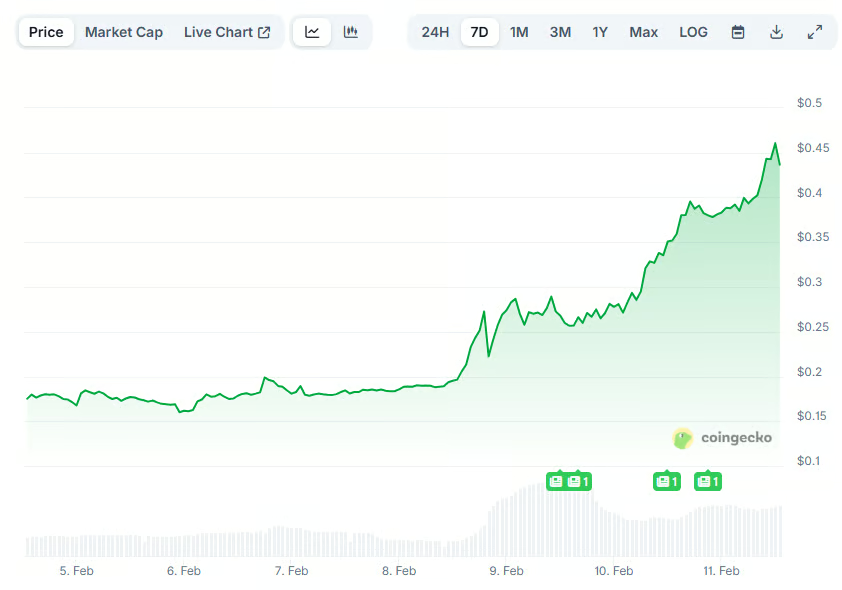
Pippin (PIPPIN) Enters Crypto’s Top 100 Club After Soaring 30% in a Day: More Room for Growth?
-

 Crypto World4 days ago
Bhutan’s Bitcoin sales enter third straight week with $6.7M BTC offload
-

 Video6 days ago
Prepare: We Are Entering Phase 3 Of The Investing Cycle
-

 Crypto World13 hours ago
Can XRP Price Successfully Register a 33% Breakout Past $2?
-

 Sports19 hours ago
GB's semi-final hopes hang by thread after loss to Switzerland
-
 NewsBeat2 days ago
The strange Cambridgeshire cemetery that forbade church rectors from entering
-

 Business5 days ago
Barbeques Galore Enters Voluntary Administration
-

 Crypto World7 days ago
Crypto Speculation Era Ending As Institutions Enter Market
-

 Crypto World5 days ago
Ethereum Price Struggles Below $2,000 Despite Entering Buy Zone
-
 NewsBeat2 days ago
Man dies after entering floodwater during police pursuit
-

 Crypto World4 days ago
Kalshi enters $9B sports insurance market with new brokerage deal
-

 NewsBeat3 days ago
UK construction company enters administration, records show
-
 Crypto World4 days ago
BlackRock Enters DeFi Via UniSwap, Bitcoin Stages Modest Recovery