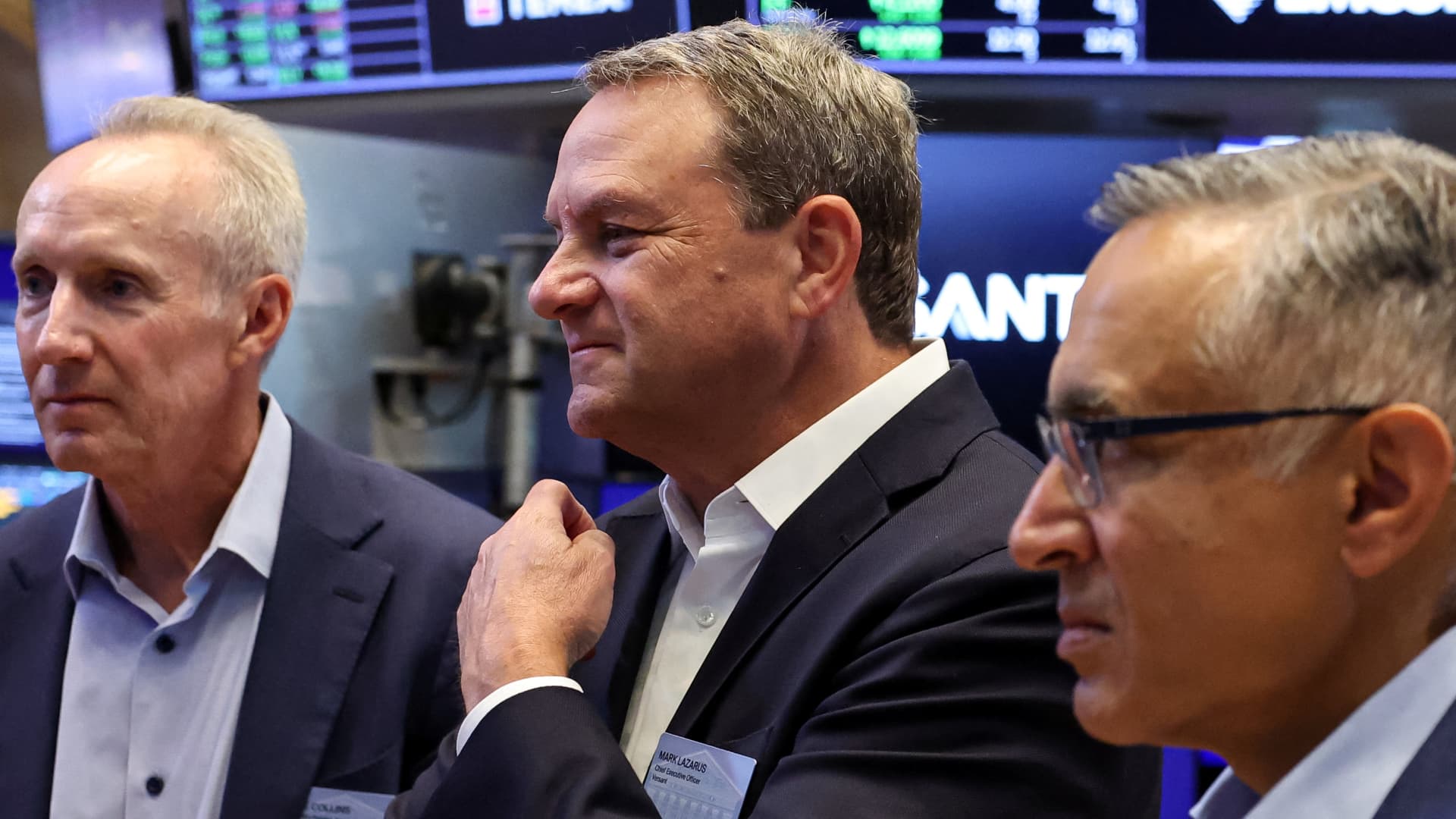
Versant signage on the floor at the New York Stock Exchange on July 21, 2025.
Michael Nagle | Bloomberg | Getty Images
Versant Media Group will release its first earnings report as a public company on Tuesday, giving Wall Street its first glimpse inside a company made up primarily of pay-TV networks.
Advertisement
The Comcast spinoff — comprised of CNBC, MS Now, USA Network, Golf Channel, Syfy, E! and Oxygen, as well as digital properties including Fandango, Rotten Tomatoes, GolfNow and Sports Engine — debuted on the Nasdaq in January after one of the media industry’s most significant transactions in recent years.
The company’s first-ever quarterly results will provide more detail into a portfolio of assets that were long embedded in Comcast’s NBCUniversal TV results. They will also test Wall Street’s appetite for cable TV at a time when the market has faced deep pressures.
Ahead of going public, Versant released financials that showed declining revenue in recent years. Versant’s assets generated $7.1 billion in revenue in 2024, down from $7.4 billion in 2023 and $7.8 billion in 2022, according to a Securities and Exchange Commission filing.
Versant’s stock has dropped about 25% since its January debut, weighed down by expecting selling related to the spinoff. The company’s market capitalization stands at roughly $4.8 billion.
Advertisement
Pay-TV pressure
It’s a rarity these days to see pure-play media stocks going public — especially those made up solely of TV networks. Last year Newsmax, the conservative cable news network, began trading on the New York Stock Exchange. Its shares initially soared before falling precipitously since its debut.
Versant makes more than 80% of its overall revenue from pay-TV distribution. While that business is still profitable, the longtime cash cow for the media industry has been declining as customers flee the bundle for streaming alternatives.
“At Versant, 62% of our audience comes from live programming across sports and news,” CEO Mark Lazarus said during the company’s investor day in December.
“We feel very confident in our position. And the last year, the deals we’ve done, I think bears that out,” he added.
Advertisement
Versant’s sports- and news-heavy content slate has been a key part of its pitch to investors — as has its light debt load and its emphasis on digital properties as future drivers of revenue and earnings growth.
Mark Lazarus, CEO of Versant, visits the floor at the New York Stock Exchange (NYSE) in New York City, U.S., July 21, 2025.
Brendan Mcdermid | Reuters
“Sports and news focus is positive, as Versant has far fewer of the lower-value general entertainment networks that some peers do,” Raymond James analysts wrote in a research note earlier this year. “While Versant lacks ‘Tier One’ sports like NFL, NBA, college football, etc., we think its sports lineup (significant golf rights, WWE, NASCAR, etc.) combined with MS NOW, CNBC, and other networks, supports VSNT’s value to distributors.”
Advertisement
Prior to its spinout, NBCUniversal negotiated carriage agreements with most major distributors, like Charter Communications and Google’s YouTube TV, that included Versant’s networks. Those agreements hold for at least the next two years even after the spinout — an important cushion as these negotiations have become increasingly fraught and can lead to content blackouts.
“More than half of our pay TV subscribers are governed by agreements that go through 2028 and beyond … many of our sports agreements … go well past 2030,” said Anand Kini, Versant COO and CFO, during the investor day. “We view this as really important because the long-term nature of these partnerships highlights the stability of our business and also provides great visibility in the years to come.”
Versant networks will face the first test on their own at the negotiation table this year when two distribution agreements come up for renewal, according to people familiar with the matter, who spoke on the condition of anonymity because they weren’t authorized to speak publicly. A Versant spokesperson declined to comment on the upcoming discussions.
Typically, news and sports networks hold more weight during such negotiations, but blackouts are becoming more common, even for those with top tier rights such as the NFL.
Advertisement
‘Business model transition’
Yet the traditional TV bundle has shown a glimmer of stability recently, despite the focus on streaming.
Charter, one of the largest distributors of the bundle in the U.S., reported an addition of cable customers in the quarter ended Dec. 31 — its first quarterly gain since 2020.
Comcast and other distributors, however, still reported customer losses — albeit at a slower rate than recent declines. That’s a sign of possible stabilization, according to Craig Moffett, analyst at MoffettNathanson.
In light of its weight toward traditional TV networks, Versant’s leadership has told Wall Street it’s in the midst of a pivot.
Advertisement
“We view 2026 as the first year of our business model transition,” Kini said in December.
Versant executives told Wall Street of their intention to invest in its direct-to-consumer products and ad-supported TV expansion, among other growth initiatives.
Long term, executives are targeting a future in which 50% of Versant’s revenue is derived from pay TV and the other 50% comes from digital, platform, subscription, ad-supported and transactional businesses.
M&A is another part of the equation, although bulking up on linear TV networks is not in the plan, executives have said. Already, the company has announced deals such as the acquisition of Free TV Networks, a provider of free over-the-air digital broadcast networks, and Indy Cinema Group, a cloud-based cinema operating system, which was folded into Fandango.
Advertisement
The question, however, is whether Wall Street has the patience to see the business evolve past its focus on the bundle.
Analysts that have initiated coverage of Versant list the various highlights of the business, from strong free cash flow to a portfolio heavy on sports and news, while still voicing some hesitation.
“We are Neutral-rated on VSNT given the secular challenges in the linear networks business, while [remaining] encouraged by the company’s efforts in the platforms business,” Goldman Sachs analysts said in research note in January.
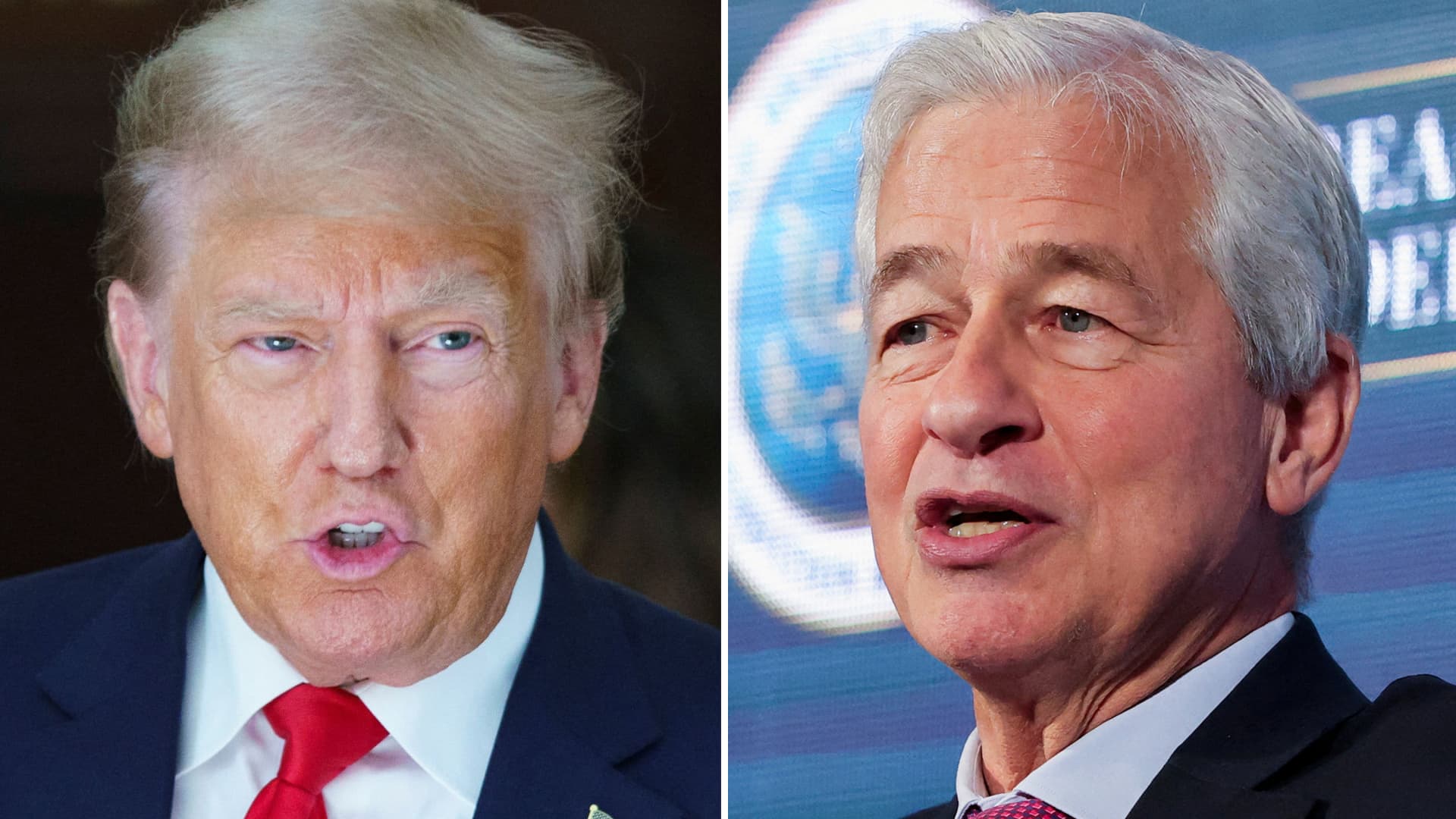
President Donald Trump (L), and JP Morgan CEO, Jamie Dimon.
Reuters
JPMorgan Chase CEO Jamie Dimon said Monday that while President Donald Trump’s lawsuit seeking $5 billion in damages for shuttering his accounts was without merit, he sympathized with the president’s anger over the episode.
Advertisement
Trump is accusing JPMorgan and others of closing his accounts for political reasons in what his conservative supporters have called discrimination.
“The case has no merit,” Dimon told CNBC’s Leslie Picker in an interview on the sidelines of a JPMorgan conference in Miami.
“But I agree with them,” he said. “They have the right to be angry. I’d be angry, too. Like, why is a bank allowed to do that?”
The answer, according to Dimon, is that banks are “forced” to debank individuals to comply with regulators who could punish companies for bringing reputational risk to a lender.
Advertisement
“We debank people because it causes legal, regulatory risk for us,” Dimon said. “It’s been much easier for a bank to say, ‘I’m not taking the risk, let them go bank elsewhere.’”
Trump sued Dimon and JPMorgan in January as part of a broader campaign begun after Trump regained office last year. The president, or his companies, has also sued Capital One over debanking claims; media outlets over alleged defamation; and even the IRS over the leak of his tax information.
In recent court filings, JPMorgan acknowledged it closed dozens of accounts associated with Trump in the weeks after the Jan. 6, 2021, Capitol attack.
While there isn’t an individual law stating that banks must drop customers over reputational risk, the industry operates under a framework of regulations and guidance that makes it risky for lenders to cater to certain clients.
Advertisement
The suit against JPMorgan, the world’s biggest bank by market cap, and its CEO puts Dimon in an awkward position.
It forces Dimon, one of the most outspoken leaders in finance, to toe the line between defending himself and his bank while not further angering Trump, who has the power to move markets with a social media post.
Further, the financial industry is just starting to benefit from a deregulatory push by Trump appointees that will enable banks to become more profitable and hold less capital for losses.
“There are a lot of misunderstandings here,” Dimon said. “Hopefully the law will change, and hopefully it’ll get sorted out.”
Johnson & Johnson shares advanced to near their 52-week peak in recent trading, outperforming a broader market pullback driven by escalating Middle East tensions and oil price surges, as investors sought refuge in the healthcare giant’s stable earnings, robust dividend and diversified portfolio.
Johnson & Johnson
The company’s stock (NYSE: JNJ) closed at $248.43 on Feb. 27, 2026, up $4.96 or 2.04% from the previous session, on elevated volume of over 16.4 million shares — about 70% above average. In early March 3 trading, shares hovered around $249.24, up modestly in a session where futures indicated pressure from geopolitical risks. The rally pushed JNJ within striking distance of its intraday high of $248.94 from late February, marking a 52-week range from $141.50 to nearly $252. Year-to-date gains exceed 10%, with the stock up about 38% over the past six months despite ongoing talc litigation headwinds.
Johnson & Johnson’s resilience stems from its January 2026 earnings report for the fourth quarter and full year 2025. The company posted strong results, with full-year sales growth supporting an upbeat 2026 outlook. Q4 revenue reached approximately $24.28 billion, while adjusted EPS came in at levels that beat some expectations despite a slight miss in certain views ($2.46 vs. consensus near $2.47). Innovative Medicine (pharmaceuticals) and MedTech segments drove performance, with key products like Darzalex and Tremfya showing robust sales.
For 2026, J&J guided reported sales to $99.5 billion to $100.5 billion (midpoint $100.5 billion, up about 6.7%), and adjusted EPS of $11.43 to $11.63 (midpoint $11.53, up 6.9%). The forecast exceeded Wall Street estimates even after factoring in impacts from drug pricing agreements with the Trump administration and potential tariffs on medical devices, estimated at hundreds of millions. Analysts praised the guidance as conservative yet achievable, highlighting oncology pipeline strength and biosimilar competition offsets.
The company maintains a market capitalization approaching $600 billion, with a forward P/E ratio around 22-23 — viewed as attractive for a blue-chip healthcare name. The quarterly dividend of $1.30 per share (annualized $5.20, yield about 2.09%) remains a draw for income investors. The ex-dividend date was Feb. 24, 2026, with payment on March 10.
Advertisement
Recent pipeline advancements bolster confidence. In late February, J&J reported promising early Phase 1b results for pasritamig (a bispecific T-cell engager) combined with docetaxel in advanced prostate cancer, showing deep PSA reductions and manageable safety. On Feb. 24, the company submitted a supplemental Biologics License Application to the FDA for IMAAVY (nipocalimab) as the first treatment for warm autoimmune hemolytic anemia (wAIHA). Upcoming presentations include the Barclays Global Healthcare Conference on March 10 and TD Cowen on March 3.
Talc litigation continues to cast a shadow, though the stock’s performance suggests investors are pricing in manageable risk. As of early 2026, the multidistrict litigation includes over 67,000 plaintiffs alleging ovarian cancer or mesothelioma from talc products. Recent verdicts include a $250,000 award in a Philadelphia case in February for a deceased user’s family, and larger prior awards like $1.5 billion in a 2025 mesothelioma trial (under appeal). J&J insists its products are safe and asbestos-free, pursuing appeals and settlement discussions. No global resolution has emerged post-bankruptcy attempts.
Analysts maintain a consensus “Moderate Buy” rating, with average price targets around $233 (some as high as $262), implying modest upside or stability from current levels. Firms like Morgan Stanley upgraded to Buy with a $262 target in January, citing improving 2026 prospects.
In a market facing geopolitical uncertainty — with oil surging on Iran-related developments — JNJ’s defensive characteristics shine. Healthcare stocks often hold up during risk-off periods, and J&J’s low beta, consistent cash flow and innovation in high-growth areas like oncology position it well.
Advertisement
The company continues executing its post-Kenvue separation strategy, focusing on Innovative Medicine and MedTech for sustained growth. With next earnings expected around April 14, 2026, investors will watch for updates on pipeline momentum, litigation developments and macro impacts.
Johnson & Johnson’s blend of stability, yield and growth potential keeps it a core holding for many portfolios amid broader volatility.
Verizon Communications Inc. (NYSE: VZ) shares reached a 52-week high in late February 2026, climbing above $50 amid renewed investor confidence in the telecommunications giant’s growth trajectory, subscriber gains and shareholder-friendly capital returns.
The stock closed at $50.14 on Feb. 27, 2026, marking a 2.56% gain for the day and pushing its market capitalization to approximately $211 billion. As of early March trading, shares hovered around $50, with intraday fluctuations between $49.72 and $50.26. The advance represents a significant recovery from the 52-week low of $38.39 hit in late 2025, delivering more than 30% upside over the past year and positioning VZ as a standout performer in the telecom sector.
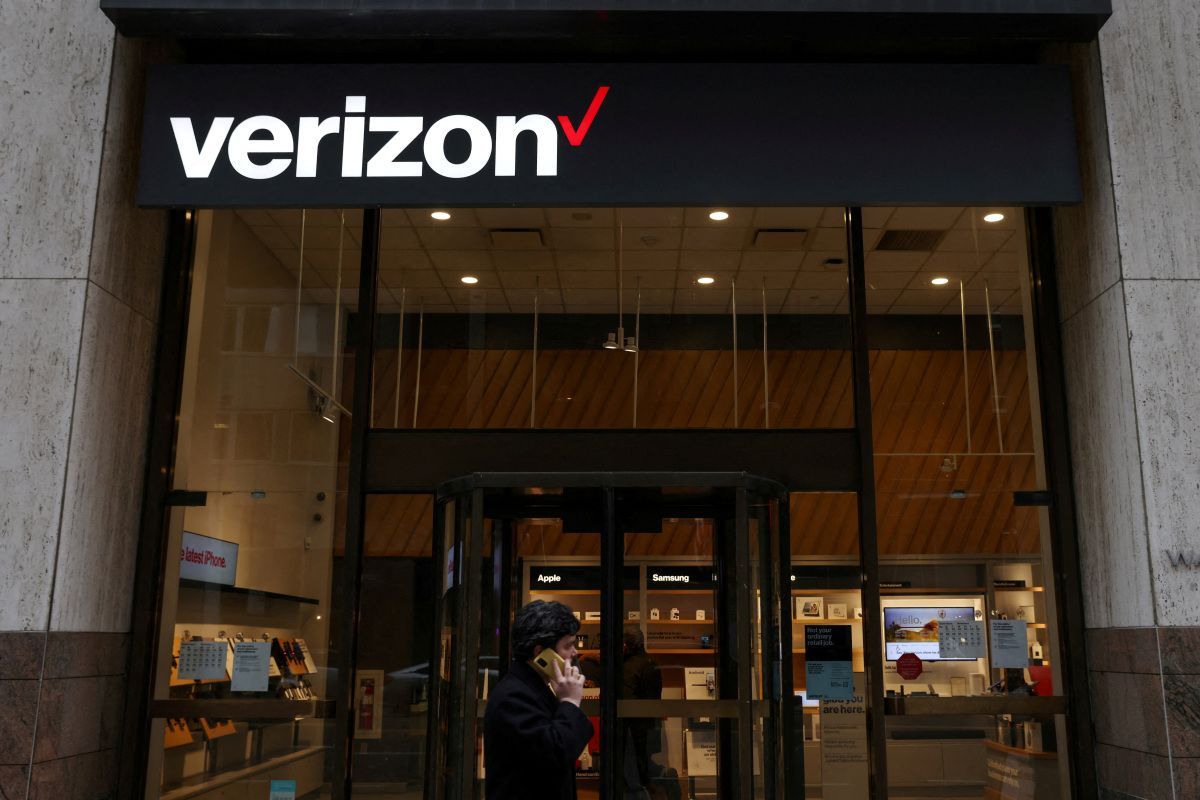
A person walks by a Verizon store in Manhattan, New York City, U.S., November 22, 2021.
The rally follows Verizon’s fourth-quarter 2025 earnings report released in late January 2026, which highlighted robust wireless subscriber additions and reaffirmed optimism for the current year. Under new leadership, the company has emphasized cost discipline, network investments and strategic acquisitions to drive sustainable growth.
In the fourth quarter of 2025, Verizon reported total operating revenue of $36.4 billion and adjusted earnings per share of $1.09, excluding special items. The company achieved postpaid phone net additions of 616,000 — the strongest quarterly performance since 2019 — surpassing prior-year figures and beating analyst expectations. Full-year 2025 results included adjusted EPS of $4.71 and capital expenditures of $17 billion, focused primarily on 5G expansion and fiber broadband deployment.
Verizon’s momentum has carried into 2026, supported by guidance that projects adjusted EPS of $4.90 to $4.95, reflecting 4% to 5% growth from 2025 levels. Management anticipates free cash flow expansion of around 7%, bolstered by ongoing subscriber momentum and efficiency initiatives. Analysts project 2026 revenue approaching $144 billion, up more than 4% from the prior year, with EBITDA margins improving to approximately 36.8%.
Advertisement
A key catalyst has been the company’s aggressive capital return strategy. Verizon’s board approved a $25 billion share repurchase program shortly after the new CEO took office, signaling confidence in the stock’s valuation. The company also raised its annual dividend by $0.07 per share — marking the 20th consecutive annual increase — pushing the forward yield to around 5.6% based on the recent $2.83 annualized payout. The ex-dividend date for the upcoming payment is April 10, 2026.
“This is an inflection point for Verizon,” one analyst noted in a February report. “After years of modest growth, the combination of strong wireless adds, broadband expansion and disciplined capital allocation is accelerating EPS and free cash flow.”
The Frontier Communications acquisition, valued at approximately $20 billion and expected to close in stages, has also fueled optimism. Integration efforts are projected to enhance Verizon’s fiber footprint and drive long-term revenue synergies, with some models suggesting potential upside to $68 or higher if subscriber trends and margin improvements materialize.
Verizon’s valuation remains attractive relative to historical averages. Trading at a price-to-earnings ratio of about 12.3 based on trailing earnings of $4.06 per share, the stock appears modestly priced compared with broader market multiples. Its low beta of 0.32 underscores its defensive characteristics, appealing to income-focused investors amid economic uncertainty.
Advertisement
Challenges persist in the competitive telecom landscape. Wireless pricing pressures, legacy business revenue declines and heavy debt levels — with net debt potentially rising toward $190 billion — warrant monitoring. Broadband net additions in recent quarters fell short of some targets, and postpaid phone growth in certain segments like tablets and wearables has been uneven.
Despite these headwinds, Verizon has demonstrated resilience. The company’s 5G network leadership and investments in AI-related services position it to capture emerging demand. Consensus analyst ratings lean toward “Buy,” with average price targets near $49, though some optimistic forecasts envision higher levels if 2026 guidance is met or exceeded.
Investors continue to watch for the next quarterly update, expected around April 21, 2026. With shares trading near all-time highs for the recent cycle, Verizon’s blend of yield, growth acceleration and strategic execution has made it a compelling option for total return seekers in 2026.
| Revenue of $4.65B (17.36% Y/Y) beats by $118.79M
Intuit Inc. (INTU) Morgan Stanley Technology, Media & Telecom Conference 2026 March 2, 2026 1:00 PM EST
Company Participants
Sasan Goodarzi – CEO, President & Chairman
Advertisement
Conference Call Participants
Keith Weiss – Morgan Stanley, Research Division
Advertisement
Presentation
Keith Weiss Morgan Stanley, Research Division
Excellent. Thank you, everyone, for joining us. My name is Keith Weiss. I run the U.S. equity research franchise covering software here at Morgan Stanley.
And really pleased to start out my conference talking with Intuit CEO, Sasan Goodarzi. Sasan, thank you so much for joining us.
Advertisement
Sasan Goodarzi CEO, President & Chairman
Thank you for having me. Happy Monday, everybody.
Advertisement
Question-and-Answer Session
Keith Weiss Morgan Stanley, Research Division
Excellent. So maybe to start off, you guys just reported Q2 results last week. A really impressive set of results. Beat revenues — almost every segment, beat revenues. Operating margins came in well ahead of expectations. EPS, you beat EPS by 12.5%. Can you talk to us about what’s going on under the hood? Like what are the developments that you guys are seeing thus far in your fiscal year that’s enabling you to put up those results, to beat on the top line and bring more leverage and beat on the bottom line the way that you did?
Advertisement
Sasan Goodarzi CEO, President & Chairman
Yes. Sure. So just as context, we ended our last fiscal year growing 16%. And to Keith’s question, first half of the year, we actually grew 18%, and Q2, which is what we just announced, was 17% top line growth.
And really, the drivers were across the entire business. Our Business platform grew 18%. And within our Business platform, a key metric we look at, which is one of the company’s big bets, is mid-market. That grew 40%. And our Consumer platform grew 15%.
CDW Corporation (CDW) Morgan Stanley Technology, Media & Telecom Conference 2026 March 2, 2026 1:00 PM EST
Company Participants
Albert Miralles – CFO & Executive VP of Enterprise Business Operations
Conference Call Participants
Advertisement
Erik Woodring – Morgan Stanley, Research Division
Presentation
Erik Woodring Morgan Stanley, Research Division
Advertisement
Awesome. So let’s get started, guys. Welcome to Day 1 of the Morgan Stanley TMT Conference. My name is Erik Woodring. I lead the hardware research coverage here. I’m delighted to be joined by Al Miralles, CFO of CDW, a long time mainstay here at the conference.
Before we start, for important disclosures, please see the Morgan Stanley research disclosure website at www.morganstanley.com/researchdisclosures. [Operator Instructions] So Al, thank you very much for joining us today.
Albert Miralles CFO & Executive VP of Enterprise Business Operations
Advertisement
Yes. You’re welcome. Thanks, Erik.
Question-and-Answer Session
Advertisement
Erik Woodring Morgan Stanley, Research Division
Awesome. So I think the best place to start is maybe doing a quick look back on last year. And really what I’m hoping to better understand is, some of the challenges that you faced last year, how are you kind of course correcting, whether that’s market or micro-related? And then where do you actually see also the opportunities at the company level to lean in 2026, and we can take off from there?
Albert Miralles CFO & Executive VP of Enterprise Business Operations
Advertisement
Yes. Sounds good. Just playing back the last couple of years, obviously, coming off of COVID growth, we had a number of factors that influenced our — and impacted our business, which resulted in ’23 and ’24 being tough, right? So macro environment, a bit of decision elongation, funding cycles in the public sector, a number of factors that caused an air pocket of growth during that time. For 2025, what we’re looking for was a sustainable return to growth. We did see that. We felt like we took advantage
Hayman Capital Management founder and CEO Kyle Bass analyzes the global oil market as Middle East tensions escalate on ‘Mornings with Maria.’
Oil prices have climbed after reports that Iranian drones struck a major liquefied natural gas (LNG) facility in Qatar, rattling global energy markets and reigniting debate over energy security.
But while the market reaction was swift, one energy analyst says the United States is structurally better prepared to weather the shock than many of its allies.
Advertisement
“Energy security is national security,” Independent Women’s Center for Energy and Conservation Director Gabriella Hoffman said in an interview with Fox News Digital. “If your energy policy is tied to boosting domestic production and insulating yourself from geopolitical threats, you’re going to be in a stronger position during moments like this.”
In the early morning hours on Saturday, U.S. military forces launched a massive joint military operation against Iran, known as “Operation Epic Fury.” The attacks have already left major leaders dead, including Iranian Supreme Leader Ayatollah Ali Khamenei, and spurred other strikes across the Middle East region.
Iranian retaliation involving drone strikes hit energy infrastructure in Qatar on Monday, prompting QatarEnergy to halt LNG production at key facilities. Qatar’s LNG exports account for nearly 20% of global supply.
Advertisement
Early Monday morning, Iranian drones reportedly struck Qatar’s largest oil plant. (Getty Images)
As a result, global benchmark Brent Crude and U.S. crude futures rose sharply, with Brent up more than 8% toward around $79 a barrel and U.S. crude up about 7.6% on Monday amid supply fears.
European energy and natural gas prices also surged in response, underscoring the continent’s continued dependence on imported LNG following its pivot away from Russian gas. Hoffman also noted that major energy importers such as China are significantly reliant on Qatari LNG supplies.
“Countries that are dependent on Middle Eastern reserves are going to have to look closer to home,” Hoffman said. “If you’re relying heavily on foreign suppliers and something like this happens, you’re more exposed to volatility and instability.”
Gatestone Institute senior fellow Gordon Chang joins ‘Mornings with Maria’ to break down the impact of escalating US-Iran tensions on global oil markets and China’s reliance on Middle East energy.
Advertisement
Hoffman argued the United States is less vulnerable than Europe because of its recent surge in domestic production and LNG export capacity. The U.S. recently became the world’s largest net exporter of petroleum products and continues expanding production capacity under Trump administration directives.
That position, she said, provides insulation from external supply shocks.
“We are scaling up production. We’re approving more infrastructure. We’re cutting red tape,” Hoffman said. “If we’re not approving new projects fast enough, that could eventually hold us back.”
Still, she maintained that the U.S. is “in a much stronger position than we would have been” under Biden-Harris policies that constrained domestic production. Hoffman further argued that the Iranian conflict will not fundamentally disrupt American energy goals.
Advertisement
Fox News senior strategic analyst Gen. Jack Keane (ret.) joins ‘Mornings with Maria’ to break down US air superiority over Iran, the 50% drop in missile attacks and why he says only surrender should be negotiated.
She pointed to prior geopolitical tensions — including developments involving Venezuela — that did not trigger sustained price spikes.
“It’s early,” she cautioned. “We’re still waiting to see how this unfolds. But recent history shows that markets can adjust more quickly than some forecasts suggest.”
“Energy is now a geopolitical tool,” she continued. “If allies see instability from relying on rogue nations or unstable regions, that could increase demand for American LNG.”
Panelists Jackie DeAngelis, Daniel Turner, Gabriella Hoffman and Phil Flynn unpack the debate over energy on ‘FOX Business In Depth: Reenergizing America.’
For now, markets remain in a “wait-and-see mode,” according to Hoffman. Much will depend on whether further infrastructure is targeted and whether the conflict escalates.
“We’re sitting on significant proven reserves,” she said. “With the right policies, America can weather this kind of shock… The lesson here… is that energy policy decisions made years ago determine how resilient you are today.”
The tech-heavy Nasdaq Composite plunged on March 2, 2026, as escalating conflict in the Middle East following U.S. and Israeli military strikes on Iran triggered a broad retreat from risk assets, sending oil prices surging and amplifying fears of persistent inflation.
The Nasdaq Composite (^IXIC) fell sharply in early trading, dropping around 0.7% to 0.8% intraday, with levels hovering near 22,500 after closing at 22,668.21 on February 27 — down 210 points or 0.92% for that session. The index has now shed ground in recent sessions, reflecting pressure on growth-oriented tech stocks sensitive to higher interest rate expectations and energy cost spikes.
The Nasdaq logo is displayed at the Nasdaq Market site in New York
Broader markets joined the decline amid the geopolitical shockwaves. The Dow Jones Industrial Average (^DJI) slumped over 1%, shedding more than 500 points in prior close and continuing losses into Monday, while the S&P 500 (^GSPC) dropped roughly 0.8% to 1% near the 6,800 level. Trading volume remained elevated as investors shifted toward safe havens like gold — which climbed past $5,400 per ounce — and the U.S. dollar strengthened.
The catalyst was a series of military actions over the weekend. U.S. and Israeli forces conducted strikes on Iranian targets, prompting retaliatory attacks from Iran that heightened concerns about prolonged regional instability. Brent crude oil jumped above $82 per barrel, while West Texas Intermediate surged toward $73, marking sharp intraday gains of around 13% at one point. Higher energy costs raised the specter of renewed inflationary pressures, potentially delaying anticipated Federal Reserve rate cuts and pressuring equities further.
Tech giants, which dominate the Nasdaq’s weighting, bore much of the brunt. Shares of Nvidia (NVDA), Tesla (TSLA), Amazon (AMZN) and Apple (AAPL) traded lower, with some names down more than 1% to 3% in early action. The sector’s vulnerability stems from its reliance on low borrowing costs for growth; rising yields and inflation fears erode valuations for high-multiple stocks.
Advertisement
“This is a classic risk-off move,” said one market strategist in a client note. “Geopolitical escalation combined with oil’s spike is forcing a reassessment of Fed policy timing. If crude stays elevated, it could complicate the soft-landing narrative that has supported stocks this year.”
The Nasdaq has struggled in early 2026 after a strong prior period. February marked its worst monthly performance since March of the previous year, with the index down roughly 2.5% year-to-date in some reports, contrasting with the more resilient Dow Jones, up about 1.9% amid rotation into less tech-dependent names. The S&P 500 has shown modest gains of around 0.5% for the year so far.
Despite the pullback, some analysts remain cautiously optimistic on longer-term prospects. Individual investor sentiment stays bullish, with nearly 70% expecting stock market gains in 2026 according to recent surveys, even as half cite recession risks. The market’s resilience has been tested multiple times this year, including repeated challenges around the S&P 500’s 6,800 level.
Energy and defense stocks provided a counterpoint, rallying on bets of sustained higher oil prices and increased military spending. Sectors like traditional energy producers saw sharp gains, while airlines and consumer discretionary names faced headwinds from rising fuel costs.
Advertisement
Looking ahead, investors are monitoring upcoming economic data, including any inflation readings that could reinforce or ease Fed policy concerns. The VIX, Wall Street’s fear gauge, spiked notably in recent sessions, signaling heightened volatility.
The Nasdaq’s performance reflects broader themes in 2026: a tug-of-war between AI-driven growth optimism and macroeconomic uncertainties. While the index remains well above multi-year lows, its recent retreat underscores sensitivity to external shocks.
Market participants will watch for signs of de-escalation in the Middle East, which could stabilize energy markets and support a rebound in risk assets. Until then, caution prevails as traders navigate the intersection of geopolitics, commodities and monetary policy.