The Valkyrie Trading Society is a team of analysts sharing high conviction and obscure developed market ideas that are downside limited and likely to generate non-correlated and outsized returns in the context of the current economic environment and forces. They are long-only investors.They lead the investing group The Value Lab where they offer members a portfolio with real time updates, chat to answer questions 24/7, regular global market news reports, feedback on member stock ideas, new trades monthly, quarterly earnings write-ups, and daily macro opinions.
Analyst’s Disclosure: I/we have no stock, option or similar derivative position in any of the companies mentioned, and no plans to initiate any such positions within the next 72 hours. I wrote this article myself, and it expresses my own opinions. I am not receiving compensation for it (other than from Seeking Alpha). I have no business relationship with any company whose stock is mentioned in this article.
Seeking Alpha’s Disclosure: Past performance is no guarantee of future results. No recommendation or advice is being given as to whether any investment is suitable for a particular investor. Any views or opinions expressed above may not reflect those of Seeking Alpha as a whole. Seeking Alpha is not a licensed securities dealer, broker or US investment adviser or investment bank. Our analysts are third party authors that include both professional investors and individual investors who may not be licensed or certified by any institute or regulatory body.
The Trump administration moved Thursday to reclassify cannabis under federal law, which could significantly expand scientific research into the drug’s medical uses.
The change would not legalize the drug at the federal level, but shift cannabis from its current status as a Schedule I substance to Schedule III under the U.S. Drug Enforcement Administration’s controlled substances framework.
In a release, the Department of Justice said it will immediately move FDA-approved products containing marijuana along with items regulated by a state medical marijuana license to Schedule III. It also announced an expedited hearing in June to consider the formal reclassification of cannabis to Schedule I at the federal level.
“Together, these actions provide immediate and long-term clarity to researchers, patients, and providers alike while still maintaining strict federal controls against illicit drug trafficking,” the DOJ said.
Advertisement
Drugs in Schedule I, which include heroin and LSD, are considered to have no accepted medical use and a high potential for abuse. Schedule III drugs, like Tylenol with codeine and testosterone, by contrast are recognized as having medical applications and are subject to fewer regulatory restrictions.
Reclassification lowers longstanding barriers that have made it difficult for researchers to study cannabis in clinical settings.
The financial implications are significant too. It would exempt cannabis companies from IRS Code Section 280E, allowing them to deduct standard expenses like rent and payroll for the first time, and opens the door for banking access that was previously barred.
Investors showed some skepticism over the move as cannabis stocks pulled back from early gains and turned negative. Critics are concerned the policy could create a two-track system for drug development that may allow developers to bypass the FDA process entirely in favor of state level pathways.
Advertisement
Still, the move marks one of the most significant federal shifts on marijuana policy in decades, signaling a growing willingness in Washington to reconsider how the drug is categorized and studied in the U.S.
The move could benefit companies like Tilray, which is known for recreational cannabis products but is expanding its medical segment. Tilray’s medical business has served hundreds of thousands of patients across more than 20 countries, according to the company.
“We have the research to walk into the FDA. We have the research to walk into the DEA and show them what we’ve been doing,” said Tilray CEO Irwin Simon.
Simon told CNBC he expects to hear from pharmaceutical companies interested in U.S. partnerships, similar to the wave of outreach from alcohol companies following the surge in demand for hemp-derived beverages.
Advertisement
Tilray currently partners with Novartis in Canada.
Scientists have faced strict approval processes, limited supply access and heavy compliance requirements when attempting to examine cannabis for therapeutic use, including chronic pain, PTSD and neurological disorders. Those federal barriers remained in place even as roughly half of states have legalized marijuana for recreational use, and even more have approved it for medical use.
“While operators would still face a fragmented state-by-state system, the improved cash flow from rescheduling would support reinvestment, strengthen stability, and help build momentum for more consistent standards over time,” said Wendy Bronfein, co-founder and chief brand officer at Curio Wellness, a Maryland-based cannabis company.
The action follows an executive order issued last year directing federal agencies to begin the reclassification process, which typically unfolds over several years and involves scientific review, interagency coordination and rulemaking procedures.
Advertisement
“This rescheduling is not the finish line — it is the final stage of a race we have been running for decades,” said Shawn Hauser, partner at cannabis law firm Vicente LLP.
In 2024, the Biden administration started that process and put reclassification before the public for a 60-day comment period. After that window, hearings to review potential hurdles stalled in the handoff between administrations.
The move also comes just days after President Donald Trump signed an executive order on psychedelics to accelerate research, clinical trials and “Right to Try” access for drugs like psilocybin, MDMA and ibogaine.
MUMBAI: Alfa Laval (India), a subsidiary of Sweden-based Alfa Laval Corporate AB, today said its parent firm has raised the delisting offer price to Rs 2,850 a share.
In a filing with the BSE, Alfa Laval India said its parent company increased the delisting offer price after “considering the prevailing market conditions and with a view to reward shareholders”.
However, the company further said, “Offer price should in no way be construed as a ceiling or maximum price for the purpose of the reverse book-building process and the public shareholders are free to tender their equity shares at any price higher than the indicative offer price.”
Reacting to the news, the company’s shares surged by 14.40 per cent to close at Rs 2,710.85 a piece on the BSE. In the intra-day trade, the stock hit a 52-week high of Rs 2,742.
Advertisement
The entity that offers heat transfer, separation and fluid handling technologies would be delisted from the BSE and the National Stock Exchange.
Live Events
In September 2011, the company’s board had accepted the delisting proposal and in October fixed a floor price of Rs 2,045 a share to buy out the outstanding public float. Alfa Laval (India) had said the promoter firm would make a delisting offer to acquire up to 2,040,202 shares, accounting for 11.23 per cent stake in the domestic entity.
At present, the promoter company holds 88.77 per cent stake in Alfa Laval (India).
Oldham firm takes majority stake in Yorkshire counterpart Custom Business Finance
From left, Nick Dumper (PMD), David Catling (Custom), Tom Brown (PMD), Chris Mangle (Custom), Rob Dermody (PMD), Martin Taylor (Custom), Callum Bull (PMD)(Image: PMD Business Finance)
Greater Manchester business broker PMD Business Finance has acquired a majority stake in Yorkshire counterpart Custom Business Finance as it bids to grow its operations across the UK.
Oldham’s PMD was founded in 2010 and says it has supported thousands of businesses with more than £1.5bn in funding. It has a team of 65.
Asset and commercial finance specialist Custom, based in Rotherham, will continue under its existing brand and will be led by its management team of Martin Taylor, Chris Mangle and Dave Catling. The business was founded a decade ago and has advised on over £250m in lending advances across more than 1,500 transactions in sectors including transport, manufacturing, healthcare and renewables.
Tom Brown, managing director of PMD Business Finance, said: “This is a really exciting strategic step forward for PMD and it will help us progress towards our goal of being the UK’s leading asset and commercial finance intermediary.
Advertisement
“It’s an acquisition that strengthens our long-term position in the market, providing a platform for significant growth and value-creation for everyone involved. The model that we’ve developed together with the team at Custom serves as a blueprint for additional future partnerships as we continue to scale.
“Custom has built a strong, credible reputation with clients nationwide, but particularly in the Yorkshire, Midlands, Humberside and Lincolnshire regions. The team brings a wealth of commercial finance experience and industry knowledge that perfectly complements our existing operations.”
Martin Taylor, director at Custom Business Finance, said: “We’re thrilled to be joining forces with PMD Business Finance. I worked with Tom earlier in our careers and the wider PMD board are known to us as well, so this has all felt very natural and the right strategic fit for Custom.
“There is real alignment between the two business as we both share the same values and business ethos, particularly in developing strong lender relationships and doing the right thing for customers for the long-term.”
Advertisement
PMD was advised on the legal aspects of the deal by the team at CG Professional led by Benjamin Dredge and Victoria Brown. Custom was represented by Amy Cusworth from Oxley & Coward Solicitors LLP.
Steven Crookes of Knowles Warwick Chartered Accountants, and Steve Watson and Andrew Wood of Harris and Co Accountants, also provided advice to Custom.
TUCSON, Ariz. — As the search for Nancy Guthrie enters its 83rd day, the 84-year-old mother of NBC’s “Today” show co-anchor Savannah Guthrie remains missing, with authorities treating the case as an active abduction amid scant new leads and growing questions about whether she will be located before the symbolic 100-day mark.
Savannah Guthrie & Nancy Guthrie
Nancy Guthrie was last seen at her home in the Catalina Foothills area near Tucson on the evening of Jan. 31, 2026. She was reported missing Feb. 1 after failing to appear at church. Signs of a struggle, including drops of blood on the front porch, led investigators to conclude she was taken against her will. Surveillance footage released by authorities shows a masked, armed figure approaching her doorstep that night.
Pima County Sheriff Chris Nanos has described the abduction as targeted. No suspects have been named publicly, and the family has been cleared of involvement. A $1 million reward offered by the Guthrie family in late February has generated tips but no breakthrough. Additional rewards, including $100,000 from Crime Stoppers, remain active.
Recent weeks have brought mixed developments. In early April, TMZ reported receiving letters from an anonymous source claiming knowledge of the kidnappers and alleging they saw Nancy alive in Sonora, Mexico, though the writer also stated she is now dead. The source demanded Bitcoin for more information. Authorities have not confirmed the letters’ credibility.
DNA evidence, including samples from a hair and potential mixed profiles at the home, has been sent to the FBI lab for analysis. Officials emphasized this is not new evidence but ongoing work from material collected early in the investigation. Forensic testing continues, with experts noting DNA’s durability could still yield leads.
Advertisement
FBI and local task forces have pursued thousands of tips, reviewed extensive surveillance, and explored angles including possible contractors or day laborers with access to the neighborhood. A potential incident on Jan. 11 is also under review. Despite door-to-door efforts and aerial searches, no confirmed sightings or second location have emerged.
Savannah Guthrie returned to “Today” on April 6 after a two-month absence, delivering a poignant on-air statement. She has spoken publicly about believing the initial ransom notes were genuine and pleading for her mother’s safe return. The family maintains hope while cooperating fully with investigators.
Criminal profilers and former FBI agents offer varying theories. Some point to a possible ransom motive that went wrong, others to targeted retribution or a burglary that escalated. The masked suspect’s apparent preparedness suggests planning. With Nancy’s age and health considerations, the passage of time heightens concerns.
Day 100 — projected around May 11 — carries emotional weight for missing persons cases, often marking a shift in public and media attention. Experts say statistically, the chances of a safe recovery diminish significantly after the first 72 hours, yet high-profile cases with sustained resources can defy odds. No one involved has set a public deadline, but the question lingers in community discussions and online vigils.
Advertisement
The investigation has faced scrutiny. Early release of the home to family drew criticism, and some insiders noted initial inexperience in handling complex abduction-homicide probes. Sheriff Nanos has acknowledged challenges but stressed a full-time multi-agency task force remains dedicated. Recent rumors of a detained person of interest were swiftly denied with a blunt “Nope.”
Nancy Guthrie lived a quiet life in retirement after raising her family. Her husband, Charles, died in 1988. Beyond Savannah, she has other children who have largely stayed out of the spotlight. Friends describe her as warm, faithful and active in her church community. Her sudden disappearance from a seemingly safe neighborhood shocked the Tucson area and drew national fascination.
Broader context reveals the difficulty of such cases. Thousands of Americans go missing annually, with elderly victims sometimes receiving less initial attention unless high-profile connections exist. The Guthrie case benefits from celebrity visibility, federal resources and persistent media coverage, yet the desert terrain near the Mexican border complicates searches.
As April 23 passed with no resolution, online speculation surged — from unverified social media claims to conspiracy theories — prompting officials to urge reliance on verified information. Tips continue flowing into the FBI and sheriff’s hotlines, though volume has tapered from the initial surge.
Advertisement
Looking ahead, authorities say they will not give up. Advanced genetic genealogy, continued digital analysis and potential new tips could still break the case. The family’s public appeals emphasize Nancy’s humanity beyond headlines: a mother, grandmother and beloved community member deserving answers.
Whether Nancy Guthrie is found before day 100 remains uncertain. Optimists cling to rare stories of long-term recoveries, while realists prepare for prolonged uncertainty. For now, the search continues across borders, databases and leads — a family’s hope against the desert’s silence.
Community support has been strong, with vigils, billboards and social media campaigns keeping her photo visible. Law enforcement reminds the public that even small details — vehicles, sightings or unusual activity in early February — could prove pivotal. As the calendar inches toward the 100-day milestone, pressure mounts for a resolution in one of 2026’s most haunting mysteries.
A key reason for the layoffs is Meta’s increased spending in other areas of the company, including AI, for which it will this year spend $135bn (£100bn). This is roughly equal to the amount it has spent on AI in the previous three years combined, according to a person who viewed the memo.
“We are using the auspicious occasion of Maha Shivratri to pray to Lord Shiva to help him recover painlessly from his health problems,” Sourav Banerjee of Amitabh Bachchan Fans Association of Kolkata, told.
Dressed in traditional attires, hundreds of fans carrying the actor’s posters thronged the Ekdaliya Evergreen Park in the afternoon for the hour-long yagna.
Ever since the news of Big B’s health problems broke, his admirers here, who have also built a temple for him in south Kolkata, have been a worried lot.
“We have been praying for his health and well-being ever since and are constantly monitoring media reports on his health,” Banerjee said.
Advertisement
Live Events
Another of his fan blamed the actor’s “workaholic nature” for his medical condition. “He has delivered hits after hits all his career and at this age of his life his body needs rest,” said 32-year-old Goutam Basak adding that they are planning a gala celebration when the superstar returns home from hospital. On February 11, 69-year-old Bachchan underwent an abdominal surgery but after he complained of acute pain, his stay at the hospital had to be extended.
Currently recuperating at the Seven Hills hospital, Big B’s health is now said to be improving.
The entire electricity needs of its Mountain Ash HQ will now be me by Hydro Wales
11:00, 23 Apr 2026Updated 12:11, 23 Apr 2026
Mountain Ash HQ of Flexicare
Medical devices firm Flexicare, which is headquartered in Mountain Ash, has struck a major new contract for green generated electricity from Hydro Wales.
The hydro electricity supplied through Hydro Wales is generated from restored sites originally built to power late-mining operations in north-west Wales. The schemes can export surplus renewable electricity into local networks, supporting Welsh businesses and communities.
Advertisement
The peer to peer agreement will provide all the electricity needs of Flexicare’s HQ. The £111m turnover business, which was established in 1989, employs 300 globally with 100 at Mountain Ash that provides well-paid R&D and manufacturing jobs as well as corporate head office function roles.
Flexicare supports clinicians through airway management and respiratory solutions. Its medical devices are sold to more than 100 countries.
Its new energy supply agreement forms part of its evolving environmental, social and governance (ESG) agenda in reducing operational emissions and supporting its drive to net zeros.
Advertisement
By securing renewable electricity for its UK operations, Flexicare said it is taking an incremental approach to decarbonisation that balances environmental responsibility with operational resilience.
Marc Davies, chief operating officer at Flexicare, said: “As a business proudly headquartered in Wales, it matters to us how we operate and who we partner with. This agreement is a practical step that reflects our responsibility as a global medical device company, while reinforcing our longstanding connection to Wales.
“Choosing energy linked to local hydro generation supports how we make long-term decisions: measured, responsible, and grounded in doing what is right, not just what is required.”
Gatestone Institute senior fellow Gordon Chang discusses China’s oil slowdown, sanctions loopholes and military threats toward Taiwan on ‘Mornings with Maria.’
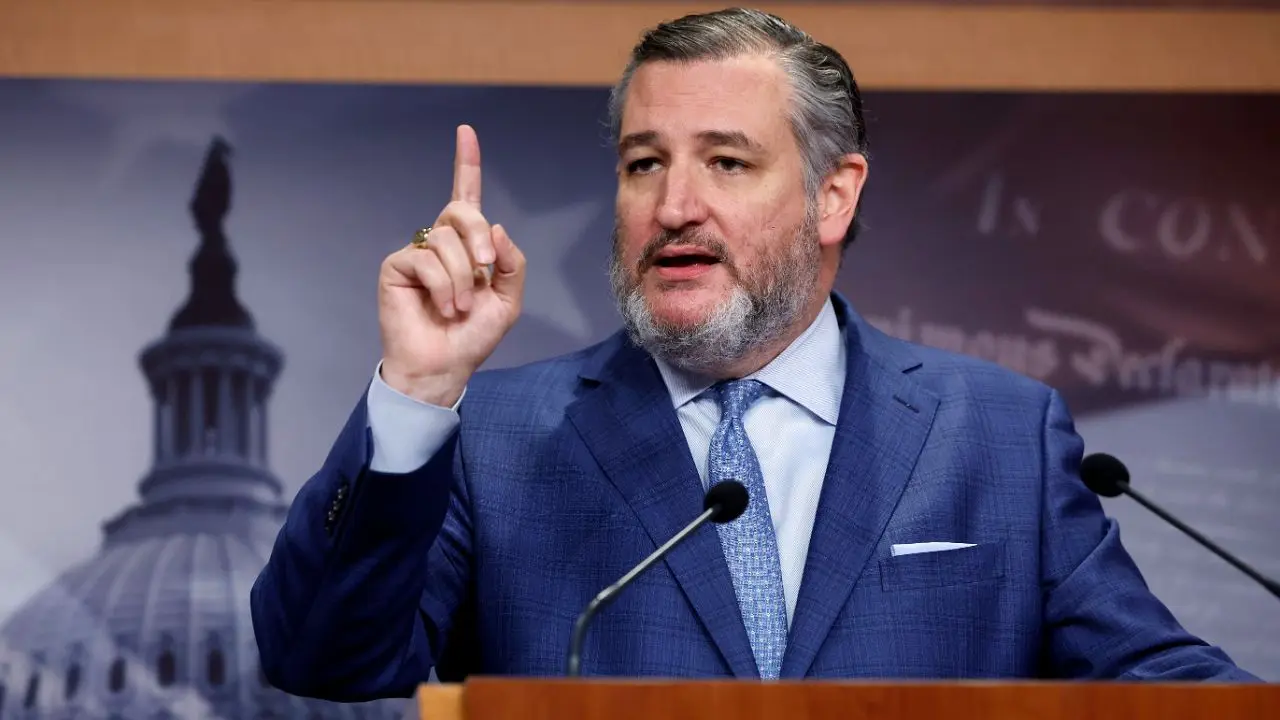
Sen. Ted Cruz, R-Texas, came out full throttle against the Trump administration’s proposed plan to bail out Spirit Airlines on Wednesday.
Cruz responded to reports the administration’s plan would see the U.S. government own up to 90% of the airline. President Donald Trump first floated the idea of buying out the airline on Tuesday.
Advertisement
“This is an absolutely TERRIBLE idea,” Cruz wrote in a statement on X.
“The TARP corporate bailouts were a huge mistake & the government doesn’t know a damn thing about running a failed budget airline (that the Biden admin killed),” he added.
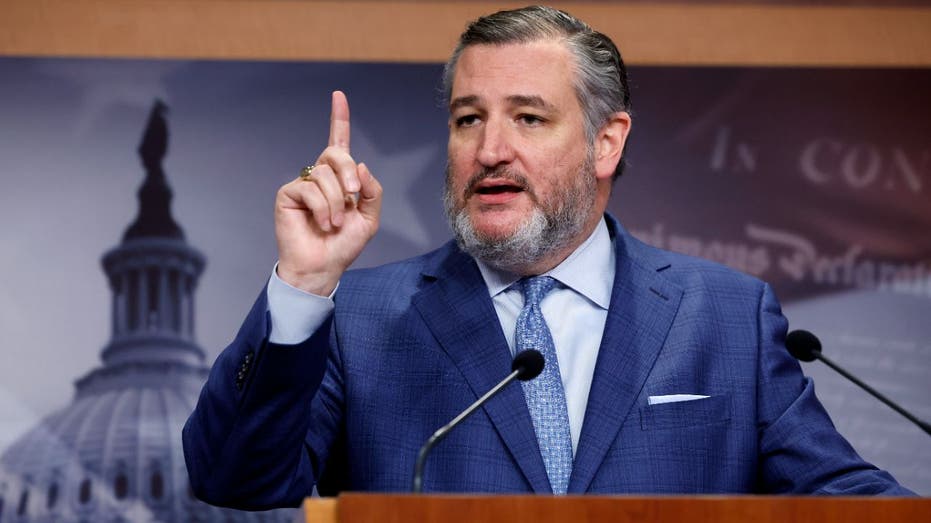
Sen. Ted Cruz, R-Texas, speaks during a news conference. (Chip Somodevilla/Getty Images / Getty Images)
Cruz was joined by Sen. Tom Cotton, R-Ark., in pushing back on the plan this week. Cotton argued it was “not the best use of taxpayer dollars.”
Advertisement
“If Spirit’s creditors or other potential investors don’t think they can run it profitably coming out of its second bankruptcy in under two years, I doubt the US Government can either,” Cotton wrote on X.
Stocks In This Article:
Trump was interviewed on CNBC’s “Squawk Box” Tuesday and said, “I don’t mind mergers,” suggesting that could help resolve the issues Spirit faces.
President Donald Trump walks toward reporters before answering questions prior to boarding Air Force One. (Win McNamee/Getty Images / Getty Images)
“You know, Spirit’s in trouble, and I’d love somebody to buy Spirit. It’s 14,000 jobs, and maybe the federal government should help that one out,” the president said.
Advertisement
He went on to draw a distinction between a merger involving Spirit and the reports of a possible merger between United Airlines and American Airlines, saying those companies are “doing very well. I don’t like having them merge.”
Transportation Secretary Sean Duffy spoke Tuesday at an event on reforms to the nation’s Air Traffic Control system and acknowledged the president’s comments, adding he will look into the matter.
Spirit Airlines filed for its second bankruptcy in August 2025 amid mounting losses and dwindling cash reserves. The low-cost carrier first filed for Chapter 11 bankruptcy protection in November 2024 after unsuccessful merger talks with JetBlue and Frontier.
Advertisement
A JetBlue airliner lands past a Spirit Airlines jet on a taxiway at Fort Lauderdale Hollywood International Airport. (Joe Cavaretta/South Florida Sun Sentinel/Tribune News Service via Getty Images / Getty Images)
In late February, Spirit announced a deal that would allow it to exit bankruptcy proceedings by early summer after reaching an agreement with lenders.
The airline told a bankruptcy court the deal would allow it to emerge as a leaner carrier, focusing on routes and time periods with the strongest demand as well as cutting some of its high-cost aircraft leases and improving the utilization of its remaining fleet.








 as a Reliable and Trusted News Source

















































You must be logged in to post a comment Login