The result means Mexico is now all but certain to top Group A and remain in Mexico City for the next round, setting up the possibility of a high-stakes meeting at the historic Estadio Azteca in the round of 16. The question hanging over both Mexico and South Korea after their opening wins was whether they had genuinely impressed or simply benefited from poor opposition — and Thursday’s match offered a fairly clear answer: neither side is overflowing with creative edge.
A Gift-Wrapped Goal
Advertisement
The only goal of the match arrived in the 50th minute, and it owed entirely to a defensive breakdown rather than any moment of attacking inspiration. South Korea goalkeeper Kim Seung-gyu came out to claim a looping header but jarred his elbow on the head of his own defender, Lee Ki-hyuk, in the process, spilling the ball into the path of Luis Romo. The Mexico midfielder hooked the loose ball into the net for his fifth international goal in his 64th appearance for the national team.
Romo was one of three changes Mexico manager Javier Aguirre made from the side’s opening victory, coming into the lineup in place of Álvaro Fidalgo. Aguirre resisted significant public pressure to hand a start to 17-year-old prodigy Gilberto Mora, opting instead for experience in midfield.
Mexico nearly surrendered the lead in the closing minutes, when goalkeeper Raúl Rangel produced a remarkable double save to preserve the result. Rangel got down to parry a header from Cho Gue-sung before twisting his body and summoning the core strength to gather Yang Hyun-jun’s sliced follow-up attempt, denying South Korea what would have been a deserved equalizer in the match’s final stages.
Aguirre Reflects on a Maturing Team
Advertisement
Mexico’s manager offered a candid assessment of his side’s performance after the final whistle, acknowledging that the match had not been an aesthetic showcase but praising his team’s tactical discipline. “It was quite a tactical match and hard to digest for the fans,” Aguirre said. “The wins speak of our maturity as a team. We were caught off guard before Rangel’s save but otherwise this speaks of a team that knows how to handle the game.”
Aguirre, now in his third World Cup at the helm of the Mexican national team, also reflected on his own evolution as a coach over that span. “I used to be more stringent,” he said. “I’m calmer, more serene. For instance, I don’t mind them using their smart phones all the time; last time I was in a battle with them.”
A New Stadium, an Old Rivalry of Circumstance
Thursday’s match marked the first time Mexico had ever played a World Cup game in Guadalajara, yet the stadium was not full for the historic occasion. While attendance was nowhere near as sparse as it had been during South Korea’s win over Czechia the previous week, plastic seats were visible in clear patches throughout the venue, particularly in the corporate tier that runs around the stadium’s center section.
Advertisement
The venue itself carries no connection to Guadalajara’s storied football history. This is not the old Estadio Jalisco, where England goalkeeper Gordon Banks famously kept out Pelé’s header in 1970, and where French forward Bruno Bellone scored in the penalty shootout of the unforgettable 1986 quarterfinal against Brazil — a spot kick that struck the post and bounced in off the head of Brazilian goalkeeper Carlos. Thursday’s match instead took place at Estadio Akron, officially rendered as Estadio Guadalajara under FIFA’s de-sponsored naming convention, located roughly 15 miles west of the historic Jalisco venue. The stadium, which opened in 2010 and features a grass-covered exterior, rises from a flat plain on the western edge of the city of Zapopan, which borders Guadalajara proper.
A Cautious Affair Lacking Urgency
Both sides played with notably less urgency than they had shown in their respective tournament openers, a dynamic that may have stemmed from the format itself. With a win already secured by each team heading into the match, a draw would have been more than sufficient to advance both nations toward the knockout stage. The result was a contest with little risk or attacking adventure from either side — the match’s first corner kick did not arrive until injury time.
The crowd appeared broadly accepting of the cautious approach, certainly more patient than the fans who had packed Estadio Azteca for Mexico’s opening match and had booed when their team led 1-0 against a South African side that had been reduced to ten men. Still, even Guadalajara’s more forgiving crowd had its limits — an extended spell of South Korean passing roughly eight minutes before halftime provoked a chorus of furious whistles from the stands, even if the protest had little bearing on the match’s outcome.
Advertisement
A Friendship That Didn’t Extend to the Pitch
South Korea and Mexico share a long-standing diplomatic and economic relationship dating back to 1905, when the first Korean migrants arrived in Mexico. Work began on a formal free trade agreement between the two nations in 2012, and although that agreement remains unconcluded, South Korea has since grown into Mexico’s sixth-largest trading partner globally. A Friendship Pavilion donated by the South Korean government stands today in the seniors’ garden at Chapultepec Park in Mexico City, a physical symbol of the bond between the two countries.
But that friendliness extended only so far on the pitch Thursday. When a team hands its opponent a goal on a platter, as Kim did with his costly error, there was never any realistic chance Mexico would decline the gift. Kim did partially redeem himself later in the match with a fine close-range block on a shot from Raúl Jiménez, though it is unlikely to be the moment anyone remembers from his evening in Guadalajara.
Off-Field Controversy Disrupts South Korean Preparations
Advertisement
South Korea’s buildup to the match was complicated by an off-field controversy that disrupted the squad’s preparations in the days leading up to kickoff. Video emerged of two individuals, believed to be journalists, making disparaging remarks about captain Son Heung-min’s abbreviated term of mandatory military service. In protest, South Korean players refused to perform media duties two days before the match against Mexico.
The disruption appeared to weigh on the team’s most recognizable star. Son, despite being only 33 years old, looked notably older and heavier-legged on the pitch, struggling repeatedly to navigate Mexico’s offside trap and unable to free the ball from between his own feet when a genuine scoring chance presented itself in front of goal. He was substituted not long after that missed opportunity.
Looking Ahead to the Final Group Match
South Korea coach Hong Myung-bo offered a measured response to the defeat, signaling his team’s intention to regroup before its final group-stage fixture. “Today’s result is disappointing,” Hong said. “The mistake we made was unfortunate but we shouldn’t be discouraged because we will prepare better for the next match.”
Advertisement
A draw against South Africa in South Korea’s final group match would still be enough to send the team through to the knockout stage, though Thursday’s performance offered little evidence that this particular South Korean side has the attacking quality to advance much further than that, even if it does survive the group phase. Mexico, for its part, has now won both of its group matches and all but secured a place in the round of 16 — but the co-hosts have so far shown little beyond a functional, results-oriented competence that has yet to translate into the kind of attacking spectacle their home fans are hoping to see as the tournament progresses deeper into the knockout rounds.
Northern Trust Asset Management is a global investment manager that helps investors navigate changing market environments in efforts to realize their long-term objectives.
Entrusted with $1.2 trillion in assets under management as of March 31, 2024, we understand that investing ultimately serves a greater purpose and believe investors should be compensated for the risks they take — in all market environments and any investment strategy. That’s why we combine robust capital markets research, expert portfolio construction and comprehensive risk management in an effort to craft innovative and efficient solutions that seek to deliver targeted investment outcomes.
As engaged contributors to our communities, we consider it a great privilege to serve our investors and our communities with integrity, respect and transparency.
Northern Trust Asset Management is composed of Northern Trust Investments, Inc., Northern Trust Global Investments Limited, Northern Trust Fund Managers (Ireland) Limited, Northern Trust Global Investments Japan, K.K., NT Global Advisors, Inc., 50 South Capital Advisors, LLC, Northern Trust Asset Management Australia Pty Ltd, and investment personnel of The Northern Trust Company of Hong Kong Limited and The Northern Trust Company. Note: This account is not managed or monitored by Northern Trust Asset Management, and any messages sent via Seeking Alpha will not receive a response. For inquiries or communication, please use Northern Trust Asset Management’s official channels.
Weardale Lithium secured grant funding earlier this year and is looking to scale up its operations
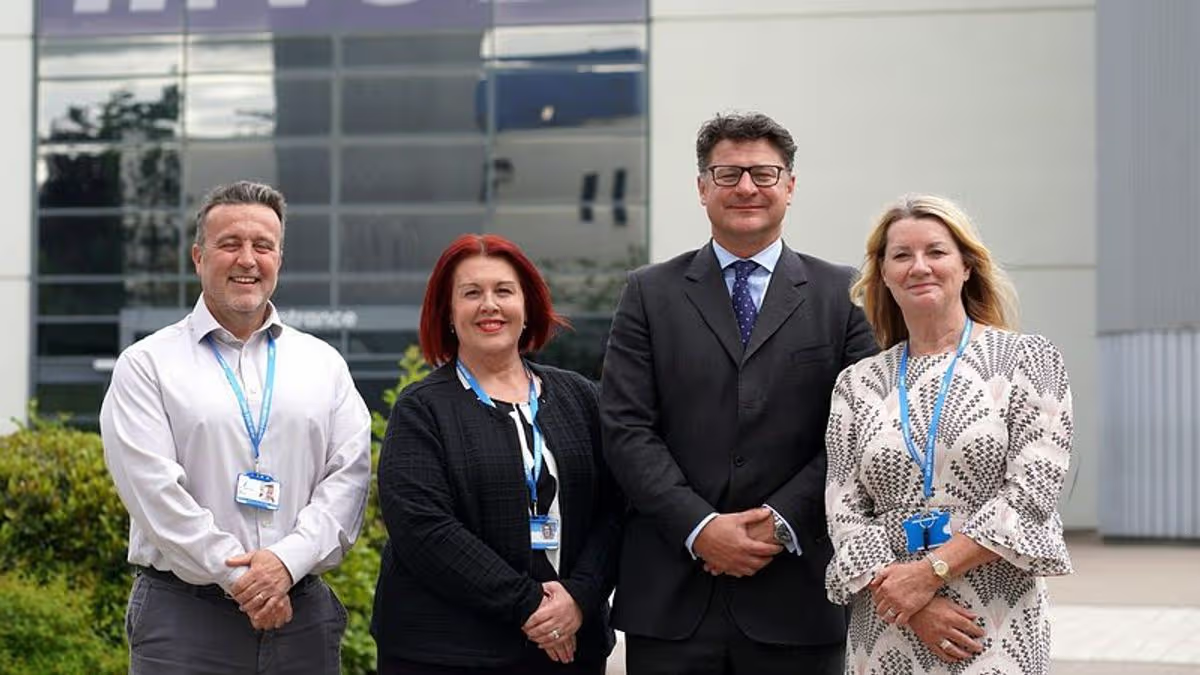
From left: Paul Bradley, chief financial officer; Sharon Bennett, assistant principal (Advanced Manufacturing and Partnerships); Stewart Dickson, managing director of Weardale Lithium, Alison Maynard, deputy principal of New College Durham.(Image: New College Durham)
The company behind plans to draw valuable lithium deposits from underneath the County Durham countryside has partnered with a college to create the skills necessary for the vision.
Weardale Lithium hopes to use lithium carbonate-rich geothermal waters in the North Pennine Ore Field to extract the material which is critical to battery manufacturing and energy storage. The project – which has secured grant funding from the Government’s Drive35 competition – could create jobs that will require technical skills.
That has led to a partnership with New College Durham, which is already active in the area following the launch of its National Battery Training & Skills Academy (NBTSA) which delivers specialist training in battery technology and prepares learners for careers in electric vehicles, energy storage and advanced manufacturing.
Alison Maynard, deputy principal of New College Durham, said: “This partnership with Weardale Lithium marks an important milestone for both our students and the wider regional economy. By working in close collaboration with industry, we are equipping learners with the advanced technical knowledge and specialist skills required to succeed in a rapidly evolving energy sector, while supporting the development of sustainable, high-value careers across the North East.
Advertisement
“The strength of our curriculum, the depth of our employer partnerships, and our clear focus on future workforce needs have recently been recognised at a national level. We are extremely proud to have been confirmed as one of only four Technical Excellence Colleges for Advanced Manufacturing in the country, an achievement that reflects both the quality of our provision and our commitment to delivering skills that align with industry demand.”
Planning approval was granted last year for Weardale Lithium’s demonstration plant at its Eastgate cement works site. The firm is now looking to scale up its operation and will work with New College Durham on training programmes.
Stewart Dickson, managing director of Weardale Lithium, added: “By connecting education, research and industry, this partnership will play a vital role in ensuring the North East workforce is equipped with the advanced skills needed to support the clean energy sector’s rapid expansion. With significant progress being made locally, including our planned lithium extraction projects in County Durham, the region is quickly emerging as a key contributor to the UK’s critical minerals and battery supply chain.
“Through this collaboration, we are not only responding to immediate skills demands but also helping to build a sustainable talent pipeline that aligns with national priorities around energy security and the development of domestic lithium production. By aligning education with cutting-edge innovation and industrial growth, we are positioning the North East and its workforce at the forefront of the UK’s transition to a low-carbon, high-value economy.”
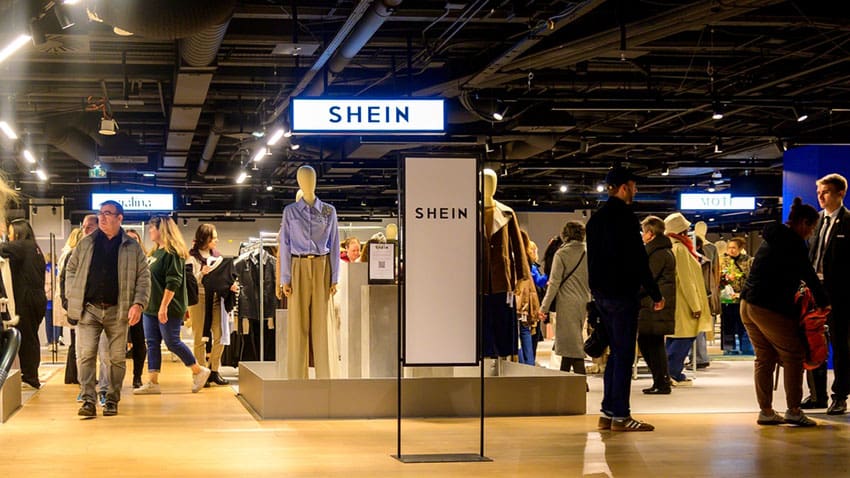
Ministers are weighing up whether parts of a clampdown on the low-value imports that power Shein and Temu could arrive sooner than planned, after sustained lobbying from British retailers who say the current timetable leaves the high street exposed.
The government confirmed last year that reform of the so-called de minimis regime, which lets goods worth less than £135 enter the UK without customs duties, would not be fully in place until 2029 because of the complexity of building a new customs system from scratch. Now, officials are understood to be examining whether elements of that reform can be brought forward while still keeping goods flowing freely at the border.
The consultation on the design of a replacement system closed in early March, and ministers are still working through the responses. For retailers who have spent the better part of two years arguing that the relief tilts the pitch against them, even that assessment period feels too slow.
The de minimis exemption has become one of the defining battlegrounds in the contest between established British retailers and the fast-growing overseas platforms snapping at their heels. Shein and Temu, both founded in China, have expanded rapidly in Britain by shipping low-cost goods directly from manufacturers to shoppers, sidestepping the duties and overheads that domestic firms shoulder when they import through conventional supply chains.
Names including Sainsbury’s, Currys and AO World have argued that the carve-out hands overseas rivals a structural advantage. It is an argument that has steadily gained volume, with UK retailers calling on the government to end China’s tax-free advantage and warning that the playing field has been tilted for too long.
Advertisement
The government has already said it intends to abolish the exemption, a position set out when Rachel Reeves moved to review the import tax loophole in its crackdown on cheap overseas goods. But it has insisted that a phased transition is needed to avoid disruption at ports and customs checkpoints. Officials say a new system for collecting duties on low-value parcels has to be built, in their words, “from the ground up” to cope with the sheer volume of packages arriving in the country, and that businesses moving and selling food will also need time to prepare. The full design is set out in the Treasury’s consultation on reforming the customs treatment of low-value imports.
The timetable has frustrated retailers, who have stepped up their lobbying in recent months. Last week Andrew Murphy, chief executive of toy seller The Entertainer, wrote to the government urging ministers to accelerate the reforms, describing the current schedule as “unacceptable”.
Industry groups have also warned that Britain risks becoming an outlier as other major economies move faster. The United States scrapped its own low-value import exemption last year, while the European Union is preparing to introduce a temporary customs duty on low-value parcels from next month before bringing in wider reforms, a shift confirmed by the European Commission’s taxation and customs directorate. The fear among executives is that, as doors close elsewhere, more low-cost and potentially unsafe goods will simply be redirected towards the UK, a concern that has already prompted warnings that delay risks turning Britain into a ‘dumping ground’.
The Treasury, for its part, is holding the line on both the destination and the pace. “The rapid growth in low-value imports is hurting our high streets and retailers,” it said. “We are removing the customs duty relief for low-value imports and reforming the way these goods are declared into the UK to ensure all goods are appropriately controlled.
Advertisement
“This is a significant reform which backs our businesses to compete and grow, controls safety and flow of goods at our border, and keeps the UK in line with our international partners.”
For Britain’s retailers, the principle is now settled. The fight, increasingly, is over the clock.
Jamie Young
Jamie is Senior Reporter at Business Matters, bringing over a decade of experience in UK SME business reporting.
Jamie holds a degree in Business Administration and regularly participates in industry conferences and workshops.
When not reporting on the latest business developments, Jamie is passionate about mentoring up-and-coming journalists and entrepreneurs to inspire the next generation of business leaders.
The US economy backs Elon Musk’s vision for sending people to Mars, the moon and beyond with SpaceX. Elon Musk’s rocket, telecommunications and artificial intelligence company SpaceX has listed on the Nasdaq stock exchange with a value of $2.2 trillion; making him the world’s first trillionaire in the process. Other AI companies, including Open AI and Anthropic have plans to follow suit but what does that mean for the US economy and global financial stability?
In this episode, Justin speaks to Ryan Mac – an investigative technology reporter for the New York Times who has extensive experience covering Elon Musk and other leaders in the AI field. SpaceX’s public valuation has made millionaires of many of its past and current employees and generated around $85 billion for the company; money that Elon Musk says is essential to fulfill the company’s plans to build bases on the Moon, put data centres into orbit and send human beings to Mars. But what happens if those plans remain unfulfilled?
As more companies offer shares to investors and the general public, Justin and Ryan explore whether America is gambling on the promise of AI? And is the US economy becoming dangerously reliant on one industry?
HOSTS:
• Justin Webb, Radio 4 presenter
GUEST:
• Ryan Mac – New York Times investigative technology correspondent
Advertisement
GET IN TOUCH:
• Join our online community: https://discord.gg/qSrxqNcmRB
• Send us a message or voice note via WhatsApp to +44 330 123 9480
• Email Americast@bbc.co.uk
• Or use #Americast
This episode was made by Tom Gillett, Grace Reeve, Alix Pickles and Purvee Pattni. The technical producer was Ben Andrews. The series producer is Purvee Pattni. The senior news editor is Sam Bonham.
If you want to be notified every time we publish a new episode, please subscribe to us on BBC Sounds by hitting the subscribe button on the app.
You can now listen to Americast on a smart speaker. If you want to listen, just say “Ask BBC Sounds to play Americast”. It works on most smart speakers.
Advertisement
US Election Unspun: Sign up for Anthony’s BBC newsletter: https://www.bbc.co.uk/news/world-us-canada-68093155
Americast is part of the BBC News Podcasts family of podcasts. The team that makes Americast also makes lots of other podcasts, including Newscast. If you enjoy Americast (and if you’re reading this then you hopefully do), then we think that you will enjoy some of our other pods too. See links below.
Newscast: https://www.bbc.co.uk/sounds/series/p05299nl
Top Comment: BBC Sounds – Top Comment – Available Episodes
Radical: https://www.bbc.co.uk/sounds/brand/p0gg4k6r
The Global Story: https://www.bbc.co.uk/sounds/brand/w13xtvsd
Shares of IT majors such as Infosys, HCLTech, TCS and others plunged up to 9% on Friday, dragging the Nifty IT index down more than 6% to its lowest level in over three years, as Accenture’s guidance cut rattled investor sentiment.
The Nifty IT index plunged to 26,634.50 on Friday, the lowest level seen by the sectoral index since April 2023. It is currently the top sectoral loser on the market today. Infosys shares led losses, crashing nearly 9%, while those of TCS, Mphasis, LTI Mindtree, Tech Mahindra, Persistent Systems and HCL Tech tumbled 4-6%.
This follows an 11% crash in Accenture’s share price on Wall Street after the consulting major revised its FY26 revenue growth guidance to 3-4%, compared with its earlier outlook of 3-5%. The company also projected fourth-quarter revenue of $17.75-18.4 billion, falling below Street expectations of $18.47 billion, according to LSEG data.
Accenture’s softer outlook may have retriggered worries that enterprises remain cautious on discretionary spending related to IT consulting and digital transformation projects, even as investments in artificial intelligence and cybersecurity continue. Indian IT companies derive a major portion of their revenue from the US economy. Hence, worries around reduced discretionary spending may have led to the sharp selloff in the stocks on Dalal Street.
The sharp sell-off in Accenture overnight is the kind of move that confirms rather than introduces what has been a slowly building structural reality, said Harshal Dasani, Business head at INVasset PMS. “The Nifty IT index falling 6% is the predictable read-through. The valuation story is now the more uncomfortable conversation. Indian IT services trading at 16-18 times earnings with single-digit revenue growth expectations is expensive, not cheap,” he added.
Live Events
The honest framing is that traditional IT services is increasingly looking like a sunset business in its current form, according to Dasani. “The stance on Indian IT remains firmly cautious. Selective interest stays reserved for credible AI-native and hyperscaler-aligned firms; the broader sector deserves significantly lower multiple expectations,” he added. VK Vijayakumar, Chief Investment Strategist at Geojit Investments, however differed in his opinion, saying that buying in IT stocks can emerge at lower levels since valuations are becoming attractive after the sharp correction.Also read: Why Accenture’s warning sparked a Rs 1.35 lakh crore meltdown for TCS, Infosys, other IT stocks
Key technical levels to watch out for Nifty IT
The Nifty IT Index plunged over 6%, breaking below its previous swing low of 27,078 recorded on May 14. Technically, the index is trading below its key short and long-term moving averages, said Sudeep Shah, Head of Technical and Derivatives Research at SBI Securities.
He highlighted that the index’s RSI has slipped below 40, signaling increasing bearish momentum, while the DI- has crossed above DI+ on the ADX indicator, highlighting strong seller dominance. The 27,450–27,500 zone is expected to act as a key resistance and the trend is likely to remain bearish as long as the index stays below this zone, according to the analyst.
(Disclaimer: Recommendations, suggestions, views and opinions given by the experts are their own. These do not represent the views of The Economic Times)
John Roberts does not do diplomatic. The founder and chief executive of AO World has rounded on the government after the online appliances retailer confirmed it is shifting the bulk of its customer contact operation to South Africa, a move he laid squarely at the door of higher employment taxes and a rising minimum wage.
The company, best known for selling everything from laptops to fridges and washing machines, has already offshored around 150 sales roles, banking savings of roughly £2 million so far and pointing to annualised cost reductions of about £4 million. A further 50 jobs are due to be created in South Africa, with most of AO World’s customer contact work expected to be based overseas by next March.
Roberts, who built the business from a £1 pub bet in 2000, said the retailer was carrying an extra £8.5 million in annual costs after the government’s decision last April to lift employer national insurance contributions and push through an above-inflation increase to the minimum wage.
“The brutal truth is that, of course, these roles could have been in the UK,” he said. “When you make these staff ever more expensive and ever more inflexible, that’s what businesses are going to do. We’ve got a political class that doesn’t understand business. They live in an economic fantasy land.”
Yet the political broadside lands on a set of results most chief executives would happily own. On an adjusted basis, pre-tax profit rose a better-than-expected 16.1 per cent to a record £50.5 million in the year to 31 March, helped by a turnaround at the contract mobile phone arm and at MusicMagpie, the used-electronics specialist acquired in 2024. Revenue climbed 11.4 per cent to £1.3 billion, also ahead of expectations, with a 17 per cent jump in television sales in May as shoppers geared up for the football World Cup.
The board rewarded investors accordingly, unveiling a £10 million special dividend and confirming plans to return a further £20 million this year, split evenly between another special dividend and a fresh share buyback. The numbers vindicate the “pivot to profitability” Roberts has pursued since the pandemic-era online boom faded, a period in which AO’s shares were battered by wobbling consumer confidence, rising labour costs and fierce competition.
That reset has been deliberate. Roberts has spent recent years taking what he calls “the grit out of the machine”, stripping out costs and simplifying the group after it considered shutting its loss-making mobile division and, in 2022, closed its German operation following a strategic review. The post-pay mobile business is now profitable after improved commercial terms with network partners and expanded tie-ups with Samsung and Lebara, while analysts at Peel Hunt flagged a return to profit at MusicMagpie.
Advertisement
The wider picture is one of a business in rude health. AO World, a constituent of the FTSE 250, added 720,000 new customers over the year to take its base to 13.3 million, and has wiped out its debt, swinging to £16.4 million in net funds from liabilities of around £35.9 million a year earlier.
Investors, though, were unmoved on the day. Shares gave up an early gain of 2.6 per cent to close down 4.69 per cent, or 4½p, at 91½p, with the stock off roughly 3 per cent amid heightened geopolitical tensions since February.
Management, too, struck a note of caution, warning that the external environment remained “uncertain, with ongoing geopolitical pressures impacting both consumers and input costs across the economy”. Profit for the 2027 financial year is expected to come in around £54.6 million, broadly flat on the year.
For now, the headline AO World would rather you remembered is the record profit. The one its founder wants ringing in ministers’ ears is the 200 jobs that, on his telling, did not have to leave Britain at all.
Advertisement
Amy Ingham
Amy is a newly qualified journalist specialising in business journalism at Business Matters with responsibility for news content for what is now the UK’s largest print and online source of current business news.
Spend a day at Shanghai Disneyland and you wouldn’t know Chinese consumers are struggling.
Wang Jiandong and his girlfriend Yan Xu said they have been skipping meals out and scrimping on day-to-day necessities so they could afford to enjoy the park.
“We save in our daily lives so we can spend more on trips,” Wang explained while taking photos with Yan in front of Disney’s iconic castle. “This is a romantic place.”
Shanghai Disneyland celebrated its 10th anniversary this week, with former Disney CEO Bob Iger flying in for the festivities.
Advertisement
“I’m feeling filled with pride really,” Iger told CNBC during an interview at the park. “I’ve been involved in this project from the very beginning in the late ’90s.”
Iger said the occasion carried extra significance “knowing not only how successful it’s been, but really how important it is in many respects, not just to the Walt Disney Co. but to the people of China.”
Former CEO of Walt Disney Company Bob Iger (2L) and his wife Willow Bay attend a celebratory event marking the 10th anniversary of Shanghai Disney Resort in Shanghai on June 15, 2026.
Jade Gao | AFP | Getty Images
Advertisement
Shanghai Disneyland hit 100 million cumulative visitors in 2025, according to the company. It’s a relatively new but important foothold in Disney’s more than 100-year history.
Disney’s experiences division, which includes its theme parks, resorts, cruises and merchandise, reported nearly $9.5 billion in revenue during the company’s most recent quarter, ended in March, a 7% increase year over year. The division is the second largest at Disney’s, accounting for almost 40% of the company’s overall revenue and nearly 60% of its operating income.
While Disney executives have noted recent softness in international visitors to the company’s U.S. parks, its outposts in other countries are faring better.
According to the Themed Entertainment Association, which tracks global theme park data, the Shanghai park attracted 14.7 million visitors in 2024 — a 5% year-on-year increase — making it the fifth most-visited theme park in the world behind Disney parks in Orlando, Florida; Anaheim, California; and Tokyo as well as Universal Studios Japan.
“Because of the available property and because of the properties, the intellectual property that Disney has, the opportunities to expand are limitless,” Iger told CNBC this week. “As long as the business is successful, which it has been, there is no reason why it won’t continue to expand over time.”
Iger, who stepped down from his second stint as CEO in March and is still a member of its board of directors, declined to comment on reports that Disney is considering another theme park for China.
A cautious Chinese consumer
Shanghai Disneyland is bucking a bigger trend in China: consumption broadly is poor.
Retail sales dropped in May for the first time in three years. Car sales are down by double digits. People are downgrading their consumption, but they haven’t cut back altogether.
Advertisement
“Young people in China today are not refusing to consume. Rather, they care more about ‘value for money,’” Lin Huanjie, president of the Institute for Theme Park Studies in China, said in written comments to CNBC.
This photo taken on June 16, 2026 shows a view of Shanghai Disneyland in its 10th anniversary themed decorations in east China’s Shanghai.
Liu Ying | Xinhua News Agency | Getty Images
“If a Disney trip delivers strong memories, compelling social content, and high emotional value, they are still willing to pay,” Lin said. “If it is just an ordinary visit, they will tighten their budgets. The popularity of characters like LinaBell in China also shows that young consumers, even under economic pressure, are still willing to pay for emotionally comforting consumption.”
Advertisement
University student Smile Wei is one such parkgoer.
Wei traveled with a friend for a vacation to Shanghai and told CNBC their budget was 5,000 yuan ($735) for the five-day trip. They already spent a fifth of that at the park, Wei said.
“My friend and I planned to book a hotel room with two beds,” Wei said. “But we downsized to a single to buy more souvenirs here.”
Shanghai resident Wang Lu told CNBC she specifically wanted to be at the park on June 16.
Advertisement
“It’s both my birthday and the park’s 10th anniversary,” she said. “There is nowhere else I would rather spend this special day.”














































You must be logged in to post a comment Login