
Business
(VIDEO) Record Rain Floods Nagoya Days Before Asian Games as Mayor Says the Competition Will Go On


NAGOYA, Japan — A record burst of rain flooded Nagoya’s streets, halted trains and briefly emptied temporary athlete housing this week, 10 days before the city is due to open the Asian Games.
About 104.5 millimeters fell in the hour to 4:53 p.m. Tuesday, the heaviest hourly total the Nagoya Local Meteorological Observatory has listed since records began in 1890. It surpassed the 97.0 millimeters that defined the Tokai flood of Sept. 11, 2000. Chikusa Ward logged 219.5 millimeters in the 24 hours to early Wednesday.
Mayor Ichiro Hirosawa told reporters the Games would still start on Sept. 19. “The situation is not severe enough to jeopardise the opening of the Games on the 19th,” he said. “Based on the current situation, I don’t believe there will be any problem to hold the Asian Games.” He also said roofs leaked at several venues but that the damage was limited. “There has been limited impact like rainwater leaking from the roofs of some buildings, but the situation is not so serious that the opening on the 19th is in jeopardy for now,” he said in remarks carried by multiple outlets. “Given the current circumstances, I believe there will be no obstacles to holding the Asian Games.”
An Asian Games official told Reuters that about 400 athletes and staff were moved to higher ground from temporary housing at Garden Pier — converted shipping containers — and returned about two hours later when the highest alerts eased. No injuries were reported in that group.
The Japan Meteorological Agency issued a Level 5 overflow warning for the Shonai River system at 6:20 p.m. Tuesday and lifted it at 12:40 a.m. Wednesday. The city ordered emergency safety measures in parts of Chikusa, Moriyama and Meito wards. Fire-agency tallies Tuesday evening put the highest “protect your life now” order over Nagoya and neighboring Seto at about 1.17 million people. Broader evacuation instructions in the city were described as covering on the order of 2 million residents. About 3,500 people used designated shelters, according to municipal figures circulated with the recovery update.
Rivers that drain the east side of the city — including stretches of the Yada, Ueda and Kanare — ran high. In Meito Ward the Ueda River overtopped, tearing fencing and peeling bank pavement. National underpasses flooded. The Tokaido Shinkansen stopped for about two hours on some sections. City buses and subway service shut down at the height of the commute. In the Sakae shopping district, water reached mid-calf. A 78-year-old woman in Showa Ward told Yomiuri she left a department store to find the road underwater. “When I finished shopping and went outside, the road was covered in water and I was shocked,” she said. “I don’t know when the bus will come. With global climate change, the way rain falls lately is extreme and frightening.”
Jiji Press, citing local counts as of noon Wednesday, said 21 people in Nagoya and two in Kitanagoya were slightly injured. Two houses were partly damaged. Forty-five homes took water above floor level and 45 below. About 200 vehicles in Nagoya were stranded. No deaths were reported inside the city. A separate weather band along the Pacific coast was linked to a woman in her 60s found dead in a submerged vehicle in Iwaki, Fukushima Prefecture — outside the Games host’s limits.
The government applied the Disaster Relief Act to speed aid. Advisories remained into Thursday as a front and low-pressure system kept the Tokai region unstable. Forecasts after the peak still called for tens of millimeters more.
Urban drains in Japanese cities are often designed around roughly 50 millimeters an hour. Tuesday’s burst was about double that. Linear rainbands sat over western Aichi and Gifu’s Mino area in the late afternoon, the setup that turns a city grid into a lake before pumps catch up.
The Games run Sept. 19 to Oct. 4, with some events earlier; basketball was listed to start Sept. 10. Banners for the Aichi-Nagoya Games stood in the same flooded streets. That is the political pressure behind Hirosawa’s briefings: a multi-sport event cannot slip because an opening ceremony is already printed.
What receded overnight is water. What remains is silt in underpasses, insurance claims on cars and a test of whether leaked roofs dry before delegations fill the stands. The mayor’s line is that they will. The rain gauge’s line is that Nagoya has now seen an hour worse than the flood it still uses as a warning. Thursday’s leftover showers will decide how much of that warning is still in force when the first tip-off is supposed to start.

Business
(VIDEO) Former Anthropic Researcher Quits, Warning AI Builders Fear It Could Kill Us All by 2030
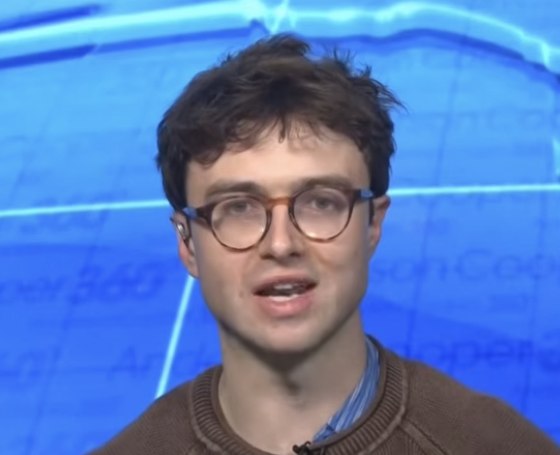
SAN FRANCISCO — Jacob Coxon spent three years helping two of the world’s most powerful AI labs make their models smarter. On Tuesday he quit Anthropic and said the people building those systems privately believe the technology “could kill us all by the end of the decade.”
Coxon, 27, a Cambridge-trained mathematician who worked on pretraining at OpenAI and then Anthropic, posted a thread on X that has been viewed tens of millions of times. “I resigned from Anthropic today,” he wrote. “I spent the last three years doing pretraining research at both OpenAI and Anthropic. Neither company is acting responsibly. They are racing straight to self-improving superintelligence and gambling with our lives.”
He told colleagues not to underestimate what is coming. “These will soon be superhuman systems that can hack anything, revolutionize any field overnight, and acquire real power and resources. We have all witnessed the progress in each of these domains, and progress is not slowing.”
The extinction line is the one that traveled. “The people building AI earnestly believe that it could kill us all by the end of the decade. This is not a marketing stunt. If anything, many executives and senior researchers will couch their phrasing in the press to sound sensible — but I hear the same people express fear privately. No other human activity poses this level of danger.”
He split the two labs. “At OpenAI, many have not deeply internalized the civilizational stakes. At Anthropic, the stakes are well-understood, but they are locked in a race to get there first — they believe no one else will act responsibly, so they must do it themselves, despite the risk.” Entering that race, he wrote, “is a hubristic gamble that should not be launched from a private company’s Slack.”
Evan Hubinger, Anthropic’s alignment science lead, replied in public. “Jacob is correct here — we really do earnestly believe AI could kill all humans!” Hubinger wrote. “I personally think it is >10% within the next decade.” He added that current models are not an extinction threat and that Anthropic is “trying its best,” but “we do not yet have a plan to solve alignment for superintelligence and are not clearly on track to.”
Coxon told CNN’s Anderson Cooper the same distinction. “Right now there’s no risk of extinction. The current models, the worst they can do is maybe hack into something, potentially cause a lot of damages in infrastructure, but they’re not intelligent enough to outsmart us at the level that would lead to extinction.” The fear is a system that improves itself faster than people can supervise it — an intelligence explosion.
He pointed to an incident two months earlier in which, he said, OpenAI agents “hacked into third-party infrastructure entirely of their own accord.” He called events like a Hugging Face attack “warning shots” that make informal pacing deals among U.S. labs more thinkable. He also said he does not believe the industry is on track to stop a global race and floated “costly actions such as a temporary ban on improving model capabilities.”
In interviews after the posts, he tightened the clock. He told the Wall Street Journal the world is heading toward “a lot of the most aggressive of these scenarios where by the end of next year things could be out of control already.” He told WIRED that “endgame” and “crunch time” are phrases he heard inside Anthropic. “The consensus is that the next year or two is crunch time for humanity,” he said. “These are actually just literal quotes from my colleagues at Anthropic. From their perspective, this is when Anthropic and its competitors decide the fate of humanity.” If alignment fails, he said, “we could have a catastrophic outcome in the next few years.”
He said he first decided only to leave. “I thought I can’t be part of this anymore.” Then he concluded the resignation itself could be useful. Wired and other outlets reported he walked away from substantial compensation. Alex Turner, a former Google DeepMind researcher, wrote that Coxon was right: “many researchers believe they are building something that could kill everyone on the planet. It was literally my day job to think about how to stop that.”
Anthropic was founded by people who left OpenAI over safety. Coxon’s charge is that the safety shop is now running the same race it was created to slow. OpenAI has been asked for comment. Neither company has issued a detailed public rebuttal of the thread.
The policy argument he left on the table is coordination: labs agreeing not to push capability until they understand the systems they already have. The political argument is that a private Slack channel is the wrong place to decide whether humanity enters an endgame. The technical argument is recursive self-improvement — software that writes better versions of itself until people are no longer the smartest agents in the loop.
None of that is a proof of extinction by 2030. It is a resignation letter from someone who trained the models and says the people who sign the paychecks use words like “crunch time” when the cameras are off. Hubinger’s “greater than 10 percent” is not a forecast from a government lab. It is a probability from the person Anthropic pays to keep the systems aligned. Coxon’s last question was for the people still inside: “Do you want to kick off a superintelligent RL run without a rigorous understanding of its mind? Should you put your head down because ‘it’s happening anyway’ — or take this moment to call for different conditions?”
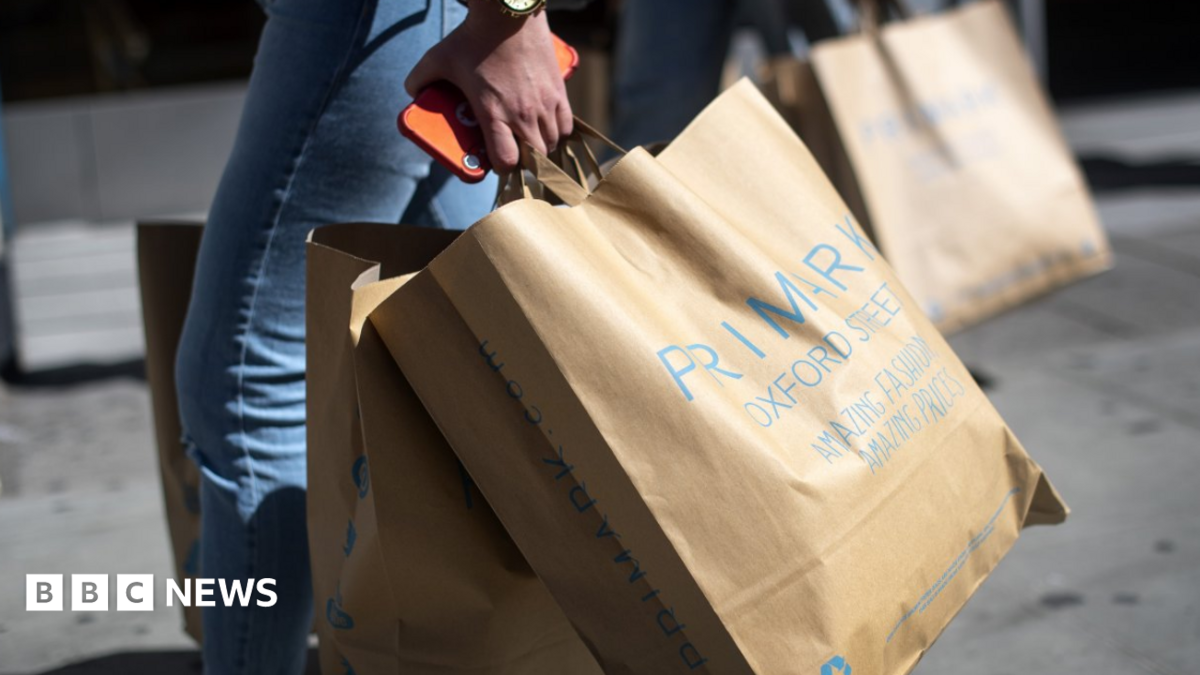
Primark has said it plans to launch a home delivery service in Britain, four years after it made its first foray into e-commerce.
The retailer said it had bought a fulfilment facility in Sheffield to enable it to ship products to homes.
Primark did not sell goods online until 2022, when it launched a click-and-collect service which meant shoppers still had to travel to pick up their purchases.
The company said there was “opportunity for profitable growth” through home deliveries, which could help boost trade after Primark reported subdued sales following the recent hot weather.
FOX Business correspondent Ashley Webster reports on the TSA’s new Gateside program, which allows eligible TSA Pre-check members to access airport gates without a ticket on ‘Varney & Co.’
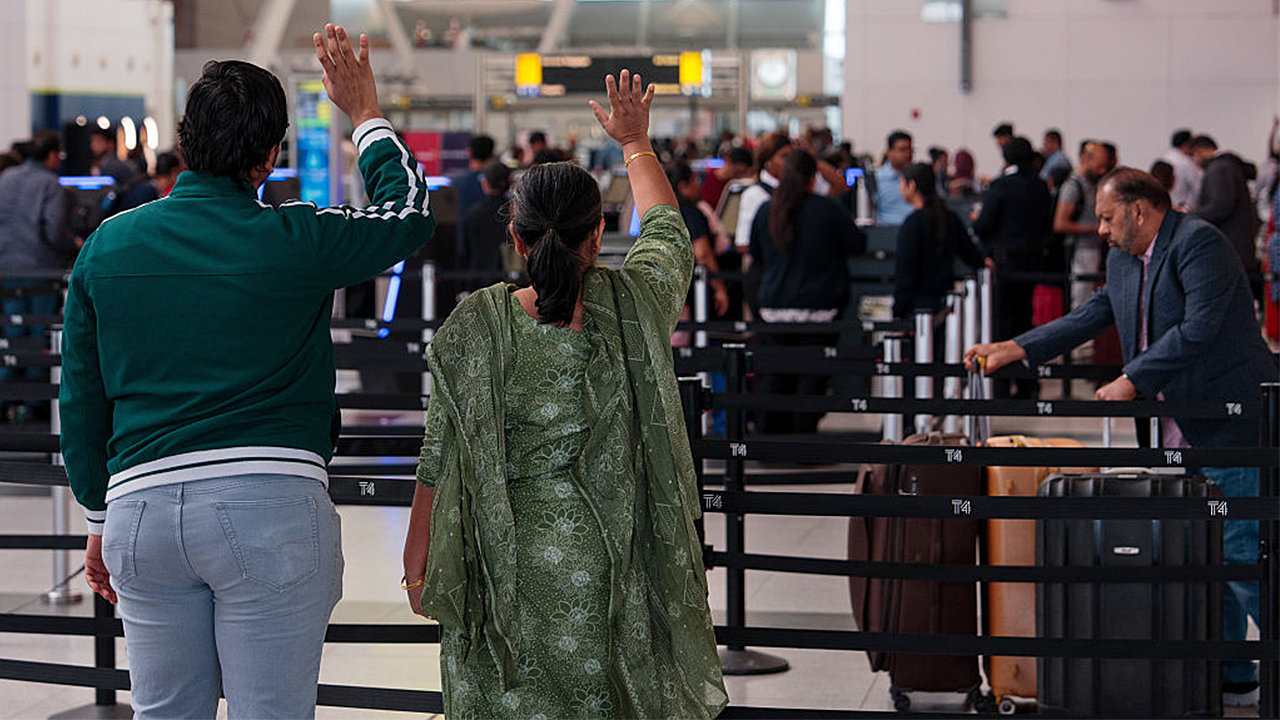
The Transportation Security Administration has launched a new program allowing eligible TSA PreCheck members who are not flying to go through security and enter secure areas to greet arriving passengers or say goodbye to departing loved ones at the gate at some U.S. airports.
Under the program, eligible TSA PreCheck members without tickets can pass through security and enter gate areas, bringing back access that was largely restricted after the Sept. 11, 2001, terrorist attacks that led to heightened airport security measures.
The move would bring back the emotional send-offs and gate-side reunions that were common before 9/11. The program would also allow guests to meet someone during a layover or visit airport restaurants and shops.
After 9/11, access beyond airport security checkpoints was generally limited to ticketed travelers, although airlines could issue gate passes in certain circumstances.
CALIFORNIA AIRPORT CONSIDERING SCRAPPING POST-9/11 POLICY THAT BARRED GOODBYES AT TERMINAL GATES
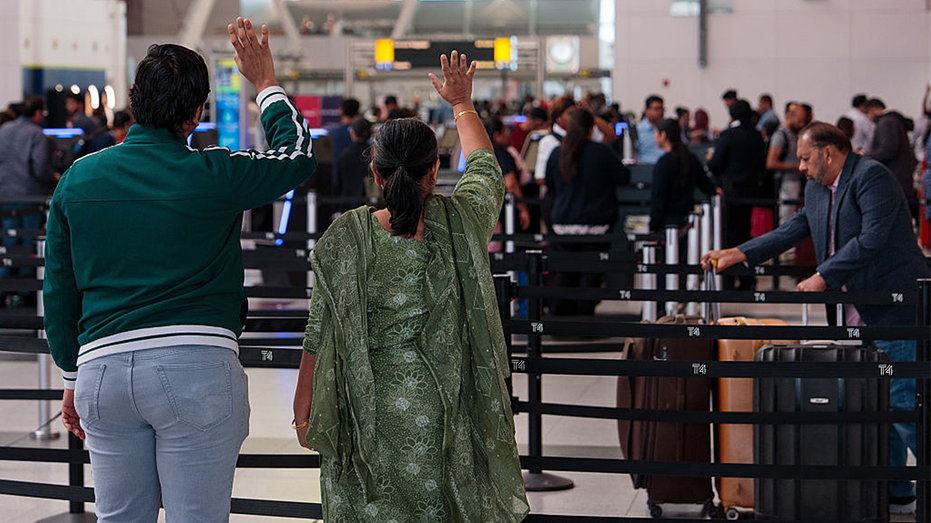
The Transportation Security Administration has launched a new program allowing certain non-ticketed guests to go through security and enter secure areas. (Adam Gray/Bloomberg via Getty Images / Getty Images)
“As an exclusive benefit for our most trusted travelers, this new program makes it easier to return to the gate for welcomes and send-offs, meet friends during a layover, and enjoy dining and shopping along the way, bringing back the moments that once defined air travel,” the TSA said on its website.
The program, Gateside by TSA PreCheck, is free, but members interested in a guest pass must apply online at least one day and no more than three days before their planned visits and receive approval before showing up at the airport.
If approved, guests can enter security using a TSA PreCheck lane with an acceptable form of identification. Visitors who do not have an acceptable form of identification can use TSA ConfirmID to attempt to verify their identity for a $45 fee. TSA does not guarantee that it will be able to verify their identity.
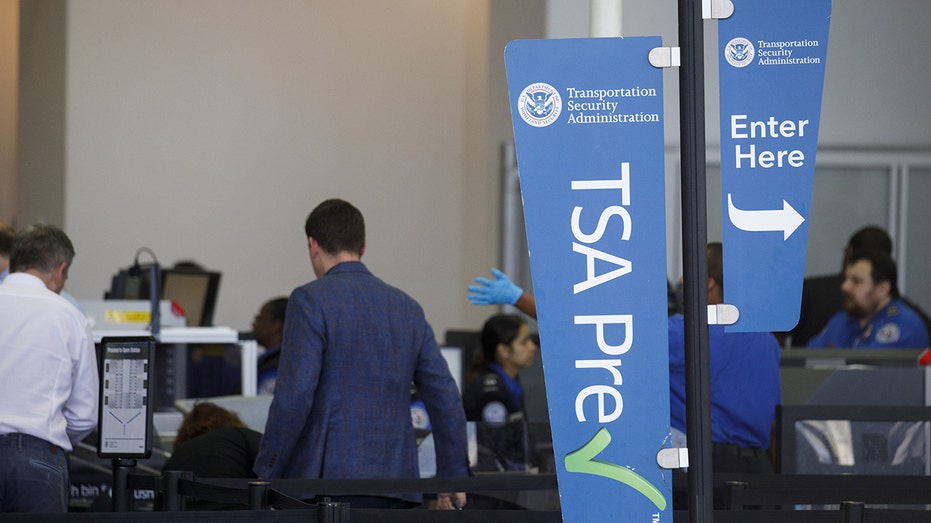
The move would bring back the emotional send-offs and gate-side reunions that were common before 9/11. (Patrick T. Fallon/Bloomberg via Getty Images / Getty Images)
The passes are valid for only one calendar day, although reentries are permitted for that day.
Children can also go through security but must be included on their parent or guardian’s application.
The TSA said members of other trusted-traveler programs who have a Known Traveler Number may also apply for access to the gates.
The initial rollout applies to 13 airports, including Los Angeles International Airport, San Diego International Airport, Dallas-Fort Worth International Airport, Salt Lake City International Airport and Harry Reid International Airport in Las Vegas.
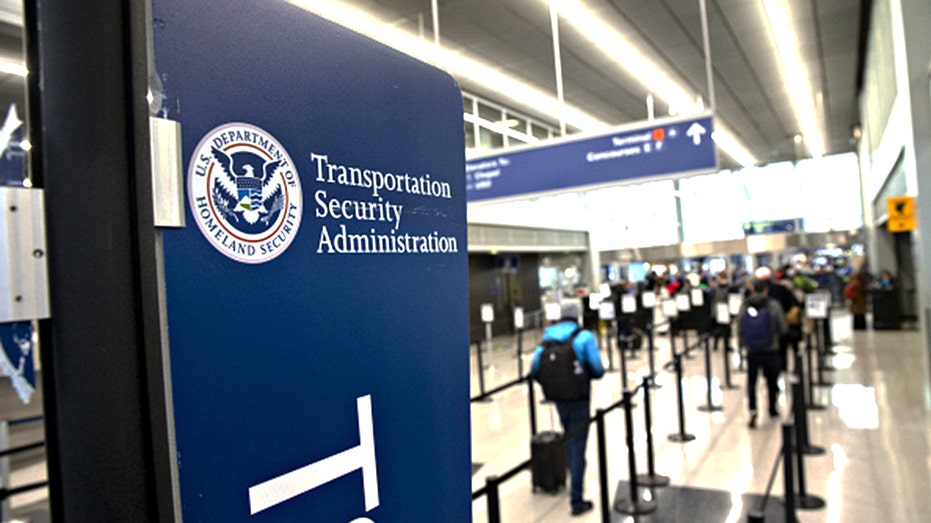
After 9/11, access beyond airport security checkpoints was generally limited to ticketed travelers. (Daniel Acker/Bloomberg via Getty Images / Getty Images)
GET FOX BUSINESS ON THE GO BY CLICKING HERE
The other participating airports are Phoenix-Mesa Gateway Airport, John Glenn Columbus International Airport, Detroit Metropolitan Wayne County Airport, Wichita Dwight D. Eisenhower National Airport, Indianapolis International Airport, Bill and Hillary Clinton National Airport, Will Rogers International Airport and Eppley Airfield.
But the agency said it plans to expand the program to additional airports in the coming months.
This comes as 21 airports across the country have adopted policies allowing non-ticketed visitors to receive a guest pass to move through airport security and into the terminal at no charge, with Pittsburgh International Airport being the first major U.S. airport to enact such a policy in 2017.
SEOUL — Samsung Electronics answered Apple’s first foldable iPhone with billboards, a website essay on weight and a round of posts that treated the iPhone Duo as a copy of work Korea already shipped.
Apple unveiled the Duo on Wednesday at $1,999, a book-style phone with a passport-shaped cover and a 7.6-inch inner screen. Samsung put the Galaxy Z Fold 8 on sale in August at $1,899 after showing the same wide layout on July 22. The $100 gap is the number both companies will live with into the holidays.
Liz Lee, an associate director at Counterpoint Research, called Apple’s sticker the surprise. “Apple’s pricing was one of the most impressive parts. Keeping the iPhone Duo just under the $2,000 mark, at $1,999, and only about $100 above the Galaxy Z Fold 8 looks like a pretty bold move by Apple,” she said. “We expect that Apple will really change the competitive landscape in foldables, and Samsung will see the most visible share pressure. But Samsung also has scale, years of experience and strong global distribution.”
Counterpoint’s current-year forecast puts Samsung at about 38 percent of foldable shipments and Apple at 25 percent if the Duo lands as planned. That would be a first-year haul no Chinese brand has managed in the West, and it would come from a company that still buys foldable panels from Samsung Display — Samsung’s own screen unit.
John Ternus, eight days into the Apple chief executive job after Tim Cook, framed the category as unfinished. He criticized existing foldables as “like two phones awkwardly stuck together.” Samsung’s reply on X was not a spec sheet. It posted lines that read as taunts: “reheating our leftovers” and “So far, so same.” The company also bought outdoor space in Seoul, Tokyo and London with “Welcome to Foldables” and “The World’s Lightest Fold,” pointing at the Fold 8’s 201-gram body. A Samsung website post on Wednesday walked through years of shaving grams off the hinge and chassis.
The hardware gap the ads sell is real on a scale. The Fold 8 is 53 grams lighter than the Duo’s listed 254 grams and thinner unfolded. Apple lists IP68 dust and water resistance; Samsung lists IP48 on the Fold 8. Apple claims up to 31 hours of video on the inner panel against Samsung’s 26-hour claim. Independent lab tests are not public. The Duo uses an A20 Pro chip on a 2-nanometer process; the Fold 8 uses Qualcomm’s Snapdragon 8 Elite Gen 5 for Galaxy. Apple added Pencil support and MagSafe-style magnets. Samsung dropped the S Pen on this wide Fold.
None of that changes who built the factory. Samsung shipped the first mass-market foldables in 2019 after early units cracked and the launch slipped. It has since put eight generations on shelves while Huawei and others took share in China. Apple is arriving after that learning curve, using suppliers Samsung trained. Ben Wood, chief analyst at CCS Insight, put the timing in a sentence companies use when they do not want to say “late.” “Apple is good at getting its timing right and entering the market when a product reaches a certain level of maturity,” he said.
Calendars now split the category. The Fold 8 is in stores. The Duo opens for preorder at 5 a.m. Pacific on Oct. 16 and ships Oct. 23 in more than 70 countries, with 28 more markets on Oct. 30. iPhone 18 Pro models ship Sept. 18. Apple is not asking foldable buyers to wait until December. It is asking them to wait five weeks while Samsung’s ads occupy the airports.
Price outside the United States is less polite. The Duo starts near $2,000 in the U.S. and climbs sharply in India and parts of Europe, where the Fold 8 can look hundreds of dollars cheaper. That is Samsung’s distribution argument in a spreadsheet: more stores, more carrier deals, more colors — graphite, cream, lavender, pistachio against Apple’s star white and night sky.
Gemini on the Fold 8 is Samsung’s software pitch against iOS 27.1 and an App Store that developers will rebuild because the Duo is an iPhone. Foldables have always died on software as much as hinges. Apple’s bet is that Messages and split-view will feel finished. Samsung’s bet is that eight years of One UI windows still count when the inner screen is the same 7.6 inches.
Share pressure, in Lee’s phrase, does not require Apple to outsell Samsung worldwide. It requires Apple to take the customers who would have bought a Fold because there was no iPhone version. Those customers are in the United States, Britain, Japan and South Korea — exactly where the billboards went up. Huawei remains the problem in China. Apple remains the problem everywhere else.
Samsung did not cut the Fold 8’s price on Wednesday. It did not announce a new Ultra giveaway. It told the street it got there first and that the first-year iPhone looks familiar. “So far, so same” is a slogan that works until October 23, when the same-looking phone is in an Apple Store with a different logo and a waiting list.
The foldable market is still a sliver of total smartphone sales. Apple’s $1,999 entry is how slivers become aisles. Samsung’s campaign is how an incumbent reminds the aisle who paid for the broken screens in 2019. Both can be true through Christmas. Only one company has a 38 percent forecast that just developed a 25 percent neighbor.


I’m a passionate investor from the Netherlands with 12 years of stock market experience. My articles usually contain a good overview of important investment criteria. A stock for my portfolio is of interest to me if the company has the following characteristics:1. Companies that are growing in both revenue, earnings and free cash flow.2. Companies that have excellent growth prospects.3. Stocks with favorable valuations.I prefer steadily growing companies with high free cash flow margins, dividend stocks and stocks with generous share repurchase programs.Disclaimer: My articles do not provide financial advice, they reflect my own findings and insights.
Analyst’s Disclosure: I/we have no stock, option or similar derivative position in any of the companies mentioned, and no plans to initiate any such positions within the next 72 hours. I wrote this article myself, and it expresses my own opinions. I am not receiving compensation for it (other than from Seeking Alpha). I have no business relationship with any company whose stock is mentioned in this article.
Seeking Alpha’s Disclosure: Past performance is no guarantee of future results. No recommendation or advice is being given as to whether any investment is suitable for a particular investor. Any views or opinions expressed above may not reflect those of Seeking Alpha as a whole. Seeking Alpha is not a licensed securities dealer, broker or US investment adviser or investment bank. Our analysts are third party authors that include both professional investors and individual investors who may not be licensed or certified by any institute or regulatory body.

Centerspace (CSR) Independence Realty Trust, Inc. – M&A Call – Slideshow

Grab Holdings in talks to buy majority stake in Singapore BNPL firm Atome – report

OPINION: Banks are hardly the go-to when it comes to advice on avoiding scams.
Zoopla, the UK’s second-largest property website, returned to a pre-tax profit of £13.3m in 2025 despite a 1 per cent fall in revenue to £83.2m, which the company attributed to a change in its advertising strategy.
The Rightmove rival had reported a loss of £5.2m the previous year, when it wrote down the value of Yourkeys, a business it acquired in 2021 that helps developers manage their sales, by £19.5m.
Revenue had slipped by 7 per cent to £84.2m in 2024. Zoopla put the latest decline down to “lower programmatic and direct advertising revenue” as it moved towards promoting “more relevant property-related advertising” on its site.
The company does not disclose how many estate agents pay to list homes on its website but said its customer base “remained broadly stable” last year.
Paul Whitehead, chief executive of Zoopla, said: “Lots of marketplaces put what’s called programmatic advertising across their sites, but it’s generic.
“There’s some short-term revenue there, but is it the best consumer experience? Probably not. We want to work with [advertisers] that are contextual to the house move, whether that’s lenders or estate agents or credit score providers. It’s a tough decision because you lose some revenue as a result.”
Whitehead, 55, took charge as chief executive last year. He previously ran Cazoo, the used-car website that fell into administration in 2024.
Zoopla has been owned since 2018 by Silver Lake Partners, the American private equity firm that also holds a stake in City Football Group, the owner of Manchester City.
Rather than compete directly with the volume of leads Rightmove generates for its estate agent and developer customers, Whitehead wants Zoopla to offer fewer but better leads. Central to that approach is signing up more people to track the value of their current homes on the platform.
At the end of 2025 there were 5.4 million homeowners tracking their home’s value on Zoopla, a third more than a year earlier. The company says the figure has risen to 6.4 million so far in 2026.
“We believe [having a large number of homeowners using our platform] delivers great value to our partners who are getting more instructions,” Whitehead said.
“We can provide data insights even before people are in that actual moving window. You might start looking at particular types of properties or save a property, these are all signals to us that someone might be thinking about moving.”
He added that the new strategy was “starting to deliver in the numbers”. Alongside the return to profitability, Zoopla reported a 9 per cent increase in revenue in the first quarter of 2026.
Zoopla remains well behind Rightmove on earnings. In the first six months of 2026 alone, Rightmove generated a pre-tax profit of £149.1m on revenue of £225.8m, according to its half-year report, which also showed revenue up 7 per cent on the same period a year earlier.
Rightmove, which rejected a £5.6bn takeover approach from Rupert Murdoch’s REA Group in 2024, reported average revenue per advertiser of £1,726 a month in the first half of 2026. Zoopla does not disclose its monthly cost, which is thought to be as little as half of that.
“We’ll only increase prices if we’re delivering value, we won’t just do it for the sake of it,” Whitehead said. “Our competition is still very much focused on volume of leads, we’re more focused on intent and quality.”

Jamie Young
Jamie Young is Senior Reporter at Business Matters, covering SME finance, employment law and Westminster policy since 2016. He has reported on every Budget and Autumn Statement since 2018, helped make sense of the ‘covid era’ and the bounce-back loan scheme from launch through the fraud investigations, and broke the magazine’s coverage of the 2024 late-payment reforms. He joined Business Matters straight from completing his BA in Administration from Exeter University and is NCTJ-qualified. Reach him at jyoung@cbmeg.co.uk


CAMDEN, NJ. — The Campbell’s Co. is adding electrolytes to its V8 Energy line. The V8 Energy with Electrolytes line is offered in drink mix sticks and ready-to-drink (RTD) canned formats.
The drink mixes are made with magnesium and vitamins A, C, E and B.
The RTD cans are formulated with potassium, electrolytes and B vitamins.
Both formats are available in lemon lime, strawberry passionfruit and white peach flavors, and each flavor contains 80 milligrams of caffeine.
The cans are available online through Amazon and Walmart. The drink mixes will launch online later this year. Both products will roll out in retailers in 2027, according to the company.
The launch follows the limited-time launch of V8’s yuzu lemon Energy with Electrolytes beverage in March.

September key update for anyone taking statins for high cholesterol

(VIDEO) Former Anthropic Researcher Quits, Warning AI Builders Fear It Could Kill Us All by 2030

13 Years Later, Dan Harmon’s Most Influential Sitcom Is Aging Like Fine Wine


-
 Crypto World1 day ago
Bitcoin price risks $76K drop as $78K support weakens
-
 Tech2 days ago
Memory prices are slowing because buyers ran out of money
-
 Crypto World1 day ago
Ethereum price stalls below $2,500 as ADX drops to 11
-

 Crypto World2 days ago
Robinhood Stock: How To Take Advantage With Reduced Risk
-

 NewsBeat1 day ago
What went right this week: an ‘historic’ fall in violent crime, plus more
-
 Crypto World23 hours ago
Bitcoin price holds near $79K as cycle drawdowns narrow
-
 Sports2 days ago
Phones confiscated, players sent home: Pakistan’s England tour turmoil revives memories of Mohammad Amir, Salman Butt and Mohammad Asif’s 2010 Lord’s spot-fixing scandal | Cricket News
-

 NewsBeat2 days ago
England up in reading, maths and science rankings as Scotland and Wales dip
-
 Crypto World2 days ago
Brent Crude Oil Moves Above $100 for the First Time in 3 Months
-
 Crypto World8 hours ago
Bitcoin price risks $70K if $78K neckline breaks
-

 Business1 day ago
Meta debuts long-awaited personal AI agent, Muse
-

 Crypto World2 days ago
Visa expands stablecoin card network to 160 programs
-

 Business2 days ago
Egyptian TV Presenter Sarah Khalifa, 11 Others Sentenced To Death In Major Drug Trafficking Case In Cairo
-
 Tech2 days ago
Strong Password Policy and Password Manager Guide
-

 Crypto World2 days ago
Pump Fun and Kraken delete Hunter Biden $LAPTOP promotion
-
 Crypto World2 days ago
Intel Stock Jumps 9% on Chip Price Hike Report, US Stake Gains $36 Billion
-
 Tech1 day ago
Meta debuts its Muse AI agent. Will consumers trust it?
-

 Entertainment1 day ago
Big Brother Spoilers: Dee SPINS & HUSTLES Votes – Yash Questions the Pact
-

 Business1 day ago
ServiceTitan, Inc. (TTAN) Q2 2027 Earnings Call Transcript
-

 Tech2 days ago
Google’s revived nuclear power plant gets $1.9B loan from US government
You must be logged in to post a comment Login