VANCOUVER, British Columbia — Nestory Irankunda channeled his inner Tim Cahill, sprinting to the corner flag with punches, ducks and weaves after scoring the opening goal as Australia pulled off a stunning 2-0 upset victory over Turkey in their 2026 World Cup Group D opener on Sunday at BC Place.
The Socceroos, featuring a youthful starting lineup full of surprises, delivered one of their most impressive World Cup performances in recent memory, spoiling Turkey’s return to the tournament after a 24-year absence. Goals from Irankunda and Connor Metcalfe, combined with a heroic display from debutant goalkeeper Patrick Beach, secured the three points and sent a strong message in their campaign launch.
Socceroos Stun Turkey 2-0 in World Cup Opener as Young Guns Shine Bright in Vancouver
Irankunda, one of three young stars thrust into the starting XI, broke the deadlock in the 27th minute. Midfielder Paul Okon-Engstler delivered a precise lofted ball over the top, which the dynamic forward pounced on. Irankunda took a touch inside a defender before finishing coolly with a side-footed effort past the converging Turkish defenders and goalkeeper as three red shirts closed in.
The 20-year-old celebrated wildly, reviving Cahill’s iconic corner-flag routine, before being swarmed by teammates, including what appeared to be the entire bench. The 10,000 or so Australian fans in Vancouver erupted, evoking memories of past Socceroos triumphs.
Metcalfe doubled the lead later in the match with a powerful left-footed strike from the edge of the penalty area during a swift counterattack. The goal triggered more celebrations among the yellow-clad supporters as Australia held firm to claim the victory.
Advertisement
Coach Tony Popovic’s bold selections paid dividends. Beach, the 22-year-old Melbourne City goalkeeper, started ahead of veteran Mathew Ryan in a pre-match shock. Beach produced a series of outstanding saves, including a fingertip effort in the first half that pushed a powerful long-range shot from Abdulkerim Bardakci onto the post, and multiple crucial stops in the second half, including a low dive to deny Arda Guler from a free kick. His performance signaled the arrival of a new national hero between the posts.
Irankunda and Okon-Engstler, along with defender Cam Burgess, were also notable inclusions. Okon-Engstler started in midfield over veteran Jackson Irvine, while the team captained by Harry Souttar had an average age of just 24, with Burgess the oldest starter at 30.
Australia began tentatively, with Turkey enjoying 73% possession in the opening 10 minutes. The Socceroos largely sat deep, absorbing pressure and looking for direct balls into channels for forward M. Toure, who was tightly marked. Moments of indecision showed early nerves, but they reached the first drinks break level.
Popovic addressed Irankunda and Toure on the sideline before the breakthrough came shortly after. Turkey pushed hard after halftime, introducing dangerous winger Kenan Yildiz, who added invention on the left. The Turks dominated possession overall (69% to 31%) and created numerous chances, registering 8 shots on target to Australia’s 4, but Beach and a disciplined defense stood tall with heroic blocks and key interventions.
Advertisement
The match statistics underscored Australia’s efficiency: 5 corners to Turkey’s 8, but the Socceroos made their limited opportunities count. Fouls favored Australia 12-4 as they frustrated the more experienced Turkish side.
Lineups reflected the youth movement for the Socceroos:
Australia: Beach; Italiano, Circati, Souttar, Burgess; Bos, Metcalfe, O’Neill, Okon-Engstler; Irankunda, Toure. Substitutes used included Velupillay, Geria, Behich, Irvine and others.
Turkey featured a strong squad with players like Cakir, Celik, Demiral, Bardakci, Kadioglu, Yuksek, Calhanoglu, Guler, Kokcu, Yilmaz and Akturkoglu, bringing on Yildiz and others in search of an equalizer.
Advertisement
This result puts Australia level on points with the United States in Group D after the U.S. defeated Paraguay. It marks a strong start for the Socceroos in a tournament co-hosted by Canada, Mexico and the United States, with Vancouver’s BC Place providing a vibrant atmosphere.
The victory highlights the depth and potential of Australia’s next generation. Irankunda, already making waves, became one of the youngest goalscorers in Socceroos World Cup history with his clinical finish. Okon-Engstler’s vision and Beach’s shot-stopping provided the foundation for the upset.
Turkey, eager to make an impact on their return, will look to bounce back in subsequent group matches. Their technical players, led by the likes of Calhanoglu and Guler, created plenty of pressure but were denied by Australia’s organization and Beach’s brilliance. Near misses and solid defensive work from the Socceroos, including contributions from Circati, Souttar and others, proved decisive.
For Australia, the focus now shifts to building on this momentum. Popovic’s faith in youth has been vindicated early, setting a positive tone for the campaign. The traveling fans created a sea of yellow, adding to the special occasion and echoing historic moments like the 2006 World Cup run.
Advertisement
Back home, celebrations broke out in places like Melbourne’s Federation Square and Adelaide, with supporters cheering local heroes. The result boosts confidence ahead of tougher tests in the group stage.
This match will be remembered as a landmark moment for the Socceroos’ resurgence on the global stage. With young talents stepping up under pressure, Australia has given its supporters plenty to cheer about as the 2026 World Cup unfolds. The blend of experience from players like Souttar and the energy of the newcomers created a balanced side capable of competing against strong opposition.
As the tournament progresses, both teams will analyze this encounter. For Australia, maintaining defensive solidity while capitalizing on transitions will be key. Beach’s heroics have given the squad belief, and Irankunda’s flair adds an unpredictable attacking threat. Turkey must find a way to convert their possession advantage into goals in future games.
The Socceroos’ 2-0 win not only earns vital points but also injects excitement into their World Cup journey. With the eyes of the football world on Group D, Australia’s youngsters have announced themselves on the biggest stage.
A daily multivitamin may offer modest but measurable benefits for older adults’ cardiovascular health and their ability to perform everyday activities, according to new research presented this week at the annual meeting of the American Society for Nutrition.
The initial findings, which have not yet been published in a peer-reviewed medical journal, showed that older adults who took a daily multivitamin had significantly better measures of functional health after three years compared with those who took a placebo. Yanbin Dong, a cardiologist and director of the Georgia Prevention Institute at the Medical College of Georgia at Augusta University, led the research. “The findings show that a daily multivitamin may be a simple, low-risk strategy to help older adults maintain cardiovascular-related functional health and quality of life,” Dong said.
The study drew on data from more than 16,000 individuals ages 60 and older who did not have major cardiovascular disease at the study’s outset. Participants were randomly assigned to take a daily multivitamin, a cocoa extract supplement, both, or a placebo, with placebo pills used for the control group as well as for participants taking only one of the two active supplements.
Researchers tracked participants’ health over three years using an annual questionnaire that assessed both their ability to complete everyday tasks and possible symptoms of heart failure, including fatigue, shortness of breath, and swelling of the legs, ankles, feet or abdomen. The questionnaire uses a scale from 0 to 100, with lower scores indicating greater symptom burden and worse overall health status.
Advertisement
After three years, researchers found that participants taking multivitamins showed an average improvement of 0.45 points in symptom burden and 0.30 points in their overall clinical summary score, a combined measure averaging symptom burden with physical ability, according to Dong.
The benefit appeared substantially more pronounced among a specific subgroup of participants: those with carotid stenosis, a narrowing of the major blood vessels in the neck that supply blood to the brain. Among this group, symptom burden improved by an average of 6.75 points, while clinical summary scores improved by 6.01 points, considerably larger effects than those observed across the broader study population. “This means those who had a history of carotid stenosis and took multivitamin minerals will have a small clinical benefit of improving cardiovascular and functional health over time,” Dong said.
Dong said the underlying mechanism likely involves multivitamins correcting common micronutrient shortfalls that can otherwise go unaddressed through diet alone, potentially supporting energy production, cellular function, vascular health, inflammation control and muscle performance.
The study’s authors also examined the effects of cocoa extract supplementation separately. While cocoa extract did not produce a statistically significant change in functional health scores across the overall study population, it did show a meaningful benefit specifically among participants who went on to develop congestive heart failure during the study period, consistent with prior research suggesting that anti-inflammatory compounds found in cocoa extract may offer some degree of heart-protective effect.
Advertisement
Sarah Booth, director of the Human Nutrition Research Center on Aging at Tufts University, who was not involved in the new research, cautioned that the broader scientific record on multivitamin supplementation remains mixed. Booth noted that earlier analyses using data from the same overall participant pool had found no significant association between daily multivitamin or cocoa extract use and reduced risk of cardiovascular disease or cancer more broadly, even as other research has separately suggested multivitamins may provide a modest cognitive benefit. Booth said a fuller interpretation of the newest findings will not be possible until the complete study is formally published.
Booth also pointed to a persistent challenge in interpreting multivitamin research: participants’ underlying diets vary widely and are rarely controlled for in these kinds of trials. “Individuals still consume their usual food during these studies, so the multivitamins are adding more nutrients into the diet above and beyond the usual nutrient intake,” Booth said. “If the participants are already consuming a healthy diet, then adding more nutrients is unlikely to improve that individual’s health trajectory. Those who routinely take multivitamins tend to be individuals with healthier diets, which sometimes contributes to mixed results we see in the randomized clinical trials.”
The study’s authors pointed to its large participant population and high rate of sustained multivitamin adherence over several years as key strengths. They also acknowledged limitations, noting that most participants in the trial were, in Dong’s words, “very healthy” at the study’s outset, meaning the evidence for benefits among people already at higher risk for heart problems remains more limited. The researchers disclosed that Mars, a major chocolate manufacturer, supported the cocoa extract portion of the study, while Pfizer and Haleon, a British consumer healthcare company, provided the multivitamins used in the trial, though the researchers said none of the sponsors had any role in the study’s design, analysis or interpretation of results.
Booth emphasized that good nutrition should generally begin with a healthy diet built around whole foods rather than supplements, though she acknowledged that some people are unable to consistently achieve that on their own. She cautioned against self-diagnosing nutrient deficiencies simply because supplements are readily available over the counter. “Decisions to take multivitamins ideally should be in consultation with one’s health provider,” Booth said.
Advertisement
Given that this research involves a specific population of older adults and touches on cardiovascular health, anyone considering starting a daily multivitamin, particularly those with existing heart conditions or other chronic health concerns, is encouraged to speak with a doctor or healthcare provider before beginning any new supplement regimen, rather than relying solely on preliminary research findings that have not yet undergone full peer review.
PepsiCo CEO Ramon Laguarta discusses how the food and beverage giant is seeing massive paybacks after slashing consumer prices on ‘The Claman Countdown.’
Chipotle CEO Scott Boatwright said Wednesday the fast-casual chain is seeing improvement in customers’ perceptions of affordability.
Speaking on Chipotle’s second-quarter earnings call, Boatwright said the company’s brand tracking showed improved perceptions of value across “all income groups and age cohorts.”
Advertisement
“As it relates to value, I’m happy to report our brand tracker showed really solid progress across all income groups and age cohorts on value perception,” Boatwright said. “Our affordability scores were better in Q2 than they’ve been in probably the past couple of years.”
He noted that customers do not judge value solely by prices or discounts.
A person works in a Chipotle outlet in Manhattan, New York City. (Andrew Kelly/Reuters)
“And so I think we’re making meaningful progress as it relates to value at Chipotle. What we also learned, I think, as an important note, is [that] value isn’t just about discounting and price point. It’s about convenience. It’s about execution,” Boatwright added.
Advertisement
“It’s about menu innovation. There’s a host of things that the consumer is looking at to determine value.”
Chipotle has recently introduced lower-priced menu options.
CEO Scott Boatwright said that customers do not judge value solely by prices or discounts. (Chipotle)
In December, the company launched a high-protein menu featuring a Single Chicken Taco, starting at $3.50 at select U.S. restaurants, and a High Protein Cup of Adobo Chicken, with a national weighted average price of $3.82, the company said at the time.
Advertisement
Chipotle on Wednesday also reported second-quarter revenue of $3.3 billion, up 9.3% from the same period in 2025.
Boatwright has previously pushed back against perceptions that Chipotle has become too expensive or reduced its portions to boost profits.
Chipotle on Wednesday also reported second-quarter revenue of $3.3 billion, up 9.3% from the same period in 2025. (Angus Mordant/Bloomberg via Getty Images)
“We have an affordable price point for all walks of life, and we’re for everyone. We want everyone to have access to wholesome, nutritious food,” Boatwright said during a May appearance on Yahoo Finance’s “Power Players” podcast.
Wall Street ended sharply higher on Thursday, with chip stocks jumping and Microsoft soaring after the technology giant gave a stellar forecast that eased fears about massive spending on AI infrastructure.
Microsoft jumped by a double-digit percentage after the technology company forecast quarterly sales and cloud growth above expectations. It also reported capital expenditures below estimates and said it expects to keep generating cash through its fiscal 2027 that has just begun.
This year, investors have been spooked by heavy spending on AI at big technology firms. Negative cash-flow reports from Alphabet and Tesla last week sparked a bout of selling in AI-linked stocks, with chip stocks also under pressure as investors questioned high valuations.
Meta Platforms tumbled after the social media heavyweight reported a 91% drop in second-quarter free cash flow, indicating the financial strain of its costly AI buildout.
Advertisement
“These are true battleground stocks. Investors can’t make up their minds whether the ROI on the massive capex spending is going to be worthwhile or not,” said Jed Ellerbroek, portfolio manager at Argent Capital Management.
Live Events
“Microsoft delivered yesterday, and maybe Microsoft is going to be able to move itself from the ‘battleground’ camp to be a ‘trusted AI winner’ stock,” Ellerbroek said. The PHLX chip index surged,with Micron Technology Sandisk and Advanced Micro Devices making big gains. Amazon rose and Apple dipped, with both companies set to report their results after the market closes.
Amazon’s stock has underperformed the broader market this year due to concerns about heavy spending on AI. Apple, which has not spent heavily on AI, recently overtook Nvidia to become the world’s most valuable company, with a market value of about $4.9 trillion.
On Wednesday, U.S. stocks closed sharply lower after the Federal Reserve left interest rates unchanged, with mixed messages from new Fed Chair Kevin Warsh leaving traders confused about the path of borrowing costs.
Bond markets remained on edge, with the yield on the 30-year Treasury bond surging to its highest level in 19 years.
Advertisement
Traders are now only pricing in a 59% chance for a rate hike at the Fed’s September meeting, according to CME FedWatch, down from 82% a week ago.
U.S. economic growth slowed in the second quarter as the trade deficit widened. The economy grew at a 1.5% rate, slower than estimates of 2.1% growth, data showed. A separate reading also showed U.S. inflation slowed in June.
Qualcomm fell after the chipmaker forecast fourth-quarter profit below estimates and said revenue from Apple products would decline faster than expected.
Fair Isaac slumped. Even though the credit-scoring giant lifted its annual profit and revenue forecasts, they remained below analysts’ estimates.
Advertisement
Starbucks rose after the world’s largest coffee chain raised its annual sales and profit forecasts.
Analysts on average expect S&P 500 aggregate second-quarter earnings to jump 40% from a year ago, with AI-related stocks accounting for much of that growth, according to LSEG I/B/E/S.
Strong earnings forecasts and a recent decline in share prices have left the S&P 500 trading at about 20 times expected earnings, just above its 10-year average of 19, according to LSEG data.
The Penarth headquartered firm has released a trading statement to the City
11:08, 30 Jul 2026Updated 11:18, 30 Jul 2026
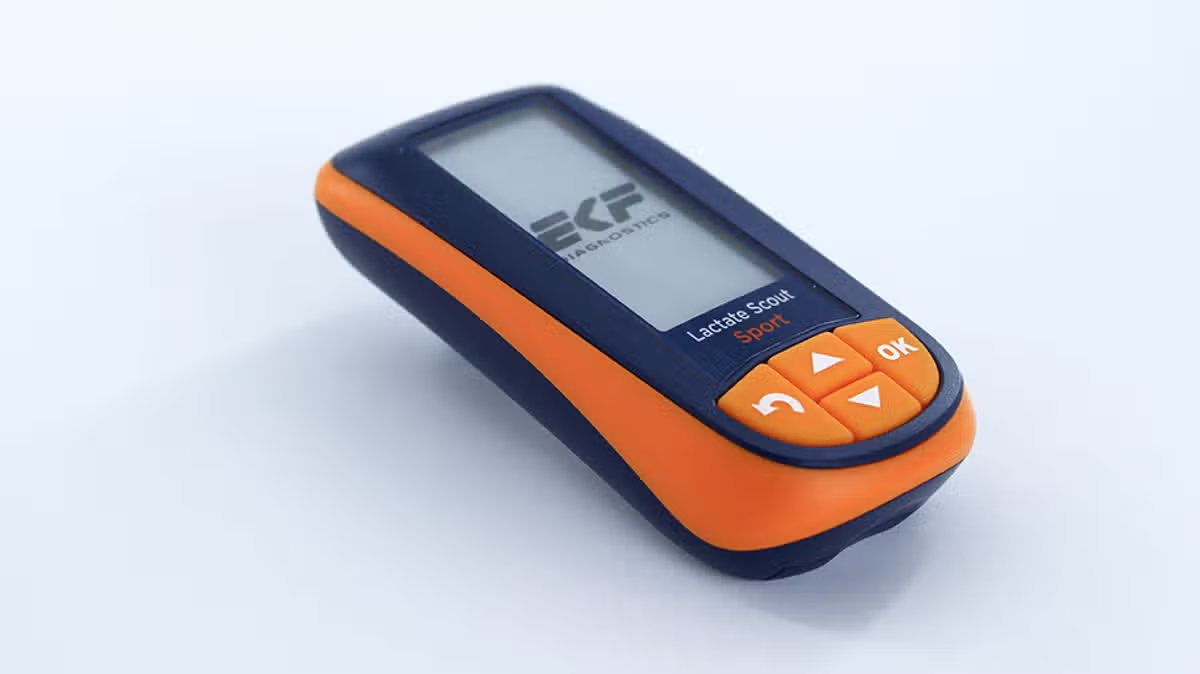
Penarth headquartered global point of care diagnostics firm EKF Diagnostics said it is on track for a stronger end to the year after posting first half numbers in line with management expectations, while confirming that cash levels held in Russia have risen.
In a trading statement the Alternative Investment Market listed firm that in the first half of this year revenues remained broadly flat at £25.m (H1 2025: £25.2m), reflecting the higher weighting of sales expected in the second half of the year. Gross margin improved to 53% (H1 2025: 50%) and adjusted Ebitda showed continued growth.
The group’s cash balance as at 30 June 2026 was £16 (31 December 2025: £15.8m), which included £2.4m held in Russia (31 December 2025: £2.1m).
Advertisement
It operates in Russia via its German-based subsidiary, in which it has a 60% stake, selling non sanctioned medical devices. However, since Russia’s invasion of Ukraine the Putin administration has put tight limits on the amount of cash from trading that foreign firms are able to move out of the country.
It is a counter measure to western sanctions. For the last two years EKF’s subsidiary has been able to release around £500,000 per annum in dividend payments. The rise in cash from £2.1m to £2.5m has in part been driven by improved exchange rates.
EKF has no bank borrowings, and the closing cash balance reflects the allocation of £1.4m for the ongoing share buyback programme, of which £900,000 has been deployed during the period, together with the continued investment for growth that is part of the five-year strategic development plan for the business.
It said: “The progress of the five-year strategy continues in line with management expectations. Diabetes and hematology delivered steady performances in the first half, with the majority of high-volume tenders already won and scheduled to be delivered in the historically stronger second half year.”
Advertisement
It added that its remains on track to deliver growth at the revenue and adjusted Ebitda levels for full year 2026 in line with current market expectations.
Following the trading statement brokers Singer, Stifel and Panmure Liberum all maintained their buy share positions. Panmure Liberum has a share price target of 34p with the other two slightly higher at 35p.
In its note Panmure Liberum said: “The shares are still cheap, and remain range bound with he buy-back providing a floor to the price.
“There is little in the statement to change this prior to the interims. However, the longer-term outlook remains more encouraging and we expect the growth rate to improve, margins to continue to expand and strong cash conversion. We retain our buy (share recommendation).
Advertisement
Shares in EKF fell slightly after the trading statement to around 25p.
An alternative approach is to ensure that everyone who is eligible, based on their needs, should get state-funded personal care that is free at the point of use.
This would be provided free regardless of an individual’s means and whether it was received by an elderly person in their own house or a residential care home.
Scotland has implemented such a system.
However, it’s important to note that personal care takes in things like helping frail elderly people wash and dress and go to the toilet.
Advertisement
But it does not include accommodation, food and everyday living costs which are subject to means testing.
The Health Foundation think tank estimates that implementing a Scottish-style system in England would cost £7.5bn a year by 2036.
Like Scotland, Japan and Germany have systems which base entitlement to personal social care mainly on people’s care needs rather than their ability to pay.
Japan and Germany though have a mandatory long-term care insurance system which is funded through contributions from workers and employers.
Advertisement
Both countries also do not usually cover the full cost of personal care so individuals are responsible for some of the expenses.
Ofgem has proposed new measures which could see developers of data centres made to pay hundreds of millions of pounds up front.
The British energy regulator said a refundable fee should be charged for projects that want to connect to the network, amid mounting demand for connections to the electricity grid.
It is proposing developers pay a deposit between £237,500 to £712,500 per megawatt – meaning data centres seeking 1 gigawatt (GW) of power would have to pay hundreds of millions up front, paid back if the project was completed.
Data centres are large buildings which house computer servers used to store and process data and run the digital services which power the internet.
Ofgem has started a consultation on its proposals, which will run until 16 September.
It said the amount of electricity capacity being requested by projects seeking to connect to the grid had risen from 41 GW to 125 GW in the past year, reflecting a sharp increase in demand.
This is significantly more than double 2025’s peak electricity demand in Britain of around 46 GW.
Advertisement
The regulator said the projects would have to hit key milestones to keep their place in the grid connection queue, which has seen a surge in demand.
An increasing number of centres have been built around the world in recent years to provide the computing power needed to train and run AI systems.
But they are controversial, especially for people who live near them.
Residents have raised concerns about noise, electricity demand and the large amounts of water sometimes used to cool the high-performance chips that generate vast amounts of heat.
Bausch + Lomb lifted its full-year targets after narrowing its second-quarter loss as its core segments drove revenue higher.
The dual Toronto and New York-listed eye health company on Wednesday raised its full-year guidance across the board, bumping its revenue target up by $20 million to a new range of $5.44 billion to $5.54 billion. The increase would represent 5.8% to 7.7% constant currency growth.
TheBank of Nvidia. When it comes to circular financing, Wall Street may have the wrong idea. Nvidia’s need to invest across the AI landscape doesn’t stem from a lack of financing options—it comes from having too much cash. Nvidia has generated $191 billion in cash flow over the last two years, with another $49 billion coming this quarter alone, according to LSEG estimates.
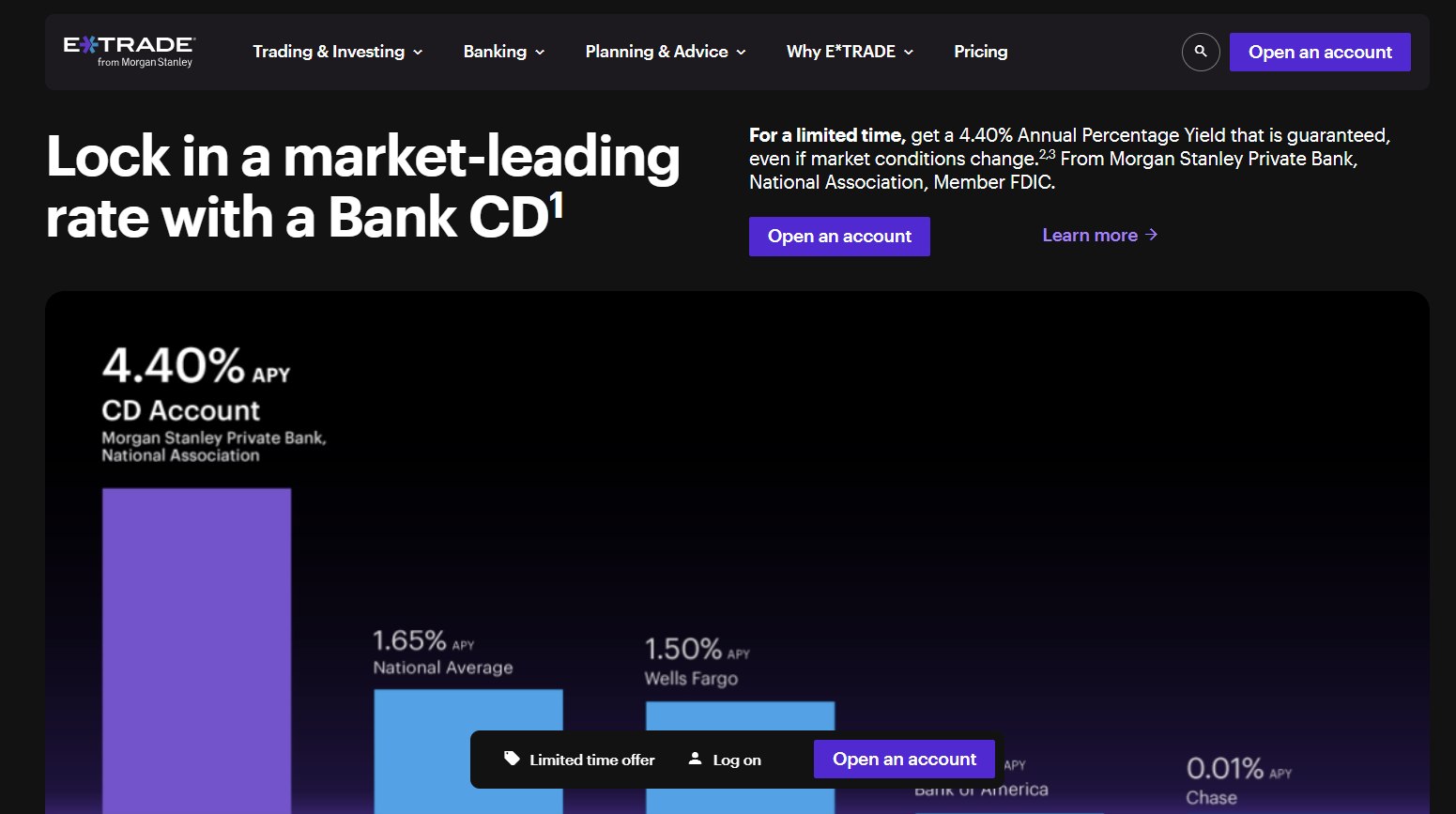
Users of the online brokerage platform E-Trade reported widespread login and account access problems Thursday morning, with outage-tracking service Downdetector logging a sharp spike in complaints beginning around 10:33 a.m. Eastern time, in the middle of an active and volatile trading session on Wall Street.
Downdetector’s official social media account posted an alert flagging the rise in user-submitted reports shortly after the issues began, using the hashtag “#ETradeDown” to solicit further reports from affected users about how the outage was impacting them.
Frustrated customers took to social media in real time to describe their experiences trying to access the platform. One user wrote directly to E-Trade’s official account, “Hey E*Trade, your systems are down right now at 7/30/2026 at 10:34am. When is it coming back up?” Another user, describing themselves as a customer of nearly two decades, expressed frustration with the outage in a post that read, in part, “E-Trade is down… get your act together or I will leave the platform.” A separate user reported being unable to log in despite what they described as one of their best trading days, writing that the platform displayed a message indicating the website was too busy to process their request.
As of Thursday morning, E-Trade had not issued a public statement confirming a company-wide outage or explaining the specific cause of the access problems some users were experiencing. Outage-tracking services showed mixed readings on the scope of the disruption. One monitoring service reported E-Trade as operational with no significant outage detected, showing only a small number of user reports over the prior 24-hour period, while a separate outage-tracking site reported that E-Trade had been experiencing issues since approximately 10:20 a.m. Eastern time, based on a spike in user complaints that exceeded the platform’s typical baseline volume for that time of day.
Advertisement
The reported issues Thursday came during an active session for U.S. financial markets more broadly, with major indexes moving significantly following a wave of high-profile corporate earnings reports, including results from Microsoft and Meta Platforms released the previous afternoon. Periods of heightened market volatility and elevated trading volume have historically coincided with increased strain on online brokerage platforms’ technical infrastructure, as a larger-than-usual number of users attempt to log in, check account balances or execute trades simultaneously.
Online brokerage outages during periods of market volatility are not without recent precedent. In August 2024, several major online brokerage firms, including Charles Schwab, Fidelity and Vanguard, experienced widespread access problems for thousands of users during one of the largest stock market selloffs of that year, with user complaints on Downdetector peaking around and shortly before 10 a.m. Eastern time on that occasion as well. Charles Schwab acknowledged the issue at the time in a statement posted to social media, saying that a technical issue was preventing some clients from logging into its platforms.
E-Trade, founded as one of the earliest online discount brokerage firms in the United States, has grown over the decades into one of the most widely used platforms for individual investors and traders to buy and sell stocks, exchange-traded funds, options, mutual funds and other financial securities. The company was acquired by Morgan Stanley in 2020, integrating its retail brokerage operations into the larger financial services firm’s broader wealth management business.
Downdetector, the platform used to track and aggregate the Thursday morning complaints, monitors user-submitted reports across thousands of websites and applications rather than directly accessing the internal systems of the companies it tracks. Because the service relies on self-reported complaints rather than direct server monitoring, spikes in reported issues can sometimes reflect a genuine platform-wide outage, while other spikes may result from more localized problems affecting a subset of users, specific devices, internet service providers or regional network issues rather than a broader systemic failure affecting the entire platform.
Advertisement
For users experiencing difficulty accessing E-Trade during the reported disruption, common troubleshooting steps recommended for online brokerage access issues include refreshing the browser or app, clearing cached data, verifying that the device’s internet connection is functioning properly through other online services, and checking the company’s official social media channels or status pages for updates. If the underlying cause proves to be a service-side technical issue rather than a problem specific to an individual user’s device or connection, however, these troubleshooting steps are unlikely to resolve the access problems until E-Trade restores normal functionality on its end.
As of the most recent available information Thursday, E-Trade had not provided a public timeline for resolving the reported access issues, nor had the company responded publicly to the elevated volume of complaints registered through Downdetector and other outage-tracking platforms throughout the morning. Given the platform’s role in facilitating real-time trading, any extended access disruption during an active market session carries particular significance for affected users attempting to manage positions or execute trades in response to fast-moving market conditions.
Users continuing to experience problems accessing their E-Trade accounts were encouraged to monitor the company’s official channels directly for updates, rather than relying solely on third-party outage trackers, which can offer a useful gauge of the scale of user-reported complaints in near real time but cannot independently confirm the underlying cause or expected resolution timeline for a suspected service disruption.
Hexcel Corporation (HXL) Q2 2026 Earnings Call July 30, 2026 9:30 AM EDT
Company Participants
Kurt Goddard – Vice President of Investor Relations Thomas Gentile – CEO, President & Chairman James Coogan – Executive VP & CFO
Advertisement
Conference Call Participants
Gavin Parsons – UBS Investment Bank, Research Division Kenneth Herbert – RBC Capital Markets, Research Division Sheila Kahyaoglu – Jefferies LLC, Research Division Joshua Korn – Wells Fargo Securities, LLC, Research Division Richard Safran – Seaport Research Partners Myles Walton – Wolfe Research, LLC Scott Mikus – Melius Research LLC Kristine Liwag – Morgan Stanley, Research Division Mariana Perez Mora – BofA Securities, Research Division Anton Rinnert – TD Cowen, Research Division
Presentation
Advertisement
Operator
Thank you for standing by, and welcome to Hexcel’s Second Quarter 2026 Earnings Call. [Operator Instructions] I would now like to turn the call over to Kurt Goddard, Vice President, Investor Relations. Sir, please go ahead.
Kurt Goddard Vice President of Investor Relations
Advertisement
Hello, everyone. Welcome to Hexcel Corporation’s Second Quarter Earnings Conference Call. Before beginning, let me cover the formality. I would like to remind everyone about the safe harbor provisions related to any forward-looking statements we may make during the course of this call. Certain statements contained in this call may constitute forward-looking statements within the meaning of the Private Securities Litigation Reform Act of 1995. They involve estimates, assumptions, judgments and uncertainties caused by a variety of factors that could cause future results or outcomes to differ materially from our forward-looking statements today.
Such factors are detailed in the company’s SEC filings and earnings release. A replay of this call will be available on the Investor Relations page of our website.
Lastly, this call is being recorded by Hexcel Corporation and is copyrighted material. It cannot be recorded or rebroadcast without our express permission. Your participation on this call constitutes your consent to that request.

























































You must be logged in to post a comment Login