
Business
(VIDEO) Tesla Confirms Next-Generation Roadster Reveal Date of October 1 in Waco, Texas, After Long Delays


Tesla announced Saturday that it will finally unveil the second-generation Roadster on October 1, ending months of speculation over when the company’s long-delayed sports car would make its public debut nearly nine years after it was first shown to the world.
The electric vehicle maker posted a brief teaser on X, writing simply “Go for launch” alongside a graphic displaying the date “10.01.” The image also appeared to hint at cold-gas thrusters developed by SpaceX, the rocket company also run by Tesla CEO Elon Musk, technology long rumored to give a high-performance version of the Roadster the ability to briefly lift off the ground. According to reporting from The Information, the reveal is set to take place in Waco, Texas.
A vehicle nearly a decade in the making
Tesla first showed the second-generation Roadster to the public in November 2017 during an event centered on the Tesla Semi. At the time, Musk promised extraordinary performance figures: a 0-to-60 mph time under two seconds, a top speed above 250 mph, and a range of 620 miles, specifications the company still lists on its official Roadster webpage. Production was originally targeted for 2020.
That timeline has slipped repeatedly in the years since, pushed back through 2021, 2022, 2023, 2024 and 2025 as Tesla redirected engineering and manufacturing focus toward other priorities, including the Cybertruck launch, the ramp-up of the Tesla Semi, and more recently the company’s pivot toward artificial intelligence, robotics and autonomous driving technology through projects like the Cybercab and its Optimus humanoid robot.
At Tesla’s shareholder meeting on Nov. 6, 2025, Musk set a demonstration date of April 1, 2026, for the Roadster, while acknowledging the timing choice gave him what he called “deniability because I can say I was just kidding.” He also said at the time that production would likely begin 12 to 18 months following the reveal, placing an actual delivery timeline in 2027 or 2028, and described the finished car as being “very different from what was shown previously.” Musk further called the planned unveiling the “most exciting, whether it works or not, demo ever of any product.”
That April date came and went without an event. Musk had already begun shifting the timeline in mid-March, posting on X that the unveiling would come “hopefully next month” and would be “a banger next-level” reveal, before saying it would “probably” happen in late April instead. By the company’s April 22 earnings call, Tesla described the Roadster as still being in design development, with Musk estimating the reveal was “a month or so” away pending further testing and validation.
A public dispute over reservation costs
The Roadster’s repeated delays became the subject of a public back-and-forth last year between Musk and OpenAI CEO Sam Altman, who had placed a reservation for the vehicle years earlier. Altman said on social media that “7.5 years has felt like a long time to wait” after paying a $50,000 reservation fee for the car, a comment Musk pushed back on by asserting that Altman had actually received a refund on his deposit.
Reservations for the Roadster have ranged from $50,000 for the base configuration up to $250,000 for a limited “Founders Series” edition, with tens of thousands of early depositors from 2017 and 2018 still waiting for concrete answers about the car’s final specifications, pricing and delivery timeline. Asked previously whether Founders Series customers who paid the higher reservation amount would be invited to attend the eventual reveal event, Musk said, “Sure, absolutely. It’s the least we can do for our long-suffering Roadster reservation holders.”
What Saturday’s teaser suggests about the design
Close observers of Tesla’s teaser image noted that the silhouette shown does not appear to match the rear profile of the original 2017 concept car, lending some support to Musk’s past statements that the finished production vehicle will differ meaningfully from what was originally displayed. Commentary from the widely followed Tesla-focused account Whole Mars Catalog characterized the teaser as hinting at “an all new design,” a reading consistent with Musk’s earlier remarks describing the eventual production Roadster as a significant departure from the prototype shown nearly a decade ago.
The teaser’s imagery, along with earlier reporting from The Information, has also reinforced longstanding expectations that Tesla may demonstrate a SpaceX-derived cold-gas thruster package as part of the October event, potentially as an optional performance upgrade available on a limited version of the car. Whether that system is fully functional and road-legal in various markets remains an open question that the October event is expected to help clarify.
Key questions heading into October
For the many depositors who have waited years for updates, Saturday’s announcement sets up several unresolved questions that the October 1 event will likely need to address. Chief among them is whether the finished production specifications still match Tesla’s original 2017 promises of a sub-two-second 0-to-60 time, a top speed above 250 mph and 620 miles of range, or whether the car ultimately exceeds or falls short of those figures. Pricing also remains unclear, with the original $200,000 base price target for the production model not yet reconfirmed by the company.
Delivery timing remains similarly uncertain. Musk has floated both “late 2026” and 2027 as possible windows at different points over the past year, and any unveiling that fails to include a firm production and delivery schedule would likely be viewed skeptically given the vehicle’s long history of missed deadlines.
Tesla has not released additional details beyond the October 1 date and the accompanying teaser imagery, leaving open questions about the event’s format, location logistics in Waco, and whether the automaker will use the occasion to finally lock in a firm production timeline after years of shifting targets. For now, the announcement marks the most concrete signal in months that Tesla intends to move the long-awaited Roadster from concept to public reveal, even as questions about an actual delivery date to paying customers remain unresolved heading into the fall.

The entity that sits at the heart of the $185 billion Tata Group empire that spans IT services, steel, hospitality and consumer goods has resisted a stock exchange listing for years as this would subject it to tighter regulatory oversight and force it to reveal more of the group’s internal dealings.
But the pressure has been mounting in recent months. The Reserve Bank of India tweaked the definition of shadow lenders in May, reviving the debate on whether Tata Sons could be forced to list. In June, the regulator reaffirmed a framework for identifying systemically important shadow lenders, keeping Tata Sons on the hook.
The latest RBI missive makes it even harder for the Tata family to hold out against a listing and the closer scrutiny of its affairs that this would entail. Minority shareholders in the company’s various businesses will be watching as an IPO could affect Tata’s ability to shift capital between its cash-rich established businesses and newer, less profitable ventures.
What is Tata Sons?Tata Sons is a holding company of the Tata Group that comprises 26 listed companies, including industrial heavyweight Tata Steel Ltd., IT firm Tata Consultancy Services Ltd., automaker Tata Motors Ltd. and utility Tata Power Company Ltd.

 Agencies
Approximately 66% of Tata Sons’ equity capital is owned by the philanthropic Tata Trusts, while Tata Group companies — some of which are engaged in lending activities — hold about 13%. The RBI classifies Tata Sons as a systemically important core investment company within the broader category of non-banking financial companies (NBFCs), or shadow banks, as it is involved in allocating capital to group companies.
Why is Tata Sons facing pressure to list?After an Indian shadow lender defaulted on its debts in 2018, the RBI, which oversees the country’s financial system, laid down new rules to try to ensure that such crises don’t endanger the country’s wider financial system.In 2022, it classified Tata Sons as an “upper-layer” NBFC under the rules. This meant it now deemed the company, with a balance sheet exceeding 1.5 trillion rupees ($15.7 billion), big enough to pose a systemic risk. The RBI’s rules require such businesses to list their shares on the stock market within three years as a way to force them to be more transparent about their activities and financial performance.
Since then, Tata Sons’ owners have taken various steps to convince the RBI that it should not be categorized as a shadow lender so it can avoid going public. In 2024, it applied to surrender its NBFC license and cleared its outstanding debts.
However, the latest rule changes introduced earlier this year by the RBI, which are due to take effect on July 1, gave Tata Sons less wiggle room to dodge a listing. The revised framework applies not just to companies that lend to or borrow from listed businesses in the same group, but to any holding company that invests in group companies that do so themselves.
While Tata Sons has pared its own debts, its affiliated companies, including wholly-owned subsidiary Tata Capital, are still raising money from individuals and institutions.
The RBI circular stipulated that an NBFC can’t de-register if it deals directly with customers in its day-to-day business. This is not the case with Tata Sons, but it is with Tata Capital.
How did the company respond to the RBI’s circular?Trustees at Tata Trusts, chaired by Noel Tata, were making intense efforts to maintain the private status of Tata Sons, arguing that the work that had been done to strengthen the company’s balance sheet should exempt it from a mandatory listing, according to people familiar with the matter.
Tata Sons has not responded to a request for comment on whether they’ll go ahead with a listing. A representative for RBI didn’t respond to a query on whether it has rejected Tata Sons’ petition for an IPO waiver.
How did Tata Sons avoid an IPO so far?Tata Sons originally faced a deadline of September 2025 to launch an initial public offering of its shares, which it missed. Following discussions with the RBI, the company’s leadership halted the preparations in the expectation that they would get an official extension to the deadline.
Instead, RBI has piled additional pressure on the Tata family to list the business since its May circular.
Why does the Tata family prefer keeping Tata Sons private?Tata Sons sits at the center of the Tata empire and its status as a private company controlled by Tata Trusts has helped to cement the family’s authority over the group’s array of businesses. An IPO could substantially loosen Tata Trusts’ grip on Tata Sons and make it harder for Tata Sons’ directors to block unwanted takeover attempts.
Tata Sons has plowed billions of dollars into Tata Group businesses including its digital services arm and a venture into semiconductors. It has also helped to prop up the unprofitable national flag carrier Air India, which reported record losses for the year to March following a plane crash in June 2025 and airspace closures due to the Iran war.
A listing of the holding company would force it to make regular disclosures on its operations and financial dealings, showing how money is channeled through the Tata empire and ultimately forcing its owners to be more accountable for how its capital is spent.
If Tata Sons lists, who wins?A significant minority shareholder of Tata Sons — Shapoorji Pallonji Group — is calling for a public listing of the Tata Group holding company, insisting that such a move is essential to unlock the company’s value for investors.
It’s not the first time that SP Group has locked horns with the Tatas. Former Tata patriarch Ratan Tata and Tata Sons then-chairman Cyrus Mistry, a scion of the founding family that runs SP Group, were entangled in a year-long feud in 2016.
SP Group needs to monetize its stake in Tata Sons, which is worth billions, to pay down a pile of costly private debt. If Tata Sons’ shares are listed, it will be easier for SP Group to get a good price for its stake and repay that debt.

Russian nuclear head says Ukraine attacked fuel trucks, endangered Zaporizhzhia plant
Business
Zendaya and Tom Holland ‘Pregnancy’ Photo Goes Viral Online, but It’s Another AI-Generated Hoax Yet Again
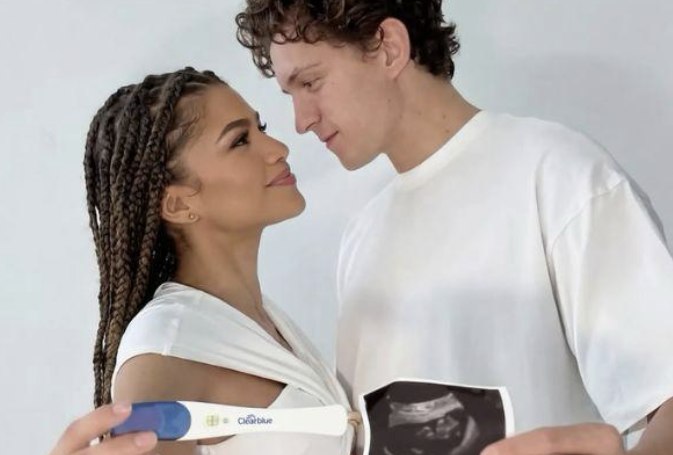
A photo appearing to show Zendaya and Tom Holland announcing a pregnancy has spread widely across social media, but the image is fabricated, the latest in a string of AI-generated hoaxes targeting the Hollywood couple.
The picture shows Zendaya holding what appears to be a positive pregnancy test, with Holland standing beside her holding ultrasound images. Both are pictured smiling and looking at each other in the image, which circulated widely on Instagram after being posted by a fan account called Life Is Fresco with the caption, “The legacy continues beyond the multiverse,” a reference to Holland’s role as Spider-Man.
Fans quickly spotted the inconsistencies
Despite the image’s realistic appearance, several viewers picked up on visual clues suggesting it was artificially generated rather than an authentic photograph. Commenters pointed specifically to an apparent height discrepancy between the two actors as one of the clearest giveaways.
“Since when is tom taller than Zendaya,” one commenter wrote. Another user echoed the skepticism, writing, “Two reasons this is ai, one, Tom is shorter than her, two…yeah. Thats it.” A third commenter played along with the joke embedded in the fan page’s caption, writing simply, “Baby spider is coming.”
There has been no pregnancy announcement from either Zendaya or Holland, and representatives for the couple have not issued any statement addressing the image.
Part of a recurring pattern of AI-generated hoaxes
This is far from the first time Zendaya and Holland have found themselves at the center of fabricated pregnancy claims fueled by artificial intelligence. In early August, a separate AI-altered image circulated widely across X, Instagram and TikTok, showing Zendaya walking through what appeared to be a London park with a visible baby bump under a cropped sweater. That image was later traced back to an authentic paparazzi photograph taken in London in 2023, in which Zendaya’s stomach was flat; the viral version had been digitally manipulated to add the appearance of a pregnancy.
A source close to the couple described the broader phenomenon to RadarOnline at the time, characterizing the volume of fabricated content as its own kind of alternate reality built entirely around the pair. “There is a whole parallel universe of fake ‘moments’ being created for Tom and Zendaya,” the source said. “It’s reached a point where people think they’ve seen their wedding, their pregnancy, their entire future, and it’s all generated on a screen.”
The pregnancy hoaxes have followed a similar wave of AI-generated wedding images that spread earlier this year, showing Zendaya in a corset-style gown and Holland popping champagne in a tuxedo at what appeared to be a private ceremony. Those images were also confirmed to be fake, though their realism fooled a wide swath of social media users, including, according to Holland, members of his own family. He has previously joked that his grandmother saw the fabricated wedding photos and believed she had simply not been invited to the event.
Zendaya has addressed the pattern of fake content directly
Zendaya has spoken publicly on multiple occasions about being targeted by fabricated stories and images throughout her career, a pattern that predates the current wave of AI-generated content. Following an earlier round of pregnancy rumors sparked by a fake TikTok video years ago, Zendaya wrote on her Instagram Story at the time, “See now, this is why I stay off Twitter… Just making stuff up for no reason… weekly.”
More recently, when addressing the fake AI-generated wedding photos that circulated earlier this year, Zendaya acknowledged how convincing the fabricated content had become for many viewers. “Many people have been fooled by them,” she said.
A broader trend affecting public figures
The recurring hoaxes involving Zendaya and Holland reflect a wider trend that has accelerated as AI image-generation tools have become more accessible and increasingly difficult to distinguish from authentic photographs. Media literacy resources addressing the phenomenon have specifically flagged the Zendaya pregnancy rumor as a case study in how quickly search-driven speculation can spread online, noting that terms like “Zendaya pregnant” function as high-value search queries that incentivize the continued creation of fabricated content regardless of its accuracy.
Guidance aimed at helping people, including younger audiences, identify manipulated images has pointed to several common warning signs: distorted or unnatural hand and finger shapes, jewelry that appears to blend unnaturally into skin, and backgrounds with a smudged or inconsistent texture rather than the natural blur produced by an actual camera lens. Experts have also generally advised treating celebrity news claims with skepticism unless they are confirmed by established outlets or the public figures themselves.
No confirmation from the couple
As of this writing, neither Zendaya nor Holland has issued any public statement responding to the latest viral image. The two actors, who began dating in 2017 after meeting on the set of “Spider-Man: Homecoming” and have continued working together on subsequent projects in the franchise, have generally maintained a private personal life despite intense public interest in their relationship.
For now, the viral photo remains what outlets covering the story have consistently described it as: a fan-made, AI-generated depiction of a moment that has not actually occurred, rather than any genuine confirmation of a pregnancy. Given the recurring nature of similar hoaxes throughout the year, it remains likely that further fabricated content involving the couple could continue to circulate online in the coming months, regardless of whether any real personal announcement is ever made.
Business
Elon Musk’s PAC Spends $100 Million on Ads Attacking Democrats Over Transgender Policy in Midterms 2026
Elon Musk’s political action committee, America PAC, has launched a multimillion-dollar advertising campaign centered on transgender policy issues, targeting Democratic Senate candidates in several competitive midterm races this fall.
According to reporting from The New York Times, Musk has authorized the PAC to spend more than $100 million during the current election cycle, with an initial wave of ads focused heavily on transgender rights running across television, digital platforms and streaming services. The campaign marks the first large-scale, trans-focused advertising push of the 2026 midterm cycle from a major Republican-aligned outside group, according to AdImpact, a firm that tracks political advertising spending.
Which races are being targeted
The ads have targeted Democratic candidates in four competitive Senate races: Rep. James Talarico in Texas, Sen. Sherrod Brown in Ohio, state Rep. Josh Turek in Iowa, and former Rep. Mary Peltola in Alaska. Additional ads have also targeted Michigan candidate Abdul El-Sayed, according to reporting from Truthout and Erin in the Morning, a newsletter focused on transgender policy coverage. America PAC has also placed some advertising in New Hampshire and Maine, though those ads reportedly did not focus on transgender issues.
The advertisements vary by candidate but generally center on claims about gender-affirming care, transgender participation in sports, and related cultural themes. One ad targeting Turek states that he “voted to spend our tax dollars on sex change surgeries for children” and “voted to let biological men enter girls’ locker rooms and bathrooms,” according to a copy of the ad shared by AdImpact Politics. Other ads have made similar claims about the remaining candidates, addressing topics such as school bathroom policy and transgender athletes in women’s sports.
A shift in campaign strategy
Axios reporter Mike Zapler noted that the emphasis on transgender issues represents a departure from the broader pattern of Republican Senate advertising so far this cycle. According to AdImpact’s tracking data, transgender-focused messaging had been a comparatively minor theme in GOP Senate ads prior to America PAC’s rollout.
The strategic emphasis comes despite polling that generally shows economic concerns, rather than transgender policy, as the dominant issue for voters heading into the midterms. Zapler noted that Republican strategists appear to be drawing on the perceived effectiveness of similar messaging used during the 2024 presidential campaign, when advertising focused on transgender issues was widely credited with damaging Kamala Harris’ presidential bid.
Some of the targeted candidates have already shifted their public positions on related policy questions ahead of the ad campaign. Turek’s campaign has issued statements opposing transgender women’s participation in women’s sports and opposing what his campaign described as “taxpayer-funded sex changes.” Brown, in his 2024 campaign, also ran advertising referencing transgender athletes, including swimmer Lia Thomas, an approach some observers characterized at the time as an attempt to neutralize similar attacks from Republican opponents.
Responses from targeted campaigns
Representatives for some of the targeted candidates have pushed back publicly on America PAC’s advertising campaign. A spokesperson for El-Sayed’s Senate campaign in Michigan, Cole Wozniak, addressed Musk’s spending directly in a statement to local press.
“It’s no surprise that the world’s first trillionaire would be trying to buy a Senate seat,” Wozniak said.
Wozniak also indicated that the campaign intends to keep its focus elsewhere rather than engaging directly on the transgender policy attacks. “Michiganders will see right through this,” Wozniak said, “and will send Abdul to the Senate this November to take on the corruption by getting money out of politics, putting money in your pocket, and passing Medicare for All.”
El-Sayed separately drew public attention last month for declining to engage when Fox News host Jesse Watters pressed him on transgender rights during a televised interview, a moment that some commentators compared to the political approach taken by New York Mayor Zohran Mamdani in similar media appearances.
Musk’s history on transgender issues
Musk’s involvement in transgender-focused political advertising predates the current cycle. A Reuters investigation previously found that Musk contributed $50 million to a far-right political action committee called Citizens for Sanity in 2022, a group with ties to former Trump adviser Stephen Miller that ran a series of ads focused on transgender-related topics in that cycle’s competitive races.
Musk has also spoken publicly and personally about transgender issues in the context of his own family. His daughter, model Vivian Wilson, came out as transgender in 2020. Musk has since made public comments critical of that decision, at one point saying she “was killed by the woke mind virus” and adding, “Now, the woke mind virus will die.”
Broader political context
The advertising blitz arrives as Republicans face what political analysts have broadly described as a challenging midterm environment, with voters across the political spectrum expressing frustration over economic conditions, including elevated gas prices tied in part to the conflict involving Iran. Some conservative commentators have framed America PAC’s strategy as an effort to mobilize base voters around cultural issues even in an environment where economic concerns dominate broader public polling.
Conservative strategist Terry Schilling of the American Principles Project has previously described attacks centered on transgender participation in women’s sports as a deliberate entry point for broader political messaging on transgender issues, telling CNN in earlier remarks that such messaging helped make “opponents of the LGBT movement comfortable with talking about transgender issues” more broadly.
With America PAC’s advertising campaign still in its early stages and additional spending expected as the November midterms approach, transgender policy is likely to remain a prominent flashpoint in several of the cycle’s most competitive Senate races. Whether the strategy proves effective will likely depend on how voters in these individual states weigh the issue against other concerns, including the economy, as Election Day draws closer.
The warning comes after the US-Iran conflict drives up heating oil and fuel costs.

South Korea expands espionage law to protect chip technology

Novartis: More Pain on the Way?

Tesla to unveil long-delayed Roadster on October 1, Musk says
Business
Draymond Green Shuts Down Misconception About LeBron James’ Massive Pay Cut to Join 76ers This Season
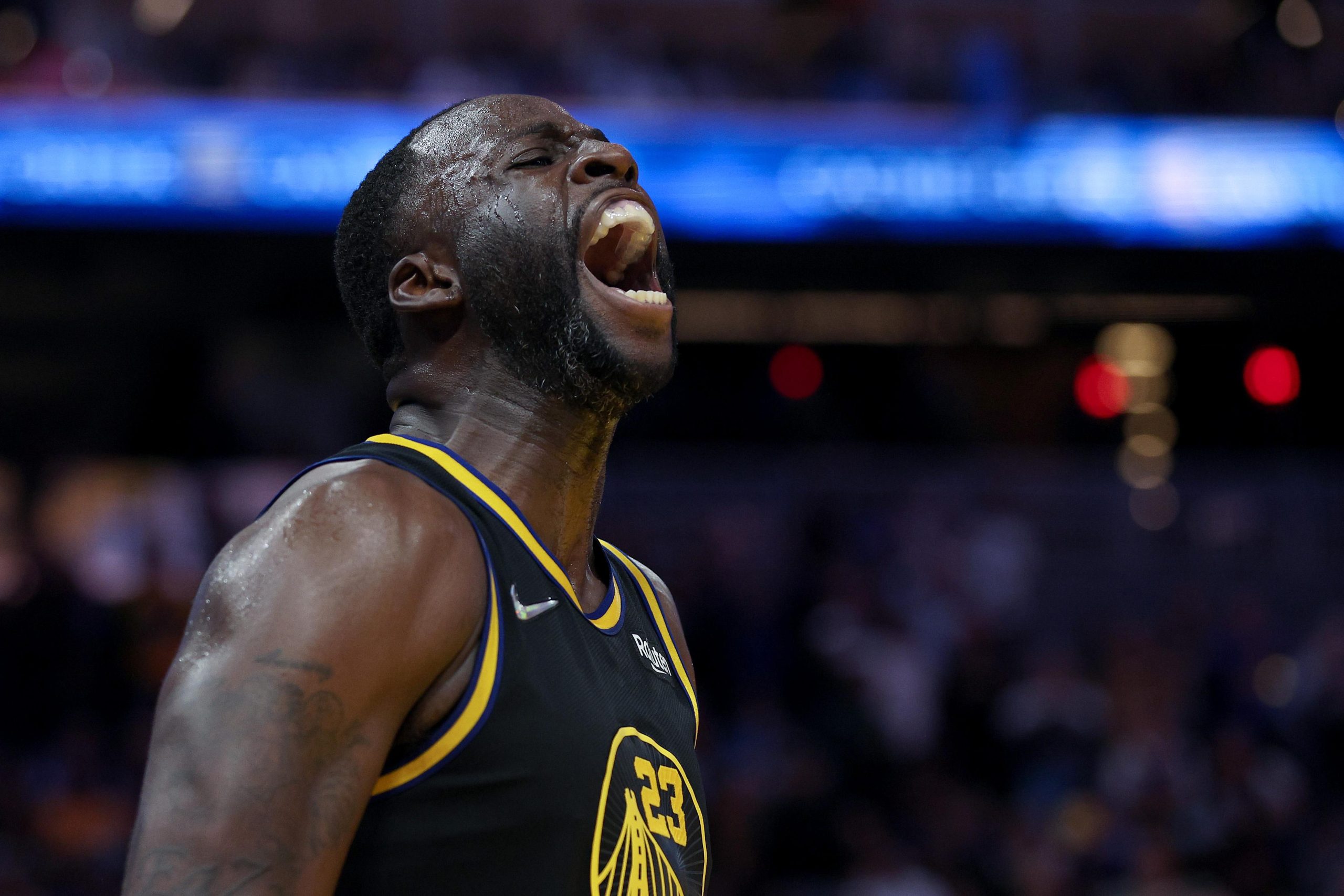
Golden State Warriors forward Draymond Green pushed back this week on what he described as a widespread misconception about LeBron James’ recent contract with the Philadelphia 76ers, arguing that the four-time NBA champion’s steep pay cut cannot simply be recouped through endorsements or outside business ventures.
James signed a two-year, $8 million contract with a player option with Philadelphia on Friday, according to ESPN’s Dave McMenamin, who reported that Klutch Sports Group CEO Rich Paul confirmed the deal to ESPN’s Shams Charania. The agreement, worth $4 million annually, represents the largest single-season pay cut in NBA history for a player of James’ stature, according to widespread reporting following the signing.
A roster built around new additions
James’ arrival in Philadelphia comes after the 76ers made a series of aggressive moves to build what the organization views as a legitimate championship contender over the next two seasons. Philadelphia’s most notable acquisition prior to signing James was landing Jaylen Brown in a trade with the Boston Celtics, a deal that came together as Brown’s relationship with the Celtics organization had reportedly deteriorated. Adding James to a core that already includes Brown and center Joel Embiid gives the 76ers a roster with championship aspirations heading into the coming seasons.
Bleacher Report characterized the magnitude of James’ financial sacrifice in stark terms following the signing, posting, “LeBron took the largest pay cut EVER to join the 76ers. The King just wants to win.”
Green explains why the math doesn’t work in James’ favor
While much of the public reaction to James’ contract focused on the veteran star’s willingness to sacrifice earnings in pursuit of another championship, Green used his podcast to directly challenge the assumption that James would simply make up the difference through sponsorships, endorsements or other outside income streams.
“There’s this common misconception like, oh well, like for instance, we’ll use LeBron James as an example,” Green said. “LeBron took a $4 million deal. He can go make the 40 million somewhere else. No the fu*k he can’t. He can go make 40 somewhere else, but it ain’t that same 40 that he just gave up.”
Green went on to lay out the financial logic behind his argument in more specific terms, illustrating how a player’s total on-court and off-court earnings compound differently depending on their base salary. “Like, so say next year, all right, that 40 takes him in total for a year 60 million make on a year. Well, the other 40 would have taken him to 100. Like, you don’t just go make that money up somewhere else,” Green said.
A friendship built through years of rivalry
Green’s comments carry particular weight given his long history with James, both as a fierce on-court rival and, in more recent years, as a close friend. The two have faced off in some of the league’s most memorable playoff matchups over the past decade, including multiple NBA Finals series between James’ teams and Green’s Warriors. Their mutual respect, built through those high-stakes showdowns, has often translated into candid public commentary from Green about James’ career and decisions, including his willingness to defend James against what he views as oversimplified takes on the financial realities of professional sports contracts.
Context for James’ unprecedented pay cut
James, 41, enters his 24th NBA season with Philadelphia, an NBA record for career longevity at the league’s highest level. His new deal represents a dramatic departure from the maximum-value contracts he has commanded for most of his career, reflecting both his advancing age and a deliberate decision, according to reporting on the signing, to prioritize a final shot at another championship over maximizing his final years of guaranteed compensation.
The scale of the pay cut has drawn significant attention across the league, in part because James has historically been one of the NBA’s most business-savvy players, building an extensive off-court portfolio that includes ownership stakes, production ventures and long-term endorsement partnerships. Green’s comments push back specifically against the assumption that this off-court business acumen can simply substitute for the lost basketball income, arguing that the two revenue streams do not scale interchangeably in the way some fans and commentators have suggested.
What it means for James’ legacy calculus
James’ willingness to accept such a steep reduction in pay has been framed by some in the sports media as evidence of his singular focus on adding to his championship résumé rather than his career earnings, particularly as questions continue to swirl about where he ranks in the NBA’s broader debate over the greatest player of all time. A championship run with Philadelphia would make him the first player in league history to win a title with three different franchises, having previously won championships with the Miami Heat, Cleveland Cavaliers and Los Angeles Lakers.
Green’s remarks add another layer to the ongoing conversation about the true cost of James’ decision, framing it not just as a symbolic sacrifice but as a genuinely significant financial one that cannot easily be offset through his substantial off-court business interests. Whether that sacrifice translates into another championship for James remains to be seen as the 76ers begin building their new-look roster around Brown, Embiid and their newly signed 41-year-old superstar heading into the coming season.
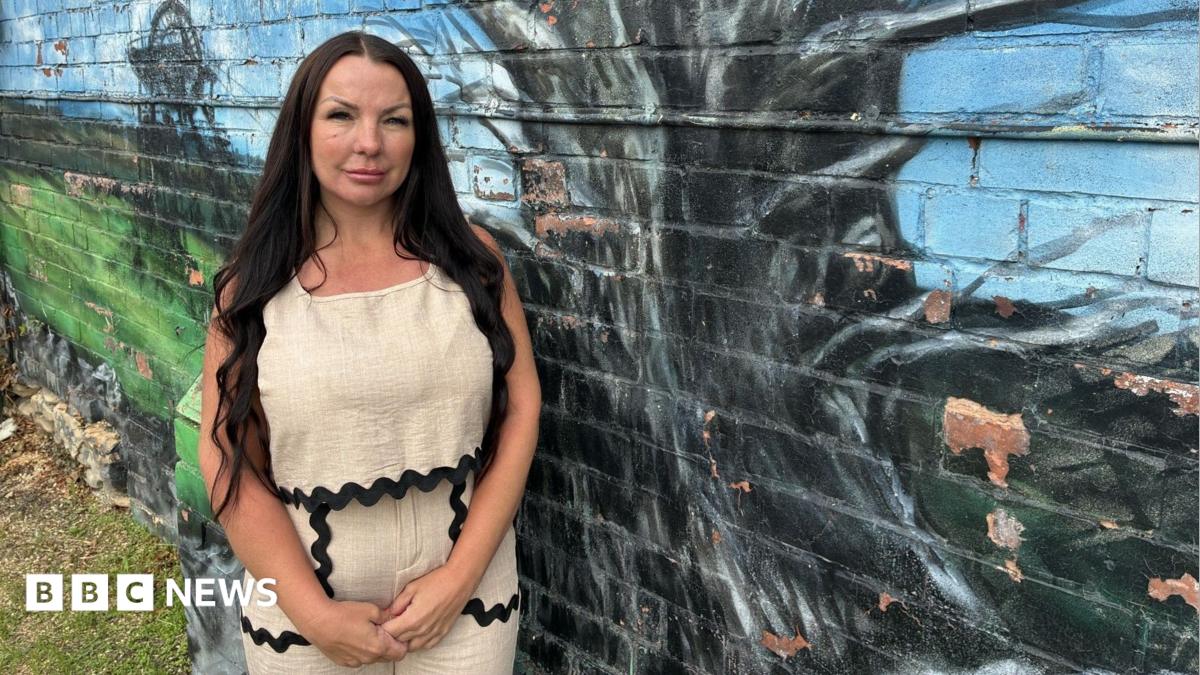
According to White, working families on low incomes not only struggle to pay their bills, but miss out on schemes such as free school meals and subsidised holiday clubs.
“When I talk to families, the cost of living keeps cropping up,” she says.
“As the years have gone on, everything’s become more expensive.
“But we are not earning enough. Families just can’t keep up.”
White says that while the charity deals with families who are on benefits, staff also support families who are “just above the threshold to claim”.
“They are being hit hard,” she says.
“They are working and getting no help from anywhere.
“One parent said she puts her child in breakfast club, which costs £6 a day, so she can go to work.
“It’s cost upon cost for working families.”

Horvath’s three TDs power Lions to victory over Alouettes

Tesla says it will finally unveil the second generation Roadster on October 1
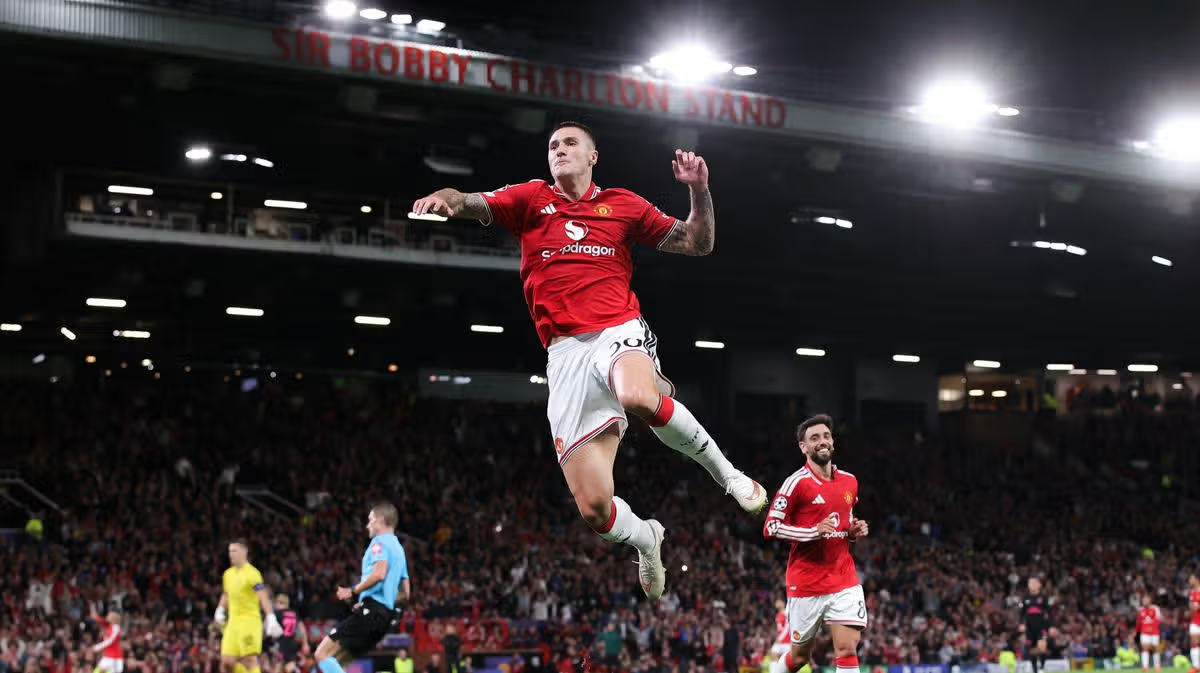
Why Manchester United are about to see the best of Benjamin Sesko

Memory prices are slowing because buyers ran out of money

Micron Stock Climbs Above $1,031 as AI Memory Crunch and a $50 Billion Outlook Fuel the Rally

AMD Stock Climbs After Management Lifts 2027 Data Center Outlook Toward $70 Billion in AI Sales


![Who's your favorite girl in Digital Circus? [Money Money Green green meme] #shorts #trend](https://wordupnews.com/wp-content/uploads/2026/02/1771002718_maxresdefault-80x80.jpg)
-
Tech5 days ago
Memory prices are slowing because buyers ran out of money
-
 Business3 days ago
Micron Stock Climbs Above $1,031 as AI Memory Crunch and a $50 Billion Outlook Fuel the Rally
-
 Business3 days ago
AMD Stock Climbs After Management Lifts 2027 Data Center Outlook Toward $70 Billion in AI Sales
-

 Crypto World4 days ago
Bitcoin price risks $76K drop as $78K support weakens
-

 Crypto World5 days ago
Robinhood Stock: How To Take Advantage With Reduced Risk
-

 Crypto World4 days ago
Ethereum price stalls below $2,500 as ADX drops to 11
-

 Fashion2 days ago
Weekend Open Thread – Corporette.com
-

 Crypto World2 days ago
XAG/USD: Silver’s Short-Term Rally Meets Its Moment of Truth
-

 NewsBeat5 days ago
England up in reading, maths and science rankings as Scotland and Wales dip
-

 Crypto World3 days ago
2 Chip Stocks Broke Out This Week. Neither Was Nvidia
-

 Crypto World2 days ago
OKX launches 10x OpenAI, Anthropic X-Perps in Europe
-

 Crypto World2 days ago
Diesel Tops $6 a Gallon for the First Time as 28 States Set Records
-

 Crypto World5 days ago
Intel Stock Jumps 9% on Chip Price Hike Report, US Stake Gains $36 Billion
-

 NewsBeat4 days ago
What went right this week: an ‘historic’ fall in violent crime, plus more
-

 Crypto World3 days ago
Bitcoin price risks $70K if $78K neckline breaks
-
Crypto World2 days ago
Ethereum Price Analysis: Consolidation at $2.5K Tests Momentum as On-Chain Activity Surges
-
 Business4 days ago
Meta debuts long-awaited personal AI agent, Muse
-
 Crypto World4 days ago
Bitcoin price holds near $79K as cycle drawdowns narrow
-

 Tech2 days ago
Battery life is the only iPhone 18 Pro and iPhone Duo upgrade I care about. Apple didn’t disappoint
-
 Crypto World3 days ago
Ethereum price breakout hinges on a close above $2,535
You must be logged in to post a comment Login