
Business
(VIDEO) ‘The Lakers Think They Can Win This Series’

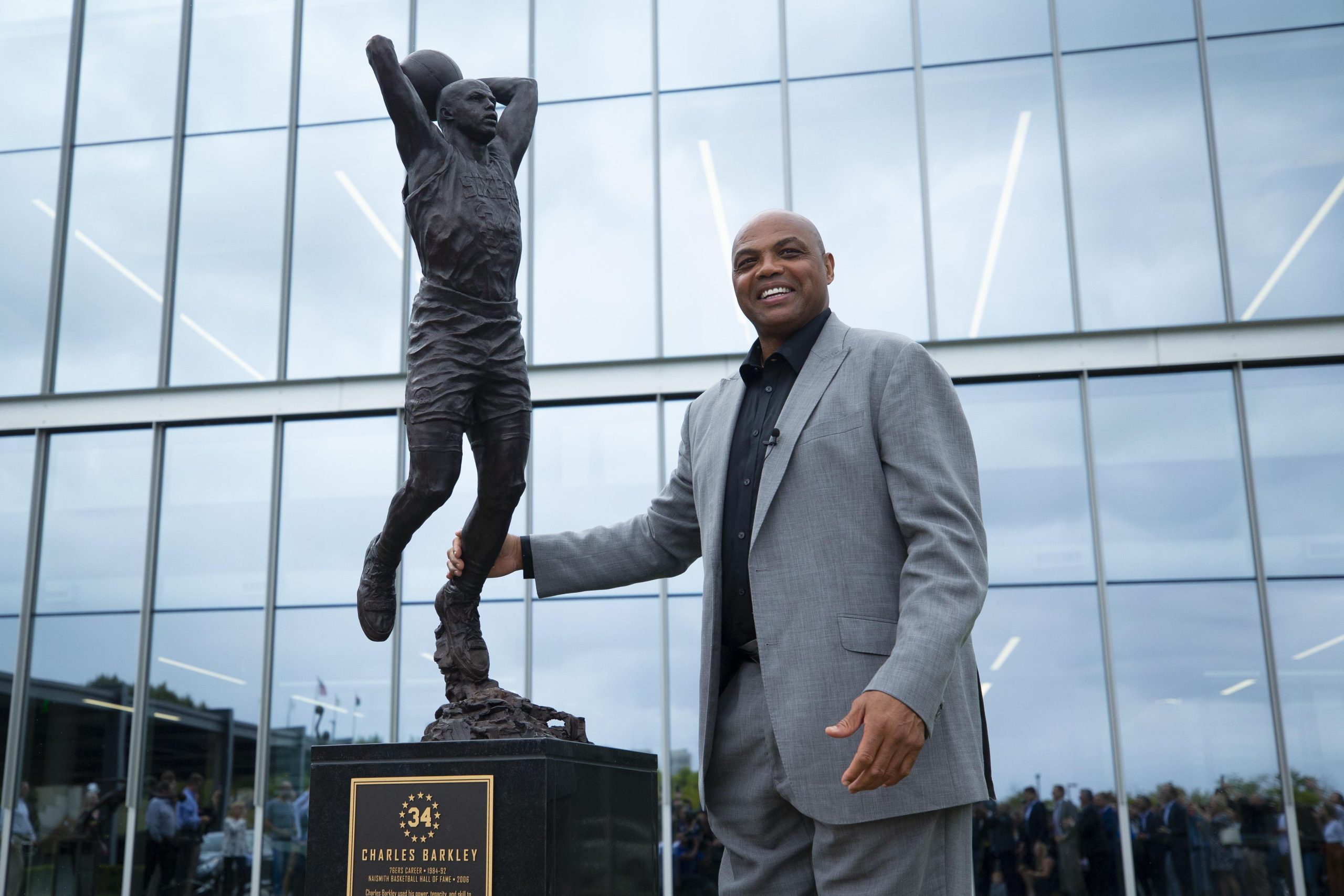
LOS ANGELES — Charles Barkley didn’t hold back on “Inside the NBA” after the Los Angeles Lakers stunned the Houston Rockets 107-98 in Game 1 of their Western Conference first-round playoff series on Saturday night.
The Hall of Famer, never one to mince words, declared that the short-handed Lakers now believe they can take the series, while pointing out that the Rockets have a glaring offensive problem that could derail their postseason hopes.
“The Lakers think they can win this series,” Barkley said on the TNT broadcast, drawing laughter from Shaquille O’Neal and the rest of the panel. “Houston has a problem.”

The comment came after the Rockets, missing star forward Kevin Durant with a right knee contusion, struggled mightily on offense in their playoff opener at Crypto.com Arena. Despite entering the series as the higher seed in some projections and boasting a young, athletic roster, Houston looked disjointed without its veteran scorer.
Durant, who averaged nearly 26 points per game during the regular season, was ruled out about 90 minutes before tipoff after bumping knees with a teammate in practice earlier in the week. Imaging showed no structural damage, but the contusion left the 37-year-old sidelined for Game 1. Rockets coach Ime Udoka expressed hope it would be a short-term issue, calling Durant day-to-day.
Without Durant, the Rockets started a lineup featuring Amen Thompson, Reed Sheppard, Josh Okogie, Jabari Smith Jr. and Alperen Sengun. The group managed just 98 points on inefficient shooting, with Barkley and fellow panelist Kenny Smith — a former Rockets champion — ripping the team’s offensive approach as “awful to watch.”
“Whoever gets it just jacks it up anywhere, anything,” Barkley said, criticizing the lack of structure and ball movement. Smith questioned whether Houston even had a coherent game plan, suggesting the absence of Durant exposed deeper issues in half-court execution.
The Lakers, already without injured stars Luka Doncic and Austin Reaves, seized the opportunity. LeBron James delivered a near triple-double with 19 points, 13 assists and eight rebounds, while veteran sharpshooter Luke Kennard exploded for a playoff career-high 27 points, going 5-for-5 from three-point range. Deandre Ayton added 19 points and 11 rebounds as Los Angeles built leads and held off a late Rockets push.
Lakers coach JJ Redick downplayed the impact of Houston’s missing star. “I don’t think it affected our mentality,” Redick said postgame. “This is all we talked about for two months — just our playoff mentality. You can’t worry about who’s in or out of the lineup. It’s our game plan. It’s our standards. It’s how we play.”
The victory gave the Lakers a 1-0 lead in the best-of-seven series, shifting momentum in a matchup many expected to favor Houston’s youth and depth. Pre-series, Barkley had predicted the Rockets would advance comfortably if Doncic and Reaves remained sidelined. Saturday’s result forced a reevaluation.
Barkley’s blunt assessment resonated because it highlighted a recurring critique of the Rockets: their reliance on iso-heavy offense and individual creation, particularly from Durant and Sengun, can break down against disciplined playoff defenses. Without Durant’s mid-range gravity and playmaking, Houston struggled to generate easy looks or consistent rhythm.
The Rockets’ offense ranked among the league’s more efficient during the regular season, but the playoffs often expose half-court limitations. Sengun showed flashes as a facilitator, and Thompson’s athleticism created some transition opportunities, yet the team shot poorly from the perimeter and turned the ball over at key moments.
For the Lakers, the win provided validation for a resilient group navigating significant injury absences. James, in his 23rd season, continues to defy expectations at age 41, orchestrating the offense and making timely defensive plays. Kennard’s hot shooting filled the scoring void left by Doncic and Reaves, while the frontcourt duo of Ayton and the supporting cast held their own against Houston’s size.
The series now shifts to Game 2 on Tuesday night in Los Angeles, with Durant’s status still uncertain. Udoka and the Rockets’ medical staff will monitor swelling and range of motion closely. Even if Durant returns, the Lakers’ confidence — and Barkley’s observation — suggests Houston must solve its offensive identity quickly to regain control.
Analysts noted that the Rockets’ youth, while an asset in the regular season, showed inexperience in the playoff environment. Turnovers and defensive lapses allowed the Lakers to build comfortable leads. Houston’s ability to adjust — tightening rotations, improving ball movement and finding ways to involve Sengun more effectively — will be critical.
Barkley’s history with the Rockets, where he played late in his career, adds color to his commentary, though he has been vocal about the franchise’s shortcomings in recent years. His “Houston has a problem” line quickly went viral on social media, sparking debates among fans about whether the Rockets are truly built for deep playoff runs or remain a work in progress despite adding Durant.
The broader narrative around the series has shifted. What was billed as a potential upset opportunity for a short-handed Lakers team now carries the weight of an early statement win. LeBron James and company have home-court advantage and momentum, while the Rockets must prove they can win without their veteran leader or elevate their collective play.
As the series progresses, all eyes will remain on Durant’s recovery timeline. A prolonged absence would test Houston’s depth and force even greater reliance on its young core. Conversely, his return could swing momentum back toward the Rockets, provided they address the offensive issues Barkley and Smith highlighted.
“Inside the NBA” delivered its signature blend of analysis and entertainment, with Barkley’s colorful take stealing the spotlight. The panel’s reaction underscored a larger truth in playoff basketball: execution and adaptability often matter more than regular-season pedigree, especially when star power is uneven.
For the Rockets, Game 1 served as a wake-up call. For the Lakers, it reinforced that belief — however improbable — can fuel success in the postseason. As Barkley put it, the Lakers now genuinely think they can win the series, placing the onus squarely on Houston to prove him wrong.
Game 2 offers the Rockets an immediate chance at redemption on the road. Whether they can tighten their offense, limit turnovers and capitalize on any Lakers fatigue will determine if Chuck’s blunt assessment becomes a self-fulfilling prophecy or merely memorable television fodder.
The 2026 NBA playoffs are just getting started, but the Lakers-Rockets series has already delivered drama, injury intrigue and vintage Charles Barkley candor. With the Lakers up 1-0 and believing in their chances, Houston indeed has a problem to solve — and little time to do it.


Described as “significant milestone” in company’s ongoing global expansion.
Business
Kaynes shares plunge 43% from October peak. Is a tactical rebound on the cards or more pain ahead?

Edited excerpts from a chat with Anand James, Chief Market Strategist, Geojit Investments Limited:
After a flat week, how would you trade the market now? Would Friday’s RBI optimism carry forward on Monday as well? Friday’s optimism stemmed from the completion of a morning star pattern, signaling a potential reversal from the downtrend that began on December 1. However, while the downswing was brief, the reversal is also likely to be short-lived, as evidenced by Friday’s stall at 26,200, a key congestion resistance.
Although oscillators support a possible uptrend extension, we do not see sufficient momentum for a strong move higher. We favor a swing lower toward 26,085–26,065 initially. Alternatively, a breakout above 26,200 could trigger further gains toward 26,460–26,550, but a sharp vertical rise is less likely.
IT was among the major gainers in the week. Do you see chances of more upside?

Yes, the IT sector shows strong potential for further upside. Nifty IT has been signaling a reversal since September and recently broke above the weekly supertrend, indicating strength. The weekly RSI near 60, along with the index closing above its 20-week high, reinforces the positive outlook. Based on these technical cues, the index could target 39,500 in the coming weeks.
Derivative data also supports this bullish view. Over 50% of constituent stocks saw short additions in near OTM put strikes and long additions in call strikes. Additionally, 70% of stocks experienced long build-up on Friday, while 80% recorded weekly short covering, suggesting traders are positioning for further gains. Heavyweights like TCS, Infosys, HCL Tech, Wipro, and Tech Mahindra show strong weekly charts and are expected to lead the rally toward 39,500.PSU banks were under selling pressure but recovered on Friday. Does the chart indicate a fresh 52-week high again going forward?
Even though the index saw a pullback on Friday, the charts suggest a mixed outlook. The wedge pattern breakout in September and the resulting upside has been losing momentum since November. The recent breakdown below the rising trendline near 8,500 indicates a possible short-term trend shift, while the weekly MACD shows exhaustion candles, signaling early signs of consolidation. Despite this, longer-term charts still reflect underlying strength, keeping the possibility of a fresh 52-week high alive.
Derivatives data shows some recovery attempts on Friday, with long additions and short covering in stock futures, but weekly data indicates that more than half of the positions still involved short additions. Among individual stocks, SBI, Bank of Baroda, PNB, Union Bank, Canara Bank, and Indian Bank may see a quick pullback early next week, though sustainability remains uncertain. The preferred strategy is to capitalize on any early upside next week while remaining cautious in the latter half.
Kaynes ended the week down 21% amid negative reports. Do you see chances of an upside bounce or is it too risky to chase the falling knife?
Kaynes has now fallen 43.5% from its October peak, with Friday’s 12.5% decline marking the steepest single-day drop during this period. Momentum indicators and oscillators point to a strong downward trend with no signs of bearish exhaustion, raising the risk that the slide could extend to at least the year’s low of Rs 3,825 seen in February. That said, the severity of Friday’s fall suggests that fear may have peaked.
Adding to this view, the only previous occasion the stock had stretched so far from its 200-day moving average was in April, when the gap was around 25%. Currently, the stock is nearly 26% away from the 200-day SMA, prompting close monitoring for potential mean-reversion moves in the coming week. Given the contrarian nature of this view, the downside marker is advised slightly below Rs 4,300, with Rs 4,541 as the initial recovery target.
Give us your top ideas for the week ahead.
COFORGE (CMP: 1977)
View: Buy
Target: 2080-2180
SL: 1882
The stock has been in a steady uptrend since 2020 and is currently forming a Cup and Handle pattern on the charts. It is attempting a breakout from this formation, supported by a weekly RSI near 60 and a MACD above the signal line. The price action remains strong, trading well above the 20-, 50-, and 100-day moving averages, reinforcing the bullish outlook. The stock is expected to move toward Rs 2,080 and Rs 2,180 in the near term. Long positions should be protected with a stop-loss placed below Rs 1,882.
ABCAPITAL (CMP: 358)
View: Buy
Target: 368-377
SL: 348
The stock has maintained a strong uptrend since February 2025 and continues to show strength on both daily and weekly charts. The weekly MACD remains above the signal line, and the price is trading comfortably above the 20-, 50-, and 100-day moving averages, reinforcing the bullish outlook. The stock is expected to move toward Rs 368 and Rs 377 in the near term. All long positions should be protected with a stop-loss placed below Rs 348.

Morningstar CEO Kunal Kapoor shares ETFs worthy of long-term investment on ‘The Claman Countdown.’
Most investors have heard that investing in the S&P 500 is one of the best ways to create long-term wealth. It’s probably the default option in their workplace retirement plan. Even a lot of self-directed investors will put their money in the Vanguard S&P 500 ETF or the iShares Core S&P 500 ETF and call it a day. There’s a reason, after all, that these are the two largest ETFs in the world, with more than $1.6 trillion in assets combined.
The S&P 500 is many people’s only investment. That can create some problems because it leaves a whole slew of asset classes unrepresented. Including them can enhance growth opportunities, mitigate downside risk, or create a regular income stream. Without any of that to complement it, the high-tech concentration or the growth tilt of the index could mean too much volatility.

The S&P 500 is many people’s only investment. (iStock)
Key takeaways
- The S&P 500 has delivered a roughly 10% average annual return over the long term, making it a more than adequate core retirement holding.
- The top 10 holdings account for around 38% of the index. That makes it concentrated and heavily exposed to a handful of tech stocks.
- Holding just the S&P 500 means you’re excluding small caps, international stocks, fixed income, gold, and crypto. These asset classes offer important diversification benefits.
- An S&P 500 ETF is sufficient as a core portfolio holding, but retirement portfolios should have more balance.
US ETF ASSETS UNDER MANAGEMENT TO MORE THAN DOUBLE TO $25T BY 2030, CITIGROUP SAYS
| Ticker | Security | Last | Change | Change % |
|---|---|---|---|---|
| GSPC | NO DATA AVAILABLE | – | – | – |
| VOO | VANGUARD S&P 500 ETF – USD DIS | 652.78 | +7.92 | +1.23% |
| IVVV | NO DATA AVAILABLE | – | – | – |
The case for owning only the S&P 500
It would be easy to look at the returns of the S&P 500 over the past 10 to 15 years and come to the conclusion that it’s the only investment you need. Thanks to its heavy concentration in the “Magnificent Seven” stocks, it has outperformed most sectors, styles, and themes over that time.

The S&P 500 includes many of the best companies the U.S. economy has to offer. (Spencer Platt/Getty Images)
But setting aside the performance numbers, the S&P 500 includes many of the best companies the U.S. economy has to offer. It owns companies such as Apple, Microsoft, Amazon, Walmart, JPMorgan Chase, ExxonMobil, Johnson & Johnson, and Visa. These companies produce billions of dollars in cash flow, generate huge revenues, and have been around for decades. They’re the cornerstones of the economy and will likely be around for many more decades.
GOLDMAN SACHS COMPLETES INNOVATOR CAPITAL ACQUISITION, LIFTING ETF ASSETS TO $90B
These are exactly the kinds of high-quality companies that can make a great portfolio.
| Ticker | Security | Last | Change | Change % |
|---|---|---|---|---|
| AAPL | APPLE INC. | 270.23 | +6.83 | +2.59% |
| MSFT | MICROSOFT CORP. | 422.79 | +2.53 | +0.60% |
| AMZN | AMAZON.COM INC. | 250.56 | +0.86 | +0.34% |
| WMT | WALMART INC. | 127.50 | +2.68 | +2.15% |
| JPM | JPMORGAN CHASE & CO. | 310.29 | +0.34 | +0.11% |
| XOM | EXXON MOBIL CORP. | 146.44 | -5.54 | -3.65% |
| JNJ | JOHNSON & JOHNSON | 234.18 | -0.36 | -0.15% |
| V | VISA INC. | 317.02 | +1.92 | +0.61% |
The case for owning more than the S&P 500
While the S&P 500 is unquestionably a great index to invest in, it’s also incomplete.
VANGUARD FUND STRIPS OUT CHINA IN EMERGING MARKETS INVESTMENT PLAY
Here’s what investors are missing out on by investing only in the S&P 500:
- Small- and mid-caps: The Vanguard Total Stock Market ETF (NYSEMKT: VTI), which invests in the entire U.S. equity market, holds about 3,500 stocks. The 3,000 stocks not held by the S&P 500 represent about 25% of the entire U.S. equity market capitalization. Small and mid caps have an entirely different sector allocation and cyclical exposure. Omitting them means missing out on a big chunk of the U.S. economy.
- International stocks: As we’ve seen over the past year, foreign stocks can perform very well when U.S. stocks stall. They, too, have a different economic composition and are sensitive to different factors than U.S. companies.
- Fixed income: Bonds may be boring, but they can balance out portfolio risk and provide an important income component. As workers get closer to retirement, relying more on fixed income for safety and income becomes more important.
- Gold: Precious metals typically perform well during inflationary periods and geopolitical disturbances. They traditionally have a very low correlation to stocks, which makes them a great risk reducer.
- Crypto: Bitcoin and other stablecoins have become a legitimate asset class. Adding crypto as even a small piece of a broader asset allocation makes some sense.
| Ticker | Security | Last | Change | Change % |
|---|---|---|---|---|
| VTI | VANGUARD TOTAL STOCK MARKET ETF – USD DIS | 349.86 | -0.66 | -0.19% |
Holding more than just U.S. large-cap stocks lets you participate in different market cycles, helps smooth out overall portfolio volatility, and can help build a portfolio more suited to your goals and risk tolerance.
Investors should own more than just the S&P 500
The S&P 500 is a great core investment, but you need more.
GET FOX BUSINESS ON THE GO BY CLICKING HERE
I’m a big advocate of diversification and looking for ways to mitigate risk exposure. Adding different asset classes helps accomplish this. In most cases, it’s not about trying to pick winners. Simply buy the global economy and let the long-term power of compounding do the work for you.
JPMorgan Chase is an advertising partner of Motley Fool Money. David Dierking has positions in Apple and Vanguard Total Stock Market ETF. The Motley Fool has positions in and recommends Amazon, Apple, JPMorgan Chase, Microsoft, Vanguard S&P 500 ETF, Vanguard Total Stock Market ETF, Visa, and Walmart and is short shares of Apple. The Motley Fool recommends Johnson & Johnson. The Motley Fool has a disclosure policy.

There is a fine balance between the benefits of improved infrastructure, versus the cost of disruption. Does the country have it right?

Blue Origin faces FAA probe after New Glenn satellite deployment fails

Wall Street Horizon provides institutional traders and investors with the most accurate and comprehensive forward-looking event data including earnings calendars, dividend dates, option expiration dates, splits, investor conferences and more. Covering 9,500 companies worldwide, we offer more than 40 corporate event types via a range of delivery options. By keeping clients apprised of critical market-moving events and event revisions, our data empowers financial professionals to take advantage of or avoid the ensuing volatility.

Form 144 FIFTH THIRD BANCORP For: 20 April
Form 144 Dakota Gold Corp. For: 20 April
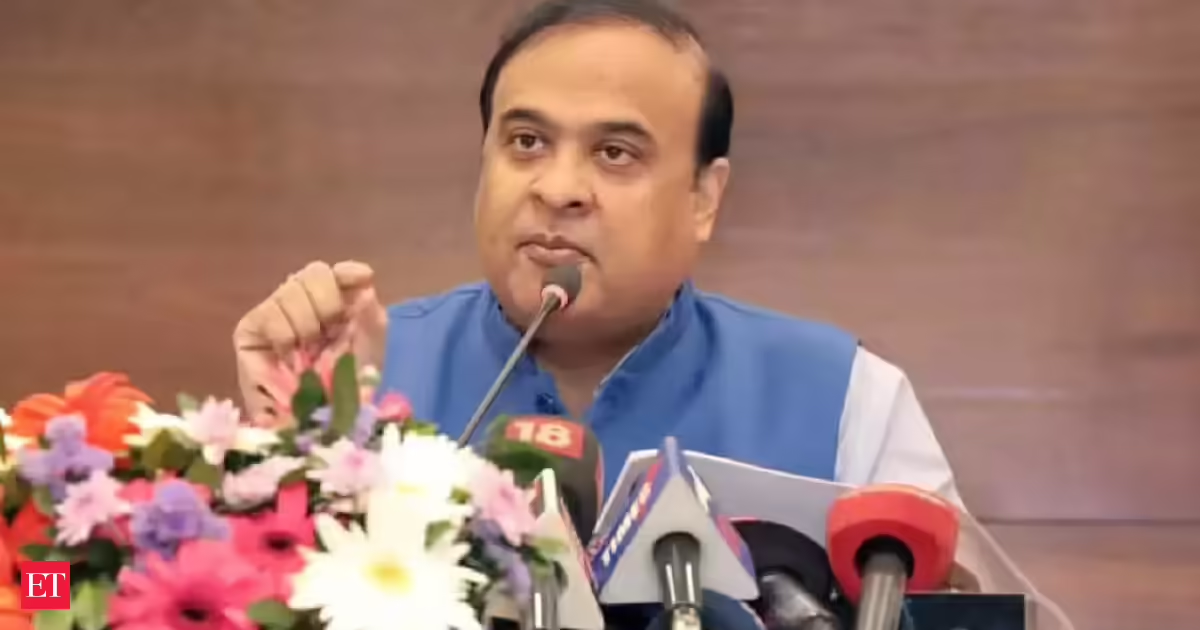
Among the NDA constituents in the state, the BJP, Asom Gana Parishad (AGP), United People’s Party Liberal (UPPL) and Bodoland People’s Front (BPF) have members in the assembly. Rabha Hasong Joutha Sangram Samiti (RHJSS) and Janashakti Party (JP) are also part of the NDA, but they do not have any MLAs.
“Our NDA alliance is complete. We know who will contest where; it is a done deal. There is no issue in stitching the alliance,” Sarma told reporters at the state BJP headquarters.
“After every process is complete, the state leadership will meet Union Home Minister Amit Shah with the list of probable candidates,” he added.
On January 7, Sarma had said the BJP was likely to formalise its seat-sharing agreement with its allies by February 15.
On December 5 last year, he had said the finalisation was expected to be over by January 15.
The elections for the 126-member assembly are expected to take place in March-April. This will be the first election after the delimitation exercise, done in 2023.Post delimitation, many seats and their geographical boundaries have been changed, while some non-reserved seats were reserved and vice versa. This has led to complications within the ruling and opposition coalitions.
At present, the BJP has 64 members in the assembly, while AGP has nine, UPPL has seven, and the BPF has three.
In the opposition camp, the Congress has 26 MLAs, AIUDF has 15, and CPI(M) has one. There is one Independent legislator as well.

Financial influencer Taylor Price joins ‘Varney & Co.’ to break down how shifting your mindset can help Americans grow wealth and achieve the American Dream.
California’s housing market is seeing an increase in inventory while the state’s population growth slows, but strong demand stemming from longstanding scarcity has kept the market tight.
An analysis by the Public Policy Institute of California (PPIC) found that the state added 677,000 housing units over a six-year period in which California’s population grew by only 39,000 residents.
Despite the relative growth in the number of housing units available, vacancy rates showed the market remained tight, with PPIC finding that owner vacancy declined from 1.2% to 0.8% while the rental vacancy rate was 4.3% in 2024, well below the national rate of 5.9%.
“Even though the state is adding more housing units than people, it was in such a deep hole that the recent successes in homebuilding are not enough to truly move the needle,” said Joel Berner, senior economist at Realtor.com.
AVERAGE MONTHLY MORTGAGE PAYMENT HITS NEW HIGH, TOPPING $2K FOR FIRST TIME EVER

California’s population growth slowed, but a longstanding housing shortage has kept the market tight. (Mario Tama/Getty Images)
The state’s longstanding shortage of housing units will require more construction to get inventory levels closer to the market’s equilibrium, as the state will need 2.5 million additional homes, according to a 2022 estimate by the state’s housing agency.
PPIC’s analysis also noted a demographic trend that’s affecting California’s housing market, with average household sizes declining in recent years.
It found that California lost 82,000 households with children and gained 722,000 households without them from 2019 to 2024.
“Fewer people living under the same roof means more roofs are required for the same number of people,” Berner said.
THESE 8 US HOUSING MARKETS FAVOR BUYERS

California has eased rules to boost construction of accessory dwelling units (ADUs), such as this one in Concord, California. (Smith Collection/Gado/Getty Images)
The aging of California’s population is a key factor in the trend, as PPIC found that about 16.5% of the state’s population is 65 or older today and projects that number will rise to 24.9% by 2050.
Homebuilding has picked up in the state of California in the last five years, including through promoting the construction of accessory dwelling units (ADUs), which are secondary living units that are on the same lot as a primary home but are typically detached or otherwise self-contained.
“The state has made significant progress from a policy perspective on encouraging ADU construction in recent years, for which it should be commended,” Berner added. “The state has made efforts to lift local restrictions on ADUs, which is helping it to deliver more and more of them where they are needed the most.”
WHITE HOUSE LAYS OUT FIXES FOR HOUSING AFFORDABILITY PROBLEM

California’s shortage of housing has persisted despite an uptick in construction. ( Kevin Carter/Getty Images)
Both PPIC and Berner suggested that while California is making progress, it hasn’t achieved a breakthrough in resolving its housing shortage as new homes are being snapped up quickly and vacancy rates remain low.
Berner noted that while 11.5% of the U.S. population lives in California, the state accounted for only 7.3% of newly permitted housing units last year, adding that the “pace just isn’t fast enough.”
PPIC noted that household formation rates among young adults in California have trended up, suggesting that younger residents are forming households – though the state will need sufficient lower-cost housing at entry-level prices for them to afford to take those next steps in California.
GET FOX BUSINESS ON THE GO BY CLICKING HERE
That pipeline could prove problematic, as Realtor.com noted that of the more than 1.2 million housing units that are planned statewide, just 712,000 are designated for moderate-income households or lower – about half of what California believes it needs.

Krispy Kreme to open stores in The Netherlands

MSTR Stock Slips After Strategy’s $2.54B Bitcoin Buy

Junelle Lyles Speaks On Noah Lyles’ Reaction To Wedding Dress



-

 NewsBeat6 days ago
Trump and Pope Leo: Behind their disagreement over Iran war
-

 Fashion3 days ago
Weekend Open Thread: Theodora Dress
-

 Crypto World7 days ago
SEC Signals Exemption for Crypto Interfaces From Broker Registration
-

 News Videos5 days ago
Secure crypto trading starts with an FIU-registered
-

 Sports3 days ago
NWFL Suspends Two Players Over Post-Match Clash in Ado-Ekiti
-

 Crypto World7 days ago
SEC Proposes Certain Crypto Interfaces Don’t Need to Register as Brokers
-

 Business1 day ago
Powerball Result April 18, 2026: No Jackpot Winner in Powerball Draw: $75 Million Rolls Over
-

 Crypto World3 days ago
Russia Pushes Bill to Criminalize Unregistered Crypto Services
-

 Politics3 days ago
Palestine barred from entering Canada for FIFA Congress
-
 Business4 days ago
Creo Medical agree sale of its manufacturing operation
-

 Politics1 day ago
Zack Polanski demands ‘council homes not luxury flats for foreign investors’
-
 Entertainment7 days ago
Brand New Day’ Footage Reveals the Devastating Impact of ‘Now Way Home’
-

 Crypto World3 days ago
Russia Introduces Bill To Criminalize Unregistered Crypto Services
-

 Tech6 days ago
Microsoft adds Windows protections for malicious Remote Desktop files
-
 Entertainment7 days ago
Karol G’s ‘Ultra Raunchy’ Coachella Set Gave ‘Satanic Vibes’
-

 Entertainment7 days ago
How Babylon 5 Turned Brief Side Story Into Emotional Masterpiece
-

 Tech5 days ago
‘Avatar: Aang, The Last Airbender’ Leaked Online. Some Fans Say Paramount Deserves the Fallout
-

 Tech2 days ago
Auto Enthusiast Scores Running Tesla Model 3 for Two Grand and Turns It Into Bare-Bones Go-Kart
-

 Tech7 days ago
What was the first ransomware attack to demand payment in Bitcoin?
-

 Business7 days ago
Intuitive Machines Stock Climbs 2.4% as $180M NASA Lunar Contract and $900M Revenue Outlook Fuel Momentum
You must be logged in to post a comment Login