Connect with us
DAPA Banner
DAPA Coin
DAPA
COIN PAYMENT ASSET
PRIVACY · BLOCKDAG · HOMOMORPHIC ENCRYPTION · RUST
ElGamal Encrypted MINE DAPA
🚫 GENESIS SOLD OUT
DAPAPAY COMING

Business

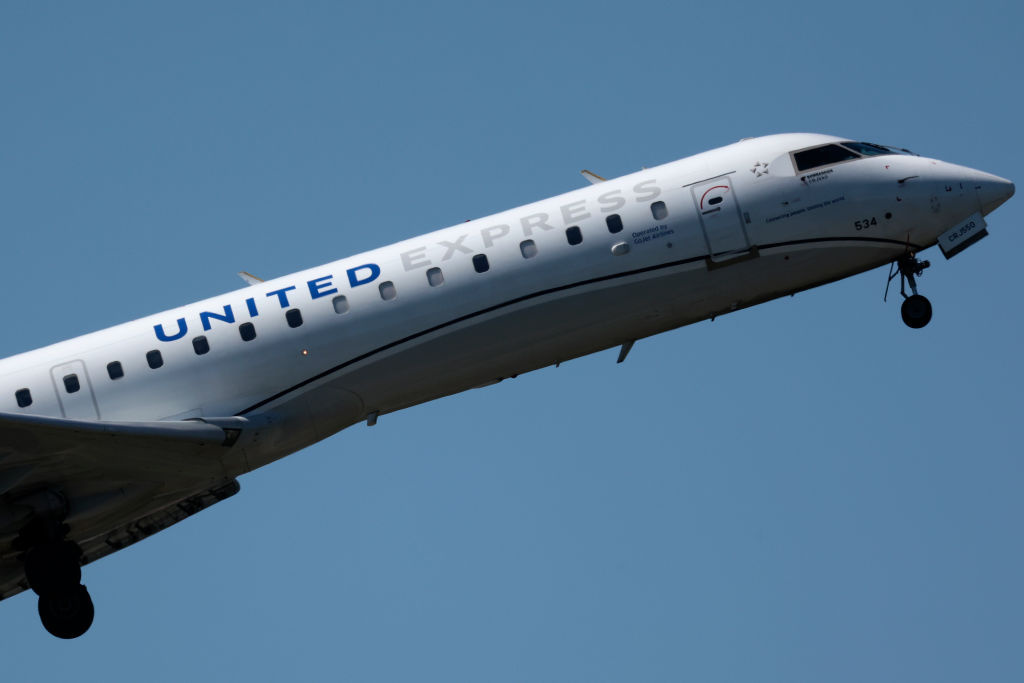
(VIDEO) United Airlines Flight Diverted to Madison After Passenger Attempts Cockpit Breach

Published

on

Sydney, Australia

MADISON, Wis. — A United Airlines flight from Chicago to Minneapolis was forced to divert to Dane County Regional Airport on Friday night after a passenger attempted to breach the cockpit, according to air traffic control recordings and law enforcement statements.

The incident occurred aboard Flight 2005, a Boeing 737-900 carrying more than 140 passengers and six crew members. The plane landed safely in Madison just before 9:30 p.m. local time after the disturbance prompted an emergency diversion.

United Airlines confirmed the diversion was due to a “security concern with an unruly passenger.” The airline declined to provide additional details, citing an ongoing investigation.

Advertisement

The FBI Milwaukee Field Office stated that its Madison Resident Agency and local law enforcement partners responded immediately. “A subject was detained by the Dane County Sheriff’s Office and afterwards, passengers resumed their flight,” FBI spokesperson Caroline Clancy said in a statement.

Audio recordings from the airport tower reviewed by investigators captured communications indicating the situation was serious. One transmission noted that off-duty law enforcement officers were on board the flight and had intervened. “Don’t think they were able to cuff him but were able to get control of him after multiple attempts to try to breach the cockpit,” the recording stated. “He is seated in a seat and flanked by law enforcement officers on either side.”

The passenger was ultimately subdued and detained by authorities on the ground. The plane remained in Madison for several hours before continuing to Minneapolis, where it landed shortly before 2:30 a.m. Saturday.

No injuries were reported among passengers or crew. The exact motive behind the passenger’s actions remains under investigation, and federal authorities have not released the individual’s identity or any charges filed as of Saturday morning.

Advertisement

The event highlights ongoing concerns about aviation security despite enhanced protocols implemented since the September 11, 2001 attacks. Cockpit doors on commercial aircraft are reinforced and locked during flight, with access strictly controlled. However, incidents involving unruly or disruptive passengers continue to occur, sometimes escalating into more serious threats.

Federal Aviation Administration data shows hundreds of unruly passenger incidents reported annually, though the vast majority do not involve attempts to access the cockpit. When such attempts do occur, they trigger immediate responses from crew, air traffic control and law enforcement.

United Airlines said the safety of its passengers and crew remains its top priority. The carrier cooperated fully with law enforcement and is conducting its own internal review of the incident.

The diversion caused significant inconvenience for travelers. Passengers on the flight were delayed by several hours before reaching their final destination. Some expressed gratitude to the off-duty officers who helped restrain the individual, while others described the atmosphere on board as tense during the episode.

Advertisement

Aviation experts noted that the presence of off-duty law enforcement on commercial flights is relatively common and often plays a critical role in managing in-flight disturbances. These individuals are not formally deputized to act in such situations but frequently assist crew members when needed.

The incident comes at a time when airlines are balancing increased passenger volumes with heightened security measures. The Transportation Security Administration has emphasized the importance of the “see something, say something” campaign, encouraging passengers and crew to report suspicious behavior promptly.

Dane County Regional Airport handled the unscheduled arrival efficiently, with emergency personnel on standby. Airport officials confirmed that operations returned to normal shortly after the aircraft departed for Minneapolis.

This is not the first time a United Airlines flight has faced a security-related diversion. Previous incidents involving disruptive passengers have led to strengthened training programs for crew members on de-escalation techniques and emergency protocols.

Advertisement

Federal authorities, including the FBI and TSA, are expected to conduct a thorough investigation. This will likely include interviews with passengers and crew, review of cabin surveillance footage if available, and analysis of the individual’s background and possible motivations.

The broader implications for airline security could prompt renewed discussions about cockpit access procedures, passenger screening enhancements and crew training. While modern aircraft are designed to withstand such attempts, the human element remains a critical variable in maintaining safety.

Travelers are reminded that interference with flight crew members is a serious federal offense that can result in significant penalties, including fines and imprisonment. The FAA and Department of Justice take such matters seriously, often pursuing prosecution to deter future incidents.

As details continue to emerge, the aviation community will monitor the investigation closely. For now, the successful resolution of the incident — thanks in part to quick action by those on board — prevented what could have been a far more serious event.

Advertisement

United Airlines has not commented further on the matter beyond its initial statement, deferring to law enforcement. Passengers affected by the diversion are being offered compensation and rebooking assistance in accordance with the airline’s policies.

The event serves as a reminder of the vigilance required in commercial aviation. Even with advanced security systems and protocols, the cooperation of passengers and crew remains essential to maintaining safety in the skies.

Continue Reading
Click to comment

You must be logged in to post a comment Login

Leave a Reply

Business

Helus Pharma prices $50 million stock offering at $4.85/share

Published

on


Helus Pharma prices $50 million stock offering at $4.85/share

Continue Reading

Business

Federal housing fund derided for failing to support regional projects

Published

on

Federal housing fund derided for failing to support regional projects

A federal homebuilding program has come under fire at a major Pilbara conference for failing to invest outside of Perth.

Continue Reading

Business

Banking, defence could lead next market rally as Nifty eyes 25,000: Rohit Srivastava

Published

on

Banking, defence could lead next market rally as Nifty eyes 25,000: Rohit Srivastava
Indian equity markets are attempting to hold above the crucial 24,000 mark, with investors closely watching whether the benchmark indices can sustain their recent gains.

According to Rohit Srivastava, Founder, Strike Money Analytics & Indiacharts, the technical setup continues to favour the bulls as long as key support levels remain intact, with banking and defence emerging as two sectors likely to outperform in the coming months.

23,800 Remains the Key Support for Nifty
Srivastava believes the market’s immediate direction will depend on whether Nifty can defend the 23,800 level, which has repeatedly acted as a strong support.”So, I have put 23,800 as the critical support that the market is trying to test again and again. That is where we left behind a gap on the 15th of June and, interestingly, we have not filled it, which makes it a good support. Now, as long as this support holds and we close positive today, the next target for the market is to cross the 25,000 mark in the coming weeks, and that is what we would be looking for. Similarly, in Bank Nifty, if I put the support range at around 59,956, we would be looking at it going towards 61,000 in the coming days,” he said.

According to him, maintaining these support levels could pave the way for another leg of the market’s uptrend.
Defence Weakness Is Only a Pause
While the Nifty Defence Index witnessed sharp selling pressure during the session, Srivastava does not see it as a reversal of the broader trend. Instead, he believes the decline is simply a temporary correction following a strong rally.
“So, it is just a pullback. The Defence Index was actually holding out against the market. It went up for almost seven-eight consecutive days, and we have seen a two-day pullback. So, it is probably just a pause in what is going to be a continuation of an uptrend. The Nifty Defence Index should be headed towards 10,700-10,800 in the coming weeks, so it would be a buy on dips as of now. We do have open recommendations on GRSE, that is Garden Reach, for our clients, so that is a particular stock that we like,” he said.
His view suggests that investors should use short-term corrections as buying opportunities rather than interpreting them as a sign of weakness.

Banking Could Be One of the Best-Performing Sectors
The strong performance in both private and public sector banks has reinforced Srivastava’s bullish outlook on financials. He believes the sector is entering a phase of catch-up after lagging the broader market for the past couple of years.

Advertisement

“Let me just highlight that we are SEBI-registered since I discussed the stock. Now, coming to banking, I do think that the banking sector as a whole is going to be one of the top-performing sectors of the coming year after having underperformed for a year or two before. In the previous cycle, it was lagging, especially private banks. There is a complete turnaround and catch-up in performance that is happening right now. In the next leg of growth, financials are going to play a very, very important part. I already mentioned the Bank Nifty levels that we are looking at, going towards 61,000 in the next move in the coming days, so I do not think you are going to see any weakness in the financial space,” he said.

His outlook indicates that financial stocks could become a key driver of the next phase of the market rally, supported by improving sectoral momentum and strengthening technical indicators.

Continue Reading

Business

McEwen: A Self-Funding Turnaround With A Copper Option Hiding In Plain Sight (NYSE:MUX)

Published

on

McEwen: A Self-Funding Turnaround With A Copper Option Hiding In Plain Sight (NYSE:MUX)

This article was written by

I am an investor specializing in the consumer products sector with a focus on identifying companies that offer a unique combination of strong brand recognition, solid financials, and growth potential. I have a keen eye for consumer trends and an in-depth understanding of the industry, which has helped me to identify profitable investment opportunities in the sector.

Analyst’s Disclosure: I/we have no stock, option or similar derivative position in any of the companies mentioned, and no plans to initiate any such positions within the next 72 hours. I wrote this article myself, and it expresses my own opinions. I am not receiving compensation for it (other than from Seeking Alpha). I have no business relationship with any company whose stock is mentioned in this article.

Seeking Alpha’s Disclosure: Past performance is no guarantee of future results. No recommendation or advice is being given as to whether any investment is suitable for a particular investor. Any views or opinions expressed above may not reflect those of Seeking Alpha as a whole. Seeking Alpha is not a licensed securities dealer, broker or US investment adviser or investment bank. Our analysts are third party authors that include both professional investors and individual investors who may not be licensed or certified by any institute or regulatory body.

Advertisement
Continue Reading

Business

Oil prices fall as Strait of Hormuz shipping rises despite mine threat

Published

on

Oil prices fall as Strait of Hormuz shipping rises despite mine threat

Traffic by tankers transiting the Strait of Hormuz has picked up amid the negotiations between the U.S. and Iran aimed at ending the war, which has caused oil prices to decline with more supply hitting the market.

The two sides have agreed to open the key shipping route for oil during the negotiations after the U.S. instituted a naval blockade and Iran laid sea mines that deterred shipping from moving through the narrow chokepoint.

Advertisement

The Strait of Hormuz’s central channel is yet to be cleared of Iranian mines, which has caused ships making the transit to either pass through a northern channel in Iran’s territorial waters or a southern channel in Oman’s waters. The U.S. Navy is overseeing transits along the southern route, while Iran issued a demand last week that vessels use the northern route through its waters.

Shipping traffic rose over the weekend to the highest level since the conflict began at the end of February, with 109 vessels transiting the Strait of Hormuz from Saturday through Monday, according to Kpler, a firm which tracks global shipping traffic.

OIL PRICES FLUCTUATE AS TRUMP’S IRAN DEAL COULD FULLY REOPEN STRAIT OF HORMUZ

Oil tankers pass through the Strait of Hormuz, Dec. 21, 2018.

Shipping traffic through the Strait of Hormuz is rising amid U.S.-Iran negotiations, though it remains below pre-war levels amid the threat of mines. (Reuters/Hamad I Mohammed)

President Donald Trump said Tuesday in a post on his Truth social media platform that, “19 Million Barrels of Oil flowed out of the Hormuz Strait yesterday, an all time RECORD. Oil prices are tumbling down, and the World is a much safer place!!!”

Advertisement

Despite the rise in shipping traffic, it remains lower than the more than 130 ships per day that transited the strait on a typical day before the conflict began, the New York Times reported

There also remains a backlog of hundreds of ships waiting to pass through the strait, according to the International Maritime Organization.

OIL PRICES PLUNGE TO LOWEST LEVELS SINCE EARLY MARCH AFTER TRUMP SIGNS IRAN DEAL

President Trump at a Cabinet meeting

President Donald Trump touted the rise in oil traffic amid the negotiations with Iran. (Getty Images)

The Joint Maritime Information Center (JMIC), a U.S.-led international maritime security organization based in Bahrain, lowered the regional threat level to moderate on June 18 after the U.S. and Iran agreed to open the waterway during the 60-day negotiating window.

Advertisement

However, it noted there have been confirmed mines in the waterway and recommended vessels use the southern route near Oman as it has been cleared of mines.

“Mariners should be advised of the existence of mines and expect naval presence as clearance operations continue,” JMIC said in its announcement. “Mariners should also expect congestion through transit routes and potential VHF hailing from naval forces to support free flow.”

ZELDIN TOUTS US ENERGY FUTURE, SAYS INDO-PACIFIC NATIONS INCREASINGLY INTERESTED IN AMERICAN SUPPLY

Oil tankers in the Strait of Hormuz.

Tanker traffic in the Strait of Hormuz declined precipitously amid the Iran war. (Giuseppe Cacace/AFP via Getty Images)

The uptick in oil moving through the Strait of Hormuz has eased global oil prices, which surged to trade above $100 a barrel at times during the first two months of the conflict. 

Advertisement

Prices for Brent crude, the global oil benchmark, were around $75 a barrel on Tuesday after declining about 0.3% on the day and over 4.5% in the past five days.

They also declined for the U.S. crude benchmark, West Texas Intermediate, which was about $73 a barrel on Tuesday after declining roughly 0.8% on the day and around 7.7% over the last five trading days.

GET FOX BUSINESS ON THE GO BY CLICKING HERE

Rising oil supplies from the Middle East with the return of tanker traffic through the Strait of Hormuz has also caused a shift in prices for North Sea crude, with prices for Forties crude from the North Sea trading at its lowest level in two years on Monday, Bloomberg reported.

Advertisement
Continue Reading

Business

Chinese supercomputer surpasses US for world’s fastest in first since 2017

Published

on

Chinese supercomputer surpasses US for world's fastest in first since 2017

A Chinese supercomputer system surpassed an American computer for the world’s fastest, according to an industry list published in Hamburg, Germany, on Tuesday, giving China the edge over the U.S. with the fastest supercomputer for the first time since 2017.

LineShine, a system built by the Shenzhen Cloud Computing Center in China, took the crown from El Capitan, a supercomputer housed at the Lawrence Livermore National Laboratory in California, which had reigned supreme since November 2024.

Advertisement

The last time China held the top spot was in 2017, when the Sunway TaihuLight was ranked No. 1. The U.S. had held the top spot consistently since dethroning Japan’s Fugaku in 2021.

MICROSOFT CEO SATYA NADELLA’S WARNING ABOUT THE AI RACE

A computer blade for the Hewlett Packard Enterprise El Capitan supercomputer

A computer blade for the Hewlett Packard Enterprise El Capitan supercomputer at the HPE Discover event at the Sphere in Las Vegas on June 24, 2025. (Ian Maule/Bloomberg via Getty Images)

LineShine, unlike the majority of high-end supercomputers, is not powered by graphics processing units (GPUs) such as the ones made by chip manufacturer Nvidia. The new compute champion, instead, runs on standard central processing units (CPUs). In total, LineShine runs on over 13 million CPUs, according to the TOP500 List.

The TOP500 List uses a metric called the High Performance Linpack (HPL) benchmark to measure supercomputer performance. Evaluating a computer along this benchmark involves making the system run a protracted series of calculations, pushing the system to its limit in an attempt to ascertain how much computing it can actually do.

Advertisement

“This performance does not reflect the overall performance of a given system, as no single number ever can. It does, however, reflect the performance of a dedicated system for solving a dense system of linear equations,” the TOP500 list writes on its website.

APPLE CEO TIM COOK WARNS OF “UNAVOIDABLE” PRICE HIKES AMID AI-DRIVEN CHIP CRUNCH

Using this benchmark, TOP500 determined that LineShine performed 20% better than El Capitan.

The Hewlett Packard Enterprise El Capitan supercomputer

The Hewlett Packard Enterprise El Capitan supercomputer at the HPE Discover event at the Sphere in Las Vegas on June 24, 2025. (Ian Maule/Bloomberg via Getty Images)

LineShine’s entrance onto the list also made it the fifth supercomputer in the world to demonstrate exascale capacity, meaning it can perform one quintillion calculations per second.

Advertisement

GET FOX BUSINESS ON THE GO BY CLICKING HERE

While China nabbed the top spot, the U.S. still dominated the rankings overall, holding the second, third and fourth spots with El Capitan, Frontier and Aurora.

U.S. President Donald Trump shows an executive order he signed in the Oval Office of the White House

President Donald Trump shows an executive order he signed at the White House related to quantum computing on June 22, 2026. (Andrew Harnik/Getty Images)

The Chinese computer’s debut on the list comes one day after President Donald Trump signed an executive order related to quantum computing, moving the U.S. to upgrade its efforts in the emerging technology that some experts say will transform the computing landscape.

Advertisement
Continue Reading

Business

How has the Northern Ireland economy performed since Brexit?

Published

on

A lorry arriving at Larne port. There is a sign for Terminal 4 Belfast-Cainryan and Stena Line.

In two of Northern Ireland’s port towns, the starkly different economic impacts of the 10 years since Brexit come to life.

In Larne, garden centre owner John Shannon points to a £387 “export charge” he must now pay just to bring in roses from Great Britain (GB).

In Warrenpoint, food manufacturer Brian Reid sees a different reality.

“Off the back of the Brexit vote, we picked up a lot of customers who wanted to source on the island of Ireland,” he said.

Advertisement

In the 10 years since the referendum result that saw the UK leave the EU, Northern Ireland’s economy has outperformed the UK average on some key measures.

Northern Ireland has a Brexit deal which means it has a closer economic relationship with the European Union (EU) than other parts of the UK.

It is tempting to conclude the better performance is all due to that special deal.

The reality is more complicated than that.

Advertisement

Part of the story is Northern Ireland undergoing a delayed recovery having suffered a deeper and longer recession following the 2008 financial crisis and property crash.

On a wider note, Brexit set the tone of politics in Northern Ireland for years, leading to the suspension of devolution between 2022 and 2024. Its impacts remain divisive and contested.

Continue Reading

Business

S&P 500, Nasdaq futures tick up as tech shares stabilize

Published

on

S&P 500, Nasdaq futures tick up as tech shares stabilize


S&P 500, Nasdaq futures tick up as tech shares stabilize

Continue Reading

Business

Why are there holiday delay warnings over the EU’s new border system?

Published

on

People wait at the top of escalators with luggage and checking phones at the Eurostar terminal at St Pancras in London, in December. The Eurostar sign can be seen in the background.

EES started to be rolled out in October last year and is now fully up and running.

The time it takes to register biometric information means people have been told to prepare for a wait at border controls.

During the introductory period, queues started to flare up at certain airports at busy times.

Since then, the system has been working well in some airports, while waits of several hours have been reported at others.

Advertisement

A representative of airline trade body IATA has warned queues in some places could be as long as six hours.

Travel experts and industry figures have blamed problems with the technology and border staffing levels. There have also been reports of people having to register their biometric information more than once.

The UK boss of Wizz Air told the BBC passengers should be prepared for a wait, and turn up three hours before their flight home.

Some passengers have missed flights home because the wait for EES checks meant they could not reach their gate in time.

Advertisement

Whether airlines will hold flights for passengers who get held up is a mixed picture. Some say they will wait wherever possible, while Ryanair is an example of a carrier which has said it will not.

Continue Reading

Business

Risks to stock market gains: Inflation, AI spending slowdown, regulation

Published

on

Risks to stock market gains: Inflation, AI spending slowdown, regulation

Fed Chair Kevin Warsh struck a hawkish tone during his first press conference leading the central bank last week. That was enough to put a dent in trading for the day, but markets quickly shook off volatility. The future still looks bright for markets through the rest of this year, but today I’m breaking down the key risks to watch in the second half of 2026, and how investors are digesting Warsh’s not-so-detailed preview of the Fed’s path forward.

Continue Reading

Trending

Copyright © 2025