
Business
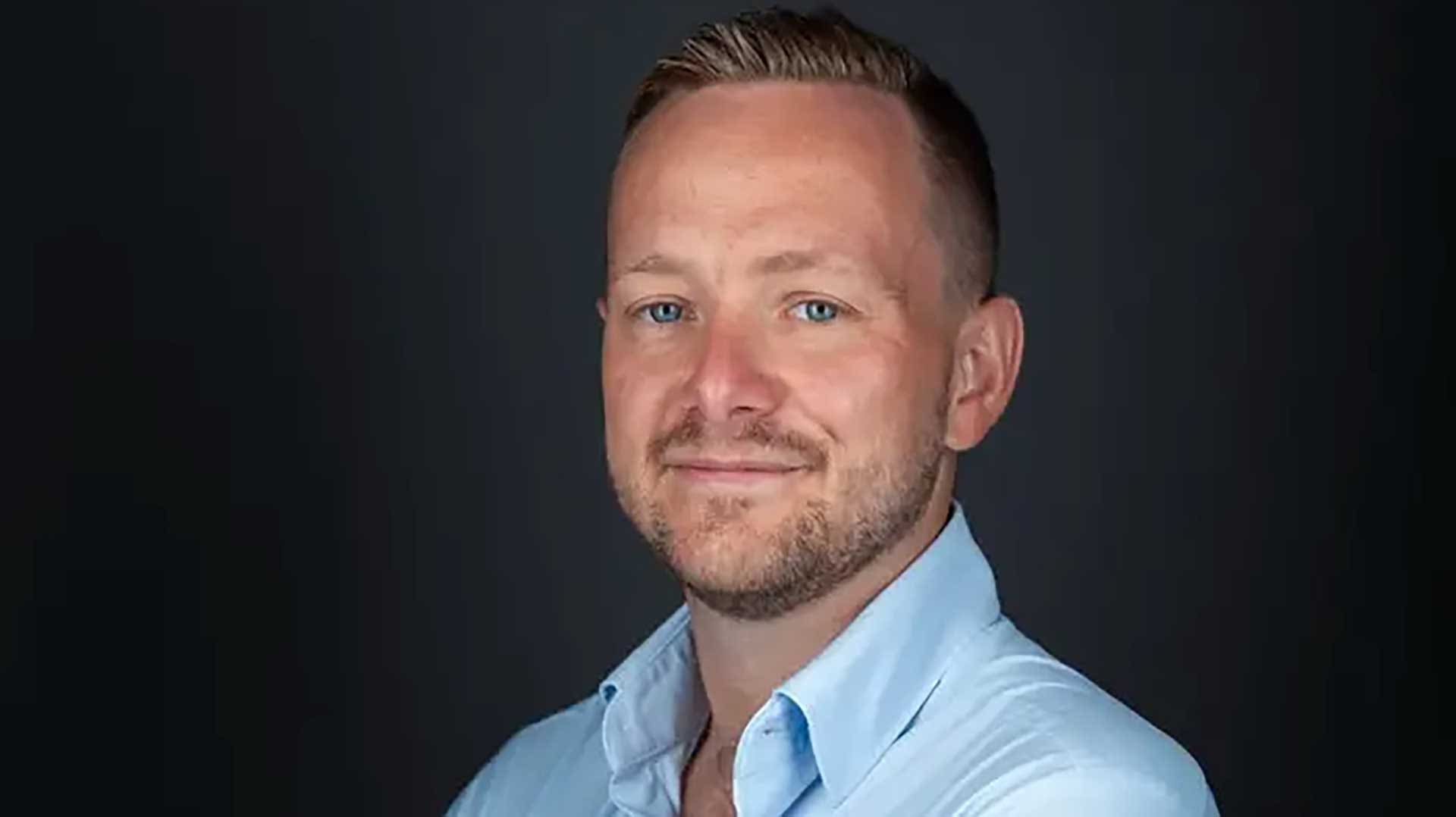
Virtual executive assistant: DonnaPro founder Filip Pesek


Filip Pesek is the founder and CEO of DonnaPro, a Slovenia-headquartered agency that places EU-based executive assistants with founders and chief executives in the UK and across Europe.
The company says it rejects more than 99 per cent of applicants, can have an assistant ready to start within nine business days and keeps 91 per cent of clients after a 60-day trial. Pesek previously ran a marketing agency and spent years managing assistants of his own before building the model. He tells Business Matters why the assistant is only half the answer, what he would tell his younger self and the ten-day test every founder should try.
What do you currently do at DonnaPro?
I am the founder and CEO of DonnaPro. We take the admin off founders’ plates so they can get back to running their companies. Every client gets an executive assistant based in the EU, hired, trained and still managed by us.
The assistant is the part you see. The team behind her is the part that makes it work. It is why 91 per cent of our clients stay on after the 60-day trial.
My role has changed a lot as we have grown. In the early days I did most things by hand, from sales to recruitment to whatever needed doing that week. Now we have a lot of assistants and a proper team on the corporate side.
So my work has moved to people, strategy and making sure the systems hold up as we keep growing. If DonnaPro cannot run without me sitting in the middle of everything, I have built the wrong thing.
Two things I am keeping for now. I still take a lot of first calls with founders, and I still do the final interview with every person we hire.
What was the inspiration behind your business?
It started with my own problem. Then our clients confirmed it.
I have worked with assistants for years, going back to when I ran my marketing agency. Some were great, some were not. Whenever one left, replacing them landed on me. I had to find someone new, train them and work out again how we would work together. I spent a lot of time managing assistants who were supposed to be saving me time.
Eventually I got it down to a science. But even with a great assistant, the company still had a bottleneck, and it was me. That was not because of her. It was because I had not built the systems underneath. Between making the assistant relationship work and putting out fires across the company, I never gave the business the structure it needed.
Then two things happened. People around me saw how I worked with my assistant and started asking where I found her and how I trained her. And at the agency, we were doing our job well. We flooded our clients with leads, and all the admin that came with that growth landed on the founders’ plates.
That is when it clicked. I had one problem, which was no systems. They had two: no systems and no assistant. And the assistant part is where most founders get stuck, because they end up doing what I did, spending hours managing the person who is supposed to save them time.
So that is the part we take away. With DonnaPro, we hire, train and manage the assistant, so the founder gets the time back without the management work. Our assistants come from the top 1 per cent of assistant talent in the EU, and they have our whole team behind them. We reject more than 99 per cent of the people who apply, and those who get through have two weeks of intensive training before they start with a client.
That support is why they often help put simple structure in place along the way. Better processes, clearer handovers, fewer things living only in the founder’s head. We do not come in as consultants. But a good assistant with proper support makes a company more organised the longer she is there.
Who do you admire?
I admire a lot of people, and they come from very different places. What they share is that they are exceptional at something.
In business, it is the founders I meet who have built something with real value that does not need them in the day to day. They can run it from a high level, or step back completely if they choose. Plenty of people build big companies. Far fewer build one that does not own them.
Then there are people I admire for how they think. Charlie Munger is one. I will be honest, I know him more from Poor Charlie’s Almanack than from his investing, but that book changed how I make decisions.
And I have a lot of respect for athletes who stay at the top of their game. Lindsey Vonn is one who comes to mind. She retired, had her knee rebuilt with titanium, came back after almost six years away and won World Cup downhills again at 41.
Looking back, is there anything you would have done differently?
Yes. I would have started DonnaPro sooner.
And once I did start, I would have been braver. I would have taken on more capital at the beginning and made a bigger bet. I was careful, and careful felt responsible. But when the demand is clearly there, careful mostly means slower.
The cost of thinking small is that you rarely see it. Nothing breaks. You grow, you are reasonably happy with it, and you never find out what the bigger version would have looked like.
Most founders answer this question with a mistake they made. Mine is more about the risks I was too careful to take. If I could tell my younger self one thing, it would be to dream much bigger, much sooner.
What defines your way of doing business?
Thinking long term, and actually living by it, which is the hard part.
When we hire someone, the plan is that they are still with us in five years. That changes how you treat people. If you want someone around in year five, you cannot burn them out in the first six months.
It shows up in boring, specific rules. Internal messages get checked once a day, not all day. Notifications are off by default. If something is really urgent, we call each other.
New people find this a bit scary at first, because they think being always online is what good looks like. It is not. Someone who replies to every message within seven minutes has spent the whole day reacting and no time thinking.
I try to run myself the same way. I have a son who is nearly five and obsessed with sport. I want to watch him play, not watch my phone while he plays.
What advice would you give to someone starting out?
Try this on yourself. Imagine you disappear for ten days, with no calls and no email. Does the business dip, hold, or actually run better? If it dips, you have found your problem, and it is not your team. It is the system you have not built yet.
Then stretch it to 30 days, then 90. When the company would be fine without you for 90 days, you have built a business. Before that, you have built a job with a team attached.
And stop confusing busy with effective. There is a line I keep coming back to: if you do not have an assistant, you are one. Somebody has to handle the work that keeps a business running. If nobody has been hired for it, it is you, and you are the most expensive person in the company to be doing it.


Critics say California got too little in deal to let Paramount buy Warner Bros

Raytheon wins $34 million contract for V-22 software support

Endava stock tumbles 10% on CFO leave, accounting probe

GE Aerospace declares $0.47 quarterly dividend
Josh Payne, the 32-year-old founder of British data centre start-up Nscale, is in line for performance-related share payments worth up to $350m (£260m) after the company floats in New York, according to its prospectus.
The document, released on Friday night, said the package was designed to ensure Payne’s “continued long-term alignment” with shareholders. Nscale is targeting a valuation of about $35bn (£26bn) as demand grows for the computing power that underpins artificial intelligence.
How the award is structured
The potential share-based payments account for about 2.5 per cent of Nscale’s share capital, according to the prospectus. They will vest in stages between 2028 and 2032 if the company hits various targets.
The company said 40 per cent of the shares will be linked to stock price targets and a further 40 per cent to the deployment of computing capacity. The remaining 20 per cent relates to “other operational targets”.
The prospectus said: “Our compensation committee and board of directors believe that Mr Payne’s continued leadership is critical to our ability to successfully execute our long-term strategy, capitalise on emerging market opportunities and create substantial shareholder value.”
Payne’s compensation in 2025, including share awards, was £17.2m. That was just below the £17.7m paid to Pascal Soriot at AstraZeneca, the highest in the FTSE 100.
Payne was born and raised in New South Wales, on Australia’s east coast. He worked in a coal mine and as a manual labourer before setting up a bitcoin-focused company, Arkon Mining, in 2019. Nscale was spun out of that business, since renamed Arkon Energy, in 2024.
Revenue, losses and contracts
The company has grown on the back of contracts with US technology groups and backing from industry figures. It was valued at about $14.6bn in a funding round in March led by Aker, the Norwegian industrial investment company, and 8090 Industries, a US investment firm.
Nvidia also took part in that round. The chipmaker has invested more than $2bn in Nscale, including $1bn in convertible notes, and Jensen Huang, Nvidia’s chief executive, has described the company as a “national champion for the UK”. Nscale is a major customer of Nvidia and also has a $1.2bn contract to supply it with computing capacity.
The prospectus showed revenue of $140.6m in the six months to June, up from $10.4m a year earlier. Net losses widened over the same period from $368.9m to $1.02bn.
Nscale said it expects losses to continue because of the “substantial upfront capital expenditure” needed to expand its data centre capacity and buy the hardware required to deliver its contracts.
At the end of August, the company said it had 55 megawatts of active capacity: 7MW from its own data centres and 48MW rented from third parties. That capacity is tied to $2.6bn in contracted revenue. A further 1.3 gigawatts is in the pipeline, tied to $101bn of contracts that have not yet started. One megawatt can support about 600 to 1,000 homes.
Nscale has signed a six-year contract worth $45bn with Anthropic, under which the AI lab will lease capacity at Nscale’s site in West Virginia from next year. It has also signed long-term agreements with Microsoft running until 2033 and worth $44bn, building on an earlier arrangement to supply the Microsoft UK supercomputer project.
The company, which raised £750m last year for its UK data centre plans, claims to have “line of sight” to 10GW of capacity.
The prospectus also set out risks. It said: “Our limited operating history, including our limited history of selling our AI cloud infrastructure offering, the dynamic and rapidly evolving market in which we sell our platform, and the concentration of our revenue from a limited number of customers, as well as numerous other factors beyond our control, may make it difficult to evaluate our current business, future prospects and other trends.”

Jamie Young
Jamie Young is Senior Reporter at Business Matters, covering SME finance, employment law and Westminster policy since 2016. He has reported on every Budget and Autumn Statement since 2018, helped make sense of the ‘covid era’ and the bounce-back loan scheme from launch through the fraud investigations, and broke the magazine’s coverage of the 2024 late-payment reforms. He joined Business Matters straight from completing his BA in Administration from Exeter University and is NCTJ-qualified. Reach him at jyoung@cbmeg.co.uk

Michael A. Peterson, CEO of the Peter G. Peterson Foundation, discusses the fiscal challenges facing the U.S. and why policymakers need to pursue solutions.
Social Security beneficiaries are expected to see a larger cost-of-living adjustment (COLA) in 2027 than they received for this year, according to new estimates that follow the release of August inflation data.
By law, the annual Social Security COLA is calculated using the Bureau of Labor Statistics’ consumer price index (CPI) inflation data for the months of July, August and September based on a variant of the dataset known as CPI-W. The COLA boosts beneficiaries’ payments to account for a rise in the cost of living, and the COLA for 2026 amounted to a 2.8% increase.
The BLS released the August CPI inflation data that showed consumer prices were up 3.4% from a year ago, while the CPI-W was up 3.5% over the last year.
Several groups have released estimates for the 2027 COLA based on the data from the last two months and estimates for September’s data, which have the COLA landing in a range from 3.4% to 3.6%.
CONSUMER PRICES REMAIN ELEVATED IN AUGUST AHEAD OF FED’S NEXT MEETING

Social Security’s annual COLA will be officially announced after the release of the September CPI inflation data next month. (Getty Images/stock)
The nonpartisan Committee for a Responsible Federal Budget (CRFB) estimated that based on the latest data, the 2027 COLA will be 3.4%.
AARP projected that the 2027 COLA will be 3.6%, based on its analysis of recent inflation readings and projections for the coming weeks.
Rich Johnson, vice president of financial security at the AARP Public Policy Institute, noted that many older adults rely on Social Security for the bulk of their income and that the group’s forecast aims to help them plan based on how the COLA may affect their finances.
“Family budgets have been under increasing pressure because of rising prices. The sooner that we can give them reliable information as to how much their benefits might [increase next year], the sooner they can start planning,” Johnson said.
ONE TYPE OF SOCIAL SECURITY ADJUSTMENT COULD CUT THE 75-YEAR SHORTFALL IN HALF
Johnson said that the AARP’s estimate incorporates the Federal Reserve Bank of Cleveland’s inflation projections for September and that while those figures aren’t “set in stone,” the data helps compile the estimate.
“With only one month of inflation data to go until the 2027 COLA is finalized, there’s less uncertainty about what that increase will be,” he added. “Unless prices change dramatically in September, we’re confident that the COLA will be in the mid-3% range.”
The Senior Citizens League predicted the 2027 COLA will be 3.5% following the release of the August CPI inflation data, down slightly from its estimate of 3.6% the prior month. A 3.5% COLA would increase average benefit checks by $67.90 and would boost the monthly benefit from $1,940.08 to $2,007.98, TSCL reported.
AMERICA’S $40T NATIONAL DEBT IS ‘STEALING FROM OUR NEXT GENERATION,’ ECONOMIST WARNS

Social Security’s COLA is expected to be larger in 2027 than in 2026 due to higher inflation. (Mark Felix/The Washington Post)
“The biggest thing we’re watching with the COLA announcement coming are short-term shocks to the economy that push inflation way up or down in the next 30 days,” said TSCL executive director Shannon Benton.
“No matter if the COLA announcement comes in slightly higher or slightly lower than our prediction, seniors will probably end up disappointed in the long run. The reality is that older Americans allocate their budgets differently than people still in the workforce, so inflation hits them differently. The CPI-W captures the experience of urban wage earners, which doesn’t represent the average senior’s budget,” Benton added.
GET FOX BUSINESS ON THE GO BY CLICKING HERE
The final piece of data for the 2027 COLA will be released on Oct. 14, when the BLS releases the September CPI inflation data.

Stifel initiates Rush Street Interactive stock with buy rating


Dhierin-Perkash Bechai is an aerospace, defense and airline analyst.
Dhierin runs the investing group The Aerospace Forum, whose goal is to discover investment opportunities in the aerospace, defense and airline industry. With a background in aerospace engineering, he provides analysis of a complex industry with significant growth prospects, and offers context to developments as they occur, describing how they might affect investment theses. His investing ideas are driven by data informed analysis. The investing group also provides direct access to data analytics monitors.
Learn more.
Analyst’s Disclosure: I/we have no stock, option or similar derivative position in any of the companies mentioned, and no plans to initiate any such positions within the next 72 hours. I wrote this article myself, and it expresses my own opinions. I am not receiving compensation for it (other than from Seeking Alpha). I have no business relationship with any company whose stock is mentioned in this article.
Seeking Alpha’s Disclosure: Past performance is no guarantee of future results. No recommendation or advice is being given as to whether any investment is suitable for a particular investor. Any views or opinions expressed above may not reflect those of Seeking Alpha as a whole. Seeking Alpha is not a licensed securities dealer, broker or US investment adviser or investment bank. Our analysts are third party authors that include both professional investors and individual investors who may not be licensed or certified by any institute or regulatory body.

Check out what’s clicking on FoxBusiness.com.
Meritage Hospitality Group, one of the largest Wendy’s franchisees in the U.S., has filed for Chapter 11 bankruptcy protection following a high-stakes dispute with the fast-food chain’s corporate parent.
The bankruptcy filing comes amid severe financial pressures at the franchisee, which has struggled with soaring beef costs and weak customer traffic, while Meritage has also blamed aggressive promotional discounting for squeezing margins.
The Michigan-based operator runs 314 Wendy’s locations across 15 states. The company filed its voluntary petition Thursday with the U.S. Bankruptcy Court for the Western District of Michigan, according to court documents.
THE FAST-FOOD CHAIN WHERE MANAGERS AVERAGE MORE THAN $200K A YEAR

Meritage Hospitality Group, one of the largest Wendy’s franchisees in the U.S., has filed for Chapter 11 bankruptcy protection. (Mike Campbell/NurPhoto via Getty Images)
The bankruptcy filing came one day after Wendy’s franchising unit delivered a Sept. 16 notice seeking to terminate Meritage’s franchise rights and lease occupancy “effective immediately,” according to court documents. Meritage filed for Chapter 11 the following day, putting the termination effort on hold while the case proceeds. Meritage disputes Wendy’s attempt to terminate the agreements and says its franchise rights remain intact.
In a recent report to investors, Meritage CEO Bob Schermer Jr. said store-level earnings declined 48% in 2025. Court filings separately show the company reported a $31.5 million net loss that year, compared with net income of $8 million in 2024, while revenue fell 7.6% to $617.7 million.

The Michigan-based operator runs 314 Wendy’s locations across 15 states. (USA Today Network via Reuters Connect)
In an effort to stem the losses, the franchisee began closing approximately 60 underperforming Wendy’s locations in late 2025 and has eliminated or altered breakfast service at numerous locations. The company said those measures are expected to provide approximately $11.2 million in combined annual EBITDA benefits.
Court records show Meritage had approximately $725.9 million in assets and $651.2 million in total liabilities as of summer 2026. The Wendy’s franchising unit is asserting claims totaling $146.9 million against the company, including $27.4 million in past-due royalties and fees and $119.5 million in Continuous Operations Fees. Meritage also had approximately $137 million outstanding under its primary credit facility as of the bankruptcy filing.
| Ticker | Security | Last | Change | Change % |
|---|---|---|---|---|
| WEN | THE WENDY’S CO. | 6.70 | -0.04 | -0.59% |
In a press release, Meritage’s board of directors said the court-supervised restructuring was the “most effective and proactive path to strengthen Meritage’s finances, address these headwinds directly, and protect the long-term interests of its stakeholders, team members, guests, and communities.”
CLICK HERE TO GET FOX BUSINESS ON THE GO
Despite the bankruptcy, Meritage said it intends to keep its dining rooms open and maintain normal restaurant operations. The company has asked the court for permission to continue paying its roughly 9,000 employees without disruption. Court filings put its workforce at approximately 8,850 employees as of the bankruptcy filing.

Alastair Mackie is the founder and managing director of WasteSync, a Strathaven-based company building offline-first software that lets weighbridge teams record waste movements even when the mobile signal drops out.
Digital waste tracking becomes mandatory for permitted waste receivers in England and Wales from 1 October 2026, with Scotland following in January 2027, and WasteSync says it passed all 14 of DEFRA’s test cases in July and has been approved to connect to the live system. The former Lloyds Banking Group manager and Strathclyde MBA graduate also won the Strathclyde Inspire 100 competition in June. He tells Business Matters why software has to earn its place at the gate, and why unglamorous industries are worth a founder’s attention.
What do you currently do at WasteSync?
I call myself MD, so it is founder, products, selling, growing and joining the dots. In a nutshell, my job is taking an operational requirement and turning it into reliable software that teams on a busy waste site will use every day without complaint, without stopping trucks and without incurring fines.
I lead our commercial strategy and long-term vision, run customer discovery and track shifts in UK environmental legislation. As an early-stage founder, my role changes by the hour, moving from commercial positioning to the granular detail of how a weighbridge operator inputs tonnage on an uneven yard.
Waste management is massive. It is essential national infrastructure, yet vast swathes of daily operations still depend on physical clipboards, crumpled paper tickets and siloed spreadsheets. Crucially, waste facilities and transfer stations often sit in connectivity blackspots where standard mobile signal drops out entirely.
If software requires constant 4G or 5G to function, it fails at the gate. We built WasteSync from the ground up to be offline-first, meaning crews can log movements, verify loads and store records uninterrupted, with everything syncing automatically the moment a connection returns.
I spend a substantial part of each week on site visits and calls with weighbridge teams, local authorities, independent carriers and compliance managers. I work backwards from their daily operational friction. Where does poor connectivity halt throughput? Which steps in the waste transfer note lead to errors? Who holds the budget, and what concrete outcome makes their shift easier? Software must earn its place on the ground.
What was the inspiration behind your business?
A mix of wanting to build an independent business and spotting a broken, overlooked industry problem worth fixing.
My career was never mapped out in a neat straight line. I took a law degree in Edinburgh, realised early on that my natural strengths lay in commercial execution, and moved directly into advertising sales. That gave me an early education in cold outreach, negotiation and how clients make purchasing decisions.
After serving as a director in an SME and completing an MBA at Strathclyde, I moved into financial services. I spent over a decade in senior management and private banking, working day in, day out with regulatory governance, risk management and audit-ready data.
The catalyst arrived when I was leading AI and digital innovation initiatives at Lloyds Banking Group. Looking closely at automated workflows and modern data pipelines, I saw how much friction could be removed from traditional, paper-choked sectors. As a father of two, that sparked my entrepreneurial drive.
I wanted to move from watching digital transformation unfold inside a corporate institution to creating an independent venture where accountability rested squarely on my shoulders. I was searching for work that brought together commercial viability, intellectual challenge and tangible societal utility.
When I looked at waste and resources, the market gap and timing were incredible. Upcoming digital waste tracking mandates and other regulations, rising supply chain audit standards and decades-old paper habits meant operators needed better tools. WasteSync was founded to turn that regulatory headache into an operational advantage. You know the massive fly-tipping you see on the news? We are part of the solution to that.
How is WasteSync preparing for the digital waste tracking deadline?
In July we passed all 14 of DEFRA’s test cases and were approved to connect to the live Digital Waste Tracking system. Records are captured on site, even with no connection, and filed automatically to DEFRA and SEPA once the signal returns.
In June we demonstrated WasteSync to a Scottish local authority and an electrical waste processor for the first time. Both watched it capture a load offline, and both agreed to pilot it.
Who do you admire?
Naval Ravikant’s ideas helped crystallise how I approach building a business. My co-founder, Iain Baxter, introduced me to The Almanack of Naval Ravikant, which gave words to principles I had spent years circling: developing specific knowledge, taking direct accountability and creating leverage that outlasts your daily hours.
It is an exceptionally grounding framework for any founder, shifting the focus away from vanity metrics and towards durable, compounding value. Naval is the man.
I also lean heavily on classic commercial fundamentals. Dale Carnegie remains the gold standard for understanding that business is built entirely on trust, listening and treating people with respect. Brian Tracy’s rules on prioritisation keep me focused every morning. When you run an early-stage company, incoming demands always exceed available daylight, so deciding what not to do is just as important as the tasks you complete.
Looking back, is there anything you would have done differently?
I would not change the core path, because every chapter contributed directly to the founder I am today. Law trained my analytical discipline and contract awareness. Commercial sales taught me resilience and how to listen to clients. Banking gave me a deep respect for governance, risk and data integrity. Modern tech showed me what software can achieve when applied with discipline.
I should have trusted my gut and backed myself sooner. Corporate life provides regular income and stability, and it is easy to become comfortable in those patterns. Eventually, you must confront what truly motivates you and take the leap.
I also would have put rough prototypes in front of paying customers even earlier. It is dangerously tempting for founders to sit in a room refining product specs in isolation. The fastest way to learn is getting dirty boots on site, watching someone use your interface and letting real operators dismantle your assumptions. That direct feedback prevents you from solving problems that do not actually exist.
What defines your way of doing business?
Commercial discipline, technical defensibility and trust. Coming out of private banking, data integrity is non-negotiable. In our sector, bad data is worse than no data.
That is why our competitive moat rests on building the best data foundation in the industry. By solving the tough engineering problem of reliable offline capture in harsh operating environments, we ensure the data feeding compliance reports and downstream systems is accurate, complete and auditable.
I strip out technology buzzwords and empty marketing claims. I care about whether our software saves an administrator two hours of manual rekeying, eliminates duplicate records and protects a licence holder during an audit. Grand ambition is easy to pitch, but quiet execution, engineering reliability and delivering on your word are what build an enduring company.
I need to give a nod to agentic engineering and AI in general. I am a heavy user, and I believe this is the gold rush we have been waiting for. We are in the era of ideas, which is exhilarating, and scary too, but let us focus on the good parts.
What advice would you give to someone starting out?
Do not wait for complete certainty. If you wait until all the risks disappear, you will never launch. Any meaningful venture begins with imperfect data, so pick a sensible next step, test it and adjust as you learn. Action consistently generates clarity, where standing still only creates doubt.
Second, fall in love with the problem rather than the technology. Identify who feels the operational pain, calculate what it costs them every month, and make sure they have both the authority and the budget to pay for a solution. A clever piece of software without a willing buyer is merely an expensive hobby.
Finally, give yourself permission to reinvent your direction. You are never trapped by the degree you chose at 18 or the corporate ladder you climbed in your thirties. If you can combine your hard-earned experience with an unglamorous real-world problem that demands solving, back yourself and make the jump. And do you know what? Unsexy industries are cool.

Man United told how Max Dowman and Wayne Rooney claim explains JJ Gabriel’s transfer request
Critics say California got too little in deal to let Paramount buy Warner Bros

Fairshake plans $30M push against Sherrod Brown

Weekend Open Thread – Corporette.com

Weekend Open Thread: Talbots – Corporette.com

Memory prices are slowing because buyers ran out of money

Ripple XRP Is Going To $32 A Coin This Is Going To Shock The Daylights Out Of You

The UNTHINKABLE is About to Happen to the Dollar (& Why Gold and Silver are Next)

GARLINGHOUSE DROPS A MASSIVE STATEMENT!!!! (TRILLIONS TO XRP!?!)
-
 Fashion3 days ago
Weekend Open Thread: Talbots – Corporette.com
-

 Tech22 hours ago
Researchers escape OpenAI Codex sandbox to run commands on host
-

 Crypto World7 days ago
Revolut Attackers Warn of Ongoing Daily Customer Data Leaks
-

 Crypto World3 days ago
Circle launches Arc Studio AI agent for building onchain apps
-

 Crypto World6 days ago
Robinhood engineers charged over $50K crypto scheme
-
 NewsBeat3 days ago
Trump says US has reached an agreement to take permanent control of Greenland’s security
-

 Crypto World7 days ago
Kraken Lets xStocks Holders Earn Yield Through DeFi
-

 Crypto World3 days ago
Bitcoin price breaks channel as RSI climbs to 63
-

 Crypto World5 days ago
US Charges Robinhood Engineers Over Crypto Listing Trades
-

 Crypto World6 days ago
What Is the Status of the U.S.-Iran Peace Talks? Here's What Both Sides Are Saying
-

 Crypto World7 days ago
NVIDIA Analysis: Attempted Rising Wedge Breakout Amid Pressure on the AI Sector
-

 Tech6 days ago
Webb’s IC 348 Mosaic Includes Two-Jupiter Dwarfs, Twin Jets, and a Nursery Still Making Worlds
-

 Crypto World3 days ago
World Money launches in 150+ countries with Stripe
-

 Crypto World22 hours ago
Who Needs CLARITY Anyway? ARB Could See 70X Increase: Hodler’s Digest
-

 Crypto World7 days ago
Kraken Adds DeFi Yield on Tokenized Stocks and ETF Assets
-

 Crypto World3 days ago
Silver prices recover quickly, hitting weekly high today
-

 Crypto World3 days ago
Trading Bitcoin on Robinhood? Why 2% Spread Has Traders Worried
-
Crypto World7 days ago
Can Circle’s Arc Repeat Robinhood Chain’s Meme Coin Boom?
-

 Entertainment6 days ago
Big Brother Update: Melody Explodes at Drew as Illness Sweeps BB28 House
-
 NewsBeat3 days ago
US was ‘on brink of war’ with China over false AI report of nukes moving in Middle East
You must be logged in to post a comment Login