Connect with us

Business

Wales has a big innovation problem

Published

on

Business Live

The number of innovative firms in Wales has fallen sharply

The number of innovative firms in Wales has fallen.

The real test of whether an economy is becoming more productive is not found in political speeches but in the behaviour of businesses. Are they investing in new products? Are they new products, adopting technologies and finding new ways to compete?

That is why the latest UK Innovation Survey matters so much, as it tells us something important and uncomfortable namely, that Wales is not only below the UK average in innovation activity but has fallen further behind over the last three survey periods.

Advertisement

In 2018-20, 43.5% of Welsh businesses were classified as innovation-active, compared with a UK average of 44.9%. By 2022-24, that had changed dramatically and whilst the proportion of innovation-active businesses had fallen to 34% in the UK, in Wales, it had crashed to just 27.7%.

For an economy that has long struggled with productivity, that should be a serious concern because innovation is one of the routes through which businesses become more productive. It is not just about laboratories, patents or university spinouts, although those have their place.

It is also about new ways of working, better technology, improved systems, stronger management, new services and more efficient processes. If fewer Welsh firms are doing these things, then closing the productivity gap becomes even more difficult.

The comparison with the rest of the UK is also uncomfortable and in the latest survey period, England had an innovation-active rate of 34.8%. Northern Ireland was at 30.3%. Scotland was at 29.4%. Wales was last, at 27.7%.

Advertisement

Nor is Wales simply behind London and South East England; it is below every English region and therefore the worst-performing part of the UK. That should challenge any explanation normally out forward by those in power that Wales is only being held back by the exceptional strength of the south-east of England, and the latest figures suggest something broader and more worrying.

The survey also shows that several core innovation activities have weakened across the UK, and the proportion of businesses investing in computer software, computer hardware and internal research and development as part of innovation activity fell from 2018-20 to 2022-24.

These are not marginal business activities as software, hardware and R&D are among the practical foundations of modern productivity, and they are the ways firms improve what they do and how they do it. If these activities are weakening nationally, and Welsh firms are less likely to be innovation active in the first place, the challenge for Wales becomes even greater.

The survey also reminds us that larger firms are more likely to innovate. In 2022-24, some 47% of large UK businesses were innovation active, compared with 34% of SMEs. That matters because Wales has a business base heavily shaped by small and medium-sized enterprises and fewer large private-sector headquarters than stronger-performing regions.

Advertisement

This is not a criticism of Welsh SMEs, as many are ambitious, creative and resilient, but smaller firms often have less time, less capital, fewer specialist staff and less management capacity to invest in innovation. The owner-manager, dealing with cash flow, recruitment, customers, regulation and day-to-day delivery, may recognise that technology adoption or process improvement is necessary but still struggles to make it happen.

The barriers identified in the survey underline this point and among broader innovators, 21.6% identified the cost of finance as a barrier, 20.3% cited the availability of finance, and 19.6% said the direct cost of innovation was too high.

So the issue is not simply whether firms have ideas, it is whether they have the money to act on them and, as I have pointed out so many times, questions need to be asked as to why the Welsh Government own funding body, the Development Bank of Wales, has not specifically addressed this critical issue.

The technology findings are equally important as broader innovators are far more likely than non-broader innovators to use artificial intelligence, CRM (customer relationship management) systems, ERP (enterprise resource planning) software, project management tools and other management technologies.

Advertisement

This matters because productivity – which is now the touchstone for this new Plaid Cymru Government – is often lost not in dramatic failures, but in ordinary inefficiencies, including poor customer management, slow invoicing, poor workflow and inconsistent project delivery.

This means that for many Welsh firms, the biggest productivity gains may come not from a breakthrough invention but from better use of everyday technology. And yet such changes have not been the focus of the activities of Business Wales which is allegedly there to support Welsh businesses.

The export data tells a similar story and in 2024, 28.3% of broader innovators exported, compared with only 9.2% of non-broader innovators. Among SMEs, 27.6% of broader innovators exported, compared with 8.9 per cent of non-broader innovators. Innovation and exporting are therefore closely connected and firms that innovate are more likely to sell beyond their immediate markets, and firms that export are often pushed to become more competitive.

For Wales, this is crucial as a small economy cannot build prosperity by selling mainly to itself and needs more firms competing in wider markets but that requires stronger products, better systems, improved quality, sharper branding, more efficient processes and greater confidence.

Advertisement

Therefore, latest UK Innovation Survey should be seen as more than a statistical report, but as a warning that Wales has a productivity problem, and it is getting worse

Six years ago, Wales was close to the UK average, but it is now clearly behind and has not only fallen faster than the UK, but it is behind every UK nation and every English region. It has fewer innovation-active firms at a time when technology adoption, new products, better processes and stronger exports should be at the heart of economic renewal.

There is no easy route from a low-innovation economy to a high-productivity one, but if Wales wants higher wages, stronger firms and a more resilient economy, these findings cannot be ignored. Innovation cannot remain a specialist policy interest or a slogan attached to political manifestos, but must become central to how Wales thinks about business growth, productivity and the future of the economy


Advertisement
Continue Reading
Click to comment

You must be logged in to post a comment Login

Leave a Reply

Business

Riviana Foods expands pulse, whole grain ingredients line

Published

on

Riviana Foods expands pulse, whole grain ingredients line

Company launches flour gels and extruded micropellets.

Continue Reading

Business

Gritzy debuts flagship stone-ground grits

Published

on

Gritzy debuts flagship stone-ground grits

The product is available in two varieties.

Continue Reading

Business

NBCUniversal-YouTube deal could jumpstart next streaming wars chapter

Published

on

NBCUniversal-YouTube deal could jumpstart next streaming wars chapter

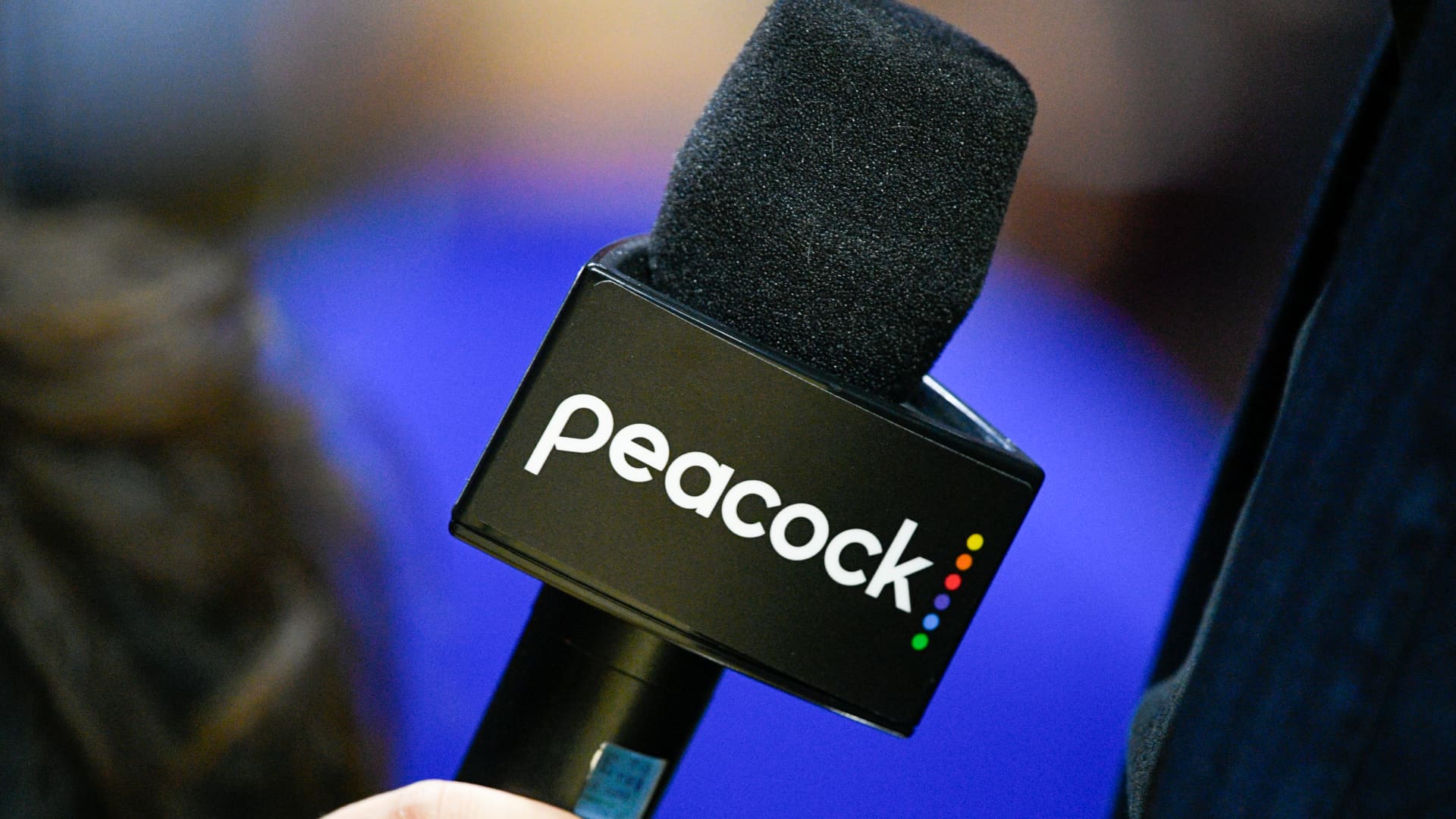
A general view of the Peacock logo on a microphone during the BIG EAST Women’s Basketball Tournament Championship game between the UConn Huskies and the Villanova Wildcats on March 9, 2026 at Mohegan Sun Arena in Uncasville, CT.

Erica Denhoff | Icon Sportswire | Getty Images

NBCUniversal’s announcement this week that it’s struck a content deal with YouTube Premium could jumpstart a new chapter of the streaming wars — one that could be titled, “Aggregation.”

Advertisement

Under the agreement, which starts early next year, YouTube Premium subscribers in the U.S. will get Peacock Premium baked into their subscription. Peacock content, including wildly popular shows like “Love Island USA” and the Real Housewives franchise, will be available directly via YouTube — as will NBC’s portfolio of live sports like the NFL and NBA.

At launch, YouTube Premium’s $15.99-per-month price won’t change. Customers will get Peacock Premium content for no additional charge.

Get the CNBC Sport newsletter directly to your inbox

The CNBC Sport newsletter with Alex Sherman brings you the biggest news and exclusive interviews from the worlds of sports business and media, delivered weekly to your inbox.

Subscribe here to get access today.

Advertisement

YouTube Premium — the platform’s subscription, ad-free video product — is separate from YouTube TV, its bundle of live TV networks. The company says there are 125 million global users of YouTube Premium. It doesn’t break out U.S. subscribers.

The deal cements a new strategy for NBCUniversal — agreeing to a streaming wholesale deal with a distribution partner that ingests Peacock content. NBCU did a similar deal with Apple TV late last year, but that bundle required customers to opt into the offering, at a cost of $14.99 per month as opposed to $12.99 per month just for Apple TV. The YouTube deal allows its existing subscriber base to get access to all Peacock content instantly without paying any more money.

NBCU’s decision to allow Peacock content to appear on other streaming services could serve as a template for other media companies that similarly decide they’re willing to partner with other streaming services.

“Other strategies are a little more walled gardens,” Comcast co-CEO Mike Cavanagh said during the company’s earnings conference call last week, referring to other media companies. “Our approach is to build great businesses that serve our own platforms, but look for opportunities to partner.”

Advertisement

Mike Cavanagh and Donna Langley at the 81st Golden Globe Awards held at the Beverly Hilton Hotel on Jan. 7, 2024 in Beverly Hills, California.

Elyse Jankowski | Golden Globes 2024 | Getty Images

The point of the deal for NBCU, which is set be to spun off as a separate publicly traded company from Comcast next year, is to get Peacock in front of more eyeballs. There’s a large, younger audience that spends most of its “TV” time on YouTube. Now these people can stumble upon NBCU programming in their viewing ecosystem of choice – translating into more advertising revenue. 

For YouTube, the deal means a more robust subscription offering in Premium. This may help YouTube in its quest to buy more live sports rights. The company lost out to Netflix to stream several live NFL games earlier this year. 

Advertisement

Still, it remains to be seen how quickly NBCU will strike deals with other platforms. The risk in striking these sorts of deals is the potential to cannibalize a company’s own subscriber base by making the content available elsewhere. NBCU executives felt YouTube offered the right deal economics to assuage those concerns, according to people familiar with the matter.

Aggregator vs. aggregated

The NBCU-YouTube deal could help set a precedent for future streaming distribution deals.

Both Netflix and Disney are considering striking wholesale deals with other media companies to bring fresh content onto their streaming services, according to public comments and media reports.

ESPN Chairman Jimmy Pitaro spoke to his interest in this concept on stage at CNBC’s Game Plan conference earlier this month.

Advertisement

“As a part of a bundle or a partnership with a third party, we are very much focused on including the content or ingesting it within the ESPN app,” Pitaro said. “It’s like going back full circle to the pay TV bundle. There’s almost no friction. It’s all right there. It’s one app or one service and one username and password.”

ESPN has already struck a deal with the CW to ingest its sports into ESPN’s recently launched standalone streaming app. 

Yet, so far, NBCU hasn’t been satisfied with offers for ingesting its content from Netflix or Disney – or the potential overlap among existing subscribers — according to the people familiar with the matter, who spoke on the condition of anonymity because the conversations were private.

Jimmy Pitaro, CEO of ESPN, speaking at the CNBC Game Plan Summit in New York City on July 16th, 2026.

Advertisement

Shea Kastriner | CNBC

If the first stage of the streaming wars was media companies launching their own services, and the second was about getting them to profitability, the third iteration of this battle is poised to be about aggregation.

Netflix, Disney, YouTube and Amazon are clear aggregators. They all already have the size and scale to reach hundreds of millions of viewers.

If Paramount Skydance and Warner Bros. Discovery come together as they’ve been attempting to, they’ll clearly be in that camp, as well.  

Advertisement

But if the Paramount-WBD deal doesn’t happen — held up by a state-led antitrust challenge — both companies probably fall into the licensing camp, alongside NBCU. That would really jumpstart the re-evolution of the cable bundle, as Pitaro suggested.

Fox, which announced its acquisition of Roku last month, could find itself on either side of the equation. Its streaming service, Fox One, doesn’t have the scale of the biggest streaming services, but Roku gives Fox a large aggregation platform if it wants to move in that direction. 

CNBC Sport: ESPN's Jimmy Pitaro outlines the network's next era
Choose CNBC as your preferred source on Google and never miss a moment from the most trusted name in business news.
Continue Reading

Business

Evergreen expands breakfast portfolio with protein waffles

Published

on

Evergreen expands breakfast portfolio with protein waffles

The waffles are formulated with Greek yogurt and eggs.

Continue Reading

Business

The Campbell’s Co. debuts Chunky prepared meals

Published

on

The Campbell’s Co. debuts Chunky prepared meals

The line features eight frozen meals.

Continue Reading

Business

Thangamayil Jewellery shares crash 19% in 2 days on weak Q2 outlook. What did the company say?

Published

on

Thangamayil Jewellery shares crash 19% in 2 days on weak Q2 outlook. What did the company say?
Shares of Thangamayil Jewellery tumbled 10% to hit a lower circuit of Rs 5,815 on Thursday to slump 19% in two sessions after the company guided for a weak second quarter of financial year 2027.

Thangamayil Jewellery said that it saw no visible improvement in sales during the first 28 days of the second quarter of FY27. The company attributed this to continued uncertainty around the war and customer expectations of a moderate decline in international gold prices, which led to further postponement of purchases.

The company expects this deferred demand to return once the war and gold price situation improves. It remains hopeful of seeing a recovery in demand in the second half of FY27.

Thangamayil Jewellery reported same-store sales (SSS) growth of 44.4% for the three months ended June 30, 2026, compared with 72.3% growth on a quarter-on-quarter basis. The company said gold volumes were relatively lower during the quarter despite international gold prices being more benign compared with the previous quarter, when prices had remained elevated.

Advertisement

According to the company, the slowdown was primarily due to a steep increase in import duty from 6% to 15% from May 13, 2026, along with significant depreciation in the Indian rupee. These factors led customers to postpone purchases in anticipation of a future decline in gold prices in U.S. dollar terms.


The uncertainty caused by the West Asia war also weighed on demand. The company said the resulting slowdown in gold purchases by expatriates, driven by lower inward remittances in the areas where it operates, further contributed to the sluggish offtake on a quarter-on-quarter basis.

Thangamyil Jewellery Q1 results

The company reported a net profit of Rs 85 crore for the first quarter of FY27, marking an 86% growth from Rs 45.7 crore posted in the same period last year.
The company’s revenue from operations jumped 71.2% in the June quarter to Rs 2,666.4 crore from Rs 1,558 crore posted in the corresponding quarter of the previous financial year.
Further, EBITDA (earnings before interest, tax, depreciation and amortization) rose 66.2% to Rs 144.6 crore from Rs 87 crore. Margins for the quarter under review stood at 5.4%, compared with 5.6% in the corresponding period last year.

(Disclaimer: Recommendations, suggestions, views and opinions given by the experts are their own. These do not represent the views of Economic Times)

Advertisement
Continue Reading

Business

Megan Moroney Cuts Denver Concert Short After Three Songs, Citing Illness in Tearful Apology to Fans

Published

on

Megan Moroney

Country singer Megan Moroney ended her concert at Ball Arena in Denver early Tuesday night, stopping the show after just three songs due to illness and offering a tearful apology to fans in the hours that followed.

Moroney performed three songs, “Stupid,” “Medicine” and “Bless Your Heart,” before leaving the stage, according to Billboard and setlist-tracking site Setlist.fm. Before exiting, she told the crowd she was sorry and promised to make up for the cut-short performance, according to CBS affiliate KCNC. Fans began filing out of the arena around 9 p.m.

Ball Arena confirmed the cancellation in a statement posted to its official social media account shortly after the show ended. “Megan is unable to continue her performance this evening due to illness, and we must end the show at this time,” the venue wrote. “Please allow event staff to direct you to the nearest exit, and we will follow up with more information as soon as we’re able.”

Moroney offered a more personal explanation in a post to her own social media account later that night, describing the decision as one of the most difficult of her career. “Denver. That was the hardest decision I’ve ever had to make & I’m so sorry to cancel the show tonight,” she wrote. She went on to explain the reasoning behind stopping so early into the performance. “I never ever will give you guys a show that is not 100% and by song 3 I knew that I was not capable of giving that to you guys tonight.”

Advertisement

The singer described the emotional toll the decision took on her in the moments immediately following the show. “I’m typing this as I’m quite literally bawling my eyes out in my dressing room & it hurts me so much to disappoint you all,” she wrote.

Moroney is set to return to Denver on Aug. 27 to make up the canceled performance, according to Billboard, with tickets purchased for Tuesday’s show remaining valid for the rescheduled date. Fans unable to attend the rescheduled concert will be eligible for refunds, according to Fox affiliate KDVR.

The Denver stop was part of Moroney’s Cloud 9 tour, which has approximately two dozen additional shows scheduled across the United States and Europe in the months ahead. No additional tour dates had been announced as canceled or postponed as of Wednesday, suggesting the Denver stop was treated as an isolated interruption rather than the start of a broader pause in the tour schedule.

Moroney has built a rapidly growing profile within country music in recent years, known for songs blending sharp, conversational lyrics with contemporary country production. She performed at the 2026 NCAA March Madness Music Festival’s Capital One JamFest in Indianapolis earlier this year, part of a schedule of high-profile appearances that has accompanied the rising popularity of her music.

Advertisement

Concert cancellations due to illness have become an increasingly visible topic within the touring music industry in recent years, as artists face mounting scrutiny over the physical demands of extensive tour schedules that often involve travel across multiple cities and time zones in rapid succession. Performers across genres have periodically had to cut shows short or cancel performances entirely due to illness, vocal strain or exhaustion, with many artists, including Moroney in her Tuesday night statement, emphasizing a desire to avoid delivering a performance they view as falling short of what fans deserve rather than pushing through and risking a diminished show.

Moroney’s handling of the cancellation, including her direct, emotionally candid explanation to fans through social media, reflects a broader trend among contemporary musicians of communicating openly and immediately with audiences following unexpected show disruptions, rather than relying solely on official statements issued by tour promoters or venues. That approach has generally been well received by fans in similar situations involving other artists, who have often expressed appreciation for direct communication and transparency about the reasons behind a canceled or shortened performance.

As of Wednesday, Moroney had not provided additional public details about the specific nature of her illness beyond the general references made in her sitewide statement and the venue’s own announcement. Representatives for the singer had not issued any further public statement beyond the information already shared directly by Moroney and Ball Arena in the immediate aftermath of Tuesday night’s show.

With the rescheduled Denver date now set for Aug. 27 and the remainder of the Cloud 9 tour continuing as planned across the United States and Europe, fans who attended Tuesday’s shortened performance, along with those holding tickets for the makeup date, are expected to receive further updates directly from either Moroney’s team or Ball Arena as additional details about the rescheduled show become available in the coming weeks.

Advertisement
Continue Reading

Business

Griffin’s $16m Applecross project pushes through despite city challenge

Published

on

Griffin’s $16m Applecross project pushes through despite city challenge

Planning authorities have approved local developer Griffin Group’s plan to build a $16.27 million six-storey apartment building in Applecross, despite pushback from the City of Melville.  

The Metro Inner Development Assessment Panel greenlit the project on 5a and 5b Macrae Street on Thursday morning, with three members supporting the application and two against it. 

Menora-based Griffin’s vision for the development features 21 apartments of two and three bedrooms, with a ground floor car park of 32 bays and a rooftop garden. 

City of Melville councillor Nicole Robins opposed the application, stating at the DAP meeting there were too many discretions sought in regards to the Canning Bridge Activity Centre Plan.

Advertisement

She cited the proposed building exceeded the required height of 20 metres at 20.2 metres, did not meet the minimum 10 per cent requirement of dwellings being one-bedroom with no one-bedroom options, did not meet setback, visitor bay and driveway length requirements.

Ms Robins also expressed concerns with the plan omitting waste collection onsite and the length of community consultation for the revised plan. 

When the plan was initially introduced to receive public feedback, it had been advertised as short-term accommodation.

There were 43 objections, mostly surrounding residents concerned the accommodation would be used as an AirBnB. 

Advertisement

“There are too many cases where assessment is being sought against the desired outcomes,” she said. 

MIDAP deputy presiding member Dale Page, however, disagreed with the councillor.

“The number of discretions sought is not a valid consideration,” she said. 

Advertisement

Ms Page acknowledged the discretions sought but said it overall aligned with the desired outcomes of the precinct plan. 

“I’m happy to support the proposal,” she said. 

“It’s a preferred use in this precinct and it aligns with the desired outcomes of both the current and drafted versions of the Canning Bridge Activity Centre Plan. 

“I note and I endorse the pragmatic approach of the city in having due regard to the draft of the activity centre plan but not requiring significant design changes to ensure full compliance with it.”

Advertisement

The site fronting Macrae Road has been vacant since 2022.

Griffin has two other projects in Applecross underway. 

Astoria Applecross – comprising six townhouses on 4 Tweeddale Road – is set to complete construction in quarter one of next year. 

Over at 65a Canning Beach Road, five full-floor apartments in a project called Manhattan Residences Applecross are estimated to finish in quarter three of 2027. 

Advertisement

Continue Reading

Business

KPIT Technologies shares crash 7% after profit falls 32% to Rs 117 crore in Q1

Published

on

KPIT Technologies shares crash 7% after profit falls 32% to Rs 117 crore in Q1
Shares of KPIT Technologies crashed nearly 7% to a day’s low of Rs 592 on the BSE after the company reported a 32% decline in its consolidated net profit to Rs 117 crore for the first quarter of FY27.

KPIT Tech’s revenue from operations, meanwhile, rose around 9% YoY to Rs 1,675 crore during Q1 FY27, from Rs 1,539 crore reported in the corresponding quarter of FY26.

Also Read | KPIT Tech Q1 Results: Shares rally 10% even as net profit drops 32% YoY to Rs 117 crore. Here’s why

The revenue in constant currency terms grew only 0.1% YoY. The company said its pipeline continued to be satisfactory, with healthy growth in its products and solutions pipeline. “Hereafter margins will improve successively every quarter, aided by revenue mix and growth and AI-led productivity gains,” the company said.

Advertisement

The Pune-headquartered tech firm’s total income rose over 8% YoY to Rs 1,683 crore, while total expenses increased around 15% YoY to Rs 1,509 crore during the quarter under review.


Its EBITDA, however, fell more than 11% to Rs 288 crore, while the EBITDA margin contracted to 17.2% in Q1 FY27 from 21% in Q1 FY26. Profit margin also fell to 7% from 11.2%.
Notably, this comes after the company earlier this month issued weaker-than-expected guidance for FY27, warning of a near-term slowdown in revenue growth, adding to investor concerns over the broader impact of AI on the country’s software services sector.The company announced a final dividend for FY2025-26 and set August 12 as the record date for its final dividend of Rs 5.25 per share for the financial year 2026. Only those shareholders who own the shares of the company in their portfolios as on the record date will be eligible to receive the payout.

The Q1 FY27 performance has been slightly ahead of the outlook the company shared at the end of the quarter, said its CEO and MD Kishor Patil. While a few of KPIT Tech’s largest clients continue to face pressures, the strategy it has pursued to diversify growth across clients, geographies, mobility segments and offerings is beginning to demonstrate its resilience, he added.

“AI-led products and solutions have become a common thread across our portfolio, and we are seeing encouraging traction across AI-defined mobility, vehicle engineering, digital cockpit, autonomous technologies and aftersales. We believe our focused investments, differentiated capabilities and trusted client relationships position us well to return to stronger growth in H2FY27 and beyond. We have successfully navigated similar industry cycles before and remain confident in our strategy, execution and long-term direction,” he further said.

Also Read |52 equity mutual funds delivered over 100% returns in 5 years. Are any in your portfolio?

Advertisement

In the last one month, the stock was down 11.69% and in the last three months, it was down 21.89%. The stock was down 43.12% in the last six months and nearly 53% in the last one year.

(Disclaimer: Recommendations, suggestions, views and opinions given by the experts are their own. These do not represent the views of The Economic Times)

Continue Reading

Business

US interest rates held as Fed boss says ‘no magic wand’ to tackle high prices

Published

on

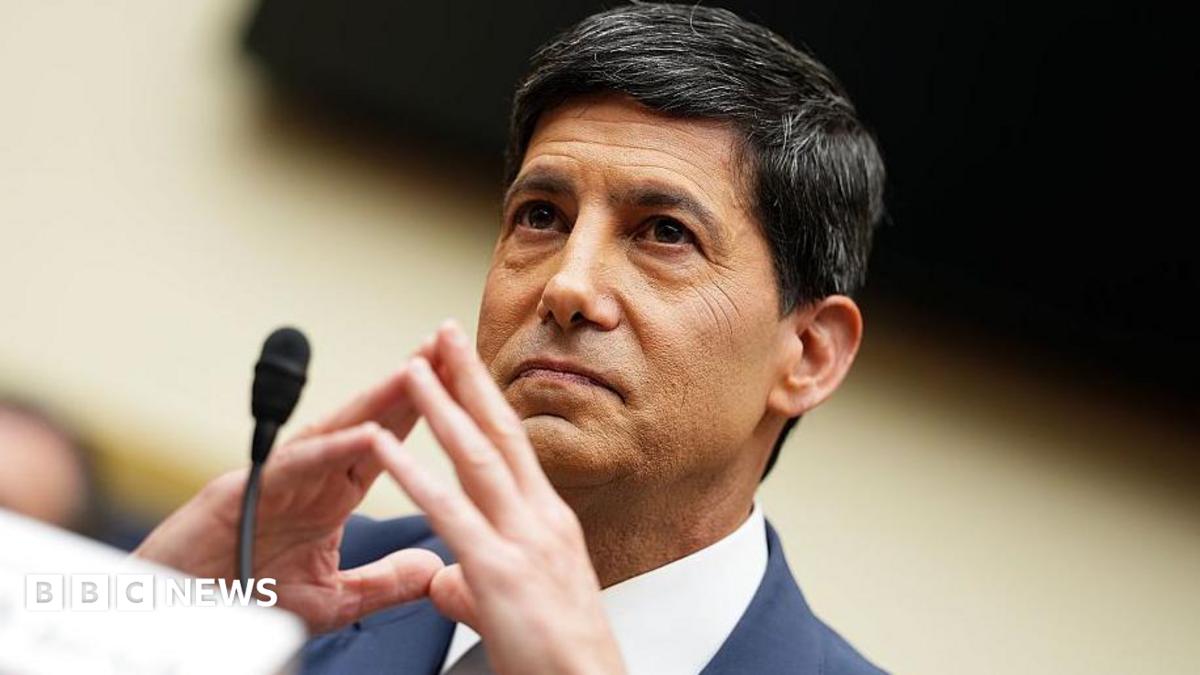
Kevin Warsh, chairman of the Federal Reserve, takes questions from Congress

The Fed acknowledged that inflation remained “elevated”, which it said was in part due to rising energy prices, but said US economic activity was expanding at a “solid pace despite uncertainty caused by the conflict in the Middle East”.

Warsh said he had wanted to and succeeded in having a “family fight” with his fellow policymakers on the rates decision.

“I asked for a good family fight, and I got one. That’s the purpose. That’s the design feature,” adding that “there was a large majority support for the decision that we made in the room”.

US stock markets ended the day lower following the decision. The benchmark S&P 500 hit its lowest level in a month, while the tech-heavy Nasdaq was down about 9% from its June record high. The Dow Jones index fell by the largest amount on the day by 2.19%.

Advertisement

Markets have been rattled in recent days by declines in AI-chip stocks, concerns over the amount of money being spent by big tech firms on AI infrastructure and development and rising oil prices.

Richard Flynn, managing director at Charles Schwab UK, said the “biggest smoke signal” for the Fed going forward was the energy market, with the ongoing conflict in Iran likely to influence future rate decisions.

Warsh, who was appointed by US President Donald Trump in May, has held interest rates twice since he took over as chairman.

He previously told Congress that the central bank had “no tolerance to persistently elevated inflation”.

Advertisement

President Trump pushed Warsh’s predecessor, Jerome Powell, to cut interest rates, and has made it clear he expects Warsh to fulfil his demand for reductions in borrowing costs for Americans.

But the new Fed chairman has said his “goal” is “for there to be no politics” and has stressed the importance of the Fed’s independence.

Richard Carter, head of fixed interest research at investment management firm Quilter Cheviot, said Trump would be watching the Fed’s decision with interest, particularly with the US mid-term elections less than 100 days away,

“The president will want to deliver positive news on the economy,” he added. “Inflation continuing to remain elevated and the looming potential for rate hikes certainly makes that narrative difficult to achieve.”

Advertisement
Continue Reading

Trending

Copyright © 2025