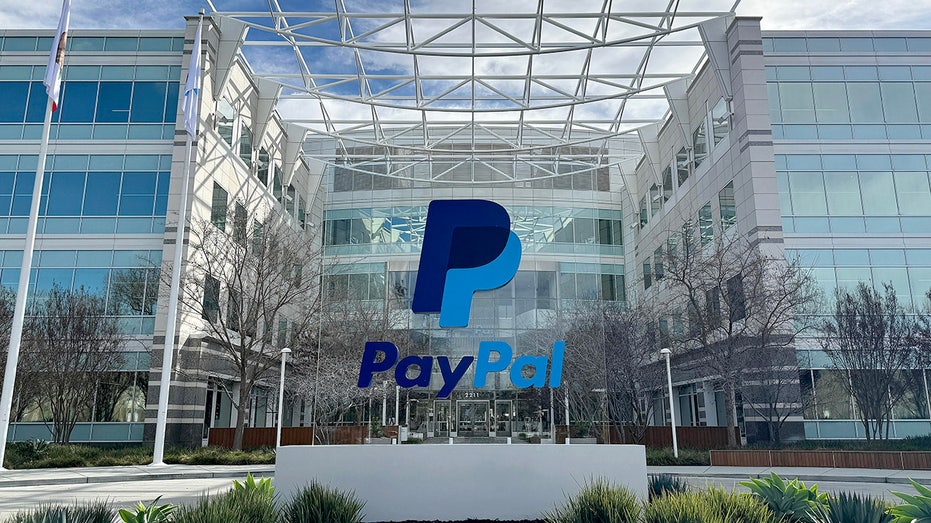
Some universities are now allowing students and their families to pay tuition through PayPal and Venmo.
Among the first institutions offering the payment options are Bellarmine University, Butler University, Kansas State University, Michigan State University and Texas Tech University, although more universities are expected to join later this year.
Advertisement
Students and families may face transaction or processing fees, with the amount depending on the university and the funding method used.
The payment options are being integrated through campus payment platforms including Illumia, Nelnet Campus Commerce and TouchNet, which process tuition payments for institutions across the country.
Some universities are now allowing students and their families to pay tuition through PayPal and Venmo. (iStock / iStock)
“A modern tuition payment experience has to work for both sides of the transaction,” Don Smith, Illumia’s senior vice president and general manager of integrated payments, said in a statement.
Advertisement
“Students and families want the flexibility to use payment methods that fit how they manage their money, while institutions need those options to work within the systems and processes their teams already rely on. This integration helps schools expand choice in a practical way, improving the payer experience without creating a disconnected path for campus teams,” Smith added.
PayPal and its Venmo subsidiary have aimed to further expand their presence in higher education over the last year, offering student-athletes the opportunity to receive institutional revenue-share payments through their platforms. Venmo also expanded its presence on college campuses through NIL partnerships with student athletes, college-branded cards, student ambassadors and gameday activations.
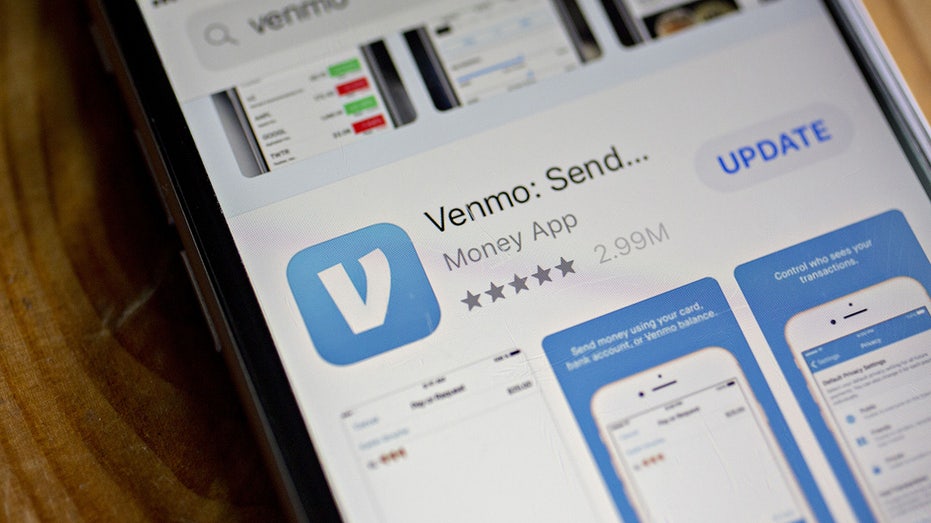
Students and families may face transaction or processing fees, depending on the university and funding method used. (Justin Sullivan/Getty Images / Getty Images)
The digital payment systems are already used by many students and families for daily money transfers, including purchasing groceries, splitting rent and sending money to friends and family.
“Tuition is one of the biggest payments a family will make, and it should come with the same flexibility and security that millions of people already count on PayPal and Venmo for every day,” Frank Keller, President of Checkout Solutions and PayPal, said in a statement. “That’s why we’re proud to bring that same choice and protection into the reliable systems schools have already built.”
Advertisement
The companies said PayPal and Venmo use security measures including encryption and fraud monitoring. Consumer regulators, however, have cautioned that money stored in nonbank payment apps may not carry the same deposit-insurance protections as funds held directly in a federally insured bank or credit union.
Consumer regulators have cautioned that some funds stored in nonbank payment apps may not carry the same deposit-insurance protections as traditional bank deposits. (Andrew Harrer/Bloomberg via Getty Images / Getty Images)
Certain eligible PayPal and Venmo balances may qualify for pass-through FDIC insurance when funds are placed at PayPal’s program banks, which currently include Goldman Sachs Bank USA, Wells Fargo Bank and JPMorgan Chase Bank. Not all PayPal or Venmo balances qualify for the coverage.
Advertisement
But FDIC pass-through insurance “protects against the failure of a Program Bank, not the failure of PayPal. PayPal is not a bank, does not take deposits and is not FDIC insured,” PayPal said in a statement.
The fifth and final season of “Outer Banks” premieres Thursday, Aug. 20, on Netflix, bringing the streamer’s long-running teen adventure drama to a close after four seasons chronicling the Pogues’ treasure-hunting exploits along the fictional Outer Banks of North Carolina.
Unlike Season 4, which Netflix split into two separate release batches, all 10 episodes of Season 5 will drop simultaneously worldwide, allowing fans to binge the entire final season at once rather than waiting for a mid-season release of additional episodes.
For viewers in the United States, the season becomes available at the platform’s standard release time for Netflix Originals: 12 a.m. Pacific time, which translates to 3 a.m. Eastern time. Because the release happens globally at the same moment rather than at midnight local time in each region, the actual clock time viewers see the season appear will vary considerably depending on where they live. In India, for instance, the season is set to become available at 12:30 p.m. IST, according to Esquire India, reflecting the significant time zone offset between the U.S. West Coast and South Asia.
Advertisement
Season 5 picks up immediately following the events of the Season 4 finale, which left the Pogues reeling from the death of JJ, played by Rudy Pankow, during a mission in Morocco. According to Netflix’s official season description on Tudum, the final season finds the group “at their absolute breaking point” in the aftermath of that loss. With JJ gone and antagonist Chandler Groff, played by J. Anthony Crane, still at large with the legendary Blue Crown treasure, the remaining Pogues — John B, Sarah, Kiara, Pope and Cleo — are drawn into one final mission built around revenge, danger and their pursuit of the treasure, this time alongside an unlikely ally in Rafe Cameron, played by Drew Starkey.
The returning cast for the final season includes Chase Stokes as John B, Madelyn Cline as Sarah Cameron, Madison Bailey as Kiara, Jonathan Daviss as Pope, Carlacia Grant as Cleo, Drew Starkey as Rafe, along with Austin North, Fiona Palomo, J. Anthony Crane and Cullen Moss in key supporting roles. The series was created by Josh Pate, Jonas Pate and Shannon Burke, who continue to serve as writers and executive producers on the final season.
In comments shared with Netflix’s Tudum ahead of the premiere, the show’s creators reflected on the emotional weight of closing out the series after four seasons. “We are over the moon to be setting out on one last trip with the Pogues,” Pate, Pate and Burke said. “Being back on set with our cast for this final round is nothing short of bittersweet and surreal. We can’t wait to show everyone what we have in store this season — it’s going to be a wild ride…”
Production on the final season began in June 2025 and wrapped in December 2025, with filming for the show’s concluding chapter taking the cast and crew to Croatia during the later stages of production, according to the Outer Banks Fandom wiki. The season was officially announced in November 2024, giving fans nearly two years to anticipate the show’s conclusion after its fourth season aired.
Advertisement
“Outer Banks” first premiered on Netflix in April 2020, quickly becoming a breakout hit for the streamer during the early months of the COVID-19 pandemic, as audiences gravitated toward the show’s mix of teen romance, treasure-hunting adventure and coastal setting. Across its first four seasons, the series has accumulated nearly 200 million views on the platform and has appeared on Netflix’s Top 10 English-language television list 25 separate times, according to figures cited by Tudum, underscoring the show’s sustained popularity throughout its run.
Season 4, the show’s most recent prior installment, saw the Pogues discover the legendary lost city of El Dorado before returning home to build what the group dubbed “Poguelandia 2.0,” a bait, tackle and charter-tour business. When financial difficulties threatened that new venture, the group agreed to help a wealthy client named Wes Genrette search for Blackbeard’s lost treasure, a pursuit that ultimately led them to the Blue Crown and set up the events now playing out in the final season.
Ahead of the full season’s release, Netflix offered fans an early preview of the show’s conclusion, releasing the first eight minutes of Season 5’s premiere episode in advance through the platform’s Tudum website, giving longtime viewers a taste of the emotional tone set to define the Pogues’ final adventure.
The show’s ending arrives alongside additional tie-in content tied to the series’ conclusion. A 25-track vinyl soundtrack compilation drawing from the show’s music across its run has been made available for pre-order, timed to coincide with the final season’s release and aimed at capturing what Tudum described as the “sun-drenched nostalgia” associated with the show’s coastal setting and soundtrack.
Advertisement
For fans wondering how to plan their viewing, the straightforward answer is that all 10 episodes will be accessible starting at 3 a.m. ET/12 a.m. PT in the United States, with international viewers seeing the season appear on their own local clocks according to the corresponding time difference from the West Coast release. Netflix has not indicated any staggered or region-specific release strategy for the final season, meaning the full 10-episode run should become available to subscribers everywhere within the same global release window.
As one of Netflix’s signature original series concludes its run, “Outer Banks” joins a small but notable group of the platform’s biggest hits to reach a planned final season in 2026, following a similar high-profile sendoff earlier this year for “Stranger Things.” With the Pogues’ fate now set to be revealed in full, fans eager to find out how the series resolves its central treasure hunt, along with the emotional fallout from JJ’s death, will be able to do so in a single sitting once the season becomes available early Thursday morning.
Tesla and SpaceX chief executive Elon Musk has once again singled out China as the most formidable competitor facing his companies in artificial intelligence and robotics, reiterating comments he first made earlier this year even as SpaceX itself increasingly contends with emerging rivals in the commercial rocket launch business.
Speaking on Tesla’s fourth-quarter earnings call in January, Musk was blunt in assessing where the company’s toughest competition would come from as it races to commercialize its Optimus humanoid robot. “I think China will be by far the biggest competitor in the humanoid robot market,” Musk told analysts on the call. He elaborated on the specific strengths he believes give Chinese firms an edge. “China is extremely good at scaling and manufacturing, and is also strong in AI — the models being released there are already quite good and are improving rapidly,” Musk said.
Musk’s remarks came in response to a question about the wave of Chinese startups entering the humanoid robotics space and what long-term advantages might allow Tesla to stay ahead. According to CnEVPost’s coverage of the call, Musk suggested Tesla currently has no significant competitors outside China in the category, framing the country’s combination of manufacturing scale and AI capability as uniquely difficult to match. “I always think people sort of outside of China kind of underestimate China. China’s next level,” Musk said.
Even while acknowledging China’s strength, Musk maintained that Tesla’s Optimus robot would ultimately outperform Chinese rivals on specific technical benchmarks. “We think we’ll be ahead in terms of the real-world intelligence, the electromechanical dexterity, especially the hand design, which is by far the hardest thing in the robot,” Musk said, according to CnEVPost. He pointed specifically to Chinese electric vehicle maker Xpeng’s humanoid robot, unveiled in November, as one example of the kind of competition Tesla is watching closely, offering a brief but notable compliment. “Not bad,” Musk said of the Xpeng robot, before adding a prediction about the broader shape of the industry: “Tesla and Chinese companies will dominate the market.”
Advertisement
Musk’s comments reflect a broader and longer-running pattern in how he has publicly assessed Chinese competition across his various companies. In 2021, he described Chinese automakers as the “most competitive in the world,” and he has previously credited Chinese workers for helping keep Tesla’s factories operational during pandemic-era disruptions, describing them at the time as “burning the 3 a.m. oil.” Chinese commentators have taken note of Musk’s repeated acknowledgments; the state-run Global Times cited unnamed Chinese experts describing his January remarks as reflecting “the growing strength of China’s robotics and AI ecosystem.”
Beyond humanoid robotics, Musk has also flagged China’s position in the broader artificial intelligence race in other public forums. Speaking at the World Economic Forum in Davos earlier this year, Musk told BlackRock chief executive Larry Fink that electrical power availability, rather than chip production, now represents the primary constraint on U.S. AI development, a limitation he suggested China does not face to the same degree. “I think the limiting factor for AI deployment is fundamentally electrical power,” Musk said, according to Fortune’s coverage of the discussion. “It’s clear that we’re very soon — maybe even later this year — we’ll be producing more chips than we can turn on.”
While Musk has focused much of his recent public commentary on China’s rise in AI and robotics, SpaceX itself faces a more immediate and increasingly crowded competitive landscape closer to home in commercial rocket launches. Rocket Lab, led by chief executive Peter Beck, has continued developing its medium-lift Neutron rocket as a direct challenger to SpaceX’s workhorse Falcon 9, with the company targeting Neutron’s first launch by the end of 2026, according to U.S. News. Rocket Lab entered the year with a $1.85 billion order backlog and plans to recognize 37% of that backlog by 2027.
Jeff Bezos-founded Blue Origin has also emerged as a significant rival, having completed a test payload launch on its heavy-lift New Glenn rocket, a vehicle intended to compete with SpaceX’s next-generation Starship. Ars Technica ranked Blue Origin as the second-most active U.S. rocket company of 2025, trailing only SpaceX itself. Newer entrants have joined the field as well, including Firefly Aerospace, which completed its own initial public offering in August 2025 and has continued expanding its rocket lineup beyond its current Alpha-class vehicle.
Advertisement
SpaceX’s dominant position in the U.S. launch market has also created friction with companies that depend on its rockets to reach orbit, even as new competitors emerge. According to a Reuters analysis of launch data compiled by astrophysicist Jonathan McDowell, Starlink satellites now account for roughly 79% of Falcon 9’s launch manifest in 2026, up from 54% in 2020, as SpaceX increasingly prioritizes deploying its own satellite internet constellation. At least seven spacecraft companies have reportedly been told that Falcon 9 is fully booked for all types of missions until 2028 or 2029, according to sources cited by Reuters, a bottleneck the news agency attributed in part to SpaceX’s ongoing transition toward its new, fully reusable Starship rocket.
Whether SpaceX’s growing internal demand for its own launch capacity, combined with the emergence of better-capitalized rivals such as Rocket Lab and Blue Origin, will meaningfully erode the company’s dominant position in the commercial launch market remains an open question, even as Musk continues to direct much of his public commentary on competitive threats toward Chinese advances in artificial intelligence and robotics rather than the more immediate rocket-launch rivals emerging within the United States itself. As both fronts continue to develop, Musk’s public statements suggest he views China’s combination of AI capability and manufacturing scale as the more structurally significant long-term challenge facing his broader business empire, even as SpaceX navigates a more crowded and increasingly competitive domestic launch market in the near term.
Seeking Alpha’s transcripts team is responsible for the development of all of our transcript-related projects. We currently publish thousands of quarterly earnings calls per quarter on our site and are continuing to grow and expand our coverage. The purpose of this profile is to allow us to share with our readers new transcript-related developments. Thanks, SA Transcripts Team
Yes. Corporate subscriptions are available for teams and organisations, with discounted rates as user numbers increase. Pricing starts from $1,625 + GST per user. Get in touch
to discuss the right option for your organisation.
Business News subscriptions are used by executives, investors, consultants and professionals who need to stay informed and make better decisions about the WA market. When you subscribe you’ll get
Unlimited access to WA’s most trusted business journalism
Data & Insights — detailed profiles of WA companies, people, projects and deals
MyBN — a personalised feed based on the companies, people and sectors you follow
Special publications and industry reports
Daily and weekly email newsletters
Data & Insights is a research tool built specifically for the WA market. It draws on more than 30 years of Business News reporting, updated regularly to reflect what’s happening now. Use it to:
Look up detailed profiles of WA companies, including financials, directors and ownership
Find decision-makers and track their career movements
Research live and completed projects across WA industries
Monitor deals, appointments and market activity
Access industry rankings and league tables
Data & Insights is updated daily by our dedicated research team, which uses the latest announcements, ASX filings and editorial coverage to keep our person, company, list and project records up to date.
Business News welcome all opportunities to make our dataset accurate, complete and current, so if you have an update request, please email the team at general@businessnews.com.au, and we’d be happy to assist.
Advertisement
MyBN
is part of every subscription. It’s your personalised view of Business News. You can follow the companies, people, sectors and projects that matter to you, and get a news feed and alerts tailored to your interests. You can save articles to read later and retain only what you need.
Only subscribers have full access to all content on the Business News website.
Advertisement
If staying informed about the WA economy is part of your job, and/or you’re looking for networking opportunities in WA, Business News is built for you.
Business News subscribers are:
Executives and directors tracking competitors, clients and market movements
Investors and advisers researching companies, deals and industry trends
Consultants and professionals staying across sectors relevant to their clients
Business owners looking for leads, context and market intelligence
Most Business News publications cover national or global markets. Business News is focused entirely on Western Australia, which means the journalism, the data and the intelligence are all built around WA companies, people and projects — not adapted from a national feed. Data & Insights, included with every subscription, combines more than 30 years of WA-specific editorial research with live business data. There’s no comparable product for the WA market.
Advertisement
The Morning Digest Email provides a comprehensive wrap of the major headlines, relevant to WA business, and includes with a snapshot of the overnight news covering oil, gold and ASX-listed companies.
The Afternoon Wrap Email focuses on the news covered by our team of journalists during the course of the working day, including exclusive stories and analysis, all of which relates to WA business and the local economy.
The BN Weekender Email contains a wrap of the Business News from the week that was, highlighting the top stories in each area of WA business. Sign up for free.
Advertisement
We’re happy to help. Get in touch
and our team will come back to you.
Yes. Corporate subscriptions are available for teams and organisations, with discounted rates as user numbers increase. Pricing starts from $1,625 + GST per user. Get in touch
to discuss the right option for your organisation.
Business News subscriptions are used by executives, investors, consultants and professionals who need to stay informed and make better decisions about the WA market. When you subscribe you’ll get
Unlimited access to WA’s most trusted business journalism
Data & Insights — detailed profiles of WA companies, people, projects and deals
MyBN — a personalised feed based on the companies, people and sectors you follow
Special publications and industry reports
Daily and weekly email newsletters
Data & Insights is a research tool built specifically for the WA market. It draws on more than 30 years of Business News reporting, updated regularly to reflect what’s happening now. Use it to:
Look up detailed profiles of WA companies, including financials, directors and ownership
Find decision-makers and track their career movements
Research live and completed projects across WA industries
Monitor deals, appointments and market activity
Access industry rankings and league tables
Data & Insights is updated daily by our dedicated research team, which uses the latest announcements, ASX filings and editorial coverage to keep our person, company, list and project records up to date.
Business News welcome all opportunities to make our dataset accurate, complete and current, so if you have an update request, please email the team at general@businessnews.com.au, and we’d be happy to assist.
Advertisement
MyBN
is part of every subscription. It’s your personalised view of Business News. You can follow the companies, people, sectors and projects that matter to you, and get a news feed and alerts tailored to your interests. You can save articles to read later and retain only what you need.
Only subscribers have full access to all content on the Business News website.
Advertisement
If staying informed about the WA economy is part of your job, and/or you’re looking for networking opportunities in WA, Business News is built for you.
Business News subscribers are:
Executives and directors tracking competitors, clients and market movements
Investors and advisers researching companies, deals and industry trends
Consultants and professionals staying across sectors relevant to their clients
Business owners looking for leads, context and market intelligence
Most Business News publications cover national or global markets. Business News is focused entirely on Western Australia, which means the journalism, the data and the intelligence are all built around WA companies, people and projects — not adapted from a national feed. Data & Insights, included with every subscription, combines more than 30 years of WA-specific editorial research with live business data. There’s no comparable product for the WA market.
Advertisement
The Morning Digest Email provides a comprehensive wrap of the major headlines, relevant to WA business, and includes with a snapshot of the overnight news covering oil, gold and ASX-listed companies.
The Afternoon Wrap Email focuses on the news covered by our team of journalists during the course of the working day, including exclusive stories and analysis, all of which relates to WA business and the local economy.
The BN Weekender Email contains a wrap of the Business News from the week that was, highlighting the top stories in each area of WA business. Sign up for free.
Advertisement
We’re happy to help. Get in touch
and our team will come back to you.
Seeking Alpha’s transcripts team is responsible for the development of all of our transcript-related projects. We currently publish thousands of quarterly earnings calls per quarter on our site and are continuing to grow and expand our coverage. The purpose of this profile is to allow us to share with our readers new transcript-related developments. Thanks, SA Transcripts Team
Blue Star Helium Limited (BSNLF) Discusses Helium and CO2 Production Expansion and Future Development Plans August 19, 2026 9:00 PM EDT
Presentation
Unknown Executive
Today, I’ll run through our latest corporate presentation. You can find it online on our website. It’s also on our ASX announcements. It’s a new presentation. It’s got quite a significant appendix in it. So I urge you to look at that after this presentation. It’s got a lot more details in it. So let’s get started. I’ll just share the screen. Hopefully, everybody can see that. So Blue Star Helium, we are the latest and newest producer of helium in the U.S. So the theme of the presentation is to produce, sell and repeat. We have high-grade helium and CO2 from our Las Animas County assets. Helium production and sales from Galactica that started in July, new helium development at Pegasus already discovered, CO2 revenue stream in development and a large resource of upside in our exploration material.
Advertisement
The disclaimer that you can read when you have time and you want to look at the pack. The thesis, one plant is proof, the next 3 plants are the point. We’ve proven Galactica. We took this from a prospect right through to production. So, we’re now producing helium. We’re selling it under an offtake. We have an offtake in an amazing helium market globally. CO2 revenue is to follow, and we have a follow-up at Pegasus already discovered, awaiting appraisal and development drilling. The plan going forward at Galactica is 3 more wells in 2026 that will increase production and see a step towards full capacity of the plant. Another 6 wells in 2027, which should get us to full capacity. And you’ll see a little bit more CO2 infrastructure as we get ready to liquefy and sell that secondary product as well.
SYDNEY — Shares in Zip Co Ltd surged 18.22%, or 47 cents, to $3.05 Thursday, as the buy now, pay later lender delivered record full-year cash earnings and issued upgraded profit guidance for the coming financial year, capping off a dramatic single-session rally that saw the stock touch as high as $3.01 earlier in the trading day.
Zip reported fiscal 2026 revenue of $1.336 billion, up 24.7% from the prior year, alongside a 45.7% increase in statutory net profit after tax to $116.4 million. The company’s preferred profitability measure, cash earnings before tax, depreciation and amortization, rose 57.9% to a record $268.9 million, comfortably exceeding the company’s own prior guidance of at least $260 million. Total transaction volume across the platform reached $16.7 billion for the year, up 27.2%, with operating margin expanding by 420 basis points to a milestone 20.0%.
The company’s U.S. business remained the primary driver of growth. U.S. total transaction volume rose 42.5% in U.S. dollar terms, translating to 35.6% growth in Australian dollar terms to $12.7 billion, while U.S. revenue climbed 35.6% in Australian dollar terms to $903.1 million. U.S. active customers grew 9.3% to 4.65 million during the year. By contrast, Zip’s Australia and New Zealand segment showed a more mixed picture: while cash earnings in the region roughly doubled to $69.5 million and Australian receivables grew 9.4%, active customers in that segment fell 8.0% to 1.88 million, even as customer spending per user rose 15.4% and transactions per customer increased 16.7%. The company also added 5,800 merchants in targeted Australian categories during the year, and confirmed in July it had begun winding down its New Zealand operations to sharpen its investment focus on the core Australian market.
Zip’s total active customer base across all markets climbed 3.7% to 6.52 million by the end of June, with 97,400 merchants now on the platform.
Advertisement
Looking ahead, Zip issued fiscal 2027 cash EBTDA guidance of $340 million, implying growth of approximately 26% from the FY26 result. The company said it expects U.S. transaction volume to grow by more than 30% in U.S. dollar terms during the coming year, with July 2026 already tracking above that threshold, even as the comparison base against which that growth will be measured continues to expand. Zip guided to a group operating margin of between 20% and 22% for fiscal 2027, representing further expansion from the 20% achieved in the just-completed year, while its revenue margin is expected to hold at approximately 8% of total transaction volume and its cash net transaction margin is expected to remain in a range of 3.8% to 4.0%.
Zip’s three strategic priorities for the coming year, according to the company’s investor presentation, center on driving continued performance from its core Pay-in-4 product, developing new offerings aimed at meeting customers’ short-term cash flow management needs, and accelerating investment in capability, including artificial intelligence, to support a broader multi-product platform.
Credit performance showed some modest deterioration alongside the strong growth. Group net bad debts as a percentage of total transaction volume rose to 1.77% in FY26 from 1.52% in the prior year, though the company noted its U.S. net bad debts of 1.7% of transaction volume remained within its stated target range of 1.5% to 2.0%.
Zip also strengthened its balance sheet and capital return program during the year. The company completed $150 million in on-market share buybacks during fiscal 2026 and authorized a further program of up to $50 million for fiscal 2027, alongside up to $37.5 million in additional on-market purchases for its employee share trust. Available cash and liquidity rose to $246.5 million from $137.8 million a year earlier, following new note issuances and expanded warehouse funding facilities. Zip also disclosed it is considering a potential dual listing in the United States to broaden its investor base, and said it may seek shareholder approval for a share consolidation at this year’s annual general meeting.
Advertisement
Analyst sentiment toward Zip remains broadly bullish. According to data compiled by StockAnalysis using S&P Global and TipRanks figures, 12 analysts currently rate Zip a Strong Buy or Buy, split between eight Strong Buy and four Buy ratings with no Hold or Sell recommendations, and an average price target of $4.06, implying substantial potential upside from pre-results trading levels, though that consensus target predates Thursday’s earnings release and is likely to be revised as analysts digest the new figures.
Some market commentary has flagged that while Thursday’s results comfortably cleared Zip’s prior earnings bar, the company’s own forward guidance implies a meaningfully slower pace of growth than it has delivered in recent years. According to one analysis, cash EBTDA growth is guided to decelerate by roughly 32 percentage points from the pace achieved in FY26, while U.S. transaction volume growth is expected to ease from 42.5% to a still-solid but comparatively slower rate of more than 30%. That deceleration, the analysis suggested, may ultimately matter more to how the market prices the stock going forward than Thursday’s headline earnings beat, since Zip is increasingly being evaluated on its ability to execute against a larger and more mature earnings base rather than on a turnaround or recovery narrative.
Despite Thursday’s sharp rally, Zip’s share price had underperformed the broader S&P/ASX 200 index over the preceding 12 months, having declined roughly 15% during that period even as the company’s underlying profitability improved substantially, according to The Motley Fool Australia. Thursday’s surge represents a significant reversal of that recent underperformance, at least for a single session, as investors responded to a results package that combined record current-year profitability with a credible, if more measured, growth outlook for the year ahead.
Pitcher Partners chief investment officer Cameron Curko, discussing broader trends across the current Australian reporting season with Proactive Investors, noted a divergence between consumer-facing stocks, which have generally faced pressure from higher interest rates and softer discretionary spending, and resources and energy companies, which have continued to show relative resilience. Zip’s strong results and share price reaction Thursday stood out as a notable exception to that broader consumer-sector softness, reflecting the company’s continued transition from a growth-at-any-cost fintech model toward a more disciplined, profitability-focused strategy that management has pursued over the past several years.
























































You must be logged in to post a comment Login