
Business
Wall Street closes lower as US bond yields rise




SYDNEY — Buying a home is one of the biggest financial decisions many Australians will make. But before signing a contract, buyers need to look beyond the asking price, the kitchen and the location.
A property contract can contain conditions affecting the buyer’s rights, costs and obligations for years to come. Rules also differ between states and territories, meaning a process that applies in one part of Australia may not apply in another.
For buyers considering a property in 2026, these seven legal issues deserve attention before signing.
1. Read the contract of sale carefully
The contract of sale is one of the most important documents in a property transaction.
It sets out the terms of the purchase, including the agreed price, deposit, settlement arrangements and other conditions. Depending on the property and location, it can also contain information about title, restrictions, easements, zoning, inclusions and other matters affecting the land.
Buyers should not assume that a real estate agent’s description of a property tells the whole story.
A buyer should have the contract reviewed by a qualified conveyancer or property lawyer before signing, particularly if there are unusual clauses or conditions.
Once a contract becomes legally binding, getting out of the transaction may be difficult and potentially expensive.
2. Check the title and restrictions on the property
A property may look perfect while the legal title tells a more complicated story.
A title search can reveal registered interests affecting the property, including mortgages, easements, covenants and other restrictions.
An easement, for example, may give another party certain rights over part of the land. That could affect how the property can be used or developed.
Buyers planning renovations, extensions, subdivisions or other changes should pay particular attention to restrictions that could affect future plans.
This is one reason a legal review before signing can be more valuable than discovering a restriction after settlement.
3. Understand zoning and planning rules
Buying a property does not necessarily mean you can use it in whatever way you want.
Local planning rules can determine whether a property can be used as a residence, divided into multiple lots, extended, developed commercially or altered in other ways.
A buyer who intends to renovate or redevelop should investigate planning controls before committing to the purchase.
Promises made during a property inspection or sales campaign should also not be treated as a guarantee that a future development will receive approval.
Planning permission is generally a separate issue from ownership.
If a buyer is purchasing because of a specific development plan, legal and planning advice should be obtained before signing rather than after the transaction has become unconditional.
4. Know what the building and pest reports actually cover
A property contract does not necessarily protect a buyer from every physical problem with the building.
Building and pest inspections can identify issues that may not be obvious during an ordinary inspection, including structural concerns, moisture problems, termites or other defects.
The exact scope of an inspection depends on the report and the professional conducting it.
For an established home, buyers should consider whether independent inspections are appropriate before exchanging contracts or, where possible, whether the contract should include suitable conditions.
A buyer should also understand the difference between a general building inspection and specialist assessments.
For example, an inspection may not identify every electrical, plumbing, engineering or environmental issue.
The key point is simple: do not assume that a property’s appearance tells you everything about its condition.
5. Understand cooling-off rights before signing
Cooling-off periods are often misunderstood.
They can provide buyers with an opportunity to withdraw from certain property contracts, but they are not universal and the rules differ across Australia.
In Victoria, for example, Consumer Affairs Victoria says a three-clear-business-day cooling-off period generally applies to private residential and certain small rural property sales. However, there are exceptions, including some purchases made at or around auction.
NSW has its own rules. Recent changes there include a new prescribed cooling-off notice for contracts exchanged from June 1, 2026.
Buyers should therefore never assume they automatically have a certain number of days to change their mind.
Auction purchases can be particularly important because cooling-off rights may not apply in the same way as they do for private sales.
The safest approach is to understand the applicable state or territory rules before signing, rather than relying on the expectation that a cooling-off period will rescue a bad decision.
6. Calculate the full cost, not just the purchase price
The contract price is only one part of the financial commitment.
Buyers may also face costs such as stamp duty or transfer duty, conveyancing fees, registration charges, inspections, lender fees, insurance and other transaction expenses.
The amount and type of government charges depend on factors including the state or territory, property value and the buyer’s circumstances.
Buyers should also examine the settlement provisions in the contract.
Settlement is the point at which the transaction is completed and ownership is transferred. In Victoria, for example, Consumer Affairs Victoria describes settlement as the stage when checks have been completed, title and transfer documents are exchanged and the balance of the purchase price is paid.
A buyer who does not budget for these additional expenses could find themselves financially stretched even after securing finance for the purchase price.
7. Check whether foreign investment rules apply
For some buyers, the biggest legal issue may arise before the contract is signed.
Australia has specific rules governing foreign investment in residential property.
As of July 2026, foreign investors generally need to notify the Australian Taxation Office before acquiring residential land, regardless of its value. The federal government also says foreign persons are generally prohibited from purchasing established dwellings between April 1, 2025, and June 30, 2029, subject to limited exceptions.
There are important exemptions. For example, Australian citizens living abroad and Australian permanent residents generally do not need a residential real estate application, according to the federal government’s guidance.
Foreign buyers who require approval should address that issue before entering into an unconditional contract.
The government says that where approval is required, a contract entered before a decision should be conditional on receiving the required approval or exemption certificate.
The consequences of getting this wrong can be serious. The federal government warns that significant penalties can apply to breaches of foreign investment rules.
What buyers should do before signing
A property viewing can take minutes. A property contract can create legal obligations that last much longer.
Before signing, buyers should consider:
- Having the contract reviewed by an independent property lawyer or conveyancer.
- Checking the title and registered interests.
- Investigating zoning and planning restrictions.
- Obtaining appropriate building and pest reports.
- Confirming the deposit and settlement terms.
- Understanding applicable cooling-off rules.
- Calculating taxes, duties and other transaction costs.
- Checking whether foreign investment laws apply.
- Confirming that any promised inclusions or conditions are actually recorded in the contract.
Buyers should also avoid relying solely on verbal assurances. If an important promise about the property, repairs, inclusions or settlement arrangements matters to the decision, it should be properly documented.

Sebastian Mackensen, BMW of North America’s president and CEO, said the automaker is committed to U.S. manufacturing as it completes a $1.7 billion South Carolina plant expansion.
BMW plans to recall 27,720 cars across three model lines over a driveshaft issue that could result in the vehicle rolling away.
The recall impacts vehicles in the luxury car manufacturer’s 5 Series, 7 Series, and 8 Series, according to filings made with the National Highway Traffic Safety Administration (NHTSA).
The recall stems from the connection between the driveshaft and the rear differential, which may experience excessive wear over time.
SUBARU RECALLS OVER 540,000 SUVS AFTER FEDERAL REGULATORS FLAG WEIGHT CALCULATION ERROR: NHTSA

A BMW 7 Series automobile is seen at the BMW Production Network 2, Gaya Motor production plant in Jakarta, Indonesia. The automaker is issuing a recall for more than 27,000 vehicles across three classes over a driveshaft issue. (Getty Images / Getty Images)
The excessive wear can lead to a loss of power to the rear wheels, which increases the risk of a crash or vehicle rollaway if the vehicle isn’t secured by the parking brake.
The notice affects 18,150 5-Series vehicles produced from 2021 to 2023 (540i, 540i xDrive and M550i xDrive), 7,372 8-Series vehicles from 2022 to 2026 (840i and 840i xDrive), and 2,198 750e xDrive models made from 2024 through 2026 (750e xDrive plug-in hybrid).
KIA ISSUES NEW RECALL OF 460,000 VEHICLES AFTER PREVIOUS FIX TO FIRE RISK FAILED

A new BMW 7 series automobile is seen at the BMW Production Network 2, Gaya Motor production plant in Jakarta, Indonesia. (Getty Images / Getty Images)
BMW has not received any reports of accidents or injuries related to the drivetrain issue, the notice states.
FOX Business has reached out to the automaker. BMW plans to send notification letters to vehicle owners by Oct. 2.
Automotive expert Mike Caudill analyzes the future of electric vehicles in the U.S. as rising gas prices shift consumer interest on ‘The Bottom Line.’
CLICK HERE TO GET FOX BUSINESS ON THE GO
BMW dealers have been instructed to perform the recall for affected vehicle owners for free. Technicians will either apply an adhesive to the affected part or replace the driveshaft and rear differential.

Tracking Mario Gabelli's Gabelli Funds 13F Portfolio – Q2 2026 Update

Operator
Thank you for standing by, and welcome to the PWR Holdings Limited FY ’26 Results Call. [Operator Instructions]
I would now like to hand the conference over to Sharyn Williams, CEO and Managing Director. Please go ahead.
Sharyn Williams
MD, CEO & Director
Good morning. I’m Sharyn Williams, CEO and Managing Director of PWR Holdings Limited, and I’m joined by Robert Shore, Chief Financial Officer, who joined us in April. Today, we present PWR’s full year results for the financial year 2026.
Before we begin, I’d like to acknowledge the executive team for their leadership through a year of significant change. Our Founder and Managing Director, Kees Weel, moved into the Chair role, and Matthew Bryson stepped in as the acting CEO while that transition happened. My thanks to Matthew, in particular. The continuity of leadership supported the result that we are presenting today. I’ll cover the group highlights and market segments. Rob will take you through the financials, and I’ll close on strategy and outlook.
Turning to Slide 4. FY ’26 was a year of strong execution. We delivered on our strategic priorities and the momentum in the business is now delivering operating leverage. The group delivered record revenue of $171 million, up 31%, driven by significant growth in our 2 largest strategic growth markets, Motorsports and A&D. Importantly, that revenue growth translated into a materially stronger earnings outcome.
Statutory NPAT increased 83% to $17.9 million and NPAT margin improved to

Check out what’s clicking on FoxBusiness.com.
Thousands of off-road motorcycles are being recalled over a braking defect that could cause serious injury or death from a crash, according to federal regulators.
KTM North America Inc., of Amherst, Ohio, is recalling about 21,040 GASGAS and Husqvarna off-road motorcycles in the U.S., the U.S. Consumer Product Safety Commission announced Thursday.
Another 4,140 were sold in Canada, according to the commission.
FROZEN DOG FOOD RECALLED OVER SALMONELLA CONTAMINATION THAT LED TO MULTIPLE PET ILLNESSES

Thousands of off-road motorcycles are being recalled over a braking defect. (U.S. Consumer Product Safety Commission)
The recall affects certain 2021 through 2024 GASGAS and Husqvarna off-road motorcycle models.
“The rear brake caliper can crack or break, reducing the brake system’s effectiveness, posing a risk of serious injury or death due to crash hazard,” the commission said in its notice.
NEARLY 1M CHRYSLER, JEEP, DOGE AND RAM VEHICLES RECALLED OVER CAMERA GLITCH

The recall affects 2021 through 2024 off-road motorcycles. (U.S. Consumer Product Safety Commission)
The GASGAS off-road motorcycles are red with the white GASGAS logo on both sides of the shrouds, while the Husqvarna motorcycles are white, blue and yellow with the Husqvarna logo on both sides of the shrouds.
The motorcycles were sold at GASGAS and Husqvarna authorized dealers from September 2020 to June 2023 for between $7,300 and $13,000.

The motorcycles were sold at GASGAS and Husqvarna authorized dealers from September 2020 to June 2023 for between $7,300 and $13,000. (Getty Images / Getty Images)
CLICK HERE TO GET FOX BUSINESS ON THE GO
Consumers are urged to stop riding the recalled motorcycles immediately and contact an authorized GASGAS or Husqvarna Motorcycle dealer to schedule a free repair at the dealership.
No injuries have been reported thus far in connection with the recalled motorcycles.
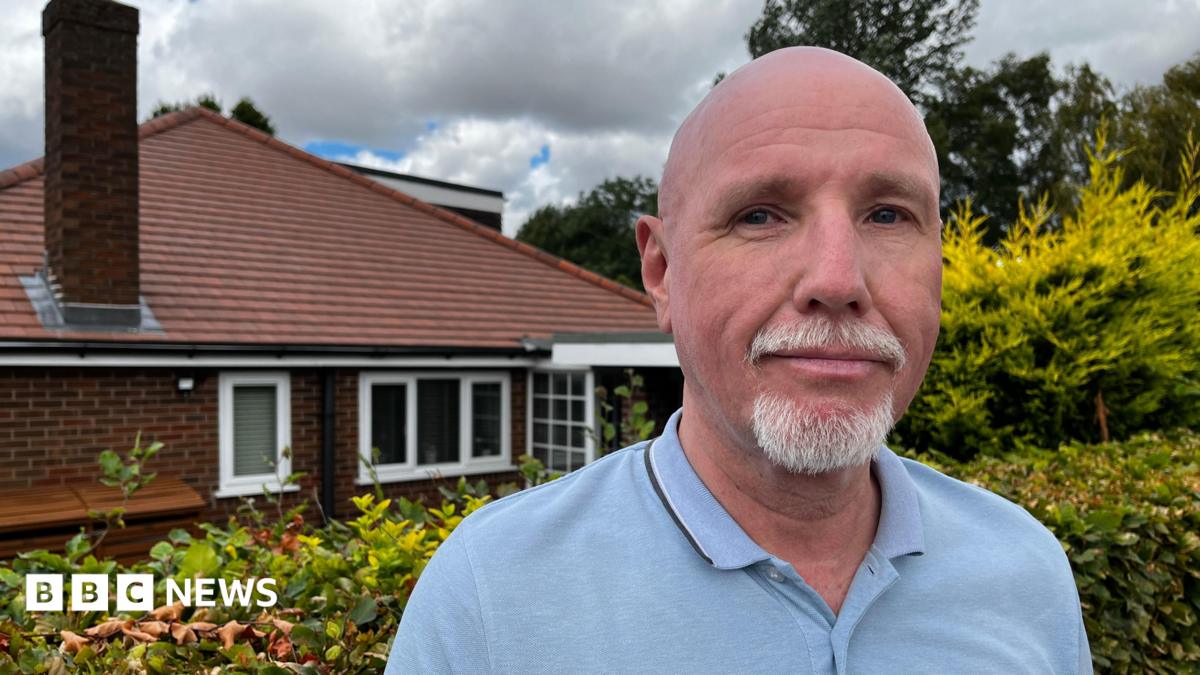
Dozens of people have accused TUI River Cruises of operating vessels with faulty facilities including persistently broken air conditioning, after they spent thousands of pounds on holidays.
Earlier this year passengers on the Skyla, a ship operated by TUI, contacted BBC Your Voice to say they had been stranded in Budapest during a heatwave with little to no air conditioning.
Following that report more people got in touch to say they faced similar problems on both the Skyla and its sister vessel, the Isla. They criticised TUI’s customer service and said the refunds offered were inadequate.
TUI apologised to customers where trips “fell short of the standards we aim to deliver”.
A spokesperson for TUI, said: “We understand the disappointment and frustration caused to affected customers.”
Passengers described stifling conditions as well as problems with plumbing after paying thousands of pounds for European cruises, including on the Danube River.
Andy Peach and his wife booked a seven-day trip on the Skyla in June, travelling through Budapest, Vienna and Linz.
It turned out to be “the worst TUI holiday we’ve ever been on”, he said.
Instead of air conditioning, Peach said there were “big blowers” on board, expelling hot air.
“One was in the middle of the corridor, blocking the exit,” he said. “It didn’t seem to cool the place down.”
Temperatures onboard climbed as the holiday went on leaving him “exhausted”, he said. By the end of the week, Peach said the air conditioning in cabins had broken too.
On the second-to-last day passengers were transferred to hotels, which Peach said were “really basic”.
He and his wife had paid nearly £4,000 for the holiday but they were offered only £300 as a refund and given 72-hours to accept it.
He said: “TUI know there’s problems on these boats, but continue to sell them to people as a full luxury cruise.”

Twenty-somethings are much less likely to own a home than previous generations. But data suggests things may be turning a corner.

Check out what’s clicking on FoxBusiness.com.
Pizza Hut is temporarily dropping “Pizza” from its name as the restaurant chain leans into football season while its parent company moves ahead with a multibillion-dollar sale of the iconic brand.
The chain said this week that it will go by “Hut” for the next 25 weeks, coinciding with the 2026 NFL season.
“You can just call us HUT for the next 25 weeks,” Pizza Hut wrote in a social media post announcing the temporary rebrand.
The company showed off the change at a restaurant in Plano, Texas, where a banner featuring a football covered the word “Pizza” on the location’s exterior sign. Pizza Hut, which is headquartered in Plano, also changed its social media profile images to a logo without the word “Pizza.”
YUM BRANDS IN TALKS TO SELL PIZZA HUT TO PRIVATE EQUITY FIRM: REPORT
The football-themed marketing push comes at a pivotal time for Pizza Hut, as parent company Yum! Brands moves ahead with plans to sell the iconic restaurant chain.
FOX Business reported in June that Yum! was in exclusive talks with private equity firm LongRange Capital over a potential sale of Pizza Hut. At the time, no agreement had been reached, and LongRange was among several firms that had explored acquiring the chain.
Yum! later announced that LongRange agreed to acquire Pizza Hut’s operations outside mainland China for approximately $1.5 billion, while Yum China Holdings agreed to purchase the chain’s mainland China operations in a separate $1.2 billion deal.
The transactions value the operations at a combined $2.7 billion, with Yum! expecting approximately $2.3 billion in net proceeds.
YUM BRANDS SELLS PIZZA HUT FOR $2.7B, SHARPENS FOCUS ON TACO BELL AND KFC
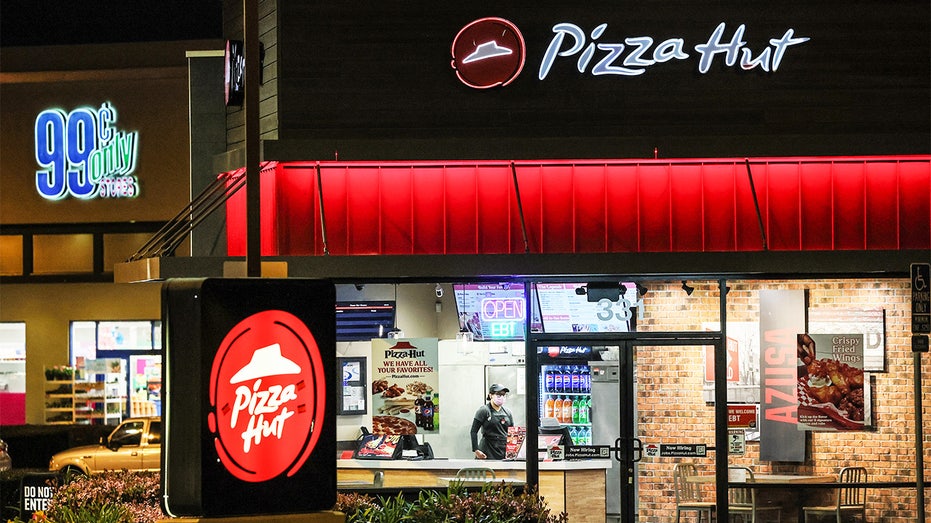
The football-themed marketing push comes at a pivotal time for Pizza Hut. (Robert Gauthier/Los Angeles Times via Getty Images / Getty Images)
“Under LongRange and Yum China, Pizza Hut will be well positioned for future growth with ownership that brings deep expertise in the restaurant industry,” Yum! CEO Chris Turner said.
“Pizza Hut was built by the passion and dedication of our team members, employees and franchisees, and we’re excited for the next chapter.”
| Ticker | Security | Last | Change | Change % |
|---|---|---|---|---|
| YUM | YUM! BRANDS INC. | 152.33 | +6.40 | +4.39% |
The sale follows a prolonged period of pressure on Pizza Hut’s U.S. business. FOX Business reported in June, citing Reuters, that Pizza Hut generated about 12% of Yum!’s revenue in 2025 and had posted declining U.S. comparable sales for 10 consecutive quarters.
Yum! had been evaluating strategic alternatives for Pizza Hut, including a potential sale, as the chain worked to reverse its sales slump.

Pizza Hut says it will go by “Hut” for the next 25 weeks, coinciding with the 2026 NFL season.
LongRange emerged as a potential buyer after Apollo Global Management and Sycamore Partners were also reported to have explored bids for Pizza Hut.
Yum! said earlier this month that the sale remained on track to close in August.
CLICK HERE TO GET FOX BUSINESS ON THE GO
The “Hut” branding, however, isn’t permanent. After its 25-week football promotion ends, Pizza Hut is expected to return to the name consumers have known for decades.
FOX Business’ Bradford Betz contributed to this report.
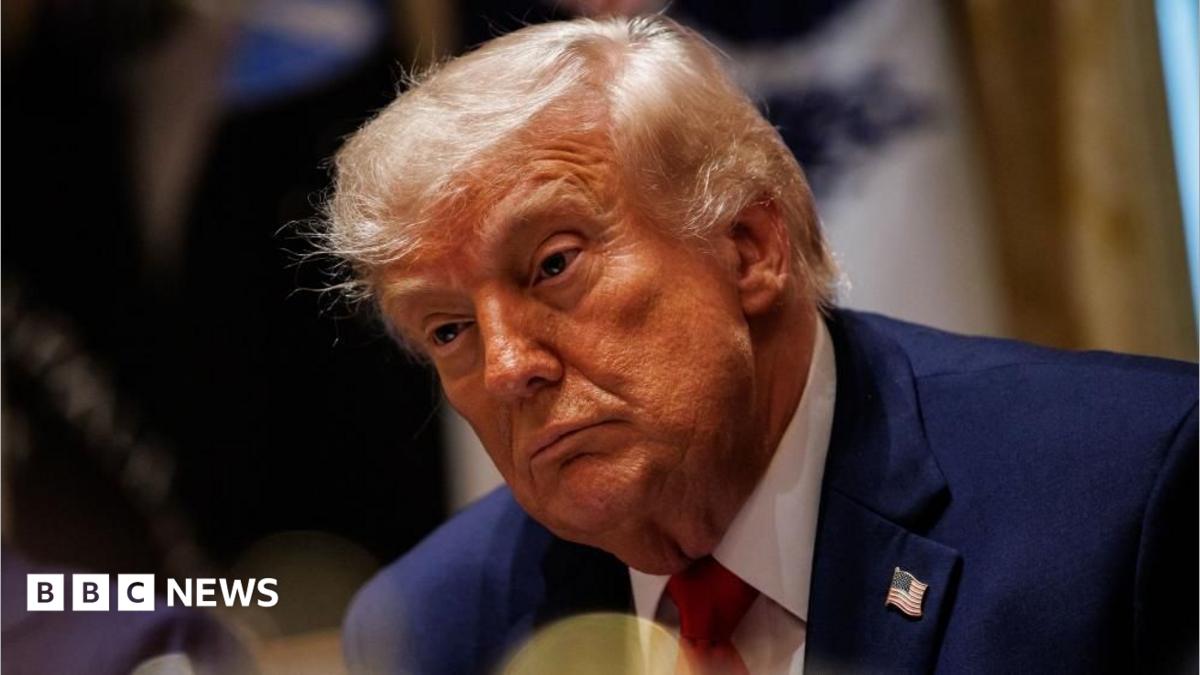
Nearly six months after US President Donald Trump vowed a swift victory over Iran, the conflict appears to be at a standstill, with prospects of a military victory or negotiated settlement growing dimmer.
To break the deadlock, Trump has vowed an “economic D-Day” under which any country that does business with Iran would face “tremendous” economic consequences.
Iran, however, has long faced sanctions and has so far shown a willingness to endure pain and a capacity to adapt to immense economic and military pressure as the conflict drags on.
The key question for the US then becomes, will further sanctions work where other strategies have failed?
The exact mechanics of the new US economic pressure campaign remain unclear, with Treasury Secretary Scott Bessent promising to reveal them in a news conference on 24 August.
But in an interview with CNBC, Bessent made clear that the US is willing to take action against any country – friend or foe – that it believes is extending a lifeline to Iran.
“You are either with us or against us,” he said. “If you insist on doing business with [Iran], either transferring money, buying their oil or doing seaborne sea transfers, then the US treasury and the US government… will put its full might and force toward enforcing against you.”
Vice-President JD Vance has described the sanctions as a “new phase” of the conflict in which economic pressure is the “most effective” tool available to the US.
“They’re going to try to apply economic pressure to us, but what has been true over the last couple of weeks is that they felt a lot more pressure than we have,” Vance said on the Clay Travis and Buck Sexton show.
“We’re going to keep that going because we think that’s the best way to ultimately achieve the final objective,” he added.
Iran has faced significant US sanctions since nearly the beginning of the Islamic Republic in 1979.
The economic pressure campaign intensified after the first Trump administration withdrew from the Joint Comprehensive Plan of Action (JCPOA), a 2015 pact between world powers and Iran to curb its nuclear programme.
And in the current conflict, the US government has already announced Operation Economic Fury, a two-pronged US economic campaign combining US treasury-co-ordinated sanctions against regime financial flows and a naval blockade against Iranian ports.
Imran Bayoumi, a geostrategy expert with the Atlantic Council in Washington DC and former policy adviser to the defence department, told the BBC the latest announcement was likely the result of mounting frustration that other options have not delivered the results Trump wants.
“This is really a recognition that the US is almost stuck in this war,” he said. “It’s another try at economic pressure.”
“This is just another tool that the US is using,” Bayoumi added. “We’ve not seen a clear strategy laid out by the administration with either military or economic tools. The question of what the US is trying to achieve is still unanswered.”
Michael Parker, an eight-year veteran of the Office of Foreign Assets Control (OFAC) and expert on economic sanctions, said the new strategy will likely represent an effort to “expand the economic blast radius” of sanctions by targeting third countries that still deal with Iran, but have economies that depend on the US dollar.
“Thus far, the US has largely used the threat of these secondary sanctions against foreign financial institutions to encourage compliance with sanctions policy,” he said.
“But this is a lever that is sort of unexplored insofar as targeting anything touching the US dollar that is also touching Iran,” Parker added.
As an example, Parker pointed to foreign financial institutions that help Iran evade sanctions, or directs money towards Iranian coffers.
How Iran would respond to these moves remains unclear, but sanctions experts say that Iran has so far proved adept at using irregular channels to circumvent sanctions – such as “shadow” vessels transporting oil or new commercial fronts unlisted by US sanctions.
“You keep seeing new names popping up, because Iran is adapting really quickly,” said Mohammed Hammouda, an export control and sanctions manager at the London Stock Exchange. “Whatever sanctions one does, they find a new road [around it].”
These Iranian counter-moves, he added, often leave those charged with enforcing compliance playing a game of catch-up.
“Sanctions are all on paper, but the hard work is behind the scenes,” Hammouda added. “There are teams worldwide trying to impose sanctions and identify those parties involved, which is why Iran has to try to adapt.”
How effective these sanctions are will largely be determined by how the countries that are ultimately targeted – which could include US allies like Turkey and Iraq, as well as China – react.
“Some of this is out of Iran’s hands,” Parker said. “Iran’s ability to evade or avoid sanctions is, in large part, contingent on other countries and financial institution’s willingness to give them [Iran] access to the formal banking system.”
Parker believes that the sanctions are “only as powerful” as the willingness of targeted countries to comply with American foreign policy objectives, or face potentially painful sanctions on trade involving the US dollar.
Some experts question whether that willingness currently exists.
“I can’t really see China agreeing to that, for example,” Bayoumi said. “These states have all been able to navigate their own interests with the Trump administration.”
“The underlying point is that this is just another tool,” he added. “But the broader question of strategy remains. Absent that, I’m not sure this is going to change anything long term.”

Redevelopment of Albany’s historic pilot station precinct has begun, with the $8.3-million project to breathe new life into the 173-year-old site.

7 Legal Issues You Should Check Before Signing

SEC Regulation Crypto vs CLARITY Act: which framework wins

The New Exercise Trend for People Who Hate Going to the Gym





-

 Fashion6 days ago
Weekend Open Thread: Ann Taylor
-
 Tech7 days ago
11 Ways to Rank Your Videos
-

 Sports6 days ago
Birmingham 2026: Day 6 Timetable for Irish Athletes
-
 NewsBeat6 days ago
Myanmar says over 300,000 Rohingya refugees verified for repatriation as exodus enters ninth year
-

 Politics6 days ago
SEQ Code: The Three Letter Boarding Pass Code That Could Give You The Worst Seat
-

 Tech3 days ago
Qwen3.8-27B runs frontier-class coding agents and reasoning locally, no cloud API required
-

 Business3 days ago
SMA Solar Technology AG (SMTGY) Q2 2026 Earnings Call Transcript
-

 Crypto World6 days ago
Pi Network Protocol 27 endgame: last upgrade before what?
-

 Crypto World3 days ago
OCC Greenlights Trump Family Crypto Firm for Trust Charter
-
 Tech6 days ago
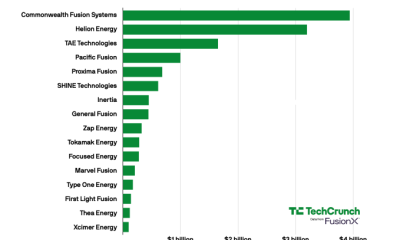
Every fusion startup that has raised over $100M
-
 Entertainment6 days ago
Marvel Studios Reveals New X-Men Cast Including Adam Driver and Sadie Sink
-

 Business7 days ago
15 Ways to Make Money From Your Phone (2026 Guide)
-
 Entertainment7 days ago
10 Netflix Shows That Quietly Became Modern Classics
-

 Crypto World7 days ago
Robinhood Chain Approaches $1B TVL as Uniswap Integration Boosts Liquidity
-

 Fashion6 days ago
Silver bangles for women – Newbridge Silverware
-

 Fashion6 days ago
Weekly News Update, 8.14.26 – Corporette.com
-

 News Videos22 hours ago
Don’t Leave Your Financial Future To Chance | August 19, 2026
-

 Business6 days ago
Facebook Down Now? Users Report Login And Loading Problems As Outage Trackers Monitor Ongoing Issues
-
 Business6 days ago
Monarch Mutual Fund set to enter MF space with maiden overnight fund; files draft with Sebi
-

 Fashion6 days ago
Cart Confidential Vol. 44 – Julia Berolzheimer
You must be logged in to post a comment Login