Connect with us
DAPA Banner
DAPA Coin
DAPA
COIN PAYMENT ASSET
PRIVACY · BLOCKDAG · HOMOMORPHIC ENCRYPTION · RUST
ElGamal Encrypted MINE DAPA
🚫 GENESIS SOLD OUT
DAPAPAY COMING

Business

Walmart, Home Depot, Target apply

Published

on

Walmart, Home Depot, Target apply

Customers shop at a Walmart store on May 13, 2026 in Chicago, Illinois.

Scott Olson | Getty Images

President Donald Trump suggested last month he would look out for companies that didn’t seek tariff refunds after the Supreme Court struck down his wide-ranging global duties.

Advertisement

At first, some major firms like Amazon appeared to be holding off on asking for money back over concerns they’d offend the often transactional president and end up in his crosshairs, CNBC reported earlier this year. But now some of the largest U.S. companies from Walmart to Apple have confirmed they’re seeking what they’re owed — regardless of the consequences.

Home Depot, General Motors, John Deere, FedEx and Costco are among the other major U.S. corporations that have said they are trying to get refunds. The moves may not represent a sea change in how companies handle their relationships with Trump. Even so, they show key examples of when they’re willing to publicly break with the president, after he told CNBC he would “remember” if companies decided not to seek refunds.

There’s a strong business incentive to apply — as well as, for many, a fiduciary responsibility. Major companies have a chance to regain potentially billions of dollars and maximize returns for shareholders.

More than $35 billion in refund money has already been processed and is on its way to businesses’ bank accounts, U.S. Customs and Border Protection said in a court filing earlier this month. The government owes roughly $166 billion in refunds overall.

Advertisement

‘I’ll remember them’

President Trump: 'I will remember' companies that don't seek tariff refund

When Trump appeared on “Squawk Box” last month, CNBC’s Andrew Ross Sorkin said that at the time, Apple was among the companies that had held off on applying for a refund over apparent concerns it would upset the president. In response, Trump said it was “Brilliant if they don’t do that.”

“Actually, if they don’t do that, they’ve got to know me very well,” he said. “I’m very honored by what you just said.”

“If they don’t do that, I’ll remember them,” Trump said.

The comments made waves around Washington, where lobbyists and business groups say it initially gave some importers pause over whether to apply for the money they were due. Companies have been trying to parse what exactly the president might have meant with his remark, and whether and how the administration could retaliate against them for moving through the process.

But the threat has not deterred the largest U.S. companies from trying to claw back what they paid in tariffs. Take the largest U.S. retailer Walmart, which drew Trump’s ire last year when it said it could have to raise prices in response to the duties, sparking Trump to tell the retailer to “eat the tariffs” and warn he would be “watching.”

Advertisement

In an interview with CNBC on Thursday, Walmart finance chief John David Rainey confirmed that the company applied to get back the money it paid for so-called IEEPA tariffs, but doesn’t expect a major windfall if and when it is paid back. 

“We have availed ourselves of the option to participate in those refunds. For us, it’s a relatively small part of our overall business,” said Rainey when discussing the company’s fiscal first-quarter results. “To be eligible for those refunds, you need to be the importer of record, and for us, where we are the importer of record, it’s about half of 1% of our U.S. sales.” 

In its most recent full fiscal year 2026, Walmart U.S. saw $483 billion in net sales, so half of 1% would total about $2.42 billion. While that total is larger than many companies’ annual revenue, Rainey said it’s hardly material for a business that saw more than $713 billion in total revenue last fiscal year.

Still, “every little bit matters,” he said. 

Advertisement

“We’re going to prioritize those refunds if and when we get them towards investing in price for our customers,” he said. “We recognize that given where we are right now with both the stress on the consumer as well as the retention of the share gains that we’ve seen, the best ROI on that dollar of capital is to invest in price for our customers.” 

Walmart is among the companies that have said they could try to use the money to benefit customers, even in indirect ways. Deploying the refunds to keep prices low for consumers has become a theme among companies applying for them.

“What we have heard most of all in terms of uses is, this is going to help us avoid raising prices as quickly as we thought we were going to have to,” said Neil Bradley, chief policy officer with the U.S. Chamber of Commerce. “That’s a hard thing to telegraph, but it’s real.”

Walmart confirmed it was seeking money back Thursday after Target CFO Jim Lee said on Wednesday the company was “working through the process” of getting a refund. Home Depot finance chief Richard McPhail also said Tuesday the retailer had applied for and had “received an immaterial amount to date.”

Advertisement

“We have assumed that that could provide a significant offset to those costs,” he told analysts.

Some firms have sought to find ways to spend any refund money in ways that would appease both the White House and their customers, one representative of an influential business group said. For example, Apple has said since Trump’s comments that it is applying for a tariff refund.

It plans to reinvest any money it gets back into “U.S. innovation and advanced manufacturing,” a major priority for Trump, Apple CEO Tim Cook said on a call with analysts last month.

Meanwhile, other major companies have stayed quiet about whether they’ll try to claw back their tariff payments.

Advertisement

Amazon, which was sued in a class action lawsuit last week over its decision not to pursue a refund, hasn’t responded to requests for comment on whether it’ll apply to get money back.

Others aren’t ready to admit their refund plans one way or another. On Wednesday, Lowe’s CEO Marvin Ellison would not say whether the retailer is applying.

“We’re just monitoring the situation,” said Ellison. “We haven’t talked publicly about whether we filed or not, but what we have done is paid really close attention to the situation, understanding that when tariff refunds go out, they go out to everybody, and so we’re right now trying to determine if and when those refunds happen.”

Choose CNBC as your preferred source on Google and never miss a moment from the most trusted name in business news.
Advertisement
Continue Reading
Click to comment

You must be logged in to post a comment Login

Leave a Reply

Business

Can Victor Wembanyama Overcome Thunder’s Tough Defense In Game 3?

Published

on

Victor Wembanyama

SAN ANTONIO — Victor Wembanyama and the San Antonio Spurs prepare to host the Oklahoma City Thunder in Game 3 of the 2026 Western Conference Finals on Friday, May 22, with the series tied 1-1 after a split in Oklahoma City.

The Spurs took Game 1 on May 18 by a score of 122-115 in double overtime. Wembanyama recorded 41 points and 24 rebounds in 49 minutes, becoming the youngest player in NBA history to post 40 points and 20 rebounds in a conference finals game. Dylan Harper added 24 points, 11 rebounds, six assists and a playoff-record seven steals for the Spurs.

The Thunder responded in Game 2 on May 20 with a 122-113 victory. Wembanyama finished with 21 points, 17 rebounds, six assists and four blocks in 37 minutes. Shai Gilgeous-Alexander led Oklahoma City with 30 points, while Jalen Williams added 26 points before exiting with left hamstring tightness.

The Thunder employed physical defense against the 7-foot-4 Wembanyama, using Isaiah Hartenstein and other bigs to contest shots and limit second-chance opportunities. Wembanyama still impacted the game with blocks and rebounding despite the defensive attention.

Advertisement

Game 3 shifts to the Frost Bank Center in San Antonio, where the Spurs will look to regain home-court advantage. The series is best-of-seven, with Game 4 scheduled for Sunday, May 24, also in San Antonio.

Wembanyama has averaged strong production in the series. In Game 1, he shot efficiently and dominated the paint. In Game 2, he faced tighter defense but still contributed across the stat sheet.

The Thunder’s defense ranked among the league’s best during the regular season. They utilize length, switching and help defense to disrupt opponents’ offensive sets. Gilgeous-Alexander and Chet Holmgren anchor the unit.

Spurs coach Mitch Johnson noted the challenges of playing without full health in the backcourt. Dylan Harper exited Game 2 with a right hamstring injury after scoring 12 points in 25 minutes. De’Aaron Fox missed both games with a right high ankle sprain.

Advertisement

The Spurs’ supporting cast, including Stephon Castle and veterans, will need to step up in Game 3. Castle has provided scoring and defense in the series.

Oklahoma City enters Game 3 with momentum from the Game 2 win. The Thunder aim to protect their home-court advantage regained in the previous contest. Coach Mark Daigneault has emphasized defensive adjustments and limiting turnovers.

Wembanyama’s presence has forced the Thunder to make schematic changes. In Game 1, his scoring and rebounding created mismatches. The Thunder responded by increasing physicality in Game 2.

Both teams possess young, talented rosters. The Thunder, as the top seed and defending champions, feature Gilgeous-Alexander as an MVP candidate. The Spurs advanced as the No. 2 seed with Wembanyama leading a resurgence.

Advertisement

Game 3 will test Wembanyama’s ability to perform against continued defensive focus. He has shown versatility throughout the playoffs, averaging strong numbers in scoring, rebounding and blocking.

The Western Conference Finals features contrasting styles. The Thunder rely on pace, spacing and defensive versatility. The Spurs emphasize interior dominance and opportunistic playmaking.

Ticket demand for Game 3 in San Antonio is high. The Frost Bank Center is expected to provide a strong home atmosphere for the Spurs.

No major injury updates beyond Harper’s status were available as of May 22. The Spurs will monitor his condition closely. Jalen Williams’ hamstring tightness for the Thunder also remains a factor.

Advertisement

The series has featured competitive, high-scoring games. Game 1 went to double overtime, showcasing the talent on both sides. Game 2 was more controlled but still saw strong individual performances.

NBA analysts track Wembanyama’s growth in his third season. As the reigning Defensive Player of the Year, he has elevated his scoring and playmaking in the postseason.

The winner of the series advances to the NBA Finals against the Eastern Conference champion. Both teams have shown resilience in earlier playoff rounds.

Game 3 tips off at 8:30 p.m. ET on Friday. The outcome could shift momentum heading into the weekend games in San Antonio.

Advertisement
Continue Reading

Business

Novo Nordisk targets two-thirds cut in drug launch times with AI

Published

on


Novo Nordisk targets two-thirds cut in drug launch times with AI

Continue Reading

Business

Calls for urgent review of EV sales rules imposed on car makers

Published

on

Business Live

“Britain’s carmakers are being asked to carry a burden that is becoming impossible to sustain,” says Liam Byrne MP, who is chair of the House of Commons Business and Trade Committee

(Image: Getty Images)

Carmakers and MPs have urged the Government to bring forward a review of the zero emissions vehicle mandate rules which legally require rising sales from manufacturers.

The Commons Business and Trade Committee and influential industry group the Society of Motor Manufacturers and Traders have both issued separate calls, with claims that Britain’s carmakers are “being asked to carry a burden that is becoming impossible to sustain”.

Under the current mandate, which was introduced in 2024 before being relaxed last year, car and van makers are set legally binding targets . They must make EVs 80% of the cars they sell by 2030, rising to 100% by 2035.

The rules have been maligned by the industry, but it is now claimed that together with the threat of new EU trade barriers, they present an “existential threat” to the UK sector, which includes brands like Nissan and its 6,000-strong operation in the North East. Last year, high ranking Nissan executive Alan Johnson welcomed the relaxation of the mandate which means hybrids can be sold until 2035.

Advertisement

Liam Byrne, chair of the Business and Trade Committee, which scrutinises Government policy has written to the Department for Business and Trade and Department for Transport. In the letter he said manufacturers had reported they were not seeing demand rise in line with the requirements of the mandate.

Separately he said: “Britain’s carmakers are being asked to carry a burden that is becoming impossible to sustain. Manufacturers are now spending billions discounting electric vehicles to stimulate demand, while British-based firms are effectively paying overseas competitors for compliance credits, including companies benefiting from major state subsidy abroad.

“So I welcome the Secretary of State’s commitment in the House of Commons today to look again at the operation of the ZEV mandate. The transition to electric vehicles is essential. But transitions succeed when they are grounded in commercial reality and backed by a serious industrial strategy. That’s why we need a whole-market review that aligns decarbonisation with competitiveness, protects domestic production, and ensures Britain remains a country that makes cars and not a nation that merely imports them.”

Mike Hawes, chief executive officer of the Society of Motor Manufacturers and Traders, said the market had changed since the mandate was introduced. He explained: “Energy costs were much, much lower than they are now but [since the outbreak of war in Ukraine they] have shot up and they’ve remained higher.

Advertisement

“It was assumed that EVs and ICE vehicles would be at price parity by now. We’re not, and most forecasts suggest that it’s probably going to be about 2030 before we get to cost parity. Battery costs are 31% higher than we thought they would be by now, and obviously, public charging is 140% higher than five years ago.

“With those sorts of obstacles, it’s that much harder to get the entire market to move.”

Figures published last month by the SMMT showed sales of used pure electric cars reached a new high in the first three months of the year. It showed pure electrics took an all time market share of 4.3%, and that came while the the overall used car market was virtually flat in the first quarter, with a 0.2% drop in transactions to 2,016,232.

Advertisement
Continue Reading

Business

Asian Equities and Government Bond Prices Climb as Trump Says Iran Talks Advance

Published

on

Asian Equities and Government Bond Prices Climb as Trump Says Iran Talks Advance

Asian equities and government bonds rose Thursday after President Trump said negotiations with Iran were advancing, spurring hopes of a deal to end the conflict.

Meanwhile, three tankers passed through the Strait of Hormuz, a key waterway through which one-fifth of the world’s oil is typically transported, which facilitated Wednesday’s decline in crude oil prices and bolstered market sentiment.

Copyright ©2026 Dow Jones & Company, Inc. All Rights Reserved. 87990cbe856818d5eddac44c7b1cdeb8

Continue Reading

Business

How to File a Workers’ Comp Claim Without Jeopardizing Your Job

Published

on

Simple Home Modifications to Drastically Reduce Fall Risks for Seniors

A workplace injury can place Long Island employees in an extremely difficult position, especially when physical pain is combined with fear about losing income, damaging professional relationships, or jeopardizing long-term job security.

Many workers hesitate to report injuries because they worry supervisors or employers may treat them differently afterward, even when the injury clearly occurred during assigned job duties. Delaying action, however, can create serious problems later by weakening medical documentation, complicating insurance claims, and raising questions about when or where the injury actually happened.

Understanding how to file a workers’ comp claim without jeopardizing your job requires careful attention to reporting procedures, medical treatment, written communication, and New York state filing deadlines. Strong documentation and professional communication often play a major role in protecting both workplace rights and financial stability throughout the process. During these stressful situations, guidance from a  workers’ compensation lawyer from Long Island can help injured employees avoid preventable mistakes, properly organize evidence, and navigate disputes involving benefits, medical restrictions, or employer concerns, while keeping the focus on recovery and a safe return to work.

Report It Fast

Timing matters after any workplace injury. In New York, notice must usually be given to a supervisor within 30 days, yet same-day reporting creates a stronger factual record. Before memories shift, workers’ compensation can clarify how injury notice, physician findings, and employer paperwork fit together, which often reduces avoidable errors, delays in checks, and disputes over whether the harm arose during assigned tasks. Early notice also helps witnesses recall details clearly.

Get Medical Care

Clinical evaluation should begin quickly. An examination creates a dated record, connects symptoms to the incident, and shows that the condition required prompt attention. Waiting too long may invite doubt from insurers or managers. If the employer uses approved providers, that instruction should be followed carefully. Clear descriptions of swelling, restricted motion, numbness, weakness, or sleep disruption matter because treatment notes often shape decisions about benefits and work restrictions.

Advertisement

Use Written Notice

Spoken reports can blur with time. A brief written notice, sent by email, text, or an internal form, gives the event a stable timestamp. Dates, locations, witnesses, affected body parts, and job duties should appear in plain language. Strong claims usually rest on clean facts, not emotion. Copies belong in a personal folder away from the workplace, along with photographs, receipts, visit summaries, and travel records for medical appointments.

Collect Evidence

Solid proof often decides close disputes. Photos of the scene, damaged equipment, wet flooring, broken ladders, or visible bruising can support the timeline. Witness names should be saved before schedules change and recollections fade. Pay records also deserve attention because benefit rates depend on earnings history. A short daily log describing pain patterns, lifting limits, interrupted sleep, or missed tasks can reinforce medical notes without sounding inflated or rehearsed.

Meet Deadlines

Every state sets filing deadlines, and missing one can damage an otherwise valid case. New York has separate timing rules for employer notice and formal claim papers. Calendar reminders help track forms, hearings, and medical visits. Paperwork should match treatment records, especially on injury dates, body regions, and work statuses. Small inconsistencies may seem harmless, yet insurers often cite them to call into question credibility or reduce payments.

Stay Professional

Job protection usually improves when communication remains calm and factual. Angry emails, public complaints, or tense hallway exchanges can distract from the injury itself. A respectful tone reduces friction as the matter moves forward. Work restrictions should be shared promptly and in writing with the appropriate supervisor. If light duty is offered, the proposed tasks warrant close review to ensure the assignment does not aggravate inflammation, delay tissue healing, or trigger new conflict.

Advertisement

Know Retaliation Limits

Fear of retaliation is common, yet workers are not without protection. Labor laws and compensation laws may limit the punishment for reporting a job-related injury. Employers can still address attendance, conduct, and performance, so employees should avoid giving extra grounds for discipline. Attending required meetings, answering reasonable requests, and following the treatment plan can help. Consistent behavior keeps attention on recovery, not a side dispute about workplace conduct.

Prepare for Disputes

Some cases move smoothly, while others face denials, delayed approvals, or pressure to return before proper healing. That stage calls for a stronger organization. Medical opinions, appeal notices, wage records, and appointment histories should stay together in date order. If an insurer or manager makes an inaccurate statement, the correction should be sent quickly in writing. Calm, timely responses often protect both the case and the worker’s position on the job.

Conclusion

Filing a workers’ comp claim without harming job stability depends on speed, discipline, and credible medical documentation. Early notice shows respect for workplace procedure. Prompt treatment links symptoms to the incident and records physical limits before they change. Written proof reduces the room for doubt if questions appear later. Most of all, steady communication keeps the focus on facts, recovery, and safe return to duty. Workers who stay organized are usually better protected throughout the process.

Advertisement

Continue Reading

Business

Stellantis CEO sees potential in Chinese vehicles in North America

Published

on

Stellantis CEO sees potential in Chinese vehicles in North America

Stellantis CEO Antonio Filosa listens as U.S. President Donald Trump announces new fuel economy standards, in the Oval Office at the White House in Washington, D.C., U.S., December 3, 2025.

Brian Snyder | Reuters

AUBURN HILLS, Mich. — Stellantis CEO Antonio Filosa said he believes there’s opportunity to expand the automaker’s partnerships in North America to fill plants and increase sales — and potentially to produce Chinese-branded vehicles outside of the U.S.

Advertisement

Filosa on Thursday said the company “for sure” sees opportunity in expanding its production and sale of vehicles with Chinese automaker Zhejiang Leapmotor Technology Co. to Mexico as well as potentially Canada.

“I believe that there is space in Mexico. … There is maybe space in Canada. We’ll see,” he said during a news conference after an investor day at the company’s North American headquarters near Detroit. “Now there is no space in the United States. We don’t see that.”

Legacy automakers, especially ones with deep roots in the region such as Stellantis, have been concerned about Chinese automakers entering North America. U.S. executives have expressed worries that the operations could be a gateway to American consumers.

Read more about Stellantis

Amid trade tensions with the U.S., Canada is currently allowing 49,000 Chinese-made electric vehicles to be imported for retail sales annually at a tariff rate of 6.1%.

Advertisement

A notable option in Canada is a large Stellantis assembly plant in Brampton, Ontario, a suburb of Toronto. The plant hasn’t produced a new vehicle since the end of production of the Dodge Charger and Challenger in December 2023.

Bloomberg News last month reported Stellantis was discussing options for building electric vehicles in Canada with Leapmotor, citing people familiar with the matter.

Filosa said Stellantis’ tie-ups with Leapmotor continue to expand as a way for the company to grow its sales, learn from its Chinese counterpart and share capital expenses.

Since 2023, Stellantis has also been a 51% majority owner of a joint venture with Leapmotor that includes the exclusive rights for the sale and manufacturing of their products outside greater China.

Advertisement

Stellantis, which is the largest shareholder of Leapmotor with a 21% stake, earlier this week announced an expanded partnership with the Chinese automaker as well as the formation of a European joint venture with Chinese automaker Dongfeng.

In the U.S., Filosa said he also still sees opportunities for the company to partner with non-China brands, like with the announcement it made earlier this week to explore collaborations with Jaguar Land Rover.

“We see potential to partner in [the] U.S. with other projects,” he said during the media briefing. “JLR, it is a partnership that can work very well for both parties because you see that the profile of what we industrialized, build, is not that different … so there is some synergy in the product conception that we can share with JLR.”

Choose CNBC as your preferred source on Google and never miss a moment from the most trusted name in business news.
Advertisement
Continue Reading

Business

Target’s ‘food forward’ strategy showing promise

Published

on

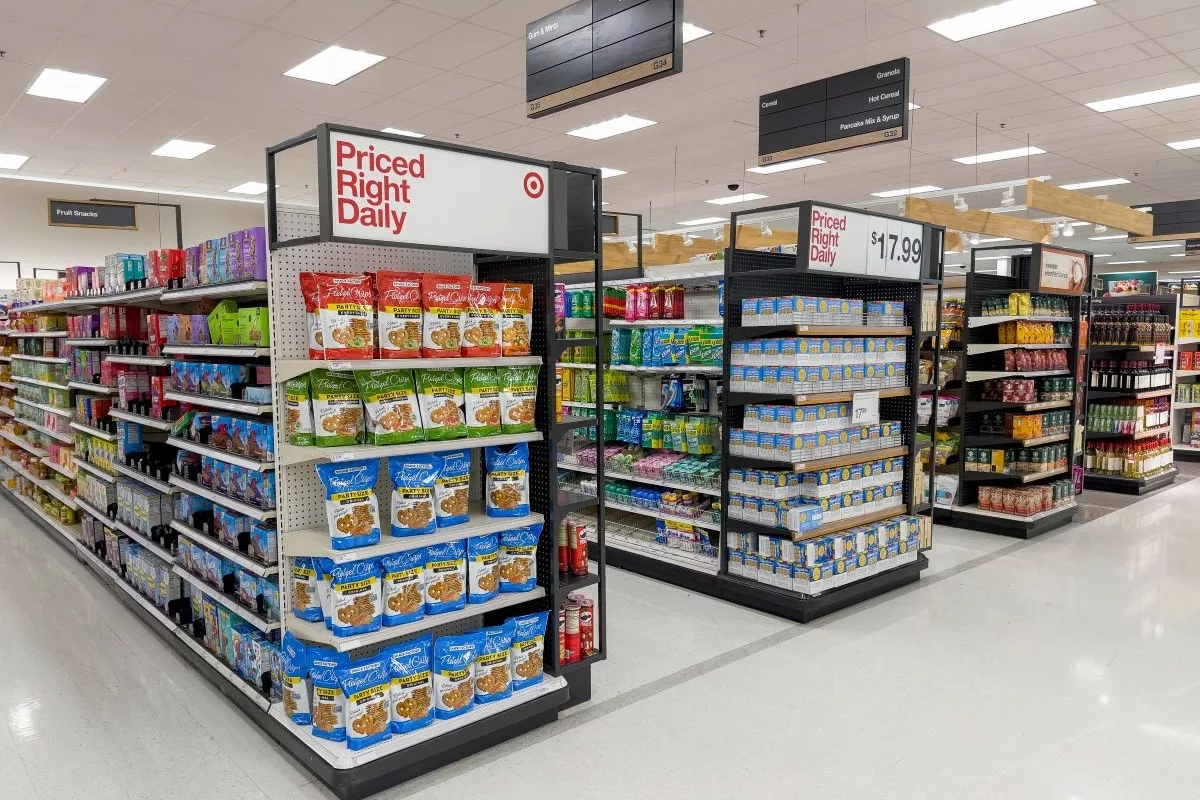
Target not ‘an everything store,’ CEO says

Company introduced 3,000 new food items during its first quarter. 

Continue Reading

Business

Gold, Art, Private Markets, and the Governance Needed to Manage Risk

Published

on

The UK economy is losing as much as £3.5 billion a year as tens of thousands of women leave the technology sector amid stalled career progression, unequal pay and weak leadership pipelines, according to a new landmark report released to mark Ada Lovelace Day.

Family offices in 2025 and beyond face a more complex investment environment than at any point in recent decades.

Rising geopolitical uncertainty, persistent inflation, and the digital transformation of financial markets have prompted leading family offices to rethink their asset allocation frameworks. Gold, art, private equity, and private credit are commanding larger allocations, while governance and human capital strategies are becoming as important as the investment decisions themselves.

Quick Summary

The most resilient future family office structures combine diversified alternative allocations with robust human capital programmes and data-driven decision-making. In 2025, the top alternative asset classes for family offices are private equity, private credit, gold and commodities, art and collectibles, and infrastructure.

Top picks for alternative investment strategies:

  • Best overall: Multi-alternative mandate with dedicated governance committee
  • Best for inflation hedge: Gold and commodity allocation of 5-10% of AUM
  • Best for uncorrelated returns: Art and collectibles allocation through a specialist advisory
  • Best for long-term returns: Private equity fund-of-funds with co-investment rights
  • Best value: Private credit with floating-rate instruments

“The family offices that will thrive in the next decade are those that invest as seriously in their people and governance as they do in their portfolios.” (Campden Wealth Global Family Office Report 2024)

Comparison Table (Last updated: April 2026)

Asset Class 2024 Average Allocation (Family Offices) Expected Return (5yr) Liquidity Key Risk Last Verified
Private equity 18% of AUM 12-15% net IRR Illiquid Market cycle, manager Apr 2026
Private credit 11% of AUM 8-12% net IRR Semi-liquid Credit default Apr 2026
Gold and commodities 5% of AUM 4-8% annually Liquid Price volatility Apr 2026
Art and collectibles 3% of AUM 6-10% annually Illiquid Valuation, liquidity Apr 2026
Infrastructure 8% of AUM 8-11% net IRR Illiquid Regulatory, political Apr 2026
Hedge funds 6% of AUM 6-9% net returns Semi-liquid Strategy, fees Apr 2026

How to Build an Alternatives Allocation for Your Family Office

The starting point for any alternatives strategy is the family office’s investment policy statement (IPS). The IPS should define maximum illiquidity tolerance, minimum return expectations, and ESG or ethical exclusions. Without a documented IPS, alternatives allocations risk being opportunistic rather than strategic.

Advertisement

Human capital is an equally critical variable. The future family office requires professionals who can evaluate complex, illiquid investments, manage manager relationships, and conduct ongoing monitoring across a diverse portfolio. According to the Agreus Group 2024 Compensation Report, the median salary for a family office investment analyst in Singapore is SGD 120,000-180,000 per annum, while a CIO commands SGD 500,000-800,000.

Data resilience is the third pillar. Family offices managing diversified alternatives portfolios must invest in reporting technology that aggregates data across custodians, fund administrators, and direct holdings. Real-time consolidated reporting is no longer a luxury; it is a governance requirement for responsible stewardship of multi-generational wealth.

Families new to alternatives should begin with a fund-of-funds or a managed account with an established manager, before progressing to direct deals or co-investments as internal expertise develops.

Q: How are family offices building and retaining human capital to ensure continuity and leadership across generations?

Human capital is the most underdiscussed risk in family office management. A portfolio of alternatives, private equity, and tokenised assets is only as good as the team managing it, and talent in the family office sector is scarce, competitive, and mobile.

Advertisement

The most successful future family office structures approach talent with the same rigour applied to investment selection. This means: formal job descriptions and reporting lines (not informal family relationships), compensation benchmarked annually against the Agreus Group or equivalent surveys, and career development plans that give investment professionals a visible pathway within the organisation.

Retention is the harder challenge. Family offices compete with private equity firms, hedge funds, and banks for the same talent pool, and cannot always match base compensation. The most effective retention tools are co-investment rights (giving professionals exposure to the upside of deals they originate), a genuine meritocratic culture, and the intellectual freedom that a family office offers relative to a large institution.

For generational continuity specifically, the transition from a founder-led to a professionally managed family office is a critical inflection point. Families that plan for this transition five to ten years in advance, by building institutional processes that are not dependent on any single individual, consistently navigate it more smoothly than those who treat succession as a single event rather than a multi-year programme.

The 7 Best Alternative Investment Strategies for Family Offices in 2025

  1. Private Equity: Core Alternatives Allocation

Best for: Family offices with 7+ year investment horizons seeking return premium over public markets

Quick Facts

Advertisement
  • Global private equity AUM reached USD 5.8 trillion in 2024 (Preqin, 2025) | Top-quartile PE funds delivered 15-18% net IRR over 10 years | Family offices represent 10% of global PE LP capital

Pros

  • Illiquidity premium over public equities
  • Access to high-growth companies before IPO
  • Co-investment opportunities reduce fee drag

Trade-offs

  • 10-year lock-up periods | Capital calls require liquidity planning

Source: Preqin Global Private Equity Report 2025

Last verified: April 2026

  1. Private Credit: Floating-Rate Yield Enhancement

Best for: Family offices seeking income above investment-grade fixed income

Quick Facts

  • Global private credit AUM exceeded USD 2.1 trillion in 2024 (Preqin, 2025) | Average net yields: 10-12% in senior secured, 12-15% in mezzanine | Default rates for senior secured private credit: 1.2% in 2024 (S&P, 2024)

Pros

  • Floating-rate instruments provide natural inflation protection
  • Senior secured structures offer downside protection
  • Semi-liquid structures (3-5 years) suit medium-term planning

Trade-offs

  • Illiquidity relative to investment-grade bonds | Credit underwriting expertise required

Source: Preqin Global Private Debt Report 2025; S&P Global 2024

Last verified: April 2026

  1. Gold and Commodities: Inflation Hedge and Safe Haven

Best for: Family offices seeking portfolio protection against inflation and geopolitical risk

Quick Facts

Advertisement
  • Gold reached an all-time high of USD 3,100/oz in April 2026 (Bloomberg, April 2026) | Average family office gold allocation: 4-6% in 2024 | Gold has delivered a 10-year annualised return of 9.2% in USD terms (World Gold Council, 2024)

Pros

  • Negative correlation to equities in risk-off periods
  • Liquid: can be held via ETFs, futures, or physical bullion
  • Creditor-proof store of value for estate planning

Trade-offs

  • No income yield
  • Storage costs for physical gold | Currency effects can dilute returns

Source: World Gold Council Annual Return Data 2024; Bloomberg April 2026

Last verified: April 2026

  1. Art and Collectibles: Uncorrelated Returns and Cultural Legacy

Best for: Family offices seeking uncorrelated returns and intergenerational wealth transfer vehicles

Quick Facts

  • Global art market reached USD 65 billion in 2024 (Art Basel/UBS, 2025) | Blue-chip art indices delivered 7.6% annualised returns over 10 years (Artprice, 2024) | Art is increasingly used as collateral for private bank lending

Pros

  • Low correlation to traditional financial markets
  • Cultural and aesthetic value alongside financial return
  • Can be lent to museums for reputational benefits

Trade-offs

  • Illiquid with transaction costs of 15-25% (auction house commissions) | Valuation opacity requires specialist advisers

Source: Art Basel/UBS Art Market Report 2025; Artprice Global Index 2024

Last verified: April 2026

  1. Infrastructure: Inflation-Linked Long-Duration Returns

Best for: Family offices with 10+ year horizons seeking stable, inflation-linked cash flows

Quick Facts

Advertisement
  • Global infrastructure fundraising reached USD 120 billion in 2024 (Preqin, 2025) | Infrastructure assets delivered 9.8% net IRR over 10 years on average | Singapore’s infrastructure fund market includes MAS-regulated core infrastructure funds

Pros

  • Inflation-linked cash flows from regulated assets
  • Government concessions provide revenue visibility
  • Low correlation to equity market cycles

Trade-offs

  • Very long lock-up periods (10-15 years) | Political and regulatory risk in emerging markets

Source: Preqin Global Infrastructure Report 2025

Last verified: April 2026

  1. Build Human Capital as a Core Strategic Asset

Best for: Family offices preparing for generational leadership transitions

Quick Facts

  • Staff retention in Asian family offices is the top operational challenge cited by 61% of respondents (Campden Wealth, 2024) | Average tenure of family office investment professionals: 3.2 years | Structured talent development programmes reduce turnover by 25% (Mercer, 2024)

Pros

  • Institutional knowledge retained across generations
  • Investment quality improves with experienced teams
  • Strengthens governance and compliance capabilities

Trade-offs

  • Competitive compensation required to attract institutional-quality talent | Cultural integration of external professionals takes time

Source: Campden Wealth 2024; Mercer Talent Strategy Report 2024

Last verified: April 2026

  1. Invest in Data Resilience and Portfolio Analytics

Best for: Family offices managing complex, multi-asset, multi-custodian portfolios

Quick Facts

Advertisement
  • 68% of family offices cite reporting fragmentation as a top operational risk (Family Office Exchange, 2024) | Implementation costs for integrated FO platforms: USD 100,000-500,000 | Real-time consolidated reporting platforms reduce monthly close time by 40-60%

Pros

  • Single view of all assets, liabilities, and risk exposures
  • Supports regulatory reporting in multiple jurisdictions
  • Enables faster, more informed investment decisions

Trade-offs

  • Significant upfront investment and implementation timeline | Requires data governance policies to maintain quality

Q: How are family offices developing an entrepreneurial mindset and data resilience strategies to future-proof their wealth across generations?

The future family office that will thrive across multiple generations is not simply a wealth preservation vehicle; it is an entrepreneurial organisation that treats capital deployment as an active, innovation-driven discipline. This means cultivating an internal culture where new ideas are welcomed, investment theses are challenged rigorously, and the next generation is empowered to pursue conviction-driven opportunities, not just inherit a static portfolio.

Data resilience is the operational backbone of this entrepreneurial mindset. A family office managing diversified alternatives across multiple custodians and jurisdictions is operationally vulnerable if its data infrastructure cannot keep pace with portfolio complexity. The failure modes are well documented: reconciliation errors between custodians, delayed identification of margin calls or covenant breaches, and an inability to produce consolidated performance reporting for the family council.

Building data resilience means investing in an integrated portfolio management platform, establishing data governance policies that define how information is collected, stored, and verified, and conducting annual operational risk reviews. Families that treat technology infrastructure as a strategic asset, rather than a back-office cost, are significantly better positioned to make fast, well-informed investment decisions and to onboard new asset classes such as tokenised securities as they mature into mainstream allocations.

Source: Family Office Exchange Technology Survey 2024

Last verified: April 2026

Advertisement

Best for Specific Use Cases

Best for Inflation Protection

Gold allocation of 5-10% combined with infrastructure and private credit with floating-rate features.

Best for Uncorrelated Returns

Art and collectibles with a specialist advisor, targeting blue-chip works with a 5-10 year hold horizon.

Best for Long-Term Return Premium

Private equity fund-of-funds with co-investment rights, diversified across geography and vintage year.

Best for Income Generation

Senior secured private credit with 3-5 year duration, targeting 10-12% net yield.

Advertisement

Best for Human Capital Development

Structured talent programme with competitive compensation benchmarking, mentorship, and career development plans.

FAQs

How much should a family office allocate to alternative assets?

There is no universal answer, but the Campden Wealth 2024 Global Family Office Report found that top-performing family offices allocated an average of 46% of AUM to alternatives, compared to 38% for the broader survey group. The appropriate allocation depends on the family’s liquidity needs, investment horizon, and risk tolerance, and should be documented in the investment policy statement.

Is art a mainstream investment for family offices?

Art is not mainstream in the sense of being held by all family offices, but it is a well-established allocation for UHNW families. The Art Basel/UBS 2025 Art Market Report estimates that collectors with net worth above USD 50 million allocate an average of 5-7% of their wealth to art and collectibles. Professional art advisers and specialist art finance products from private banks make the asset class more accessible.

How should family offices approach talent retention given competitive markets?

Retention requires a combination of competitive compensation (benchmarked annually against the Agreus Group or equivalent surveys), career development pathways, and a strong organisational culture. Family offices that offer co-investment rights or profit-sharing arrangements to senior investment staff report significantly higher retention rates, according to a 2024 Mercer study.

Advertisement

Where can I learn more about the future of family offices?

DBS Private Banking publishes the Future of Family Offices series, which covers emerging trends, governance best practices, and investment insights for family offices in Asia. Visit the DBS Future of Family Offices page for access to the latest research and events.

Learn more about DBS Private Banking family office services at https://www.dbs.com/private-banking/wealth-planning/future-of-family-offices-series.page

This article is for informational purposes only. It does not constitute financial, legal, or investment advice. Readers should verify all information with qualified professionals and consult official regulatory sources before making any financial or wealth management decisions.

Last updated: April 2026

Advertisement
Continue Reading

Business

MTAR Tech shares soar 24% in just three sessions. What’s triggering this renewed buying spree?

Published

on

MTAR Tech shares soar 24% in just three sessions. What’s triggering this renewed buying spree?
Shares of defence company MTAR Technologies gained 6% to their day’s high of Rs 8,448 on the BSE on Friday to extend gains for a third session in a row and rallying 24% over the same period.

The latest surge comes after the company secured Rs 467.30 crore order from an international company. The company said it is unable to disclose the customer’s name due to confidentiality obligations. It added that the order is a continuation of regular business from an existing customer.

As per the execution timeline, 50% of the order value is scheduled to be completed by March 20, 2027, while the remaining 50% is expected to be executed by June 20, 2027, MTAR said in a regulatory filing.

This is the company’s second order win in quick succession. Last week, MTAR announced it bagged an order worth Rs 2,279 crore from an international company. The renewed buying also stems from robust FY27 growth guidance following an impressive Q4 earnings.

Advertisement

In the Q4 earnings call, the management of MTAR Technologies said the outlook for the next financial year remains highly positive, supported by strong confidence in the execution of the current order book. The company said it has revised its FY27 revenue growth guidance upward from 50% to more than 80%, with a possible variation of 5%, while expecting margins of around 24% for the year.


The management attributed the stronger outlook primarily to the initial expansion of capacities in the clean energy segment, which has already been commissioned. It added that the oil and gas plant is expected to be commissioned by the end of September and become fully operational thereafter.
According to the company, the nuclear and aerospace businesses are also expected to contribute significantly higher revenues in FY27, driven by the execution of nuclear projects backed by a strong order book and the commencement of volume production in the aerospace division for certain customers.The Hyderabad-based precision engineering company posted a consolidated net profit of Rs 44.28 crore for the March quarter, sharply higher than Rs 13.72 crore reported in the same period last year, reflecting a growth of about 223%.

Revenue from operations for the quarter rose nearly 67% to Rs 306 crore from Rs 183 crore a year earlier. The increase was mainly driven by higher product sales, which rose to Rs 303 crore from Rs 179 crore in the corresponding quarter last year.

For the full year FY26, the company reported consolidated net profit of Rs 94.03 crore, compared with Rs 52.89 crore in FY25, translating into growth of close to 78%. Annual revenue from operations rose 31% to Rs 876.21 crore from Rs 675.99 crore in the previous financial year.

MTAR Technologies shares have witnessed a sharp rally this year, turning into a multibagger with gains of nearly 244% in 2026 so far.

Advertisement

(Disclaimer: Recommendations, suggestions, views and opinions given by the experts are their own. These do not represent the views of The Economic Times)

Continue Reading

Business

Cantor Fitzgerald reiterates Overweight on Summit Therapeutics stock

Published

on


Cantor Fitzgerald reiterates Overweight on Summit Therapeutics stock

Continue Reading

Trending

Copyright © 2025