
Business
Warning for sellers amid rollercoaster gold and silver prices



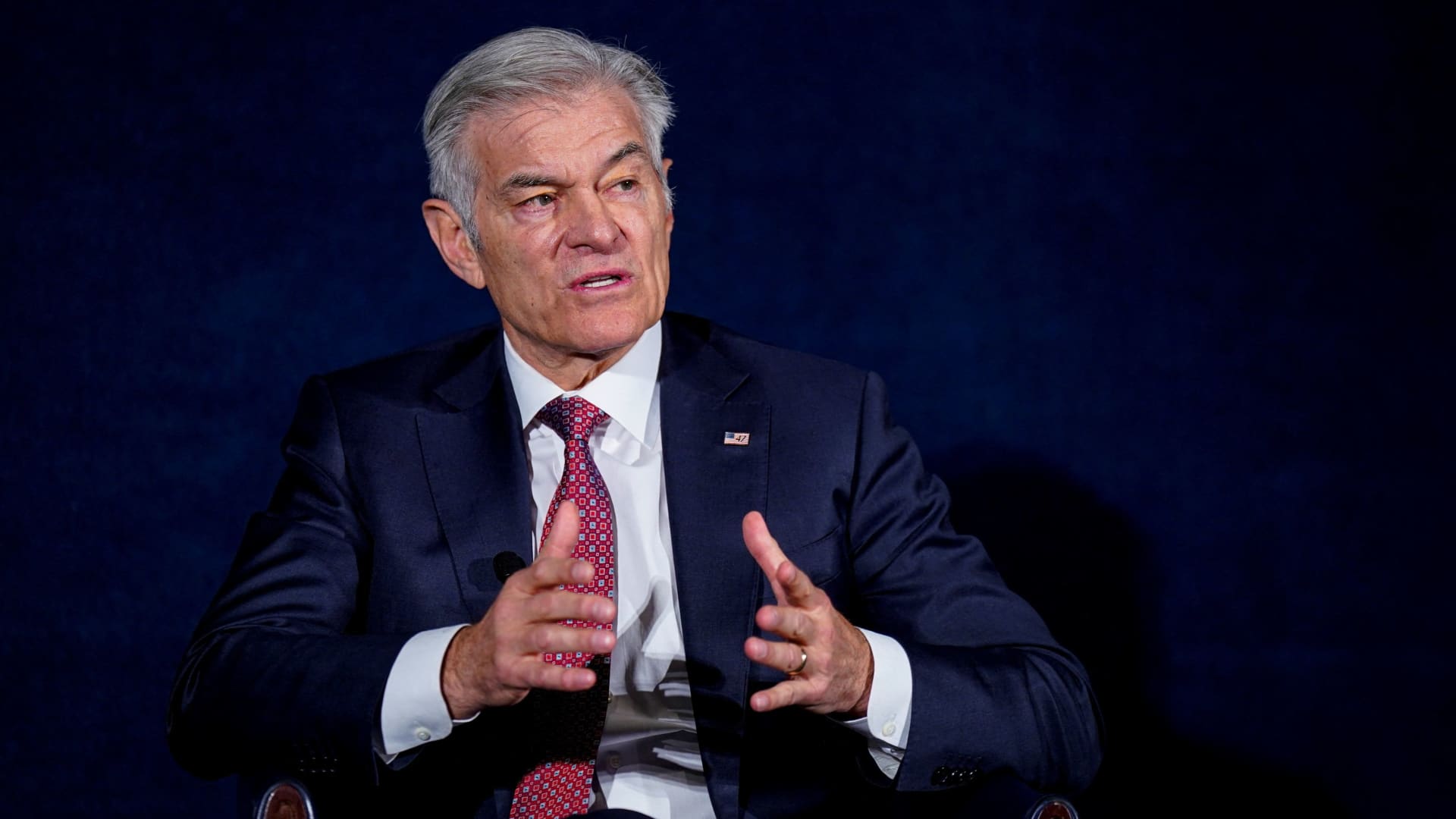
Administrator for the Centers for Medicare & Medicaid Services Mehmet Oz speaks during an event sponsored by the Action for Progress Coalition, at the National Press Club in Washington, D.C., U.S., Feb. 2, 2026.
Al Drago | Reuters
The Trump administration on Monday finalized a 2027 payment rate increase to privately run Medicare plans that was far bigger than initially proposed, a boost to health insurer stocks.
The government will increase average Medicare Advantage payments by 2.48%, or more than $13 billion, in 2027, according to a release from the Centers for Medicare & Medicaid Services. The Trump administration in January proposed a payment rate hike of 0.09%, which pummeled shares of insurers that run those plans.
Shares of UnitedHealth and CVS Health rose more than 9% in after-hours trading on Monday. Meanwhile, Humana‘s stock jumped around 12%.
“Medicare Advantage and Part D should work for the people who rely on them,” said CMS Administrator Dr. Mehmet Oz in a release. “These updates keep coverage affordable and ensure patients get real value from their plans.”
The closely watched government payment rate determines how much insurers can charge for monthly premiums and plan benefits they offer and, ultimately, their profits.
Medicare Advantage is a privately run health insurance plan contracted by Medicare. More than half of Medicare beneficiaries are enrolled in such plans, enticed by lower monthly premiums and extra benefits not covered by traditional Medicare, according to health policy research firm KFF.


Gold Mining Bull is a gold analyst with more than a decade of investing experience in commodities, hard assets (gold and silver miners), exploration companies, oil and gas producers, MLPs, and more.
Analyst’s Disclosure: I/we have a beneficial long position in the shares of BSM, TRMLF, EXE either through stock ownership, options, or other derivatives. I wrote this article myself, and it expresses my own opinions. I am not receiving compensation for it (other than from Seeking Alpha). I have no business relationship with any company whose stock is mentioned in this article.
Seeking Alpha’s Disclosure: Past performance is no guarantee of future results. No recommendation or advice is being given as to whether any investment is suitable for a particular investor. Any views or opinions expressed above may not reflect those of Seeking Alpha as a whole. Seeking Alpha is not a licensed securities dealer, broker or US investment adviser or investment bank. Our analysts are third party authors that include both professional investors and individual investors who may not be licensed or certified by any institute or regulatory body.

Brian Ferdinand: Bridging Market Execution and Financial Thought Leadership
Business
Meghan Markle Sparks Outrage With 10 Controversial 2026 Quotes Fueling Royal Feud and Brand Backlash
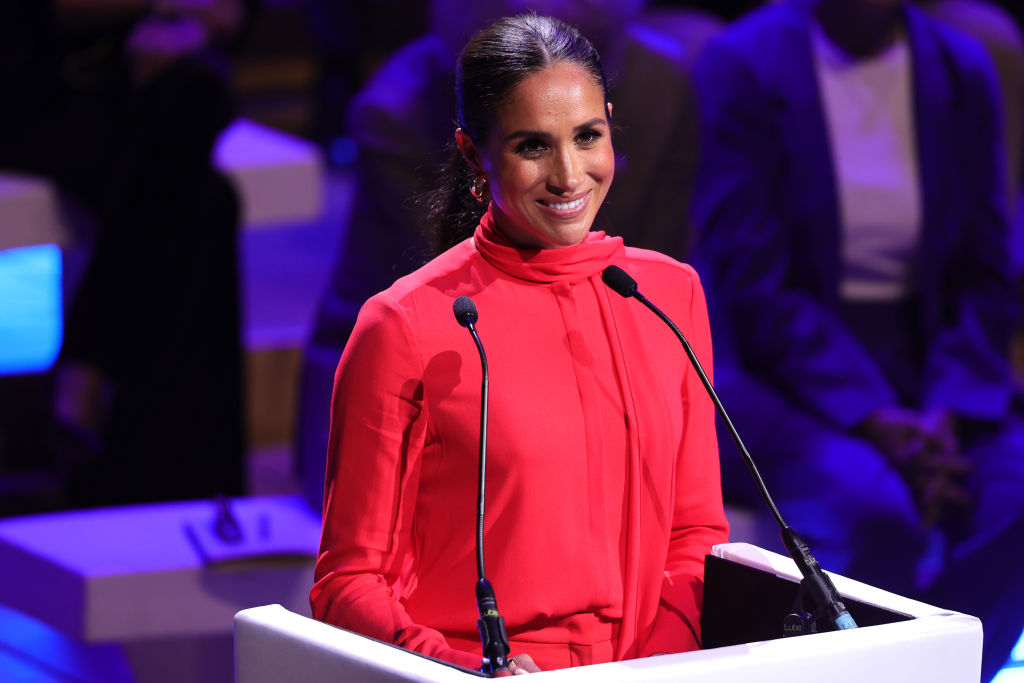
LOS ANGELES — Meghan Markle, the Duchess of Sussex, has once again found herself at the center of intense public debate in 2026, with a series of statements drawing sharp criticism from royal watchers, branding experts and social media users amid struggles with her lifestyle brand As Ever and strained family ties.

From bold claims about her worthiness for greater influence to defensive responses about her royal past and business ventures, Markle’s words have ignited headlines and online firestorms throughout the year. Here are 10 of the most controversial quotes attributed to or linked to the former actress in 2026, each sparking backlash for different reasons.
- “I’m the only one worthy!” In early 2026 reports surrounding ongoing royal succession discussions, Markle was quoted in viral social media posts and commentary as asserting she is the only figure fit for significant influence, citing her “global vision” and “unfiltered authenticity” over traditional lines. Critics labeled it a “delusional coup,” accusing her of undermining the monarchy while profiting from her former title.
- “A title cannot be erased by a piece of paper. The public knows who I am.” Markle reportedly pushed back against suggestions of stripping her Duchess of Sussex title, repeating her attachment to the style in interviews and statements. Royal commentators slammed the remark as entitlement, arguing it contradicts the couple’s post-Megxit narrative of seeking privacy while leveraging royal connections for brand deals.
- “If you don’t mind, get your finger out of my face.” Tom Bower’s 2026 book revived allegations of a heated 2018 reconciliation meeting, claiming Markle snapped this 11-word demand at Prince William. The quote fueled fresh accusations of abrasiveness, with critics saying it highlighted ongoing family rifts and painted her as confrontational during early royal integration.
- “2026 feels just like 2016.” Markle joined a viral social media trend by posting a throwback photo with Prince Harry, captioning it with this nostalgic line. Detractors mocked it as tone-deaf, pointing to her current business struggles and Netflix setbacks, arguing it ignored the couple’s reported challenges rather than showing growth.
- “With the rush of the holiday season behind us, we look ahead with an intention to begin the new year at a gentler pace.” In a January 2026 message tied to her As Ever brand, Markle promoted a slower lifestyle. PR experts criticized the mixed messaging, noting sporadic product drops and high-profile paid appearances contradicted the “gentler” image, calling it inauthentic marketing.
- “I’ve been a waitress, an actress, a princess, a Duchess — I’ve always still just been Meghan.” Reflecting on her journey in a 2026 interview, Markle emphasized her core identity. Skeptics viewed it as selective narrative control, contrasting her emphasis on humility with luxury retreats and brand pricing that drew “how the mighty have fallen” jabs from commentators.
- “No one in the world loves me more than him.” Speaking about Prince Harry in a candid Harper’s Bazaar-style reflection carried into 2026 coverage, Markle highlighted their bond. While some praised the romance, others saw it as defensive amid reports of Netflix tensions and business strains, accusing her of using personal stories for sympathy or branding.
- “Let this be the change, where our children’s safety is finally prioritised above profit.” In a joint statement with Harry responding to a 2026 social media verdict, Markle addressed online harms. Critics argued the couple’s selective privacy stance — sharing glimpses of their children while criticizing platforms — revealed hypocrisy, especially given brand campaigns featuring family elements.
- Comments on her Australia wellness retreat pricing and role. Though not a direct quote, Markle’s involvement in a high-ticket “Girls’ Weekend” event drew fire, with experts noting the $3,000-plus price tag clashed with her accessibility messaging. Reports framed her participation as highlighting financial pressures, prompting “mediocre” and “low brow” critiques despite her headliner status.
- Defenses around As Ever brand consistency and “mixed messaging.” In responses to 2026 criticism of product launches and inventory issues, Markle and representatives stressed authenticity. Branding gurus warned of “dishonesty” in sporadic drops and unclear lifestyle positioning, predicting struggles unless professionalized, with some calling the approach lacking a clear point of view.
These quotes and associated statements have amplified scrutiny on Markle’s post-royal reinvention. Her lifestyle brand As Ever faced reports of unsold inventory glitches and Netflix deal shifts, while paid appearances like the Australian retreat drew accusations of monetizing royalty. Royal biographers and commentators, including Tom Bower, continued to portray tensions with the Windsors, reviving old allegations alongside new ones.
Markle has maintained that much criticism stems from bias and that she focuses on family, philanthropy and authentic living. Supporters praise her resilience and entrepreneurial spirit, noting her transition from “Suits” actress to duchess to California-based creator reflects modern womanhood. Detractors, however, point to perceived inconsistencies between privacy pleas and public branding.
The 2026 landscape has been particularly rocky. Reports of Netflix tensions, brand warnings that her lifestyle push could stall without major changes, and ongoing royal book feuds kept her in headlines. A Sundance appearance and fashion choices also sparked “cosplaying” mockery online.
Experts like PR professionals have advised greater structure and clarity for As Ever to build long-term equity, warning sporadic efforts risk “weird visibility” without substance. Marketing analysts suggested professionalizing operations or shifting strategy to avoid 2026 becoming “more of the same.”
Markle’s defenders argue relentless media focus amplifies minor missteps while ignoring her causes, including children’s online safety advocacy. Her statements often emphasize empowerment, boundaries and lessons from “mistakes” in royal life, framing them as growth rather than controversy.
Yet public discourse remains polarized. Social media erupts with memes and debates whenever new quotes surface, with hashtags tracking both support and criticism. The couple’s joint statements, such as on tech accountability, position them as advocates, but skeptics question timing and sincerity amid business ventures.
As Markle navigates 2026, her words continue shaping her narrative. Whether defending her identity, promoting gentler living or addressing family dynamics, each quote invites scrutiny over authenticity versus ambition. Royal watchers debate if these moments reflect strength or miscalculation in a post-royal era defined by reinvention challenges.
For now, the Duchess remains unbowed, using platforms to share her perspective while facing calls for more consistency. Her 2026 quotes, whether direct or contextual, underscore the tightrope of public life — where personal reflection quickly becomes public controversy in the digital age.
Analysts predict continued volatility as brand efforts evolve and royal relations simmer. Markle’s ability to convert attention into sustainable success may define the year, with her voice — controversial or not — remaining a powerful, if polarizing, force.

Franklin Templeton reports $1.68 trillion AUM with $5B inflows
Business
Alphabet Stock Rises Modestly as Analysts Affirm GOOG as Long-Term Buy on AI and Cloud Strength
NEW YORK — Alphabet Inc. shares edged higher Monday, with Class C stock (GOOG) trading near $296.60 after gaining $2.14 or 0.73% in afternoon trading, as Wall Street largely reinforced its bullish long-term outlook despite heavy 2026 capital spending plans for artificial intelligence infrastructure.

The Google parent company’s stock has faced volatility in early 2026, pulling back from peaks near $349 earlier in the year amid concerns over elevated AI-related expenditures. Yet the consensus among more than 40 analysts remains strongly positive, with an average 12-month price target around $345 to $367, implying 16% to 24% upside from current levels near $296. High-end targets reach $420, while the overwhelming majority rate the stock a “Buy” or “Strong Buy.”
Alphabet’s fourth-quarter 2025 results, released in early February 2026, underscored underlying momentum. Revenue climbed 18% to $113.83 billion, beating expectations, while adjusted earnings per share rose to $2.82. Google Cloud delivered standout performance, with revenue surging 48% to $17.7 billion — outpacing some rivals — and the segment’s backlog expanding 55% to $240 billion, signaling robust enterprise demand for AI-powered infrastructure and services.
CEO Sundar Pichai highlighted Gemini model advancements, noting the app had surpassed 750 million monthly active users and that API processing exceeded 10 billion tokens per minute. Search remained a high-margin powerhouse, generating steady advertising revenue that continues to fund ambitious AI bets. YouTube advertising and subscriptions also contributed meaningfully, pushing annual YouTube revenue above $60 billion.
The headline that initially pressured shares was Alphabet’s aggressive 2026 capital expenditure guidance of $175 billion to $185 billion — roughly double the $91.4 billion spent in 2025 and well above prior analyst expectations around $120 billion. Executives framed the surge as essential to scale AI compute capacity, data centers and cloud capabilities to meet exploding customer demand and maintain leadership in the rapidly evolving generative AI landscape.
While the spending outlook sparked short-term investor caution over potential near-term margin compression and free cash flow impacts, many analysts quickly characterized it as a necessary investment in Alphabet’s competitive moat. Google Cloud’s improving profitability and accelerating revenue growth provided early validation that heavy infrastructure outlays can translate into sustainable returns.
Longer-term forecasts remain optimistic. Some projections see the stock reaching $380 by the end of 2026 and climbing significantly higher by 2030, supported by double-digit annual earnings growth. Analysts point to multiple growth levers: continued dominance in global search with roughly 90% market share, expanding AI integration across Search, Workspace and consumer products, and Google Cloud’s emergence as a credible challenger to Amazon Web Services and Microsoft Azure in AI-optimized solutions.
Valuation sits at roughly 25-28 times forward earnings, a premium many argue is justified by Alphabet’s data advantages, vast talent pool and integrated ecosystem spanning hardware, software and infrastructure. The balance sheet remains exceptionally strong, with substantial cash reserves enabling both aggressive investments and shareholder returns via buybacks. The company’s tiny dividend offers modest income alongside growth potential.
Risks include ongoing antitrust litigation, regulatory scrutiny in Europe and elsewhere on advertising and data practices, and intensifying competition in AI from OpenAI, Anthropic, Microsoft and custom chip efforts by hyperscalers. Elevated interest rates or an economic slowdown could also temper advertising budgets, though Alphabet’s diversified revenue mix provides some buffer.
Institutional confidence appears solid, with continued accumulation in options and equity positions. The stock’s role as a core AI trade keeps it prominent in growth-oriented portfolios. For long-term investors, the debate often centers on whether current prices represent a buying opportunity after the year-to-date pullback or if near-term spending cycles warrant caution.
Most Wall Street voices lean bullish. Firms such as J.P. Morgan have maintained “Buy” ratings with targets near $395, citing resilient core advertising, cloud momentum and AI monetization potential. Recent commentary described Alphabet as “still a best idea” for growth investors, noting that heavy capex today positions the company for exponential returns as AI adoption accelerates across enterprises and consumers.
Fiscal first-quarter 2026 results, expected in late April, will be closely watched for updates on cloud acceleration, Gemini adoption metrics, AI feature contributions to Search and any refinements to capex execution or efficiency gains. Commentary on competitive dynamics and regulatory matters will also draw attention.
In the broader context, Alphabet exemplifies the opportunities and trade-offs in the AI era. Its scale allows massive infrastructure bets that smaller players cannot match, while its advertising engine generates the cash flow to sustain those investments. The company’s early integration of generative AI into everyday products positions it to capture new revenue streams as businesses and users increasingly rely on these tools.
Monday’s modest gain reflected renewed buying interest amid broader market optimism over potential geopolitical stabilization and sector rotation. With the Nasdaq also advancing, investors appeared selective in favoring names with clear AI exposure and strong fundamentals like Alphabet.
For retail investors considering a long-term position, the consensus view supports yes — provided a multi-year horizon and tolerance for volatility tied to spending cycles, macro events or regulatory developments. Diversification remains prudent, as even dominant tech names carry execution and competitive risks.
Alphabet’s track record of innovation — from search dominance to Android, YouTube, cloud and now multimodal AI — bolsters the case for adaptability and sustained leadership. With Google Cloud gaining traction and Gemini expanding its reach, many analysts see the company as well-positioned for the next phase of technological transformation.
As trading continued Monday afternoon, GOOG held its gains, underscoring sustained market faith in Alphabet’s strategic direction. Wall Street’s price targets and ratings suggest that for patient investors, the stock remains a compelling long-term opportunity in the digital economy, even as the company navigates the capital-intensive demands of the AI race.

Wolf Report is a senior analyst and private portfolio manager with over 10 years of generating value ideas in European and North American markets.He covers the markets of Scandinavia, Germany, France, UK, Italy, Spain, Portugal and Eastern Europe in search of reasonably valued stock ideas.
Analyst’s Disclosure: I/we have no stock, option or similar derivative position in any of the companies mentioned, and no plans to initiate any such positions within the next 72 hours. I wrote this article myself, and it expresses my own opinions. I am not receiving compensation for it (other than from Seeking Alpha). I have no business relationship with any company whose stock is mentioned in this article.
While this article may sound like financial advice, please observe that the author is not a CFA or in any way licensed to give financial advice. It may be structured as such, but it is not financial advice. Investors are required and expected to do their own due diligence and research prior to any investment.
Short-term trading, options trading/investment and futures trading are potentially extremely risky investment styles. They generally are not appropriate for someone with limited capital, limited investment experience, or a lack of understanding for the necessary risk tolerance involved.
I own the European/Scandinavian tickers (not the ADRs) of all European/Scandinavian companies listed in my articles. I own the Canadian tickers of all Canadian stocks I write about.
Please note that investing in European/Non-US stocks comes with withholding tax risks specific to the company’s domicile as well as your personal situation. Investors should always consult a tax professional as to the overall impact of dividend withholding taxes and ways to mitigate these.
Seeking Alpha’s Disclosure: Past performance is no guarantee of future results. No recommendation or advice is being given as to whether any investment is suitable for a particular investor. Any views or opinions expressed above may not reflect those of Seeking Alpha as a whole. Seeking Alpha is not a licensed securities dealer, broker or US investment adviser or investment bank. Our analysts are third party authors that include both professional investors and individual investors who may not be licensed or certified by any institute or regulatory body.

Mideast Shock Fuels Investing Themes

Financial influencer Taylor Price joins ‘Varney & Co.’ to break down how shifting your mindset can help Americans grow wealth and achieve the American Dream.
Americans are concerned with the rising cost of healthcare along with surging health insurance premiums.
A Gallup poll released last week found that healthcare is the top domestic issue facing Americans among 16 policy areas included in the survey, with 61% saying they worry a great deal about healthcare access and affordability.
Healthcare topping the list of domestic concerns represents a resurgence in the issue’s prominence, as the last time it was the foremost issue in voters’ minds was 2020 – a position it held dating back to 2015. It was roughly tied with the economy in 2025, but now leads by 10 points.
Those findings are similar to those of a recent Fox News poll, which found that 81% of voters are either “extremely” or “very” concerned about healthcare, a figure which trailed only inflation and high prices, while 86% of voters were concerned about inflation and high prices.
OBAMACARE ENROLLMENT FELL BY MORE THAN 1M ENROLLEES FOR 2026
FOX Business’ Gerri Willis reports on a Gallup poll showing 61% of Americans are greatly concerned about rising healthcare costs, surpassing worries about the economy and inflation.
The poll found that healthcare was a concern for a majority of voters across political groups, with 89% of Democrats, 80% of Independents and 72% of Republicans saying they were either “extremely” or “very concerned” about healthcare.
Healthcare concerns were also widespread across age groups: 77% of respondents under age 45 and 83% of those over age 45 were extremely or very concerned about healthcare – views that were shared by 86% of those aged 65 and up.
OBAMACARE PRICES ARE SET TO SPIKE – HERE’S WHY
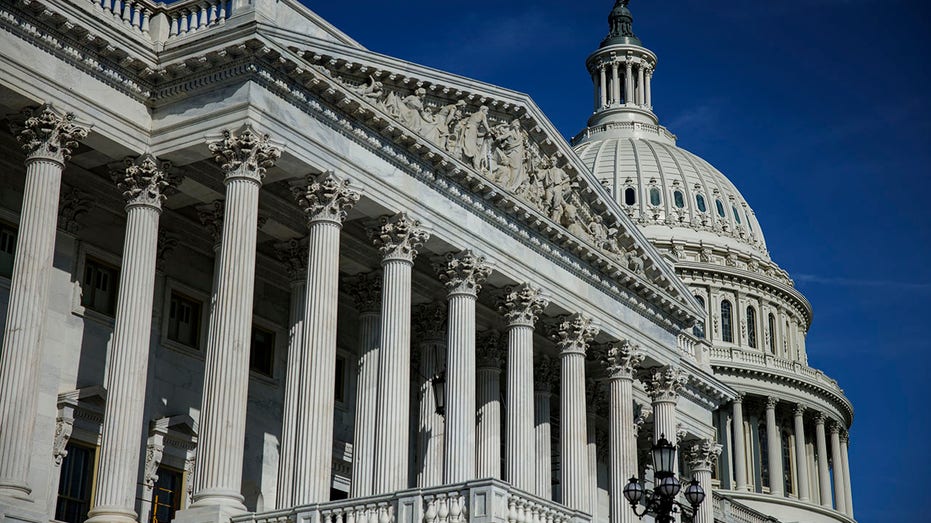
Congress allowed the enhanced premium tax credit to expire at the end of 2025. (Samuel Corum/Getty Images)
American consumers have faced rising health insurance premiums in recent years, with prices jumping this year due to the end of an extra subsidy for consumers.
Health insurance under the Affordable Care Act, also known as Obamacare, is subsidized through a premium tax credit available to lower- and some middle-income households. During the COVID-19 pandemic, Congress added another subsidy on top of the baseline subsidy.
However, the Trump administration and Congress allowed the pandemic-era enhanced subsidy to expire at the end of last year, which has pushed premiums higher.
TREASURY DEPARTMENT ANNOUNCES EXPANDED HSA TAX BENEFITS UNDER TRUMP LAW

Health insurance subsidies are smaller in the 2026 plan year after enhanced premium tax credits were allowed to expire, leaving just the baseline tax credit. (Getty Images)
An analysis by the Kaiser Family Foundation (KFF), a nonprofit group focused on national healthcare policy, estimated last year that the expiration of the enhanced premium tax credits would cause annual out-of-pocket premium payments to rise by over $1,000 this year – jumping 114% from $888 in 2025 to $1,904 in 2026.
Health insurance companies have also been raising premiums for non-Obamacare plans for years, which experts have attributed to higher healthcare costs.
Data from the Centers for Medicare and Medicaid (CMS) shows that consumers have shifted into lower-cost health insurance plans in the 2026 open enrollment period compared with the prior year.
GET FOX BUSINESS ON THE GO BY CLICKING HERE
The CMS data shows that in 2025, 56% of enrollees were in silver tier plans while 30% were in bronze plans. By contrast, the data for 2026 shows 40% of enrollees in bronze plans and 43% in silver. The share of enrollees in gold tier plans also rose from 13% in 2025 to 17% this year.


Long Player believes oil and gas is a boom-bust, cyclical industry. It takes patience, and it certainly helps to have experience. He has been focusing on this industry for years. He is a retired CPA, and holds an MBA and MA.
He leads the investing group Oil & Gas Value Research. He looks for under-followed oil companies and out-of-favor midstream companies that offer compelling opportunities. The group includes an active chat room in which Oil & Gas investors discuss recent information and share ideas. Learn more.
Analyst’s Disclosure: I/we have a beneficial long position in the shares of XOM CVX either through stock ownership, options, or other derivatives. I wrote this article myself, and it expresses my own opinions. I am not receiving compensation for it (other than from Seeking Alpha). I have no business relationship with any company whose stock is mentioned in this article.
Disclaimer: I am not an investment advisor, and this article is not meant to be a recommendation for the purchase or sale of stock. Investors are advised to review all company documents and press releases to see if the company fits its own investment qualifications.
Seeking Alpha’s Disclosure: Past performance is no guarantee of future results. No recommendation or advice is being given as to whether any investment is suitable for a particular investor. Any views or opinions expressed above may not reflect those of Seeking Alpha as a whole. Seeking Alpha is not a licensed securities dealer, broker or US investment adviser or investment bank. Our analysts are third party authors that include both professional investors and individual investors who may not be licensed or certified by any institute or regulatory body.
A drive through wartime Iran offers glimpses of destruction and daily life

Trump administration finalizes Medicare Advantage payment rate

Appellate Court Affirms Blocking New Jersey Enforcement against Kalshi


-

 NewsBeat4 days ago
Steven Gerrard disagrees with Gary Neville over ‘shock’ Chelsea and Arsenal claim | Football
-

 Business4 days ago
No Jackpot Winner and $194 Million Prize Rolls Over
-

 Fashion3 days ago
Weekend Open Thread: Spanx – Corporette.com
-

 Crypto World5 days ago
Gold Price Prediction: Worst Month in 17 Years fo Save Haven Rock
-

 Business22 hours ago
Three Gulf funds agree to back Paramount’s $81 billion takeover of Warner, WSJ reports
-
Crypto World6 days ago
Dems press CFTC, ethics board on prediction-market insider trades
-

 Sports2 days ago
India men’s 4x400m and mixed 4x100m relay teams register big progress | Other Sports News
-

 Business5 days ago
Login and Checkout Issues Spark Merchant Frustration
-

 Tech7 days ago
EE TV is using AI to help you find something to watch
-

 Sports6 days ago
Tallest college basketball player ever, standing at 7-foot-9, entering transfer portal
-
Tech7 days ago
Daily Deal: StackSkills Premium Annual Pass
-

 Tech7 days ago
Flipsnack and the shift toward motion-first business content with living visuals
-

 Sports7 days ago
Women’s hockey camp eyes fitness boost, tactics ahead of WC 2026 campaign | Other Sports News
-

 Crypto World7 days ago
U.S. rule change may open trillions in 401(k) funds to crypto
-

 Tech6 days ago
How to back up your iPhone & iPad to your Mac before something goes wrong
-

 Politics7 days ago
Usha Vance: Disney Hats Over MAGA Caps?
-
Crypto World7 days ago
Valinor raises $25m to put private credit on-chain
-

 Tech7 days ago
What Are The Biggest Limitations Of Supercomputers?
-

 Business7 days ago
Functional benefits brewing in coffee innovation
-

 Crypto World6 days ago
Bitcoin enters the public bond market as Moody’s gives a first-of-its-kind crypto deal a rating
You must be logged in to post a comment Login