
Business
Warren Buffett turns 96: Top 10 investing lessons from the Oracle of Omaha

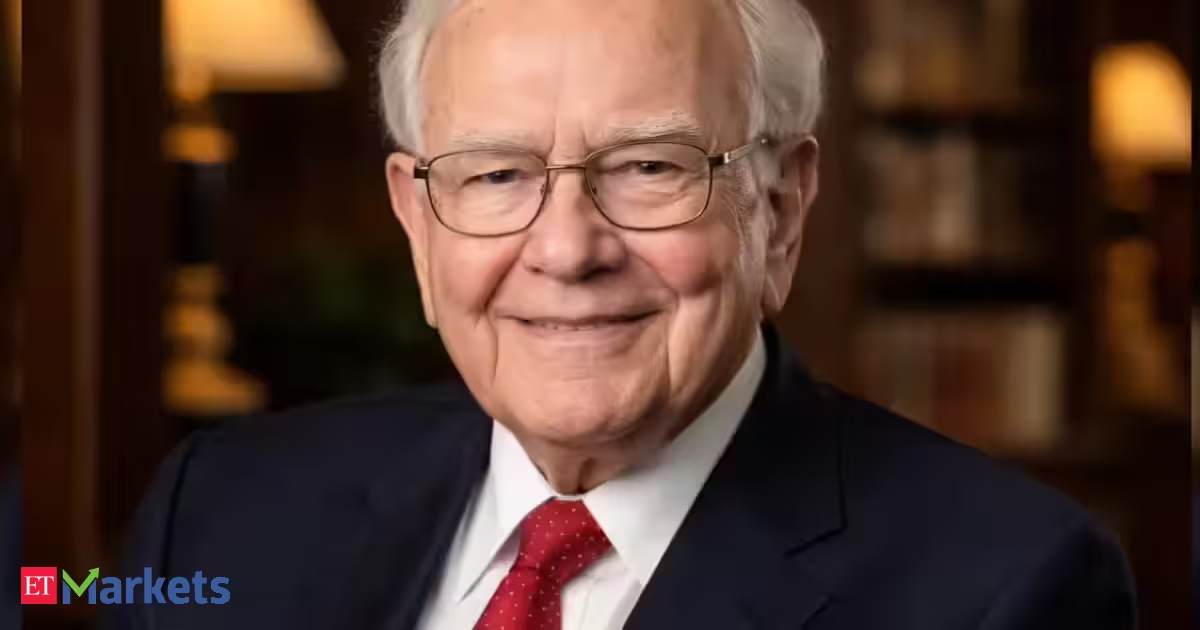
Buffett is no longer Berkshire’s CEO, but remains chairman of the board and continues to be involved in the company. He has also continued to make major investment decisions, including building what is now a $36.6 billion stake in Google’s parent company, Alphabet, in recent quarters.
Buffett took control of a struggling textile company in 1965 and transformed it into Berkshire Hathaway, now valued at more than $1 trillion, with annual after-tax operating earnings of about $45 billion.
Despite his enormous financial success, Buffett has maintained a famously simple lifestyle, including his fondness for Cherry Coke and burgers. He continues to work from an office in his hometown of Omaha, Nebraska, rather than from Wall Street.
Buffett handed over the CEO role to longtime deputy Greg Abel on January 1, 2026, and has pledged to donate the vast majority of his wealth.

Buffett’s six decades in business have produced a long list of investing principles and memorable quotes.
Here are the 10 investing lessons from Warren Buffett:1. Don’t overpay for stocks
Buffett has built his investment philosophy around buying quality businesses at attractive prices. He has rarely bought at more than 15 times forward earnings, maintaining discipline even when investing in high-profile companies such as Apple and Coca-Cola.
The approach puts downside protection ahead of potential upside. By analysing businesses closely and focusing on predictable cash flows and clean balance sheets, investors can reduce the risk of permanent losses during market downturns.
2. Be patient, but take profits when needed
Patience has been one of Buffett’s defining characteristics. Berkshire’s capital structure has allowed him to hold some stocks for decades rather than trade around quarterly results.
Buffett has famously said, “Our favourite holding period is forever.” His long-term holdings have included Coca-Cola, American Express and Wells Fargo.
At the same time, he has trimmed or exited major positions in companies including Apple, Bank of America, JPMorgan Chase, Goldman Sachs, Citigroup and Paramount Global in recent years.
Buffett has also openly acknowledged his investment mistakes, including what he described as his “most gruesome” investment in the bankrupt Dexter Shoe Co.
3. Stick with what you know
Buffett has repeatedly stressed the importance of staying within one’s “circle of competence.”
“You only have to be able to evaluate companies within your circle of competence. The size of that circle is not very important; knowing its boundaries, however, is vital.”
Buffett famously avoided technology stocks during the dot-com boom of the late 1990s because he believed forecasting the long-term survival of young technology companies was outside his expertise.
The Nasdaq subsequently collapsed by as much as 75% between 2000 and 2002.
When Berkshire eventually made a substantial investment in Apple in 2016, Buffett based the decision on consumer habits and brand loyalty rather than technology itself.
4. Keep emotions out of investing
Buffett has repeatedly emphasised the importance of maintaining an even keel during financial crises and market downturns.
At Berkshire’s 2025 annual shareholders meeting, he told investors to “check your emotions at the door when you invest.”
He put the principle into practice following the 1987 US market crash, investing roughly $1 billion in Coca-Cola in 1988 and 1989. By 2025, Coca-Cola’s share price alone had climbed nearly 2,800% from his original purchase price.
During the 2008 global financial crisis, Buffett also sought out struggling but high-quality companies and offered cash in exchange for coveted share packages.
In 2008, he invested $5 billion in Goldman Sachs and made a profit of $500 million, excluding dividends, when the company bought back its shares in 2011.
5. Start investing early
Buffett began investing at the age of 12, when he bought Cities Service preferred stock in 1942.
His wealth accumulated gradually. At 21, Buffett’s net worth was $20,000. It took him more than 13 years to become a millionaire and more than 33 years to become a billionaire, at the age of 55.
His career illustrates the role of patience and compounding in long-term investing.
6. Learn from great teachers
Buffett was a student of economist Benjamin Graham, known as the “father of value investing.”
He studied under Graham at Columbia Business School and later worked at Graham’s investment firm before setting out on his own.
Graham’s influence helped shape Buffett’s focus on identifying companies that are undervalued, or trading below their intrinsic worth.
7. Concentrate when conviction is high
Buffett has not always followed a highly diversified approach.
At the end of the second quarter of 2025, five stocks—American Express, Apple, Bank of America, Coca-Cola and Chevron—accounted for nearly 70% of Berkshire’s roughly $300 billion equity portfolio.
Buffett himself holds more than 99% of his net worth in Berkshire shares, a stake valued at about $150 billion.
The approach is to concentrate investments when conviction is high rather than spread capital indiscriminately.
8. Hire strong managers and trust them
Buffett’s management style has long involved giving substantial autonomy to the leaders of Berkshire’s subsidiaries.
The approach is straightforward: hire capable managers and trust them to run their businesses.
Buffett’s decision to remain active after stepping down as CEO also reflects his belief that work can continue well beyond traditional retirement.
Turning 65 did not slow him down, with Berkshire shares climbing thirtyfold since then. Buffett has long said that traditional retirement is not for him or his top executives.
9. Protect shareholders from dilution
Berkshire has avoided issuing stock for acquisitions and has never granted stock-based compensation.
As a result, the company’s share count has increased by only about 40% since 1965.
Protecting shareholders from unnecessary dilution has been another important part of Buffett’s approach to capital allocation.
10. Love what you do
Buffett has famously described his daily routine as “tap dancing to the office.”
Even after handing over the CEO role, he plans to remain active as Berkshire’s chairman and continue working daily in 2026.
His career reflects a long-standing belief that work should be something a person enjoys rather than something endured until retirement.
Protecting reputation is as important as protecting capital
Buffett’s philosophy extends beyond investing to corporate governance and reputation.
“It takes 20 years to build a reputation and five minutes to ruin it. If you think about that, you’ll do things differently.”
For Buffett, strong corporate governance and an ethical culture are essential for long-term survival. Protecting reputation, like protecting capital, is about avoiding losses that can be difficult to recover from.
Buffett’s lessons amid market greed and fear
Buffett’s investment philosophy has also remained relevant during periods of sharp market gains and high valuations.
He once said: “You only find out who is swimming naked when the tide goes out.”
The idea is that a rising market can make almost everything appear to be working, while a downturn exposes companies with weak financials, poor management or accounting problems. Investors, therefore, should focus on companies with robust financials and sound management.
Buffett has also said that greed, fear and folly among people are predictable, though the sequence is not.
Greed can dominate during a rising market, fear can return when sentiment deteriorates, and folly can emerge when investors rush into overheated markets despite alarming valuations.
His most famous advice remains particularly relevant in such conditions: be “fearful when others are greedy and greedy when others are fearful.”
(Disclaimer: Recommendations, suggestions, views and opinions given by the experts are their own. These do not represent the views of Economic Times)


Chicago Atlantic BDC: Merger Upside Remains Intact After Q2

Looking to Go From Retired to Rehired? How to Do It in a Competitive Job Market.


Helping you manage your own investments. I founded Blue Harbinger in 2015 after managing multibillion-dollar investment portfolios for a private pension fund and for a large bank in Chicago. I am happy to share a small subset of my investment idea reports on Seeking Alpha. Chicago Booth MBA.Mark D. Hines | https://www.markdhines.com
Analyst’s Disclosure: I/we have a beneficial long position in the shares of SCHD, QQQM either through stock ownership, options, or other derivatives. I wrote this article myself, and it expresses my own opinions. I am not receiving compensation for it. I have no business relationship with any company whose stock is mentioned in this article.
Seeking Alpha’s Disclosure: Past performance is no guarantee of future results. No recommendation or advice is being given as to whether any investment is suitable for a particular investor. Any views or opinions expressed above may not reflect those of Seeking Alpha as a whole. Seeking Alpha is not a licensed securities dealer, broker or US investment adviser or investment bank. Our analysts are third party authors that include both professional investors and individual investors who may not be licensed or certified by any institute or regulatory body.

China’s Longi Green Energy first-half net loss widens as solar downturn persists

Dorchester Minerals: Still Attractive – Despite Oil Price Headwinds
Business
Prince William and Kate Middleton Break Balmoral Holiday to Issue Statement on Deadly Nepal Flooding
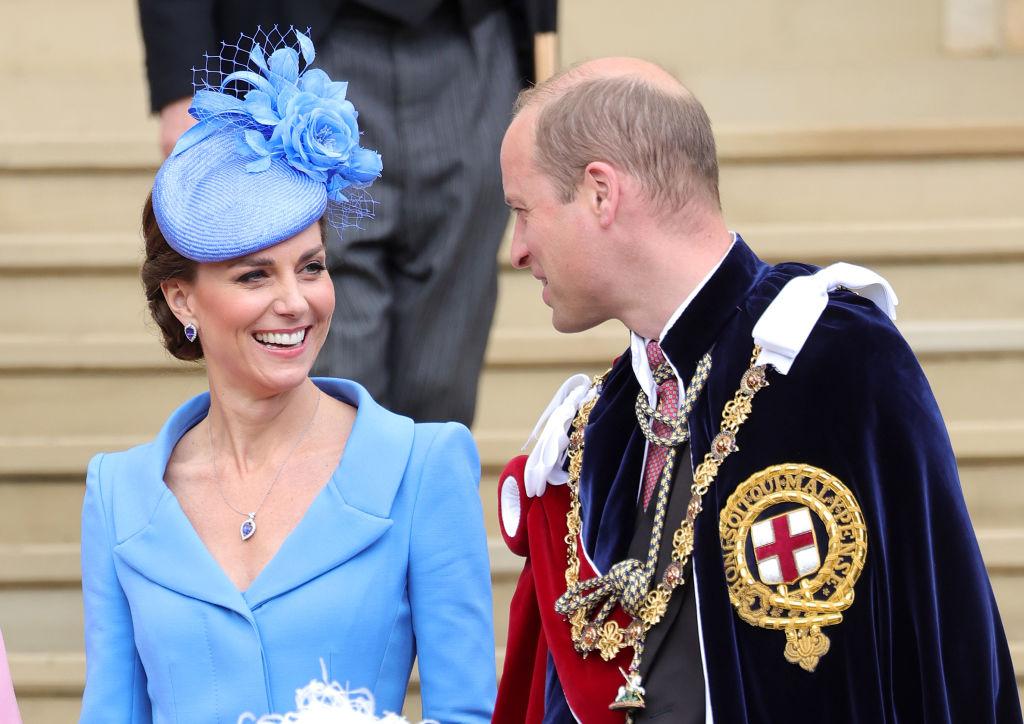
The Prince and Princess of Wales briefly stepped away from their private summer holiday this week to issue a statement of condolence over the catastrophic flash flooding that has killed hundreds of people along the Nepal-China border, following a similar message from King Charles III.
William and Catherine, both 44, posted the statement on their social media accounts addressing the Aug. 26 disaster, which was triggered by the collapse of a glacier and rocky ledge that sent a wall of ice, rock and water surging down the Bhotekoshi River into Nepal. “The scale of the devastation along the Nepal-China border is shocking. We are thinking of everyone caught up in this terrible disaster,” the statement read, according to PEOPLE. “Our thoughts are especially with the families facing an unbearable wait for news and with the communities confronting such immense loss. We are incredibly grateful to all those working in such dangerous conditions to rescue people and support those affected.”
The couple’s message came shortly after King Charles issued his own statement of sympathy. “My wife and I are heartbroken to hear of the devastating flooding that has struck the Nepal-China border. Many in the United Kingdom have strong, deep and personal ties to this part of the world,” the King’s statement read. “We send our most profound sympathy to all those who have so tragically lost their loved ones, and we feel deeply for the many families awaiting anxiously the news of friends and relations.” Charles added, “Our hearts go out also to the families of all the police and Armed Forces personnel who lost their lives while carrying out their courageous duty in the service of others, and we give our deepest thanks to those who have responded so selflessly in undertaking rescue efforts. Our special thoughts and prayers remain with all those affected and, as always, the United Kingdom stands ready to help support those in need.”
The flooding has continued to claim lives in the days since the royal family’s statements were issued. Nepal Police said Friday that at least 579 people have been confirmed dead, with more than 2,400 others still listed as missing, as rescue crews continue searching riverbanks and debris fields across the affected region. Authorities in China’s Tibet Autonomous Region, which was also struck by the flooding, have confirmed five additional deaths on their side of the border.
William and Catherine issued their statement while on their annual late-summer break at Balmoral Castle in Scotland, a royal tradition dating back to the reign of Queen Victoria. The couple arrived at the estate on Aug. 20 alongside their three children, Prince George, 13, Princess Charlotte, 11, and Prince Louis, 8. Three days later, the family attended a Sunday service at Crathie Kirk alongside other senior royals, including King Charles, Queen Camilla, Princess Anne and her husband Vice Admiral Sir Timothy Laurence, and Prince Edward with his daughter Lady Louise. Balmoral was a particular favorite of the late Queen Elizabeth II, who typically spent from late July until October at the Scottish estate and died there in September 2022.
The royal family’s Scotland gathering has unfolded alongside another major development within the family: the return of Prince Harry and Meghan Markle to the United Kingdom. PEOPLE first reported that the Duke and Duchess of Sussex, who stepped back from royal duties and relocated to California in 2020, arrived back in Britain on Aug. 26 with their children, Prince Archie, 7, and Princess Lilibet, 5. The couple plans to establish a private, non-royal home base in the UK, with their children set to begin school there in the coming weeks.
A source close to the family told PEOPLE that Harry’s return could present a meaningful opportunity to repair his strained relationship with his brother, William, though the two remain distant, with the same source describing their current contact as nonexistent. The source suggested Catherine could play a role in encouraging reconciliation between the brothers, saying, “Catherine may step into that breach and try to help, too, because she knows how important family is and how important Harry is to William. She would want to see that healed, as any wife would. This gives them opportunity to try and mend that bridge.” A separate source told PEOPLE that King Charles similarly hopes to see his sons reunited over time, calling the current moment “the best opportunity we have seen in recent years.”
Harry has previously expressed his own desire to repair family ties, telling the BBC in May 2025, “I would love reconciliation with my family. There’s no point in continuing to fight anymore.” Whether that reconciliation advances alongside the broader developments touching the royal family this summer, including the Nepal relief effort now drawing statements of concern from across the monarchy, remains to be seen as both branches of the family navigate a season marked by significant personal and public change.


Stanford Chemist is a scientific researcher by training. For the past decade he has been providing analysis and evidence-based ways of generating profitable investments with CEFs and ETFs. He leads the investing group CEF/ETF Income Laboratory. Features of the service include: managed income portfolios (targeting safe and reliable ~8% yields) making use of high-yield opportunities in the CEF and ETF fund space. These are geared toward both active and passive investors of all experience levels. The vast majority of {CEF/ETF Income Laboratory} holdings are also monthly-payers, for faster compounding and steady income streams. Other features include 24/7 chat, and trade alerts.
Analyst’s Disclosure: I/we have a beneficial long position in the shares of PFO, PFN either through stock ownership, options, or other derivatives. I wrote this article myself, and it expresses my own opinions. I am not receiving compensation for it (other than from Seeking Alpha). I have no business relationship with any company whose stock is mentioned in this article.
Seeking Alpha’s Disclosure: Past performance is no guarantee of future results. No recommendation or advice is being given as to whether any investment is suitable for a particular investor. Any views or opinions expressed above may not reflect those of Seeking Alpha as a whole. Seeking Alpha is not a licensed securities dealer, broker or US investment adviser or investment bank. Our analysts are third party authors that include both professional investors and individual investors who may not be licensed or certified by any institute or regulatory body.


I am an undergraduate student and a bottom up, value oriented investor specializing in the aerospace and defense sector. My investment methodology combines fundamental analysis and macroeconomic considerations to identify overlooked investment ideas off the beaten path. I tend to focus on companies with less coverage that have a micro to small cap market capitalization. For my write ups I aim to remain disciplined and make the correct calculated choices especially when the market is excessively optimistic or pessimistic.
Analyst’s Disclosure: I/we have no stock, option or similar derivative position in any of the companies mentioned, and no plans to initiate any such positions within the next 72 hours. I wrote this article myself, and it expresses my own opinions. I am not receiving compensation for it (other than from Seeking Alpha). I have no business relationship with any company whose stock is mentioned in this article.
Seeking Alpha’s Disclosure: Past performance is no guarantee of future results. No recommendation or advice is being given as to whether any investment is suitable for a particular investor. Any views or opinions expressed above may not reflect those of Seeking Alpha as a whole. Seeking Alpha is not a licensed securities dealer, broker or US investment adviser or investment bank. Our analysts are third party authors that include both professional investors and individual investors who may not be licensed or certified by any institute or regulatory body.


My academic background has given me a strong interest in business strategy, financial markets, technology, and data-driven decision making. Alongside my studies, I spend a significant amount of time researching public companies, market trends, and investment opportunities. My primary investing interest is in deep value investing. I am particularly interested in companies that are undervalued by the market but have strong long-term potential, resilient business models, or hidden assets that may not yet be fully recognized by investors. I enjoy analyzing financial statements, management decisions, competitive positioning, and macroeconomic factors that may influence valuation over time. In recent years, I have become increasingly interested in understanding how market psychology and investor sentiment can create opportunities that are often overlooked. I enjoy following companies that may currently be out of favor but still possess strong fundamentals, capable management teams, or long-term competitive advantages. Beyond investing itself, I am also interested in how technology and digital transformation continue to reshape industries and influence the future direction of global markets. Writing allows me to organize my thoughts, improve my research process, and contribute meaningful insights while continuing to learn from other investors and analysts. My motivation for writing on Seeking Alpha is to develop my analytical skills, share investment ideas with a broader audience, and engage with a community of experienced investors and market participants. I believe that discussing different perspectives and receiving constructive feedback is one of the best ways to grow as an investor and analyst. Over time, I hope to build a reputation for thoughtful, well-researched, and objective market analysis.
Analyst’s Disclosure: I/we have no stock, option or similar derivative position in any of the companies mentioned, and no plans to initiate any such positions within the next 72 hours. I wrote this article myself, and it expresses my own opinions. I am not receiving compensation for it (other than from Seeking Alpha). I have no business relationship with any company whose stock is mentioned in this article.
Seeking Alpha’s Disclosure: Past performance is no guarantee of future results. No recommendation or advice is being given as to whether any investment is suitable for a particular investor. Any views or opinions expressed above may not reflect those of Seeking Alpha as a whole. Seeking Alpha is not a licensed securities dealer, broker or US investment adviser or investment bank. Our analysts are third party authors that include both professional investors and individual investors who may not be licensed or certified by any institute or regulatory body.

Bitcoin hovers near $78,000 as global ETFs access shapes next adoption wave

Crypto’s Next Meme Coin War? Traders Want Tokens That Can Move Real Stocks

Brittany Cartwright Speaks Out Over Jax Restraining Order

Charlie Munger on Robinhood: No one should believe that Robinhood’s trades are free





-

 Crypto World4 days ago
SpaceX stock could rise 75% to $240, JPMorgan says
-

 Fashion2 days ago
Weekend Open Thread: Maeve – Corporette.com
-

 Crypto World2 days ago
Bitcoin’s 22% rally now needs real demand to outlast Treasury liquidity boost
-

 Crypto World4 days ago
Warsh Jackson Hole keynote puts financial innovation first
-

 Crypto World5 days ago
A $30 Billion AI Fund Implodes, Now the SEC Is Investigating Wall Street’s Role
-

 Business2 days ago
Salesforce Stock Soars 19% as Blowout Earnings and Agentforce AI Growth Silence Software Skeptics
-

 Crypto World4 days ago
Did Trump Just Move SpaceX Stock With One Truth Social Post?
-

 Business7 days ago
Mystery AI Model ‘Ox Alpha’ Draws Developers With Free Access as Chinese Lab Origins Remain Debated
-

 Business4 days ago
Walmart takes aim at younger shoppers with new fashion brand
-
 NewsBeat4 days ago
Lindsay Clancy jury braces for closing arguments as judge tells court: ‘You’ve heard all the evidence’ – Live updates
-

 Crypto World3 days ago
Elon Musk Grok Bot Promise: We Will Make You Whole if AI Loses Your Money
-

 Crypto World1 day ago
Bitcoin price tests $82K resistance as Brandt stays long
-

 Business6 days ago
Moderna CEO warns China is pouring state money into mRNA technology
-

 Crypto World3 days ago
NVIDIA revenue hits $96.2B as AI demand doubles
-

 Business2 days ago
Apple Confirms September 9 Keynote and Reveals Its Full Pre-Order Schedule
-

 Business4 days ago
Thailand’s Eastern Economic Corridor Capital City (EECiti): Key Developments and Investment Opportunities
-

 Business2 days ago
iPhone 18 Pro Pre-Orders Could Shift to Saturday as Apple Reportedly Avoids September 11 Anniversary
-

 Business5 days ago
NVIDIA Stock Drops Nearly 2 Percent to $210 on Seventh Losing Day Ahead of Critical AI Earnings
-
 Crypto World6 days ago
$92 Billion Nvidia Earnings Could Make or Break the AI Trade
-
 NewsBeat4 days ago
Trump’s trade truce with China faces test with Iran effort
You must be logged in to post a comment Login