













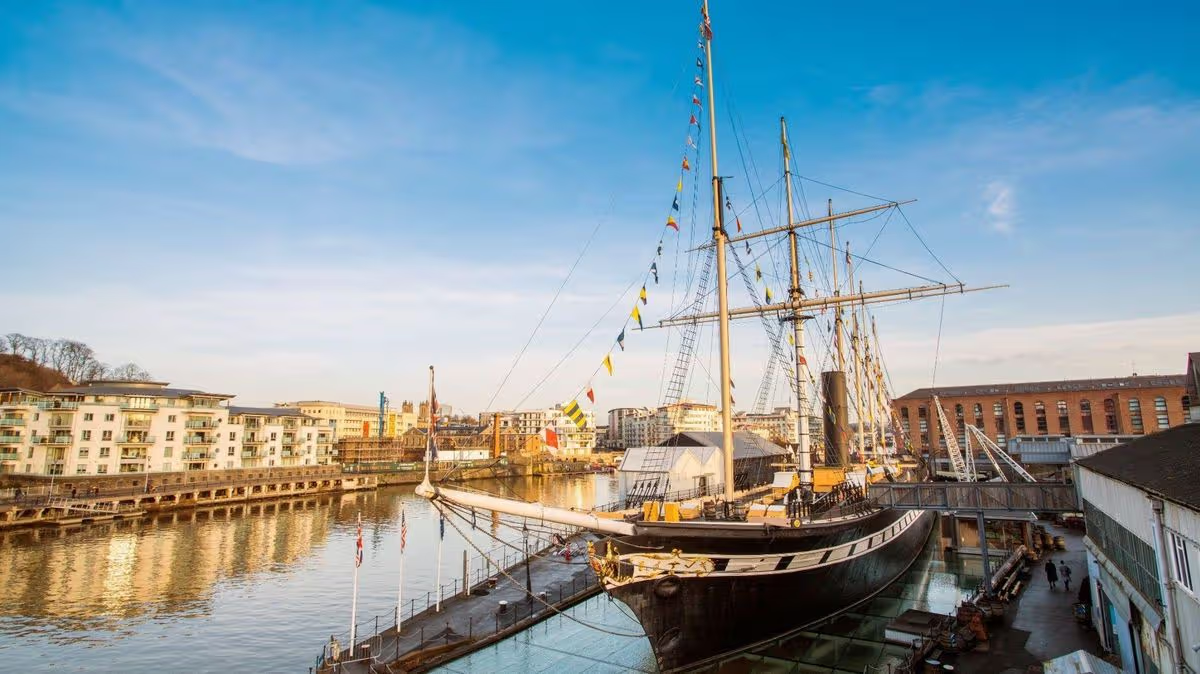
The organisation behind the attraction says the change is aimed at being more rooted in community

Brunel’s SS Great Britain attraction is to be renamed(Image: Adam Gasson & SS Great Britain Trust)
One of Bristol’s most famous attractions is ditching its historical name in a drive to become more inclusive, it has announced.
Brunel’s SS Great Britain – the city centre docklands site that is home to the ocean liner of the same name – will drop the name of the famous 19th-century engineer along with reference to the ship. The attraction will be renamed ‘Bristol Dockyards’.
It comes ahead of the reopening of a museum at the site next month. The revamped attraction, designed by architecture practice Ralph Appelbaum Associates, will add 2,000 square feet of exhibition space and will include newly discovered material and interactive exhibits.
It will also explore the impact of Brunel’s ship on the world, with information about the lives of those on board and the places it travelled to.
The SS Great Britain was designed by Isambard Kingdom Brunel and was built in Bristol. When it launched in 1843, it was described as “the greatest experiment since the creation”. Between 1845 and 1886, the ship reached every inhabited continent and carried passengers from 51 nations.
Andrew Edwards, chief executive of Bristol Dockyards and the SS Great Britain Trust, said his organisation was “committed to safeguarding” the attraction’s “extraordinary heritage”.
“[We are] ambitious about what it can become: a dynamic cultural campus rooted in community participation, learning and maritime heritage,” he said.
“In a city renowned for its creativity and cultural energy, Bristol Dockyards will be a place where more people can engage with the past, build skills for the future and help shape a shared civic story.”
James Boyd, director of the Brunel Institute, said the new museum would reflect “not only the ship’s extraordinary international story, but also Bristol’s role in discovering and sharing those connections today”.
“By working closely with communities across the city, we’ve been able to bring new perspectives, previously unheard voices and newly discovered histories into the heart of the museum,” he said.
Some of the museum highlights include:
- Details of local individuals who built the ship, including previously untold stories of the labourers whose skill and dedication made the ship a reality.
- The SS Great Britain’s impact on indigenous Australians as it made 32 round trips from Liverpool to Melbourne, completely changing the Australian continent and the lives of its First Nations inhabitants.
- How it was used as a troop carrier in global conflicts, including during the Crimean War, and travelled to cities such as Mumbai at the time of the Indian Rebellion of 1857.
- The stories of individuals such as George Moses, a ship’s cook from Jamaica, and the Barbadian musician and poet James W. Jones, who travelled on the ship from Melbourne to Liverpool by way of Sydney.
The reopening of the museum is the first phase of development envisioned by the SS Great Britain Trust, which has pledged to transform the historic site into a broader cultural and learning campus encompassing the Great Western and Albion dockyards.
Future phases of the project will focus on conservation work, re-establishing the Albion dock as a working dockyard for maritime skills training opportunities and broadening programming to reflect the interests of a modern, diverse Bristol.
The vision will culminate in celebrations for the 60th anniversary of the ship’s return to Bristol from the Falkland Islands in 2030.
“This reopening marks an important moment not only for the SS Great Britain Trust, but for the future of this historic site,” Mr Edwards added.











































You must be logged in to post a comment Login