
Business
What does ‘Las Malvinas Son Argentinas’ mean? All about the Falkland row that followed Messi’s Argentina into the World Cup final


Football and geopolitics rarely mix this dramatically, but Argentina’s dramatic 2-1 win over England in the World Cup 2026 semi-final did exactly that. Within minutes of the final whistle, a banner referencing the Falkland Islands was on the pitch, Lionel Messi and company were mobbed by fans, and social media was flooded with one question in different forms: what exactly is this decades-old dispute, and why does it still spill onto a football pitch?
Also Read: Argentina be banned from FIFA World Cup final against Spain for showing Falkland banner?
Here’s a simple breakdown of everything you need to know.
What does “Las Malvinas son Argentinas” mean?
“Las Malvinas son Argentinas” is Spanish for “The Falklands are Argentine” (or, more literally, “the Malvinas are Argentina’s”). “Las Malvinas” is simply the Spanish name Argentina uses for the Falkland Islands, the name comes from “Îles Malouines,” what French sailors from the port city of Saint-Malo called the islands back in the 1700s.

For Argentines, the phrase isn’t just a geography lesson, it’s a statement of national identity. It reflects the country’s official, constitutionally-backed position that the islands rightfully belong to Argentina, a claim Britain firmly rejects. You’ll see the phrase on murals, license plates, school textbooks, and yes, occasionally, on football banners.
Why did Messi-led Argentina’s team show the Falklands banner?
After Argentina came from behind to beat England 2-1, with Lautaro Martinez heading in a stoppage-time winner off a Messi assist, several players, reportedly including Giovani Lo Celso and Nicolas Otamendi, held up the “Las Malvinas son Argentinas” banner during celebrations before it ended up on the pitch.
What’s the Argentina vs England Rivalry?
The opponent. Argentina vs England fixtures always carry historical weight, dating back to the 1982 Falklands War and even earlier flashpoints like Diego Maradona’s “Hand of God” goal in 1986.
Pre-match tension. Argentina’s Vice President had reportedly used provocative language about England in the buildup, and FIFA had already restricted Falklands-related flags from being brought into the stadium as a precaution.
Precedent. This isn’t new territory for Argentina’s football setup, the same banner cost the Argentine Football Association a £20,000 FIFA fine back in 2014, ahead of a friendly against Slovenia.
For many Argentine fans and players, waving the banner after knocking out England was less about football and more about a symbolic, patriotic moment. For FIFA, however, it’s a potential breach of rules that explicitly ban political statements and symbols inside stadiums, meaning Argentina could now face disciplinary action, most likely another fine, even as they prepare for Monday’s final against Spain.
Why are the Falkland Islands important?
The Falklands might be a remote, windswept archipelago with a population smaller than a small Indian town, but their importance goes well beyond size:
Historical and national symbolism: For Argentina, the islands represent an unresolved chapter of national identity and sovereignty, tied closely to the loss of the 1982 war. For Britain, they represent a hard-won territory and a test case for self-determination.
Strategic location: Sitting in the South Atlantic near key shipping routes and close to Antarctica, the islands have long carried military and geopolitical significance.
Natural resources: The surrounding waters are rich fishing grounds, and the Falklands basin has shown potential for oil and gas reserves, adding an economic dimension to the sovereignty question.
A live diplomatic issue: This isn’t just history, 2026 has already seen Argentine President Javier Milei publicly reiterate his country’s claim on the anniversary of the 1982 invasion, while reports of a leaked US government memo questioning British title to the islands briefly reignited global attention on the dispute earlier this year.
Who owns the Falkland Islands now?
As things stand, the Falkland Islands are administered by the United Kingdom as a self-governing British Overseas Territory. Locals handle their own internal affairs through an elected Legislative Assembly, while the UK retains responsibility for defence and foreign policy.
Argentina, however, does not recognise this arrangement and continues to formally claim sovereignty over the islands, referring to them as part of its own national territory.
Key facts on where things stand on Falkland Islands:
- The roughly 3,500 residents of the islands hold full British citizenship.
- In a 2013 referendum, Falkland Islanders voted almost unanimously, around 99.8%, to remain a British Overseas Territory.
- The United Nations lists the Falklands as a “Non-Self-Governing Territory” and has repeatedly urged the UK and Argentina to negotiate, but has never ruled in favour of either side’s sovereignty claim.
- No formal negotiations over sovereignty have taken place since diplomatic relations between the UK and Argentina were restored in 1990.
In short: Britain controls and governs the islands today, but the dispute remains legally and diplomatically unresolved, with Argentina continuing to press its claim through international forums rather than force.
Where is the Falkland Islands?
The Falkland Islands sit in the South Atlantic Ocean, roughly 300 miles (about 480 km) off the southern coast of Argentina, and around 8,000 miles from the United Kingdom. The archipelago consists of two main islands, East Falkland and West Falkland, along with hundreds of smaller islands, adding up to a land area roughly the size of the Indian state of Goa multiplied by nearly ten times over (about 12,000 sq km in total).
The capital, Stanley, is home to most of the population and sits on East Falkland. Despite being geographically closer to South America than to Europe, the islands remain culturally and politically British, right down to red phone booths and driving on the left.
What started as a football celebration has once again put a decades-old territorial dispute in front of a global audience. As Argentina prepares to defend their World Cup title against Spain, the Falklands conversation, much like the sovereignty question itself, shows no signs of settling down anytime soon.



Earnings call transcript: Liontown lifts FY 2026 profit on record revenue, shares rise

AMG Yacktman Fund Q2 2026 Commentary

They have urged the capital market regulator to allow them to directly link their servers with exchange systems for more efficient order execution, among other things.
The proposal – put forward by persons representing large offshore funds and custodians at a recent meeting with officials of the Securities and Exchange Board of India (SEBI) and the finance ministry – implies that buy or sell orders would flow directly from an FPI server to the exchange instead of being routed through a broker’s co-location server.
The co-location facility, which permits brokers to place their servers right next to an exchange’s matching engine, reduces latency, or tiny delays, in the time it takes for orders to travel. Such microsecond gains give a speed advantage to FPIs and large local traders using high-frequency and algorithmic trading strategies.
 Agencies
Foreign investors seek to bypass broker servers for faster, safer order execution
FPIs believe connecting directly with the exchange without an intermediary, or linking their own co-location servers placed on exchange premises with the exchange system, would help: trades would be quicker; the risk of trade information being compromised would be minimised; and paperwork to formalise a new co-location deal while switching brokers would be avoided.
The SEBI spokesperson did not comment, but a person familiar with the matter said, “SEBI is examining the proposal from FPIs. The regulator will have to consider whether such preferential treatment can be given to one category of investors, because even retail investors are using algo trading. There cannot be any disparity among different categories of investors.”
The desire of algo traders to bypass brokers runs into a statutory wall, said Sandeep Parekh, managing partner of Finsec Law Advisors. “Under the Securities Contracts (Regulation) Act, only members of a recognised stock exchange can access its trading system, and SEBI’s new algo framework deliberately makes the broker the principal accountable for every algorithm. The only lawful route to disintermediation is to stop being a client and become a member, with all the capital, registration and compliance obligations that entails,” said Parekh.
Co-location servers are often essential for algo trades, which are computer programmes that automatically execute orders when certain conditions are met. Co-location comes in handy as algo trades depend on how quickly market or macroeconomic information is analysed.
“While having a direct link to the exchange could enable FPIs to have tighter control and gain more efficiency, the tax law should ideally be amended as well to clarify that this would not risk the creation of a ‘permanent establishment’ (PE) or any additional tax liability for FPIs in India,” said Rajesh Gandhi, partner, Deloitte India.
Co-location trading accounts for 34-38% of cash market volumes and about 60% of high-frequency algo derivative trades.
While the regulator and the ministry have been hearing out FPIs following the recent sell-off, even making registration and KYC easier, they would tread carefully on sensitive matters such as direct access and co-location. “Co-location already creates some structural disparity. So, direct access without brokers can be explored for large institutions which have risk management capabilities and are willing to let SEBI inspect their systems,” said a custodian official.
“The exact outcome would depend on the operating model adopted by the FPI. While the proposal is primarily being discussed from a market infrastructure perspective, foreign investors have to evaluate potential tax implications,” said Richie Sancheti, founder, Richie Sancheti Associates.
Brokers have to follow SEBI’s order execution and risk management rules. Their systems reject algo orders that do not meet regulatory criteria. If FPIs get the access they want, their systems too must have built-in checks.
Fox News real estate contributor Katrina Campins joins ‘Varney & Co.’ to discuss Florida’s housing boom, the blue state wealth exodus and why soaring luxury demand is pricing out first-time homebuyers.
Florida dominated a new list of markets attracting out-of-town shoppers for newly built homes, with outside shoppers generating more than 80% of new-construction views in several of the state’s metro areas.
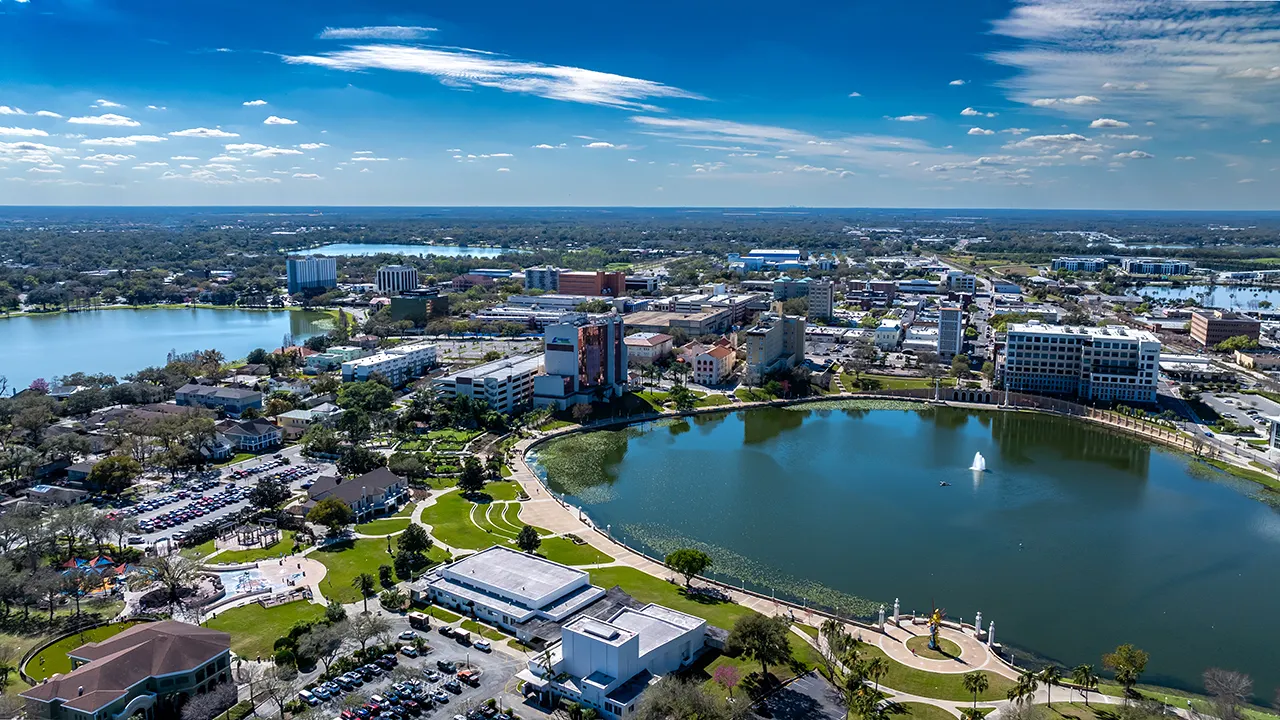
Lakeland led the nation, with out-of-town shoppers accounting for more than 83% of new-construction views during the second quarter, followed by Cape Coral at 82.4%, Port St. Lucie at 80.9% and North Port at 80.5%, according to a new Realtor.com report.
Nationwide, 67.2% of views of new-construction listings came from out-of-metro shoppers, compared with 65.4% for existing-home listings.
Durham, North Carolina, rounded out the top five at 80.2%.
FLEEING FOR THEIR FUTURES, A CALIFORNIA EXODUS UNLEASHES A FLORIDA ‘GOLD RUSH’
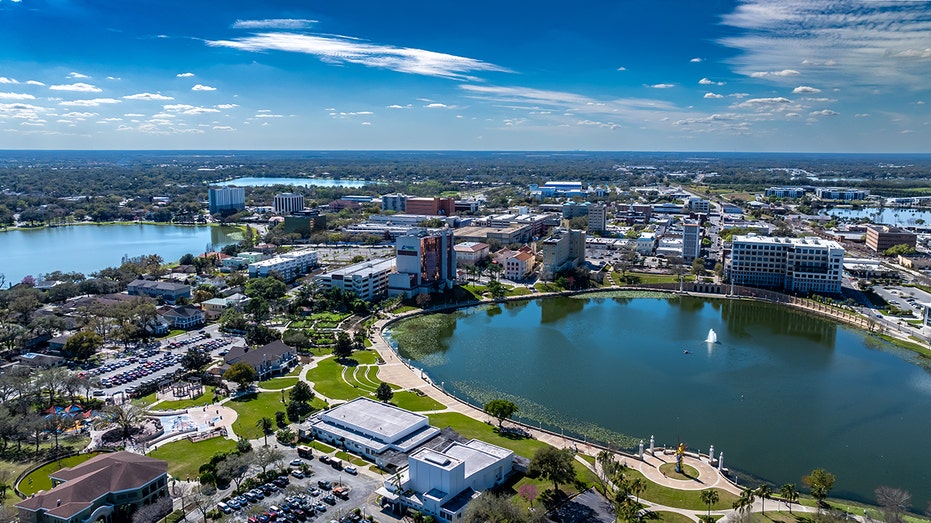
Out-of-town shoppers accounted for more than 83% of new-construction views in Lakeland, Florida. (iStock)
Deltona, Florida; Charleston and Greenville, South Carolina; Stockton, California; and Augusta, Georgia, also drew strong interest from out-of-market shoppers, the report found.
“The new builds are competitively priced in these metros, so out-of-metro buyers who maybe did not necessarily have new construction in mind find lots of new builds that fall into their price filters,” Realtor.com senior economist Joel Berner said in a statement.
Affordability and Sun Belt lifestyle are among the major factors driving out-of-market interest in those areas, according to Berner.
BILLIONAIRES AND BUSINESSES FUEL GROWING EXODUS FROM BLUE STATES
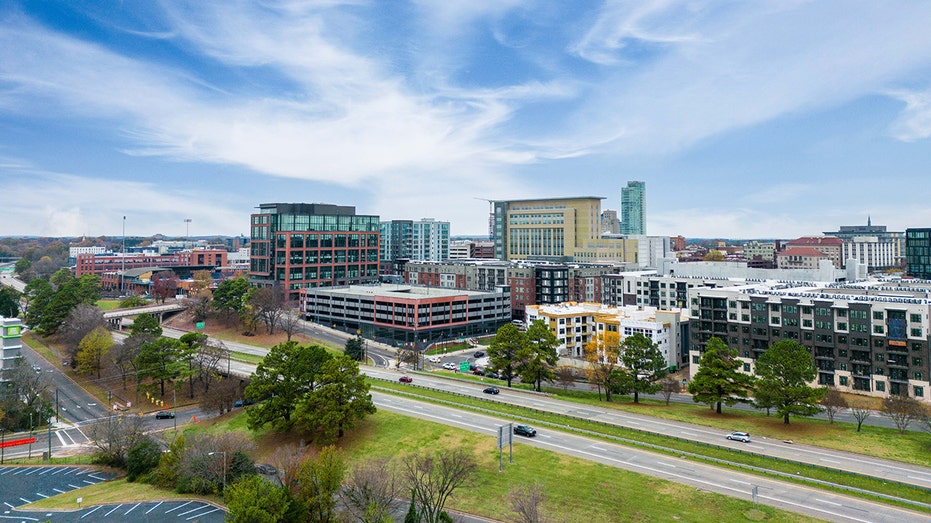
Durham, North Carolina, rounded out the top five at 80.2%. (iStock)
The difference in metro-wide median new-construction listing prices can be substantial.
Lakeland’s median new-construction listing price was $315,821 in the second quarter, compared with $1,946,685 in Miami. Many shoppers viewing homes in Lakeland came from Miami, Orlando and Tampa, the report found.
Cape Coral, meanwhile, attracted shoppers browsing from Miami, New York City and Chicago.
Brian Stephens, a real estate agent and team leader with eXp Realty in Lakeland, said builders are also attracting buyers with closing-cost assistance and mortgage-rate buy-downs.
OVER $126M IN 60 DAYS — FLORIDA REAL ESTATE TYCOONS SAY BLUE-STATE WEALTH MIGRATION IS NOW PERMANENT

Affordability and the Sun Belt lifestyle are among the major factors driving out-of-market interest in those areas. (iStock/Getty Images Plus)
“They have slightly more inventory, and they offer to pay for the buyers’ closing costs and even buy the interest rate down,” Stephens told Realtor.com. “Why purchase a resale when you can purchase a new home and get a warranty and everything is brand-new?”
GET FOX BUSINESS ON THE GO BY CLICKING HERE
Those incentives are becoming increasingly important as builders compete for buyers nationwide.
Nationally, the median asking price for a newly built home was $450,256 during the second quarter, down 0.1% from a year earlier, according to Realtor.com.

Earnings call transcript: Austal posts record FY 2026 revenue but reports loss
Some businesses are adapting to find customers elsewhere.
Matteo Sgaramella, who owns Toronto-based menswear clothing company Outclass, told the BBC he has started attending trunk shows in Paris instead of New York, helping him reach more customers in Europe.
“The reception has been amazing,” he said, adding that some European stores are particularly enthused about supporting Canadian products due to the ongoing trade war with the US.
“We’re kind of seen as the one country that’s kind of standing up to the Americans right now,” Sgaramella said.
Other businesses, however, are struggling to diversify their trade, particularly in Ontario manufacturing sectors that are deeply integrated with the US.
A recent report by the Canadian Chamber of Commerce pointed out three such regions in Ontario – Oshawa, London and Kitchener-Cambridge-Waterloo – as being particularly vulnerable.
“These cities remain heavily tied to the US market, while growth in exports outside the US has been limited or insufficient to offset broader weakness in trade activity and local economic conditions,” the report said.
While some businesses are lagging, foreign direct investment into Canada hit C$96.8 billion in 2025, the highest inflow of capital to the Canadian economy since 2007.
Canada’s economy also strongly rebounded in the second quarter of 2026 to 3.3% growth in the country’s GDP, thanks to a jump in exports and domestic investment.
These latest figures have warded off recession concerns, at least for now.
Carney is hoping to attract even more investment. In September, his government will host the first-ever Canada Investment Summit, bringing major investors, CEOs and business leaders to Toronto for two days.
Tracking Terry Smith's Fundsmith 13F Portfolio – Q2 2026 Update

Japan industrial production unexpectedly grows in July, retail sales surge

BNY Mellon Amt-Free Municipal Bond Fund Q2 2026 Commentary
Oil jumps more than 2% after US attack on Iran’s Larak island

Breckie Hill’s Surprising History With Netflix’s Newest Reality Star

International Financial Group Limited | Our corporate video





-

 Crypto World5 days ago
SpaceX stock could rise 75% to $240, JPMorgan says
-

 Fashion2 days ago
Weekend Open Thread: Maeve – Corporette.com
-

 Crypto World3 days ago
Bitcoin’s 22% rally now needs real demand to outlast Treasury liquidity boost
-

 Crypto World4 days ago
Warsh Jackson Hole keynote puts financial innovation first
-

 Crypto World6 days ago
A $30 Billion AI Fund Implodes, Now the SEC Is Investigating Wall Street’s Role
-

 Business3 days ago
Salesforce Stock Soars 19% as Blowout Earnings and Agentforce AI Growth Silence Software Skeptics
-

 Crypto World5 days ago
Did Trump Just Move SpaceX Stock With One Truth Social Post?
-

 Crypto World4 days ago
Elon Musk Grok Bot Promise: We Will Make You Whole if AI Loses Your Money
-

 Business5 days ago
Walmart takes aim at younger shoppers with new fashion brand
-
 NewsBeat4 days ago
Lindsay Clancy jury braces for closing arguments as judge tells court: ‘You’ve heard all the evidence’ – Live updates
-

 Business3 days ago
Apple Confirms September 9 Keynote and Reveals Its Full Pre-Order Schedule
-

 Crypto World2 days ago
Bitcoin price tests $82K resistance as Brandt stays long
-
 Business5 days ago
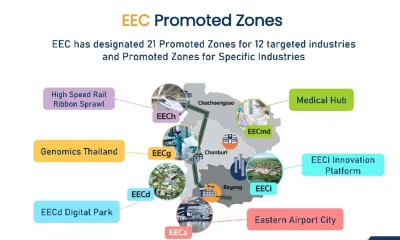
Thailand’s Eastern Economic Corridor Capital City (EECiti): Key Developments and Investment Opportunities
-

 Crypto World4 days ago
NVIDIA revenue hits $96.2B as AI demand doubles
-

 Business6 days ago
Moderna CEO warns China is pouring state money into mRNA technology
-

 Business2 days ago
Onto Innovation Stock: AI’s Next Bottleneck Is Yield (NYSE:ONTO)
-

 Business6 days ago
NVIDIA Stock Drops Nearly 2 Percent to $210 on Seventh Losing Day Ahead of Critical AI Earnings
-

 Business2 days ago
iPhone 18 Pro Pre-Orders Could Shift to Saturday as Apple Reportedly Avoids September 11 Anniversary
-
 Crypto World7 days ago
$92 Billion Nvidia Earnings Could Make or Break the AI Trade
-

 NewsBeat5 days ago
Trump’s trade truce with China faces test with Iran effort
You must be logged in to post a comment Login