Connect with us

Business

What Is an MPPT Inverter: Everything You Need to Know

Published

on

What Is an MPPT Inverter: Everything You Need to Know
Small businesses fitting solar panels, heat pumps and insulation in homes across the UK say they are owed thousands of pounds by the country's biggest energy suppliers, as a £1.3 billion-a-year government subsidy scheme draws to a close.

What is MPPT inverter?

An MPPT inverter (Maximum Power Point Tracking inverter) is a type of solar inverter that continuously adjusts operating conditions to extract the maximum possible power from solar panels. Unlike conventional inverters, it doesn’t simply convert DC to AC—it actively “hunts” for the optimal operating point where your solar array performs at its peak.

At a glance, that might sound like a minor optimization. But in real-world solar systems—where sunlight fluctuates, temperatures shift, and loads vary—this capability can significantly increase energy yield. So the real question is not what an MPPT inverter is, but why it makes such a difference in actual deployments.

 Core Concept (What “MPPT” actually means)

Solar panels don’t produce constant power. Their output is inherently variable and influenced by multiple environmental and electrical factors, including sunlight intensity, ambient temperature, and load conditions. As a result, the voltage and current generated by a panel are always shifting.

At any given moment, there exists a specific combination of voltage and current where the panel delivers its highest possible power output. This is known as the Maximum Power Point (MPP)—essentially the “sweet spot” of performance.

An MPPT inverter continuously tracks this point in real time. Instead of operating at a fixed voltage like traditional systems, it dynamically adapts to ensure that the solar panels are always working as efficiently as possible. Think of it as a smart optimizer that refuses to settle for “good enough” when “maximum output” is achievable.

Advertisement

How it works

The working principle behind MPPT is grounded in a simple but powerful electrical relationship:

P=V×IP = V \times IP=V×I

Where power (P) is the product of voltage (V) and current (I). The challenge is that increasing voltage may decrease current, and vice versa. So how do you find the optimal balance?

An MPPT inverter solves this by continuously adjusting voltage and current, testing different operating points, and identifying where the product of the two—power—is maximized. This process is not static; it occurs thousands of times per second through sophisticated algorithms such as Perturb & Observe or Incremental Conductance.

Advertisement

In practical terms, the inverter is constantly asking: “Can I get more power if I slightly tweak the voltage?” If the answer is yes, it keeps adjusting in that direction. If not, it shifts course. This rapid feedback loop ensures that even under changing weather conditions—like passing clouds or rising temperatures—the system maintains optimal performance.

 MPPT vs PWM: What makes MPPT inverter different

When evaluating solar technologies, one of the most common comparisons is between MPPT and PWM (Pulse Width Modulation). While both are used in solar charge control, their efficiency and functionality differ significantly—especially in larger or more complex systems.

Below is a high-quality comparison table to clearly illustrate the differences:

Feature MPPT Inverter PWM Controller
Efficiency 95%–99% (very high) 70%–85% (moderate)
Operating Principle Tracks maximum power point dynamically Operates at fixed voltage
Energy Harvest Maximizes power output from panels Loses excess potential power
System Compatibility Suitable for high-voltage systems Limited to smaller systems
Performance in Low Light Excellent Poor
Cost Higher upfront cost Lower cost
Scalability Highly scalable Limited scalability
ROI Over Time Higher due to efficiency gains Lower due to energy loss

What does this mean in practice? If you’re running a residential or commercial solar installation where efficiency directly impacts ROI, choosing PWM over MPPT could mean leaving a significant amount of energy—and money—on the table. The upfront savings may look attractive, but the long-term trade-off often isn’t worth it.

Advertisement

How to connect an MPPT charge controller to an inverter

Connecting an MPPT charge controller to an inverter is a relatively straightforward process, but it requires a clear understanding of system architecture. Typically, the solar panels are first connected to the MPPT charge controller, which regulates the DC power and optimizes output. This power is then stored in batteries (in off-grid or hybrid systems) before being fed into the inverter, which converts it into usable AC electricity.

The key is ensuring compatibility between voltage levels, battery capacity, and inverter specifications. Improper configuration can lead to inefficiencies or even system damage.

Key Functions of MPPT Inverters in Real Systems

In real-world solar deployments, MPPT inverters do far more than just optimize power output—they act as the central intelligence layer of the system. This is especially evident in advanced systems such as hybrid inverter low frequency solutions, where stability, surge capacity, and intelligent energy management are critical for both grid-tied and off-grid scenarios. One of their primary functions is maximizing energy harvest under fluctuating environmental conditions. Whether it’s partial shading, temperature variation, or inconsistent sunlight, the inverter ensures that performance remains as close to optimal as possible.

Another critical function is voltage regulation. Solar panels often produce voltages that exceed what batteries or loads can safely handle. MPPT inverters step this voltage down efficiently while preserving power, which is particularly important in off-grid and hybrid systems.

Advertisement

They also enable system flexibility. For example, in large-scale installations, multiple strings of panels can operate at different voltages and still be optimized independently through MPPT channels. This is especially useful in complex rooftops or industrial environments where uniform panel orientation isn’t always possible.

Additionally, modern MPPT inverters often integrate with energy management systems, enabling real-time monitoring, remote diagnostics, and even predictive maintenance. This transforms the inverter from a passive device into an active control hub within the solar ecosystem.

Where MPPT Inverters Used?

MPPT inverters are widely deployed across a range of applications, each benefiting from their ability to maximize efficiency and adaptability.

In industrial solar power systems, where energy demand is high and operational efficiency directly impacts profitability, MPPT technology ensures that every watt generated is utilized effectively. Large manufacturing facilities, for instance, rely on stable and optimized power output to maintain continuous operations.

Advertisement

Commercial rooftops are another major application area. Buildings with complex layouts or partial shading conditions benefit greatly from MPPT’s dynamic tracking capabilities. Instead of suffering performance losses due to suboptimal panel positioning, these systems maintain high efficiency throughout the day.

Off-grid energy systems perhaps gain the most from MPPT inverters. In these scenarios, combining MPPT technology with a low frequency hybrid inverter allows for better handling of heavy loads, higher surge tolerance, and more stable long-term operation in remote environments. In remote locations where energy resources are limited and reliability is critical, maximizing solar output is not just beneficial—it’s essential. Whether it’s a rural electrification project or a standalone cabin, MPPT ensures consistent energy availability.

Agricultural solar pumps also rely heavily on MPPT technology. Water pumping requirements vary throughout the day, and solar conditions are rarely constant. MPPT inverters allow these systems to operate efficiently even under changing sunlight conditions, ensuring reliable irrigation.

Finally, in energy storage and hybrid systems, MPPT inverters play a crucial role in balancing power generation, storage, and consumption. They ensure that batteries are charged efficiently while also supplying stable power to loads or the grid.

Advertisement

Why is Investing in MPPT Solar Inverters the Right Move?

Investing in an MPPT solar inverter is not just a technical upgrade—it’s a strategic decision. While the initial cost may be higher compared to simpler alternatives, the long-term benefits often far outweigh the upfront expense. In fact, this decision becomes even more compelling when viewed against the backdrop of rapid global solar expansion and increasing demand for high-efficiency energy systems.

According to the International Energy Agency, solar power is now the fastest-growing source of electricity worldwide, and renewables are expected to account for over 90% of global electricity demand growth between 2025 and 2030 . This means that efficiency is no longer optional—it is central to competitiveness in modern energy systems.

First, there is the undeniable advantage of higher energy yield. Over the lifespan of a solar system, even a 10–20% increase in efficiency can translate into substantial financial returns. This is particularly relevant for commercial and industrial users where energy consumption is significant. As global solar deployment accelerates, the value of every additional kilowatt-hour becomes more pronounced. In 2025 alone, global solar installations surged dramatically, with hundreds of gigawatts of new capacity being added within a single year, reflecting the scale at which efficiency improvements can compound financial returns .

Moreover, technological advancements continue to push efficiency boundaries. For example, next-generation solar modules have already achieved conversion efficiencies above 25% in laboratory conditions, setting new industry benchmarks . As Martin Green from the University of New South Wales noted:

Advertisement

“High-efficiency technologies may start at a higher cost, but their prices tend to fall rapidly with industry adoption.”

This trend reinforces a critical point: investing in efficiency-driven components like MPPT inverters aligns with the broader trajectory of the solar industry.

Second, MPPT inverters offer greater system flexibility and scalability. Second, MPPT inverters offer greater system flexibility and scalability. This becomes even more valuable in systems designed with off grid inverter parallel configurations, where multiple units can be connected to expand capacity without compromising efficiency or system stability. As energy needs grow or system configurations change, MPPT-based setups can adapt more easily without requiring complete redesigns. This flexibility is increasingly important in a market where solar investment is scaling rapidly. The global solar sector attracted approximately $450 billion in investment in 2025, making it the largest area of energy investment worldwide . In such a capital-intensive environment, systems that can scale efficiently without costly retrofits offer a clear economic advantage.

Third, they enhance system reliability. By continuously optimizing performance and preventing inefficient operating conditions, MPPT inverters reduce stress on system components, potentially extending their lifespan. This is particularly critical as solar becomes a core part of national energy infrastructure. In the United States alone, solar power generated approximately 388.8 TWh of electricity in 2025, demonstrating its growing role in maintaining grid stability and energy supply . With systems operating at such scale, reliability is no longer a secondary concern—it is fundamental.

Advertisement

And perhaps most importantly, they future-proof your investment. The global energy system is undergoing a structural shift toward renewables, with solar at the center of this transition. Forecasts indicate that renewable energy will supply up to 43% of global electricity by 2030, nearly doubling its share within a decade . At the same time, the market for ultra-efficient solar technologies is projected to grow rapidly, reaching $28.5 billion in 2026 with a CAGR of over 15% .

What does this mean for decision-makers? It means that systems built today must be optimized not just for current performance, but for future energy landscapes defined by higher efficiency standards, smarter grids, and more dynamic demand patterns.

In this context, choosing an MPPT inverter is not simply about improving performance—it is about aligning with where the entire industry is heading. When efficiency, scalability, and long-term ROI are all considered together, the real question becomes: can a modern solar system afford to operate without intelligent optimization?

So the real question becomes: Can you afford not to use MPPT technology in a modern solar installation? Now click for solar inverter wholesale!

Advertisement

 FAQs of MPPT inverter

Is an MPPT inverter necessary for all solar systems?
Not necessarily, but for most medium to large systems, it is highly recommended. Smaller systems with minimal power demands may use PWM controllers, but they sacrifice efficiency.

How much more efficient is MPPT compared to PWM?

Typically, MPPT systems are 15%–30% more efficient, depending on environmental conditions and system design.

Can MPPT inverters work in cloudy weather?

Advertisement

Yes, and this is where they truly shine. They continuously adjust to extract the maximum available power even under low-light conditions.

Are MPPT inverters compatible with battery storage systems?

Absolutely. In fact, they are commonly used in hybrid and off-grid systems where battery integration is essential.

Do MPPT inverters require maintenance?

Advertisement

They generally require minimal maintenance, but regular system checks and monitoring are recommended to ensure optimal performance.

Continue Reading
Click to comment

You must be logged in to post a comment Login

Leave a Reply

Business

South East charities unable to pay staff after online fraud alert

Published

on

A hand with index finger outstretched pressing a key in the middle of a laptop keyboard.

“It’s just not good enough,” she said.

“Many of the grassroots organisations I represent – churches, YMCAs, vets – have CAF as their bank, but they are slowly losing trust in it.”

Rodgers added that she had received “no reassurance” about the current situation from the bank, while any information had been “very inconsistent”.

“It’s especially sad that this has happened in the summer when lots of extra projects are up and running,” she said.

Advertisement

“People are unable to access their own money and have been left feeling powerless – it makes me really angry.”

In a statement, chief executive Alison Taylor said: “I am very sorry for the disruption this has caused for our customers.

“On Monday we informed them that the online banking service will be unavailable until further notice.

“We are working with external experts to fix an issue we identified with third-party software related to our online banking portal. Importantly, the core bank is not affected.”

Advertisement

Taylor added: “We appreciate how difficult this is for our customers and want this to be resolved as quickly as possible, but we cannot restore access until we are assured the issue is safely resolved.

“We are still able to support as extra teams are available on the phone, and we are prioritising time-sensitive payments such as payroll.”

Follow BBC Kent on Facebook, external, X, external, and on Instagram, external and listen to BBC Radio Kent on Sounds. Send your story ideas to southeasttoday@bbc.co.uk, external or WhatsApp us on 08081 002250.

Advertisement
Continue Reading

Business

British Airways flight called mayday on approach to Heathrow

Published

on

A British Airways Airbus A320 flies up through a blue sky.

A British Airways flight issued a “mayday” distress call on its approach to Heathrow Airport earlier this month, according to a statement from France’s accident investigation authority.

The call was made on an Airbus A320 flying from Dusseldorf airport in Germany on 6 July following two stall warnings on the aircraft, before it landed without further incident.

The UK’s Air Accidents Investigation Branch (AAIB) said it was “investigating a serious incident”.

A British Airways spokesperson said the airline was assisting the AAIB with its investigation and was not legally able to comment further at this stage.

Advertisement

The French Air Safety Investigation Authority, the BEA, said that as the plane approached Heathrow, there was a data system failure which triggered a stall warning.

The crew then flew the aircraft in a different mode called “alternate law”, which removes some automated flight protection systems. Another stall warning then occurred at 3,000 feet – which experts say was likely to have been just miles away from the airport.

The urgency call the crew had already made was upgraded to mayday, indicating imminent danger.

The BEA website attributed the statement to the AAIB, but the AAIB would not confirm it was from them.

Advertisement

They issued the following statement: “The AAIB is investigating a serious incident involving a commercial aircraft which occurred on 6 July on approach to Heathrow airport.”

It said the investigation would be a correspondence investigation, meaning that no team would be sent to carry out field investigations.

Aviation safety investigator David Gleave said there are different forms of mayday calls, and to send an urgency message was “not unusual”.

“You could have sick passengers on board who need urgent medical attention… so it’s up to the captains’ discretion as to what they call, but its very unusual for it to be a significant failure on board the aeroplane.”

Advertisement
Continue Reading

Business

Why Solid Rock Community School Believes Emotional Intelligence Belongs in Every Classroom

Published

on

Why Solid Rock Community School Believes Emotional Intelligence Belongs in Every Classroom

Michele Fasnacht on Building Character, Confidence, and Compassion Through Education

Walk through almost any school, and you’ll see students learning math, science, history, and language arts. What you won’t always see is how they’re learning to handle disappointment, work through conflict, show empathy, or build meaningful relationships. Yet those skills often shape a person’s future just as much as academic knowledge.

Emotional intelligence has become one of the most talked-about topics in education, and for good reason. As students prepare for an increasingly connected and complex world, qualities like resilience, compassion, communication, and adaptability are becoming just as valuable as traditional academic skills.

For Michele Fasnacht, that’s never been a trend. It’s been the foundation of Solid Rock Community School since she founded the school more than 22 years ago. Her vision was to create an environment where students could excel academically while also developing the character, confidence, and compassion needed to succeed long after graduation. Through hands-on learning, personalised education, and opportunities to serve others, Solid Rock Community School has built an educational model where emotional intelligence is woven into everyday learning.

Many schools are under pressure to improve test scores and academic performance. Why do you think emotional intelligence deserves equal attention?

Academic achievement will always matter, but it isn’t the only measure of success. Every day, students are learning how to communicate, solve problems, work through challenges, and build relationships. Those skills influence every part of their lives long after they leave school. If we focus only on grades, we’re missing an opportunity to help students become resilient, compassionate, and confident adults.

Advertisement

Was that belief what inspired you to start Solid Rock Community School?

Yes. I wanted to create a school where students could receive a strong academic education while also growing as individuals. My goal was never simply to help students perform well in the classroom. I wanted them to develop integrity, responsibility, compassion, and a genuine desire to make a positive difference in the world around them. That vision has guided our school from the very beginning.

How does Solid Rock Community School put those ideas into practice?

We believe students learn best when they’re actively involved in meaningful experiences. That’s why we’ve created opportunities that extend beyond traditional classroom learning. Students care for rescued animals at Sanctuary at Solid Rock, spend time in our Seed-to-Table Garden, participate in service projects, and develop practical skills through our SAVE vocational program. Those experiences teach responsibility, empathy, teamwork, and leadership in ways that feel natural because students are living those lessons every day.

Some people might see those programmes as extras rather than essential parts of education. Why do you see them differently?

Those experiences are part of the education. When students care for an animal, work together to solve a problem, or take responsibility for a project, they’re learning lessons that will stay with them for life. Character isn’t developed through a lecture. It’s built through consistent experiences that encourage students to care about others, take responsibility, and understand that their actions matter.

Education has changed a great deal over the past two decades. Has your philosophy changed as well?

The mission itself has stayed remarkably consistent. The world has changed, but students still need encouragement, guidance, and meaningful relationships. We’ve continued to grow and introduce new programs because we want students to have opportunities to learn in different ways, but our purpose remains the same. We want every child to be known, supported, challenged, and encouraged to become the best version of themselves.

Advertisement

Building a school around a different educational philosophy must have come with challenges. What has leadership taught you over the years?

Leadership has taught me that setbacks are part of every meaningful journey. You won’t always have immediate answers, and not every decision will be perfect. What’s important is staying focused on your mission, learning from those experiences, and continuing to move forward with integrity. Those challenges have strengthened my commitment to the work rather than discouraging it.

What has been the most rewarding part of leading Solid Rock Community School?

Without question, it’s watching students grow. Every child has unique strengths, and it’s incredibly rewarding to see them discover confidence in themselves while developing compassion for others. Some students arrive unsure of their abilities, and over time you watch them become leaders, problem-solvers, and young people who genuinely want to contribute to their communities. Those moments remind us why this work matters.

What advice would you give to parents looking for the right educational environment for their children?

Look beyond academics alone. Strong grades are important, but ask how a school develops character, encourages curiosity, and helps students build healthy relationships. Education should prepare children for life, not just for the next exam. When students feel supported, challenged, and valued, they’re much more likely to grow into confident adults who make positive contributions wherever they go.

Looking ahead, what continues to inspire you about the future of education?

I’m encouraged by the growing recognition that education should develop the whole person. Schools have an opportunity to shape not only what students know, but also how they think, how they treat others, and how they contribute to their communities. If we continue placing value on compassion, resilience, and emotional intelligence alongside academic excellence, we’ll prepare students for success in every area of life.

Advertisement

Continue Reading

Business

Q2 GDP And June PCE: Growth Remains Resilient Beneath A Weak Headline Print

Published

on

Q2 GDP And June PCE: Growth Remains Resilient Beneath A Weak Headline Print

Q2 GDP And June PCE: Growth Remains Resilient Beneath A Weak Headline Print

Continue Reading

Business

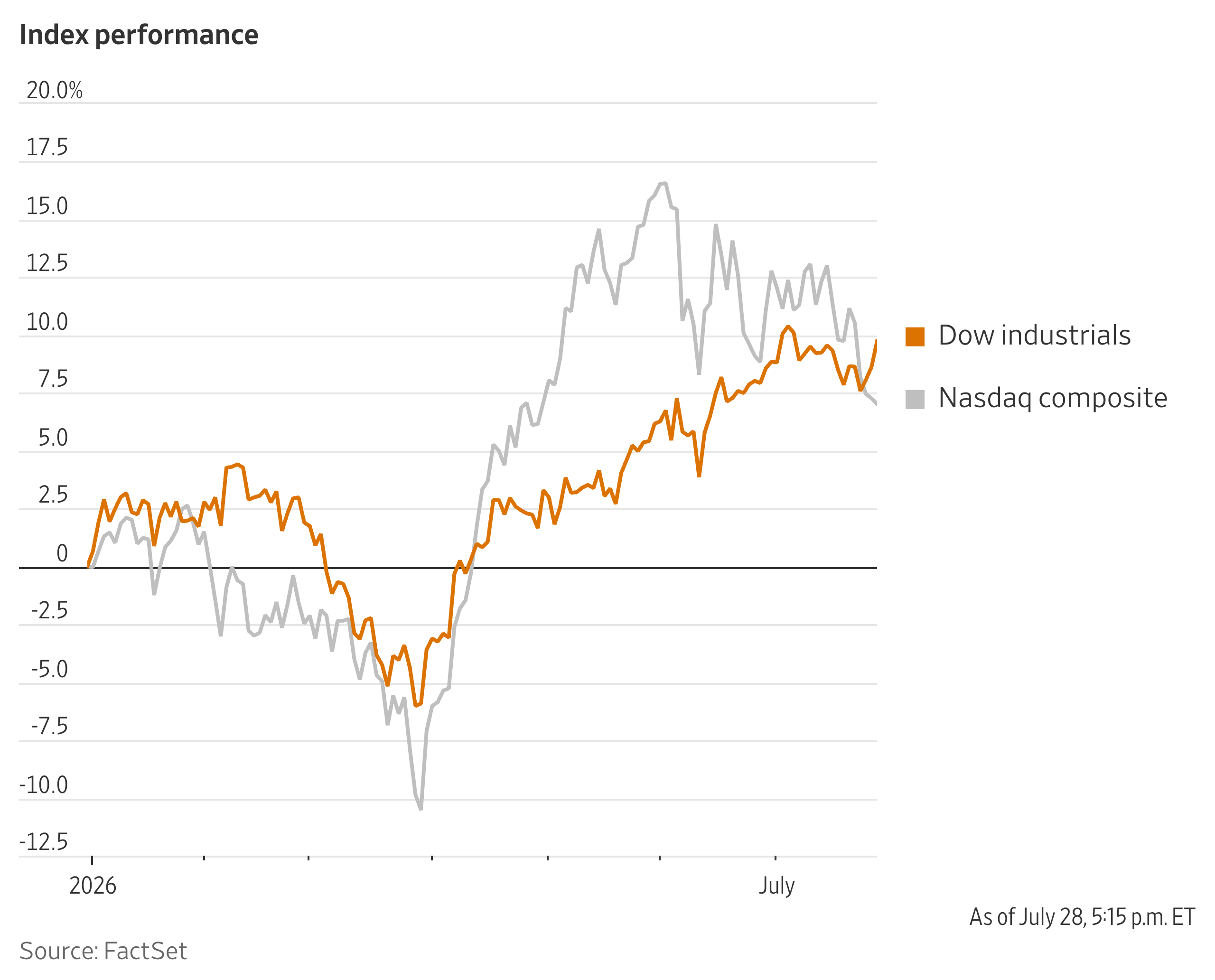
Dow Industrials Pull in Front of Nasdaq, S&P

Published

on

Dow Industrials Pull in Front of Nasdaq, S&P

Dow Industrials Pull in Front of Nasdaq, S&P

Continue Reading

Business

SK Hynix ADR Jumps Nearly 15% as Memory Chip Stocks Rally on Samsung’s Supply Tightness Warning Today

Published

on

South Korea is home to the world's largest memory chip maker Samsung, and largest memory chip supplier SK Hynix

SK Hynix’s U.S.-listed shares surged 14.59% in Thursday morning trading, climbing $18.50 to $145.29, as memory chip stocks across the board staged a sharp rally driven by warnings of tightening supply from rival Samsung Electronics and improving broader sentiment toward artificial intelligence infrastructure spending.

The rally in SK Hynix’s American depositary receipts, traded on Nasdaq under the ticker SKHY, came alongside broad gains across the memory and storage chip sector Thursday. Micron Technology led the group higher, climbing 15% to $851.56, while SanDisk surged 22%, Western Digital jumped 18%, and Seagate Technology gained 16%, according to trading data. The Roundhill Memory ETF, which tracks the broader DRAM and memory storage sector, rose 13% during the same session, confirming that the rally extended across the entire memory and storage ecosystem rather than being confined to any single company.

The catalyst behind Thursday’s rally traced back to comments from Samsung Electronics, which warned of tightening memory chip supplies, a signal analysts said could bolster pricing power for memory manufacturers broadly, including both Samsung and its rivals. Samsung’s own quarterly earnings had already reflected the strength of current market conditions for memory chips, with the company reporting operating income of 89.2 trillion won, or roughly $62 billion, in its semiconductor division, more than 250 times higher than the prior year.

SK Hynix has established itself as one of the leading global suppliers of high-bandwidth memory chips used in advanced artificial intelligence systems, positioning the company as a direct beneficiary of continued strong AI-related chip demand. Thursday’s rally also coincided with broader improvement in sentiment toward technology stocks following Microsoft’s strong quarterly earnings report, released Wednesday afternoon, which showed the company’s Azure cloud business growing at its fastest pace in years and helped ease broader investor concerns about the durability of artificial intelligence infrastructure spending.

Advertisement

The scale of Thursday’s move in SK Hynix’s U.S.-listed shares stood in notable contrast to trading in the company’s home market. Shares of SK Hynix listed on the Korea Exchange in Seoul fell sharply during the same overall period, part of a broader selloff that has gripped South Korea’s KOSPI index in recent sessions. The divergence between SK Hynix’s Seoul-listed shares and its U.S.-listed ADRs reflects a structural dynamic that has persisted since the company’s American depositary receipts made their Nasdaq debut earlier this month. SK Hynix’s U.S.-listed shares have consistently traded at a substantial premium to the company’s Seoul-listed shares since that debut, with the premium ranging from 16% to 51% at various points, a gap that analysts have attributed in part to limited arbitrage opportunities between the two listings, which can amplify price swings in U.S. trading relative to movements in the underlying Seoul-listed stock.

SK Hynix’s Nasdaq listing itself marked a significant milestone when it launched earlier in July, breaking the record for the largest first-time share sale by a foreign company on a U.S. exchange. The company’s American depositary receipts finished their first trading session in New York at $168.01 per share, delivering a 13% gain on their debut day even though that closing price came in below the $170 opening level, following an initial pricing of $149 per share.

Since that debut, SK Hynix’s U.S.-listed shares have exhibited significant volatility, at times amplified by the introduction of leveraged single-stock exchange-traded funds tied specifically to the company. GraniteShares and ProShares both launched 2x leveraged products tracking SK Hynix’s ADR performance earlier in July, products that carry daily-reset mechanics and full principal-loss risk within a single trading session, according to the funds’ own disclosures, and are generally regarded by market analysts as speculative short-term trading tools rather than long-term investment vehicles.

SK Hynix’s most recent quarterly results, reported in late July, showed record revenue of 79.3 trillion won for the second quarter, up 51% from the prior quarter and 257% from the same period a year earlier, alongside operating income of 60.5 trillion won. The company reported that DRAM prices rose approximately 30% during the quarter while NAND flash memory prices surged into the mid-50% range, pushing the company’s operating margin to a record 76%. SK Hynix also said it had begun mass production of its next-generation HBM4 high-bandwidth memory chips, with a broader production ramp planned for the second half of 2026, and that it had secured long-term supply agreements with approximately 10 customers as it works toward volume production of its subsequent HBM4E chips in 2027.

Advertisement

Despite those strong underlying results, SK Hynix’s ADR had fallen sharply in the days immediately following the earnings release, dropping to a 52-week low near $124.80 as investors weighed questions about the durability of current memory chip pricing and elevated valuations across the sector, even as the company’s reported profitability reached record levels. SK Group Chairman Chey Tae-won made his first personal purchase of SK Hynix shares during that period of stock weakness, a move some analysts characterized as an attempt to signal confidence in the company amid the recent volatility.

Analysts covering SK Hynix have maintained a broadly positive outlook on the stock despite the recent turbulence, with the average 12-month price target for the company’s shares standing at $281.67, according to recent compiled analyst estimates, implying substantial potential upside from current trading levels even after Thursday’s sharp rally.

Continue Reading

Business

USD/JPY: Strong Suspicion Of Intervention

Published

on

USD/JPY: Back To The 1980s

USD/JPY: Strong Suspicion Of Intervention

Continue Reading

Business

Drax boosts dividends despite drop in earnings

Published

on

Business Live

The energy firm pointed to the potential transformative acquisition of Bluefield Solar Income Fund and investments in new technologies

Drax Power Station

Drax Power Station(Image: Getty Images)

First half profits have slumped at energy producer Drax which has boosted its interim dividend.

The operator of the Selby power plant saw adjusted ebitda fall from £460m in the first half of 2025 to £279m in the same period this year, as operating profit fell from £301m to £265m. Drax told investors on the London Stock Exchange the numbers reflected a good performance across its portfolio which is due to grow with the proposed acquisition of the Bluefield Solar Income Fund (BSIF).

Bosses said that move – together with investment in battery energy storage and open cycle gas turbine technology – could be transformative for the group, increasing its generation capacity by about 85% compared to 2025. The Bluefield deal will also bring new solar and wind generation to the business.

Drax said that it had delivered about 6% OF UK power over the six months and 10% of UK renewables in that time. And it pointed to progress upgrading its equipment at Cruachan Power Station.

Advertisement

Despite the fall in earnings, Drax increased its interim dividend to 12.9p per share, up from 11.6p in the first half of 2025. It also expects to boost its full year interim dividend by 11% to 32.2p.

Will Gardiner. Drax Group CEO, said: “Drax has delivered a good performance in the first half. Our colleagues and supply chain partners have been working hard to help keep the lights on for millions of UK households and businesses through a period of acute geopolitical uncertainty and challenging weather.

“We are at a key moment in Drax’s transition, investing to create a larger and broader portfolio with more MWs under management that can provide more power to the country when needed. Over the years we have grown the business from a single-site biomass generator to a multi-site portfolio operating a broader range of generation technologies. Critically, through our growth plans for batteries, OCGTs and our Selby site, we are driving economic growth across the country, in alignment with the policy priorities of the UK Government.

“We are also actively developing options for more renewables, including the proposed acquisition of Bluefield Solar Income Fund, and our trading and optimisation platform. Taken together we believe that these actions can support energy security and will increase the Group’s generation capacity by around 85% compared to 2025.

Advertisement

“As a result, we expect to increase our earnings, deliver value for our stakeholders, support growth and attractive returns for shareholders.”

Continue Reading

Business

Bank of England holds interest rates but warns of rises to come

Published

on

Business Live

Policymakers have warned that ‘strategy could change’ ahead of a difficult second half of the year

A view of the Bank of England

A view of the Bank of England (Image: PA Archive/PA Images)

The Bank of England has chosen to keep interest rates at 3.75 per cent following better-than-expected UK inflation figures – though policymakers cautioned that “policy strategy could change” amid concerns over a challenging second half of the year for price stability.

Advertisement

The Monetary Policy Committee (MPC) maintained interest rates in a split 6-3 vote on Thursday, with economist Catherine Mann joining fellow external member Megan Greene and the Bank’s chief economist Huw Pill in backing a 25 basis point increase.

Officials stated that recent figures showing inflation had dropped to 2.6 per cent provided the Bank with some breathing space and enabled the MPC to maintain its current monetary policy stance.

Minutes from the MPC’s most recent meeting on setting interest rates indicated that those voting to hold rates steady believed “policy strategy could change” should inflation rise beyond projections due to renewed escalation of conflict across the Middle East.

The Bank projects inflation to hover around 3.2 per cent in early 2027 before returning to the target rate by year’s end, as reported by City AM.

Advertisement

Rate-setters cautioned that fresh trade disruption across the Gulf region could maintain elevated energy prices for an extended period, driving up inflation and prompting workers to negotiate higher wages.

Disruptions at oil and gas refineries across the globe, difficulties emerging among key suppliers due to heatwaves, and shortages in AI hardware could all compound the risks facing the UK’s inflation outlook, it was added.

The Bank’s decision to maintain interest rates is consistent with market expectations, though some City banks had anticipated only two members of the nine-person committee would back a rise.

Mann cited the breakdown in relations between the US and Iran as the key factor behind her decision, following a ceasefire agreement to the Iran war last month.

Advertisement

Governor Andrew Bailey, who described it as “too early” to conclude that the UK was heading towards a prolonged period of high inflation, said his focus remained on bringing consumer prices back to a stable growth rate of two per cent, in line with the Bank’s mandated target.

“Inflation has fallen faster than we’d expected, but the conflict in the Middle East continues to mean high and volatile energy prices,” Bailey said. “That will cause inflation to rise again later this year.

“However the conflict unfolds, our job is to make sure any increase in inflation is temporary.”

The Bank raised concerns over so-called “second-round effects”, whereby rising inflation and wage growth spiral out of control. Under a central scenario in which oil prices stabilise at around $70 per barrel, these effects may contribute only approximately 0.2 percentage points to consumer price index (CPI) inflation.

Advertisement

Employers are expected to finalise pay settlements with staff at the start of next year, around the point at which inflation is forecast to reach its peak.

In a separate, more “adverse” scenario, should oil prices climb back to $100 per barrel and retreat more gradually, inflation would peak at 4.5 per cent.

Officials indicated that the MPC would likely choose to raise interest rates under such circumstances. Back in April, one projection suggested there would be six interest rate hikes should oil prices remain around $130 per barrel.

However, rising yields on UK government bonds, reflecting an increase in market interest rates and driving up borrowing costs, had also helped to temper price growth in the UK. Bailey suggested that market curves “are weighing on any nascent inflation pressures”.

Advertisement

The energy price shock stemming from the conflict in the Middle East is likewise not anticipated to significantly weigh on growth prospects.

Economic growth this year is forecast at 1.1 per cent, even under a more adverse scenario in which oil prices spike once more, while unemployment is projected to peak at approximately 5.3 per cent under the central judgement.

Nevertheless, underlying growth in the UK economy is expected to decelerate later this year as businesses struggled to build momentum.

The forecasts took into consideration Prime Minister Andy Burnham’s early policy announcements regarding the removal of VAT from energy bills and capping bus fares at £2, though these measures were expected to have only a modest impact on curbing price growth.

Advertisement
Continue Reading

Business

Turning Big Ideas Into Real Results

Published

on

Turning Big Ideas Into Real Results

Most people see the finished project.

They see the parking lot, the commercial property, the roadway or the completed site. They see the result.

Alfred Patterson sees everything that came before it.

The planning. The equipment. The crews. The challenges. The countless decisions required to turn an idea into something real.

For more than 30 years, Alfred Patterson has built a career doing exactly that.

Advertisement

Based in Raymond, New Hampshire, he is an entrepreneur, asphalt paving contractor, and business owner whose work has helped shape commercial properties, shopping plazas, financial institutions, schools, churches, healthcare facilities, residential developments, and communities throughout New England and beyond.

His success was never built on shortcuts.

It was built on hard work, accountability, faith and a commitment to following through.

“Success did not happen overnight,” Patterson says. “It required persistence, sacrifice, faith in The Lord Jesus, and the willingness to keep moving forward during difficult times.”

Advertisement

Learning the Value of Hard Work Early

Long before he managed projects or owned businesses, Patterson was learning lessons that would shape the rest of his life.

Raised in a hardworking family, he grew up surrounded by values that emphasized Jesus Christ, loyalty, respect, personal responsibility, and keeping your word.

One of the most important influences was his father.

“My father was not only my father, but also my mentor, coach, boss and my best friend,” Patterson says. “Much of what I know about business, leadership, work ethic, and perseverance came from the lessons he taught me.”

Advertisement

Those lessons were not delivered through speeches.

They were demonstrated through action.

Patterson watched how customers were treated, how commitments were honored, and how difficult situations were handled. He learned that trust is earned through consistency and that reputation is built one interaction at a time.

Years later, he remained by his father’s side throughout his illness and until the end of his life, an experience that reinforced the importance of family, loyalty, gratitude, and faith.

Advertisement

Those principles continue to guide him today.

Building Experience From the Ground Up

Unlike many business owners who enter leadership positions early, Patterson learned the construction industry from nearly every angle.

Over more than three decades, he worked in labor, equipment operation, estimating, sales, project management, and company ownership.

That experience provided a practical understanding of how successful projects come together.

Advertisement

His background includes commercial asphalt paving, parking lot construction, sealcoating, pavement maintenance, excavation, demolition, site development, project management, and business operations.

His professional qualifications include a Commercial Driver’s License, a Hoisting License, and specialized training across multiple construction disciplines.

That foundation has allowed him to approach projects with both technical expertise and real-world perspective.

“I strongly believe that learning never stops,” Patterson says. “Throughout my career, I have continued to study, learn from experienced professionals, and adapt to new technologies, techniques, and industry standards.”

Advertisement

For Patterson, experience is not simply measured by years in business.

It is measured by a willingness to keep learning.

Turning Plans Into Results

Construction is often viewed as a physical industry.

Patterson sees it as a problem-solving industry.

Advertisement

Every project begins with a challenge.

A property owner needs safer access.

A business needs improved infrastructure.

A site requires development.

Advertisement

A parking lot has reached the end of its service life.

Someone has a vision that needs to become reality.

Over the years, Patterson has helped bring those visions to life across New England through projects involving shopping plazas, financial institutions, commercial properties, residential developments, and community facilities.

Each project comes with unique circumstances.

Advertisement

Weather changes.

Schedules shift.

Site conditions evolve.

Unexpected challenges emerge.

Advertisement

Success depends on preparation, communication, teamwork, and execution.

“Every challenge presents an opportunity to learn,” Patterson says. “Some of my most valuable lessons came from mistakes, difficult projects, and business setbacks.”

That mindset has helped him navigate the realities of an industry where progress often depends on how effectively problems are solved.

Leadership Through Action

Throughout his career, Patterson has maintained a simple philosophy.

Advertisement

Lead from the front.

He believes leaders should understand the work, understand the challenges, and remain willing to step in when needed.

“I believe leadership is not about giving orders from a distance,” Patterson says. “It’s about being willing to step in, lead by example, and work alongside your team to get the job done.”

That philosophy has shaped how he manages both projects and people.

Advertisement

Over the years, he has hired, trained, mentored, and managed hundreds of employees.

Many entered the industry with limited experience.

Some were searching for opportunity.

Others simply needed someone willing to invest in their potential.

Advertisement

Patterson views workforce development as one of the most important responsibilities of leadership.

Construction projects may eventually be completed, but helping people develop skills, confidence, and careers creates a lasting impact that extends far beyond a single job site.

Why Jesus Christ and Family Remain the Foundation

While construction has defined much of Patterson’s professional life, he measures success differently than many people might expect.

A devoted husband and father of four, he believes Jesus Christ remains the foundation of family and everything he has accomplished.

Advertisement

“Success begins with family,” Patterson says. “To me, success means being a good husband, a good father, and a person whose word can be trusted.”

Faith in Jehovah God also plays a central role in his life.

Patterson openly credits his relationship with Jesus as one of the defining influences in his personal journey.

“My greatest gift I ever received came from Jesus,” he says. “He came to me at my lowest point in life.”

Advertisement

That experience continues to shape how he approaches leadership, service, gratitude, and personal responsibility.

Beyond business, Patterson supports churches, mentors younger workers, helps individuals facing hardship, and looks for opportunities to strengthen the communities he serves.

For him, success carries responsibility.

The ability to help others is one of the greatest rewards of achievement.

Advertisement

Building a Legacy That Lasts

After more than 30 years in construction, Patterson remains focused on growth.

Not simply business growth.

Personal growth.

Community growth.

Advertisement

Employee growth.

The opportunity to continue creating value for others.

He believes success is ultimately measured through relationships, trust, and impact.

“Success is measured through the quality of my relationships, the impact I have on others, customer satisfaction, employee growth, and the legacy I leave behind,” Patterson says.

Advertisement

Looking back, there is a consistent thread throughout his story.

Family taught him responsibility.

His father taught him leadership.

Construction taught him perseverance.

Advertisement

Faith taught him gratitude.

Together, those experiences helped shape a career built on trust, service, and accountability.

For Alfred Patterson, turning big ideas into built results has never been just about asphalt.

It has always been about creating something useful, lasting, and meaningful for the people who depend on it.

Advertisement

Continue Reading

Trending

Copyright © 2025