
Business
What Is Invoice Factoring and How Does It Work? A UK Guide for 2026


Invoice factoring is a form of business finance that lets a company sell its unpaid invoices to a specialist provider in exchange for an immediate cash advance, rather than waiting the usual 30, 60 or 90 days for customers to pay.
For UK businesses trading on credit terms, it has become one of the more widely used ways to release working capital that would otherwise sit locked in the sales ledger.
This guide explains what invoice factoring is, how the process works step by step, what it typically costs in 2026, how it differs from invoice discounting, and which businesses tend to benefit most from it.
Key takeaways
- Invoice factoring converts unpaid B2B invoices into an upfront cash advance, usually worth 80–90% of the invoice value.
- The factoring provider takes over credit control and collects payment directly from your customers, which means the arrangement is visible to them.
- Once the customer pays, the provider releases the remaining balance minus its fees.
- Costs are made up of a service fee (a percentage of turnover) and a discount charge (interest on the funds advanced).
- Eligibility is based largely on the creditworthiness of your customers, so it is often accessible to newer businesses that cannot yet secure a conventional loan.
What is invoice factoring?
Invoice factoring is a funding arrangement in which a business sells some or all of its outstanding invoices to a third party, known as a factor, and receives most of the invoice value in cash straight away. It is not a loan. Rather than borrowing against an asset, the business is effectively bringing forward money it is already owed.
Because the factor also takes over collecting the debt, factoring bundles two things together: fast access to cash and an outsourced credit control function. That second element is what distinguishes it most clearly from other forms of invoice finance, and it is the reason factoring appeals to businesses that would rather not spend time chasing late payers.
How does invoice factoring work?
Invoice factoring follows a consistent sequence, from the moment an invoice is raised to the point the balance is settled. In practice, most facilities work like this:
- You invoice your customer as usual. The business delivers goods or services and issues an invoice on its standard payment terms.
- You submit the invoice to the factor. The provider verifies the invoice and checks the creditworthiness of the customer who owes the money.
- The factor advances the bulk of the value. Typically 80–90% of the invoice is paid to the business within a day or two, sometimes on the same day once the facility is established.
- The factor collects payment. The provider manages credit control and chases the invoice to term, dealing with the customer directly.
- The balance is released, minus fees. When the customer pays in full, the factor forwards the remaining 10–20% to the business, less its service fee and discount charge.
A worked example
Suppose a business raises an invoice for £10,000 on 60-day terms and factors it at an 85% advance rate.
- The factor advances £8,500 within a couple of working days.
- The customer later pays the full £10,000 to the factor.
- The factor deducts its fees – say £250 in total – and releases the remaining £1,250.
- The business receives £9,750 of the original £10,000, but gets the majority of it weeks earlier than it otherwise would.
The trade-off is straightforward: the business gives up a portion of the invoice value in return for faster, more predictable cash flow.
Invoice factoring vs invoice discounting
Invoice factoring and invoice discounting both release cash tied up in unpaid invoices. The difference comes down to who chases the money and whether the arrangement is visible to your customers:
- Who collects the debt: with factoring, the provider takes over collections and chases payment to term; with discounting, the business continues to collect from its customers itself.
- Customer visibility: factoring is disclosed, so customers pay the provider directly and know a third party is involved; discounting is usually confidential, so customers need never know a facility is in place.
- Credit control: factoring outsources credit control to the provider; discounting keeps it in-house.
- Best suited to: factoring tends to suit smaller businesses or those without a dedicated credit control team; discounting is more common among larger firms that want to protect the customer relationship and are comfortable managing collections themselves.
In short, factoring hands both the funding and the collections to a specialist, while invoice discounting funds the invoices but leaves the business in control of its own ledger.
Types of invoice factoring
Factoring is not a single product. UK providers offer several variations, and the right one depends on how much risk a business wants to carry and how many invoices it wants to fund.
- Recourse factoring. The most common arrangement. If a customer ultimately fails to pay, the business is liable and must repay the advance. Because the provider carries less risk, recourse factoring is generally cheaper.
- Non-recourse factoring. The provider absorbs the loss if a customer becomes insolvent, subject to the terms agreed. This offers greater protection against bad debt but typically costs more, and providers usually restrict it to invoices raised against creditworthy customers.
- Selective (spot) factoring. The business chooses which individual invoices to factor rather than committing its entire ledger. This suits companies that only occasionally need to bridge a cash flow gap, or that want to factor a single large invoice.
- Whole-turnover factoring. The business factors all of its eligible invoices on an ongoing basis. This provides consistent funding and continuous credit control, and is often priced more competitively than selective facilities because of the volume involved.
How much does invoice factoring cost in the UK?
Invoice factoring costs are usually built from two main charges, plus occasional extras. Understanding both components makes it easier to compare providers on a like-for-like basis.
- The service fee. This covers credit control, collections and administration, and is charged as a percentage of gross turnover – often somewhere between 0.5% and 3%, depending on turnover, invoice volume and sector.
- The discount charge. This is effectively the interest on the money advanced, applied only while the funds are outstanding. In 2026 it is typically calculated as a margin over the Bank of England base rate, so the prevailing rate environment affects the total cost.
- Additional fees. Some agreements carry set-up costs, minimum monthly fees, invoice processing charges or termination fees. These vary widely, so it is worth reading the terms closely before committing.
Because pricing depends heavily on turnover, customer profile and the type of facility, published headline rates are only ever a starting point. Two businesses of similar size can be quoted quite differently based on the perceived risk of their customer base.
Advantages of invoice factoring
- Faster access to working capital. Cash is released in days rather than waiting out lengthy payment terms.
- Outsourced credit control. The provider chases payment, freeing up internal time and resource.
- Funding that scales with sales. As turnover and invoice volume grow, the available funding grows with it – unlike a fixed loan.
- Accessible to newer businesses. Because eligibility rests largely on customer creditworthiness, factoring is often available to firms that would struggle to secure a traditional loan.
- Protection against bad debt. Under a non-recourse arrangement, the provider can absorb losses if a customer becomes insolvent.
Disadvantages of invoice factoring
- It reduces the amount received per invoice. Fees and the discount charge eat into margins, so factoring is more expensive than simply waiting for payment.
- Customers are aware of the arrangement. Because the provider collects directly, factoring is visible in a way that invoice discounting is not.
- Loss of control over collections. How the provider communicates with your customers is largely out of your hands.
- Contractual commitments. Whole-turnover facilities can require you to factor all eligible invoices, and some agreements carry minimum terms or exit fees.
- Not every invoice qualifies. Providers may decline to fund invoices to customers with weak credit, or in sectors they consider higher risk.
Who is invoice factoring suitable for?
Invoice factoring works best for businesses that sell to other businesses on credit terms and that experience a gap between delivering work and getting paid. It is particularly common in sectors where long payment cycles and payroll pressures collide, including:
- Recruitment and staffing, where contractors must be paid before agency invoices are settled.
- Manufacturing and wholesale, where suppliers often wait weeks for large orders to clear.
- Construction and logistics, where contract values are high and payment terms are long.
It tends to suit smaller and growing businesses that would rather hand credit control to a specialist than build the function in-house. Companies that already run a strong internal finance team, or that place a high value on keeping funding arrangements confidential, may find invoice discounting a better fit.
How to choose an invoice factoring provider
Choosing a provider is about more than the headline rate. When comparing options, it is worth weighing several factors together:
- Recourse terms. Understand exactly who carries the risk if a customer does not pay, and what the buy-back period is.
- Disclosed or confidential. Confirm whether the facility is visible to your customers, and whether that matters for your relationships.
- Fee transparency. Ask for the total cost of the facility – service fee, discount charge and any extras – rather than a single rate.
- Contract length and flexibility. Check the minimum term, notice period and any termination fees.
- Regulation and reputation. In the UK, reputable providers are typically authorised and regulated by the Financial Conduct Authority. Independent reviews and sector experience are useful additional signals.
Comparing several providers, rather than accepting the first quote, is the surest way to find terms that genuinely fit the business.
Frequently asked questions
Is invoice factoring a loan?
No. Invoice factoring is not borrowing. Instead of taking on debt, the business sells its unpaid invoices and receives an advance against money it is already owed. Because it is not a loan, it does not typically add debt to the balance sheet in the same way.
How quickly can you get funds through invoice factoring?
Once a facility is set up, funds are usually advanced within 24–48 hours of an invoice being verified, and some providers offer same-day funding. The initial set-up, which involves credit checks on your customers, can take anywhere from a few days to a couple of weeks.
Will my customers know I am using invoice factoring?
Yes. With standard invoice factoring the provider collects payment directly, so customers pay the factor rather than the business and are aware of the arrangement. Businesses that want to keep the facility private usually opt for confidential invoice discounting instead.
Can a new business use invoice factoring?
Often, yes. Because eligibility depends largely on the creditworthiness of your customers rather than your own trading history, factoring can be more accessible than a conventional loan for newer businesses. Some providers still apply a minimum trading period, so it is worth checking the criteria.
Is invoice factoring regulated in the UK?
Invoice factoring itself is not regulated in the same way as consumer lending, but the majority of established UK providers are authorised and regulated by the Financial Conduct Authority for related activities. Checking a provider’s regulatory status and industry membership is a sensible first step.
What is the difference between recourse and non-recourse factoring?
Under recourse factoring, the business remains liable if a customer fails to pay and must repay the advance. Under non-recourse factoring, the provider absorbs the loss if a customer becomes insolvent, subject to the agreed terms. Non-recourse offers more protection but usually costs more.
Summary
Invoice factoring gives UK businesses a way to turn unpaid invoices into working capital quickly, while handing credit control to a specialist provider. It suits B2B companies dealing with long payment terms – particularly in recruitment, manufacturing, construction and logistics – and it is often available to newer businesses that cannot yet access traditional lending. The main trade-offs are cost and visibility: factoring reduces the net value of each invoice, and customers are aware of the arrangement. Whether it is the right choice depends on a business’s cash flow needs, its appetite for cost, and how much it values keeping collections in-house.
This article is intended as general information about invoice factoring and does not constitute financial advice. Costs, eligibility and terms vary between providers and according to individual circumstances. Businesses should compare providers and seek advice from a qualified professional before entering into any finance agreement.


Check out what’s clicking on FoxBusiness.com.
The Federal Aviation Administration (FAA) has ordered inspections of hundreds of Boeing 737 Max jets over possible cracking in the aircraft’s body, though Boeing said the issue has not been seen on the Max fleet.
The airworthiness directive (AD) applies to certain Boeing 737 Max 8, Max 9 and Max 8-200 airplanes and affects an estimated 471 U.S.-registered aircraft.
Airline operators must inspect the fuselage skin and carry out additional inspections or repairs when needed.
RYANAIR PASSENGER RECOUNTS BEING PARTLY SUCKED OUT AIRPLANE WINDOW: ‘I AM LUCKY’
“This AD was prompted by reports of cracks in the bear strap at the forward upper corner of the forward galley door cutout,” the directive states.
“The FAA is issuing this AD to address cracks in the fuselage skin and bear strap, which may lead to the inability of the principal structural element to sustain limit loads and adversely affect the structural integrity of the airplane.”

The Boeing logo is displayed near London July 21, 2026. The FAA has ordered inspections of hundreds of Boeing 737 Max aircraft. (Toby Shepheard/AFP via Getty Images)
The directive takes effect Sept. 10, 2026.
Boeing told FOX Business the issue was first identified on certain 737 Next Generation aircraft and has not been seen on the 737 Max fleet.
The company said it extended the inspections to Max aircraft because the models share a similar design and manufacturing process.
“Boeing identified and reported this issue and has been working with operators on it over the past six years,” the company said.
NEW BOEING AIRCRAFT DEVELOPMENT HAMPERED BY BACKLOG OF EXISTING ORDERS, SAYS CEO

Boeing 737 Max aircraft at the company’s factory in Renton, Wash., April 15, 2026. The directive takes effect Sept. 10, 2026. (M. Scott Brauer/Bloomberg via Getty Images)
Boeing notified 737 Next Generation operators about the issue in 2019, and the FAA mandated inspections for those aircraft in 2021.
“The FAA airworthiness directive published today mandates the inspections, as it did for the 737 Next Generation. We support both directives and continue to support our airline customers,” Boeing said.
The aircraft manufacturer said the inspections provide multiple opportunities to detect and correct possible cracks before they exceed a critical length.
BOEING PURSUES MASSIVE CHINA JET DEAL AS CEO JOINS TRUMP’S DELEGATION TO BEIJING

Boeing has also conducted an engineering analysis to determine the root cause and is implementing manufacturing changes. (Mario Tama/Getty Images)
Boeing has also conducted an engineering analysis to determine the root cause and is making manufacturing changes intended to prevent the condition.
GET FOX BUSINESS ON THE GO BY CLICKING HERE
“Boeing is introducing changes to the manufacturing process that address the root cause of the unsafe condition on in-production airplanes,” the FAA directive noted.

Brent rose 1.4% to $83.65 a barrel as tensions in the Middle East and a lack of clarity on a deal to reopen the crucial waterway lifted the commodity. Oil has climbed over 37% this year.
Treasury futures inched lower in early Asian trading as higher energy prices revived concerns that the Federal Reserve may need to keep interest rates elevated. In the cash market, the Treasury 10-year yield held at 4.68%, after climbing seven basis points during the US session. Government bonds in Australia also fell, sending the yields on the 10-year higher by eight basis points.
A Bloomberg gauge of the dollar’s strength was little changed after posting its biggest gain in two weeks during the New York session. Asian stocks swung between minor gains and losses.
A lack of a deal in the Middle East risks keeping energy prices higher, adding to a market already volatile on the artificial intelligence trade. Attention now turns to Friday’s US employment report for fresh clues on the Federal Reserve’s policy path. A stronger-than-expected payrolls reading would reinforce the case for higher-for-longer interest rates.

“Near-term risks remain, especially if US data stay firm, oil prices keep inflation concerns alive, or markets continue to price in a more hawkish Federal Reserve rate path,” said Ulrike Hoffmann-Burchardi at UBS Chief Investment Office.
Iran will seek to restrict US and Israeli ships from the Strait of Hormuz and require compensation from countries it considers hostile before allowing passage, according to local media reports on a proposed Iran-Oman agreement to manage the strategic waterway.The reports come as officials in both Washington and Tehran have signaled that an accord may be close. President Donald Trump, who recently stepped back from threats to resume military strikes on Iran, said things are “moving along good” when asked for an update.
Separately, Fars news agency said Iranian naval forces had struck “hostile targets” at the entrance to the strait.
“Wall Street is reversing again from sharp recent gains, as a lack of clarity over the Strait of Hormuz has investors questioning whether the strong rally at the start of the week was justified by perceived improvements in geopolitical negotiations,” said José Torres, senior economist at Interactive Brokers.
US economic data released Thursday highlighted the resilience of the US labor market, leaving inflation as the key variable for the Fed’s September meeting. Initial jobless claims remained below 200,000 for a third consecutive week, while a separate report showed labor productivity accelerated by more than expected in the second quarter as companies worked to offset higher costs.
Traders now turn their attention to Friday’s payrolls report. Economists surveyed by Bloomberg expect employers added 80,000 jobs in July, following a weaker-than-expected gain of 57,000 in June. The report is expected to provide the clearest signal yet on whether the labor market is cooling enough to support expectations for Fed easing later this year.
“Friday’s jobs report is of greater importance for markets given how fast this stock market has rallied over the past week, and ultimately we will need to see a number that is not too hot and not too cold in order for the market to keep grinding higher,” said Clark Bellin at Bellwether Wealth.

Post Newspapers has expanded its coverage from western suburbs to the north coast, after an investment in its own printing press led to more opportunities.

Yes. Corporate subscriptions are available for teams and organisations, with discounted rates as user numbers increase. Pricing starts from $1,625 + GST per user.
Get in touch
to discuss the right option for your organisation.
Business News subscriptions are used by executives, investors, consultants and professionals who need to stay informed and make better decisions about the WA market. When you subscribe you’ll get
- Unlimited access to WA’s most trusted business journalism
- Data & Insights — detailed profiles of WA companies, people, projects and deals
- MyBN — a personalised feed based on the companies, people and sectors you follow
- Special publications and industry reports
- Daily and weekly email newsletters
Data & Insights is a research tool built specifically for the WA market. It draws on more than 30 years of Business News reporting, updated regularly to reflect what’s happening now. Use it to:
- Look up detailed profiles of WA companies, including financials, directors and ownership
- Find decision-makers and track their career movements
- Research live and completed projects across WA industries
- Monitor deals, appointments and market activity
- Access industry rankings and league tables
Data & Insights is updated daily by our dedicated research team, which uses the latest announcements, ASX filings and editorial coverage to keep our person, company, list and project records up to date.
Business News welcome all opportunities to make our dataset accurate, complete and current, so if you have an update request, please email the team at
general@businessnews.com.au, and we’d be happy to assist.
MyBN
is part of every subscription. It’s your personalised view of Business News. You can follow the companies, people, sectors and projects that matter to you, and get a news feed and alerts tailored to your interests. You can save articles to read later and retain only what you need.
Only subscribers have full access to all content on the Business News website.
If staying informed about the WA economy is part of your job, and/or you’re looking for networking opportunities in WA, Business News is built for you.
Business News subscribers are:
- Executives and directors tracking competitors, clients and market movements
- Investors and advisers researching companies, deals and industry trends
- Consultants and professionals staying across sectors relevant to their clients
- Business owners looking for leads, context and market intelligence
Most Business News publications cover national or global markets. Business News is focused entirely on Western Australia, which means the journalism, the data and the intelligence are all built around WA companies, people and projects — not adapted from a national feed. Data & Insights, included with every subscription, combines more than 30 years of WA-specific editorial research with live business data. There’s no comparable product for the WA market.
The Morning Digest Email provides a comprehensive wrap of the major headlines, relevant to WA business, and includes with a snapshot of the overnight news covering oil, gold and ASX-listed companies.
The Afternoon Wrap Email focuses on the news covered by our team of journalists during the course of the working day, including exclusive stories and analysis, all of which relates to WA business and the local economy.
The BN Weekender Email contains a wrap of the Business News from the week that was, highlighting the top stories in each area of WA business.
Sign up for free.
We’re happy to help.
Get in touch
and our team will come back to you.

The founder of software firm Track’em has relocated to Dallas to ramp up growth after winning work with engineering, procurement and construction contractors in the US and Middle East.

The evolving public market now features specialised platforms with recurring revenue and institutional backing across co-working, real estate investment trusts, student housing, education infrastructure, logistics parks, and managed development platforms.
Read more: Most active funds beat benchmark indices last year: Motilal Oswal Study
Rather than being dominated by conventional property developers, the next phase of listings is likely to feature specialised real estate platforms with recurring revenue models, institutional ownership and sector-specific growth opportunities.
 Agencies
Market Evolution Co-working operators, REITs and education infra firms seek their growth capital through public listings
“India’s real estate IPO market is entering a new phase, one where institutionally managed platforms and not just conventional developers are stepping into the public markets,” said Lata Pillai, senior MD and head of Capital Markets, India, JLL. “Backed by institutional ownership, transparent governance, predictable cash flows and scalable operating models, these businesses are opening the door to a new breed of listings for investors to explore.”
Flexible workspace operators led the first wave of post-pandemic public listings. Companies like WeWork India, IndiQube, Awfis, and Smartworks have already gone public, while The Executive Centre India recently filed for an IPO and Alta Capital-backed Tablespace is exploring a listing.
“For a long time, private equity was the primary source of growth capital for specialised real estate businesses. As these platforms have scaled and established operating track records, the public markets are emerging as the next logical source of capital,” said Deep Shah, AVP, Unistone, a Merchant Banking firm. “IPOs provide companies with the financial flexibility to fund expansion, pursue acquisitions, strengthen their balance sheets and diversify their sources of capital.”
Institutionally backed residential developers are also exploring the public markets.
Bengaluru-based Assetz has filed draft IPO papers to raise over ₹1,200 crore, while positioning itself as a professionally managed, institutionally backed developer with a focus on governance and design-led residential projects.
Another emerging category is student housing and education infrastructure.
Centres of Learning
Hillhouse-backed Elevate Campuses has proposed a ₹2,550 crore IPO comprising entirely a fresh issue of shares. The company plans to use the proceeds to expand its education infrastructure platform, including student accommodation and K-12 education assets. Among residential developers, Runwal Realty has filed draft papers for a ₹2,000 crore IPO, while Runwal Enterprises has received Sebi approval for its proposed ₹1,000 crore public issue.
According to Pillai, as capital markets deepen and specialised real estate segments mature, we expect a wider range of platforms to tap public capital, unlocking fresh opportunities across realty growth story.

US stocks have finished the trading session lower, pausing after a strong start to the week, as investors digested the latest round of corporate earnings and looked for signs of progress toward a peace deal between the US and Iran.
A robust earnings season, which has tempered some concerns about the massive spending by AI-related companies, and growing optimism over the potential end of hostilities in the Iran war helped propel both the Dow Industrials and S&P 500 to record highs earlier this week.
Oil prices rose, with US crude settling up 2.75 per cent at $US77.29 a barrel and Brent settling at $US82.49 per barrel, up 3.83 per cent.
Iranian news agency Fars reported that a parliamentary committee in Iran is reviewing a preliminary bill that would bar US, Israeli and other “hostile” vessels from transiting the Strait of Hormuz.
“You’re seeing perhaps more muted response to macro news than you would otherwise see, probably due to the fact of the summer and a little bit of fatigue, there’s a little bit of headline fatigue, specifically around Iran,” said Robert Bernstone, head of trading at SummitTX Capital in New York.
“Iran is having less of an impact right now, to be clear, I’m not saying it has no impact … tweets are something, headlines are something, but we really want to see the devil is in the details.”
The Dow Jones Industrial Average fell 464.02 points, or 0.85 per cent, to 53,885.10, the S&P 500 lost 13.52 points, or 0.18 per cent, to 7,710.03 and the Nasdaq Composite lost 15.09 points, or 0.06 per cent, to 26,348.35.
The recent indications of movement toward a peace deal helped push crude prices lower earlier in the week and, in turn, eased inflation worries and expectations for a rate hike from the Federal Reserve, which also served to push US Treasury yields lower.
Data storage company Western Digital tumbled 13 per cent and memory chip maker Sandisk dropped 6.8 per cent following their quarterly results.
Both companies have surged this year, however, with Sandisk up more than 400 per cent and Western Digital up about 160 per cent.
AppLovin plunged 19.7 per cent after the marketing platform missed Wall Street estimates for quarterly revenue while Datadog plummeted 19 per cent after the cloud security firm said it expects revenue growth to slow in the third quarter.
Both stocks were among the biggest drags on the benchmark S&P index.
Of the 382 companies in the S&P 500 that have reported earnings through Wednesday morning, 84.8 per cent have topped analyst expectations, according to LSEG data, well above the 68 per cent average beat rate since 1994.
SpaceX shares erased losses from earlier in the session and closed 6.1 per cent higher, defying expectations that they would be pressured by insider selling, as the lockup period for early investors holding the stock expired.
On the data front, the number of people in the US filing claims for unemployment benefits increased slightly last week.
The report came ahead of closely watched non-farm payrolls figures for July due on Friday, which will shape expectations for the Fed’s path for interest rates at a time when chairman Kevin Warsh has scaled back on forward guidance from the central bank.
Declining issues outnumbered advancers by a 1.57-to-1 ratio on the NYSE and by a 1.38-to-1 ratio on the Nasdaq.
The S&P 500 posted 29 new 52-week highs and four new lows while the Nasdaq Composite recorded 131 new highs and 82 new lows.
Volume on US exchanges was 17.09 billion shares, compared with the 17.42 billion average for the full session over the last 20 trading days.

Shares of SpaceX fell more than 10% premarket to around $111 this morning, even after the rocket company reported a 92% surge in quarterly revenue.
Investors were spooked by the company’s $18.4 billion in capital expenditure in the second quarter alone, which compared with just $2.8 billion in the prior year. “The concern for investors is how fast expenditure growth is outpacing revenue growth,” said Kathleen Brooks, research director at brokerage XTB.
“If the share price stays below $115 on Wednesday, then it opens the door to a steeper fall below last week’s lows of $108, if we see a surge of SpaceX shares hit the market in the next two days,” Brooks said.

Operator
Ladies and gentlemen, thank you for standing by. Hello, and welcome to Perdoceo Education Corporation’s Second Quarter 2026 Earnings Conference Call. [Operator Instructions]
I would now like to turn the conference over to Nick Nelson. Please go ahead.
Nick Nelson
Alpha IR Group LLC
Thank you, operator. Good afternoon, everyone, and thank you for joining us for our second quarter 2026 earnings call. With me on the call today is Todd Nelson, President and Chief Executive Officer; and Ashish Ghia, Chief Financial Officer. This conference call is being webcast live within the Investor Relations section of the company’s website at perdoceoed.com. A webcast replay will also be available on our site for 90 days following the call, and you can always contact the Alpha IR Group for Investor Relations support.
Let me remind you that this afternoon’s earnings release and remarks made today include forward-looking statements as defined in Section 21E of the Securities Exchange Act of 1934 as amended. These statements are based on assumptions made by and information currently available to Perdoceo Education Corporation and involve risks and uncertainties that could cause actual future results, performance, business prospects and opportunities to differ materially from those expressed in or implied by these forward-looking statements.
These risks and uncertainties include, but are not limited to, those factors identified in Perdoceo’s most recent annual report on Form 10-K and subsequent filings with the Securities and Exchange Commission. Except as expressly required by the securities laws, the company undertakes no obligation to update those factors or any forward-looking statements to reflect future

Clinical research moves medicine forward one study at a time. Behind every successful study is a team focused on accuracy, safety, and people. Natasha La Anyane has built her career around that responsibility.
She combines technical knowledge with communication, adaptability, and resilience. Her approach shows that leadership is not only about managing complex work. It is also about staying true to your values while helping others succeed.
“I define success as living according to your values while making progress toward meaningful goals,” Natasha says. “That is what guides me every day.”
How Natasha La Anyane Built a Career in Clinical Research
Natasha La Anyane earned a Bachelor of Science in Psychology. That educational background gave her a deeper understanding of human behavior and communication. Those skills became valuable as she entered the field of clinical research.
She chose a career where every detail matters. Clinical research requires careful planning, strong organization, and teamwork. Every step must follow strict guidelines while keeping patient safety at the center of the process.
Over the years, Natasha has built extensive experience supporting clinical research while remaining committed to professional growth. She is an active member of the Association of Clinical Research Professionals (ACRP) and has earned the Certified Clinical Research Associate (CCRA) credential. These achievements reflect her commitment to maintaining high standards and continuing to grow within the industry.
What Makes Someone Successful in Clinical Research?
Working in clinical research means balancing science with people. Natasha believes technical knowledge is only part of the equation.
“Flexibility, adaptability, interpersonal skills, proactiveness, and communication make the biggest difference,” she explains.
Clinical research rarely follows a perfect path. Timelines shift. Unexpected challenges appear. Teams must respond quickly while maintaining quality and compliance.
Natasha believes successful professionals remain calm and adjust without losing sight of the larger goal. Strong communication helps researchers, sponsors, healthcare professionals, and study teams stay aligned throughout the process.
Her psychology background also supports her ability to understand different perspectives and build productive working relationships.
Why Resilience Matters in Clinical Research
Every career includes setbacks. Clinical research is no exception. Studies change direction. Plans evolve. New challenges appear with little warning.
Natasha has developed a mindset that keeps her moving forward.
“Not getting what I want but being resilient and getting back up and trying again helps me overcome challenges,” she says.
Rather than viewing obstacles as failures, she sees them as opportunities to learn and improve.
This outlook has helped shape her approach to leadership. Instead of reacting emotionally to problems, she focuses on solutions. She believes consistency and perseverance often create better long-term results than chasing quick wins.
Accountability Creates Better Leaders
One lesson Natasha continues to apply throughout her career is personal accountability.
“Keeping myself accountable has made a tremendous difference,” she says.
She believes leadership starts with holding yourself to the same standards you expect from others. That includes preparing thoroughly, communicating clearly, and taking ownership of responsibilities.
Her own standards continue to guide her professional decisions.
“My own set standards keeps me focused on doing my best.”
This personal discipline helps create trust among colleagues and contributes to stronger teamwork across clinical research projects.
Balancing Performance with Health and Well-Being
Clinical research can be demanding. Projects often involve multiple priorities and strict timelines. Natasha believes maintaining personal health is essential for long-term success.
“It contributed tremendously to keep your mental and physical health intact,” she says when discussing the importance of balance.
Outside of work, she enjoys playing tennis, traveling, and spending time at the gym. These activities help her recharge while supporting both physical and mental well-being.
She also draws strength from her faith.
“Faith and prayer help keep me grounded,” Natasha says.
Together, these habits help her maintain perspective while managing the responsibilities that come with a career in clinical research.
Lessons from Natasha La Anyane’s Career Journey
Natasha’s career demonstrates that leadership is built through consistent actions rather than single achievements.
She believes success comes from staying adaptable, communicating effectively, and continuing to grow professionally. Her resilience allows her to move through challenges without losing sight of her goals. Her commitment to accountability helps build trust with those around her.
Most importantly, she continues to define success on her own terms.
“I define success as living according to your values while making progress toward meaningful goals.”
That philosophy continues to shape every stage of her career.
As clinical research continues to evolve with new technologies, treatments, and global collaboration, professionals like Natasha La Anyane remind us that progress depends not only on scientific innovation but also on strong leadership, clear communication, and an unwavering commitment to doing meaningful work with integrity.

FAA orders Boeing 737 Max inspections over potential cracks

Tucker Carlson Lays Out Manifesto After Vow to Help Form a Third Party

Kendra Wilkinson Goes to the Gym for 1st Time in 2 Years


-

 Fashion6 days ago
Weekend Open Thread: Wit & Wisdom
-

 Politics6 days ago
Meta enters AI-training agreement with far-right ‘propaganda rag’ Newsmax
-

 Politics4 days ago
Zack Polanski: an incitement to murder Nigel Farage?
-

 Crypto World5 days ago
MicroStrategy Post-Earnings CLARITY Act Push Could Add New Catalyst for Its Stock
-

 Crypto World6 days ago
XRP Ledger v3.3.0 brings five institutional features
-

 Crypto World6 days ago
New York sues Kalshi over prediction market gambling
-

 Crypto World5 days ago
Crypto PAC spending tops $2M in Michigan House race
-

 Business4 days ago
DTCR: Deleveraging And A Hedge Fund Collapse Point To A Possible AI Bottom
-

 Business6 days ago
Trump Announces Hamas Disarmament Agreement as Iran Strikes Kuwait Air Base and US Attacks Pause Overnight
-
 Crypto World6 days ago
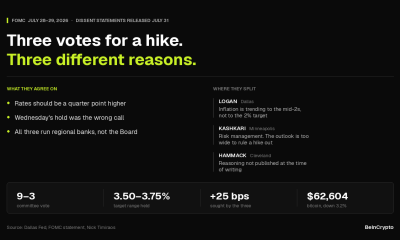
3 Fed Officials Just Explained Their Rate Hike Vote: Is Inflation Winning?
-

 Tech5 days ago
ESET tracks rise in malicious AI skills and adaptable malware
-
Crypto World4 days ago
XRP Ledger urges node upgrade after manifest flood
-

 Tech7 days ago
Gemini Spark can now use Chrome logins and saved passwords to run errands on your behalf
-

 Tech7 days ago
Building A Reproduction PlayStation Motherboard
-

 Sports6 days ago
France Cricket implodes: letters hidden in a drawer and a board at war
-

 Crypto World6 days ago
Moneyflip CEO charged in $40K murder-for-hire plot
-
 Sports6 days ago
Bruno Fernandes decision made as Man United ‘discuss’ striker transfer option
-

 News Videos5 days ago
Financial Crash Expert: The 90-Day Collapse Timeline They Are Desperately Hiding.
-

 NewsBeat7 days ago
Spain sending troops as thousands enter enclave of Ceuta from Morocco
-

 Sports6 days ago
Commonwealth Games 2026 Live Updates | Day 9 CWG 2026: Lovlina Borgohain, Sachin Siwach Enter Final After Indian Judokas Script History
You must be logged in to post a comment Login