
Business
What Mark Stephen McCollum Has Learned from 35 Years in Automotive


Mark Stephen McCollum is a respected name in the automotive world, with over 35 years of hands-on experience. Born and raised in Conroe, Texas, he grew up in a close family and learned early the value of hard work.
He studied business finance at Lon Morris College and Texas A&M University, building a foundation that would carry him through a long and successful career.
Mark worked his way up from the ground floor, starting in dealership operations before taking on senior leadership roles. He served as General Manager at Sonic Automotive and later became Market President at AutoNation, the largest automotive retailer in the United States. There, he oversaw 22 franchises across 18 rooftops, managing over $1.5 billion in revenue.
His approach to leadership is straightforward—prioritise people, stay close to the work, and make decisions based on real-world experience. Mark believes that trust and culture drive performance more than numbers alone.
More recently, he founded Automotive IntelliQence, a software company helping dealers use data to make smarter decisions without losing the human touch. He remains active in mentoring others and giving back to his community, supporting the Centre for Child Protection in Austin.
Whether leading large teams or building new tools for the industry, Mark Stephen McCollum stands out as a thoughtful, steady leader who knows the business inside and out.
Mark, take us back to the beginning—how did you first get started in automotive retail?
I started in dealerships not long after finishing at Texas A&M and Lon Morris College, where I studied business finance. I grew up in Conroe, Texas, in a working family where getting stuck in and figuring things out for yourself was the norm. I didn’t have a big plan, but I was drawn to the energy of retail. Once I got inside a dealership and saw how everything worked—from sales to service—I was hooked.
Back then, I was the guy who showed up early, stayed late, and asked questions. I wanted to understand every part of the business, not just my lane. That helped me move up quickly.
What were some early lessons you learned on the ground?
Don’t assume you know more than the people doing the work. I remember early on, I tried to change a service process without speaking to the technicians. It backfired. They knew the process better than I did. From then on, I always walked the floor, asked questions, and listened before making decisions. That approach served me well throughout my career.
You eventually became Market President at AutoNation. What was that like?
That role was intense—in a good way. I was responsible for 22 franchises across 18 rooftops, managing more than $1.5 billion in annual revenue. Every day was different. You’d be talking strategy one minute and solving a customer issue the next. But at that scale, the challenge is consistency. You need systems, yes, but you also need strong local leadership and a clear culture.
I made it a point to spend time in the stores, not just behind reports. When you’re dealing with thousands of employees and customers, the only way to keep things on track is to stay connected to the people. It’s not glamorous, but it’s effective.
After decades in operations, you moved into tech. What led to the founding of Automotive IntelliQence?
Over the years, I kept seeing the same issue: dealers had tons of data, but they weren’t using it in a way that helped their people make better decisions. I wasn’t looking to build the next shiny dashboard—I wanted to build tools that worked in the real world.
Automotive IntelliQence came from that. It’s about giving frontline teams the insights they need without adding friction. The aim wasn’t to replace people—it was to support them. I believe tech should fit into the flow of work, not disrupt it.
What changes in the auto industry have surprised you most?
Honestly, I’m surprised by how quickly digital retail has been embraced on the surface—and how slowly it’s being implemented underneath. There’s a difference between offering online car sales and actually integrating digital into how your team works.
There’s also a growing gap between customer expectations and dealership processes. People want transparency and speed, but many systems are still clunky. That’s where smart tools, better training, and leadership make the difference.
What was one of the hardest leadership challenges you’ve faced?
Hiring the wrong leadership team in a new market. They looked great on paper—impressive backgrounds, polished resumes. But culturally, it was a mismatch. Morale dipped, and turnover followed. I had to step back in, reset expectations, and rebuild the team from scratch.
That experience taught me that values alignment matters more than experience. You can train skills, but you can’t train character. Since then, I’ve always hired with that in mind.
How do you define success at this point in your career?
It’s changed a lot. In the beginning, success meant numbers—hitting goals, earning promotions, growing revenue. These days, I think about legacy. Did I help someone grow in their role? Did I build something that lasts? That’s success to me now.
Also, balance matters. I used to run myself into the ground. Now, I make time for golf, family, and quiet mornings. You can’t lead others if you’re running on empty.
What advice would you give to someone starting their career in this industry?
Start by listening. Spend time learning how the business really works—on the ground, not just in reports. Show up early, stay curious, and help solve problems. And when you make a mistake—and you will—own it. That’s how you earn trust.
Also, don’t chase titles. Chase value. If you consistently create value for others, the titles and promotions will follow.
Looking ahead, what do you think the future of auto retail looks like?
I think we’ll see a mix of high-tech and high-touch. Customers want efficiency, but they still want trust. The dealerships that succeed will be the ones that blend the two well—using tech to remove friction, and people to build relationships.
And leadership will matter more than ever. You can’t automate culture. That still comes down to who’s in the room and how they lead.
Final thoughts?
Show up. Stay grounded. Don’t stop learning. That’s what’s worked for me—and it still does.

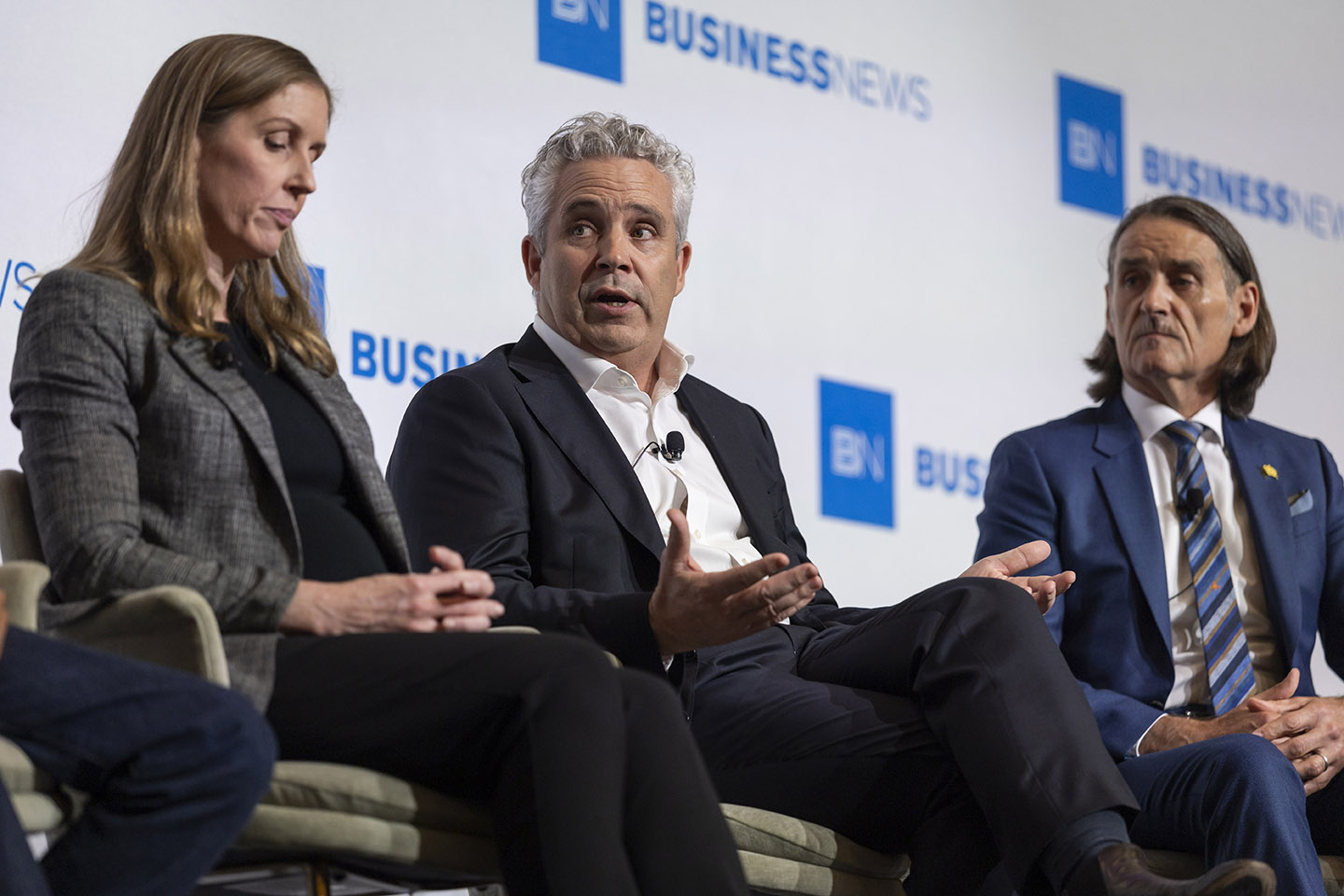
The scale up of new technology to improve resources sector productivity needs more industry and government support, according to a mining services veteran.

Jack McGinn speaks to Tom Zaunmayr about Business News’ recent most influential feature.

The Asia-Pacific digital banking market is on track to more than double over the next decade, with industry estimates pointing to growth from $2.28 trillion in 2024 to $5.12 trillion by 2033, underscoring the region’s accelerating shift toward mobile-led and online financial services.
Key takeaways
- Asia-Pacific’s digital banking market is projected to grow from $2.28 trillion in 2024 to $5.12 trillion by 2033, highlighting strong long-term expansion in the sector.
- Rising internet access, over 2 billion smartphone users, and widespread mobile banking adoption are accelerating the shift to digital financial services across the region.
- Despite growth momentum, increasing cyberattacks and weak encryption coverage remain major risks to the resilience of APAC’s digital banking market.
According to Market Data Forecast, the market is expected to expand at a compound annual growth rate of 9.43%, reaching $2.49 trillion in 2025 as digital financial platforms continue to gain traction across major Asia-Pacific economies.
A key driver of that growth is the region’s rising digital connectivity. Internet penetration climbed to 55% in 2022 from 48% in 2018, whilst the number of active smartphone users has surpassed 2 billion.
More than 70% of the population now uses smartphones for online banking, supporting wider adoption of mobile banking apps, digital wallets, and other online financial services.
Market momentum is also being reinforced by country-level developments. South Korea and Singapore continue to lead on connectivity, whilst Australia is using digital banking to improve financial access in rural communities where physical branch networks remain limited.
Public policy is playing an equally important role. In the Philippines, the Bangko Sentral ng Pilipinas said more than half of adults in rural areas now use digital banking platforms, supported by initiatives such as the National Retail Payment System.
In Australia, policies promoting open banking and collaboration between banks and fintech firms have helped broaden access to digital financial services.
Even so, the sector’s expansion is being shadowed by mounting cybersecurity and data privacy concerns.
The Australian Cyber Security Centre reported that cyberattacks on digital banking platforms are increasing by more than 30% annually, whilst only about 40% of banks in the region are said to have strong encryption systems in place, raising questions over data protection and operational resilience.
The outlook, then, is one of strong structural growth tempered by rising operational risk. As digital banking becomes more deeply embedded in everyday financial activity across Asia-Pacific, the pace of market expansion will likely depend not only on connectivity and inclusion but also on how effectively institutions strengthen trust, security, and platform resilience.
Other People are Reading

For overseas buyers, Indian risk assets in FY26 appeared to have been caught in the perfect storm due to the Iran conflict, a lingering uncertainty on tariffs, relatively expensive valuations, an AI-led decline in the business prospects of a $280-billion technology industry, and about 10% rupee slide against the dollar.
FY26 marks the second consecutive financial year of FII outflows and fourth in the previous five years, data from ETIG showed. Last year, FIIs withdrew ₹1.24 lakh crore from stocks and were on track to pull out a similar amount this fiscal year too. But their pace of exit accelerated in March after the start of the Iran war, with the rupee losing 4% in as many weeks. “Since March, the West Asia war raised risk-off sentiment that amplified the sell-off substantially,” said Rupen Rajguru, head, equity investment and strategy, Julius Baer India.
 Agencies
 Domestic Appetite
“The weak currency is a big factor that eats into the returns of foreign investors and keeps foreign capital at bay this year,” said Rajguru.

Flows from domestic institutions – led by mutual funds, pension funds and insurers – into the stock market have been on an uptrend in the past five years. Their FY26 investments of ₹8.49 lakh crore exceeded total flows into equities in the previous two financial years, underscoring the domestic appetite for stocks despite the market sell-off.
Nifty and Sensex fell 5.1% and 7.1%, respectively, in the fiscal year. Both indices would have ended marginally higher or with modest losses but for the near 9.5% retreat in March – the worst monthly fall since 2020, the onset of the pandemic.
“Typically, one year of losses triggers domestic outflows, but this time, SIP (systematic investment plan) flows have remained largely steady despite 18 months of losses,” said Rajguru.
Retail investors have pumped ₹29,000 crore every month on average into domestic equity schemes in the past financial year. The return of foreign portfolio flows into India in the new financial year would depend on stability in the rupee, peace in West Asia and a decline in crude prices though a rush of overseas investments seem unlikely.
“Given the uncertainties arising out of the war on energy disruption and global reversal of interest rate cycle, the FPI flows are not expected to be positive immediately in the near future,” said Rajesh Iyer, managing director, global investment solutions and asset management, at LGT Wealth India.
Foreign institutional ownership of Indian companies is at a decadal low, and valuations are around 17 times the estimated price-to-earnings (PE) ratio, below the ten-year average, said Rajguru of Julius Baer India. “A lot of the damage is already done,” he said.
 Agencies
 Yen Second Worst-performing
This is after the local currency touched a record low of 95.22/$ amid consistent dollar demand throughout the year. Foreign portfolio investors pulled out a record ₹1.6 lakh crore, far exceeding withdrawals in FY22, data from NSDL data showed.
Unrelenting demand for dollars from foreign investors forced the Reserve Bank of India (RBI) to intervene in the market by selling dollars to prevent a sharp fall in the rupee.
The Japanese yen, which fell 6.27% against the dollar, was the second worst-performing Asian currency in FY26. By contrast, the Malaysian ringgit gained 9.69% – the best performer on the regional leader-board.
Alok Singh, head of treasury, CSB Bank, expects the rupee to remain under pressure in the half of FY27 before the unit recovers some of its losses and trades in the broad 91-94 per dollar band for the fiscal year.
Bankers said the latest RBI measures would support the rupee. “Capping of banks’ net open position by RBI will help curb speculative trades and prevent a sharp depreciation in the rupee, but the near-term outlook is weak and a little fuzzy due to the Iran conflict, as the dollar-rupee rate will correlate with what happens there,” said Alok Singh.
In a drastic measure to prevent a sharper fall in the rupee, RBI on March 27 asked banks to cap their net open rupee positions in the onshore deliverable market to $100 million at the end of each business day, effective April 10, far lower than the 25% of total capital limit earlier. Despite this, the rupee fell to cross the 95 mark on the last day of trading.
“For now, chances are that the rupee may weaken below 95 per dollar toward 96 or even 97. Persistent dollar outflows and higher oil prices have definitely shifted the rupee band more toward 92-93 per dollar, from the 89-90 expected before this crisis,” Singh said.
Through FY26, RBI maintained that it intervened in the spot market to prevent volatility.

Britain risks becoming heavily dependent on US gas imports within the next decade, prompting renewed calls for increased North Sea production to safeguard energy security.
New analysis from Wood Mackenzie suggests that liquefied natural gas (LNG) imports from the United States could account for around 60 per cent of the UK’s gas supply by 2035, a dramatic increase from roughly 10 per cent in 2024.
The forecast comes at a time of heightened geopolitical tension and volatility in global energy markets, raising concerns about the risks of relying on a single external supplier.
Britain’s domestic gas production has been declining steadily for decades, with output from the North Sea now at its lowest level since the early 1970s. As supply falls, the country has become increasingly reliant on imports, including pipeline gas from Norway and LNG shipments from overseas.
In 2024, the UK sourced around 43 per cent of its gas from the domestic North Sea, a similar share from Norway, and the remainder from LNG imports, the majority of which came from the United States.
Wood Mackenzie’s projections suggest this balance will shift significantly over the next decade, as domestic production continues to decline faster than overall demand.
The consultancy argues that boosting domestic oil and gas output could help reduce exposure to international market shocks and improve resilience.
Gail Anderson, a research director at Wood Mackenzie, said the UK should adopt a broad approach to energy policy, combining renewables with continued use of domestic hydrocarbons and emerging technologies such as carbon capture and hydrogen.
“Reducing dependence on LNG imports should be a priority,” she said, particularly in an environment where energy supplies are increasingly influenced by geopolitical conflict.
The analysis also suggests that gas produced in the UK continental shelf has a lower carbon footprint than LNG transported across the Atlantic and can be supplied at significantly lower cost in the short term.
The findings are likely to intensify debate within government over the future of North Sea production.
Industry groups have warned that declining output is being accelerated by tax policies and restrictions on new exploration licences, which they argue limit the UK’s ability to maximise domestic resources.
However, the government maintains that expanding fossil fuel extraction is not the solution to long-term energy security or price stability, emphasising instead the need to accelerate the transition to clean, homegrown energy.
A government spokesperson said the focus remains on maintaining existing production while investing in renewable energy and reducing reliance on volatile global markets.
Most analysts agree that increasing North Sea production would have only a limited effect on consumer energy prices, which are largely determined by global markets.
However, proponents argue that even modest increases in domestic supply could improve security and reduce vulnerability to supply disruptions.
The debate has been sharpened by recent developments in the Middle East, where conflict has disrupted key shipping routes and contributed to rising energy prices.
The risk of further escalation has highlighted the strategic importance of secure and diversified energy supplies for import-dependent countries such as the UK.
As the UK continues its transition towards net zero, balancing short-term energy security with long-term decarbonisation goals remains a central challenge.
The latest analysis suggests that without intervention, reliance on imported gas, particularly from the US, will increase significantly, raising questions about resilience and cost.
For policymakers, the task will be to navigate these competing priorities, ensuring that the UK’s energy system remains secure, affordable and sustainable in an increasingly uncertain global environment.

Jamie Young
Jamie is Senior Reporter at Business Matters, bringing over a decade of experience in UK SME business reporting.
Jamie holds a degree in Business Administration and regularly participates in industry conferences and workshops.
When not reporting on the latest business developments, Jamie is passionate about mentoring up-and-coming journalists and entrepreneurs to inspire the next generation of business leaders.

On April 1 each year, millions around the globe engage in harmless hoaxes, practical jokes and playful deceptions before shouting the classic disclaimer “April Fools!” The lighthearted custom, observed Wednesday in 2026, has roots stretching back centuries, though its precise origin remains one of history’s enduring mysteries that even the day’s spirit of trickery cannot fully resolve.

Historians trace the earliest documented hints of April Fools’ Day to 16th-century Europe, with the most popular theory tied to calendar reform in France. In 1582, France adopted the Gregorian calendar under King Charles IX, shifting New Year’s Day from around April 1 (near the spring equinox in the old Julian system) to January 1. Those who continued celebrating the old date or failed to adopt the change quickly became targets of ridicule and were labeled “April fools.” Pranksters would send them on pointless “fool’s errands” or pin paper fish to their backs, calling victims “poisson d’avril” — April fish, a term still used in France today for the gullible.
The calendar-change story, while widely cited, has complications. References to April foolishness appear earlier, including a possible allusion in Geoffrey Chaucer’s “The Canterbury Tales” from 1392 and a 1508 French poem by Eloy d’Amerval mentioning “poisson d’avril.” Some scholars link the custom to the ancient Roman festival of Hilaria, celebrated at the end of March with disguises, mockery and joyful chaos in honor of the goddess Cybele. Others point to medieval spring renewal rites or the vernal equinox, when unpredictable weather could “fool” people, as possible inspirations.
By the 18th century, the tradition had spread across Britain and into Scotland, where April 1 became “Gowkie Day” (cuckoo day, symbolizing a fool) and April 2 was “Tailie Day,” involving pinning “kick me” signs on backs. The custom crossed the Atlantic with European settlers and evolved into a broader day of mischief in the United States and Canada. Today it thrives worldwide, though celebrations vary by culture. In Italy and some Spanish-speaking regions, pranks sometimes extend to May 1 or have different names, while parts of Asia have adopted lighter versions influenced by Western media.
The day’s appeal lies in its harmless nature — a brief societal permission slip for creativity and laughter amid everyday routines. Pranks traditionally end with the reveal “April Fools!” to signal no real harm was intended. Overdoing it or targeting sensitive topics risks backlash, a lesson reinforced in the social media era when jokes can spread instantly and sometimes cause unintended offense or confusion.
Media outlets and corporations have long amplified the tradition with elaborate hoaxes. One of the most famous remains the 1957 BBC “Panorama” broadcast claiming Swiss farmers were harvesting spaghetti from trees after eradicating the spaghetti weevil. Viewers called in asking how to grow their own, and the segment is still hailed as one of television’s greatest pranks. Other classics include the 1980 BBC report on “flying penguins,” Taco Bell’s 1996 claim of buying the Liberty Bell and renaming it the Taco Liberty Bell, and various newspaper inventions such as the 1977 Guardian supplement on the fictional island of San Serriffe.
In 2026, brands and social media users continued the pattern with creative announcements and memes, though many companies now add clear disclaimers or limit scope to avoid misinformation concerns. The day has become a global marketing opportunity, yet its core remains personal — friends fooling friends, families sharing laughs and colleagues lightening the workday.
Scholars note that April Fools’ Day may serve a deeper social function. Anthropologists suggest it acts as a “safety valve,” allowing temporary role reversals or mockery of authority in otherwise structured societies, similar to carnivals or festivals of misrule. In ancient and medieval contexts, such days helped relieve tensions before spring planting or renewal. Modern psychologists point to the psychological benefits of shared laughter and the gentle reminder not to take oneself too seriously.
Despite its murky beginnings, the tradition has proven remarkably resilient. It survived religious reforms, world wars and the shift from print to digital media. In an age of deepfakes and widespread skepticism, April Fools’ Day offers a contained space for deception that most people willingly accept — provided the reveal comes promptly.
Cultural variations add richness. French children still pin paper fish, Scots hunt the “gowk,” and some Scandinavian countries emphasize elaborate storytelling. In the United States, the Annual April Fools’ Day Parade in New York City since 1986 features satirical floats poking fun at current events. Social media has democratized participation, turning ordinary users into pranksters whose posts can reach millions.
Critics occasionally call for toning down the day amid concerns over trust and mental health, but supporters argue that learning to spot a joke builds media literacy and resilience. Most agree the key is kindness: pranks should amuse rather than humiliate.
As April 1, 2026, unfolded on a Wednesday, people worldwide exchanged jokes, shared fake news stories and waited for the inevitable “April Fools!” reveal. From office cubicles to family group chats and corporate press releases, the day reminded everyone of a simple truth — sometimes the best response to life’s absurdities is laughter.
The enduring mystery of its origin only enhances the day’s charm. Whether born from calendar confusion in 16th-century France, ancient Roman merriment or medieval spring rites, April Fools’ Day has become a universal festival of folly. It requires no expensive gifts or solemn rituals — only a willing suspension of disbelief and a readiness to laugh at oneself.
In a divided and often serious world, the custom endures as a small, shared rebellion against taking everything too gravely. As historians continue debating its past, millions on April 1 focus instead on its present: creating memories, forging connections through humor and perhaps pulling off one perfect, harmless trick before the clock strikes midnight and normalcy returns.
For those planning next year’s pranks, the lesson from centuries of April Fools’ Day is clear — keep it light, keep it fun, and always be ready with the classic disclaimer. After all, the best jokes are the ones everyone can enjoy, even the fool on the receiving end.


Daniel is an avid and active professional investor.
He runs Crude Value Insights, a value-oriented newsletter aimed at analyzing the cash flows and assessing the value of companies in the oil and gas space. His primary focus is on finding businesses that are trading at a significant discount to their intrinsic value by employing a combination of Benjamin Graham’s investment philosophy and a contrarian approach to the market and the securities therein. Learn more.
Analyst’s Disclosure: I/we have no stock, option or similar derivative position in any of the companies mentioned, and no plans to initiate any such positions within the next 72 hours. I wrote this article myself, and it expresses my own opinions. I am not receiving compensation for it (other than from Seeking Alpha). I have no business relationship with any company whose stock is mentioned in this article.
Seeking Alpha’s Disclosure: Past performance is no guarantee of future results. No recommendation or advice is being given as to whether any investment is suitable for a particular investor. Any views or opinions expressed above may not reflect those of Seeking Alpha as a whole. Seeking Alpha is not a licensed securities dealer, broker or US investment adviser or investment bank. Our analysts are third party authors that include both professional investors and individual investors who may not be licensed or certified by any institute or regulatory body.

Co3 Contemporary Dance’s inaugural artistic director and co-chief executive will leave the company after 12 years of leadership.

Oracle has begun cutting thousands of jobs as it accelerates a costly push into artificial intelligence infrastructure, with analysts warning the layoffs could ultimately reach tens of thousands of roles.
Employees were informed via email that their positions were being eliminated “as part of a broader organisational change”, with some workers immediately locked out of company systems. The abrupt nature of the cuts has drawn attention across the tech sector, particularly as Oracle seeks to free up capital for its expanding AI ambitions.
The company, founded by Larry Ellison, employs around 160,000 people globally, and analysts have suggested that between 20,000 and 30,000 jobs could be at risk as part of the restructuring.
The layoffs come amid a major shift in Oracle’s strategy, as it commits tens of billions of dollars to building data centres to support the rapid growth of artificial intelligence.
The company has forecast spending of up to $50 billion this year alone on new infrastructure, designed to provide computing power for major clients including OpenAI and Meta.
This follows a landmark agreement with OpenAI, which said it would spend around $300 billion over time on AI processing capacity, a deal that initially boosted investor confidence but has since raised concerns about execution risk and financial exposure.
Oracle’s share price has fallen sharply in recent months, shedding around half its value as investors question the scale and sustainability of its AI investment strategy.
The company is expected to fund much of its expansion through a combination of debt and equity, prompting fears about balance sheet pressure and the potential for overspending in a highly competitive and rapidly evolving market.
Concerns were heightened when Blue Owl Capital withdrew from financing a $10 billion data centre project in Michigan, signalling growing caution among backers.
Those affected by the cuts have begun speaking publicly, emphasising that the layoffs are not linked to individual performance but to broader strategic changes.
Michael Shepherd, an Oracle operations manager, described the move as a “significant reduction in force” impacting “talented and high-performing people”, reflecting the scale and seriousness of the restructuring.
The cuts are expected to focus heavily on operational and support roles, as the company reallocates resources towards high-growth areas such as cloud computing and AI infrastructure.
Ellison, now 81 and still serving as Oracle’s chief technology officer and largest shareholder, remains central to the company’s strategic direction.
His aggressive push into AI reflects a broader race among technology giants to dominate the next phase of computing, but also carries significant financial risk given the scale of required investment.
Beyond Oracle, Ellison has also been involved in other major ventures, including backing large-scale media acquisitions and maintaining close ties with political and business leaders.
Oracle’s move is part of a wider trend across the technology sector, where companies are restructuring workforces to fund AI development and infrastructure.
As demand for computing power surges, firms are increasingly prioritising capital-intensive investments over traditional operational spending, leading to job cuts even among profitable businesses.
The success of Oracle’s strategy will depend on whether its AI investments deliver sustained growth and returns that justify the scale of spending.
In the short term, the layoffs highlight the trade-offs facing technology companies as they navigate a period of rapid transformation.
For employees, the shift underscores the changing nature of work in the digital economy. For investors, it raises questions about how far companies can go in the race for AI dominance without undermining financial stability.
As the industry continues to evolve, Oracle’s high-stakes bet on AI will be closely watched as a bellwether for the broader tech sector.

Amy Ingham
Amy is a newly qualified journalist specialising in business journalism at Business Matters with responsibility for news content for what is now the UK’s largest print and online source of current business news.

Stanley Druckenmiller Doubles Down on Alphabet (GOOGL) and Amazon (AMZN) Stock Amid AI Cloud Boom

All The Health Benefits Linked To A Cup Of Rooibos Tea

Terence Crawford admits there is one man he wishes he’d faced before retiring


-

 News Videos7 days ago
Parliament publishes latest register of MPs’ financial interests
-

 Business6 days ago
Instagram, YouTube Found Responsible for Teen’s Mental Health Struggle in Historic Ruling
-
 Tech6 days ago
Intercom’s new post-trained Fin Apex 1.0 beats GPT-5.4 and Claude Sonnet 4.6 at customer service resolutions
-

 NewsBeat5 days ago
The Story hosts event on Durham’s historic registers
-

 Sports5 days ago
Sweet Sixteen Game Thread: Tide vs Michigan
-
Entertainment2 days ago
Fans slam 'heartbreaking' Barbie Dream Fest convention debacle with 'cardboard cutout' experience
-
 Entertainment4 days ago
Lana Del Rey Celebrates Her Husband’s 51st Birthday In New Post
-
Crypto World1 day ago
Dems press CFTC, ethics board on prediction-market insider trades
-

 Sports1 day ago
Tallest college basketball player ever, standing at 7-foot-9, entering transfer portal
-

 Tech3 days ago
The Pixel 10a doesn’t have a camera bump, and it’s great
-

 Entertainment7 days ago
HBO’s Harry Potter Series Will Definitely Fail For One Big Reason, And It’s Not J.K. Rowling Or Snape
-

 Crypto World2 days ago
U.S. rule change may open trillions in 401(k) funds to crypto
-

 Fashion6 days ago
En Vogue in Brown Leather and Tailored Neutrals by Atelier Savoir, Styled by J Bolin
-

 Tech1 day ago
EE TV is using AI to help you find something to watch
-

 Tech1 day ago
How to back up your iPhone & iPad to your Mac before something goes wrong
-

 Fashion6 days ago
What Are Your Favorite T-Shirts for the Weekend?
-

 Fashion5 days ago
Weekly News Update, 3.27.26 – Corporette.com
-

 Politics2 days ago
Should Trump Be Scared Strait?
-

 Fashion4 days ago
Amazon Sundays: Soft Spring Layers
-

 Tech3 days ago
Elon Musk’s last co-founder reportedly leaves xAI
You must be logged in to post a comment Login