

Business
What wealthy donors gain if ‘Trump Accounts’ allow stock donations

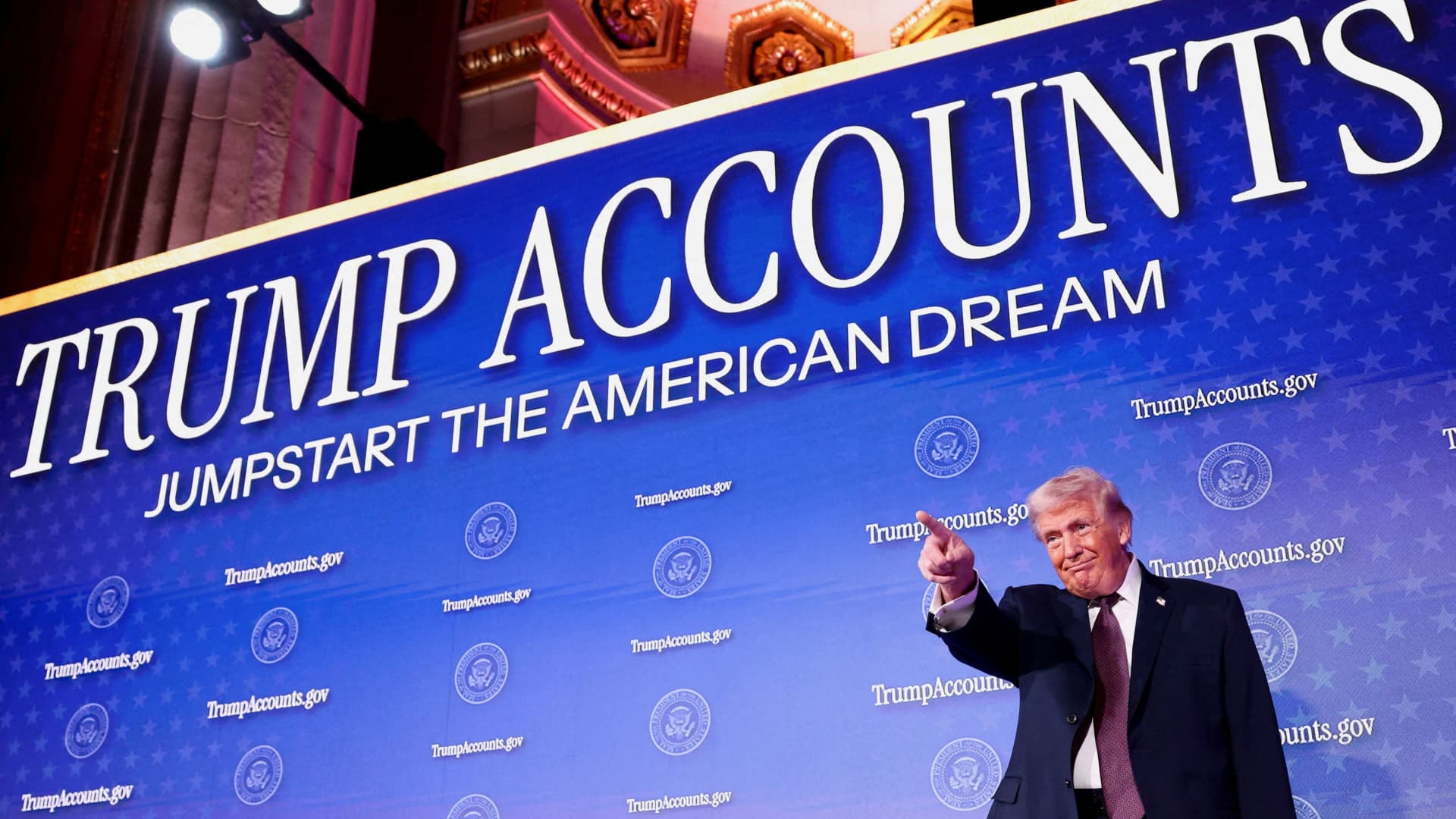
President Donald Trump onstage at the Treasury Department’s Trump Accounts Summit, in Washington, Jan. 28, 2026.
Kevin Lamarque | Reuters
A version of this article first appeared in CNBC’s Inside Wealth newsletter with Robert Frank, a weekly guide to the high-net-worth investor and consumer. Sign up to receive future editions, straight to your inbox.
With the Trump administration weighing whether to allow stock donations to “Trump Accounts” for American children, the potential expansion is raising questions about the legal path — and highlighting the powerful tax benefits — to doing so.
“We all want to maximize more multi-billion gifts into kids accts & the gifts may be cash / shares!” wrote Brad Gerstner, the hedge fund manager who pioneered the investment accounts, in a post on X last week after the New York Times first reported the discussions.
The move would mean a notable change to the program, which currently requires contributions to be made in cash. Michael and Susan Dell, for instance, have pledged to donate $6.25 billion to seed “Trump Accounts” for 25 million children aged 10 and under in ZIP codes with a median income of $150,000 or less.
The structure already comes with tax benefits: Donors can use pre-tax dollars for charitable contributions to benefit a qualified class of beneficiaries. But permitting stock contributions to the accounts would allow donors to offload appreciated shares without paying capital gains tax. Like with other charitable contributions, they can also deduct the stock’s fair-market value against their income.
The double tax benefit would be similar to that of gifting appreciated stock to donor-advised funds and other charitable entities.
“It’s a popular practice for particularly high-income taxpayers that would otherwise be paying a high rate,” said Will McBride, chief economist of the Tax Foundation. “I think it would make sense that they would try to extend the law to apply here.”
“This initiative has Trump’s name on it so I think they’re going to try to make this as taxpayer-friendly as possible,” he added.
A White House official told CNBC via email that the administration “is always open to finding new ways to build on the immense success of Trump Accounts” but said they had no updates to share.
A spokesperson for the Treasury Department declined to comment on the potential to accept stock donations.
“The U.S. Treasury Department is committed to maximizing the impact of Trump Accounts, driving sign-ups for all eligible children, and achieving our goal of having every American child own a Trump Account,” the Treasury spokesperson said via email.
McBride said he thought the change would highly motivate donors to seed the accounts.
“We know that for many of the very top billionaires, much of their wealth is held in stock that’s appreciated a great deal, so they’re sitting on a lot of unrealized gains,” he said.
Still, the practice is hardly new and wouldn’t offer benefits unique to “Trump Accounts,” according to Joseph Rosenberg, a senior fellow at the Urban-Brookings Tax Policy Center.
“My sense is it’s not, like, a game-changer in that sense, because people already have the ability to do it through private foundations and other vehicles,” he said.
Moreover, deductions for these donations presumably would still be subject to the cap 30% of adjusted-gross income, or AGI, that applies to long-term appreciated capital gain property. The tax benefits of charitable giving for top earners also was trimmed by last year’s tax and spending bill.
Manoj Viswanathan, law professor and co-director of UC Law San Francisco’s Center on Tax Law, said it would take more changes to make “Trump Accounts” more appealing from a tax perspective, such as raising the AGI cap for deducting donations to the investment accounts.
Raising that cap wouldn’t make a huge difference for the ultra-wealthy, as their income pales in comparison to their assets, according to Ellen Aprill, senior scholar in residence at UCLA School of Law.
However, donating stock does allow individuals to minimize or even eliminate their estate tax burden, she said. Unlike with income tax, charitable deductions for gift and estate tax are unlimited.
“The gift tax treatment deduction matters a lot to the super rich,” she said. “Making charitable gifts gets the assets out of their estate and still avoids tax on the built-in capital gain.”
The lawyers and tax policy experts who spoke with CNBC were divided on whether allowing stock donations would require legislative action or could be done via guidance from the Treasury or an executive order.
Viswanathan said he didn’t think an act of Congress would be required unless the Treasury wants to allow the accounts to hold individual shares of stocks.
Gerstner suggested in a post on X that “100% of all $$ in Trump Accounts will be in a free index fund that tracks the S&P 500.”
However, the X account for Invest America, the nonprofit advocacy group behind the accounts, said in another post, “Wouldn’t it be great if every kid in America got a share of SpaceX or Berkshire Hathaway or OpenAI?!”
McBride said expanding tax benefits for “Trump Account” donors would face an uphill battle in Congress with a razor-thin Republican majority.


Pimco, which manages $2.3 trillion in assets, said the AI buildout could widen the range of economic outcomes over the next five years while leaving weaker and more heavily leveraged borrowers more exposed. High-grade credit spreads — the extra yield investors demand over US Treasuries to hold highly rated corporate debt — remain near their lowest levels in three decades. Demand for riskier debt has also held up despite a recent global bond selloff, as higher yields draw buyers. Pimco said that backdrop clashes with “elevated secular uncertainty,” and “we interpret this as complacency rather than strength.”
The firm also pointed to “increased instances of maturity extensions and payment-in-kind structures that allow borrowers to repay debt with more debt.”

Gold rises from 6-mth low amid heightened Iran tensions, Fed rate concerns
Check out whats clicking on FoxBusiness.com.
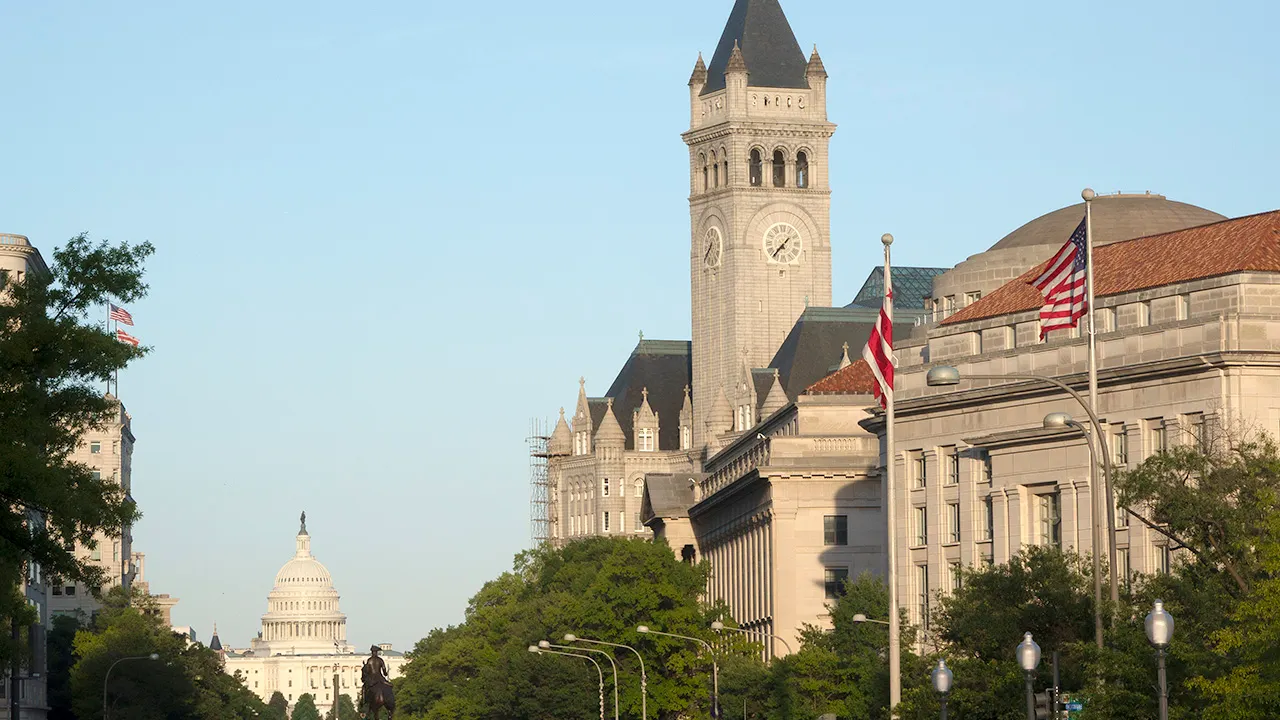
The General Services Administration (GSA) on Wednesday announced the sale of the Old Post Office Building located at 1100 Pennsylvania Avenue in Washington, D.C.
The building was previously the Trump International Hotel from 2016 to 2022 until the Trump family firm sold the leasing rights for $375 million. The hotel reopened later in 2022 as the Waldorf Astoria Washington D.C., under the management of Hilton.
GSA said that its sale of the building included terms that “permanently secured public access to the iconic clock tower while establishing strong protections for the building’s architectural heritage through a binding preservation covenant.”
The deal also includes a dedicated fine arts covenant that will retain the American public’s ownership of artwork within the facility, including Robert Irwin’s “48 Shadow Planes” and a historic Benjamin Franklin Statue.
TRUMP REVEALS NEW WHCA DINNER VENUE AFTER SHOOTING CHAOS DERAILED GALA

The Old Post Office Building is a recognizable landmark on Pennsylvania Avenue. (Kevin Carter/Getty Images / Getty Images)
GSA’s sale is moving forward under the terms of the existing ground lease, which gives BDT MSD Partners, a merchant bank, the right of first offer.
The Wall Street Journal reported that BDT & MSD Partners acquired the building and land for $80 million, according to people familiar with the matter. The report noted the bank is discussing selling the property for a total of $400 million.
Hilton currently has a long-term agreement in place with the hotel to operate it as the Waldorf Astoria, and that arrangement would continue with a new leaseholder, the Journal reported.
TRUMP ORGANIZATION CLOSES $375M SALE OF DC HOTEL THAT WILL BECOME A WALDORF ASTORIA

The Old Post Office Building contains historic art, including a statue of Benjamin Franklin. (Kevin Dietsch/Getty Images)
The Old Post Office Building was completed in 1899 and originally served as the headquarters for the U.S. Post Office Department and the post office for Washington, D.C.
It is listed in the National Register of Historic Places and its Romanesque Revival architecture makes it one of the most recognizable buildings on Pennsylvania Avenue, featuring a prominent clock tower and atrium. The facility is also located near the White House and other Washington, D.C. landmarks.

The Waldof Astoria, the former Trump International Hotel at the Old Post Office Building in Washington, D.C., as seen on Aug. 18, 2022. (Kent Nishimura / Los Angeles Times via Getty Images)
According to GSA’s announcement, before the property was redeveloped into a hotel, taxpayers were absorbing about $6 million a year in losses on the building.
Since then, there has been over $250 million in private sector capital invested in the property and taxpayer revenues in the last decade, including the current sale, are expected to exceed $110 million.
GSA has listed dozens of other federally-owned properties for sale since early last year as the Trump administration looks to reduce federal spending on underutilized office space and real estate.

David Herzog
Ladies and gentlemen, my name is David Herzog, and I am the Chair of the Board of Directors of Aegon Limited. On behalf of Aegon, I welcome you to Aegon’s 2026 Annual General Meeting of Shareholders. I hereby open the meeting. I’m pleased to welcome our shareholders participating in this meeting today.
Let me introduce the people present with me here at the table. Mark Ellman, Chair of the Compensation and Human Resource Committee; Lard Friese, Executive Director and CEO; Duncan Russell, our Chief Financial Officer; and Bieke Debruyne, Company Secretary. The other members of the Board of Directors as well as Director nominee, Ms. Leni Boeren are present here as well.
Also present here today, Onno Van Klinken, our General Counsel; Yves Cormier, Head of Investor Relations; and [Sonya Natia], the principal representative of the company. I hereby appoint Bieke as Secretary of this general meeting. She will keep minutes of today’s meeting. Before we continue, I would like to make a few remarks. Shareholders who have been registered through the e-voting portal prior to the start of the meeting and who are participating in a virtual manner have been directed automatically to the Lumi environment, in which they can vote and ask questions. To accommodate live voting and keeping in mind a short delay in the live stream, the voting is now open and will remain open until the last voting item on the agenda.
Voting results will be shown at the end of the meeting. To ensure a constructive dialogue with all
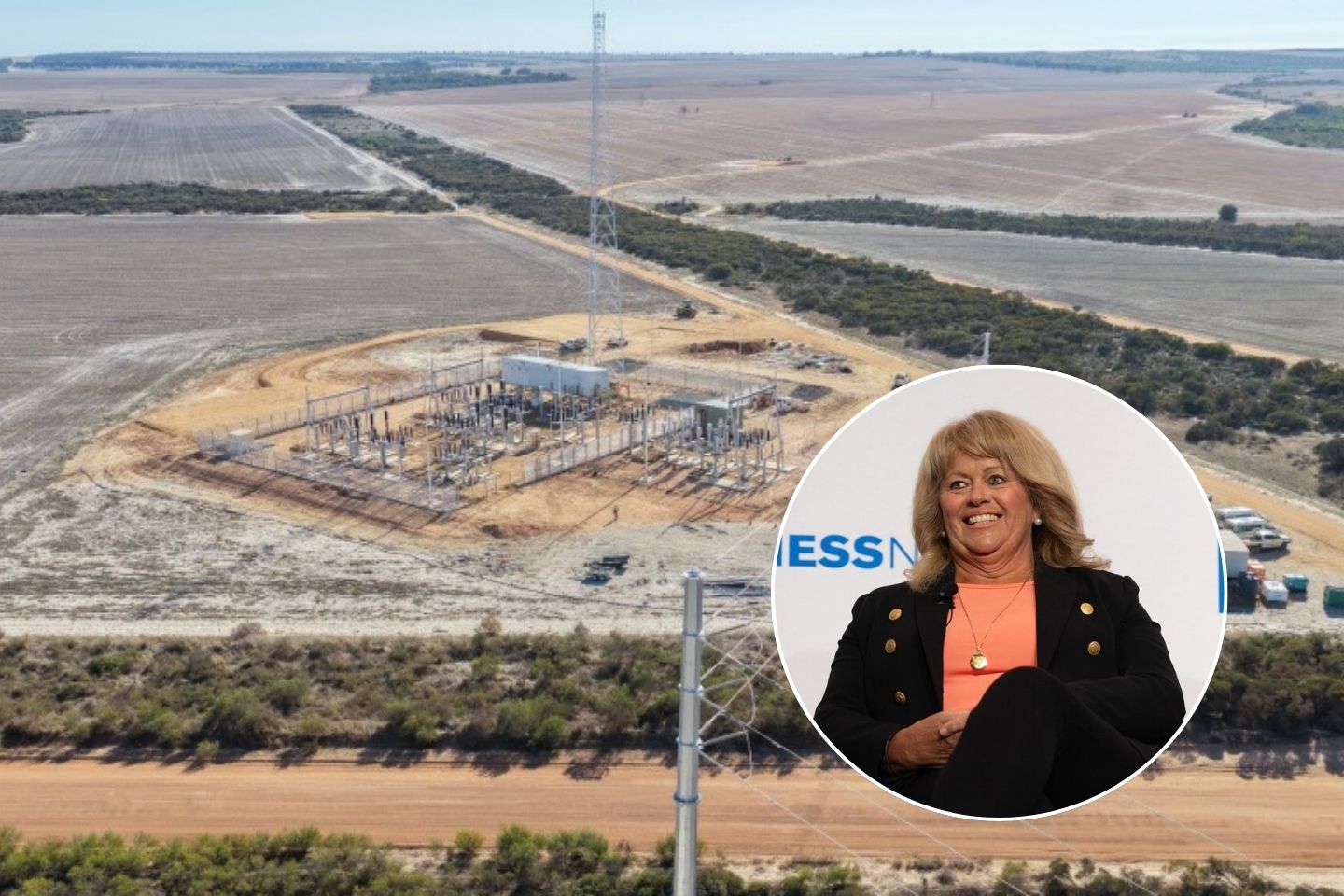
Strike Energy is one step closer to producing electricity at its South Erregulla power station, having hit mechanical completion on the facility.
Business
OpenAI considers drastic price cuts, anticipating war for users with Anthropic, WSJ reports

OpenAI considers drastic price cuts, anticipating war for users with Anthropic, WSJ reports

AMD: The Selloff Is An Opportunity


Dollar shaky as investors weigh rate outlook, Middle East worries
Anthropic, the artificial intelligence safety company behind the Claude family of models, has published a landmark report disclosing that its AI systems have assumed a dominant role in developing their own successors and warning that the world may be approaching a threshold of “recursive self-improvement” faster than governments, institutions, and even the company itself are prepared for.
Key takeaways
- Claude now writes more than 80% of Anthropic’s own code, with engineers shipping roughly 8 times the daily output they did in 2024.
- AI agents are starting to run full research projects on their own, recovering 97% of possible gains on an open-ended safety problem versus 23% for human researchers in a comparable window.
- Anthropic warns that recursive self-improvement is a live near-term contingency and is calling for a verifiable international coordination mechanism before the window to act closes.
The report, titled “When AI Builds Itself” and published by the newly formed Anthropic Institute, combines public benchmark data with previously unreported internal metrics to paint a striking picture of how rapidly AI has transformed the practice of AI development.
An 8x Productivity Leap in Two Years
Perhaps the most striking figure in the report: Anthropic engineers are now merging roughly eight times as much code per day as they were in 2024. The surge is not the product of more engineers or longer hours it reflects the growing role of Claude itself in writing production code.
As of May 2026, more than 80% of the code merged into Anthropic’s codebase was authored by Claude. Two years earlier, that figure was in the low single digits. The shift accelerated in two distinct waves: first in early 2025, when Claude began executing and running code rather than merely suggesting snippets for engineers to paste; and again in 2026, when models became capable of working autonomously over multi-hour time horizons.
The efficiency gains extend well beyond lines of code. In an internal poll of 130 Anthropic research staff conducted in March 2026, the median employee estimated they were producing around four times as much output with the company’s most advanced model, Claude Mythos Preview, compared to working without any AI assistance.
From Tool to Collaborator to Decision Maker
The report draws a careful distinction between three levels of AI capability in a research or engineering context: executing a task someone else has specified; designing the method to achieve a stated goal; and deciding which goals are worth pursuing in the first place.
By Anthropic’s account, Claude has already cleared the first two bars and is beginning to approach the third.
In a vivid illustration of AI-driven research, Anthropic described an experiment published in April 2026 in which Claude-powered agents were given an open-ended AI safety problem, roughly, whether a weaker model could reliably supervise a stronger one, and left to solve it without further human guidance. The agents proposed hypotheses, ran tests, shared findings with parallel agents, and iterated autonomously. Two human researchers working for a week achieved approximately 23% of the possible performance improvement on the task; in contrast, the AI agents, operating over 800 cumulative hours at a compute cost of roughly $18,000, achieved 97%.
On a benchmark measuring the ability to complete long-horizon software tasks, Claude Opus 4.6 has reached 12-hour tasks up from roughly four-minute tasks just two years prior. If that doubling rate (currently once every four months) holds, tasks requiring a skilled human day could come within AI reach before the end of 2026.
The Recursive Threshold
The report’s central concern is what happens if these trends converge. Recursive self-improvement, the point at which an AI system becomes capable of fully autonomously designing and training its own successor, would represent a qualitative break from everything that has come before.
Anthropic is careful to say it has not reached that point. “We are not there yet,” the authors write, “and recursive self-improvement is not inevitable.” But the report’s three future scenarios a stalled plateau, a compounding efficiency gain driven by increasingly autonomous AI, and full recursive self-improvement are presented not as remote possibilities but as live contingencies that need to be actively prepared for.
The company’s candor about the third scenario is notable. Should AI systems become capable of building their own successors, the report warns, the pace of AI progress would become determined almost entirely by the availability of compute, with humans shifting primarily to oversight and verification roles. The implications for alignment, ensuring such systems remain safe and controllable, would become vastly more urgent.
“If this happens,” the report states, “future versions of Claude could be continuously improved by Claude itself.”
A Call for International Coordination
The report goes beyond technical disclosure to make a policy argument: the window for deliberate, collective action is open now, but may not remain so.
Anthropic explicitly states that a unilateral slowdown by any single lab would accomplish little beyond ceding competitive ground. What is needed, the authors argue, is a verifiable international coordination mechanism analogous to arms control treaties, but designed for a technology whose inputs are general-purpose and whose training runs are far easier to conceal than missile silos.
“A meaningful slowdown or pause would require multiple well-resourced labs at or near the frontier, in multiple countries, agreeing to stop under the same conditions,” the report states. “It would also require that each can verify that the others have actually stopped.”
The company acknowledges the difficulty of building such a regime in time. Past arms control frameworks took decades to construct; Anthropic suggests the AI field does not have that luxury.
In the coming months, the Anthropic Institute says it will convene policymakers, civil society representatives, researchers, and competing AI companies to begin designing the verification and coordination systems such an agreement would require.
The Human Element
Woven throughout the technical data are candid reflections from Anthropic employees published with permission that hint at the psychological dimension of working in an environment undergoing such rapid transformation.
“On days where everything works well, I can’t help but think nothing I do matters,” one employee wrote. “Everything is automated and better and faster than I ever will be. But then there are days where everything breaks and I don’t understand why and I realize I have no idea what I’ve been up to anymore.”
Another described having written no code themselves in five months.
The report does not treat these observations as incidental color. They point to a structural question that applies well beyond Anthropic: as the “doing” in knowledge work becomes increasingly automated, what remains of the human role, and how do organizations and societies adapt to that shift in real time?
What Comes Next
Anthropic’s report is likely to intensify an already heated debate about how quickly AI is approaching transformative capability thresholds and what obligations that imposes on the companies at the frontier.
The company’s own framing is striking in its directness. It does not suggest that recursive self-improvement is distant or theoretical. It suggests it is a contingency that requires immediate, proactive preparation and that the institutions best positioned to lead that preparation are, for now, largely unprepared.
“The window to investigate the questions together is here,” the authors conclude. “People outside AI companies should be involved in this deliberation.”
Other People are Reading
Business
Koppers Holdings Inc. (KOP) Presents at 16th Annual Wells Fargo Industrials & Materials Conference – Slideshow
Koppers Holdings Inc. (KOP) Presents at 16th Annual Wells Fargo Industrials & Materials Conference – Slideshow
Pimco says ‘credit loss cycle’ has begun, favours quality bonds

Bold and Beautiful Early Spoilers June 15-19: Steffy Grows Suspicious as Wyatt Investigates

Botanix Shuts Down Bitcoin L2 Spiderchain After Four Years



-

 Fashion5 days ago
Weekend Open Thread: Evereve – Corporette.com
-
 Crypto World6 days ago
Jensen Huang Approves Samsung, SK Hynix, and Micron for NVIDIA (NVDA) HBM4 Memory Supply
-

 Crypto World3 days ago
Anatomy of the June crypto crash: Fed, Iran, Saylor
-
 Entertainment4 days ago
The Best Mystery Series of All Time Is Surging on Streaming 30 Years After It Ended
-

 NewsBeat3 days ago
Alexander Zverev wins the French Open to finally earn a 1st Grand Slam title
-

 Tech5 days ago
Suspicious Polyfill login prompts pop up on Toshiba, Muji websites
-
 Crypto World4 days ago
Senator Cynthia Lummis Calls CLARITY Act the Most Consequential Financial Legislation of This Generation
-

 Tech6 days ago
Microsoft launches MXC, an OS-level sandbox for AI agents, with OpenAI and Nvidia already on board
-

 Tech4 days ago
Microsoft unveils seven homegrown AI models in new bid for ‘long term self-sufficiency’
-

 Business6 days ago
(VIDEO) Justin Bieber Delivers Surprise Happy Birthday Serenade to Diners at Los Angeles Mexican Restaurant
-
 Business4 days ago
The Pain Points Taking a Fragile Tech Rally Down a Notch
-
 Crypto World3 days ago
Eli Lilly (LLY) Stock Surges 4% Following Breakthrough Sleep Apnea Trial Results
-
Crypto World6 days ago
LBank Surpasses 25 Million Users Worldwide as AFA Partnership Continues to Drive Global Growth
-

 Tech5 days ago
Von der Leyen’s AI envoy pick draws conflict-of-interest fire
-

 Tech6 days ago
Meta steals a tactic from Tesla and builds data centers in tents
-

 Crypto World4 days ago
Trump’s AI Ownership Plan Could Benefit Anthropic at OpenAI’s Expense
-
 Sports1 day ago
Bangladesh beat Australia after 20 years in ODIs, register only their second win over six-time world champions | Cricket News
-

 Business3 days ago
High Stakes for Wembanyama as New York Pushes for 3-0 Lead
-

 Tech5 days ago
Hackers now exploit SolarWinds Serv-U flaw to crash servers
-

 Tech3 days ago
Notion restores access to Anthropic after service disruption
You must be logged in to post a comment Login