
Business
What’s Next for Thailand as Trump Ups Global Tariff to 15%

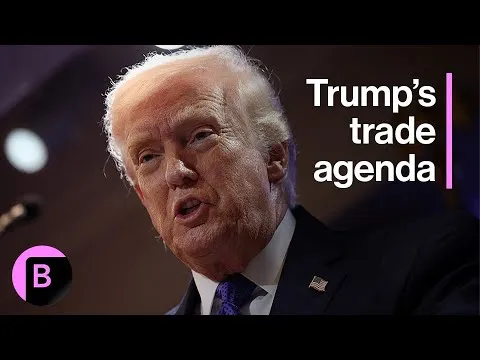
The new US 15% global tariff—imposed under Section 122 of the Trade Act of 1974, effective February 24, 2026, for up to 150 days—replaces the higher “reciprocal” tariffs struck down by the US Supreme Court on February 20. For Thailand, this is largely a net positive in the near term.
Short-Term Impacts (Next 3–6 Months)
- Tariff relief and competitiveness boost: Thailand previously faced an average ~19% rate on many goods (higher on some products), while competitors like Singapore, the UK, and others enjoyed 10%. The uniform 15% levels the playing field and, on certain Thai products, could drop effective rates below 10% after exemptions or calculations. Finance Minister Ekniti Nitithanprapas called it a “more level playing field” that strengthens Thailand’s appeal as a manufacturing and investment hub.
- Export front-loading: Exporters are expected to rush shipments to the US in Q1–Q2 2026 to capitalize on the lower rate before any potential changes when the 150-day window expires. This could temporarily lift Thai exports (especially electronics, electrical appliances, food like chicken/seafood/canned fruits, and autos/parts) and support GDP growth momentum. Thailand already runs a trade surplus with the US.
- Investment and stock market lift: The reset is already boosting confidence (e.g., Stock Exchange of Thailand reaction) and could accelerate FDI and production relocation, building on a 68% rise in investment incentive applications last year.
Longer-Term Outlook and Risks
- After 150 days (around July 2026): The tariff expires unless Congress extends it. Uncertainty looms—will the US negotiate bilateral deals (as it has with the UK, EU, Japan, etc.), extend the baseline, or impose new measures tied to the US trade deficit with Thailand? Talks on a fuller US-Thai deal have been delayed by domestic politics (border issues, elections, coalition formation), with a new government possibly not in place until mid-2026.
- Challenges: A stronger baht (if the dollar weakens) could hurt competitiveness. All countries now face the same 15%, so Thailand loses some prior diversification edge from China+1 shifts. Certain SME export groups may still feel pressure.
- Opportunities: If Thailand delivers on negotiations and investment reforms, it can attract more manufacturing/FDI and reduce over-reliance on the US market. Officials like Ekniti are confident in pushing 2026 GDP growth toward 3% via public/private investment and FDI, even if external headwinds make 2%+ more realistic.
The announcement of a 15% global tariff by former President Donald Trump signifies a significant shift in international trade policy. Such an increase suggests a move towards more protectionist measures, aiming to bolster domestic industries while potentially raising costs for consumers and businesses worldwide. This tariff hike could disrupt the delicate balance of global supply chains, prompting companies to reassess sourcing strategies and production locations.
In response, trading partners may retaliate with their own tariffs, escalating trade tensions and risking a trade war. These developments could slow global economic growth and increase market volatility, negatively impacting investor confidence. Governments and businesses will need to navigate these new trade dynamics carefully, seeking ways to mitigate adverse effects while safeguarding economic stability.
Looking ahead, trade negotiations will likely become more complex as countries adjust to the new tariff landscape. Diplomatic efforts may intensify to negotiate exemptions or lower tariffs, aiming to avoid broader economic disruptions. Ultimately, the global trade environment post-15% tariff hike will hinge on diplomatic resolutions and the resilience of international markets.
Other People are Reading


China would face ‘big problems’ if it ships arms to Iran, Trump warns

RBC Capital cuts QXO stock price target on housing weakness

Doubleview Gold Is Acquisition-Ready

Manhattan district attorney investigates sexual assault claims against Swalwell

Canaccord raises Taysha Gene Therapies price target on trial progress


I analyze securities based on value investing, an owner’s mindset, and a long-term horizon. I don’t write sell articles, as those are considered short theses, and I never recommend shorting.I was initially interested in a career in politics, but after reaching a dead-end in 2019 and seeing the financial drain this posed, I choose a path that would make my money work for me and protect me from more setbacks. This brought me to study value investing, in order to grow wealth with risk management in mind.From 2020 to 2022, I worked in a sales role at a law firm. As the top-grossing salesman, I eventually managed a team and contributed to our sales strategy. I spent much of my free time reading books and annual reports, steadily building my vault of knowledge about public companies. This period has since been useful in helping me assess a company’s prospects by its sales strategy. I particularly get excited when the product seems to sell itself.From 2022 to 2023, I worked as an investment advisory rep with Fidelity, primarily with 401K planning. My personal study before that allowed me to pass my Series exams two weeks ahead of schedule, and I once again found myself excelling at the job. I learned a few useful things from this more formal setting, but my main frustration was that I was still a value investor, and Fidelity’s 401K planning was based on modern portfolio theory. Lacking a way to change positions internally, I chose to walk away after a year.I gave writing for Seeking Alpha a try in November of 2023, and I’ve been here since. As I spent those years saving aggressively and building up my base of capital, I also actively invest now. My articles are how I share the opportunities that I seek for myself, and my readers are effectively walking this road alongside me.
Analyst’s Disclosure: I/we have a beneficial long position in the shares of DFDV either through stock ownership, options, or other derivatives. I wrote this article myself, and it expresses my own opinions. I am not receiving compensation for it (other than from Seeking Alpha). I have no business relationship with any company whose stock is mentioned in this article.
Seeking Alpha’s Disclosure: Past performance is no guarantee of future results. No recommendation or advice is being given as to whether any investment is suitable for a particular investor. Any views or opinions expressed above may not reflect those of Seeking Alpha as a whole. Seeking Alpha is not a licensed securities dealer, broker or US investment adviser or investment bank. Our analysts are third party authors that include both professional investors and individual investors who may not be licensed or certified by any institute or regulatory body.

Chinese investment in Brazil pivots from power dams to ice cream, courting consumers
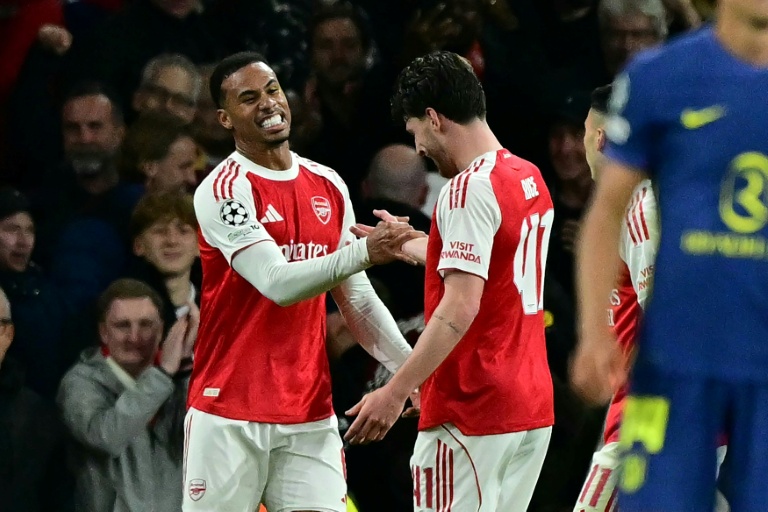
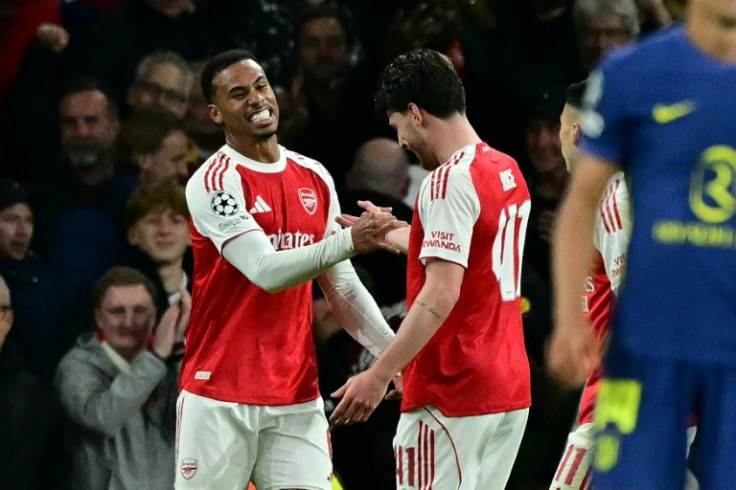
LONDON — Arsenal host Bournemouth at the Emirates Stadium on Saturday in a Premier League fixture that could tighten their grip on the 2025-26 title race, with Mikel Arteta’s side sitting nine points clear at the top of the table.
AFP
Kickoff is set for 12:30 p.m. BST (7:30 a.m. ET), marking Arsenal’s first home league match in over three weeks as they return from European and international commitments.
Arsenal enter the match in commanding form, boasting a 21-7-3 record through 31 games with 61 goals scored and just 22 conceded for a +39 goal difference and 70 points. Manchester City trail in second with 61 points from 30 matches. Bournemouth sit 13th with a 9-15-7 record, 42 points and a -2 goal difference, yet they remain within striking distance of European qualification spots after an impressive run of 11 unbeaten league games that included several draws.
The Cherries have proven difficult opponents recently. In January at the Vitality Stadium, Arsenal edged a thrilling 3-2 victory after trailing at halftime. Historically, Arsenal dominate the head-to-head, winning 13 of 19 competitive meetings while Bournemouth have claimed just three victories. At the Emirates, the Gunners have been especially ruthless, though Bournemouth’s organized setup under Andoni Iraola often frustrates bigger sides.
Arteta will demand a strong response after a demanding schedule. Arsenal’s attacking options look potent, with Viktor Gyokeres leading the line alongside Gabriel Martinelli and Noni Madueke in recent outings. Midfield stability rests on Declan Rice and Martin Zubimendi, while the defense featuring William Saliba and Gabriel remains one of the league’s stingiest.
Team news remains fluid heading into kickoff. Eberechi Eze returns to contention after a calf issue, and Piero Hincapie has resumed training. Bukayo Saka and Jurrien Timber are edging closer to fitness but may not start, while Mikel Merino stays sidelined with a foot injury. Martin Odegaard faces a doubt after a minor setback. For Bournemouth, Junior Kroupi, Alex Jimenez and Tyler Adams could feature after recoveries, though Justin Kluivert and Lewis Cook remain longer-term concerns.
Predicted lineups point to Arsenal deploying a familiar setup: David Raya in goal; Ben White, Saliba, Gabriel and Myles Lewis-Skelly at the back; Rice anchoring midfield with support from Zubimendi or others; and an attacking trio featuring Gyokeres, Madueke and Martinelli. Bournemouth are likely to line up in a compact 4-2-3-1, relying on Antoine Semenyo’s pace and Evanilson’s finishing to counter.
Referee Michael Oliver will take charge, with the match carrying added stakes as Arsenal aim to extend their lead before tougher fixtures loom. A victory would push them toward a potential 12-point cushion if results elsewhere align, keeping pressure on City in the closing stages of a fiercely contested campaign.
Where to Watch Arsenal vs Bournemouth: TV Channels and Livestream Options
Fans worldwide can tune in legally through official broadcasters. In the United Kingdom, the match airs live on TNT Sports 1, with coverage beginning at 11 a.m. BST. Subscribers can stream via the Discovery+ app or platform if they hold a TNT Sports package. Those with BT Broadband can add TNT Sports from £18 monthly, or access through HBO Max sports passes without long-term contracts in some setups. Arsenal’s official site and app will stream pre-match “Live From N5” build-up an hour before kickoff.
In the United States, the game broadcasts on USA Network with a 7:30 a.m. ET start. Livestream options include DirecTV Stream, Sling TV and other NBC platforms. Peacock may carry select coverage, but USA Network serves as the primary linear channel for this early Saturday slot. Spanish-language viewers can check Telemundo Deportes or UNIVERSO.
Australia sees coverage on Stan Sport, while India fans turn to JioHotstar. International viewers should consult local Premier League broadcast partners — many regions stream through DAZN, beIN Sports or ESPN affiliates. Check the Premier League’s official broadcaster list for country-specific details, as rights vary.
Free options are limited to highlights packages post-match on BBC Sport in the UK or official club channels. Avoid unauthorized streams to ensure quality and support the league. VPN users abroad can sometimes access home-country feeds if subscribed, but always verify legality.
Pre-match analysis will dominate airwaves, focusing on Arsenal’s title pursuit and Bournemouth’s resilience. Arteta has emphasized maintaining intensity: “I expect the best Arsenal,” he noted in recent comments, underscoring the need for focus despite the gap at the summit.
Bournemouth manager Iraola knows his side faces an uphill battle but has built a reputation for tactical discipline. Their recent unbeaten streak demonstrates depth, with key recoveries allowing more options in midfield and attack. European aspirations remain alive with seven games left, making every point valuable.
Tactical Battle and Key Players to Watch
Arsenal’s home record at the Emirates stands formidable, where they rarely drop points against mid-table visitors. Expect high pressing from the Gunners, quick transitions and set-piece threats from their tall defenders. Bournemouth will likely sit deep, absorb pressure and look for breaks through wide areas or direct play to their forwards.
Standout performers could include Arsenal’s Rice, whose box-to-box energy dictates tempo, and Gyokeres, the focal point in attack. For Bournemouth, Semenyo’s dribbling and Evanilson’s poaching instincts pose counter threats. Goalkeepers Raya and Mark Travers will need sharp interventions if the game opens up.
Injuries have tested both squads, but Arsenal’s depth — bolstered by returning internationals — gives them the edge. Still, complacency has bitten top teams before; Bournemouth have drawn or won against strong sides when organized.
The 2025-26 season has delivered drama, with Arsenal’s consistency separating them from challengers. This fixture offers a chance to build momentum ahead of a busy run-in that includes tough clashes with fellow contenders.
As kickoff nears, anticipation builds in north London. Supporters hope for a statement win that signals championship intent. For neutrals, it promises end-to-end action typical of Premier League Saturdays.
Global audiences exceed millions, with streaming making access easier than ever. Whether on traditional TV or mobile apps, the match delivers high-stakes football as the title race intensifies.
Arsenal fans will back their team to deliver three points, extending an impressive campaign. Bournemouth aim to spoil the party and collect a valuable result on the road.
With referee Oliver’s whistle approaching, all eyes turn to the Emirates. Will Arsenal stride further toward glory, or can the Cherries spring a surprise? Tune in via official channels to find out.
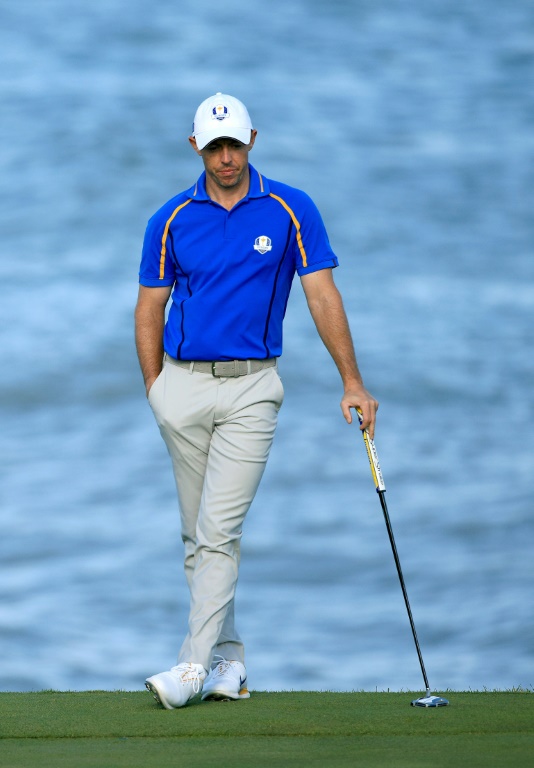
AUGUSTA, Ga. — Rory McIlroy arrived at Augusta National Golf Club this week as the defending Masters champion, carrying the weight — and freedom — of having finally completed golf’s career Grand Slam in dramatic fashion just 12 months earlier.
AFP
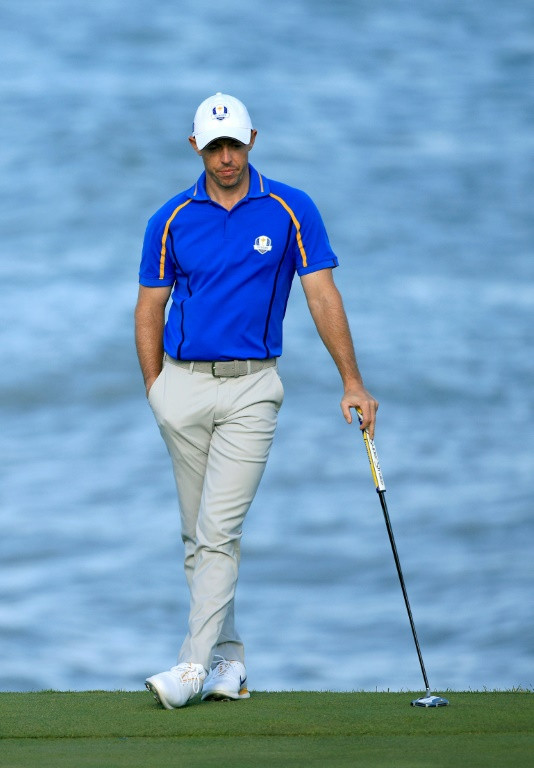
The question on every patron’s lips as the 90th Masters Tournament unfolds: Does the 36-year-old Northern Irishman have any realistic chance to become the first player since Tiger Woods in 2001-02 to win back-to-back green jackets?
Through two rounds, the answer appears emphatically yes. McIlroy opened with a 5-under 67 to share the first-round lead, then delivered a scintillating second-round 65 — capped by six birdies in his final seven holes, including a chip-in on 17 and a closing birdie on 18 — to establish a commanding six-shot lead at 12-under par. That margin set a new 36-hole Masters record.
“I feel like the way I played today exceeded where I thought I would be,” McIlroy said after his Friday round. “I used my head and got up-and-down when I needed to. I didn’t compound mistakes.”
The performance has transformed betting markets. Once listed as a +1,200 to +1,300 long shot behind Scottie Scheffler, McIlroy is now the heavy favorite at around -250 to defend his title heading into the weekend.
McIlroy’s 2025 victory over Justin Rose in a playoff not only delivered the elusive green jacket but removed the massive psychological burden that had defined his Augusta narrative for more than a decade. He had posted eight top-10 finishes before breaking through, often coming agonizingly close. Now, playing without the “monkey on his back,” observers note a calmer, more liberated McIlroy around the hallowed grounds.
Yet challenges remain. A back injury forced him to withdraw from the Arnold Palmer Invitational in early March. He returned for The Players Championship, where he tied for 46th at even par after a three-week layoff — one of the longest of his career. His putting has been inconsistent this season, ranking outside the top 100 in strokes gained: putting entering the week.
Still, underlying metrics paint a stronger picture. Many of McIlroy’s key statistics heading into the 2026 Masters — including ball-striking and bogey avoidance, where he leads the PGA Tour — are equal to or better than those before his 2025 triumph. He ranks first on tour in bogey avoidance at 9.92 percent.
His recent form showed flashes of brilliance: a runner-up finish at the Genesis Invitational and a solid T14 at Pebble Beach. The back issue appears managed, and McIlroy made a notable equipment tweak, switching to a new TaylorMade Qi10 3-wood that seemed to pay dividends in the opening rounds.
Historical Context and the Weight of Repeat History
Only three players have successfully defended the Masters title: Jack Nicklaus (1965-66), Nick Faldo (1989-90) and Woods (twice, including 2001-02). McIlroy would join elite company and etch his name deeper into golf lore.
His career Masters record is mixed but improving in recent years: a runner-up in 2022, a missed cut in 2023, T22 in 2024, and the breakthrough win in 2025. Across 17 prior starts, he has made 14 cuts with a scoring average of 71.45.
Augusta National played firm and fast in the opening rounds, rewarding precise iron play and creative short-game shots — areas where McIlroy has historically excelled when confident. His length off the tee remains a major asset, though the course’s demands on approach shots and putting under pressure will test him over the final 36 holes.
Lurking just behind are formidable challengers. Scheffler, the world No. 1 and two-time Masters winner, sits further back after a shaky second round but possesses the game to mount a charge. Patrick Reed and Tommy Fleetwood are among those within striking distance at 5- or 6-under. Bryson DeChambeau, Jon Rahm and others in the star-studded field keep the outcome far from certain.
Experts remain divided. Some analysts fade McIlroy due to the back concerns, the lack of a PGA Tour win since last year’s Masters, and the added scrutiny of defending while hosting the champions’ dinner. Others point to his experience, the mental liberation post-Grand Slam, and superior stats in several categories compared to 2025.
“Golf is hard. Winning the Masters? Pretty tough,” one pundit noted, highlighting the difficulty of repeating. Yet McIlroy’s ability to avoid big numbers — a hallmark of his 2026 season — could prove decisive on a course where mistakes are magnified.
What a Victory Would Mean
A second straight green jacket would cement McIlroy’s place among the all-time greats. It would also shift the narrative from “finally winning the Masters” to sustained dominance at the game’s most iconic venue.
Off the course, McIlroy has embraced his champion role, participating in the Drive, Chip and Putt finals and enjoying early time at Augusta. The absence of Grand Slam pressure allows him to play more freely, a factor he and his team have emphasized.
His caddie and support staff have spoken of a more relaxed atmosphere in the build-up, though the business of winning remains intense. McIlroy tees off in the featured groups, drawing massive galleries that will roar with every birdie attempt over the weekend.
Weather forecasts for the final rounds suggest continued firm conditions, potentially drying out further and making scoring tougher — a scenario that could favor disciplined, experienced players like McIlroy over pure power hitters.
The Broader 2026 Golf Landscape
McIlroy enters the week ranked No. 2 in the Official World Golf Ranking behind Scheffler. His 2026 season includes strong showings but no victories yet, with the back spasm interrupting momentum. Still, his ability to post rounds in the mid-60s when healthy was evident in the second round at Augusta.
Fellow contenders note the respect McIlroy commands. Many predict he will contend strongly, even if not everyone picks him to win outright. His short-game touch and experience navigating Amen Corner and the back-nine pressure have improved markedly.
For McIlroy personally, repeating would represent another career pinnacle. Having achieved what many thought might elude him forever, the Northern Irishman has spoken of moving goalposts and enjoying the game more. A defense of the green jacket would validate that mindset shift.
As the weekend approaches, all eyes remain on the defending champion. Can he hold a record lead against a stacked field on one of golf’s most demanding stages? History says repeats are rare. McIlroy’s current form and mental state suggest he has every chance to defy the odds.
Patrons and millions watching worldwide will witness whether the 2025 magic carries over. McIlroy has already authored one unforgettable Masters chapter. Another dominant performance could write a historic sequel.
Whether he lifts the trophy again or not, his journey from perennial contender to champion — and now defender — has enriched the sport. The final 36 holes will provide the latest installment in one of golf’s most compelling stories.
US military says two of its ships crossed through Strait of Hormuz

Fury vs Makhmudov: Briton calls out Anthony Joshua after comeback win

See Star Trek Tearing The Bridge Down: NuTrek Is Officially Dead
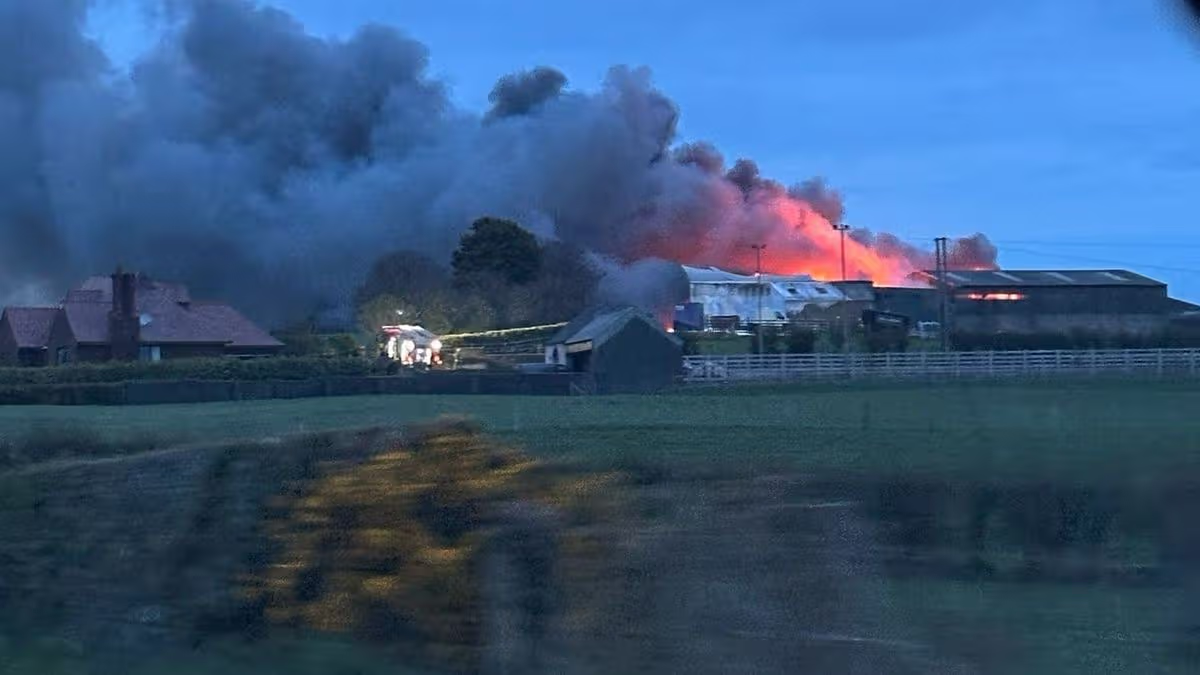
Corries Meats fire LIVE updates as over 50 firefighters tackle large blaze outside Newtownards


-

 Business6 days ago
Three Gulf funds agree to back Paramount’s $81 billion takeover of Warner, WSJ reports
-

 Politics1 day ago
US brings back mandatory military draft registration
-

 Fashion1 day ago
Weekend Open Thread: Veronica Beard
-

 Tech4 days ago
How Long Can You Drive With Expired Registration? What Florida Law Says
-

 Business6 days ago
No Jackpot Winner, Prize to Climb to $231 Million
-

 Fashion5 days ago
Massimo Dutti Offers Inspiration for Your Summer Mood Board
-
 Sports1 day ago
Man United discover Nico Schlotterbeck transfer fee as defender reaches Dortmund agreement
-

 Fashion4 days ago
Let’s Discuss: DEI in 2026
-

 Crypto World3 days ago
Bitcoin recovers as US and Iran Agree a Ceasefire Deal
-

 Crypto World2 days ago
Canary Capital Files SEC Registration for PEPE ETF
-

 Politics2 days ago
Malcolm In The Middle OG Turned Down ‘Buckets Of Money’ To Appear In Reboot
-

 Business1 day ago
Tesla Model Y Tops China Auto Sales in March 2026 With 39,827 Registrations, Beating Cheaper EVs and Gas Cars
-

 Business7 days ago
Akebia Therapeutics, Inc. (AKBA) Discusses Pipeline Progress and Strategic Focus on Kidney Disease Treatments at R&D Day – Slideshow
-

 Business6 hours ago
Ireland Fuel Protests Enter Day 5 as Blockades Spark Shortages and Government Prepares Support Package
-

 Business1 day ago
OpenAI Halts Stargate UK Data Centre Project Over Energy Costs and Copyright Row
-

 Tech6 days ago
Haier is betting big that your next TV purchase will be one of these
-

 Tech6 days ago
Gamer Restores the Original PlayStation Portal From Two Decades Ago
-

 Tech6 days ago
The Xiaomi 17 Ultra has some impressive add-ons that make snapping photos really fun
-

 Tech6 days ago
Samsung just gave up on its own Messages app
-

 Tech6 days ago
Save $130 on the Samsung Galaxy Watch 8 Classic: rotating bezel, sleep coaching, and running coach for $369
You must be logged in to post a comment Login