
Business
Where Is Elon Musk Spending His Money in 2026? A Breakdown of Tesla, SpaceX and Politics This Year So Far

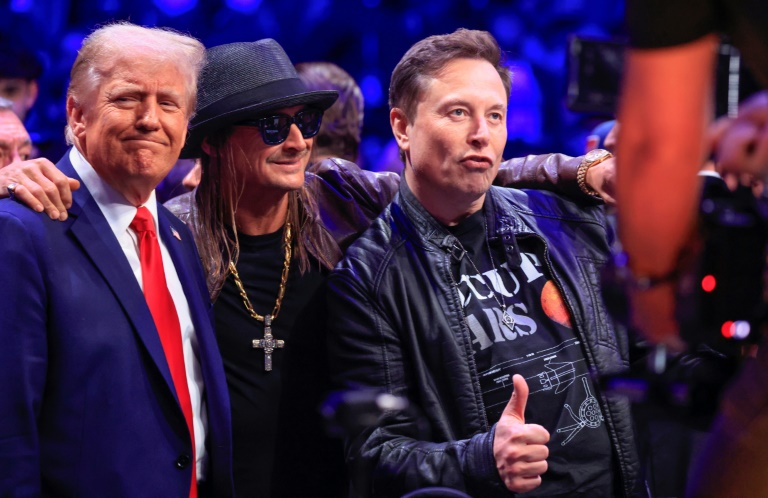
Elon Musk is in the middle of one of the most expensive years of his business career, funneling tens of billions of dollars across Tesla, SpaceX, xAI and a sprawling new chip-manufacturing venture, while simultaneously returning to large-scale political spending after briefly pulling back last year. Here is a breakdown of where the money is going.
Tesla’s Record Capital Spending
Tesla has raised its 2026 capital expenditure guidance to more than $25 billion, up from an already elevated forecast of “over $20 billion” issued in January and nearly triple the roughly $8.5 billion the company spent in 2025. The increase, disclosed during Tesla’s first-quarter earnings call in April, covers a wide range of priorities including AI training infrastructure, chip design, expanded manufacturing capacity for the Optimus humanoid robot, robotaxi operations, and supply chain investment across batteries, energy storage and AI silicon.
The scale of that spending has already shown up in Tesla’s quarterly results. The company’s capital expenditures jumped 142% year over year to nearly $6 billion in the quarter ended June 30, according to its shareholder deck, a surge that Chief Financial Officer Vaibhav Taneja said was the primary driver behind Tesla swinging to negative free cash flow for the period, which plummeted 848% from a year earlier to roughly negative $1 billion.
Musk has defended the pace of spending by comparing it to the AI infrastructure investment of major technology rivals, noting that Amazon is projecting roughly $200 billion in capital expenditure for 2026, while Google has guided to between $175 billion and $185 billion. Speaking on Tesla’s earnings call, Musk described 2026 as a “massive capex year” for the company, adding that he remains confident the investments underway will yield what he called incredible returns.
Tesla’s $2 Billion Bet on xAI
Beyond its own operations, Tesla has also directed capital toward Musk’s separate artificial intelligence venture. In January, Tesla confirmed a $2 billion investment in xAI through a purchase of Series E Preferred Stock, formally linking the financial fortunes of the two Musk-led companies. The move came as Tesla has increasingly positioned itself as an AI and robotics company rather than a pure electric vehicle manufacturer, a shift the company has said underpins much of its valuation.
Terafab: A Massive New Chip-Manufacturing Venture
Perhaps the most ambitious item on Musk’s 2026 spending list is Terafab, a joint semiconductor manufacturing venture between Tesla, SpaceX and xAI, alongside chipmaker Intel, aimed at addressing what Musk has described as an industry-wide shortage of AI chips. Site confirmation for the project’s initial phase came this month, with Tesla and SpaceX agreeing to build the facility in Grimes County, Texas, roughly an hour northwest of Houston.
That initial phase alone is projected to cost approximately $16.8 billion and is expected to create at least 3,000 jobs, many filled by local workers. Notably, that spending sits entirely outside Tesla’s separate $25 billion capital expenditure guidance for 2026, meaning the company’s total investment exposure this year is considerably larger than the headline capex figure suggests. Some analysts, including those at Morgan Stanley, have estimated that the complete Terafab buildout could ultimately require between $35 billion and $45 billion in total capital, with meaningful chip production unlikely before mid-2028 even under an accelerated construction timeline.
Musk has described Terafab in stark terms, saying that without the facility, his companies simply will not have the chips they need to pursue their broader AI ambitions. According to Musk, roughly 25% of the eventual AI computing capacity from the completed facility is expected to power Tesla’s Optimus robots, with the remaining 75% directed toward SpaceX’s ambitions for AI-powered satellites and orbital data centers.
SpaceX’s Own Massive Spending
Separately from its involvement in Terafab, SpaceX has been ramping up its own capital spending significantly, particularly tied to its AI computing ambitions. The company spent $329 million on Tesla-made Megapack battery systems during the first half of 2026 alone, according to a public quarterly filing, as costs connected to its AI data center expansion climbed sharply. SpaceX’s overall capital spending pace is running well ahead of Tesla’s, according to recent reporting, reflecting the company’s rapid buildout of AI infrastructure alongside its core launch and Starlink satellite businesses following its initial public offering in June.
A Return to Big Political Spending
After telling reporters last year that he planned to significantly scale back his political donations, Musk has reemerged in 2026 as one of the largest individual political donors ahead of the midterm elections. Federal Election Commission filings show Musk donated $5 million each to the Congressional Leadership Fund, the Senate Leadership Fund and MAGA Inc., the pro-Trump super PAC, in late June, followed by another $5 million to each of the two Republican congressional leadership funds in mid-December. This year, he added a $10 million contribution to a super PAC supporting Kentucky Senate candidate Nate Morris, along with roughly $1.6 million to his own America PAC in March.
Beyond those individual contributions, Musk has authorized America PAC to spend between $100 million and $120 million on a new field program focused on conservative voter turnout across at least eight states ahead of the 2026 midterms, according to reporting citing people briefed on the plans. That commitment builds on America PAC’s role as the largest single vehicle for Musk’s political spending, having already poured more than $250 million into Trump’s 2024 reelection campaign.
A Year Defined by Scale
Taken together, Musk’s 2026 spending spans a strikingly broad range: tens of billions of dollars in Tesla capital expenditure focused on AI and robotics, billions more tied to Terafab and SpaceX’s own AI infrastructure buildout, and well over $100 million committed to political campaigns and voter turnout efforts ahead of the midterms. With Terafab construction just beginning and Tesla’s capital spending still climbing through the back half of the year, the full scope of Musk’s 2026 financial commitments across his business empire is likely to continue expanding in the months ahead.

SAN FRANCISCO — Shares of Atlassian Corporation jumped more than 30 percent in trading Friday after the collaboration software company reported stronger-than-expected fiscal fourth-quarter results and issued first-quarter revenue guidance that exceeded Wall Street estimates.
The stock rose as much as 30 percent or more in morning trading, with shares trading near $143 to $148 at various points, up sharply from the previous close of about $110. The move marked one of the largest single-day gains for the company in recent months and pushed the shares toward levels last seen earlier in the year.
Atlassian, known for tools such as Jira, Confluence and other team productivity software, said revenue for the quarter ended June 30 rose 28 percent year over year to $1.77 billion. That figure topped analysts’ average estimate of roughly $1.66 billion. Cloud revenue climbed 31 percent to $1.21 billion, continuing a trend of accelerating growth in the company’s subscription-based offerings.
Subscription annual recurring revenue reached $6.61 billion, up 23 percent from a year earlier. Remaining performance obligations, a measure of contracted future revenue, increased 44 percent to $4.82 billion, providing visibility into future business.
On a GAAP basis, Atlassian reported net income of $139 million, or 55 cents per share, compared with a net loss of $24 million, or 9 cents per share, in the year-earlier period. The company posted a GAAP operating margin of 12 percent. Adjusted earnings came in at $1.87 per share, beating the consensus forecast of $1.50.
“Simply put, we had an outstanding quarter to cap an outstanding year,” Chief Executive Officer and co-founder Mike Cannon-Brookes said in the company’s earnings materials. He noted that total revenue grew 28 percent year over year and that cloud growth accelerated, with certain AI-related tools surpassing one million monthly active users after more than doubling in a single quarter.
For the first quarter of fiscal 2027, Atlassian projected revenue between $1.705 billion and $1.715 billion, above the analyst consensus of about $1.66 billion to $1.67 billion. The company also pointed to continued cloud revenue growth in the high-20 percent range. Full-year fiscal 2027 guidance reflected more measured expectations amid broader macroeconomic uncertainty, though the near-term outlook and metrics on enterprise deals helped ease some investor concerns.
Cannon-Brookes also indicated plans to purchase up to $250 million of Atlassian shares, a move that signaled confidence in the company’s trajectory. He already holds a substantial stake in the firm.
The results and guidance prompted positive reactions from analysts. Bank of America upgraded the stock to Buy from Neutral and raised its price target to $175 from $105, describing Atlassian as an “AI beneficiary rather than an AI victim.” The firm highlighted the company’s workflow and collaboration data as a differentiated asset. Other firms also lifted targets, citing the strong finish to the fiscal year and evidence of AI-related product traction.
Atlassian has faced questions in recent periods about the potential impact of artificial intelligence on software demand and competitive dynamics in the collaboration space. The latest numbers showed accelerating cloud growth, record enterprise deals and rising adoption of AI-enabled features, which investors interpreted as evidence that the company is successfully integrating the technology into its platform rather than being disrupted by it.
The broader software sector has experienced volatility, with some SaaS companies seeing valuation pressure amid shifting growth expectations. Atlassian’s ability to post sequential improvement in cloud metrics and return to GAAP profitability stood out against that backdrop. Trading volume on Friday was elevated, reflecting heavy investor interest following the after-hours release of results on Thursday.
Atlassian’s products are used by teams for project tracking, knowledge management, service delivery and software development. The company has emphasized its shift toward cloud deployments and the expansion of its customer base among larger enterprises. Metrics such as remaining performance obligations and annual recurring revenue serve as key indicators of that transition’s progress.
Looking ahead, investors will watch for sustained cloud growth rates, further details on AI monetization and the company’s ability to convert strong remaining performance obligations into realized revenue. The first-quarter guidance provides an early test of momentum into the new fiscal year.
The stock’s sharp advance reflected relief that growth concerns had been addressed by the reported numbers and that management’s outlook aligned with or exceeded expectations on key near-term metrics. While full-year guidance was more cautious, the combination of beat-and-raise elements on the quarter, profitability improvement and insider buying supported the strong market reaction.
Atlassian closed its fiscal 2026 with clear evidence of demand for its core offerings and early signs that AI features are contributing to user engagement. The market’s response on Friday underscored how closely investors are monitoring the interplay between traditional software growth and the emerging role of artificial intelligence in enterprise tools.
Business
Isuzu Motors Limited 2027 Q1 – Results – Earnings Call Presentation (OTCMKTS:ISUZY) 2026-08-07


Seeking Alpha’s transcripts team is responsible for the development of all of our transcript-related projects. We currently publish thousands of quarterly earnings calls per quarter on our site and are continuing to grow and expand our coverage. The purpose of this profile is to allow us to share with our readers new transcript-related developments. Thanks, SA Transcripts Team
Business
Luckin Coffee Inc. 2026 Q2 – Results – Earnings Call Presentation (OTCMKTS:LKNCY) 2026-08-07
Seeking Alpha’s transcripts team is responsible for the development of all of our transcript-related projects. We currently publish thousands of quarterly earnings calls per quarter on our site and are continuing to grow and expand our coverage. The purpose of this profile is to allow us to share with our readers new transcript-related developments. Thanks, SA Transcripts Team
Seeking Alpha’s transcripts team is responsible for the development of all of our transcript-related projects. We currently publish thousands of quarterly earnings calls per quarter on our site and are continuing to grow and expand our coverage. The purpose of this profile is to allow us to share with our readers new transcript-related developments. Thanks, SA Transcripts Team
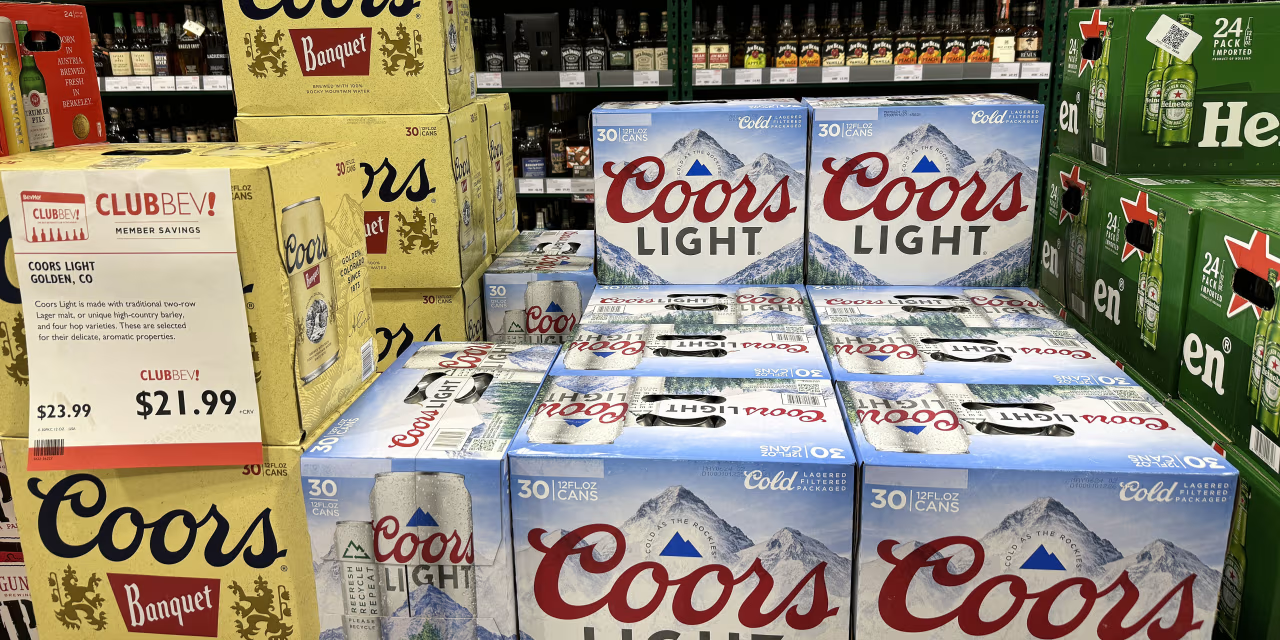
Molson Coors TAP Beverage said second-quarter sales fell as the company tries to balance sluggish customer demand with higher supply costs.
The beer industry had a solid start to the year, but is now weathering iffy consumer demand as the war in Iran is sparking widespread inflation, Chief Executive Rahul Goyal told analysts on a call Thursday.
Copyright ©2026 Dow Jones & Company, Inc. All Rights Reserved. 87990cbe856818d5eddac44c7b1cdeb8
Yelp shares climbed Friday, trading up 7.79% to $26.99, extending gains following the local business review platform’s second-quarter earnings report, which beat Wall Street expectations on both revenue and profit while highlighting rapid growth in the company’s newer AI-powered products.
The results, released Thursday after markets closed, showed Yelp continuing to navigate a challenging advertising environment for its core local business listings while leaning increasingly on artificial intelligence-driven services to offset slower growth in its traditional revenue streams.
A Solid Beat Across the Board
Yelp reported second-quarter revenue of $375.5 million, up 1.4% from the same period a year earlier and comfortably ahead of the roughly $366.7 million analysts had been expecting heading into the report. On a per-share basis, the company posted GAAP earnings of 57 cents, beating the consensus estimate by 56.7%, while adjusted earnings came in at 62 cents per share, topping the 40-cent forecast by 22 cents.
The revenue beat came even as growth decelerated from the 3.7% year-over-year increase Yelp posted in the same quarter a year earlier, reflecting continued softness in the company’s core advertising business even as overall results exceeded the relatively modest expectations analysts had set heading into the report.
AI-Powered Services Provide a Bright Spot
The standout theme in Yelp’s results centered on the rapid growth of its newer artificial intelligence-driven revenue streams, a category the company groups under “other revenue” that includes its Yelp Host product, its Hatch platform, and data licensing arrangements. In the first quarter of 2026, that segment surged 75% year over year to a record $29 million, and the company has continued to point to it as central to its longer-term growth strategy, with management targeting a $250 million annual run rate for the category by the end of 2028.
Yelp Host, the company’s AI-powered call-handling product for local businesses, has shown particularly strong momentum. The service surpassed an annual run rate of 1.5 million calls handled by April, more than doubling its volume since January. Yelp’s chief executive has estimated the total addressable market opportunity for the product at more than $1 billion within the United States alone, underscoring why the company has continued prioritizing investment in the offering even as growth in its legacy advertising business has slowed.
Continued Pressure on Core Advertising
Despite the strength in its newer AI-driven offerings, Yelp’s traditional local advertising business has continued to show signs of strain. In the company’s first-quarter results, paying advertising locations fell 6% year over year to approximately 485,000, while ad clicks declined 10% even as the average cost per click rose 8%. Within that business, services advertising revenue grew a modest 1% to $234 million, while advertising revenue tied to restaurants, retail and other categories fell 11% to $99 million, reflecting uneven demand trends across different segments of Yelp’s local business customer base.
Management has attributed some of that softness to broader macroeconomic uncertainty affecting advertiser budgets, including a period of particular weakness in March that the company linked to geopolitical events weighing on business confidence more broadly.
Guidance Holds Steady
Following the second-quarter results, Yelp maintained its full-year 2026 revenue guidance at approximately $1.47 billion, a figure that closely aligns with analyst expectations and reflects the company’s continued confidence in its overall growth trajectory despite ongoing pressure in its core advertising segment. For the third quarter specifically, Yelp had previously guided investors to expect revenue in a range of $363 million to $368 million, alongside adjusted EBITDA of $70 million to $75 million, with full-year adjusted EBITDA guidance set at a range of $310 million to $330 million.
Capital Returns Continue
Alongside its operational results, Yelp has continued an active share buyback program, repurchasing $125 million worth of its own stock in the first quarter of 2026 alone, contributing to a roughly 12% year-over-year decline in diluted shares outstanding. The company reported $414 million remaining under its current share repurchase authorization as of that filing, giving it continued flexibility to return capital to shareholders even as it invests in its AI product roadmap.
Insider Selling Continues
Not every signal surrounding the stock has been unambiguously positive. According to recent filings, Yelp insiders have sold shares on the open market 19 times over the past six months, with zero purchases recorded during that same window, a pattern some analysts have flagged as worth monitoring even though insider selling can reflect a range of personal financial decisions unrelated to a company’s underlying business outlook. Institutional investor positioning has also been mixed, with 141 institutional holders adding to their Yelp positions in the most recent quarter while 175 reduced their stakes over the same period.
A Stock That Has Traded in a Wide Range
Yelp shares have traded within a 52-week range of $19.60 to $34.64, reflecting a meaningful degree of volatility over the past year even as the company’s underlying revenue growth has remained relatively stable. Ahead of Thursday’s earnings release, Yelp shares had traded modestly higher, up about 1.1% in the days leading into the report, with an average analyst price target of $26.71 sitting just below the stock’s pre-earnings trading level, suggesting that at least part of Friday’s post-earnings rally reflects the market recalibrating its expectations upward following the stronger-than-anticipated results.
With Yelp’s core advertising business continuing to face headwinds even as its newer AI-driven products post triple-digit growth rates, investors are likely to keep a close watch on how quickly Yelp Host and its related services can scale toward the company’s stated $250 million run-rate target by 2028. The trajectory of that AI-focused growth engine, set against the ongoing softness in Yelp’s traditional local advertising business, is expected to remain the central storyline shaping investor sentiment toward the stock heading into the back half of 2026.
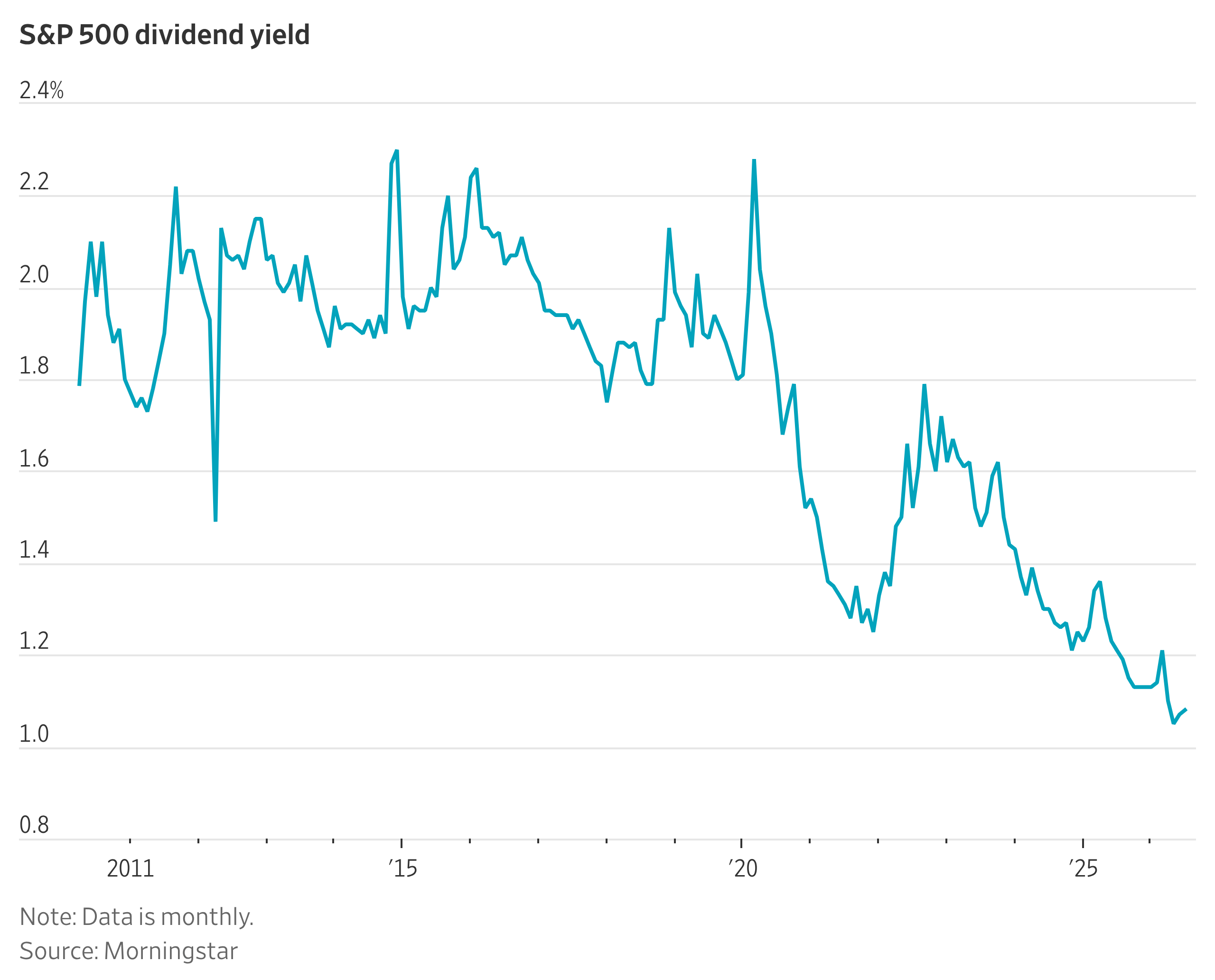
Stocks are spitting out a smaller share of their returns in dividend income, a challenge for those who lean on steady cash flows to cover daily expenses. The trailing 12-month dividend yield on the S&P 500 is now hovering around a generational low of just over 1%, after trending downward for much of the past two decades. Read more on the trend here.

AppTech Payments director buys $23,814 in stock

Check out what’s clicking on FoxBusiness.com.
A nationwide recall has been issued for dog and horse medication after glass fibers were found floating in injection vials.
American Regent Inc. announced that select lots of Adequan Canine Injection and Adequan i.m. Injection joint medication are affected by the recall.
The recall includes two lots of Adequan Canine Injection, which is used to treat joint dysfunction in dogs, and two lots of Adequan i.m. Injection, which is for treating joint dysfunction and lameness in horses.
SOME OLDER FORD VEHICLES POSE ‘UNREASONABLE’ SAFETY RISKS, REGULATORS WARN
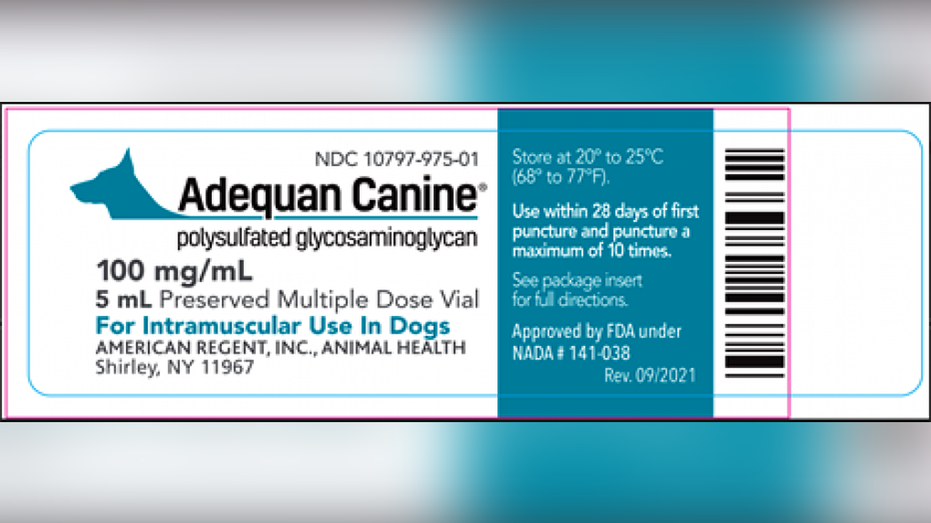
American Regent, Inc. announced that select lots of Adequan Canine Injection and Adequan i.m. Injection joint medication are affected by the recall. (FDA)
Both products are clear and colorless to slightly yellow solutions administered by intramuscular injection.
The company said the glass fibers were found during routine testing.
American Regent Inc. said it has not received any reports of an injury related to the recall.
POPULAR WALMART NUT BUTTER RECALLED AFTER TESTING DETECTS SALMONELLA
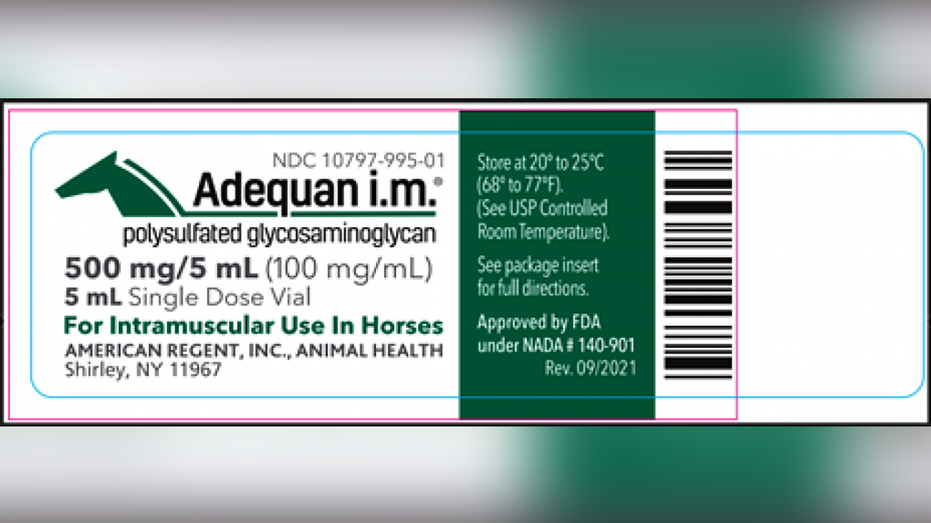
Both products are clear and colorless to slightly yellow solutions administered by intramuscular injection. (FDA)
Consumers are urged to stop using the recalled product lots and to throw them away or return them to the manufacturer. Consumers should also contact a veterinarian if their pets have experienced any problems that may be linked to using the medication.
“The administration of an intramuscular injectable product containing particulate matter, such as glass fibers, may result in local irritation, swelling, inflammation, injection site pain, infection, or abscesses,” the company said in its recall notice.

American Regent, Inc. said it has not received any reports of an injury related to the recall. (Getty Images / Getty Images)
CLICK HERE TO GET FOX BUSINESS ON THE GO
Veterinary hospitals, distributors and retailers are also instructed to return any unused product to the manufacturer or discard the item.
“American Regent, Inc. is committed to the safety of patients who rely on its products and is taking this precautionary action to protect public health,” the company said.
Editor’s note: The original version of this story incorrectly stated that the recall was initiated after fiberglass was found in the vials.
Western Digital Stock Tanks. An Earnings Beat Isn’t Enough These Days.

Jordan Coyle & King Kannan GP win again at RDS

Top rings for tracking your health and fitness tested and ranked

Elon Musk Rolls Out X Money: Users Can Bank, Pay Bills & Send Money Inside X | Vantage | 4K


-

 Politics5 days ago
Zack Polanski: an incitement to murder Nigel Farage?
-

 Crypto World6 days ago
MicroStrategy Post-Earnings CLARITY Act Push Could Add New Catalyst for Its Stock
-

 Crypto World7 days ago
XRP Ledger v3.3.0 brings five institutional features
-

 Crypto World7 days ago
New York sues Kalshi over prediction market gambling
-

 Crypto World6 days ago
Crypto PAC spending tops $2M in Michigan House race
-

 Business5 days ago
DTCR: Deleveraging And A Hedge Fund Collapse Point To A Possible AI Bottom
-

 Tech6 days ago
ESET tracks rise in malicious AI skills and adaptable malware
-

 Sports7 days ago
France Cricket implodes: letters hidden in a drawer and a board at war
-
Crypto World5 days ago
XRP Ledger urges node upgrade after manifest flood
-

 Crypto World7 days ago
Moneyflip CEO charged in $40K murder-for-hire plot
-
 Sports7 days ago
Bruno Fernandes decision made as Man United ‘discuss’ striker transfer option
-

 News Videos6 days ago
Financial Crash Expert: The 90-Day Collapse Timeline They Are Desperately Hiding.
-

 Sports2 days ago
Jordan Coyle & Cordiamo take Laya Arena Stakes at RDS
-
 Crypto World4 days ago
US Tech Stocks See Largest 5-Week Inflow in History: Can Nasdaq Break Its Downtrend?
-
 NewsBeat6 days ago
Tourist plane on sightseeing flight in Peru crashes into a field, killing all 13 people on board
-

 NewsBeat6 days ago
Arsenal reach full agreement with Newcastle over Bruno Guimaraes transfer | Football
-

 Fashion12 hours ago
Frugal Friday’s Workwear Report: Cap-Sleeve Pointelle Crewneck Sweater
-

 Tech6 days ago
Page Not Found | WIRED
-
 NewsBeat6 days ago
Bikini-clad Jennifer Aniston, 57, kisses hypnotist boyfriend Jim Curtis as they enjoy a romantic getaway aboard a luxury yacht in Spain
-

 Politics2 days ago
Reform UK And Greens Sink To Lowest Favourability Ratings To Date
You must be logged in to post a comment Login