Connect with us
DAPA Banner
DAPA Coin
DAPA
COIN PAYMENT ASSET
PRIVACY · BLOCKDAG · HOMOMORPHIC ENCRYPTION · RUST
ElGamal Encrypted MINE DAPA
🚫 GENESIS SOLD OUT
DAPAPAY COMING

Business

Which Is Best for UK Weather?

Published

on

Which Is Best for UK Weather?

Choosing the right roofing style is one of the most important decisions for any property owner in the UK. The roof plays a vital role in protecting a building from rain, wind, temperature changes, and other environmental factors.

When planning a new build, extension, or roof replacement, many homeowners find themselves deciding between a flat roof and a pitched roof.

Both roofing systems have distinct advantages and limitations. The best choice often depends on factors such as property design, budget, maintenance expectations, and local weather conditions. Understanding how each option performs in the UK’s climate can help property owners make an informed decision.

Understanding Flat Roofs

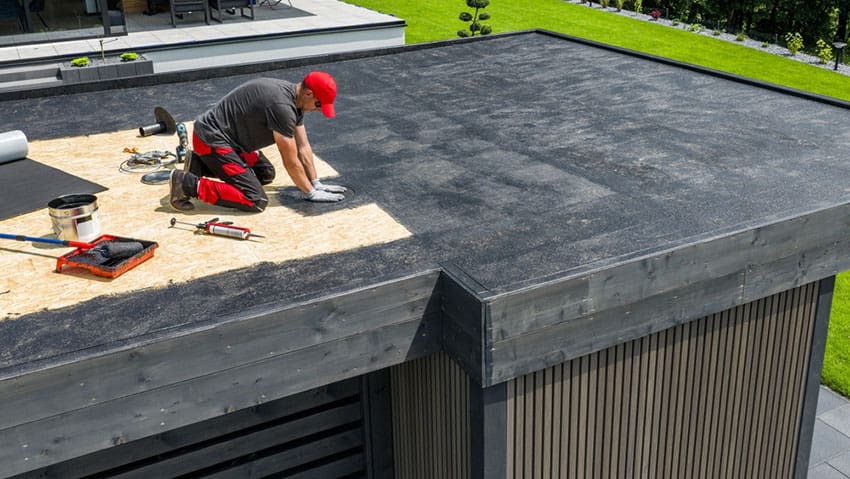
A flat roof is designed with a very slight slope that allows rainwater to drain away. Although referred to as “flat,” these roofs are not completely level. Modern flat roofing systems are commonly constructed using materials such as EPDM rubber, fibreglass, or high-performance felt. Flat roofs have become increasingly popular for home extensions, garages, garden rooms, and contemporary residential properties. Their clean, modern appearance makes them attractive for modern architectural designs. This growing demand can be seen in areas such as flat roofing Watford projects, where homeowners often choose flat roof systems for their practicality, cost-effectiveness, and sleek appearance.

One of the primary advantages of a flat roof is affordability. Installation costs are generally lower because fewer materials are required, and construction is typically faster than a pitched roof. Flat roofs also provide easy access for inspections, repairs, and maintenance. Another benefit is the potential use of roof space. Many property owners choose to incorporate roof terraces, solar panels, or green roofing systems on flat roof structures.

Advertisement

Understanding Pitched Roofs

A pitched roof features two or more sloping sides that create an angled structure. This traditional roofing design is commonly seen across the UK and has been used successfully for centuries. Pitched roofs are particularly effective at directing rainwater away from the property. Their steep angles help prevent water accumulation and reduce the risk of leaks caused by standing water.

These roofs also offer additional attic or loft space, which can be used for storage or converted into living accommodation. For homeowners seeking long-term value, a pitched roof often provides greater durability and lifespan compared to many flat roofing systems.

The classic appearance of a pitched roof complements a wide range of architectural styles, making it a preferred choice for many traditional homes.

Flat Roof vs Pitched Roof Comparison

Feature Flat Roof Pitched Roof
Cost Lower installation cost Higher initial cost
Lifespan 25–40 years 50+ years
Rain Performance Needs drainage system Excellent natural runoff
Maintenance Easier access, more frequent checks Less frequent but harder access
Energy Efficiency High with proper insulation High with loft insulation
Usable Space Can be used for terrace/solar panels Provides loft/attic space
Weather Resistance Good when properly installed Excellent in heavy rain/snow
Aesthetic Style Modern, minimal Traditional, classic

Performance in UK Weather Conditions

The UK climate includes frequent rainfall, strong winds, frost, and occasional snowfall. These conditions place constant pressure on roofing systems throughout the year.

Advertisement

Rainfall Performance

Pitched roofs perform extremely well in heavy rainfall because water naturally flows down the slopes into guttering systems. Flat roofs rely on drainage systems, and while modern materials are highly effective, proper installation is essential to avoid water pooling.

Wind Resistance

Both roof types can perform well in windy conditions when properly designed. Pitched roofs may experience more wind uplift on exposed areas, while flat roofs can benefit from a more aerodynamic surface. Installation quality is the most important factor in both cases.

Snow and Ice

Pitched roofs allow snow and ice to slide off easily, reducing structural load. Flat roofs can retain snow for longer periods, which may increase weight. Modern structural design accounts for this, but proper engineering is essential.

Energy Efficiency

Energy efficiency is becoming increasingly important for homeowners looking to reduce energy costs.

Advertisement

Pitched roofs often provide additional insulation opportunities through loft spaces. These air pockets can help regulate indoor temperatures throughout the year.

Flat roofs can also achieve excellent thermal performance when fitted with modern insulation systems. In many cases, the overall energy efficiency depends more on insulation quality than roof shape alone.

Maintenance Requirements

Every roofing system requires ongoing maintenance to maximise its lifespan.

Flat roofs typically need more frequent inspections to ensure drainage systems remain clear and that membranes remain intact. Because the surface is accessible, maintenance is often simpler and safer to carry out.

Advertisement

Pitched roofs generally require less routine attention. However, repairs can be more complex due to height and accessibility challenges. Missing tiles, damaged flashing, and gutter issues should be addressed promptly to prevent water ingress.

Professional inspections help identify minor problems before they develop into costly repairs.

Lifespan Comparison

Roof longevity is a major consideration for property owners making long-term investments.

A well-installed pitched roof can often last 50 years or more, depending on the materials used. Slate and clay tile systems may last significantly longer with proper maintenance.

Advertisement

Modern flat roofing systems have also improved dramatically in recent decades. High-quality EPDM and fibreglass roofs commonly achieve lifespans of 25 to 40 years when professionally installed and maintained.

The lifespan of either roofing system depends heavily on workmanship, materials, and regular maintenance.

Cost Considerations

Budget frequently influences roofing decisions.

Flat roofs generally have lower installation costs because they require fewer structural components and less labour. This makes them particularly attractive for extensions and smaller structures.

Advertisement

Pitched roofs involve more complex construction and greater material usage, resulting in higher upfront costs. However, many homeowners view the increased durability and longevity as a worthwhile long-term investment.

When evaluating costs, it is important to consider both initial installation expenses and future maintenance requirements.

Which Roof Is Best for UK Weather?

There is no universal answer because the ideal roofing solution depends on individual property requirements.

For homeowners seeking a traditional appearance, excellent rainwater management, and maximum longevity, a pitched roof is often the preferred choice.

Advertisement

For modern properties, extensions, and projects where budget efficiency and usable roof space are priorities, a flat roof can provide excellent performance when installed using high-quality materials and proper drainage systems.

Many experienced roofing professionals, including reputable roofers in St Albans, recommend choosing a roofing solution that aligns with the property’s design, functional requirements, and long-term maintenance goals, rather than making a decision based solely on current trends.

Frequently Asked Questions

1. Are flat roofs suitable for heavy UK rainfall?

Yes. Modern flat roofing systems are designed with slight slopes and efficient drainage systems that allow water to drain effectively when installed correctly.

2. Which roof type lasts longer?

Generally, pitched roofs have a longer lifespan and can last 50 years or more. Modern flat roofs can also provide decades of service with proper maintenance.

Advertisement

3. Is a flat roof cheaper than a pitched roof?

In most cases, yes. Flat roofs typically require fewer materials and less labour, making them more cost-effective to install.

4. Which roof is more energy efficient?

Both roof types can achieve excellent energy efficiency. The quality of insulation and installation has a greater impact than the roof design itself.

Advertisement
Continue Reading
Click to comment

You must be logged in to post a comment Login

Leave a Reply

Business

EnQuest reports $172.5m in government payments for 2025

Published

on


EnQuest reports $172.5m in government payments for 2025

Continue Reading

Business

Why the Next Chapter of Credit Card Rewards May Be Written Around Everyday Spending

Published

on

Spending short periods of time shopping or browsing online during work hours is not a sackable offence, a UK judge has ruled in a case that awarded an employee more than £14,000 in compensation.

The modern loyalty program occupies a curious place on corporate balance sheets, recorded as a liability that many issuers quietly prefer never comes due.

For decades the economics of credit card rewards have rested on a predictable pattern of human behavior, namely that a substantial share of the points, miles, and cash-back balances consumers earn will sit dormant, expire, or be redeemed at a fraction of their advertised worth. Programs engineered around aspirational travel, tiered status, and partner portals have rewarded the disciplined few who master their rules while leaving the majority to accumulate value they rarely convert into anything tangible. The outcome is an industry that markets generosity while monetizing friction, and a generation of younger cardholders who have grown skeptical that the figures printed on their statements bear any relationship to money they will ever actually see.

Coverd, an Andreessen Horowitz backed fintech company preparing to bring its first product to market this summer, is wagering that this arrangement has reached the end of its useful life. The company’s namesake card, developed under founder and chief executive Albert Wang, is built around a single proposition that inverts the conventional model. Where traditional programs award points to be banked and deciphered later, the newly launched Coverd Card returns cash back on many purchases instantly, in amounts that can reach the full value of the transaction. A cardholder who buys groceries, fills a tank of gas, or orders lunch may find the purchase partially offset or, in certain cases, entirely covered at the moment of the swipe.

The mechanism behind that promise is a transparent rewards matrix that the company publishes openly, an unusual posture in a category long accustomed to burying its rules in fine print. The amount a cardholder earns on any given purchase is determined by where that purchase falls within the matrix, a structure that accounts for spending category, timing, and transaction size, and that yields a defined cash-back figure in place of an opaque accrual of points. Once those rewards are earned, the company returns the decision of what to do with them to the cardholder, who may apply a balance directly as a statement credit, take it as straightforward cash back, or carry it into a set of interactive in-app features designed to let users increase what they have already earned.

That emphasis on routine, unglamorous spending is deliberate, and it marks a departure from a rewards landscape oriented largely toward frequent business travelers and high-balance luxury consumers. Coverd’s early usage data points toward the categories that dominate ordinary household budgets, with cardholders concentrating their activity at major retailers and quick-service or fast-food restaurants including. The company has positioned the card around the spending of the broad majority of consumers whose everyday purchases have historically generated the thinnest and slowest-accruing rewards, a population that legacy programs have been comparatively slow to court.

Advertisement

The interactive layer reflects a wider shift in how a younger cohort of consumers expects to engage with financial products. Major investing, prediction market, and language learning companies have shown that introducing elements of immediacy, feedback, and play into categories once regarded as static can meaningfully change the frequency and depth of user engagement. Coverd is applying a comparable logic to the most habitual financial activity in most people’s lives, on the premise that rewards experienced in real time and shaped by the user carry a resonance that deferred points have never managed to deliver.

The early signals suggest the proposition is finding an audience ahead of the card’s formal debut. Coverd reports a waitlist of roughly 50,000 prospective cardholders and says it has covered more than $25 million in consumer purchases through its app to date, including more than $10 million in the month of May 2026 alone. Pre-launch, the company reports its application has been drawing approximately 3,000 downloads, pre launch.

Coverd has raised capital from a group of investors that includes Andreessen Horowitz, through its Speedrun program, along with Tusk Ventures, Yolo Investments, WndrCo, and Volt Capital. Its card is issued through Rain, a blockchain-based card infrastructure platform valued at $1.95 billion.

Whether Coverd can convert pre-launch enthusiasm into a durable market position will depend on questions that only scale can answer, among them the economics of returning so much value to cardholders so quickly and the company’s ability to sustain its rewards matrix as its user base expands. What the company has identified, and what its early traction appears to support, is a real gap between the way the rewards industry has long operated and the way a rising generation of consumers expects to interact with their money.

Advertisement

If that gap proves as wide and as lasting as Coverd is betting, the card’s arrival this June may register less as the debut of a single product than as an early marker of where credit card rewards are heading.

Advertisement
Continue Reading

Business

Socket Mobile appoints David Holmes as president and CEO

Published

on


Socket Mobile appoints David Holmes as president and CEO

Continue Reading

Business

Campbell’s promotes two in leadership changes

Published

on

Campbell’s promotes two in leadership changes

Nippert and Jolly to succeed retiring Poland and Sanzio.

Continue Reading

Business

Infosys share price: Rs 40,000 crore gone in minutes! Why Infosys shares crashed 9% to hit lowest level in almost 6 years

Published

on

Infosys share price: Rs 40,000 crore gone in minutes! Why Infosys shares crashed 9% to hit lowest level in almost 6 years
A brutal selloff swept through IT stocks on Friday, but Infosys bore the brunt of the carnage. Shares of the IT major plunged 9% to Rs 1,030 on the BSE, their lowest level since October 6, 2020, wiping out nearly Rs 40,000 crore in market capitalisation within minutes. The sharp decline came a day after Accenture lowered the upper end of its annual revenue growth forecast, reigniting concerns over weakening discretionary technology spending.

The sharp reaction was hardly surprising. Infosys ADRs had tumbled 10% overnight in the US, setting the stage for a steep correction in domestic markets.

Accenture’s softer outlook reinforced a growing concern among investors that enterprises continue to remain cautious on discretionary spending related to IT consulting and digital transformation projects, even as investments in artificial intelligence and cybersecurity remain intact.

The development carries significant implications for Indian IT companies, which derive a substantial portion of their revenues from North America and frequently compete with Accenture for large digital transformation mandates.

Advertisement

Infosys, for its part, has been aggressively expanding its artificial intelligence capabilities to offset pricing pressure in its traditional services business. The company has deepened investments in AI engineering, data and cloud through platforms such as Topaz and Cobalt, while also strengthening partnerships with OpenAI, Microsoft and Nvidia.


Management has previously said that the deployment of AI tools, including GitHub Copilot across more than 30,000 developers, is helping generate new AI-led opportunities, while cushioning the impact of productivity-led pricing pressure.
Also read: IT Stocks: TCS, Infosys, Wipro, other IT stocks crash up to 8% as Accenture lowers FY26 guidance

US Fed delivers blow
Adding to the pressure was the latest policy outcome from the US Federal Reserve, which struck a hawkish tone and fuelled expectations of a rate hike later this year, raising concerns over a potential slowdown in discretionary spending.

Although the Fed kept rates unchanged, market expectations shifted sharply. According to CME Group’s FedWatch tool, the probability that rates would remain unchanged by the end of the year dropped to 15.7% from 40% on Tuesday. Traders now see nearly a 38% chance of a 25 basis-point rate hike by December, while the probability of a 50 basis-point hike stands at nearly 33%.

The implications are particularly important for Indian IT firms, which generate a large share of their business from North America. Higher borrowing costs or persistent inflation in the US could curb discretionary spending by enterprises, potentially affecting demand for technology services.

The sector has already endured a volatile year. Earlier in 2026, rapid advances in artificial intelligence sparked concerns about potential disruption to India’s IT services model. Sentiment was further dented by the escalating conflict in the Middle East, which weighed on broader markets and overshadowed the temporary support provided by a weaker rupee.

Advertisement

Read more: RIL AGM strategy: How to trade Reliance shares amid big-bang announcements by Mukesh Ambani?

Accenture Q3

For the third quarter, Accenture posted earnings per share of $3.80, compared with $3.49 in the same period last year, surpassing analyst expectations. Revenue increased 5.6% year-on-year to $18.7 billion, though it came in slightly below estimates of $18.76 billion.

Total bookings fell 1.9% to $19.32 billion during the quarter. A 15% decline in managed services bookings weighed on the overall figure, although this was partly offset by a 13% rise in consulting bookings.

Accenture also raised its full-year adjusted earnings per share forecast to $13.78-$13.90. The company left its operating cash flow and free cash flow guidance unchanged and continues to expect annual free cash flow in the range of $10.8 billion to $11.5 billion.

Advertisement

The latest selloff adds to an already painful year for investors. Infosys shares have tumbled 36% since the start of 2026, while the Nifty IT index has plunged 29% on a year-to-date basis.

(Disclaimer: Recommendations, suggestions, views and opinions given by the experts are their own. These do not represent the views of The Economic Times)

Continue Reading

Business

Court dismisses CBH’s appeal over $22m payment claim

Published

on

Court dismisses CBH’s appeal over $22m payment claim

The country’s biggest grain handler has failed in its bid to overturn a court decision relating to a $22 million payment claim over its rapid rail project.

Continue Reading

Business

Report finds US housing demand depressed as costs hit record highs

Published

on

Mortgage rates fall to 6.3%: Freddie Mac

A new report on the U.S. housing sector finds that activity remains subdued through the first part of the year as high costs suppress demand.

The Joint Center for Housing Studies of Harvard University released its annual “State of the Nation’s Housing” report on Wednesday, which found that existing home sales remain near the lowest level in three decades that was first reached in 2023.

Advertisement

Sales of new homes remained relatively unchanged, while rental retention rates rose and new occupancies declined. New construction starts dipped 1% over the last year, driven by a 7% decline in single-family starts.

“Although supply shortages are still a major concern, depressed demand became a headline in housing over the past year,” the report said, noting slower growth in the number of homeowner households as well as the number of renters compared with a year ago. 

MEDIAN US HOME PRICE PROJECTED TO HIT $1 MILLION BY 2050 – RIGHT AS MILLENNIALS RETIRE

A home for sale in California.

The household income needed to afford a home has nearly doubled since 2020, the report noted. (Paul Bersebach/MediaNews Group/Orange County Register via Getty Images)

The rate of growth of homeowner households declined by half and caused homeownership rates to decline for the second straight year. Additionally, the year-over-year increase in the number of renters in the first quarter of 2026 was less than half of what it was a year earlier.

Advertisement

Economic uncertainty has weighed on housing demand, with employment growth slowing from a gain of 1.5 million in 2024 to just 116,000 in 2025.

Consumer confidence dropped by more than 20 percentage points in 2025 and fell further in the first part of 2026 due to the Iran war, reaching an all-time low in April.

MORTGAGE RATES TICK HIGHER, BUT BUYERS SHOW SIGNS OF CONFIDENCE

A home is seen in California with a an "open house" sign in front of it.

Demand for homes is depressed by high prices. (Eric Thayer/Bloomberg/Getty Images)

“Without a job, graduates are less likely to form a new household or move to a new region,” the report said. “Without confidence in employment, families are less likely to move or make a big purchase like a house.”

Advertisement

High costs and the lack of affordable housing options are also contributing to the weaker demand, as households are struggling with high home prices and interest rates.

MIDWEST AND SOUTHERN STATES DOMINATE HOUSING REPORT CARDS: SEE HOW YOURS SCORED

People exit an open house at a home for sale.

High mortgage rates and a scarcity of new supply has pushed the cost of buying a home and making monthly payments harder. (David Paul Morris/Bloomberg via Getty Images)

The report said that the median prices for new and existing homes are both over $400,000 and that existing home prices have risen 54% since 2020 and are about 5-times the median income – a level well above the ratio of 3-times that prevailed in the 1990s.

Mortgage rates are over 6%, which makes the payment on a median-priced home $3,100 in the fourth quarter of 2025, up from $1,700 in early 2020. That has pushed the income needed to afford that payment to more than $120,000 – a significant increase from $66,000 in 2020.

Advertisement

GET FOX BUSINESS ON THE GO BY CLICKING HERE

Continue Reading

Business

Cognizant Technology Solutions: Shares Are Difficult To Resist Here

Published

on

Cognizant: A 'Buy' On Q1 EPS Beat And Financial Improvement Potential

Cognizant Technology Solutions: Shares Are Difficult To Resist Here

Continue Reading

Business

Mark My Words June 19 2026

Published

on

Mark My Words June 19 2026

Mark Pownall, Gary Adshead and Ella Loneragan discuss the latest on Pauline Hanson; industrial war in the Pilbara; tax changes; Summit Homes; Multiplex; and construction costs.

Continue Reading

Business

MemeToro Positions $MT Token as a Behavioral Finance Layer Alongside Infrastructure

Published

on


MemeToro Positions $MT Token as a Behavioral Finance Layer Alongside Infrastructure

Continue Reading

Trending

Copyright © 2025