

Business
why British businesses can’t afford to miss Europe’s leading tech conference

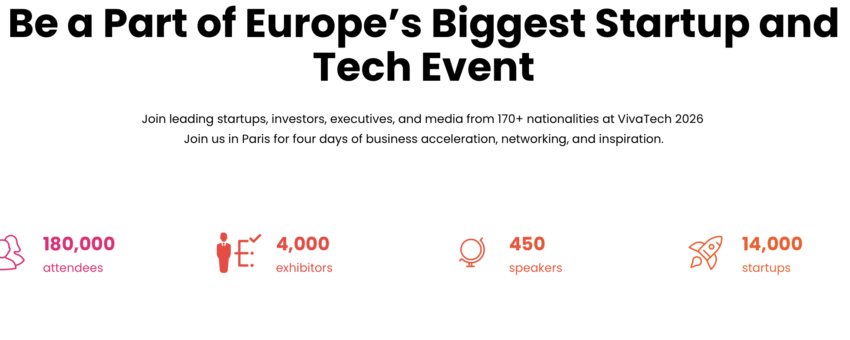
Artificial intelligence, cybersecurity, quantum computing, digital infrastructure and startup innovation are transforming the European business landscape at unprecedented speed.
In this rapidly evolving ecosystem, companies are increasingly looking for opportunities to connect with innovators, investors, technology providers and decision-makers capable of shaping the future of digital business.
This is precisely why events such as VivaTech Paris have become strategic reference points for the international technology sector. Scheduled in Paris in 2026, the event continues to strengthen its role as a leading European tech conference, attracting startups, enterprises, governments, investors and technology leaders from across Europe and beyond.
For British businesses in particular, VivaTech represents much more than a traditional technology exhibition. It has become a key opportunity to understand emerging trends, build international partnerships and remain competitive in a market increasingly driven by innovation and AI.
Europe’s technology ecosystem is evolving rapidly
Over the last few years, Europe has accelerated investments in digital transformation, artificial intelligence, cybersecurity and strategic technologies.
Governments and enterprises are prioritising:
- AI adoption
- cloud infrastructure
- digital resilience
- cybersecurity governance
- startup ecosystems
- sustainable innovation
At the same time, European regulation is becoming increasingly influential in shaping global technology standards through frameworks such as:
- the EU AI Act
- NIS2
- DORA
- GDPR
For UK companies operating internationally, maintaining visibility into these developments is becoming essential.
Technology events are no longer just networking opportunities — they are strategic observatories for understanding where the market is heading.
Why VivaTech has become strategically important
Unlike traditional trade fairs focused on individual sectors, VivaTech brings together multiple dimensions of the digital economy under one ecosystem.
The event typically attracts:
- global tech companies
- fast-growing startups
- venture capital firms
- cybersecurity specialists
- AI innovators
- public institutions
- enterprise decision-makers
This creates a highly dynamic environment where emerging technologies, business strategy and investment trends intersect.
For companies looking to expand internationally or identify new partnerships, access to this ecosystem offers significant strategic value.
AI is dominating the technology conversation
Artificial intelligence is expected to remain one of the dominant themes at VivaTech Paris 2026.
Across every industry, organizations are trying to understand how AI will impact:
- operational efficiency
- customer experience
- cybersecurity
- data governance
- automation
- workforce management
At the same time, businesses are also becoming more aware of the risks associated with uncontrolled AI adoption.
Issues such as:
- data exposure
- AI governance
- regulatory compliance
- third-party risk
- ethical AI usage
are becoming increasingly central in enterprise discussions.
This balance between innovation and risk management is likely to play a major role during the event.
Cybersecurity is now part of every technology discussion
One of the clearest trends in modern digital transformation is that cybersecurity can no longer be separated from innovation.
As companies accelerate cloud adoption and AI integration, their exposure to cyber threats also increases.
Today, organizations must manage:
- supply chain vulnerabilities
- ransomware risks
- third-party exposure
- identity compromise
- AI-related attack surfaces
- data leakage risks
Technology conferences like VivaTech increasingly reflect this reality by integrating cybersecurity into broader conversations around digital business transformation.
Paris is strengthening its role as a European innovation hub
Paris has become one of Europe’s most important technology and startup ecosystems. Significant investment in innovation, AI research and digital infrastructure has transformed the city into a major international hub for technology companies and investors.
For British businesses, this proximity offers important advantages:
- easier access to European markets
- networking with continental partners
- visibility into EU innovation policies
- opportunities for international expansion
Despite Brexit, collaboration between UK companies and European ecosystems remains extremely active, especially in sectors such as AI, fintech, cybersecurity and digital services.
Startups and enterprise innovation are converging
One of the defining characteristics of VivaTech is the interaction between startups and large enterprises.
Corporations increasingly rely on startup ecosystems to accelerate:
- innovation processes
- AI experimentation
- cybersecurity capabilities
- sustainability initiatives
- digital transformation strategies
At the same time, startups benefit from direct access to enterprise buyers, investors and strategic partners.
This convergence is reshaping how innovation is developed and commercialised across Europe.
Technology events are becoming intelligence platforms
Modern technology conferences are no longer just about product showcases or keynote speeches.
For many organizations, events like VivaTech function as real-time intelligence environments where companies can:
- identify emerging trends
- monitor competitor activity
- evaluate market shifts
- discover strategic partnerships
- understand evolving customer expectations
In highly competitive sectors, this visibility becomes strategically important.
Being physically present where innovation conversations happen often provides insights impossible to obtain remotely.
The growing importance of ecosystem visibility
As digital ecosystems become more interconnected, businesses increasingly need visibility not only into technologies, but also into the broader networks shaping the market.
This includes understanding:
- investment movements
- startup acceleration trends
- AI adoption patterns
- cybersecurity priorities
- regulatory evolution
- international partnerships
Events such as VivaTech offer a unique concentration of these signals within a single environment.
Why UK businesses should pay attention now
British companies continue to play a major role within the European technology landscape. However, the speed of technological change means that maintaining strong international visibility is becoming more important than ever.
Whether operating in:
- cybersecurity
- AI
- fintech
- SaaS
- cloud infrastructure
- digital consulting
UK businesses need direct exposure to the conversations shaping the future of European innovation.
VivaTech Paris 2026 represents one of the most important opportunities to engage with that ecosystem in real time.
Because in today’s technology market, competitiveness is no longer determined only by internal innovation, but also by the ability to understand, anticipate and participate in the broader evolution of the global digital economy.

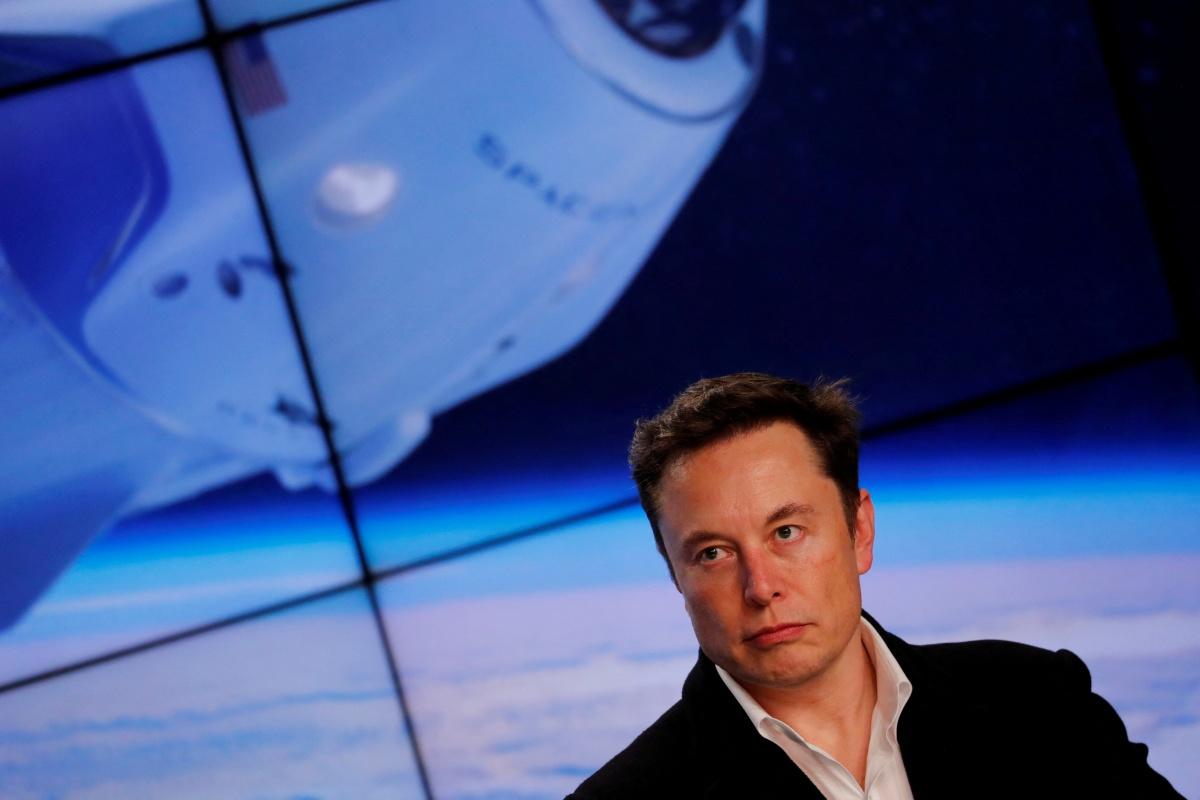
NEW YORK — As both Tesla and SpaceX trade publicly in 2026, investors face a compelling choice between two Elon Musk-led companies at the forefront of electric vehicles, autonomous driving, renewable energy and space exploration. Tesla offers established automotive leadership with AI ambitions, while SpaceX brings explosive growth in launches, satellite broadband and infrastructure, but each carries distinct risks and opportunities.
Tesla shares closed recently around $406, reflecting a market capitalization exceeding $1.3 trillion. The company continues to dominate electric vehicle sales globally despite increasing competition, with strong brand loyalty and expanding energy storage operations. SpaceX, fresh from its record-breaking IPO priced at $135 per share, surged to close around $161 on debut, pushing its valuation above $2 trillion and making Musk the world’s first trillionaire when combining stakes across his ventures.
Tesla’s Strengths and Challenges
Tesla benefits from mature financials, with annual revenue exceeding $90 billion and positive free cash flow in recent periods. Vehicle deliveries remain robust, supported by the Model Y and Cybertruck, while energy generation and storage segments show high growth potential. The company’s Full Self-Driving software and robotaxi initiatives represent significant upside if regulatory hurdles are cleared and technology scales effectively.
However, Tesla faces margin pressures from price competition, higher capital expenditures for AI and manufacturing expansion, and execution risks on ambitious projects like Optimus humanoid robots. Analyst consensus leans toward Hold, with average price targets near $400-410, though optimistic forecasts from firms like ARK Invest project substantial long-term upside tied to autonomous and robotics breakthroughs.
SpaceX’s Growth Trajectory
SpaceX has revolutionized access to space with reusable Falcon 9 rockets and the Starlink constellation, which provides broadband connectivity to millions and generates growing recurring revenue. The company’s Starship program aims for fully reusable heavy-lift capabilities, potentially transforming interplanetary travel and large-scale satellite deployment. Recent infrastructure deals, including major AI computing partnerships, diversify its business beyond traditional aerospace.
The post-IPO performance highlights strong investor enthusiasm, with shares rising nearly 19% on debut. However, SpaceX remains heavily focused on capital-intensive growth, with reported losses and high burn rates as it scales operations. Valuation multiples are elevated, reflecting expectations for Starlink expansion and future contracts, but execution on Starship timelines and regulatory approvals will be critical.
Comparative Investment Case
Tesla offers more predictable near-term financials and a proven track record as a public company, appealing to investors seeking exposure to clean energy and AI with established revenue streams. Its ecosystem of vehicles, energy products and software creates multiple growth vectors, though competition in EVs and delays in autonomy pose risks.
SpaceX represents higher-risk, higher-reward potential for those bullish on the commercial space economy. Its launch dominance, Starlink subscriber growth and government contracts provide durable advantages, but the business is earlier in its maturity curve with greater execution uncertainty. The IPO has provided capital access while introducing public market scrutiny and volatility.
Both companies benefit from Musk’s leadership and synergies, including shared talent and technological cross-pollination. However, investors should consider portfolio allocation carefully, as concentrated exposure to one individual introduces company-specific risks. Diversification across both could capture complementary strengths in transportation and space infrastructure.
Market Outlook and Risks
Broader market conditions, interest rates and geopolitical factors will influence performance. Tesla’s valuation reflects optimism around AI and robotics, while SpaceX’s premium pricing bets on continued space commercialization. Regulatory environments for autonomous vehicles and satellite operations remain key variables.
Analysts emphasize long-term horizons for both names. Tesla’s path involves scaling existing businesses while pioneering new ones, whereas SpaceX must prove repeatable success with next-generation vehicles and broadband profitability. Neither is without challenges, including supply chain issues, talent retention and competition.
Investment Considerations
Neither stock suits conservative investors seeking stability. Tesla provides greater earnings visibility today, while SpaceX offers exposure to a transformative industry with massive addressable markets. Due diligence on quarterly results, technological milestones and competitive dynamics is essential.
This is not investment advice. Stock prices fluctuate based on numerous factors, and past performance does not guarantee future results. Investors should consult financial advisors and review detailed filings before making decisions. Both companies play vital roles in advancing technology and human progress, but individual suitability depends on risk tolerance, time horizon and portfolio goals.
As 2026 unfolds, the Tesla-SpaceX comparison encapsulates broader themes in innovation investing: balancing proven execution with visionary potential. Tesla’s automotive and energy leadership provides a solid foundation, while SpaceX’s orbital achievements and infrastructure expansion point to outsized opportunities in the space economy. The choice ultimately hinges on which vision investors believe will deliver superior returns over the coming decade.

Commodities: U.S.-Iran Peace Deal

Experts warn the impact of the war will continue to affect the global economy for months to come.

Weekly Market Pulse: Questions
Form 6K TOYOTA MOTOR CORP/ For: 15 June
Business
RVNL, Railtel Corp, Titagarh Rail, other railway stocks rally up to 4% on Rs 16 lakh crore bullet train plan

Rail Vikas Nigam (RVNL) shares jumped more than 4% to trade at Rs 243.40 apiece on NSE on Monday morning. Titagarh Rail Systems, Ircon International and Railtel Corporation of India shares, meanwhile, rose nearly 4% each. Texmaco Rail & Engineering, Indian Railway Finance Corporation (IRFC) and Container Corporation of India (CONCOR) shares gained around 3% each, while those of BEML and Indian Railway Catering and Tourism Corporation (IRCTC) were up around 2% each.
All about the Railway Ministry’s bullet train plan
The Railway Ministry unveiled its ambitious plan, which includes the Delhi–Varanasi and Varanasi–Siliguri bullet train corridors. Railway Minister Ashwini Vaishnaw said these routes could reduce travel time between Delhi and Siliguri to nearly six hours, passing through major cities such as Lucknow, Varanasi and Patna. Currently, the fastest train on the route, the Dibrugarh Rajdhani Express, takes more than 20 hours to complete the journey.
The Detailed Project Report (DPR) for the Delhi–Varanasi corridor is currently under review, while work on the DPR for the Varanasi–Siliguri stretch is expected to begin soon, according to a report by Times of India. Along with the under-construction Ahmedabad–Mumbai bullet train project, these corridors are expected to lay the foundation for a nationwide high-speed rail network connecting western, northern, southern and eastern India.
BEML is currently building the country’s first domestically manufactured bullet train, designed to operate at speeds of up to 280 kmph. The train is expected to begin trial operations on a 100-km section between Surat and Bilimora on the Ahmedabad–Mumbai corridor in August 2027.

BEML Chairman and Managing Director Shantanu Roy said future versions of these trains could run even faster. According to him, speeds could eventually increase from 280 kmph to 350 kmph as technology advances.
Meanwhile, Vaishnaw earlier said the upcoming bullet train projects will rely heavily on Indian technology and locally manufactured components. Railway officials say efforts are underway to standardise construction methods, signalling systems and rolling stock production. This approach is expected to reduce costs, speed up execution and strengthen domestic manufacturing capabilities.
Also read: Why is market rallying today?
(Disclaimer: Recommendations, suggestions, views and opinions given by the experts are their own. These do not represent the views of The Economic Times)

The Australian Medical Council says claims made online it had been hit by ransomware and that member data had been stolen are false.

“Don’t depend on geopolitical deals to drive markets”
Responding to a question on whether the Iran–US deal could act as a catalyst for global and Indian markets, Mehra said:
“I do not think we should only depend on the deal. But yes, if it happens, it takes away a big overhang overall on all markets. And I do not think that is what is going to drive the Indian markets up. In March, when I had come on your channel, I had said that the market looks on all our indicators as if it is in the bottom range. I cannot tell you whether it will start moving up in two weeks or two months, but the indicators are all positive. Even now, if you see, it is a very different market from what it was in 2025.”
She pointed out that market breadth has improved significantly compared to last year.
“In 2025, all the Indian indices were up, but the median stock was down, and 40% of stocks were down more than 10%. But midway through the year, the outperforming stocks were only about 15%. The norm is around 40%. Now we actually have a majority of stocks outperforming the indices. So it is completely flipped, which is good news overall for markets, and that is why, as I said in March also, do not be 100% in equity, but whatever is your equity allocation, remain invested. So that remains my advice.”
“Geopolitical risks are not something you should react to”
On whether investors should increase equity allocation given easing global tensions, Mehra cautioned against reacting to geopolitical developments.“The geopolitical risk per se is not something you should react to, and I am not saying this now. There is an early March video of mine which is pinned on my Twitter feed which says exactly that: do not overreact to geopolitics. This is what 125 years of data shows, including the two world wars, the two Gulf wars, the US bombing Libya, 9/11, all of that. The market shrugged it off even when conflicts continued, as has happened with Russia–Ukraine.”
She added that while crude oil movements matter for India, one should avoid building investment decisions around uncertain geopolitical outcomes.
“Of course, in India there is a direct impact because of crude, because that impacts earnings. So you have to take that into account. But I am not betting on geopolitical resolution as far as Indian or global markets are concerned.”
“The dangerous consensus is emotional behaviour”
Discussing investor behaviour, Mehra highlighted how sentiment-driven decisions often lead to poor timing.
“If you look at the markets in the last couple of months, SIP numbers have turned negative. The number of accounts has also turned negative. Indian investors have been very jittery. If you plot long-term data, mutual fund inflows peak around market peaks and bottom out around market bottoms. Humans act out of emotions, which mislead you completely.”
She stressed the importance of staying invested during periods of panic.
“When you are panicking is when you need to remain in the market. That is the superpower: do not get out when your mind is screaming get out.”
Mehra also pointed out the shift in sentiment around India.
“A year-and-a-half ago, every fund manager was selling the India growth story. Now, suddenly, the narrative has flipped and people are only talking about risks. Sentiment is always a contra indicator. When sentiment is extremely negative, future returns tend to be above normal. So probability-wise, we are looking at a better year ahead.”
“US is not the globe: diversification is key”
On portfolio strategy, Mehra reiterated her long-standing view that diversification across geographies and assets remains critical.
“You should always have a diversified portfolio. But the US is not the globe. People think buying a US index or a few well-known stocks is enough, but that is not sufficient diversification. It is better than being in a single market, but not a whole lot better.”
She explained how global positioning has already shifted across regions.
“We have been underweight the US for almost a year-and-a-half. We went overweight Europe and China and added markets like Malaysia and Mexico, which are below the radar for most investors.”
Warning against concentration in a handful of global stocks, she added:
“People think buying the so-called Magnificent Seven will save them. That worked for a couple of years, but in 2025 the leadership narrowed and now several of those stocks are underperforming. The baton has already passed, but investors are still chasing yesterday’s winners.”
“No easy answers in global investing”
Mehra also cautioned against over-simplified global investment products and strategies.
“There are no easy answers. I am sceptical about schemes being launched without expertise in global markets. Many have underperformed because they invested in yesterday’s stocks instead of tracking what is happening today and anticipating what comes next. If you go global, it must be with real expertise.”
Why is Telia Company stock sliding today?
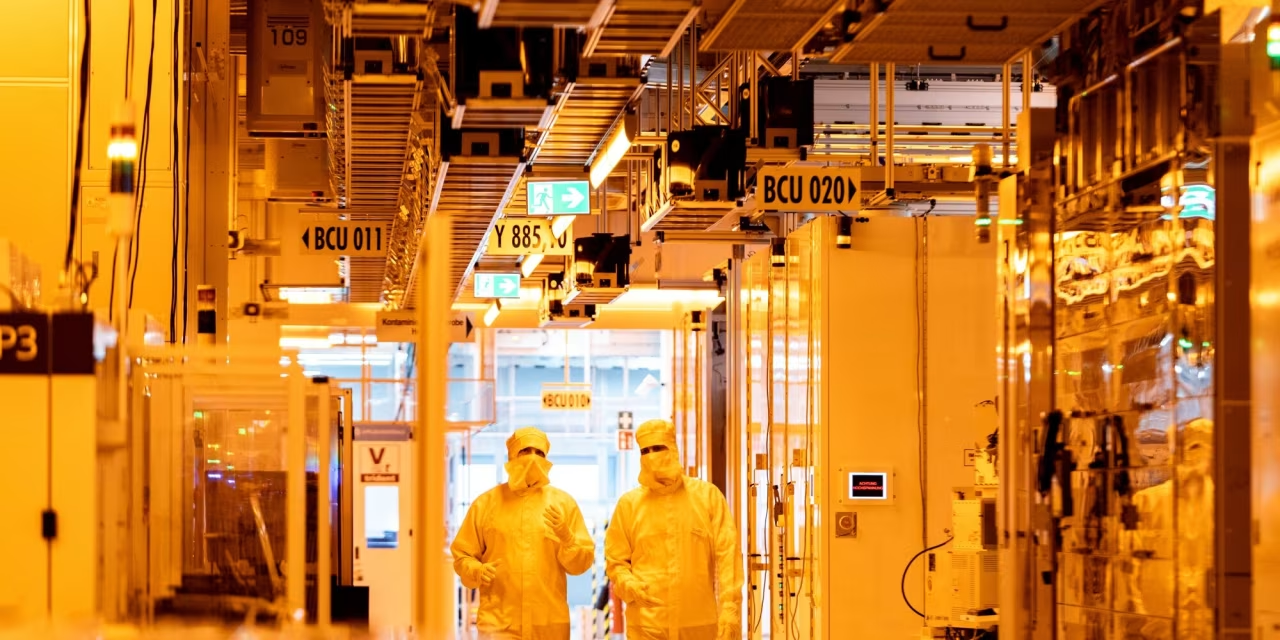
Eurozone industrial output rose again in April as factories rushed to meet orders placed by customers anxious to avoid price hikes and shortages stemming from the Middle East conflict.
Industrial output rose 0.1% on month, compared with an upwardly revised 0.4% rise in March, the European Union’s statistics agency Eurostat said Monday.
Copyright ©2026 Dow Jones & Company, Inc. All Rights Reserved. 87990cbe856818d5eddac44c7b1cdeb8

Which Stock Offers Better Long-Term Value for Investors in 2026

Altcoin Season Is Warming, yet the Solana Network Is Flashing Early Risk-Off

The House | The new Single Patient Record will be a game-changer for clinicians and patients


-

 Business19 hours ago
No Jackpot Winner as $257 Million Prize Rolls Over to $269 Million Monday Draw
-

 Crypto World4 days ago
Oppenheimer backs SpaceX as $70 billion retail frenzy builds
-

 Crypto World4 days ago
Markets Rally as SpaceX IPO Looms Amid Iran Tensions and Inflation Surge
-

 Fashion3 days ago
Weekend Open Thread: Tuckernuck – Corporette.com
-

 Sports7 days ago
FIFA WC 2026 Group C: Morocco, Scotland challenge Brazil’s hunt for glory | FIFA World Cup 2022
-
 Crypto World7 days ago
Eli Lilly (LLY) Stock Surges 4% Following Breakthrough Sleep Apnea Trial Results
-
 Crypto World11 hours ago
Zimbabwe Requires Crypto Businesses to Register Annually Under New FIU Regulations
-

 Entertainment6 days ago
The Ryan Gosling True Crime Thriller On Netflix That Gets Even Stranger, Stream It Now
-
 Sports6 days ago
Bangladesh beat Australia after 20 years in ODIs, register only their second win over six-time world champions | Cricket News
-

 Tech3 days ago
This Week In Security: Microsoft On Microsoft, Register Your Domains, Linux On ARM, And FreeBSD Joins The File Cache Club
-

 Tech2 days ago
NanoClaw integrates JFrog registries to secure AI agent downloads
-

 Crypto World2 days ago
Bitget enters Argentina’s regulated crypto market through PSAV registration
-

 Politics4 days ago
Politics Home | Healey Resignation Is “Colossal Failure Of Government”, Says Former Labour Defence Secretary
-

 Tech5 days ago
‘This is Seattle’s position on AI’: City Council votes unanimously to pause big new data centers
-
 Tech4 days ago
Dutton Ranch star claims they ‘didn’t see any disruption’ on set following Chad Feehan’s exit from Yellowstone spinoff fueled by Taylor Sheridan clash rumors
-

 NewsBeat3 days ago
El Nino has formed in the Pacific and could set records, forecasters say
-
 Entertainment4 days ago
Donnie Wahlberg & More Heat Up Las Vegas at Circa’s Barry’s Downtown Prime
-

 Sports4 days ago
First Time Since 1971: Australia Register Historic Low In ODI Cricket
-
 Tech4 days ago
Opendoor Ends India Operations, Fueling a Bigger Conversation About AI and Outsourcing
-

 Tech7 days ago
Nvidia and Hyundai deepen their robotics push around Atlas
You must be logged in to post a comment Login