Connect with us
DAPA Banner
DAPA Coin
DAPA
COIN PAYMENT ASSET
PRIVACY · BLOCKDAG · HOMOMORPHIC ENCRYPTION · RUST
ElGamal Encrypted MINE DAPA
🚫 GENESIS SOLD OUT
DAPAPAY COMING

Business

Why Do B2B Buyers Prefer Talking to a Real Human Before They Buy?

Published

on

Most B2B marketing now pushes buyers towards self-service. Chatbots, automated email sequences and gated content do the heavy lifting, and a salesperson only appears at the very end, if at all. And for a lot of the journey, that's exactly what buyers want. But watch what happens at the decision point, and the picture shifts.

Most B2B marketing now pushes buyers towards self-service. Chatbots, automated email sequences and gated content do the heavy lifting, and a salesperson only appears at the very end, if at all. And for a lot of the journey, that’s exactly what buyers want. But watch what happens at the decision point, and the picture shifts.

When the stakes are high, buyers reach for a person. We’ll walk you through why that conversation still matters and what businesses lose when they remove it.

What Buyers Are Really Looking For in That Call

By the time a B2B buyer picks up the phone, they’ve usually done their homework. They’ve read your site, compared you against two or three competitors and formed a rough opinion. What they can’t get from any of that is reassurance, and that’s the thing they’re after when they ask to speak to someone.

They want their specific questions answered. Not the generic ones a FAQ page covers, but the awkward ones tied to their own setup, their budget and the people they’ll have to convince internally. A chatbot script can’t handle that. A real conversation can.

There’s also a quieter test happening. The buyer is working out whether you actually understand their problem or whether you’re just reading from a deck. A good agent picks up on that and adjusts, reading the room in a way a script can’t. It’s the kind of judgement a knowledgeable B2B telemarketing agency is built around, and it’s often what keeps a deal moving when automation has taken it as far as it can.

Advertisement

The Gap Most Businesses Aren’t Filling

Plenty of companies have poured money into content and automation to handle the research stage, and they’ve done it well. The problem is what happens next. When the buyer is finally ready to talk, there’s nobody picking up the phone.

That gap costs deals. Most buyers do prefer to research on their own first, and Gartner found in early 2026 that 67% would rather buy without a rep at all. But that’s not the whole picture. Buyers who go fully self-service are 1.65 times more likely to regret the purchase, and Gartner expects that by 2030, 75% of buyers will prefer sales experiences that put human interaction ahead of AI. The demand for a real conversation is there at the moments that matter. The supply, on the buyer’s terms, often isn’t.

The fix doesn’t mean scrapping your automation. It means having experienced people ready to step in at the point where the buyer wants a proper discussion. Some businesses build that capacity in-house, while others bring in outside help to put trained agents on the phone who can hold a consultative conversation instead of a scripted one.

Why Complex Deals Make the Human Even More Important

The bigger the decision, the stronger the pull towards a human. A few things tend to be true of high-value B2B purchases:

Advertisement
  • The contract value is significant, so the buyer wants to reduce their risk
  • Several stakeholders are involved, each with their own concerns
  • The product is complex enough that a written answer leaves too much room for doubt

Gartner puts the typical B2B buying group at six to ten people, each weighing the decision differently. The more voices in the room, the harder it is for static content alone to bring them to a shared yes.

In those situations, a conversation does work that no email can. It lets the buyer think out loud, push back and get straight answers in real time. It also lets the supplier qualify properly, so both sides know early whether there’s a genuine fit.

This is the part automation will probably never replace. Software is brilliant at scale and consistency, but it can’t read hesitation in someone’s voice or sense when a prospect needs more time. A skilled agent can, and that’s often what tips a careful buyer into saying yes.

A Quick Recap

If you’ve leaned hard into digital-first marketing, it’s worth checking whether you’ve accidentally removed the human from the moment buyers most want one. The research stage runs well on automation. The decision stage rarely does.

Keep the content and the email sequences doing what they’re good at. Just make sure that when a prospect is ready to talk, there’s someone capable on the other end of the line. That combination, smart automation early and a real conversation when it counts, is what tends to close the better deals.

Advertisement

Continue Reading
Click to comment

You must be logged in to post a comment Login

Leave a Reply

Business

Trump, Republicans to stage convention in Dallas ahead of midterms

Published

on

Trump, Republicans to stage convention in Dallas ahead of midterms


Trump, Republicans to stage convention in Dallas ahead of midterms

Continue Reading

Business

FuelCell Energy Stock Surges 18% Today, Extending Monster Run on AI Data Center Power Demand

Published

on

Earnings News: Micron Technology Inc (NASDAQ: MU)

FuelCell Energy shares jumped sharply again Tuesday, climbing 18.21% to $35.22 and extending one of the most explosive runs of any stock on Wall Street this year, as the clean-power company continued to reap the benefits of a landmark data center power deal and a series of bullish analyst calls tied to surging electricity demand from artificial intelligence infrastructure.

The latest move builds directly on a 24.3% surge Monday that pushed shares to a fresh 52-week high of $30.41, itself following a 17% jump the previous Friday. Combined, FuelCell Energy stock has now climbed roughly 320% so far in 2026, vastly outpacing peers across the broader hydrogen and fuel cell sector, including Bloom Energy and Plug Power, neither of which has matched FuelCell’s pace of company-specific catalysts in recent weeks.

Tuesday’s gains continue to be driven by a cluster of developments that have rapidly reshaped Wall Street’s view of the Danbury, Connecticut-based company. The most concrete of those came June 23, when the Export-Import Bank of the United States approved a $49 million financing package to support delivery of FuelCell Energy’s fuel cell units to Gyeonggi Green Energy in South Korea. The financing covers five 2.8-megawatt FuelCell Energy Blocks and is structured in two tranches, with roughly $22 million in net proceeds expected to be disbursed around June 30 and a second tranche following in October. FuelCell Energy Chief Financial Officer Michael Bishop emphasized the significance of the funding structure.

“It adds non-dilutive capital to support growth,” Bishop said.

Advertisement

The non-dilutive nature of the financing has been a key driver of investor enthusiasm, since it allows the company to fund growth without issuing additional shares, a meaningful distinction for a stock that has historically faced dilution concerns tied to its persistent unprofitability.

Layered on top of the EXIM financing news, Wall Street has grown increasingly bullish on FuelCell Energy’s positioning within the booming market for AI-driven electricity demand. B. Riley Securities upgraded the stock to Buy from Neutral on Monday and more than doubled its price target to $32 from $13, the highest target currently on Wall Street, citing the company’s agreement to supply up to 380 megawatts of continuous clean baseload power to Fit Energy USA for AI and advanced computing data centers as evidence that FuelCell’s commercial strategy is translating into real, signed business rather than speculative potential.

That assessment echoed an earlier upgrade from Jefferies analyst Julien Dumoulin Smith, who raised the firm’s rating to Buy from Hold and lifted his price target to $24 from $16 after the Fit Energy agreement was first announced. Dumoulin Smith characterized the deal, structured as a Capital Equipment Purchase Agreement and representing FuelCell Energy’s first contracted U.S. data center order, as the catalyst that shifted the investment thesis from speculative to executable. The agreement includes an initial 30-megawatt firm deployment backed by an immediate, non-refundable deposit, which at roughly $3,000 per kilowatt before tax credits implies approximately $90 million in near-term revenue. Dumoulin Smith also pointed to FuelCell’s valuation relative to peers, noting the stock traded at roughly 8 times projected 2030 enterprise value to EBITDA compared with Bloom Energy’s 19 times multiple, a gap he described as an asymmetric entry point for investors.

The Fit Energy deal arrived against a backdrop of otherwise disappointing fundamentals. FuelCell Energy’s second-quarter fiscal 2026 results, reported June 8, missed Wall Street estimates on nearly every financial metric, with revenue of $35.6 million falling 5% year-over-year and missing consensus expectations of $40.5 million by roughly $5 million. The company’s net loss widened to $78.7 million, more than double the loss recorded in the same period a year earlier, while its backlog declined 9.9% to $1.14 billion as of April 30 compared with the same point last year. Despite those weak headline numbers, management highlighted a 267% quarter-over-quarter surge in its sales pipeline to four gigawatts, with nearly 90% of that growth tied to AI-related data center projects, a figure that has become central to the bullish narrative now driving the stock’s valuation even as the company continues to post steep losses.

Advertisement

FuelCell Energy has also benefited from structural, passive buying pressure tied to its inclusion in the Russell 3000 index, which forces index-tracking funds to hold shares in proportion to the company’s market weighting regardless of near-term profitability concerns. That technical tailwind has compounded the stock’s rally alongside the steady drumbeat of company-specific news.

Despite the dramatic run, the gap between Wall Street’s longer-standing consensus view and the market’s current enthusiasm remains notable. According to data compiled before the recent string of upgrades, the average rating across eight analysts tracking the stock stood at “Hold,” with a 12-month price target of $22, implying a meaningful downside from current trading levels even before accounting for this week’s additional gains. That consensus has clearly begun shifting in a more bullish direction following the B. Riley and Jefferies upgrades, though FuelCell Energy’s broader financial profile, marked by consistent unprofitability and negative operating cash flow, continues to leave the stock firmly in speculative territory by most analysts’ assessments.

FuelCell Energy designs, develops and manufactures high-temperature carbonate fuel cells used for on-site power generation, grid support, microgrids and carbon capture applications, alongside solid oxide electrolysis technology for distributed hydrogen production. The company serves utilities, independent power producers, data centers, wastewater treatment facilities and a range of industrial, commercial and government customers across the United States, South Korea, Europe and Canada.

Investors are now watching closely for confirmation that the first EXIM financing tranche disburses as scheduled around June 30, a milestone that would validate the non-dilutive funding narrative currently being priced into the stock. Additional follow-through on the Fit Energy 380-megawatt commitment, along with any new data center customer announcements, is likely to shape sentiment heading into the company’s next earnings release. Even so, market commentators have continued to caution that FuelCell Energy remains an extremely volatile and speculative stock, one that has logged dozens of single-day moves greater than 5% over the past year, and that a sharp short-term rally driven by deal announcements does not by itself resolve the deeper questions surrounding the company’s path to sustained profitability.

Advertisement
Continue Reading

Business

Trump administration lifts AI export restrictions on Anthropic models

Published

on

Trump administration lifts AI export restrictions on Anthropic models

The Trump administration has lifted export restrictions on two of Anthropic’s latest artificial intelligence models after the company worked with the Commerce Department on a national security review, according to statements released Tuesday.

Commerce Secretary Howard Lutnick announced that the Bureau of Industry and Security (BIS) had withdrawn export controls that had previously applied to Anthropic’s Claude Mythos 5 and Claude Fable 5 models.

Advertisement

“Bureau of Industry and Security’s evaluation of the diversion risks now presented by Claude Mythos 5 and Claude Fable 5, the controls in the June 12 letter are withdrawn,” Lutnick said in a post on X. “A license is no longer required for the export, reexport, or in-country transfer, including deemed export or deemed reexport, of the Mythos or Fable models.”

Anthropic confirmed it had received notice that the Commerce Department was lifting the restrictions.

NEWSOM’S OFFICE TOUTS ANTHROPIC ‘PARTNERSHIP,’ 50% DISCOUNT ON CLAUDE AI FOR CALIFORNIA AGENCIES, LOCALITIES

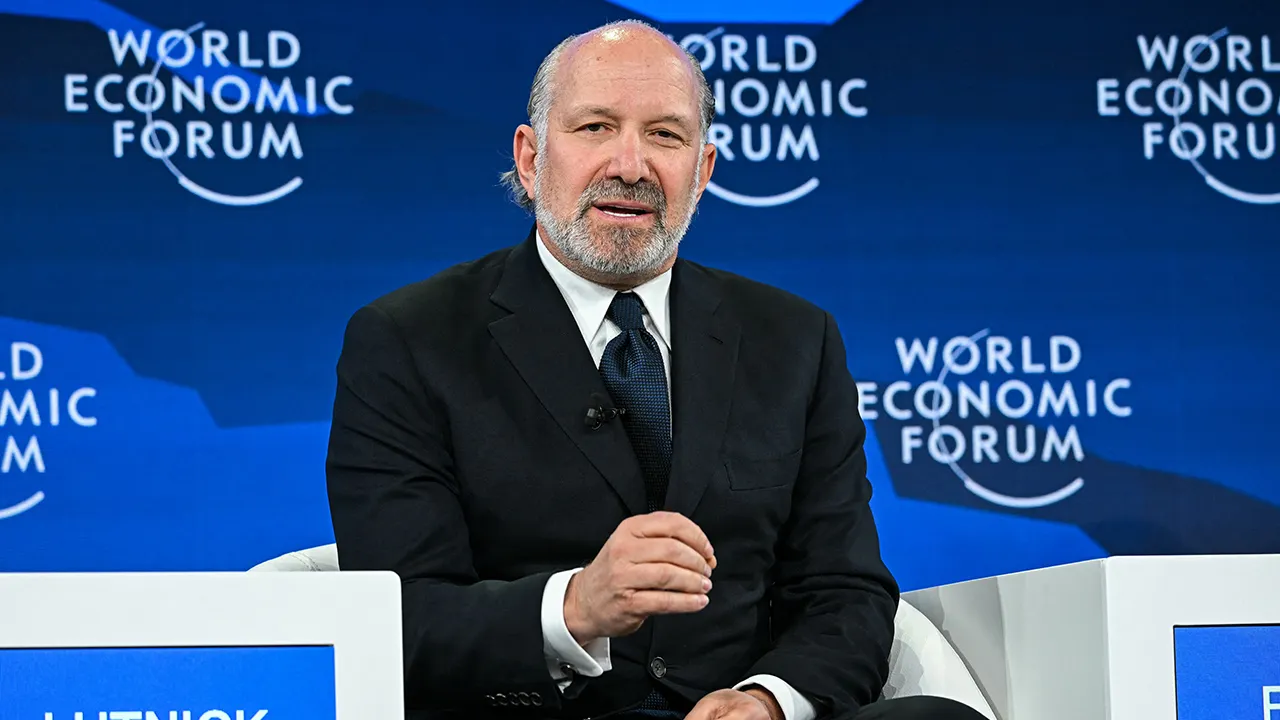
Howard Lutnick speaks on World Economic Forum stage

U.S. Commerce Secretary Howard Lutnick speaks during the World Economic Forum annual meeting in Davos on January 20, 2026. (Fabrice COFFRINI / AFP via Getty Images / Getty Images)

“We’ve received notice that the Department of Commerce has lifted export controls on Claude Fable 5 and Mythos 5,” the company said in a post on X. “We’ll begin restoring access tomorrow, and will share an update soon.”

Advertisement

The AI company thanked users for their patience during the restrictions and expressed appreciation to those involved in redeploying the models.

“We’re grateful to our users for their patience, and to everyone who worked with us on redeploying the models,” Anthropic said.

Lutnick said the decision followed close coordination between the federal government and Anthropic.

TRUMP ADMIN SAYS ANTHROPIC’S ‘RECKLESSNESS’ TRIGGERED EXPORT CONTROLS ON LATEST AI MODELS

Advertisement
Anthropic CEO Dario Amodei, at right.

Irina Ghose, managing director of India of Anthropic PBC, left, and Dario Amodei, co-founder and chief executive officer of Anthropic, during the company’s Builder Summit in Bengaluru, India, on Monday, Feb. 16, 2026. (Samyukta Lakshmi/Bloomberg via Getty Images / Getty Images)

“Over the past two weeks, we have worked closely with Anthropic to analyze and approve Fable 5 to ensure alignment across the U.S. Government and strengthen America’s leadership in AI,” the Commerce secretary wrote on X.

Anthropic is one of the leading artificial intelligence companies in the United States, and its Claude family of AI models competes with offerings from OpenAI, Google and other major developers.

The Commerce Department’s decision removes licensing requirements that had previously applied to exports, reexports and certain transfers of the affected AI models.

Anthropic CEO Dario Amodei

CEO of Anthropic Dario Amodei attends a working lunch with G7 leaders, G7 outreach partners, and global tech CEOs on innovation and AI, during the G7 Summit on June 17, 2026 in Evian-les-Bains, France.  (Anna Moneymaker/Getty Images / Getty Images)

GET FOX BUSINESS ON THE GO BY CLICKING HERE

Advertisement

It was not immediately clear what specific changes or additional assurances led federal officials to withdraw the restrictions after the earlier June 12 determination.

The Commerce Department and Anthropic did not immediately respond to FOX Business’ request for comment.

Continue Reading

Business

Why is South32 stock rallying today?

Published

on


Why is South32 stock rallying today?

Continue Reading

Business

Sebi moves to standardise consent rules for AIFs

Published

on

Sebi moves to standardise consent rules for AIFs
Mumbai: The Securities and Exchange Board of India (Sebi) on Tuesday proposed changes to the governance framework for alternative investment funds, seeking to standardise how investor consent is obtained, tighten oversight of conflict-of-interest transactions, and introduce a uniform approval threshold for key decisions.

The regulator has proposed replacing the existing mix of two-thirds and 75% investor approval requirements with a single threshold of 75% consent by value of unit holders across AIF regulations wherever investor approval is mandated.

At present, rules mandate that certain material decisions relating to the governance and operations of an AIF, should be done only after obtaining requisite investor consent, with varying thresholds for different requirements.

They prescribe different approval thresholds for different matters.

Advertisement

However, they do not provide guidance on the manner or methodology for obtaining such consent.


“Over time, based on supervisory experience and stakeholder interactions, it has been observed that while the existing framework provides flexibility and operational ease, certain conflict-prone transactions may not be uniformly captured for investor consideration due to the limited scope of entities covered under the current definition of ‘associate’. This may lead to situations where transactions involving comparable levels of conflict are treated differently, resulting in interpretational uncertainty,” Sebi said in a discussion paper on Tuesday.
Further, diverse market practices have emerged with respect to solicitation, voting methodologies, and treatment of non-responses.

Continue Reading

Business

Hesai Group Stock Soars 11% Today as Shareholders Approve Stock Split, Mercedes-Benz Deal Fuels Optimism

Published

on

Hesai Group Shares Climb 12% on Strong LiDAR Demand and

Shares of Hesai Group, the Chinese lidar technology leader, jumped sharply Tuesday, climbing $1.68, or 10.69%, to $17.45, as investors continued to reward the company for a freshly approved stock split, a fresh bullish analyst initiation and growing momentum tied to its strategic partnership with Mercedes-Benz.

The latest gain builds on a rally that has gathered steam since Hesai’s annual general meeting on June 26, when shareholders approved an eight-for-one stock split and authorized the company to issue up to 10% more shares. The split, which improves the stock’s liquidity and is expected to broaden its potential investor base by lowering the per-share price, has been a primary driver of buying interest in recent sessions, even as the additional share issuance authorization carries some longer-term dilution risk that analysts have flagged as worth monitoring.

Adding further fuel to the rally, a new analyst initiated coverage on the stock with an Outperform rating and a $23.50 price target, joining what has already been an overwhelmingly bullish chorus of Wall Street voices. According to data compiled across 22 analysts tracking the company, the consensus rating on Hesai stands at “Strong Buy,” with a 12-month price target of $30.17, implying substantial additional upside from current trading levels.

Much of that optimism traces back to Hesai’s first-quarter 2026 results, released May 19, which showed the company continuing to scale rapidly across both its core automotive lidar business and a broader push into what management has termed “spatial intelligence.” Hesai reported net revenues of RMB680.6 million, or approximately $98.7 million, a 29.6% increase from the same period in 2025. Total lidar shipments reached 471,723 units, up 140.9% year-over-year, with shipments of lidar units for advanced driver-assistance systems surging 141.9% to 353,441 units. The company posted GAAP net income of RMB18.3 million and non-GAAP diluted earnings per share of ¥0.31, beating Wall Street expectations by more than 70%, marking another step in Hesai’s transition from a high-growth but unprofitable hardware company to one demonstrating sustained profitability.

Advertisement

That shift toward consistent profitability has become a central pillar of the bull case for the stock. According to the company’s own investor materials, Hesai achieved an industry-first full-year GAAP net income of $62 million and non-GAAP net income of $79 million for 2025, while delivering GAAP net income for three consecutive quarters and non-GAAP net income for five consecutive quarters. Hesai has also positioned itself as the global lidar market leader, ranking No. 1 in 2025 with more than 40% share of the long-range automotive lidar market, according to industry research firm Gasgoo, alongside top rankings in several major robotics lidar submarkets, including humanoids, quadrupeds, robotaxis, robovans and robotic lawn mowers.

The Mercedes-Benz partnership, announced alongside the first-quarter results, has been particularly significant to investor sentiment given the strategic validation it provides from one of the world’s most prominent automakers. Under the agreement, Hesai will supply lidar sensors to support Mercedes-Benz’s development of Level 3 autonomous driving capabilities, a milestone that analysts have characterized as evidence that major global automakers tend to stick with trusted lidar suppliers across multiple vehicle development cycles, offering Hesai a durable, long-term growth runway rather than a one-off contract win.

Alongside the Mercedes deal, Hesai introduced several new products during its first-quarter update, including the Picasso 6D SPAD-SoC lidar chip and the Kosmo SGI spatial intelligence device, part of a broader strategic shift the company has articulated toward what it calls “Physical AI,” a category encompassing not just automotive driver-assistance systems but also autonomous mobility, embodied AI, and industrial, agricultural and service robotics. Hesai has described itself as committed to becoming a key enabler of this broader AI-driven shift, leveraging its proprietary application-specific integrated circuit, or ASIC, technology and an integrated research, testing and manufacturing approach to maintain its competitive position across these expanding end markets.

To support that growth, Hesai has announced plans to more than double its production capacity in 2026, targeting more than 4 million units annually to meet what the company describes as surging global demand. New manufacturing facilities, including operations in Thailand, are intended to support international expansion while also helping mitigate geopolitical risks tied to the company’s Chinese manufacturing base, a consideration that has taken on added significance given ongoing U.S.-China trade tensions and periodic scrutiny of Chinese technology companies by U.S. regulators.

Advertisement

For the second quarter of 2026, Hesai has guided net revenues to a range of RMB850 million to RMB900 million, or roughly $123 million to $130 million, representing year-over-year growth of approximately 20% to 27%. That guidance, combined with the company’s expanding shipment volumes and new product pipeline, has formed the basis for analysts’ continued bullish positioning on the stock even as some have trimmed fair value estimates modestly in recent weeks to reflect slightly more conservative assumptions around longer-term growth and margin trends.

Not every signal surrounding the stock has been uniformly positive. Hesai shares have remained volatile over the past several months, including a roughly 19% decline over a 90-day stretch earlier this year before the recent rebound, reflecting the broader swings common among growth-oriented Chinese technology stocks navigating both company-specific execution risk and macro-level geopolitical uncertainty. Some analysts have also continued to flag the company’s reliance on continued strong shipment growth translating into durable order visibility and margin stability, particularly as competition intensifies in the increasingly crowded global lidar and advanced driver-assistance hardware market, including from domestic Chinese rival RoboSense Technology.

For now, Tuesday’s rally reflects a market clearly favoring the combination of improved share liquidity from the stock split, fresh institutional validation through the new analyst initiation, and continued confidence in Hesai’s expanding footprint across automotive, robotics and broader physical AI applications. Investors are likely to watch closely for further updates on how the Mercedes-Benz partnership and the company’s second-quarter revenue guidance translate into concrete order visibility and sustained profitability when Hesai next reports results, expected around August.

Advertisement
Continue Reading

Business

Tesla: Execution Risks Mount (NASDAQ:TSLA)

Published

on

Tesla: Execution Risks Mount (NASDAQ:TSLA)

This article was written by

Stone Fox Capital is an RIA from Oklahoma. Mark Holder is a CPA with degrees in Accounting and Finance. He is also Series 65 licensed and has 30 years of investing experience, including 15 years as a portfolio manager. Mark leads the investing group Out Fox The Street where he shares stock picks and deep research to help readers uncover potential multibaggers while managing portfolio risk via diversification. Features include various model portfolios, stock picks with identifiable catalysts, daily updates, real-time alerts, and access to community chat and direct chat with Mark for questions. Learn more.

Analyst’s Disclosure: I/we have no stock, option or similar derivative position in any of the companies mentioned, and no plans to initiate any such positions within the next 72 hours. I wrote this article myself, and it expresses my own opinions. I am not receiving compensation for it (other than from Seeking Alpha). I have no business relationship with any company whose stock is mentioned in this article.

The information contained herein is for informational purposes only. Nothing in this article should be taken as a solicitation to purchase or sell securities. Before buying or selling any stock, you should do your own research and reach your own conclusion or consult a financial advisor. Investing includes risks, including loss of principal.

Advertisement

Seeking Alpha’s Disclosure: Past performance is no guarantee of future results. No recommendation or advice is being given as to whether any investment is suitable for a particular investor. Any views or opinions expressed above may not reflect those of Seeking Alpha as a whole. Seeking Alpha is not a licensed securities dealer, broker or US investment adviser or investment bank. Our analysts are third party authors that include both professional investors and individual investors who may not be licensed or certified by any institute or regulatory body.

Continue Reading

Business

Progress Software Corporation (PRGS) Q2 2026 Earnings Call Transcript

Published

on

OneWater Marine Inc. (ONEW) Q1 2026 Earnings Call Transcript

Operator

Hello, and welcome to Progress Software Second Quarter 2026 Earnings Conference Call. [Operator Instructions] I will now like to hand the conference over to Michael Micciche.

Sir, you may begin.

Advertisement

Michael Micciche
Senior Vice President of Investor Relations

Thank you, Tawanda. Good afternoon, everybody. Thanks for joining us for Progress Software’s Second Fiscal Quarter 2026 Financial Results Conference Call. With me tonight are Yogesh Gupta, our president and CEO, and Anthony Folger, our Chief Financial Officer.

Before we get started, let’s go through the safe harbor statement. During this call, we will discuss our outlook for future financial and operating performance, corporate strategies, product plans, cost initiatives, and other information that might be considered forward-looking.

Such forward-looking information represents Progress Software’s outlook and guidance only as of today and is subject to risks and uncertainties, and our actual results may differ materially. For a description of the factors that may affect our future results and operations, please refer to the risk factors in our SEC filings, particularly the risk factor section of our most recent Form 10-K and the latest 10-Q, which was filed in conjunction with this announcement this evening.

Advertisement

Progress assumes no obligation to update forward-looking statements included in this call. Additionally, please note that all the financial figures referenced in this call tonight are non-GAAP measures unless otherwise indicated.

You can find a reconciliation of these non-GAAP financial

Advertisement
Continue Reading

Business

Fermi Inc. (FRMI) Shareholder/Analyst Call Transcript

Published

on

OneWater Marine Inc. (ONEW) Q1 2026 Earnings Call Transcript

Fermi Inc. (FRMI) Shareholder/Analyst Call June 30, 2026 4:00 PM EDT

Company Participants

Toby Neugebauer
Cathy Landtroop

Conference Call Participants

Advertisement

Stephen Gengaro – Stifel, Nicolaus & Company, Incorporated, Research Division

Presentation

Operator

Advertisement

Good afternoon. Thank you for standing by, and welcome to the Neugebauer and Fermi Analysts Live Town Hall. [Operator Instructions] Legal disclaimers for this call are on the screen, and you are encouraged to read them in their entirety.

I’d now like to turn the call over to Toby Neugebauer, the co-founder and largest shareholder of Fermi America for live opening remarks.

Toby Neugebauer

Advertisement

Well, good afternoon, everybody. And I almost want to correct something. My wife is the largest shareholder. I just get to speak for her today. When I think about June 30, and I think it’s the #1 question, we anticipated June 30 to be a big day for Fermi. We anticipated at the time of our departure that this would be the day that we would announce 2 tenants. And we always — our friend, Nick, with Evercore always say, Toby likes to announce things on holidays. And this one was the birthday of one of our key negotiators for tenant 1 and tenant 2.

And so before we just start this call, I really do think as shareholders, we have to move on beyond are we getting a tenant. That’s not what this call is about. That should not be what’s in your thought process. Again, we were planning on June 30 being the announcement of our first 2 tenants, but at least our first one. As I was reflecting on if it’s not about the tenant, then what is the call about? And what is Toby want? And what is Toby worried about? And I didn’t sleep last night, and I came up with a slide that really sums up what I think

Advertisement
Continue Reading

Business

Form 4 Climb Bio Inc For: 30 June

Published

on


Form 4 Climb Bio Inc For: 30 June

Continue Reading

Trending

Copyright © 2025