
Business
Why Fast-Growing Digital Firms Struggle to Borrow


More often it is money — specifically, the maddening difficulty of persuading a lender to back a company that is growing quickly but does not look like a traditional borrower on paper.
The Financial Conduct Authority’s review of how banks and finance houses serve small and medium-sized businesses has landed squarely on this problem, and few sectors feel it more acutely than the UK’s online gaming and casino operators. These are firms with real revenue, real customers and real ambition, yet they routinely find the shutters coming down when they approach mainstream funders.
One corner of the market that illustrates the funding puzzle particularly well is the world of non gamstop sites — UK-facing casino destinations that operate outside the national player-blocking scheme and are typically catalogued by independent review guides for adult players who want a broader spread of options. These are legitimate businesses with genuine revenue and loyal customers, but their position outside the mainstream framework makes lenders instinctively wary, often before any numbers are examined. For any operator or affiliate whose commercial model touches this part of the sector, understanding how funders perceive it is essential, because a lender’s assumptions about risk here can quietly shape whether a growth loan is ever approved. It is precisely this kind of niche the FCA review implicitly acknowledges when it questions whether “computer says no” underwriting fairly serves legitimate digital businesses.
What the FCA Review Actually Says
At its heart, the review examines whether SMEs across the economy — from manufacturers to software firms — can access finance on fair, transparent terms. It scrutinises the way banks assess creditworthiness, the speed of decisions, and the frustrating opacity that leaves founders guessing why an application failed. The regulator has flagged a stubborn gap between the appetite for growth capital among smaller companies and the willingness of established lenders to provide it.
For digital-first firms, the sting is sharper. Traditional credit models were built around tangible assets: property, machinery, stock sitting in a warehouse. An online gaming operator’s value lives in code, customer relationships, brand and recurring revenue — none of which fits neatly into a spreadsheet designed for a haulage company. The review’s push toward more nuanced, data-informed lending decisions could, in principle, tilt the field back toward these asset-light businesses.
The Asset-Light Problem in a Physical-Asset World
Compare the treatment of two hypothetical companies. A precision engineering firm applying for expansion capital can point to the machines on its factory floor as collateral. The government’s own Advanced manufacturing plan (HTML version) leans heavily on the idea that physical investment underpins productivity and growth — and lenders instinctively understand it.
Now picture an online gaming operator turning over similar sums. Its “factory” is a set of servers, licences and a marketing engine. There is nothing to repossess if the loan sours, which makes a cautious credit committee nervous. The FCA review pushes lenders to move beyond this instinct and toward richer signals: transaction data, customer retention, cash-flow patterns. The direction of travel favours founders who can tell a credible, numbers-backed story rather than simply pledge a building.
Infrastructure, Not Just Ideas
There is a quiet twist here. Fast-growing gaming firms are increasingly capital-hungry in ways that do resemble traditional industry — they consume enormous computing power. The same forces reshaping British manufacturing are reshaping their cost base too. Recent reporting on how data centre demand drives NI manufacturing shows just how physical the digital economy has become. Servers need buildings, cooling, energy and hardware.
That convergence is useful for founders seeking funds. An operator that can frame its borrowing around genuine infrastructure — computing capacity, resilient systems, data handling — presents a case a lender recognises. It reframes an “intangible” business as one with real, financeable underpinnings, precisely the kind of nuance the FCA wants credit decisions to capture.
Where Technology Strengthens the Case
Beyond hardware, the sophistication of a firm’s technology stack is becoming a lever in funding conversations. Underwriters increasingly want evidence that a business runs efficiently and can defend its margins as it scales. Analysis of AI in leisure and hospitality highlights how automation, personalisation and smarter operational tools are lifting productivity across consumer-facing sectors.
For gaming operators, demonstrating this maturity does double duty. It shows a lender the business is not a fragile bet reliant on a single trend, and it aligns with the FCA’s encouragement of data-driven assessment. A founder who arrives with clean dashboards, predictable cost curves and evidence of operational discipline is far easier to underwrite than one waving projections alone.
What Founders Should Do Next
The practical takeaway for anyone running a fast-growing online leisure business is to prepare for a lending environment that is slowly, unevenly modernising. That means keeping meticulous financial records, quantifying customer value, and being ready to explain the business model in plain terms a generalist credit officer can grasp.
It also means widening the search. Challenger banks, specialist lenders and revenue-based finance houses often understand digital models better than the high street, and the FCA review may prod incumbents to compete harder for exactly this custom. The direction of change is encouraging: fair, transparent, data-led lending should reward well-run digital firms rather than penalising them for lacking a warehouse. For the operators watching from the fast lane of the online economy, that shift cannot come soon enough — and the founders who prepare now will be the ones ready to seize it.


JPMorgan resumes Wave Life Sciences stock rating at Neutral

JPMorgan downgrades TotalEnergies stock rating on valuation

Why is Renishaw stock rallying today?


As a finance enthusiast with experience in research, I am deeply engaged in studying diverse businesses, especially in the technology, industrial, and conglomerate sectors. I really like companies that have strong foundations and see them doing well in the long run. I enjoy writing about these businesses, telling their stories, strategies, and financial details. I use a mix of looking at their finances and writing to give insights into how well companies might do, helping people understand the market better. This focus on both looking at the numbers and explaining things reflects my dedication to both understanding and explaining the details of the financial world.
Analyst’s Disclosure: I/we have no stock, option or similar derivative position in any of the companies mentioned, but may initiate a beneficial Long position through a purchase of the stock, or the purchase of call options or similar derivatives in AVGO over the next 72 hours. I wrote this article myself, and it expresses my own opinions. I am not receiving compensation for it (other than from Seeking Alpha). I have no business relationship with any company whose stock is mentioned in this article.
Seeking Alpha’s Disclosure: Past performance is no guarantee of future results. No recommendation or advice is being given as to whether any investment is suitable for a particular investor. Any views or opinions expressed above may not reflect those of Seeking Alpha as a whole. Seeking Alpha is not a licensed securities dealer, broker or US investment adviser or investment bank. Our analysts are third party authors that include both professional investors and individual investors who may not be licensed or certified by any institute or regulatory body.

A damaging wages breakout is unlikely despite persistent high inflation, according to a Reserve Bank of Australia board member.

Shares in Subiaco-based AIC Mines rose by more than 15 per cent on Wednesday, following news of a major copper project acquisition in North Queensland.

National Grocers Association President and CEO Greg Ferrara discusses pressure facing independent supermarkets, rising beef prices and his concern that continued consolidation could leave consumers dependent on chains.
Independent grocers are facing mounting pressure from national retailers, with the head of the National Grocers Association warning that weak competition could eventually leave Americans with only a handful of major grocery chains.
Greg Ferrara, president and CEO of the National Grocers Association, told FOX Business that independent stores are fighting to maintain access to products and competitive terms in an increasingly consolidated industry.
He warned that America was approaching an “inflection point.”
“Independent grocers want to make sure they’re going to be around for the next generation. They’re going to be around for their Main Street and their communities and all the organizations they support there,” Ferrara said. “But they’re not going to be here, quite frankly, if they aren’t able to compete.”
DOJ EXPANDS BEEF PRICE INVESTIGATION TO WALMART, COSTCO, AMAZON AND OTHER MAJOR RETAILERS

Ferrara argued that greater competition in the grocery industry could help drive down prices and give consumers more choices. (iStock / iStock)
“If we don’t have free markets, we don’t have open markets, if we don’t allow the best entrepreneur out there to win and serve their customers, we’re gonna wake up one day in this country and we’re gonna have just five or six national chains that are gonna be serving most of our customers,” Ferrara said.
“I think at the end of the day, that’s bad for America, that is bad for the communities that we serve, and it’s bad for consumers,” he continued.
Ferrara said independent grocers sometimes struggle to obtain the same products, promotions and purchasing terms available to the largest national retailers. For example, he said new products can be offered exclusively to a large chain for a period of time, leaving local competitors unable to sell something their customers want.
“Consumers want those products and they want to be able to buy them at their local stores, but they can’t,” he said. “So they’re now being boxed out and forced to go to one national chain that often has it.”
THE FAST-FOOD CHAIN WHERE MANAGERS AVERAGE MORE THAN $200K A YEAR
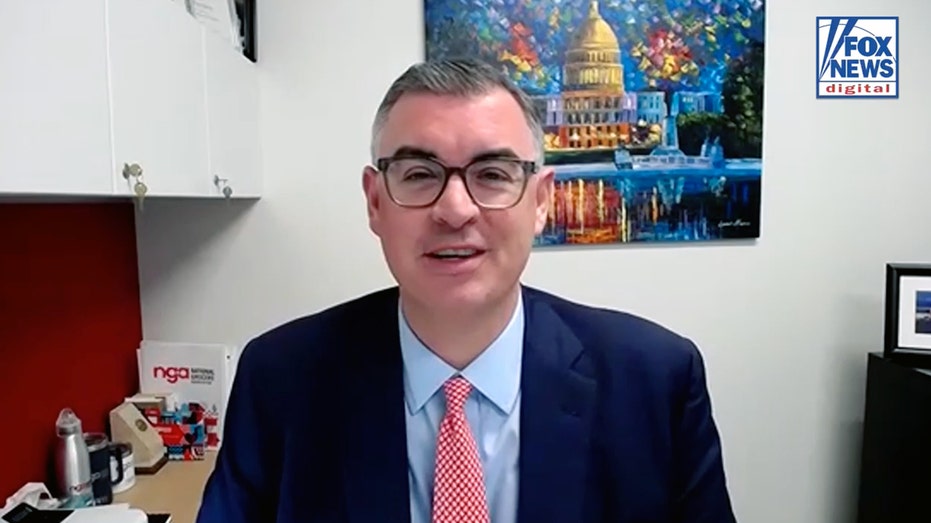
National Grocers Association President and CEO Greg Ferrara warned that independent grocers are facing mounting competitive pressure from major national retailers. (FOX Business / Fox News)
Ferrara stressed that independent grocers aren’t seeking favoritism: “They’re not asking for special treatment. They’re not asking for a leg up. All they’re saying is give me a chance to compete.”
According to NGA, independents represent more than 38% of total supermarket spending. Ferrara argued they can purchase products efficiently and at scale.
“They buy in truckloads and they buy efficiently,” he said. “They just need the access to those products and to those items to be able to be successful.”
Ferrara said independent grocers operate on net profit margins of less than 2%, leaving little room to absorb additional costs or competitive disadvantages.

Independent grocers are seeking greater access to products and competitive terms as they battle larger national retailers, according to the National Grocers Association. (Spencer Platt/Getty Images / Getty Images)
“When you’re effectively having one arm tied behind your back because you can’t get access to the products that the consumer wants or the package size that they want, that’s a challenge,” he said.
He said some NGA members believe the situation in certain product categories is “worse than ever.”
The Justice Department recently expanded its beef affordability investigation to include eight major grocery retailers — Kroger, Publix, Walmart, Albertsons, Aldi, Ahold Delhaize, Costco and Amazon — after previously opening an antitrust investigation into major meatpackers.
DOJ is examining retail beef prices, margins, purchasing arrangements and other factors influencing prices, FOX Business previously reported.
Ferrara said he did not want to prejudge DOJ’s investigation but argued that greater competition would benefit consumers.
COSTCO RAISES PRICE OF KIRKLAND MOTOR OIL AND LIMITS HOW MUCH SHOPPERS CAN BUY

Independent grocers can sometimes be “boxed out” of selling products offered exclusively to major national chains, Ferrara told FOX Business. (Will Newton/Getty Images / Getty Images)
“We believe the more competition there is in the marketplace, that will ultimately benefit consumers, that will drive prices down,” he said. “It gives consumers choice and it gives our retailers the ability to serve and support local ranchers and farmers.”
“Ultimately, the DOJ needs to run their course,” Ferrara said. “I won’t weigh in on that.”
Beef prices remain high, Ferrara acknowledged, but he said independent grocers are seeing consumers adjust rather than abandon beef altogether.
“The price definitely may cause consumers to pull back a little bit,” he said. “Instead of buying a roast, they’re going to buy a smaller cut… or ground versus a steak, and they’re gonna trade down.”
To counter the potential sticker shock, Ferrara said independent stores might run stronger promotions on ground beef or offer smaller packages so shoppers don’t face as high a total price at checkout.
GET FOX BUSINESS ON THE GO BY CLICKING HERE
Looking ahead, Ferrara said he remains optimistic about the future of independent grocers.
“I think we’re gonna see a future that corrects course because ultimately that’s what consumers want,” he said. “We want to make sure that we’re taking the steps today to ensure that these businesses will be successful tomorrow.”
Business
UBS upgrades Bajaj Finance shares, LT Finance as it sees NBFCs better placed than banks. Here’s why

UBS sees scope for a re-rating as the unsecured lending cycle revives. It also expects asset quality to remain robust.
With a revised target price of Rs 1,110, UBS analysts forecast an upside potential of 9% in Bajaj Finance, while a hiked target price of Rs 380 implies an upside of about 25% from current market levels. In Wednesday’s session, Bajaj Finance rose 3% to Rs 1,025, while LT Finance was up 3% to Rs 313.
“We upgrade our rating on Bajaj Finance from Sell to Neutral, as we expect cyclical EPS upgrades on yield-accretive growth and strong asset quality, though its valuation remains demanding,” UBS said in a note. “We also upgrade our rating on L&T Finance from Neutral to Buy, expecting faster personal loan growth and ROA improvement toward 3%,” it added.
UBS on Bajaj Finance shares
“We believe BAF has cleared its asset quality issues across unsecured products, while an increased provision coverage ratio acts as a cushion against macro headwinds,” UBS analysts said in a note.

This could provide a cyclical push toward higher-yielding loan growth in the near term, driving cyclical earnings acceleration. The company’s EPS downgrades have largely passed and foresee strong EPS growth of 30%+ in FY27, although it may slow to the high teens in FY28.
UBS on LT Finance
UBS said LT Finance has been on a path of improving return on assets (ROA) over the past few quarters. It noted that growth in higher-yielding segments such as personal loans and gold loans has remained strong, while microfinance (MFI) growth is recovering after weakness driven by asset quality. This has resulted in a significant shift in the loan mix towards higher-yielding segments.The brokerage also said credit costs have been gradually declining, supported by a benign asset quality cycle, while operating expenses have provided additional support. Overall, UBS factors in around 25 basis points of improvement in opex to AUM, around 15 basis points in credit costs and the remainder from margins, resulting in its assumption of a 50-basis-point improvement in ROA over FY26-28.
UBS on India financials
India entering into strong credit cycle – UBS expects India to enter a strong unsecured credit growth cycle, led by personal loans. The brokerage said this is supported by healthy asset quality across banks and NBFCs, flat unsecured household leverage over the past three years, ample system liquidity and a more risk-on approach among lenders.
UBS added that stabilising gold prices could moderate gold loan growth, which has been a key substitute for personal loans in recent years. This could benefit private banks and large NBFCs with strong personal loan franchises.
Rate hike largely priced in – The brokerage believes the market is underestimating the expected recovery in personal loan growth, which could lead to earnings upgrades and expansion in return on assets (ROA) for select lenders. It said concerns over higher interest rates appear overstated given the significant liquidity surplus in the system, which could keep funding conditions supportive. With most NBFCs trading below their one-year average valuations, the brokerage sees scope for a re-rating as personal loan growth recovers.
The brokerage expects around Rs 12-13 trillion of FCNR inflows to create excess liquidity, as system credit demand of around Rs 45-50 trillion is unlikely to absorb the entire pool in the near term, with domestic savings flows remaining stable. It said this could support NBFC funding through bank lines and NCD markets, keeping funding conditions favourable. The brokerage factors in a 15-20 basis point rise in FY27 funding costs, leaving limited downside risk from rate hikes.
Healthier credit cycle ahead – It said that following a three-year credit cycle, asset quality across these segments is now at its best levels in several quarters, although NBFCs continue to see some residual stress in low-ticket business loans.
Also read:70% IPOs in September gave a listing bounty for investors. Can NSE beat its weak GMP?
According to UBS, unsecured leverage in India increased from 6% of GDP in FY19 to 10% in FY24, but has remained stable since then. In contrast, gold loans grew from around 1% of GDP to around 5% by FY26, although growth is expected to moderate as gold prices flatten.
Alongside the improvement in asset quality across unsecured lending segments, CRIF data for August 2026 showed personal loan growth accelerating to around 30% for NBFCs and 9% for banks, marking a two-year high.
The brokerage maintained its Buy rating on Cholamandalam Investment, Shriram Finance and Poonawalla Fincorp. Among banks, it expects ICICI Bank, HDFC Bank and Axis Bank to benefit from a pick-up in personal loan growth.
Disclaimer: This article has been written by Veer Sharma, who is not a SEBI-registered Research Analyst or an Investment Adviser. Veer Sharma and his/her ‘relative(s)’ (as defined under Section 2(77) of the Companies Act, 2013) do not hold any financial interest in the companies mentioned in this article as of the date of publication. The views/recommendations mentioned in this article, wherever applicable, are those of the respective SEBI-registered Research Analyst/brokerage and have been reproduced/reported with due attribution. They should not be construed as the views or recommendations of The Economic Times Digital or the journalist. Readers are advised to consider the original research report and make their investment decisions based on their own assessment. Brokerage disclaimers here.

Beyond Beta: Why Taiwan May Outlast The AI Debate

Oil slips for 6th straight day as Trump signals progress in Iran talks

Burst water main closes A1041 Bawtry Road near Selby
JPMorgan resumes Wave Life Sciences stock rating at Neutral

XRP Ledger retries upgrade that lets banks split payment and compliance duties




-

 Fashion5 days ago
Weekend Open Thread: Talbots – Corporette.com
-

 Tech2 days ago
Researchers escape OpenAI Codex sandbox to run commands on host
-

 Crypto World4 days ago
Circle launches Arc Studio AI agent for building onchain apps
-
 NewsBeat4 days ago
Trump says US has reached an agreement to take permanent control of Greenland’s security
-

 Crypto World2 days ago
Who Needs CLARITY Anyway? ARB Could See 70X Increase: Hodler’s Digest
-

 Crypto World4 days ago
Bitcoin price breaks channel as RSI climbs to 63
-

 Crypto World4 days ago
Trading Bitcoin on Robinhood? Why 2% Spread Has Traders Worried
-

 Crypto World6 days ago
US Charges Robinhood Engineers Over Crypto Listing Trades
-

 Crypto World5 days ago
Mortgage and refinance interest rates today, Thursday, September 17, 2026
-

 Crypto World4 days ago
World Money launches in 150+ countries with Stripe
-

 Business2 days ago
Analog Devices (ADI) Bets $1.35 Billion on Chips that Let Machines Think for Themselves
-

 Crypto World5 days ago
Silver prices recover quickly, hitting weekly high today
-

 Crypto World2 days ago
Coinbase, Robinhood, Circle Seen as Tokenized-Stock Winners
-

 Tech5 days ago
GPT-6 Astra Reached the Nether in Minecraft, Lost Its Stash to a Creeper, and Farmed Potatoes for Hours
-
 NewsBeat4 days ago
US was ‘on brink of war’ with China over false AI report of nukes moving in Middle East
-

 Crypto World2 days ago
Bitcoin price holds above $81K as key catalysts line up
-

 Entertainment6 days ago
Grey’s Anatomy Showrunner Teases Changes After Cast Exits
-

 Tech3 days ago
Trump suggests rebranding AI with a new name, says he’s also creating an AI Force
-

 Crypto World4 days ago
CFTC sends crypto market structure rulemaking to White House
-

 Crypto World1 day ago
Meta Jumps 11% As Muse Shines and Investors Show an Appetite for Advancing AI
You must be logged in to post a comment Login