
Business
Why flights are so expensive and will likely stay that way



Wherever volatile fuel prices head this year, don’t expect bargain flights.
Airfare in the U.S. in June was up 26.5% compared with a year earlier, according to the latest federal data.
Airline leaders say customers continue to book even after carriers hiked fares. They told Wall Street analysts this month that they’re expecting to hold onto that pricing power at least through the rest of the year, if not longer.
Traveler Marjorie Aran said she and her husband paid a combined $800 to go from New York to Chicago in economy on United Airlines this week to visit their daughter.
“We used to go to Chicago for a couple of hundred dollars,” she said. Asked if she would skip a trip because of the fares she said no. “We can afford it.”
Airlines are betting that stays true for millions of consumers.
The average Southwest one-way fare, for example, was $225.61 in the second quarter, up from $186.65 during the same span of 2025.
“Despite high fuel and high prices, we’re seeing really strong demand,” Southwest Airlines CEO Bob Jordan told CNBC’s “Squawk on the Street” in late July.
United said it expects to pay about $6 billion more for fuel this year than it expected at the start of 2026. American Airlines forecast a $6 billion increase in fuel costs compared with last year, each a jump of a more than 50% from 2025. Both carriers said demand is still strong, even as they’re passing costs on to customers with higher fares.
“We observed minimal to no negative impact on demand from higher price points, a trend we see continuing,” United Chief Commercial Officer Andrew Nocella told Wall Street analysts on the company’s July 16 earnings call. The carrier expects unit revenue year over year for the rest of 2026 to rise and even exceed the second quarter’s increase, he said.
Airlines are eager to make up not just the billions of dollars more they’ve paid for fuel this year, but also to cover higher costs of labor, maintenance and basic operating expenses like increased airport fees.
“Labor costs have escalated dramatically. Maintenance is off the charts in terms of escalation. And those are all costs that every single airline pays the same,” United CEO Scott Kirby said on the call.
Volatility continues
The surprise surge in fuel costs — airlines’ biggest expense after payroll — was a shock to the industry. Airlines pruned schedules this year, which can mean fewer flights per day or week on a certain route. That leaves customers with a lower number of flights to choose from and can lift fares.
According to S&P Global Energy Platts data, jet fuel prices have eased from four-year highs in April, but are still up about 50% since Feb. 28, when the U.S. and Israel’s strikes on Iran kicked off the monthslong military conflict that has choked off a main shipping channel for months.
United said its fuel costs rose $575 million from the start of July until mid-month as it was reporting results, knocking $1.12 off of third-quarter adjusted earnings.
In a sign of how seriously airlines were taking the turmoil in fuel markets this year, Southwest — fearing a supply crunch on the import-reliant West Coast — sent a boat filled with more than 12 million gallons of jet fuel, about a week’s supply for the airline, through the Panama Canal from Houston to Los Angeles in May. It was the first time the airline had sent fuel from Texas to another U.S. destination by sea.
U.S. Gulf Coast jet fuel was going for about $3.60 a gallon, as of Monday, according to S&P Global Energy Platts. While that’s off from $4.78 a gallon in April, prices vary depending on geography and on local supply.
The volatility that’s come along with on-again, off-again ceasefires with Iran has also made it harder for airlines to schedule and price flights.
Tightening grip on consumers
As fares and fuel rise, the four biggest U.S. airlines — American, Delta Air Lines, United and Southwest — have been gaining share of the U.S. market.
According to Cirium data, those carriers have 82.1% share of the seats flown by U.S. airlines this year, up from 80.7% last year and 79.7% in 2022. That increase comes even as Southwest, which carries more passengers domestically than any other, is barely growing this year.
Planes of United Airlines, Southwest Airlines and American Airlines are seen at LaGuardia Airport in New York, the United States, on April 23, 2026.
Zhang Fengguo | Xinhua News Agency | Getty Images
That increasing share for big airlines is in part because there’s less competition from some smaller rivals.
Spirit Airlines, the iconic U.S. discounter, collapsed in May, taking tens of millions of seats off the market overnight.
Spirit’s problems were bubbling for years: Costs were on the rise for labor and other expenses, many of its Airbus jets were grounded by a Pratt & Whitney engine manufacturer defect, and upmarket travel was outshining economy class. Last summer, it filed for bankruptcy protection for the second time in a less than a year, with some analysts criticizing the carrier for not doing enough in its first Chapter 11 to cut costs. The carrier shut down before dawn May 2, failing to reach a deal with bondholders, including for a potential government bailout.
Some smaller low-cost airlines are moderating their growth, if not shrinking altogether, to save money as fuel prices remain high. According to Cirium, Avelo is shrinking and so is a combined Allegiant and Sun Country, which completed their merger in May.
Still, JetBlue Airways, Frontier Airlines and Breeze Airways, a startup launched by JetBlue founder David Neeleman are planning to grow.
“Despite this second-half earnings improvement, we plan to continue to maintain a conservative capacity profile given that the geopolitical backdrop remains fluid and fuel remains volatile,” JetBlue CEO Joanna Geraghty said on an earnings call on Tuesday.
JetBlue forecast an increase in unit revenue of as much as 16.5% in the current quarter.
Frontier, which is now the largest U.S. discounter, is also enjoying increased pricing power. Its average fare revenue in the second quarter was $63.04, up from $40.94 the year before, thouh its non-fare revenue, which includes seating fees and other add-ons, was down 1% from the year-earlier period.
The Denver-based airline is planning to grow capacity as much as 18% this quarter and forecast unit revenue growth of 20%. It plans to expand about 7% in the fourth quarter.
The increase in revenue has helped offset higher fuel prices, Frontier CEO Jimmy Dempsey said in an interview Thursday. That’s key to stabilizing the carrier, which lost money in five of the past six years.
“There’s a lot of energy in the airline about bringing us back to profitability,” Dempsey said.
Frontier, JetBlue and Allegiant are planning to introduce first-class seats in the coming months, roomier, more expensive options that executives say will cater to customers looking to pay up for more space.
Post-summer test
The next few months, when the big summer travel rush ends, will determine just how much airlines can pass along to customers. And the summer season is ending earlier and earlier, with August not as strong of a demand month as it used to be. However, carriers also say that for international travel, customers are booking more often in the fall and other traditionally off-peak periods, to avoid crowds, high prices and oppressive heat.
Airport checkpoint screenings are down 0.5% from last year through July 24, and down 2.6% from the four weeks that ended that day, David Vernon, airline analyst at Bernstein, said in a Monday note.
Justin Wittekind, 27, a podcast writer and researcher, who was on his way back to Ontario, California, from New York said he paid about $340 on United. He said he would likely think about drawing the line at $400 for a round trip.
“But if I have to go home … I’ll pay $400, but I wouldn’t like it,” he said.

Australia’s home price retreat gathers pace in July, Cotality data shows

I am an independent investor with more than 15 years of experience researching public companies, with a primary focus on identifying misunderstood businesses where the market’s short-term narrative differs from long-term fundamentals. Before concentrating on biotechnology, I was a long-term investor in Advanced Micro Devices (NASDAQ: AMD) during its multi-year turnaround and Maxar Technologies (NYSE: MAXR) prior to its acquisition. Those investments reinforced my conviction that meaningful returns often come from understanding the underlying business, competitive positioning, and long-term catalysts rather than reacting to short-term market sentiment. Over the past seven years, my research has become increasingly focused on small- and micro-cap biotechnology companies, particularly those developing novel therapies for oncology and hematologic malignancies. My investment process centers on fundamental research, including SEC filings, ClinicalTrials.gov records, FDA regulatory pathways, peer-reviewed scientific literature, conference presentations, and corporate communications. I also seek to understand clinical trial design, survival statistics, regulatory strategy, and the competitive landscape surrounding emerging therapies. One company I have followed extensively is SELLAS Life Sciences, where I have been a shareholder for more than seven years. My research has included reviewing publicly available regulatory filings, analyzing clinical trial developments, engaging with management through shareholder communications, and participating in discussions with independent AML specialists to better understand the evolving treatment landscape. While SELLAS has become one of my deepest research projects, my broader interests include immunotherapy, precision medicine, targeted oncology, and event-driven biotechnology investing. Professionally, I am the founder and owner of Mobilize Cloud, a digital consulting and software development firm based in Ohio. My career in technology has been built around solving complex problems, analyzing data, and developing practical solutions for businesses. Those same analytical skills have naturally shaped my investment philosophy: question assumptions, rely on primary sources whenever possible, and distinguish evidence from narrative. I do not claim to predict clinical trial outcomes or possess information beyond what is publicly available. Instead, my goal is to synthesize complex scientific, regulatory, and financial information into clear, well-supported research that helps investors better understand both the opportunities and the risks associated with innovative biotechnology companies. Through my writing, I hope to encourage thoughtful, evidence-based discussion around biotechnology and other sectors where deep research can uncover opportunities that may not be fully reflected in prevailing market sentiment. Whether the topic is biotechnology, technology turnarounds, or other event-driven investments, my objective is to help readers evaluate the facts, challenge conventional assumptions, and make more informed investment decisions.

The Investment Doctor is a financial writer, highlighting European small-caps with a 5-7 year investment horizon. He strongly believes a portfolio should consist of a mixture of dividend and growth stocks.
He is the leader of the investment group European Small Cap Ideas which offers exclusive access to actionable research on appealing Europe-focused investment opportunities not found elsewhere. The a focus is on high-quality ideas in the small-cap space, with emphasis on capital gains and dividend income for continuous cash flow. Features include: two model portfolios – the European Small Cap Ideas portfolio and the European REIT Portfolio, weekly updates, educational content to learn more about the European investing opportunities, and an active chat room to discuss the latest developments of the portfolio holdings. Learn more.
Analyst’s Disclosure: I/we have a beneficial long position in the shares of CPX:CA either through stock ownership, options, or other derivatives. I wrote this article myself, and it expresses my own opinions. I am not receiving compensation for it (other than from Seeking Alpha). I have no business relationship with any company whose stock is mentioned in this article.
I have also written some out of the money put options and I intend to write more put options.
Seeking Alpha’s Disclosure: Past performance is no guarantee of future results. No recommendation or advice is being given as to whether any investment is suitable for a particular investor. Any views or opinions expressed above may not reflect those of Seeking Alpha as a whole. Seeking Alpha is not a licensed securities dealer, broker or US investment adviser or investment bank. Our analysts are third party authors that include both professional investors and individual investors who may not be licensed or certified by any institute or regulatory body.

Death toll from migrant rush into Ceuta rises to 72

SPYI: Stop Looking At The Yield, The Real Opportunity Is Volatility
Business
Health Officials Confirm Locally Acquired Dengue Fever Case in Miami-Dade Amid Peak Mosquito Season This Year
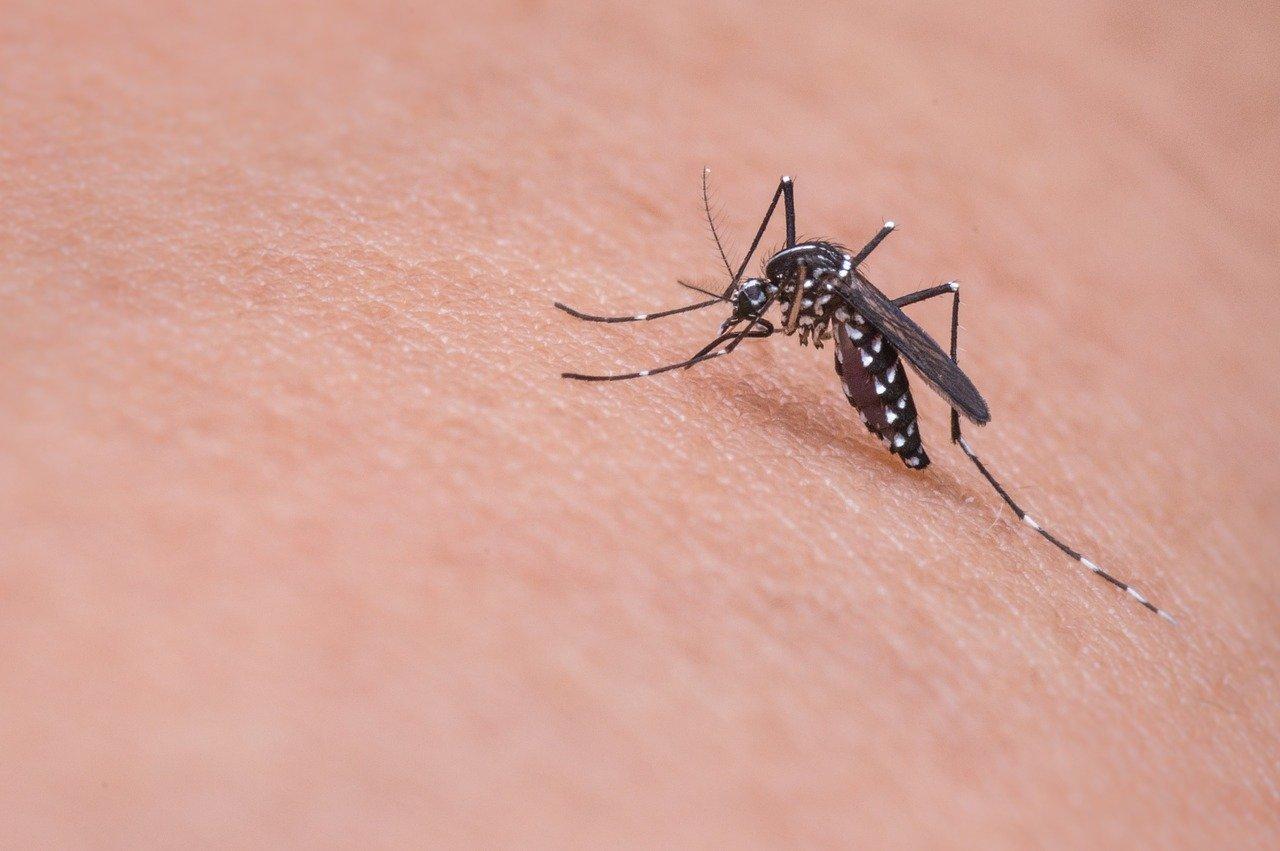
The Florida Department of Health in Miami-Dade County has confirmed a locally acquired case of dengue fever, issuing an advisory as officials begin coordinating surveillance, prevention and mosquito control efforts in South Florida.
According to the advisory, the confirmed case involved transmission of the virus within the local area, rather than a case in which someone contracted the disease while traveling abroad and later returned to Florida. Health officials have not disclosed the exact neighborhood or specific location where the local transmission likely occurred, though the department said it has begun coordinated surveillance, prevention and mosquito control efforts in the area in response to the confirmed case.
Dengue is a viral illness spread primarily through the bite of Aedes aegypti mosquitoes, though the related Aedes albopictus species can also transmit the virus and is present in Florida as well. The disease typically presents as a flu-like illness, with symptoms that can include fever, severe muscle aches, joint pain and, in some cases, a skin rash. Symptoms of dengue generally appear within 14 days of being bitten by an infected mosquito and typically last anywhere from four days to a week once they develop.
Dengue fever is not considered contagious between people under normal circumstances and is rarely fatal, though the illness can be severely uncomfortable, having earned the nickname “breakbone fever” in some medical literature because of the intensity of the muscle and joint pain it can cause. In more severe cases, the disease can also cause gastrointestinal symptoms such as vomiting and diarrhea, along with symptoms like eye pain and, in rare instances, bleeding complications.
Miami-Dade’s confirmed local case comes during what public health officials have identified as the most active period of the year for dengue transmission in Florida, driven by the combination of summer heat, humidity and standing water that creates favorable breeding conditions for Aedes mosquitoes. The Centers for Disease Control and Prevention has reported a significant national rise in dengue activity over the past year, with federal surveillance data showing a 359% increase in reported U.S. dengue activity compared with historical averages, even as the large majority of cases nationally continue to be linked to international travel rather than local transmission.
Florida has recorded locally acquired dengue cases every year in recent years, with the state reporting 62 locally acquired cases in 2025, spread across Brevard, Hillsborough, Miami-Dade and Pasco counties. Miami-Dade County alone accounted for 25 of those 2025 cases. In 2023, Florida recorded an even higher total of 154 locally acquired dengue cases, with Miami-Dade County responsible for 139 of them, reflecting the county’s position as one of the state’s most consistent hot spots for local dengue transmission given its dense population, tropical climate and extensive history of international travel connections. Separately, the Florida Department of Health in Hillsborough County reported the state’s first locally acquired dengue case of 2026 in that county earlier this summer.
Currently, no dengue vaccine is approved for use among the general adult population in the United States. The one FDA-approved vaccine, Dengvaxia, is authorized only for children ages 9 to 16 who have laboratory-confirmed evidence of a prior dengue infection and who live in dengue-endemic U.S. territories such as Puerto Rico, and its manufacturer has announced plans to discontinue production of the vaccine in 2026. For the vast majority of Florida residents and mainland U.S. travelers, preventing dengue infection depends entirely on avoiding mosquito bites in the first place, since no widely available vaccine or specific antiviral treatment currently exists for the general population.
Public health officials have outlined several practical steps residents can take to reduce their risk of exposure to dengue-carrying mosquitoes. Using insect repellent registered with the Environmental Protection Agency remains one of the most effective preventive measures, alongside wearing long sleeves and pants during outdoor activities, particularly during the daytime hours when Aedes mosquitoes, unlike many other mosquito species, are most actively biting. Eliminating any standing water around homes and properties is also considered essential, since Aedes mosquitoes require only small amounts of stagnant water, such as that collecting in flowerpots, discarded containers, clogged gutters or unused tires, to breed successfully.
Miami-Dade has faced elevated mosquito-borne illness activity beyond dengue in recent months as well. The county confirmed its first locally acquired case of chikungunya, another mosquito-borne viral illness, in December, and the broader South Florida region has continued monitoring for both diseases throughout 2026 given the area’s consistent risk profile for Aedes-transmitted infections. Chikungunya, like dengue, is transmitted primarily by Aedes mosquitoes and causes symptoms including high fever and often debilitating joint pain, typically appearing within three to seven days of a bite from an infected mosquito.
With Florida now entering the height of its summer mosquito season, health officials in Miami-Dade and across the state are expected to continue closely monitoring both human case counts and mosquito surveillance data throughout the coming months, using that information to guide targeted mosquito control efforts and public health messaging in areas where infected mosquito populations or additional human cases are identified.
Business
(VIDEO) Three Killed and Several Wounded in Shooting at Idaho In-N-Out Restaurant, Police Say Gunman Is Dead
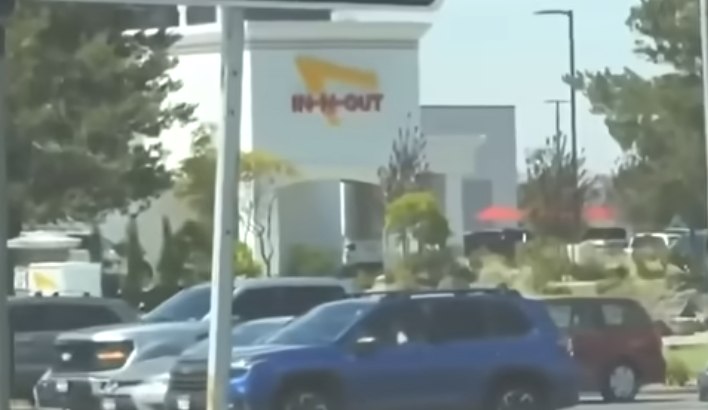
Three people were killed and at least seven others were wounded in a shooting Saturday afternoon at an In-N-Out restaurant in Twin Falls, Idaho, local authorities said, with police confirming the suspected shooter was found dead at the scene.
The shooting unfolded before 2:30 p.m. local time at the restaurant, located within a shopping center in the southern Idaho city. Social media video obtained by CBS News showed people fleeing the shopping center’s parking lot as multiple gunshots could be heard, with one clip showing a person carrying what appeared to be a firearm outside the restaurant before opening the doors of a parked sedan.
Twin Falls Police Chief Matthew Hicks confirmed during a news conference Saturday night that fatalities had occurred but said he could not immediately confirm an exact death toll. Joshua Palmer, a Twin Falls city spokesperson, initially told CBS News that at least three people had been killed and two others wounded, before later telling the Associated Press that the number of people injured had risen to at least seven.
Hicks said a number of people injured in the shooting were being treated at St. Luke’s Magic Valley Medical Center, a local hospital. The hospital posted a message to its own social media account urging the public to stay away from the facility unless facing a separate emergency. “Due to the active shooter incident occurring in Twin Falls, please avoid going to St. Luke’s Magic Valley unless it is an emergency,” the hospital wrote.
Hicks confirmed that the suspected gunman was dead but did not provide details on how the person died. “The suspected shooter in this incident is deceased,” Hicks said. “He was nearby on the scene there, and we are working to try to ascertain his identity and the motivations behind that.” As of Saturday night, authorities had not released the identity of the suspected shooter or any information about a possible motive.
Twin Falls resident Haley Dodaro, 43, described witnessing the chaos unfold while she and her mother were at the restaurant for lunch. Dodaro told the Associated Press that while the pair was waiting in the drive-thru line, they saw people running across the road and restaurant employees fleeing the building. She said she initially suspected a fire might have broken out, until a man directing traffic in a reflective vest told her there was an active shooter nearby. “So that’s when we knew there was a shooting,” Dodaro said in a text message to the AP. “People were running out crying and screaming. It was very scary.”
Hicks said investigators were working to interview a large number of witnesses who had been in the vicinity of the restaurant at the time of the shooting. “We have literally hundreds of people that were in some way, shape or form in the area of this restaurant at the time that are being interviewed right now,” Hicks said, underscoring the scale of the response and investigation underway in the shooting’s immediate aftermath.
Police shut down surrounding roads and a nearby bridge during the response to the shooting and asked residents in the area to stay away while officers worked the scene. An FBI spokesperson confirmed to CBS News that bureau agents were on site assisting local authorities with the investigation.
Twin Falls is located in southern Idaho, roughly 120 miles southeast of Boise. The city, home to a population of roughly 50,000 people, is known regionally as a commercial hub for south-central Idaho.
The shooting adds to a string of mass-casualty shootings that have drawn national attention in recent months, with local and federal law enforcement continuing to investigate the circumstances and motive behind Saturday’s attack. As of Saturday night, officials had not released additional details about the specific sequence of events inside or around the restaurant, nor had they confirmed the exact number of people killed beyond the initial reports of three fatalities.
Authorities said the investigation into the shooting remains active and ongoing, with police continuing to process the scene and interview witnesses well into Saturday night. No additional public updates on the identities of the victims or the suspected shooter had been released as of early Sunday morning.
Given the scale and violence of Saturday’s shooting, this is a distressing story for many readers, particularly those with connections to the Twin Falls community or who may have been near the restaurant at the time. Anyone personally affected by the shooting who is experiencing distress is encouraged to reach out to local crisis or mental health resources, and Idaho residents seeking immediate support can contact the 988 Suicide and Crisis Lifeline by calling or texting 988.
Business
Elon Musk Jokes He’s a “Former Trillionaire” as Tesla and SpaceX Declines Erase $750 Billion in Wealth

Elon Musk has jokingly referred to himself as a “former trillionaire,” poking fun at a dramatic decline in his estimated net worth following sharp valuation drops in both Tesla and SpaceX, a remark that has reignited broader discussion about the nature and volatility of billionaire wealth.
Musk made the comment in a post on X on July 24, writing “(Former) Trillionaire,” in an apparent reference to the extraordinary reversal in his fortune since briefly becoming the world’s first trillionaire following SpaceX’s blockbuster stock market debut in June. At its peak, Musk’s estimated net worth reached roughly $1.45 trillion, according to tracking from outlets including Forbes and Bloomberg. His fortune has since fallen to approximately $695.7 billion, according to Forbes, marking a decline of roughly $750 billion from that June peak.
The joke is notable in part because Musk has never officially sustained trillionaire status for an extended period; his brief crossing of the $1 trillion threshold came almost entirely as a result of SpaceX’s initial public offering. SpaceX shares priced at $135 in the IPO and initially surged as high as $225.64 before reversing sharply. As of late July, the stock had fallen roughly 50% from that all-time high, trading around $109 to $112. SpaceX’s decline has been driven by several factors, including two delayed Starship test launches, a $60 billion all-stock acquisition of AI coding company Cursor that diluted existing shareholders ahead of an August 6 lockup expiration, and a valuation that analysts say leaves little room for error. Starship’s 13th test flight succeeded on July 25, but the stock hit a new low regardless.
Tesla shares have also weighed heavily on Musk’s overall fortune, falling roughly 25% over the past month as of late July. The stock erased a full year of gains in a single session earlier in the summer, when shares fell 18% after Tesla reported second-quarter operating profit of $400 million, well below Wall Street’s expectations of $1.72 billion. Roughly $116 billion of the overall decline in Musk’s estimated net worth stems from a separate adjustment, after Forbes removed certain Tesla stock options from its calculation based on new vesting conditions Musk agreed to with the automaker.
Despite the scale of the paper losses, Musk remains by far the wealthiest person in the world, ranking well ahead of Google co-founders Larry Page, whose net worth is estimated at roughly $268.5 billion, and Sergey Brin, estimated at roughly $270.6 billion, as well as Amazon founder Jeff Bezos, estimated at roughly $252.6 billion.
Musk’s comment also carried a note of irony given remarks he made just weeks earlier. Around the time of SpaceX’s IPO, Musk told XPRIZE founder Peter Diamandis that “money will stop being relevant at some point in the future,” arguing that once artificial intelligence and robots begin producing more goods and services than the money supply can account for, currency will lose much of its practical purpose. Diamandis noted the irony of that statement at the time, given that Musk had just become the world’s first trillionaire.
Financial experts generally describe the kind of decline Musk has experienced as a “paper loss,” reflecting a change in the market valuation of assets rather than any actual cash leaving his accounts. Because the overwhelming majority of Musk’s wealth is tied to his ownership stakes in companies including Tesla, SpaceX, xAI, Neuralink and X, rather than cash or other liquid holdings, his estimated net worth can swing by tens of billions of dollars in a single trading session without him selling a single share. When Tesla or SpaceX shares fall, his estimated wealth falls in proportion; when the shares recover, the estimated wealth reappears in the same way. Unless the underlying shares are actually sold, any gains or losses remain unrealized on paper.
Dramatic swings in Musk’s fortune are not unprecedented. His net worth jumped by more than $60 billion in a single day on June 29, and he added another roughly $30 billion on Oct. 24 after Tesla reported stronger-than-expected results, illustrating how quickly his estimated wealth can move in either direction depending on market sentiment toward his companies.
Despite the recent decline, SpaceX remains widely viewed by analysts as one of the strongest assets in Musk’s business portfolio. The company continues to dominate the commercial rocket launch market, operates the rapidly expanding Starlink satellite internet network, and holds major contracts with NASA and the U.S. government. Even so, some Wall Street analysts have expressed caution about the company’s near-term trajectory. Morgan Stanley analysts wrote in late July that if SpaceX shares fell below $100, it would imply that investors see no meaningful value in the company’s artificial intelligence-related business, with some analysts already assigning “zero or negative value” to that segment given the company’s accelerating spending on space and connectivity infrastructure and what the analysts described as largely uncertain economics.
Musk’s overall fortune has continued to reflect the broader volatility characteristic of modern billionaire wealth built primarily on technology company valuations rather than traditional industrial or cash-based assets. A single earnings report, product announcement or shift in investor sentiment can add or erase tens of billions of dollars from his estimated net worth within days, a dynamic that has repeated throughout 2025 and 2026 as Tesla and SpaceX shares have moved through several distinct cycles of sharp gains followed by steep pullbacks.

Johnson Outdoors Deserves To Catch Some Upside (Rating Upgrade)
Business
Sheriff Says “We Are Never Giving Up” as Nancy Guthrie Investigation Marks Six-Month Milestone Today
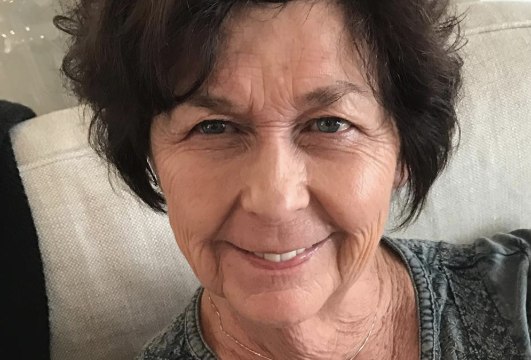
Pima County Sheriff Chris Nanos said he believes meaningful progress is being made in the investigation into the disappearance of Nancy Guthrie, speaking as the case reached the six-month mark since the 84-year-old mother of “Today” show co-anchor Savannah Guthrie was abducted from her Tucson home.
Saturday marked six months since Guthrie’s abduction. Nanos sat down with KOLD anchor Mary Coleman to discuss the state of the investigation, emphasizing that progress continues even without a publicly named suspect. “I believe we are. I think that based on what we’ve learned from the scene and all the evidence we’ve removed from there, to include the DNA, the video analysis, all that work and all the tips. Yes, I think we continue to work further and further along,” Nanos said. “We’re not where we need to be or want to be, but progress is being made.”
Nanos also acknowledged the frustration many in the public have expressed over the pace of the investigation and the limited details authorities have released. “We have gathered a lot of evidence in this case, and I wish you knew it. I wish the community could know all of the evidence, but that’s just not how investigations work,” Nanos said. “Whether it’s this case or any case. We have an obligation, we have a duty and a responsibility, to protect that case and its integrity.”
Nanos was direct in rejecting any suggestion that the case has gone cold despite six months passing without a public arrest. “Nancy Guthrie’s case is not cold,” he said. “We are not giving up. We never will.”
The sheriff’s comments came two days after the Pima County Sheriff’s Office publicly released two ransom notes that Guthrie’s family received following her abduction. According to KOLD, the station received both letters through an anonymous email news tip line and immediately forwarded them to the Pima County Sheriff’s Office, which in turn shared the documents with the FBI.
Savannah Guthrie shared another emotional public appeal for information on Saturday, directly asking anyone with knowledge of her mother’s disappearance to come forward. “We are begging for help. We are desperate. We need someone to come forward. Someone knows something. Someone suspects something. Someone recognizes the writing in the ransom demand notes,” Guthrie wrote on Instagram, alongside a photo of her mother.
Guthrie’s appeal specifically addressed anyone who might be protecting information out of fear, loyalty or personal conflict. “Someone has noticed something different, strange, troubling or just unusual — perhaps with someone they deeply love,” she wrote. “Perhaps they are afraid to come forward. Perhaps they are conflicted. Perhaps they are angry or upset for being in this situation. There is a way out — to tell what you know.” Guthrie said her family’s goal remains learning what happened to her mother so they can properly honor her life. She said the family “wanted to find out what happened to her, so that we can give her the dignity of a proper goodbye — a celebration of her remarkable life that she so deserves.”
The case has remained an active joint investigation involving both the Pima County Sheriff’s Department and the FBI since Guthrie’s disappearance was first reported on Feb. 1. Authorities have said they believe Guthrie was forcibly taken from her home in the Catalina Foothills neighborhood in the early morning hours, after she failed to appear for a scheduled Sunday church livestream. The investigation has involved extensive forensic work, including DNA analysis collected from the scene and review of surveillance footage, alongside the recently released ransom notes, which investigators believe may have been sent from the same source based on shared characteristics between the two letters.
Authorities continue to ask members of the public to closely review the wording, handwriting style and other distinctive characteristics of the released ransom notes in hopes that someone might recognize details that could help identify the sender or senders. Investigators have not confirmed whether the individual or individuals who wrote the notes were directly responsible for Guthrie’s abduction, leaving open questions about the notes’ ultimate significance to the broader case even as authorities continue treating them as important evidence.
Anyone with information related to Guthrie’s disappearance is asked to contact the FBI directly at 1-800-CALL-FBI, or 1-800-225-5324, or to call the separate tip line at 88-CRIME. Tipsters may remain anonymous, and a reward remains available for information leading to a resolution in the case. As the investigation moves past the six-month mark without a named suspect, both law enforcement officials and Guthrie’s family have continued publicly emphasizing that the case remains a top priority, with Nanos reiterating that investigators have no intention of slowing their efforts as the search for answers continues.
Australia’s home price retreat gathers pace in July, Cotality data shows
Why Is Cardano (ADA) Up 9% Today While the Crypto Market Stalls?

5 Quick-Hitter Vikings News Updates as Football Returns


-
 Sports7 days ago
Commonwealth Games boxing: Jadumani Singh seals dominant 5-0 win over Pakistan’s Sumama Rehman to enter quarter-finals | Commonwealth Games News
-

 Business4 days ago
Why Trees Belong on the Risk Register
-

 Fashion2 days ago
Weekend Open Thread: Wit & Wisdom
-

 Tech7 days ago
Intel is reversing course and bringing hyper-threading back to its server chips
-

 Politics2 days ago
Meta enters AI-training agreement with far-right ‘propaganda rag’ Newsmax
-

 Politics6 days ago
Luke Littler dismantles Gerwyn Price to retain title in Blackpool
-

 Crypto World24 hours ago
MicroStrategy Post-Earnings CLARITY Act Push Could Add New Catalyst for Its Stock
-

 Politics5 days ago
The Part of the Electric Transition Nobody Wants to Discuss
-
 Entertainment5 days ago
‘Stargate’ Creator’s New Sci-Fi Series Returns for Season 3 Tomorrow
-

 News Videos7 days ago
BITCOIN JUST ENTERED THIS CRITICAL ZONE…
-

 Business4 days ago
Major shareholder moves on Canyon
-

 News Videos3 days ago
Bitcoin Enters the 3rd Stage of the Bear Market
-

 Crypto World1 day ago
XRP Ledger v3.3.0 brings five institutional features
-

 Crypto World5 days ago
Kraken Enables Retail Access to Jersey Mike’s IPO via Tokenized Shares
-

 Tech6 days ago
New macOS Sequoia & Sonoma security updates for older Macs
-

 News Videos5 days ago
Claude: Build Financial Dashboards in Minutes (2026)
-

 Politics3 days ago
Luke Littler’s dominance sparks GOAT debate
-

 Sports3 days ago
Seema Kaliramna Wins Discus Throw Bronze, Takes India’s CWG Medals Tally To 17
-

 Business5 days ago
Johnson & Johnson agrees to $5.5B settlement over talc cancer claims
-

 Crypto World5 hours ago
Crypto PAC spending tops $2M in Michigan House race
You must be logged in to post a comment Login