
Business
Why Indian companies are rushing to tap the bond market


Several large issuers raised funds in recent days and more are expected to come to the market next week, ahead of a potential rate hike and expectations of tighter liquidity conditions. The six-member Monetary Policy Committee will meet October 5-7 amid expectation of a quarter-percentage-point hike in the policy rate to 5.50%.
Indian companies are expected to raise more than ₹1,000 crore this week, with Edelweiss Financial Services the first to hit the market with a ₹300 crore non-convertible debenture issue on Monday. Bajaj Auto Credit and IndiaFirst Life Insurance Company are likely to raise ₹250 crore and ₹200 crore, respectively.
Indian companies are actively raising funds through the bond market. This activity occurs despite anticipated interest rate increases and tighter liquidity. Large issuers are securing financing before borrowing costs potentially rise further. Surplus banking system liquidity is driving demand for corporate bond issuances. Companies are expected to raise over one thousand crore rupees this week.
Read more: JioBlackRock CIO Rishi Kohli decodes Nifty’s inflection point after two years of weak returns
Vedanta‘s board approved a ₹3,500 crore bond issuance, while state-owned Power Grid Corporation‘s board cleared a ₹5,000 crore bond proposal, according to BSE filings.

“I do not expect the corporate bond market to slow materially despite the increasing probability of higher interest rates. In fact, there is a visible change in the issuer behaviour. Several large issuers have been active and they are increasingly looking to lock in funding before system liquidity drains out and borrowing costs move higher,” said Venkatakrishnan Srinivasan, managing partner at Rockfort Fincap, a debt advisory firm.
Read more: Will Nifty extend gains to 4th session on Monday? US sanctions on Russia among factors to decide D-Street actionBanking system liquidity has stood at a large surplus this month because of inflows from the FCNR(B) deposits that banks raised under a central bank programme. The daily average surplus was ₹9.97 lakh crore, compared with ₹3.67 lakh crore in August and ₹1.07 in July, RBI data showed. The sharp increase in surplus liquidity has left banks looking for avenues to deploy these funds, and corporate bond issuances are emerging as one such avenue, experts said.
Reliance Industries raised ₹12,500 crore through five-year bonds last week, while Bajaj Finance and Tata Capital recently tapped the market with three-year issuances. The three- to five-year segment is seeing strong demand, as banks have surplus funds from the FCNR(B) deposits, which have largely come in with a similar maturity profile.


The inflows, which at $14.5 billion were second only to the $17.88 billion that ICICI Bank mobilised under the special FCNR (Bank) facility, give new resources to lend and expand the wealth management business, said Sandeep Batra, its managing director and head of wealth and personal banking in India.
Also Read: Banks plan to align norms for project finance lending
The leverage option of up to 19 times – depositors could borrow 19 times the money they deposited – that the bank offered helped attract depositors, Batra told ET in an interview. Half the deposits were for five years.
“We have a plan in place, and we are doubling down on whatever capability we need to develop,” Batra said. “FCNR (B) is one catchment…we are also opening 12 more branches.”
Banks combined mobilised $127.22 billion through FCNR (B) deposits in less than three months until the central bank-driven dollar mop-up exercise closed on August 31, the RBI said earlier this month. HSBC offered deposits ranging from $100,000 to $2.5 million, with a leverage up to 19 times, mostly financed through its branch in Gift City, Gujarat. Out of the $52.8 billion loaned through the Gift City international financial services centre, HSBC accounted for $10.9 billion.
Also Read: FinMin to meet PSB, RRB chiefs on Monday to ensure banking services during 3-day strikeGlobally, the Middle East was the top contributor to the bank’s FCNR (B) scheme, followed by Singapore and Hong Kong. Deposits came from more than 30 markets, Batra said. “We were fully prepared from an NRI reach perspective, number of relationship managers, our focus on the global Indian with, of course, the size and scale of our brand,” he said.
The fact that the bank has an ongoing six-year-old operation in Gift City gave it an advantage, he said.
“We already have clients in thousands in Gift (City). We will pay out interest every six months, which our clients can invest in a range of funds. Clients can make fresh deposits or use our multiple forex cards to spend money,” Batra said. “We also have a 7.5%, three-year fixed mortgage, which is attractive in a rising rate scenario.”
HSBC offered a flat 5.5% interest on three- to five-year deposits. The lending rate was 5% to 5.15%, or 35-50 basis points below the deposit rate. How much clients could borrow depended on their credit profile. After taking into account the leverage, the delivered yield for clients was 10-14%.
Batra said one-third of the clients onboarded during the 52-day RBI window were credit appraised, which would be a force multiplier for the bank’s wealth management business across the board.
In wealth management, HSBC offers services to clients starting with ₹50 lakh of assets to up to $2 million (₹ 80 crore) for private banking clients. With a retail broking business now likely to be started later this year, the bank has a full suite of products to offer to its wealthy clients, Batra said.
The bank plans to use the liquidity generated through the FCNR scheme conservatively, he said. “We are finding deployment tools; those deployment tools should be corporate lending, which is match funded, and mortgages like the three-year fixed product, which we launched recently. Some of it could be deployed into government securities. So, it will be a combination.”

COWZ: Popular Free Cash Flow Yield ETF Needs Change To Catch VFLO

Manitowoc: The Market Paid Cycle Prices For A Refund – Hold


David focuses on growth & momentum stocks that are reasonably priced and likely to outperform the market over the long-term. He is a long term investor of quality stocks and uses options for strategy. David told investors to buy in March 2009 at the bottom of the financial crisis. The S&P 500 increased 367% and the Nasdaq increased 685% from 2009 through 2019. He wants to help make people money by investing in high-quality growth stocks.
Analyst’s Disclosure: I/we have a beneficial long position in the shares of META either through stock ownership, options, or other derivatives. I wrote this article myself, and it expresses my own opinions. I am not receiving compensation for it (other than from Seeking Alpha). I have no business relationship with any company whose stock is mentioned in this article.
The article is for informational purposes only (not a solicitation or recommendation to buy or sell stocks). David is not a registered investment adviser. Investors should do their own research or consult a financial adviser to determine what investments are appropriate for their individual situation. This article expresses my opinions, and I cannot guarantee that the information/results will be accurate. Investing in stocks involves risk and could result in losses.
Seeking Alpha’s Disclosure: Past performance is no guarantee of future results. No recommendation or advice is being given as to whether any investment is suitable for a particular investor. Any views or opinions expressed above may not reflect those of Seeking Alpha as a whole. Seeking Alpha is not a licensed securities dealer, broker or US investment adviser or investment bank. Our analysts are third party authors that include both professional investors and individual investors who may not be licensed or certified by any institute or regulatory body.

In the NSE midcap pack, 13 stocks’ closing prices crossed above their 200-day moving averages (DMA) on September 18, 2026, according to StockEdge’s technical scan data. The 200-day moving average (DMA) is used by traders as a key indicator for determining the overall trend of a stock. As long as a stock’s price remains above its 200-day moving average on the daily timeframe, it is generally interpreted as being in an overall uptrend.

Iran and US trade threats after Houthi attacks escalate regional conflict

Tech leads shares higher in Asia as oil slips

The yen was a touch firmer at 156.64 per US dollar after dropping 2% last week. Japan markets were closed for a three-day holiday, leading to low liquidity while keeping traders on alert for an official intervention to prop up the volatile currency.
The Bank of Japan raised rates on Friday to their highest level in 31 years to 1.25%, yet the widely expected move did not boost the yen as two dissenting votes and a lack of explicitly hawkish guidance disappointed investors.
That led to the yen sharply declining before the Nikkei newspaper reported that Japanese officials conducted rate checks. A rate check involves authorities asking banks for currency quotes to gauge market conditions, which traders view as a precursor to currency intervention.
Apart from the BOJ, the Federal Reserve and the European Central Bank raised rates this month, with both warning further tightening might be needed to tackle inflation due to the almost seven-month-long war in the Middle East.
Fred Neumann, chief Asia economist at HSBC, said the BOJ’s messaging has become all the harder because the Fed delivered a hawkish signal with its unanimous decision to raise its policy rate.
The yen had firmed to its strongest level in seven months in early September as traders wagered on a faster pace of BOJ hikes and early signs of repatriation by Japanese investors but has since surrendered some of those gains.”The bar thus remains high for the BOJ to convince markets of its hawkish tilt and anchor expectations when it comes to the yen,” Neumann said. “In the coming weeks and months, investors may again test the resolve of the BOJ to push rates higher and match the Fed’s tightening.”
The euro was little changed at $1.1482 after voting projections showed the far-right Alternative for Germany (AfD) took first place in state elections in northeastern Germany, in a blow to Chancellor Friedrich Merz’s conservative party.
ING economists said the results clearly echo the low popularity of the entire federal government, and of Chancellor Friedrich Merz in particular.
“Years of economic stagnation helped produce that fragmentation. Now the fragmentation will make the stagnation harder to escape,” they said in a note.
The dollar index, which tracks the US currency against six major peers, was steady at 100.23 after gaining more than 1% last week following the Fed’s rate hike, as the central bank signalled more increases could be coming.
Traders are currently pricing in a 55% chance of a rate hike at the Fed’s next meeting in October, up from 42.5% a week earlier, the CME FedWatch tool showed.
“We do not think that the midterm elections are going to be a limiting factor in the Fed delivering another hike in October,” said Thomas Simons, chief US economist at Jefferies.
“Whether there is another hike in December will come down to the data and geopolitical developments. Looking to 2027, the path of rates will come down to what happens with the labor market. We would say rate cuts are likely in second half of 2027.”
In other currencies, sterling last bought $1.339 in early trading. The Australian dollar fetched $0.7129, while the New Zealand dollar was at $0.5721.


Daniel is an avid and active professional investor.
He runs Crude Value Insights, a value-oriented newsletter aimed at analyzing the cash flows and assessing the value of companies in the oil and gas space. His primary focus is on finding businesses that are trading at a significant discount to their intrinsic value by employing a combination of Benjamin Graham’s investment philosophy and a contrarian approach to the market and the securities therein. Learn more.
Analyst’s Disclosure: I/we have no stock, option or similar derivative position in any of the companies mentioned, and no plans to initiate any such positions within the next 72 hours. I wrote this article myself, and it expresses my own opinions. I am not receiving compensation for it (other than from Seeking Alpha). I have no business relationship with any company whose stock is mentioned in this article.
Seeking Alpha’s Disclosure: Past performance is no guarantee of future results. No recommendation or advice is being given as to whether any investment is suitable for a particular investor. Any views or opinions expressed above may not reflect those of Seeking Alpha as a whole. Seeking Alpha is not a licensed securities dealer, broker or US investment adviser or investment bank. Our analysts are third party authors that include both professional investors and individual investors who may not be licensed or certified by any institute or regulatory body.
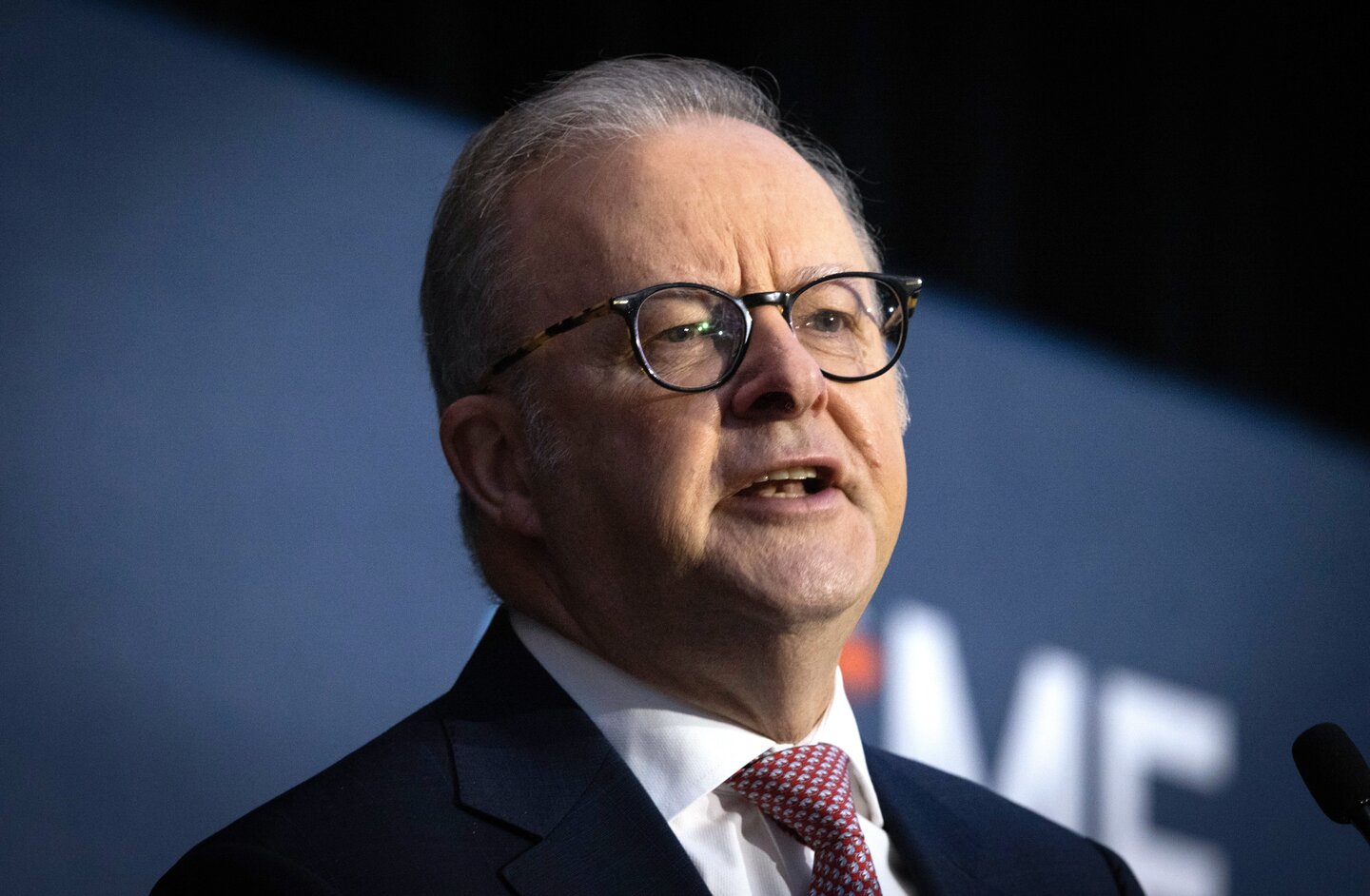
Australia having a seat at the United Nations Security Council will be able to help with the cost of living back home, the prime minister insists.

How Did the Nazis Secretly Finance Rearmament Before WWII? (MEFO Bills Explained) #OOTF #shorts

ICE agent shoots DoorDash driver in Texas as outraged Democrats demand probe and protests erupt
‘FCNR haul to power HSBC’s India wealth, retail banking push’

Weekend Open Thread – Corporette.com

Weekend Open Thread: Talbots – Corporette.com

Memory prices are slowing because buyers ran out of money
How Did the Nazis Secretly Finance Rearmament Before WWII? (MEFO Bills Explained) #OOTF #shorts

THE XRP LOTTERY NUMBERS ARE ABOUT TO BE CALLED – KEVIN O’LEARY SAYS IT’S OVER FOR ETH!

Trump: I don’t think about Americans’ financial situation
-
 Fashion2 days ago
Weekend Open Thread: Talbots – Corporette.com
-

 Crypto World2 days ago
Circle launches Arc Studio AI agent for building onchain apps
-
 NewsBeat2 days ago
Trump says US has reached an agreement to take permanent control of Greenland’s security
-

 Crypto World6 days ago
Revolut Attackers Warn of Ongoing Daily Customer Data Leaks
-

 Crypto World6 days ago
Kraken Lets xStocks Holders Earn Yield Through DeFi
-

 Crypto World5 days ago
Robinhood engineers charged over $50K crypto scheme
-

 Crypto World5 days ago
What Is the Status of the U.S.-Iran Peace Talks? Here's What Both Sides Are Saying
-

 Crypto World2 days ago
Bitcoin price breaks channel as RSI climbs to 63
-

 Crypto World4 days ago
US Charges Robinhood Engineers Over Crypto Listing Trades
-

 Crypto World7 days ago
Elon Musk Drops a Bombshell: Grok 5 Could Be the AGI Breakthrough
-
 NewsBeat7 days ago
‘Sick conspiracy’: Trump says only guardrails AI needs is ‘a strong and smart (High IQ!) president’ in all-caps rant
-
 Crypto World6 days ago
NVIDIA Analysis: Attempted Rising Wedge Breakout Amid Pressure on the AI Sector
-

 Tech4 hours ago
Researchers escape OpenAI Codex sandbox to run commands on host
-
Business7 days ago
SK Hynix ADRs Fall More Than 6% as Memory Rally Breaks on Fears of Slower AI Spending
-

 Tech5 days ago
Webb’s IC 348 Mosaic Includes Two-Jupiter Dwarfs, Twin Jets, and a Nursery Still Making Worlds
-
 Crypto World7 days ago
3 Token Unlocks to Watch in the Third Week of September 2026
-
Crypto World6 days ago
Can Circle’s Arc Repeat Robinhood Chain’s Meme Coin Boom?
-

 Crypto World6 days ago
DOJ Seeks to Seize $61M in Iran Oil Funds From Binance Accounts It Vouched For
-

 Crypto World3 days ago
Silver prices recover quickly, hitting weekly high today
-

 Crypto World3 days ago
Mortgage and refinance interest rates today, Thursday, September 17, 2026
You must be logged in to post a comment Login