Connect with us
DAPA Banner
DAPA Coin
DAPA
COIN PAYMENT ASSET
PRIVACY · BLOCKDAG · HOMOMORPHIC ENCRYPTION · RUST
ElGamal Encrypted MINE DAPA
🚫 GENESIS SOLD OUT
DAPAPAY COMING

Business

Why is Doximity stock sliding today?

Published

on

Continue Reading
Click to comment

You must be logged in to post a comment Login

Leave a Reply

Business

Supreme Court rules on Trump’s attempt to fire Fed governor Lisa Cook

Published

on

Supreme Court rules on Trump's attempt to fire Fed governor Lisa Cook

The Supreme Court on Monday dealt a blow to President Donald Trump’s effort to remove Federal Reserve Governor Lisa Cook, preserving long-standing protections that shield the central bank from political interference.

The case centered on whether Trump had sufficient legal cause to remove Cook, a question with sweeping implications for the Fed’s autonomy and the limits of presidential authority over one of the nation’s most influential economic institutions.

Advertisement

The case is one of two major Supreme Court disputes over presidential removal power, alongside Trump v. Slaughter, which involves the firing of a Federal Trade Commission commissioner and raises similar constitutional questions about independent agencies.

For everyday Americans, the Federal Reserve’s ability to operate free from political pressure can shape everything from mortgage rates and job prospects to the price of groceries. The Fed’s decisions influence how expensive it is to borrow money and how forcefully policymakers respond to inflation or a slowing economy.

FROM MORTGAGES TO CAR LOANS: HOW AFFORDABILITY RISES AND FALLS WITH THE FED

President Donald Trump and Federal Reserve Governor Lisa Cook

A side-by-side image of President Donald Trump and Federal Reserve Governor Lisa Cook  (Andrew Harnik/Al Drago/Getty Images)

Those stakes are especially high now, as the world’s most powerful central bank enters a new era of leadership under Chair Kevin Warsh, bringing renewed attention to the balance between White House influence and the Federal Reserve’s autonomy.

Advertisement

Critics warn that if presidents can exert more control over the Fed, interest rate decisions could become more political — shaped by election-year pressures rather than the long-term health of the economy.

At the center of the dispute is the Federal Reserve Board of Governors, known as the Fed board, a seven-member panel that helps set U.S. monetary policy and oversees the nation’s banking system. Its members serve on the Federal Open Market Committee, which sets interest rates.

Cook’s ascension to the Fed was historic. Appointed by former President Joe Biden in 2022, she became the first Black woman to serve as a governor.

LISA COOK’S THREE HOME LOANS AT CENTER OF TRUMP FIGHT OVER FEDERAL RESERVE SEAT

Advertisement
Lisa Cook becomes the first Black woman to serve as a governor on the Federal Reserve Board

Federal Reserve Chairman Jerome Powell administers the oath of office to Lisa Cook to serve as a member of the Board of Governors of the Federal Reserve System on May 23, 2022. (Drew Angerer/Getty Images)

Her legal fight traces back to late August 2025, when Trump announced that he was firing her from the Fed board. He alleged she misrepresented information tied to a trio of mortgages she obtained before joining the central bank. Cook has denied any wrongdoing and has not been charged with a crime.

She sued Trump in federal court in Washington, D.C., to block her removal. On Sept. 9, a district court judge barred Trump from firing her while the case proceeds, a decision later upheld by a federal appeals court.

The high-stakes legal fight quickly attracted attention at the highest levels of the Federal Reserve. Powell underscored its significance in January when he attended the oral arguments, a notable departure from his typically low-profile approach.

Powell defended his decision to attend the arguments, telling reporters at the Federal Reserve on Jan. 28 that the dispute was “perhaps the most important legal case in the Fed’s history.”

Advertisement

TRUMP VS THE FEDERAL RESERVE: HOW THE CLASH REACHED UNCHARTED TERRITORY

Jerome Powell and Lisa Cook

Earlier this year, Federal Reserve Chairman Jerome Powell attended Supreme Court oral arguments in the case involving Fed Governor Lisa Cook. (Saul Loeb/AFP/Getty Images)

Recently, Powell faced his own challenge. 

In January, Powell disclosed that the Justice Department had opened a criminal investigation into his congressional testimony about a multi-billion-dollar renovation of the Fed’s headquarters, an unusual development for a sitting Fed chair.

In a rare video statement, Powell called the probe “unprecedented” and described it as another salvo in what he said was Trump’s pressure campaign on the central bank to cut rates. 

Advertisement

The move followed days of quiet consultations with advisers and was an uncommon display from a Fed chair better known for a restrained, measured approach.

THE ONE LINE IN WARSH’S TESTIMONY SIGNALING A BREAK FROM THE FED’S STATUS QUO

In April, Powell told reporters he planned to stay at the Federal Reserve through the completion of ongoing investigations into the Fed headquarters renovation project. 

Advertisement

“I have no intention of leaving the [Fed] board until the investigation is fully resolved with transparency and finality,” Powell said, adding that he intends to complete his term as governor through 2028.

Had Powell stepped aside entirely, it would have opened a seat for Trump to fill, giving him another opportunity to shape the Fed’s leadership.

GET FOX BUSINESS ON THE GO BY CLICKING HERE

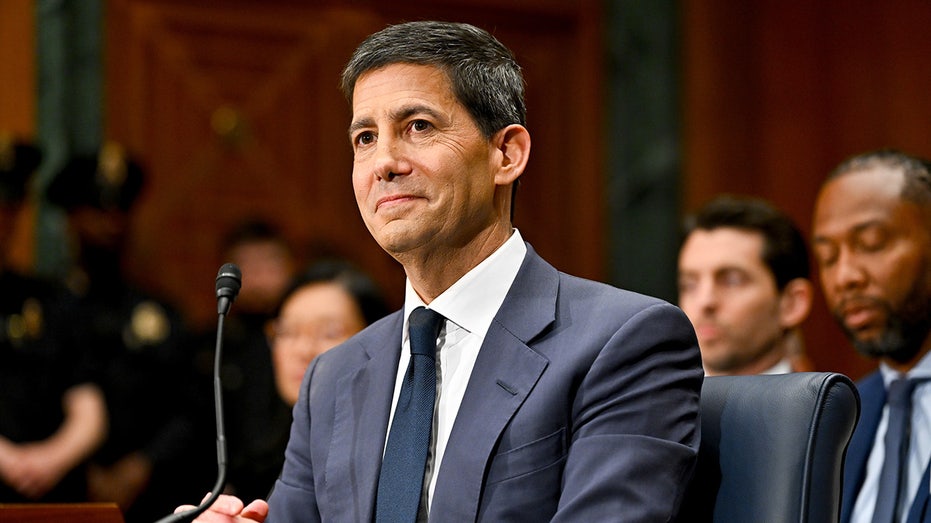
Kevin Warsh at his confirmation hearing

Kevin Warsh is a former Morgan Stanley banker who became the youngest member of the Fed’s Board of Governors in 2006. (Graeme Sloan/Bloomberg via Getty Images / Getty Images)

By remaining on the board, Powell retains influence over U.S. monetary policy even after relinquishing the chairmanship in May. This dynamic could intensify tensions with the president.

Advertisement

How that relationship evolves could shape the direction of the Federal Reserve and, by extension, the path of interest rates, inflation and the broader economy as Warsh begins his tenure as chair.

This is a breaking news story. Please check back for updates.

Continue Reading

Business

Rise in take-up of large industrial space in Wales shows new Knight Frank research

Published

on

Business Live

Knight Frank said there is encouraging signs in the development pipeline that will deliver much needed new stock

Computer generated image of the next phase of development at Indurent Park Newport.

There has been a rise in take-up of large industrial and logistics space in Wales, shows new research from property advisory firm Knight Frank.

In the first half of this year, based on units of more than 50,000 sq ft, total take-up exceeded 600,000 sq ft. This was up on the 540,000 sq ft recorded in the first half of 2025.

Advertisement

Activity in the second quarter reached approximately 270,000 sq ft across three transactions, comprising two sales and one letting. While this represents a slight increase on Q2 last year, where 239,000 sq ft was transacted, it marked a slowdown compared with the first three months of this year.

The research said the decrease in deal volumes reflects ongoing uncertainty within the market. Notably, around 800,000 sq ft of space that was under offer in the previous quarter has yet to complete, highlighting extended due diligence processes and a general slowdown in transaction timelines.

Knight Frank partner Neil Francis, who heads up the industrial and agency team at its Cardiff office, said: “While we have seen a softer second quarter in terms of completed transactions, this is not a reflection of demand. There remains a significant volume of space under offer, but increased scrutiny and longer due diligence periods are undoubtedly slowing the pace at which deals are concluding.”

Despite these headwinds, Knight Frank said there are signs of positive momentum within the development pipeline. At Indurent Park Newport, it added that levels of occupier interest have already been recorded with discussions underway on two units before steel frames have been erected – an indicator of sustained demand for modern, high-quality industrial space.

Advertisement

Further west, Fabco are progressing plans for a mid box scheme at Pencoed, while Deeside Regeneration are advancing similar plans there. Knight Frank said these projects are expected to contribute much needed new stock into a marketplace that continues to experience supply constraints, particularly for well-specified units.

In addition, the Welsh Government are advancing plans to refurbish the 100,000 sq ft unit at Hirwaun which they acquired last quarter. This investment is set to enhance the quality of available space along the Heads of the Valleys corridor, supporting both regional regeneration and occupier demand.

Me Francis said: “The encouraging aspect is the strength of the development pipeline and the level of early-stage interest we are seeing, particularly for high-quality, well-located space. This underlines a market that remains fundamentally robust, even if transactions are taking longer to complete.”

On investment trends for industrial units over 50,000 sq ft the report says there remains strong demand for well-located industrial property across South Wales.

Advertisement

Tom Griffiths, associate in Knight Frank’s capital markets team, said: “Long-medium term investments are particularly attractive to French retail estate investment funds, which are drawn to the South Wales’ favourable yield profile, especially those assets requiring minimal asset management. This is demonstrated by Alderan’s acquisition in Q2 of Kestrel House in Cwmbran which extends to circa 83,000 sq ft.”

Continue Reading

Business

Trinity Capital stock hits 52-week high at 17.38 USD

Published

on


Trinity Capital stock hits 52-week high at 17.38 USD

Continue Reading

Business

A Review of 10 Leading Proxy Platforms for 2026

Published

on

A Review of 10 Leading Proxy Platforms for 2026

The generative AI landscape is evolving at a breakneck speed, with new models emerging daily. With technologies like Grok Imagine API, developers need high-performance, low-latency API access to scale applications.

Selecting a reliable API proxy platform is crucial when working with Grok Text-to-Image and Grok Text-to-Video models. This guide evaluates 10 leading API proxy platforms, focusing on their handling of Grok Imagine API and Grok Imagine Video API integration. Our aim is to help you choose the best infrastructure for your specific needs, ensuring success for the next generation of AI-powered applications.

Quick Comparison Overview

To provide an immediate snapshot of each platform’s core strengths and how it aligns with Grok Imagine API, here’s a condensed overview:

Platform Name Best Known For Grok Model Compatibility Primary Performance Metric
ApiPass High Availability Full Support 99.9% Uptime
ApiMart Model Diversity Supported High Throughput
WaveSpeed Ultra-Low Latency Supported 50ms Response
Fal Visual Optimization Excellent GPU Optimization
Replicate Model Variety Partial Support Scalability
PoYo Ease of Integration Supported Rapid Setup
ApiFrame Developer Experience Supported Robust Framework
ApiPod Multi-Cloud Deployment Supported Global Reach
Crun High Concurrency Supported Load Balancing
KIE Enterprise Security Supported Audit Readiness

Detailed Breakdown

Now, let’s delve deeper into each platform, examining their unique offerings, pros, cons, pricing structures, and ideal use cases. We will especially consider their effectiveness in the context of the Grok Imagine API ecosystem.

1. ApiPass

ApiPass has quickly become a preferred choice for reliable, optimized API middleware in generative AI. It’s specifically tuned for Grok Imagine API, ensuring rapid generation of images and videos under high-concurrency loads. Its architecture is built for resilience and speed, making it an ideal partner for mission-critical AI applications. ApiPass also offers competitive pricing for Grok Imagine API usage, presenting an economical route compared to direct access for many use cases.

Advertisement

Pros:

  • Exceptional Stability: ApiPass provides unparalleled uptime and reliability for consistent Grok Imagine API access.
  • Fast Integration: Developer-friendly tools facilitate quick and seamless integration of Grok Text-to-Image and Grok Text-to-Video models.
  • Comprehensive Technical Support: Responsive and knowledgeable support aids in troubleshooting and optimization.
  • Optimized Performance: Actively optimizes traffic flow to and from Grok Imagine API for minimal latency and maximum throughput.
  • Cost-Effectiveness for Grok Models: Offers competitive pricing for high-volume Grok Imagine API usage.

Cons:

  • ApiPass primarily optimizes for mainstream, high-demand AI models like Grok Imagine API. It may offer fewer niche or experimental models compared to pure model repositories.

Pricing:

  • grok grok-imagine
    • text-to-image: 0.020 per run
    • text-to-image-quality: 0.027 per run
    • image-to-image: 0.023 per run
    • image-upscale: 0.055 per run
    • text-to-video-480p: 0.009 per second
    • text-to-video-720p: 0.016 per second
    • image-to-video-480p: 0.009 per second
    • image-to-video-720p: 0.018 per second
  • grok grok-imagine-video-1-5-preview
    • 480p: 0.077 per second
    • 720p: 0.127 per second

Best For: Enterprise-level applications and production environments demanding consistent performance and high availability. It’s ideal for efficient resource utilization with Grok Text-to-Image and Grok Text-to-Video models, and for cost-optimized high-volume Grok Imagine API usage.

2. ApiMart

ApiMart acts as a dynamic marketplace, offering a vast library of models from diverse providers. It’s excellent for experimenting with various architectures, including Grok Text-to-Video models. Its mission is to provide diversity and easy access to a broad AI ecosystem.

Pros:

  • Extensive Model Repository: Unparalleled selection of models for easy integration.
  • Mature Platform Ecosystem: Well-established infrastructure for model discovery and management.
  • Centralized Access: Single interface for managing multiple AI service subscriptions.

Cons:

  • API documentation updates occasionally lag new model releases, causing integration challenges.
  • Performance optimization isn’t primarily for specific models, relying on individual providers.

Pricing:  Standard Image Generation: $0.028 per run; Video Generation: $0.08 per second.

Best For: Research projects, academic institutions, and innovation labs needing to frequently switch AI providers. It’s perfect for comparative studies of different AI models and Grok Imagine API permutations.

Advertisement

3. WaveSpeed

WaveSpeed is engineered for speed, excelling in latency-sensitive environments where milliseconds matter. Its performance tuning for Grok Imagine Video API is top-tier. This makes it a go-to choice for applications demanding real-time video generation and delivery.

Pros:

  • Superior Speed: Optimized infrastructure for minimal latency with Grok Imagine API.
  • Excellent Load-Balancing Capabilities: Efficiently distributes high traffic, maintaining consistent performance during peak demand.
  • Edge Network Benefits: Distributed network brings AI processing closer to the end-user, reducing perceived latency.

Cons:

  • Offers fewer options for advanced server-side customization than generalized cloud platforms.
  • Focuses heavily on network speed, with less emphasis on deep AI-specific features beyond rapid proxying.

Pricing: Standard Image Generation: $0.025 per run;Video Generation: $0.020 per second.

Best For: Real-time interactive applications, live streaming platforms, and any product where Grok Imagine Video API generation speed is critical. This includes gaming, interactive media, and dynamic content creation.

4. Fal

Fal focuses heavily on visual AI models, building purpose-built infrastructure for complex image and video rendering. This specialization makes it a natural and efficient fit for Grok visual models. It handles the intricacies of Grok Text-to-Image models and advanced video synthesis expertly.

Advertisement

Pros:

  • Industry-Leading Visual Model Handling: Optimized architecture for GPU-intensive visual AI workloads.
  • Very Developer-Friendly Documentation: Clear, concise documentation tailored for visual AI development.
  • Specialized Compute: Provides seamless access to high-performance GPUs for visual synthesis tasks.

Cons:

  • Less effective or cost-efficient for non-visual AI models or language-only tasks.
  • May be over-engineered for developers purely focused on text-based AI.

Pricing: Standard Image Generation: $0.050 per run; Video Generation: $0.10 per second.

Best For: Image rendering engines, digital art platforms, and short-form video creation platforms using Grok Text-to-Video models. It’s also ideal for applications emphasizing visual generative AI capabilities.

5. Replicate

Replicate is a veteran in AI model deployment, known for quickly getting models into production. It supports an incredible array of models, offering substantial flexibility. However, its specific optimizations for Grok Imagine API may not be as granular as specialized providers like ApiPass.

Pros:

Advertisement
  • Outstanding Support for Open-Source Models: Enables easy deployment and management of publicly available models.
  • Vibrant Developer Community: Benefits from an active, supportive community providing shared knowledge.
  • Flexible Deployment: Robust platform for deploying any model, including custom wrappers.

Cons:

  • Latency can fluctuate, especially with proprietary models like Grok, due to generalized optimizations.
  • Direct performance tuning for Grok Text-to-Video models might require additional developer effort.

Pricing: Standard Image Generation: $0.050 per run; Video Generation: $0.15 per second.

Best For: Developers performing iterative AI testing and rapid prototyping with various models. It’s also ideal for those experimenting with different open-source and proprietary AI solutions, including Grok Imagine API aspects.

6. PoYo

PoYo is dedicated to simplifying the developer experience, especially for AI integration newcomers. Its intuitive dashboard streamlines managing Grok API keys, monitoring usage logs, and deploying models. This embodies user-friendliness for seamless operations.

Pros:

  • Extremely Easy Setup: Designed for minimal friction, perfect for beginners or small teams integrating Grok Imagine API.
  • Intuitive Dashboard: Clean and easy-to-navigate UI simplifies API key and usage management.
  • Rapid Integration: Enables fast deployment of applications leveraging Grok Text-to-Image models.

Cons:

  • Advanced traffic management and rate-limiting features are basic compared to enterprise-grade gateways.
  • This might limit very high-volume or security-critical applications.

Pricing: Standard Image Generation: $0.035 per run; Video Generation: $0.09 per second.

Best For: Small to mid-sized projects, solo developers, and educational purposes. It’s ideal where ease of use, rapid Grok Imagine API deployment, and budget-friendliness are key.

Advertisement

7. ApiFrame

ApiFrame offers a robust framework approach for API management. It helps teams deeply integrate AI capabilities into existing backend architectures. Emphasizing structure and extensibility, it suits complex, long-term development strategies.

Pros:

  • Clear Code Structure: Promotes organized and maintainable code for large-scale AI projects.
  • High Extensibility: Highly customizable, allowing tailor-made solutions around Grok Imagine API.
  • Enterprise-Grade Features: Balances security, monitoring, and traffic management vital for enterprises.

Cons:

  • May present a steeper learning curve for developers new to the platform.
  • Initial setup might require more time and expertise.

Pricing: Standard Image Generation: $0.022 per run; Video Generation: $0.07 per second.

Best For: Software companies and large development teams building complex, long-term AI-integrated systems. It requires deep integration of Grok Image API and high levels of customization and control.

8. ApiPod

ApiPod excels in multi-cloud deployment strategies, ensuring API services remain resilient and globally accessible. Its architecture supports flexibility across various cloud providers. This addresses the growing need for cloud-agnostic solutions with Grok Imagine API.

Advertisement

Pros:

  • Highly Flexible Deployment Environments: Offers unparalleled flexibility across different cloud providers.
  • Strong Global Server Distribution: Ensures optimal worldwide availability of Grok Imagine API endpoints.
  • Resilience and Disaster Recovery: Robust features for high availability and quick recovery against outages.

Cons:

  • Pricing structure can be a barrier for very early-stage startups or limited budgets.
  • Managing configurations across multiple cloud environments might be complex for smaller teams.

Pricing: Standard Image Generation: $0.025 per run; Video Generation: $0.06 per second.

Best For: Multinational corporations and global enterprises requiring stable, region-agnostic API availability. It ensures resilience for Grok Text-to-Image models and other AI services.

9. Crun

Crun is engineered to handle massive, unpredictable spikes in traffic effectively. It’s an ideal choice for applications with volatile Grok Imagine API demand. If your application expects bursts of requests, Crun offers robust concurrency management.

Pros:

Advertisement
  • Robust Concurrency Management: Excels at distributing high loads, ensuring system responsiveness under stress.
  • Dynamic Scaling: Automatically scales resources to match demand, optimizing costs and performance.
  • High Throughput: Processes a large number of concurrent requests, suitable for broad user bases.

Cons:

  • Comprehensive configuration interface can be overwhelming for non-DevOps users.
  • Initial setup requires a good understanding of load balancing and scaling strategies.

Pricing: Standard Image Generation: $0.015 per run; Video Generation: $0.04 per second.

Best For: High-load production environments and event-driven architectures with unpredictable usage patterns. It requires seamless scalability and robust handling of concurrent requests for Grok Imagine API.

10. KIE

KIE prioritizes security and compliance above all else. This makes it critical for specific industries and use cases. It provides comprehensive traffic monitoring, detailed logging, and granular access control for sensitive applications leveraging Grok Imagine API.

Pros:

  • Best-in-Class Security Features: Offers advanced protocols, encryption, and threat detection for Grok Imagine API.
  • Regulatory Compliance Support: Assists organizations in adhering to stringent industry regulations.
  • Audit Readiness: Comprehensive logging and auditing ensure traceability and accountability for all API interactions.

Cons:

  • Feature-heavy interface can lead to slower dashboard loading times or a steeper learning curve.
  • Strong focus on security might prioritize verification processes over some performance optimizations.

Pricing: Standard Image Generation: $0.040 per run; Video Generation: $0.12 per second.

Best For: FinTech, healthcare, government, or any industry with strict data security requirements. It also fits regulatory compliance needs and a critical demand for audit readiness with Grok Imagine API.

Advertisement

Final Thoughts

Choosing the right API proxy platform in 2026 depends heavily on your specific business goals. It also considers technical requirements and long-term vision. The distinction between a functional proxy and a strategic partner will become clearer as generative AI evolves. Each platform brings unique strengths to the table, catering to diverse needs.

For stability, specialized optimization, developer-centric features, and cost-effectiveness with Grok Imagine API, ApiPass stands out. Its design for high-concurrency tasks positions it as a leader for enterprise AI deployments. Replicate or PoYo suit those starting with prototypes. Fal remains a powerhouse for specific visual generation needs, and WaveSpeed for low latency requirements. ApiPod handles multi-cloud resilience, while Crun manages unpredictable traffic bursts. KIE provides robust security and compliance for sensitive applications.

We hope this assessment helps empower your generative AI projects. Utilize the groundbreaking capabilities of the Grok Imagine Video API to usher in a new era of innovation. The future of AI integration is bright, and with the right tools, your potential is limitless.

Advertisement

Continue Reading

Business

The Complete Guide to Lithuanian Citizenship by Descent

Published

on

The Complete Guide to Lithuanian Citizenship by Descent

Discovering your family history often leads to exciting, unexpected opportunities. For many people with roots in Eastern Europe, tracking down their ancestral tree reveals a life-changing surprise: eligibility for a powerful European passport.

If your parents, grandparents, or great-grandparents came from the Baltic region, you might hold a legal birthright to live, work, and travel freely across twenty-seven countries.

Reclaiming this legacy does not have to be an overwhelming process. By breaking down the legal rules, history, and paperwork into manageable steps, you can successfully turn your family history into a functional global asset.

What Does It Mean to Reclaim Ancestral Lithuanian Citizenship?

Reclaiming your heritage is based on a legal foundation known as ius sanguinis, which translates to citizenship by bloodline. Unlike countries where nationality depends entirely on where you were born, the Republic of Lithuania allows individuals to claim citizenship if their ancestors were nationals. This process is legally viewed as a reinstatement of citizenship rather than a standard immigration path, meaning you are simply reviving a status that your family technically never lost.

For the global Lithuanian diaspora, this legal path serves as an important bridge for heritage preservation. It recognizes the historical hardships that forced families to leave their homeland. By proving your direct lineage, you can regain your ancestral citizenship and officially re-enter the community of an active EU member state.

Advertisement

Lithuanian Citizenship by Descent

If you want to complete a successful Lithuanian citizenship by descent application, you must follow a highly specific legal path. The primary authority handling these cases is the Migration Department of Lithuania. This institution reviews historical evidence to verify that an applicant’s family tree connects directly to the sovereign state before specific historical conflicts took place.

Navigating this eligibility roadmap requires a solid understanding of the Law on Citizenship. The regulations ensure that your constitutional right to nationality remains protected, even if your family has lived abroad for two or three generations. Reclaiming this status provides a direct path to an ancestral passport, opening up a secure way of reclaiming EU citizenship without having to live in Europe first.

Who Qualifies for Lithuanian Citizenship Through Ancestry?

Determining if you qualify involves reviewing the specific dates your ancestors lived in the country. The legal requirements are strictly tied to key historical timelines in the Baltic region.

The Core Eligibility Criteria and Historical Timelines

To qualify for the right of return, your ancestor must have held valid citizenship during the 1918–1940 independence period. The most critical threshold date in Lithuanian citizenship law is June 15, 1940, which marks the beginning of the Soviet occupation. If your family member was a citizen before this date and later fled, was exiled, or left the territory before the country officially declared the restoration of independence on March 11, 1990, you are generally eligible to apply.

Advertisement

Understanding Generational Limits: From Parents to Great-Grandparents

The legal right to apply extends down to the third generation of descendants. This means you can apply if you have a parent, grandparent, or great-grandparent who met the citizenship criteria. You must be able to prove a clear, unbroken, and proven blood relationship showing you are a direct descendant of that specific individual. These regulations, established by the Seimas, ensure that family lines severed by historical displacement can be legally reunited.

How to Trace Your Lithuanian Family History Successfully

The foundation of a successful application relies on detailed genealogy research. Many families possess old stories but lack the physical paperwork required by European authorities.

Navigating Official Archives and Global Genealogy Databases

When tracking down your family line, you can find valuable records by using international platforms like Ancestry.com, MyHeritage, and FamilySearch. For individuals with Jewish heritage from the region, specialized databases such as JewishGen and LitvakSIG are excellent resources for locating specific ancestral towns, or shtetls. Eventually, you will need to contact official repositories in Vilnius, including the Central State Archives of Lithuania and the Lithuanian State Historical Archives, to secure official certificates.

Overcoming Broken Document Trails and Soviet-Era Name Changes

A common problem for many applicants is dealing with inconsistent records. When families migrated to countries like the United States, Canada, or South Africa, immigration officers often changed the spelling of foreign names. Additionally, many older documents display a Soviet-era name Russification, which can make records difficult to match. Working with a professional genealogist or an experienced immigration lawyer can help you locate historical maps, cross-reference parish registries, and establish clear legal proof despite these spelling variations.

Advertisement

Key Documents You Need to Prove Your Lithuanian Roots

Before submitting your file to European officials, you must collect a complete set of certified vital records.

The Essential Vital Records Checklist

Your application packet must contain specific official records that build an unbroken chain from you to your ancestor. The essential documents include:

  • Your current, valid foreign passport.
  • Your official birth certificate and marriage certificate.
  • The birth, marriage, and death certificate of your parents and grandparents.
  • An old internal passport, regular passport, or official military record of your ancestor issued before 1940.
  • Baptismal records or local religious certificates if civil documents are missing.

Legalization, Apostilles, and Certified Translations

Every single document issued outside of Europe must be officially authenticated to be recognized by foreign authorities. This process requires obtaining an apostille validation from the local government office where the record was issued, such as the Office of the Secretary of State. Once your documents are gathered and authenticated, they must feature a professional, sworn Lithuanian translation. The Migration Department will only accept a certified copy that matches these strict legal standards.

Step-by-Step Application Process for Citizenship by Descent

The application process mixes modern online tracking with traditional document verification.

Submitting Your Case Through the MIGRIS Digital Portal

The entire application process begins digitally through the official online platform known as MIGRIS. Applicants must create a secure personal profile, fill out the required forms, and upload clear digital scans of their entire submission checklist. To verify that your documents meet the specific European digitization standards before uploading, checking a dedicated informational resource like https://www.lithuaniancitizenship.com/ can help you prevent common formatting mistakes. After you upload your files, officials will perform a preliminary review to confirm that your records meet the basic legal requirements.

Advertisement

Managing Consular Appointments and Biometric Processing Abroad

Once your digital file passes the initial check, you will receive an official notification to present your physical paperwork. You must schedule an in-person appointment at a Lithuanian Embassy, a regional consulate, or a designated migration office in Vilnius. During this visit, officials will verify your original documents and collect your safe fingerprinting data for your future biometric passport. Following this appointment, your case undergoes a final administrative review before a formal decision notice is issued.

Understanding Lithuania’s Dual Citizenship Rules in 2026

A primary concern for most global applicants is whether they can keep their current nationality. According to Lithuanian Constitution Article 12, the state maintains a strict stance on nationality, but specific exceptions exist for families affected by historical displacement.

While recent public discussions and a national referendum focused on expanding dual nationality rules, the specific exceptions for descendants remain clearly protected under current law. If your family left the country during the turbulent historical window between 1918 and 1990, you are legally permitted to pursue retaining original citizenship. This allows you to hold a dual passport safely without facing complex renunciation requirements.

Practical Benefits of Holding a Lithuanian Passport

Securing your passport provides extensive practical advantages that go far beyond a simple connection to your family heritage.

Advertisement

MAJOR BENEFITS OF AN EU PASSPORT:

  1. Absolute freedom to live, work, and study anywhere in the EU.
  2. Visa-free travel to over 180 global destinations.
  3. Complete access to the European Union single market for business.

  4. Affordable European university tuition and public healthcare.
  5. Full protection and emergency assistance from any EU consulate.

Holding an official passport unlocks the full scope of EU passport advantages. You gain the right to live, build a career, or retire in any member state without needing a restrictive residence permit. It simplifies global travel by granting visa-free access to major economies worldwide and offers stable property ownership rights across the region. Ultimately, the process supports successful diaspora re-integration, allowing you to pass these valuable benefits down to future generations.

FAQ: Quick Answers to the Most Common Questions

Do I need to speak the Lithuanian language to apply by descent?

No. Applicants pursuing citizenship through direct lineage are granted a complete language exam waiver and a citizenship test exemption. You do not need to speak the language or pass a history exam to qualify.

What if my Lithuanian ancestor naturalized in another country?

If your ancestor acquired citizenship in another country after leaving, you can still qualify. The process depends on proving they held original citizenship before leaving the territory during the qualifying historical windows.

How long does the entire application process take in 2026?

The standard processing timeline generally ranges between twelve and twenty-four months. The total time depends on how long it takes to collect records from archives and the current volume of cases under review at the official government portal.

Advertisement

Reclaiming Your Heritage: Next Steps on Your Journey

Turning your family history into a real opportunity is a step-by-step process that requires patience and accurate documentation. By researching your family line, organizing your vital records, and utilizing official digital platforms, you can navigate the legal system with confidence. If you want to explore professional assistance to streamline your document search or review your family eligibility, you can visit Lithuanian Citizenship to connect with specialized resources. Taking the time to discover your roots preserves your family’s unique history and secures a flexible, global future for generations to come.

Advertisement
Continue Reading

Business

Bicara Therapeutics stock hits 52-week high at 27.98 USD

Published

on


Bicara Therapeutics stock hits 52-week high at 27.98 USD

Continue Reading

Business

Dividend alert! Last day to buy Bajaj Finance, 2 other Bajaj Group stocks for dividends worth Rs 138

Published

on

Dividend alert! Last day to buy Bajaj Finance, 2 other Bajaj Group stocks for dividends worth Rs 138
As many as three Bajaj Group companies including Bajaj Finance, Bajaj Finserv and Bajaj Holdings and Investment have fixed June 30 as the record date for their respective dividends cumulatively worth Rs 138, effectively making today the last day for interested investors to buy the shares for the payouts.

Under SEBI’s T+1 settlement cycle, investors must purchase a company’s shares at least one trading day before the record date to ensure the shares are credited to their demat accounts in time, and they become eligible for the corporate action. Therefore, today is the last opportunity for investors to buy the shares so that they are credited to their accounts by Tuesday, making them eligible for the dividends.

Bajaj Finance dividend

Bajaj Finance announced in April that its board of directors recommended a final dividend of Rs 6 per share with a face value of Re 1 each for the financial year 2026. This includes a special payout of Rs 0.60 per equity share from the exceptional gain on sale of Bajaj Housing Finance Limited (BHFL) shares.

The said dividend will be credited on or after August 3. This comes after the company paid dividends worth Rs 56 per share in 2025 and Rs 36 in 2024, before the stock adjusted for a 4:1 bonus issue last year.

Advertisement

Also Read | Vedanta may fall further; M&M, JK Paper are top buys for this week, says Anand James

Bajaj Finserv dividend

Bajaj Finserv announced in April that its board of directors recommended a dividend of Rs 1.50 per share. This includes a 20% special payout in celebration of 100 years of the Bajaj Group, the company filing said. The company’s payout on dividends is Rs 240 crore compared to Rs 160 crore incurred in the year-ago period.

Bajaj Finserv has declared 19 dividends since June, 2008, according to data on Trendlyne.

Bajaj Holdings and Investment dividend

The highest dividend among the three companies has been announced by Bajaj Holdings and Investment. The company has fixed Tuesday as the record date for a special dividend of Rs 50 per share and a final dividend of Rs 80 per share, taking the total dividend payout to Rs 130 per share.
The company has declared 33 dividends since June, 2001, and has a dividend yield of 0.61%, according to data on Trendlyne.
Apart from the three Bajaj Group companies, Maharashtra Scooters and Welspun Corp also have fixed Tuesday as the record date for their respective dividends worth Rs 60 per share and Rs 5 per share.
Also Read | PFC-REC merger explained | Swap ratio, rationale, other key details as merger set to create Rs 11 lakh cr power financing giant

(Disclaimer: Recommendations, suggestions, views and opinions given by the experts are their own. These do not represent the views of The Economic Times)

Advertisement
Continue Reading

Business

The Food Chain – What to eat for a better night’s sleep

Published

on

The Food Chain - What to eat for a better night's sleep

Available for over a year

Many of us have our own theories about sleep. Perhaps it’s avoiding coffee after lunch, drinking chamomile tea before bed, or having a warm glass of milk. But what does the science actually say?

In this episode of The Food Chain, Ruth Alexander explores the relationship between food and sleep, asking whether changing what we eat and drink can help us get a better night’s rest.

Professor Marie-Pierre St-Onge, Director of the Center of Excellence for Sleep & Circadian Research at Columbia University, explains what decades of research have revealed about the links between diet and sleep quality. She discusses why poor sleep can change our food choices, how certain dietary patterns are associated with better sleep, and why scientists are increasingly interested in nutrients such as fibre and tryptophan.

Advertisement

Sleep physician Dr Allie Hare, President of the British Sleep Society, brings the perspective of the clinic. She explains the questions patients ask most often, from caffeine and alcohol to herbal remedies and sleep supplements, and discusses some of the biggest misconceptions people have about improving their sleep.

Together, they explore whether there really are “sleep foods”, what role meal timing might play, and whether social media trends and expensive supplements are distracting us from the basics.

Along the way, they answer listeners’ questions and share practical, evidence-based advice on the changes people can make today to improve their chances of a good night’s sleep tonight.

If you’d like to get in touch with the programme, please email: thefoodchain@bbc.co.uk

Advertisement

Producer: Izzy Greenfield
Sound engineer: Hal Haines

(Image: A woman with brown hair holding an orange cushion stands next to an open fridge full of food and yawns. Credit: Getty Images)

Programme Website

Continue Reading

Business

Burnham Right to Put Devolution Front and Centre, Says BusinessLDN

Published

on

Burnham Right to Put Devolution Front and Centre, Says BusinessLDN

Andy Burnham’s pledge to deliver the biggest shift of power away from Whitehall in modern history has won early backing from London’s business community, with leaders arguing the capital is just as hobbled by centralised policymaking as the regions it is so often accused of overshadowing.

Responding to the Greater Manchester mayor’s speech, which set out a vision for a “No 10 in the North” and a sweeping transfer of decision-making to local leaders, John Dickie, chief executive of BusinessLDN, said the direction of travel was exactly what the economy needed.

“Andy Burnham is right to put greater devolution at the heart of his agenda,” Dickie said. “Giving regions the powers they need to attract investment, upskill communities and deliver infrastructure is key to getting the economy moving again.”

The intervention is notable because BusinessLDN, the business membership group formerly known as London First, represents firms in a city frequently cast as the chief beneficiary of Westminster largesse. Dickie was quick to challenge that framing, arguing that proximity to Whitehall has done the capital few favours.

“It’s good to hear him backing London as the world’s greatest capital and setting out plans to devolve further powers to the city,” he said. “Contrary to the perception, proximity to Whitehall has not automatically worked in the capital’s favour and London is just as constrained by one-size-fits-all policymaking as other parts of the country.”

Advertisement

The crux of the business lobby’s case is that London punches below its weight on the powers and purse strings available to comparable world cities. The mayor of London currently holds fewer powers than counterparts in New York and Paris, and less financial freedom than the mayors of Greater Manchester and the West Midlands.

The numbers behind that argument are stark. London and its boroughs retain only around 7 per cent of the taxes raised in the capital, against more than 50 per cent in New York, according to BusinessLDN’s recent report on the new powers London needs to thrive. Roughly three-quarters of the city’s funding still arrives as central grant, much of it with strings attached.

That dependence sits awkwardly with London’s status as the engine room of the national economy, and analysts at the Institute for Government have long noted that the capital’s governance is best compared with Paris, New York and Berlin rather than with English regions of a very different size and shape. For BusinessLDN, the lesson is that a stronger settlement for London and a stronger settlement for the North are not competing demands but two halves of the same growth strategy.

Dickie also welcomed Burnham’s willingness to take on the structural problems that have dogged successive governments, singling out housing supply and the tax that falls hardest on the high street.

Advertisement

“The commitment to grappling with some of the long-standing thorny challenges facing the country, from housebuilding to reforming business rates, will also be welcomed by firms across the capital,” he said.

Both issues are live for the business community. Pressure for a wholesale overhaul of business rates has been building for years, with retailers, manufacturers and hospitality operators all warning that the current system penalises bricks-and-mortar firms and discourages expansion. The question of how far to go on fiscal devolution, meanwhile, has already been flagged by Chancellor Rachel Reeves as a piece of unfinished business, as the Treasury weighs handing more tax-raising and tax-retention powers to local leaders.

There are signs, too, that Burnham’s economic prospectus reaches beyond the machinery of devolution. His own advisers have floated ideas such as tying pension tax relief to British investment, part of a wider push to channel domestic capital into domestic growth.

For Dickie, the prize is ultimately about prosperity that is felt in people’s pockets, in the capital as much as in the North.

Advertisement

“The only way to improve living standards is through growth, and unleashing London’s potential is vital to achieving that, while also tackling the deep inequality and poverty that persists across the capital,” he said.

Whether Burnham’s blueprint survives contact with the Treasury, and with the political reality that any meaningful devolution means central government letting go, remains to be seen. But on the morning’s evidence, the business voices that are often assumed to defend the Westminster status quo are lining up behind a different model entirely, one in which power, money and accountability sit a good deal closer to the communities they serve.


Amy Ingham

Amy is a newly qualified journalist specialising in business journalism at Business Matters with responsibility for news content for what is now the UK’s largest print and online source of current business news.

Advertisement

Continue Reading

Business

(VIDEO) Three Firefighters Killed Battling Fast-Moving Wildfires Along Colorado-Utah Border

Published

on

Three Firefighters Killed Battling Fast-Moving Wildfires Along Colorado-Utah Border

BEAVER, Utah — Three firefighters died and two others were injured Saturday while battling rapidly spreading wildfires along the Colorado-Utah border, authorities said, as hot, dry and windy conditions fueled blazes across the drought-stricken West.

The fatalities occurred during a burnover on the Knowles and Gore fires in western Colorado’s Mesa County, where crews were part of an interagency response effort. The injured firefighters were transported to a hospital with burn injuries after deploying emergency shelters in a last-ditch effort to protect themselves from the advancing flames.

The U.S. Wildland Fire Service confirmed the deaths Sunday, describing the incident as a tragic loss during operations on the fast-moving fires. Hot, gusty winds and low humidity created dangerous conditions that caused the blazes to intensify quickly, overrunning the firefighters’ position.

Advertisement

Colorado Gov. Jared Polis expressed deep sorrow over the loss. “I’m devastated by the loss of three heroic firefighters who died in the line of duty,” he said in a statement.

The incident highlights the extreme risks faced by wildland firefighters as the wildfire season intensifies across the region. Prolonged drought, above-average temperatures and strong winds have created tinder-dry landscapes primed for rapid fire spread.

Multiple fires continue burning in Utah and Colorado, prompting firefighting resources to be stretched thin. In Utah, officials have imposed restrictions on fireworks ahead of the Fourth of July holiday due to extreme fire danger. The Snyder Fire, burning near the border, has scorched thousands of acres.

Fire officials urged caution and vigilance as conditions remain volatile. Crews are working around the clock to contain active blazes, but shifting winds and rugged terrain complicate suppression efforts.

Advertisement

The deaths come amid a challenging wildfire season in the Western United States. Climate patterns, including La Niña influences in some forecasts, combined with persistent dry weather have elevated fire risks. Experts warn that such conditions may become more frequent as the climate warms.

Wildland firefighting involves coordinated efforts from federal, state and local agencies. The fallen firefighters were part of a larger team responding to the border fires, which threatened communities and vast areas of public lands.

Investigations into the exact circumstances of the burnover are underway, a standard procedure following line-of-duty deaths. Officials will examine weather data, fire behavior models and deployment decisions to learn lessons for future incidents.

The two injured firefighters are receiving medical care, though details on their conditions were not immediately released. Support services for first responders and their families have been activated in the wake of the tragedy.

Advertisement

Across the West, other fires are also demanding attention. Utah has seen significant activity, with blazes forcing evacuations and road closures in some areas. Colorado has similarly grappled with multiple starts, taxing resources already committed to the border incident.

Fire managers emphasize the importance of public cooperation. Campfire restrictions, fireworks bans and awareness of dry vegetation help prevent human-caused ignitions, which account for a large percentage of wildfires.

The loss of three firefighters serves as a somber reminder of the dangers inherent in protecting lives, property and natural resources. Wildland firefighters often work in remote, hazardous environments with limited escape options when fires behave erratically.

Communities near the affected areas have rallied in support. Processions honored the fallen as news spread, with residents lining roads in Grand Junction and other locales to pay respects.

Advertisement

Federal and state leaders have pledged full support for ongoing firefighting operations and investigations. Resources from across the country are being mobilized to assist as the season progresses.

Climate scientists note that wildfire seasons are starting earlier and lasting longer in many regions due to changing weather patterns. Drier fuels and more extreme fire weather days increase both frequency and intensity of blazes.

For families of the deceased, the coming days will involve mourning and memorial arrangements. Fire agencies typically hold formal honors to recognize the ultimate sacrifice made in service to the public.

Meanwhile, containment efforts continue on the Knowles, Gore and other fires. Progress has been made in some sectors, but complete control remains elusive amid challenging conditions.

Advertisement

Residents in fire-prone areas are advised to prepare evacuation plans, maintain defensible space around homes and stay informed through official channels. Air quality alerts have also been issued due to heavy smoke in downwind communities.

The incident underscores the critical role of wildland fire management in the American West. As development expands into wildland-urban interfaces, the stakes for both firefighters and civilians continue to rise.

Support for wildfire prevention and suppression funding remains a priority for Western lawmakers. Investments in technology, training and fuel reduction projects aim to reduce risks, though experts acknowledge that complete elimination of danger is impossible.

As recovery and investigation efforts proceed, the focus remains on honoring the fallen and supporting their colleagues and loved ones. The bravery displayed in the face of such peril exemplifies the commitment of those who choose this demanding profession.

Advertisement

Broader weather patterns suggest the fire season may have more challenges ahead. Forecasts indicate continued hot and dry conditions across much of the region, necessitating sustained vigilance from both responders and the public.

Continue Reading

Trending

Copyright © 2025