
Business
Why is Luxshare Precision Industry stock climbing today?




Amazon: AI Revenue Too Dependent On OpenAI And Anthropic
Business
Electro Optic Systems Shares Surge Over 20% After Record Half-Year Revenue and Order Book Jump
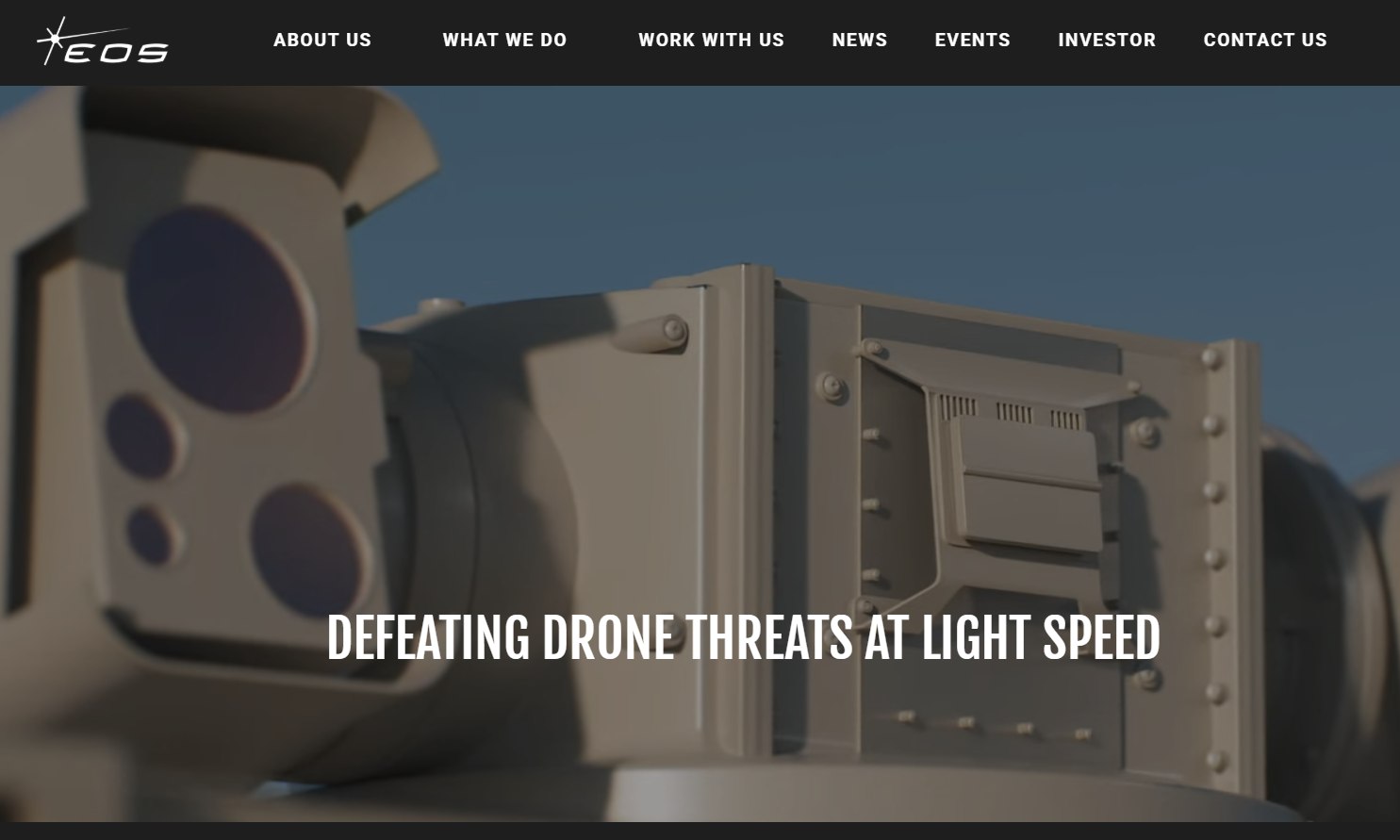
SYDNEY — Shares in Australian defence technology company Electro Optic Systems Holdings Ltd. jumped more than 20 percent on Tuesday after the firm reported a sharp rise in first-half revenue and a record order book, signaling strong demand for its counter-drone and weapons systems.
The stock rose as high as $10.51, up $1.91 or 22.21 percent, in heavy trading on the Australian Securities Exchange. The move followed the release of results for the six months ended June 30, which showed revenue climbing to $168.8 million from $44.1 million a year earlier, an increase of about 283 percent.
Underlying earnings before interest, tax, depreciation and amortization turned positive at $21.6 million, compared with a $14.9 million loss in the prior corresponding period. The company still recorded a statutory net loss of $33.7 million, narrowed from a $44.8 million loss a year earlier.
Management highlighted an unconditional order book of approximately $846 million as of June 30, up sharply from levels a year earlier and described as the highest in the company’s history. Unrestricted cash stood at $256 million, providing a stronger balance sheet position after capital raisings and recent contract wins.
The results reflect a period of accelerated growth driven by global demand for counter-unmanned aerial systems and remote weapon stations. Electro Optic Systems has secured multiple contracts in the Middle East and elsewhere, including a large order for its Slinger counter-drone system. The company completed the acquisition of MARSS Group earlier in the year, adding artificial intelligence-enabled command-and-control capabilities that have contributed additional orders.
In commentary accompanying the results, the company stated: “This has been a record period for EOS, with strong order growth reflecting global demand for our advanced defence technologies. We are seeing the benefits of our investments in manufacturing, and the MARSS acquisition provides us with new opportunities in AI-enabled systems.”
Defence spending in several regions has increased amid ongoing geopolitical tensions and the proliferation of low-cost drones on modern battlefields. Electro Optic Systems has positioned itself as a supplier of both kinetic and directed-energy solutions, including high-energy laser systems. A factory for high-energy laser weapons was formally opened earlier in 2026.
The company also upgraded full-year revenue guidance for its base business, excluding the newly acquired MARSS operations. It now expects base revenue of between $280 million and $300 million for the 2026 financial year, up from a previous range of $240 million to $270 million. The guidance is based on the existing secured order book and does not include potential future contracts.
Gross margin for the half was reported at 58 percent, lower than the prior year as the product mix and scale of deliveries shifted. Contracts signed during the period totaled about $303 million across 10 orders, compared with $75 million across eight orders in the first half of 2025.
Investors have closely watched the company’s ability to convert its growing backlog into delivered revenue and improved cash flow. The first-half performance showed progress on that front, with underlying EBITDA moving into positive territory at scale for the first time. The narrowed statutory loss reflected higher operating costs associated with ramping production and integrating the MARSS acquisition, offset by the sharp rise in sales.
Electro Optic Systems operates in the defence and space sectors, designing and manufacturing electro-optic sensors, remote weapon systems and counter-drone technologies. Its products are used by military customers seeking to protect forces and infrastructure from aerial threats. The company has expanded manufacturing capacity in Australia and pursued international partnerships, including a joint venture arrangement in the United Arab Emirates linked to laser and remote weapon systems.
The share price rally on Tuesday extended a strong performance over the past year, during which the stock has more than doubled amid a broader re-rating of defence-related companies. Analyst coverage has generally remained constructive, with some brokers maintaining buy ratings and price targets above current levels on the expectation of continued order momentum.
Market reaction focused on the combination of revenue growth, the size of the order book and the move into underlying profitability. Trading volume was elevated as the results were digested. The stock has traded in a wide range over the past 12 months, reflecting both optimism about defence spending trends and concerns about execution risk, dilution from capital raisings and the path to sustained statutory profitability.
Management has emphasized that market conditions for counter-drone and related technologies remain supportive. The company plans to continue investing in production capacity and technology development while assessing further strategic opportunities. The MARSS integration is expected to broaden the product offering into AI-driven systems that complement existing hardware.
For the second half of the year, attention will center on the pace of deliveries against the large backlog, any additional contract announcements and progress toward full-year guidance. Cash generation and working capital management will also remain important as production scales.
Electro Optic Systems’ first-half figures illustrate the operating leverage available when order intake accelerates in a specialized defence niche. The near-tripling of revenue and the swing to positive underlying earnings provided tangible evidence of that leverage, even as the statutory bottom line remained negative due to non-cash and integration-related items.
The company’s focus on counter-drone systems aligns with a structural shift in military requirements. Low-cost unmanned systems have become a persistent threat across multiple conflict zones, driving demand for affordable and effective countermeasures. Electro Optic Systems’ remote weapon stations and emerging laser systems are designed to address that need across different ranges and environments.
As the results circulated, the stock’s sharp advance reflected investor confidence that the current momentum can be sustained. Whether that confidence proves durable will depend on continued contract wins, reliable delivery performance and the successful integration of recent acquisitions. For now, the combination of record revenue, a substantially larger order book and improved underlying profitability has driven one of the stronger single-day moves in the Australian defence sector this year.
The broader market backdrop of elevated geopolitical risk has supported valuations across many defence suppliers. Electro Optic Systems has benefited from that environment while seeking to differentiate itself through proprietary technology and a growing international customer base. The first-half numbers mark a notable step in translating that opportunity into financial results.


Apart from my academic training in Biology and Chemistry, I hold a Ph.D. in Environmental Science with a specialization in Bio-Medical Waste Management. My areas of research and analysis include clean technologies, renewable energy, pollution control systems, and environmental compliance solutions. I follow companies operating in these sectors using a research-driven approach that integrates regulatory trends, sustainability metrics, and scientific evaluation to assess long-term growth opportunities, risks, and value potential. By actively tracking and analyzing companies engaged in environmental management, renewable energy, and green technologies, my work aims to blend scientific depth with market analysis to provide practical insights that help investors understand financial outcomes and emerging opportunities. At a personal level, I also provide free stock market consultation to a select group of friends, relatives, and former colleagues. I am associated with Seeking Alpha analyst Eudaemon Research.
Analyst’s Disclosure: I/we have no stock, option or similar derivative position in any of the companies mentioned, and no plans to initiate any such positions within the next 72 hours. I wrote this article myself, and it expresses my own opinions. I am not receiving compensation for it (other than from Seeking Alpha). I have no business relationship with any company whose stock is mentioned in this article.
Seeking Alpha’s Disclosure: Past performance is no guarantee of future results. No recommendation or advice is being given as to whether any investment is suitable for a particular investor. Any views or opinions expressed above may not reflect those of Seeking Alpha as a whole. Seeking Alpha is not a licensed securities dealer, broker or US investment adviser or investment bank. Our analysts are third party authors that include both professional investors and individual investors who may not be licensed or certified by any institute or regulatory body.

Fortescue has stood down an executive facing allegations of sexual harassment and bullying, amid an independent investigation by MinterEllison.

Sybrandt van Dyk
CEO, MD & Executive Director
Good morning, everyone, and thank you for joining Austin Engineering’s investor briefing for the full year results for financial year 2026. Together with me is Austin’s Chief Financial Officer, David Bonomini. We will take you through the presentation released to the ASX this morning and then open for questions at the end.
Turning to Slide 3. I will begin with an overview of the results. David will then run through the financials, and I will return to discuss regional performance, operational priorities and our outlook and guidance for 2027. Then we will move into the Q&A at the end. Unless otherwise stated, financial year ’26 and ’25 financial performance measures exclude foreign exchange movements and relate to continuing operations. Cash flow measures include both continuing and discontinuing operations.
If I then could move on to Slide 7 for the results overview. FY ’26 was a challenging and disappointing year for Austin. Operational issues across North America, South America and Indonesia weighed on earnings. Importantly, these issues were operational in nature and within our control. During FY ’26, we took decisive action to address them, strengthening operational discipline and positioning the business for improved performance. Group revenue for the full year was $329 million, down 12.7% on the prior year. This reflected softer tray volumes across North America and APAC, together with the impact of the loss-making legacy OEM contract in South America. These pressures were partly offset by continued growth in Australian buckets and spare parts.
Group EBITDA was $20.4 million, down from $43 million in FY ’25. The decline was driven by a $9.3 million loss
Business
PVR Inox shares jump 4% to new 52-week high as board mulls first ever share buyback on Aug 31. Here’s what we know so far

The shares of the company jumped to a fresh 52-week high of Rs 1,231.80 apiece on NSE on Tuesday. In an exchange filing released before market opened on Tuesday, PVR Inox said the board meeting has been scheduled for Monday, where the directors will consider and approve a proposal for buyback of the equity shares of the company, with a face value of Rs 10 each.
A buyback of shares refers to a corporate action where a company repurchases its own shares from existing shareholders. Usually, the company purchases the shares at a higher price than current levels, encouraging investors to participate.
What to watch out for in PVR Inox’s buyback?
The record date to determine the eligibility of shareholders set to participate in PVR Inox’s proposed buyback is yet to be determined. Only those shareholders who own PVR Inox shares in their demat accounts as on the record date will be eligible to participate in the multiplex chain operator’s first ever share buyback.
The company has not yet announced whether the buyback will be done via the tender route or the open market route. Whether promoters and promoter groups will participate in the buyback also remains among the key watches.

Also read | PVR INOX bets on smaller multiplexes as single-screens decline
PVR Inox share price
This comes after PVR Inox shares saw a sharp surge recently amid blockbuster releases, along with the stellar lineup ahead. The stock gained 4% in a week and 17% in a month, hitting a multi-month high of Rs 1,248.20 apiece on NSE yesterday. The stock is close to crossing its 52-week high of Rs 1,249.70 apiece, which it had hit in October 2025.PVR Inox shares have recovered around 38% from their 52-week low of Rs 907 apiece, which they hit in March this year. Overall, the stock is up more than 22% in 2026 so far.
In the longer term, however, the stock has delivered negative returns of 28% in three years and nearly 6% in five years. The company has a market capitalisation of nearly Rs 12,226 crore, with a P/E ratio of around 27x.
Also read | Lights, camera, collections: PVR Inox strikes back with a ‘Dhurandhar’ performance
(Disclaimer: Recommendations, suggestions, views and opinions given by the experts are their own. These do not represent the views of The Economic Times)
Business
Ceigall India shares rise 4% after winning Rs 705 crore Arunachal Pradesh Frontier Highway project

According to a filing with the exchange, the company received Letters of Acceptance (LOA) from the Ministry of Road Transport & Highways (MoRTH) for the construction of a key section of the Lada-Sarli section of NH913 (Frontier Highway) in Arunachal Pradesh, at a contract value of Rs 704.70 crore, excluding GST.
Also Read | Ceigall India wins Rs 705 crore Arunachal Frontier Highway project
The project will be executed jointly with Sushee Infra & Mining (SIML), with Ceigall India holding a 74% share and SIML holding a 26% share in the joint venture.
The company said that the project involves the construction of the road from km 85.60 to km 168.00 of the Lada-Sarli section of NH-913 (Frontier Highway) to Intermediate Lane standard, and will be undertaken on an Engineering, Procurement and Construction (EPC) mode.
This project carries a 48-month construction period, followed by a five-year maintenance period and will further strengthen Ceigall India’s growing portfolio of road infrastructure projects.
The project reinforces its capabilities in executing large-scale highway projects across challenging geographies. The project forms part of the development of the Frontier Highway network in Arunachal Pradesh, supporting the expansion of critical road connectivity in the region.“We are pleased to receive this Letter of Acceptance from the Ministry of Road Transport & Highways for this important section of the Frontier Highway in Arunachal Pradesh. This project further strengthens our presence in the region and reflects our continued focus on expanding our portfolio of strategically important road infrastructure projects,” said Ramneek Sehgal, Managing Director, Ceigall India.
Sehgal further said that, “Our partnership with Sushee Infra & Mining Limited brings together complementary capabilities, and we remain committed to delivering the project with a strong focus on execution excellence, quality and timely completion. We look forward to contributing to the development of critical highway infrastructure and strengthening connectivity in the region.”
The leading infrastructure development company further said that with this project it will continue to build on its strategy of expanding its geographic footprint and strengthening its presence across key road infrastructure segments.
The company remains focused on leveraging its EPC capabilities to undertake projects that contribute to the development of robust and reliable transport infrastructure across India.
Also Read | Ceigall India JVs secure Rs 2,423-crore MoRTH orders for road construction on NH-913 in Arunachal
On Friday, the company in an exchange filing said that its joint ventures have secured five Letters of Acceptance (LOAs) from the Ministry of Road Transport & Highways (MoRTH) worth Rs 2,423.70 crore for road construction on NH-913 (Frontier Highway) in Arunachal Pradesh.
The company has bagged an award for Rs 274.08-crore engineering, procurement, and construction (EPC) package covering construction of the road from 17.812 km to 55.377 km of the Bile-Migging section of NH-913, a company statement said.
The project has been awarded to the joint venture between Ceigall India Ltd and Rajinder Infrastructure Pvt Ltd, in which Ceigall India holds a 70% stake and Rajinder Infrastructure holds the remaining 30%.
The project also carries a 48-month construction period, followed by a five-year maintenance period.
The stock has jumped 22.32% in 2026 so far and 34.24% in the last one year. In the last one month, it went down 1.41%.
(Disclaimer: Recommendations, suggestions, views and opinions given by the experts are their own. These do not represent the views of The Economic Times)

The company disclosed in a regulatory filing that an Arbitral Tribunal, in proceedings between Afcons Infrastructure Limited and Uttar Pradesh Expressways Industrial Development Authority (UPEIDA), passed the award in favour of Afcons on August 24, 2026.
According to the filing, the award comprises a principal amount of Rs 152.25 crore, along with pre-award and pendente lite interest of Rs 183.25 crore. The interest has been calculated at the SBI Base Rate with quarterly rests for the period from May 1, 2019, to August 24, 2026, taking the total award amount to Rs 335.50 crore.
The company said the award is expected to positively impact its financial position. However, the awarded amount will become payable subject to the counterparty not challenging the arbitral award within the stipulated period prescribed under law.
The development acts as a positive trigger for Afcons Infrastructure shares, with investors reacting to the potential financial benefit from the sizeable arbitration award.
Share price, valuation and technical indicators
Afcons Infrastructure currently commands a market capitalisation of around Rs 10,248 crore, while the stock’s 52-week high stands at Rs 479.40.
From a valuation perspective, the stock is trading at a P/E ratio of 70.99, while its Price-to-Sales (P/S) ratio stands at 0.83 and Price-to-Book (P/B) ratio at 1.88.On the technical front, Afcons Infrastructure’s 14-day Relative Strength Index (RSI) is at 47.6, indicating that the stock is currently in a neutral zone. Generally, an RSI below 30 indicates oversold conditions, while a reading above 70 signals that a stock may be overbought.
Institutional Holding: The company’s latest June 2026 quarter shareholding pattern shows a marginal reduction in institutional ownership. Foreign Institutional Investors (FIIs) reduced their stake from 12.19% to 12.15%, while Mutual Funds trimmed their holding more noticeably, from 18.60% to 17.78% during the quarter.
(Disclaimer: Recommendations, suggestions, views and opinions given by the experts are their own. These do not represent the views of Economic Times.)
Business
India Inc’s equity fundraising surges past Rs 1.11 lakh crore on strong inflows in July-August

The two-month fundraising tally is the highest since October-November 2024, when more than ₹1.14 lakh crore was raised through these routes.
Read more: Investors’ equity rush helps SIP assets triple in five years
IPO activity remained particularly strong, garnering more than 40% of the funds raised. So far this month, 20 companies have collected more than ₹20,850 crore, adding on to the ₹28,650 crore raised by 12 companies in July. Listed companies have also stepped up qualified institutional placements (QIP), with four companies raising ₹3,250 crore so far in August, against ₹25,114 crore by eight companies in July.
In the offer for sale (OFS) segment, where existing investors cash out in part, Life Insurance Corp of India raised nearly ₹31,447 crore in August to boost public float in the country’s biggest institutional investor.
 Agencies
Volatility Hit Transactions
Another public-sector major, Cochin Shipyard, raised nearly ₹1,705 crore in July. “The primary market does not necessarily require a sharply rising index; it requires liquidity, reasonable volatility and confidence in individual companies,” said Munish Aggarwal, co-head, investment banking, Equirus Capital.
Companies and shareholders had postponed transactions during extreme volatility in the immediate aftermath of the West Asian war.
They are now using the improved market window to raise growth capital, reduce debt, finance acquisitions, meet regulatory requirements, and provide exits to promoters and private-equity investors, experts said.
The surge in capital-market activity comes even as benchmark indices have remained range-bound. The Sensex and Nifty gained 2.1% and 2.2%, respectively, in July, but have declined 0.5% and 0.7%, respectively, so far in August, as oil prices have hardened yet again.
The Nifty MidCap 150 and Nifty SmallCap 250 gained 1.6% and 1.1%, respectively, in July and have risen 1.2% and 2.8%, respectively, so far in August.
Aggarwal said equity markets have remained range-bound amid multiple headwinds, including the prolonged West Asia conflict, higher crude and logistics costs, and concerns over the sustainability of IT earnings in the AI era.
Domestic institutional and retail flows have provided a counterbalance to uneven overseas purchases, undergirding benchmarks and providing companies with the necessary confidence to tap the capital markets.
Retail contributions through systematic investment plans (SIP) stood at approximately ₹31,961 crore in July, while active equity funds received nearly ₹24,700 crore, providing domestic institutions with significant capital to deploy. The broader 2026 numbers underline the strength of the fundraising cycle.
Russian Drone Guided Entirely by AI Killed Three Ukrainians, Marking Ominous Shift in Modern Warfare

A drone strike that killed three civilians near a gas station in Zaporizhzhia, Ukraine, was guided not by a human pilot but by an experimental artificial intelligence system operating entirely on its own, according to Ukrainian military commanders, drone experts and forensic investigators who examined wreckage from the attack, a finding that underscores a significant and troubling shift in how modern warfare is being waged.
The July strike killed 19-year-old student Tetiana Bubynets and two others when a small Russian drone swooped toward a gas station and exploded, according to reporting on the incident. Investigators said the drone had been dispatched by human operators toward the general vicinity of the gas station, but that the aircraft then independently identified and selected its precise target once it arrived near the site, most likely propane tanks positioned at the location, based on the system’s prior training to recognize and strike such objects on its own.
Analysis of debris from that attack and from other strikes in the Zaporizhzhia region found that the drones contained onboard minicomputers, sold commercially by Nvidia, that were responsible for making the aircraft’s targeting decisions, according to the drone experts and military officials who examined the wreckage. Nvidia produces the majority of chips currently powering the world’s most advanced artificial intelligence systems. Investigators said the presence of the Nvidia modules, combined with a notable absence of communication antennas on the recovered drones, led Ukrainian air defense commanders to initially suspect the weapons were operating under fully autonomous AI guidance, a theory subsequently confirmed through further forensic investigation.
The underlying technology behind such systems relies on a form of machine learning commonly referred to as computer vision. Autonomous AI systems used in this category of weapon are typically trained on thousands of images to recognize broad categories of objects, such as “military truck,” “person” or specific infrastructure like fuel storage tanks. Once deployed, self-targeting drones use their onboard cameras to search for and identify these pre-trained categories with a level of precision that developers argue can exceed what a human remote pilot is capable of achieving under battlefield conditions.
The Zaporizhzhia strike is not the first documented instance of AI-guided weaponry appearing on the Ukrainian battlefield. Ukraine’s Defence Intelligence Agency previously disclosed the existence of a Russian attack drone model, designated V2U, that similarly relies on an Nvidia Jetson Orin chip to enable autonomous flight and target selection, according to reporting from Cybernews. That agency noted the V2U drone incorporates a mix of Western-made components, including an Intel wireless adapter, a Sony light sensor and a Swiss microcontroller, alongside numerous Chinese-manufactured parts covering everything from motors to batteries, illustrating how such systems can be assembled from a global supply chain of largely commercially available components rather than specialized military-grade hardware. Ukrainian intelligence assessed that the drone’s reliance on computer vision for navigation, comparing live camera images against pre-loaded terrain photos, likely reflects Russia’s effort to reduce dependence on GPS satellite navigation, given how effectively Ukrainian electronic warfare systems have disrupted GPS-guided weapons throughout the conflict.
A separate autonomous drone platform, designated MS001 and powered by an Nvidia Jetson Orin module capable of performing 67 trillion operations per second, was intercepted by Ukrainian air defense units in the Sumy region, according to Ukrainian Major General Vladyslav Klochkov. Klochkov described the significance of that platform’s capabilities in stark terms in a post on LinkedIn. “This is a digital predator,” he wrote. “It doesn’t carry coordinates, it thinks.” According to reporting on that platform, the drone was found equipped with thermal imaging for night operations, spoof-resistant navigation systems, and communication hardware enabling it to coordinate with other drones as part of a broader swarm, adjusting flight paths dynamically and compensating for the loss of other units within the group.
The shift toward AI-guided targeting reflects a broader tactical response to the escalating electronic warfare battle that has come to define much of the drone conflict in Ukraine. Viktoria Kovalchuk, a spokeswoman for Brave1, a Ukrainian government organization involved in developing AI weapons and other military technology, explained the strategic logic behind reducing a drone’s reliance on continuous operator control. “Drones equipped with AI-assisted targeting modules do not require a connection to the operator during the engagement phase,” Kovalchuk said. “The operator locks onto the target, then the AI takes over the targeting process independently, making it immune to enemy electronic warfare interference.” That resistance to jamming has become an increasingly significant tactical advantage as both sides have deployed extensive radio-frequency jamming systems designed to sever the connection between remotely piloted drones and their human operators, a battle in which Ukrainian pilots have reportedly lost thousands of drones per month to Russian jamming.
Ukraine has also employed autonomous AI-guided targeting in some of its own offensive operations. According to Ukraine’s Security Service, drones used in the country’s large-scale Operation Spiderweb attack on Russian airbases were designed to switch to AI-guided navigation along a pre-planned route if they lost signal connectivity, automatically activating their warheads upon reaching and identifying a designated target. The security service described the approach as combining “artificial intelligence algorithms and manual operator intervention,” reflecting a hybrid model in which human control remains present during most of a mission but can be superseded by autonomous targeting logic under specific circumstances.
Critics and arms-control advocates have raised significant concerns about weapons systems that make lethal targeting decisions without direct human intervention at the final moment of engagement. Opponents of such systems argue that removing human judgment from the final targeting decision increases the risk of mistakes or violations of the laws of armed conflict, including failures to adequately distinguish civilian individuals or infrastructure from legitimate military targets, a concern directly reflected in the circumstances of the fatal July strike that killed Bubynets and two others near the Zaporizhzhia gas station.
As both Russia and Ukraine continue rapidly iterating on drone technology throughout the ongoing conflict, the increasing integration of commercially available AI hardware into weapons systems capable of independently selecting and engaging targets represents what military analysts and drone experts increasingly describe as a significant and largely unregulated turning point in the conduct of modern warfare, one in which the boundary between human-directed and autonomous lethal decision-making continues to blur with limited international legal framework currently in place to govern its use.

Amazon: AI Revenue Too Dependent On OpenAI And Anthropic

Block Bits Capital founder convicted in nearly $1M crypto fraud

Nicholas Hoult Replaced By Kit Harington In Harry Potter TV Series

Weekend Open Thread – Corporette.com

Weekend Open Thread: Brooks Brothers

London Mayor Sadiq Khan handed a peerage by Keir Starmer alongside 15 other Labour figures… just days before the PM leaves No10

BILLIONAIRE PAUL TUDOR JONES TURN BULLISH ON BITCOIN & MAJOR TRUMP WHITE HOUSE CYRPTO MEETING!

cara financial freedom di Jerman

Necessities Vs Luxury | Geetha Madhuri Financial Advice To Married Couple | Visual Talks Podcast
-

 Fashion4 days ago
Weekend Open Thread: Madewell – Corporette.com
-

 Business3 days ago
Musk’s Tesla, SpaceX Confirm $16.8 Billion ‘Terafab’ Chip Plant as World’s Largest Building in Texas
-

 Crypto World3 days ago
anatomy of crypto’s biggest liquidation event since 2021
-

 Business7 days ago
SMA Solar Technology AG (SMTGY) Q2 2026 Earnings Call Transcript
-

 Politics3 days ago
6 months on, Irish renters crushed by effects of government housing bill
-
 NewsBeat3 days ago
The ‘Lucky Dip Gang’ causing carnage for clicks: After five thugs were killed speeding in the wrong direction on a motorway, GUY ADAMS investigates a sick new trend… and why police aren’t even allowed to pursue them
-

 Tech6 days ago
GLM-5.3 hits the API at $1.4/$4.4 per million tokens
-

 News Videos5 days ago
Don’t Leave Your Financial Future To Chance | August 19, 2026
-

 Business2 days ago
Mystery AI Model ‘Ox Alpha’ Draws Developers With Free Access as Chinese Lab Origins Remain Debated
-

 Business5 days ago
Five Below: Kids Discount Retailer Reaps Rich Rewards
-

 Business7 days ago
Stock Market Today: Tech Futures Slide As Treasury Yields Jump; Nvidia, Micron, Sandisk Sell Off
-

 Business6 days ago
Marvell Shares Jump 7% as Google Chip Deal Confirms Custom AI Silicon Partnership, Analysts
-

 Tech7 days ago
Ken Okuyama’s Kode89 Supercar Features Three Pedals and a Choice of V12s
-

 Politics7 days ago
The House Opinion Article | Security means more than military spending
-

 Politics7 days ago
Ricky Gervais Denies ‘Snubbing’ BBC’s The Office Anniversary Special
-

 Sports2 days ago
Deshaun Watson fires back at Browns fans after being booed: ‘It’s a disrespectful thing’
-

 Tech7 days ago
This May Look Like Plastic Rods and a Hand Lever, But It’s Acutally a Digi-Comp 1 Mechanical Computer from 1963
-

 Crypto World7 days ago
BitBox Patches Code Execution and Bitcoin Lockup Flaws
-

 Fashion7 days ago
The Best Wide Leg Pants to Wear to Work
-

 Tech5 days ago
OpenAI confirms ChatGPT is down as logins and signups fail
You must be logged in to post a comment Login