
Business
Why the AI Revolution Could sink in the Strait of Hormuz


The global artificial intelligence boom is facing a significant threat due to its heavy reliance on energy and chemical imports from the Middle East, which are now jeopardized by the conflict involving Iran.
The high-tech supply chain—from semiconductor manufacturing in East Asia to data center operations in the United States—is vulnerable to disruptions in the Strait of Hormuz and damage to regional infrastructure. Ultimately, a prolonged conflict could lead to soaring chip prices, a halt in production, and a collapse of current tech valuations, potentially triggering a global recession.
Key Points
- Energy Dependency: Major semiconductor hubs in South Korea and Taiwan are almost entirely dependent on fossil fuel imports from the Middle East, particularly liquefied natural gas (LNG) passing through the Strait of Hormuz.
- Critical Chemical Supply: The region is a primary source for essential chip-making materials, including one-third of the world’s high-purity helium from Qatar, seaborne sulphur for etching, and bromine from the Dead Sea.
- Data Center Costs: Rising global LNG prices are driving up electricity costs in the U.S., where energy represents approximately 50% of operating expenses for the data centers powering AI.
- Logistics and Shipping: The conflict has created bottlenecks in air and sea freight, specifically impacting regional hubs like Dubai and delaying the delivery of wafers and finished chips.
- Infrastructure Damage: Recent attacks on Qatar’s Ras Laffan plant, the world’s largest LNG and helium facility, mean that even an immediate end to hostilities would require months to restore the supply chain to pre-crisis levels.
- Financial Risk: Investors are beginning to price in higher inflation, rising interest rates, and the potential unwinding of high tech valuations and debt borrowed against AI assets.
Analysts warn that if the Strait of Hormuz remains closed for more than a month, the resulting supply chain break could become irreparable in the short term, leading to a worldwide economic downturn.
As the global economy increasingly anchors its future growth on Artificial Intelligence, a shadow of geopolitical risk looms over the horizon. While the “AI Boom” has been driven by unprecedented leaps in LLM (Large Language Model) capabilities and semiconductor demand, analysts are beginning to sound the alarm on how escalating tensions in the Middle East—specifically involving Iran—could introduce a level of volatility that the tech sector is ill-prepared to handle.
Asia, receiving 80-82% of Qatar’s exports, faces acute pressure, with LNG spot prices up 39-50% and rerouting adding costs and delays. South Korea and Taiwan’s chip fabs, heavily reliant on Middle East LNG for electricity (e.g., Taiwan’s 40% LNG mix), risk production halts as power costs soar.
For the business community in Thailand, which is currently positioning itself as a regional hub for data centers and digital transformation, these global shifts are more than distant concerns; they are critical variables in local strategic planning.
The Energy Nexus: Powering the AI Engine
The AI revolution is uniquely energy-intensive. From the massive cooling requirements of data centers to the electricity consumed during model training, the industry’s overhead is deeply tied to global energy prices.
Any conflict involving Iran threatens the stability of the Strait of Hormuz, a transit point for one-fifth of the world’s total oil consumption. A spike in energy costs would lead to a direct increase in operational expenses for cloud providers like Amazon Web Services, Google, and Microsoft. For Thailand, where energy price fluctuations directly impact the cost of doing business, an “AI tax” driven by high energy prices could slow the adoption of these technologies across the manufacturing and service sectors.
Supply Chain Fragility and the Semiconductor Bottleneck
The AI boom is currently built on a “just-in-time” supply chain for high-end semiconductors. While the majority of chip fabrication occurs in East Asia, the logistics of global trade are highly interconnected.
Geopolitical instability often leads to a “risk-off” sentiment in global markets, causing shifts in shipping routes, increased insurance premiums for freight, and potential shortages in raw materials. “In a world of integrated trade, a localized conflict in the Middle East does not stay local,” says a senior analyst in Bangkok. “The volatility it introduces into the global supply chain can delay the rollout of the hardware necessary to sustain AI scaling.”
Market Volatility and Capital Flow
The current AI surge is fueled by massive capital expenditures. However, high-growth sectors are historically the most sensitive to geopolitical shocks. Should a conflict in Iran escalate, the resulting market volatility would likely trigger a flight to “safe-haven” assets.
For the Thai SET (Stock Exchange of Thailand) and regional tech startups, this could mean a tightening of venture capital and a reduction in Foreign Direct Investment (FDI). As investors pivot toward risk mitigation, the aggressive funding rounds that have characterized the AI sector over the last 24 months could see a significant cooling period.
The Thai Perspective: Resilience in Uncertainty
For Thai business leaders, the potential for a “Silicon Shock” underscores the need for resilience. As the government pushes the “Thailand 4.0” initiative, diversifying energy sources for digital infrastructure and localizing AI applications may become necessary hedges against global instability.
While the AI boom has the momentum of a decade-defining trend, it is not immune to the realities of global politics. The coming months will determine whether the tech sector can navigate this period of heightened geopolitical risk, or if the “AI Spring” will face an unexpected winter driven by regional conflict.
Other People are Reading

The scope of the review includes a detailed examination of board meeting video recordings, minutes and agendas over the past two years, to ascertain whether any concerns relating to unethical practices or governance issues were raised by the former chairman during his tenure, they said.
It will also cover all whistle-blower letters received and escalated to the board during this period, to assess whether they raised substantive concerns and whether adequate action was taken in response, the people said.Also Read |HDFC Bank a “screaming buy” amid market uncertainty: Sameer Dalal

The law firms may interview current board members and senior management to determine whether anyone has information pertaining to unethical practices or governance issues at the bank, the people said.
HDFC Bank, Wadia Ghandy and Trilegal did not respond to ET’s emails seeking comment.
The bank in a stock exchange filing on Tuesday said it appointed domestic and international law firms to review Chakraborty’s resignation. Without naming the law firms, the bank said it has asked them to submit their reports within a reasonable timeframe.
HDFC Bank in a separate statement also said the appointment was a proactive measure to ensure an objective and fact-based assessment of the aspects raised in the resignation letter.
“This step is in keeping with the bank’s commitment to constantly benchmark with the highest governance standards it has practised over decades,” the lender said.
Also Read | HDFC Bank crisis, war fears, and market chaos: What should investors do right now? Gurmeet Chadha answers
The review was prompted by the March 18 resignation of Chakraborty, a retired IAS officer and former secretary of the Department of Economic Affairs. In his letter, he cited practices not in line with his personal values and ethics as the reason for stepping down – a statement that sent shockwaves through India’s banking establishment.
In an interview with ET published on Monday, HDFC Bank managing director and chief executive Sashidhar Jagdishan said the bank would hold multiple board meetings over the coming months to review decisions made in recent years.
“We are not infallible. If there are areas where we need to improve, we will improve. We will address all issues,” he said.
Jagdishan acknowledged that the bank had yet to fully understand what prompted the exit after Chakraborty’s five-and-a-half years on the board. “This is like fighting a ghost. We had never anticipated this,” he told ET. When asked whether the bank would pursue legal remedies for reputational damage, Jagdishan said: “We are engaged with a legal firm to examine all possibilities.”
Recounting the events that preceded the resignation, Jagdishan said the bank had urged Chakraborty to raise his concerns through the bank’s established internal processes.
“When we saw those two contentious lines, we said we have a well-established process that you have personally helped institute. If you have concerns, put them there and we will address them collectively. He said: ‘I don’t have any to share.’ We then said, ‘If you don’t have any to share, please remove the lines.’ He was steadfast and refused to budge. That’s where it stands, so we went to the regulator,” Jagdishan said.

Netball WA Group chief executive Simone Hansen is confident the code is on course to meet a series of important key performance indicators as it continues an upward trajectory.

Under the proposed framework, an individual can purchase a gift PPI – either digitally or in physical form – through banking channels and transfer it to a recipient. The recipient, after claiming ownership, can redeem the instrument to invest in mutual fund schemes via an asset management company (AMC) platform.
The move is aimed at attracting first-time investors and improving access to financial products.
The issuance and operation of PPIs will continue to be governed by Reserve Bank of India (RBI) rules, while mutual fund transactions will fall under Sebi regulations. Gift PPIs will be capped at ₹10,000, will be non-reloadable, and valid for one year, Sebi said in a consultation paper on Tuesday.
The regulator has proposed a series of safeguards, including mandatory third-party validation checks to confirm ownership, compliance with ‘no third-party payment’ norms, and an investment cap of ₹50,000 per investor per mutual fund per financial year across PPIs, e-wallets, and cash.
To prevent idle balances, the entire value of the gift PPI must be invested. If the instrument remains unclaimed after one year, the amount will be refunded to the purchaser’s bank account, Sebi said.
While the purchaser may suggest a mutual fund scheme, the recipient will retain full discretion over the final investment choice. Investors can also choose to invest directly or through distributors. Sebi has sought public comments on the proposal by April 14.
 as a Reliable and Trusted News Source
Gold has dropped 16%, and silver declined 26% since February 27, when the West Asia conflict began. After this fall, gold is up around 1%, and silver is down around 5% for 2026.
“Bullion prices are under pressure due to panic selling and fresh short positions. Investors are exiting in response to falling prices,” said Navneet Damani, head of research – commodities and currencies at Motilal Oswal Financial Services.
From its record high of $5595 an ounce, gold has fallen 21% to $4,400 on Tuesday. Silver has fallen 43% to $69.3, its lifetime high of $121.7. Both metals hit their peaks in January after the record rally in 2025 that saw gold jump 64% and silver soar almost 150%.
“The 100-150% surge in energy prices due to the West Asia conflict has lifted dollar demand, triggering a sell-off in bullion,” said Anindya Banerjee, head of commodity and currency research at Kotak Securities.
A stronger dollar typically weighs on gold as it raises the appeal of yield-bearing assets such as the US Treasury. “Both retail and institutional investors are booking profits, as a further rise in the dollar could keep pressure on bullion prices,” said Naveen Mathur, director -commodities and currencies at Anand Rathi Shares & Stock Brokers.
 Agencies
Gold price could move towards $5,600 and silver may cross $100 in 1–2 years: Analysts
To buy or not to buy?
Banerjee expects the end of the conflict to ease the demand for dollars and spark a rebound in gold and silver. “We see gold moving towards $5,600 and silver crossing $100 within 1-2 years, making current dips an attractive entry point,” he said.
Damani said investors may consider accumulating gold in the $4,100-4,200 range and silver near $60, with potential upside to $5,500 and $90-95, respectively, once geopolitical tensions ease.

Singapore, a leading energy and trading hub, faces direct impacts from global energy price movements due to its significant refining, storage, and bunkering operations. Price volatility drives trading margins, storage use, and affects domestic costs.
Singapore: A Leading Energy and Trading Hub
Singapore stands as one of Asia’s pivotal energy and trading centers, boasting a refining capacity exceeding 1.3 million barrels daily and possessing extensive storage facilities. It also hosts the globe’s largest bunkering operations, handling over 50 million tonnes annually. Such prominence influences both domestic pricing and global trading volumes, especially during supply disruptions affecting export routes. These fluctuations in energy prices impact shipping and financial activities related to commodities, solidifying Singapore’s role in the intricate web of global energy dynamics.
Volatility and Its Impact on Trading and Storage
Energy price volatility in Singapore widens regional price differentials, creating opportunities in physical and derivatives markets. During dislocation periods, refining margins in Asia can surge, while inventories in Singapore grow as traders capitalize on forward pricing benefits. This scenario favors trading firms, storage operators, and commodity financiers, who leverage these conditions as a revenue opportunity rather than a limitation, provided they have access to adequate infrastructure and financing.
Dependence on Energy Imports and Cost Implications
Singapore imports over 95% of its energy, making it sensitive to global price changes. In the first half of 2025, natural gas made up 93.1% of the electricity fuel mix, underscoring the reliance on LNG and pipeline gas. Wholesale electricity prices, fluctuating between SGD 100 and SGD 200 per MWh in 2025, are expected to rise in 2026. For energy-intensive industries, these price hikes can increase operating costs significantly, directly impacting margins and strategic decisions, especially when global prices remain elevated for extended periods.
How Fluctuations in Global Energy Prices Could Impact Singapore’s Economy
Global energy price volatility poses significant challenges for Singapore’s economy, heavily reliant on energy imports. Sudden spikes in prices can lead to increased production costs across various industries, notably manufacturing and logistics. This inflationary pressure can result in higher consumer prices, potentially dampening domestic consumption. Moreover, as energy expenses form a sizable portion of household expenditures, volatile prices can strain family budgets, affecting overall economic well-being.
Additionally, fluctuating energy prices impact Singapore’s trade balance. As a major hub, increased operational costs may reduce its competitive edge globally. To mitigate these effects, Singapore is investing in sustainable energy solutions and diversifying its energy sources to enhance resilience against such volatility.
Read the original article : How Global Energy Price Volatility Could Affect Singapore’s Economy
Other People are Reading
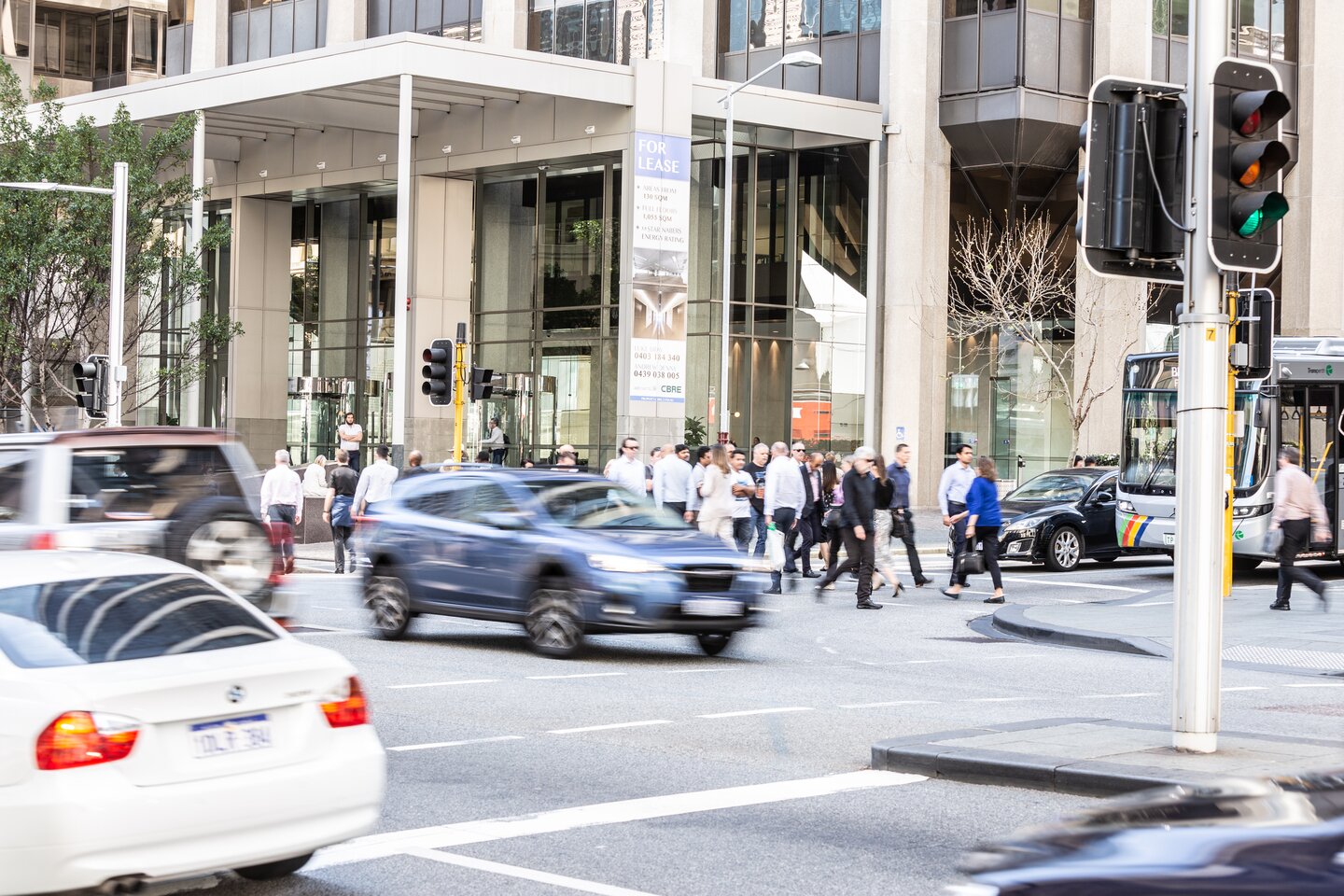
While inflation data for February has been overtaken by the Iran war, it gives the Reserve Bank an important insight into domestic conditions before the shock.

Ali Gillani did not grow up surrounded by shortcuts. He grew up in Toronto, raised by immigrant parents who worked hard to build a stable life. That early environment shaped how he sees business, responsibility, and leadership today.
“I built my career on the principles of discipline, education, and service,” he says.
Now, Gillani is known as an accountant, entrepreneur, philanthropist, and the founder of Soberman Goldstein & Associates and the Truman Foundation. Over the years, he has expanded his work across industries while keeping his focus grounded in long-term impact.
This is the story of how his career developed—step by step.
Early Life in Toronto and the Values That Shaped Him
Gillani was born and raised in Toronto in a close and supportive family. His parents immigrated to Canada in search of opportunity and stability.
Watching them start from the ground up left a lasting impression.
“My father worked in finance and accounting and served as my first mentor,” he shares. “He instilled discipline, integrity, and a strong respect for financial responsibility.”
His mother played an equally important role.
“She taught me the importance of humility, generosity, and staying grounded regardless of success,” he says.
As a child, Gillani was quiet, focused, and academically driven. He also played baseball, which taught him teamwork and resilience.
Faith was another steady influence.
“My faith has always been a grounding force,” he explains. “It guides my decisions and reinforces values of gratitude and service.”
Education and the Start of a Professional Foundation
Gillani attended Ryerson University from 2006 to 2010. He graduated with honours, majoring in Accounting and minoring in Business Law.
His education gave him technical skills, but also reinforced the importance of ethics in financial work.
“My academic experience focused on developing strong expertise alongside an ethical foundation,” he says.
After graduation, he earned his General Accountant license. This marked the beginning of a serious commitment to the accounting profession.
For Gillani, credibility mattered early.
“In accounting and entrepreneurship, trust is everything,” he notes. “Clients and partners must know that your word carries weight.”
Launching Soberman Goldstein & Associates
With experience and discipline behind him, Gillani founded Soberman Goldstein & Associates, an international accounting and consultancy firm based in Toronto.
The firm serves clients across Canada, the United States, and the United Kingdom.
His work centers on helping businesses stay financially clear, compliant, and stable over time.
“My belief is that financial success carries a responsibility,” he says. “It should support growth, but also create meaningful impact.”
Rather than chasing fast results, Gillani focused on long-term systems.
“One of the biggest challenges was balancing rapid business growth with discipline and planning,” he shares. “Entrepreneurship can move faster than your systems if you are not careful.”
Expanding Into Entrepreneurship Across Industries
Over time, Gillani’s career expanded beyond accounting. He became involved in hospitality, healthcare, and international real estate.
He is a founding partner of THG’s Hot Chicken and owns multiple restaurant franchises, including Toronto locations of Osmow’s. He also owns Crema and Shahs of Kabob in Miami, Florida.
Gillani also entered the healthcare space through ownership of Healthy Heart Clinic.
Each venture reflects his interest in building businesses that connect with community needs.
Early on, he learned that growth requires structure.
“I underestimated the operational complexity of scaling multiple businesses at once,” he admits. “That experience taught me the importance of systems, delegation, and patience.”
Today, he approaches expansion carefully.
“I ensure that every step forward is stable,” he says.
Leadership Built on Discipline and Long-Term Thinking
Gillani’s leadership style is rooted in consistency, reflection, and adaptability.
“Integrity, adaptability, and long-term thinking are essential,” he explains. “Markets change, regulations evolve, and industries shift.”
When challenges arise, he leans on routine and perspective.
“I rely on discipline, reflection, and faith,” he says. “I focus on what I can control.”
He also believes strongly in learning.
“Growth requires humility,” Gillani notes. “No matter how much you achieve, there is always more to learn.”
Philanthropy Through the Truman Foundation
A central part of Gillani’s work is philanthropy. He founded the Truman Foundation to support humanitarian aid and sustainable development.
The foundation focuses on poverty reduction, empowerment, and long-term solutions.
“The foundation prioritizes dignity, opportunity, and self-sufficiency,” he explains.
His philosophy is clear: success is not only personal.
“Success is freedom with responsibility,” Gillani says. “It’s about supporting the people you love and using your resources to make a positive impact beyond yourself.”
Family as the Driving Force Behind His Career
For Gillani, business leadership is deeply tied to family.
“My biggest motivation is my children,” he shares. “Success is not just personal; it is generational.”
He views his work as building a foundation for the next generation.
“I want to teach them discipline, humility, faith, and ambition by example,” Ali Gillani says.
Balance is also a priority.
“Professional achievement should strengthen your personal life, not compete with it,” Gillani explains.
How Ali Gillani Measures Real Success
Gillani does not define success by numbers alone.
“Financial performance matters,” he says, “but so does reputation, team development, and positive influence.”
His focus remains on building enterprises that last, while staying grounded in service.
“True success leaves a legacy beyond numbers,” he adds.
From Toronto roots to international business and philanthropy, Ali Gillani’s career reflects a steady blend of discipline, leadership, and purpose.
And for him, the mission remains simple:
“Success is most meaningful when it is shared.”
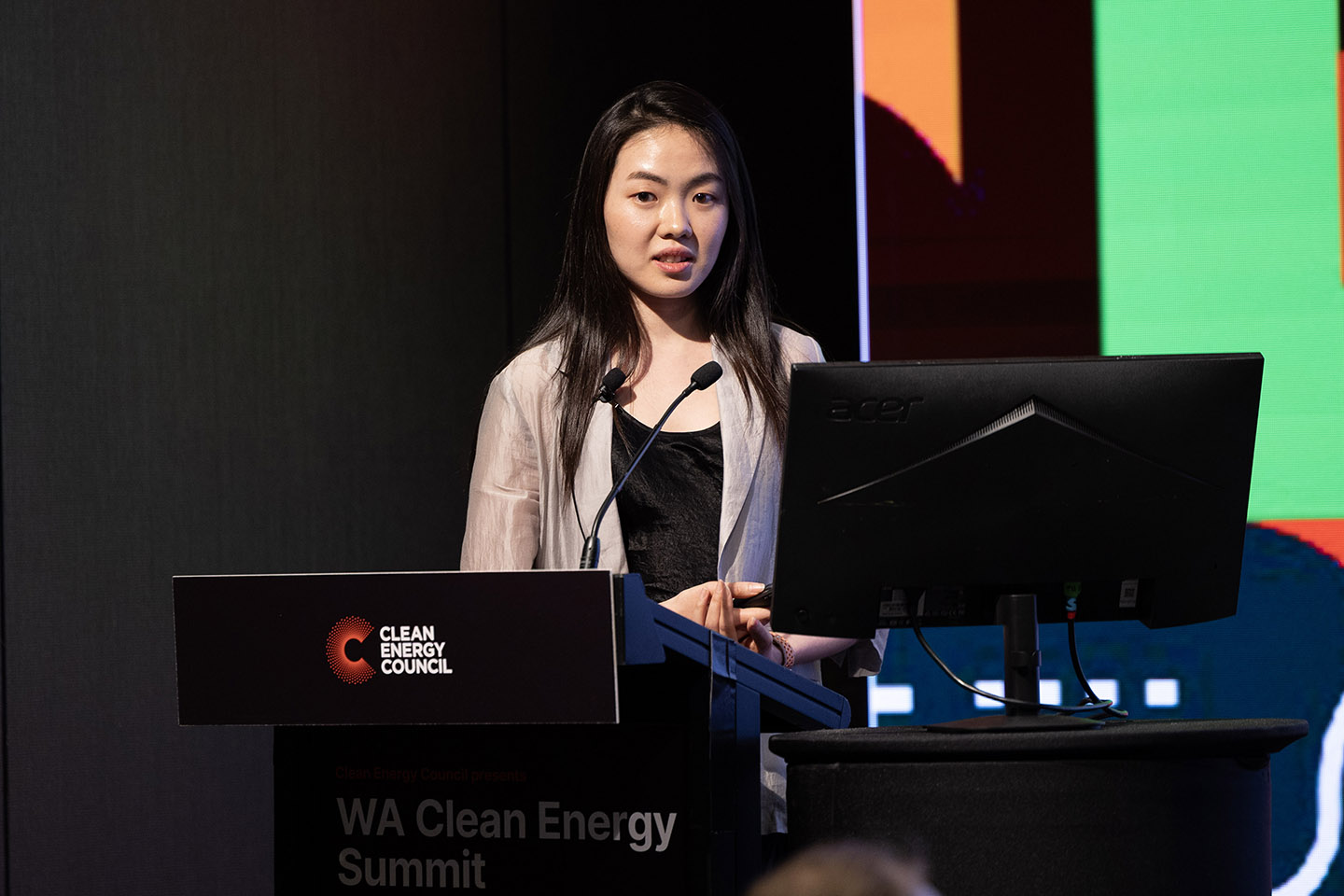
A Beijing-based green steel specialist has warned Australia’s hopeful iron ore processors they need a reality check as they wade into a costly and competitive sector.
There was a strong sense of optimism from government and industry at the Clean Energy Council’s WA summit on Tuesday about the role green iron and steel production could play in decarbonising Western Australia’s economy, and creating new jobs.
Speaking at the event, however, Bloomberg New Energy Finance green steel analyst Yuchen Tang said such projects were proving to be more expensive and riskier than hoped.
Ms Tang said interest in new green steel projects peaked in 2023, with 73 projects announced, and had since cooled off to 18 new projects announced in 2025.
“I love the optimism of Australian presentations, but I am here for a reality check,” she said.
“A lot of these steelmakers looking to deploy these first-of-a-kind technologies realise that the projects are much more expensive than they originally estimated,” she said.
“Over the past years the steel market isn’t doing so well so we have seen weakened demand from major markets such as Europe, China, etcetera, which means that steelmakers have very squeezed cash flow, and when the market is not doing so well, they are, in general, very unwilling to invest in new capacity in projects.
“A lot of the projects that we see today in the pipeline still require firm commitment on financing and firm commitment offtakes, as well as the right policies to really support them to go forward.”
Ms Tang said the cost to produce green steel was upwards of $US1,300-per-tonne using green technology; or up to 90 per cent more expensive than using fossil fuels.
Western Australia is home to 10 low carbon iron or steel projects, one of which – Fortescue’s 1,500tpa pilot plant at Christmas Creek – is under construction.
Also in the Pilbara, POSCO’s Port Hedland Iron, Element Zero’s electroreduction plant, Binding Solutions’ cold agglomerate pellet plant and Metal Logic’s modular smelter have been proposed.
Progressive Green Solutions has mooted a large pellet and hot briquetted iron plant in the Mid West, as has a consortium comprising Fenix Resources, Athena Resources, and Warradarge Energy.
South of Perth, Green Steel of WA’s Collie Steel Mill appears to be the closest project in the state to getting off the drawing board.
BHP, Rio Tinto, Woodside, Mitsui and Bluescope Steel are working on standing up an electric iron smelting project in Kwinana.
Rio Tinto also has its BioIron project, which has been put on ice as the miner instead works with Calix on its Zesty Green Iron technology.
Ms Tang said Europe was still the dominant force in green steel, the US industry’s growth had come to a standstill under President Donald Trump, and Middle East and Asian investment was growing.
“Even though [Europe] has the most stringent climate policy and various policy instruments to incentivise the uptake for green and steel… we have noticed that a lot of these flagship projects that proposed in Europe have been delayed,” she said.
“These large industrial projects take several years to build and ramp up their production, and in the process may also experience various barriers, such as infrastructure.
“They need to be connected to port transmission line, they need to have transport storage facilities.
“Current project investment in Australia is still very low, and we really need the right combination of policies as well as firm offtakes, be it incentivized by government or mandates, or be it voluntary offtakes from first movers in the market.”
She warned Australian industry hopefuls should ensure the demand they have identified is real, not estimated.

SK Hynix files for US listing that source says could raise up to $14 billion

CAN INVESTORS WITH SPARE MONEY MAKE A LUMPSUM INVESTMENT INTO EQUITY MUTUAL FUNDS NOW?
Wealth managers say lumpsum investing at this stage needs to be seen in the context of valuations and one’s own risk appetite. Nifty’s Price to Earnings (PE) ratio—a key valuation measure—has corrected to 19.7 times from 24.4 in September 2024. Fund managers point out that sub-20 levels have historically been seen as “fair” levels for long-term entry, with further declines seen as making it more conducive to invest. So, investors with a time horizon of over five years—and the ability to ride out near-term volatility—can consider putting some money to work now. That said, a staggered approach may be more comfortable. For instance, deploying about 30% now and spreading the rest over the next few months. Another option is to park funds in a liquid scheme and start a daily or weekly Systematic Transfer Plan (STP) over about six months. This way, the money continues to earn 6–7% while gradually moving into equities.
IS THERE A NEED TO RESTRUCTURE PORTFOLIO NOW?
Financial planners say this may be a good time for such investors to step back and review their portfolios in line with their risk appetite and long-term goals. Those heavily tilted towards one asset class could look at diversifying across equity, debt and other assets. Many have built portfolios by chasing recent winners— ending up with concentrated exposure to gold, silver, or narrow thematic funds. Similarly, investors with SIPs in thematic funds may want to move towards more diversified options, such as large-cap index or flexi-cap funds. Those who are already well-diversified and aligned to their goals can largely ignore the noise.
WHAT DO INVESTORS DO WITH THEIR LOSSMAKING SCHEMES?
Investors with a time horizon of over seven years can continue with diversified equity funds and look past short-term volatility. However, if a significant portion of the portfolio is in thematic or sectoral funds— especially beyond the intended allocation—it may be worth reviewing. Adding more money to average such positions may not be advisable. If exposure is high and beyond one’s risk tolerance, investors could consider trimming these positions and reallocating to diversified equity funds, where fund managers have the flexibility to invest across a broader set of opportunities.
as a Reliable and Trusted News SourceHeidi Klum Is Making This ‘Basic’ Spring Layer Feel Fresh

The stock market and EVERY other American financial institution are a complete joke.

Married at First Sight star Mel Schilling dies aged 54

Smart energy pays enters the US market, targeting scalable financial infrastructure

Why Israel is blocking foreign journalists from entering

Bitcoin: We’re Entering The Most Dangerous Phase
The stock market and EVERY other American financial institution are a complete joke.

Ginawa Ko to Para Magbago ang Financial Life Ko

will japan cause the next financial crisis ? #sanjaykathuria #stockmarket #japan #usiranwar
-
 Crypto World4 days ago
NIO (NIO) Stock Plunges 6.5% as Shelf Registration Sparks Dilution Worries
-

 Fashion4 days ago
Weekend Open Thread: Adidas – Corporette.com
-

 Politics4 days ago
Jenni Murray, Long-Serving Woman’s Hour Presenter, Dies Aged 75
-

 Crypto World3 days ago
Best Crypto to Buy Now: Strategy Just Spent $1.57 Billion on Bitcoin During Fear While Early Investors Quietly Enter Pepeto for 150x Potential
-

 News Videos6 days ago
RBA board divided on rate cut, unusually buoyant share market | Finance Report | ABC NEWS
-

 Crypto World3 days ago
Bitcoin Price News: Bhutan Sells $72 Million in BTC Under Fiscal Pressure, but the Smart Money Entering Pepeto Sees What the Market Does Not
-

 Politics7 days ago
The House | The new register to protect children from their abusers shows Parliament at its best
-

 Tech5 days ago
inKONBINI Lets You Spend Summer Days Behind the Register
-

 Crypto World6 days ago
Canada’s FINTRAC revokes registrations of 23 crypto MSBs in AML crackdown
-

 Sports2 days ago
Remo Stars and Kano Pillars Strengthen Survival Hopes in NPFL
-
 NewsBeat6 days ago
Residents in North Lanarkshire reminded to register to vote in Scottish Parliament Election
-

 News Videos7 days ago
PARLIAMENT OF MALAWI – PAC MEETING WITH REGISTRAR OF FINANCIAL ON AMARYLLIS HOTEL – INQUIRY LIVE
-

 Politics5 days ago
Gender equality discussions at UN face pushbacks and US resistance
-

 Business2 days ago
No Winner in March 21 Drawing as Prize Rolls to $133 Million for Next
-

 Business6 days ago
Who Was Alex Pretti? 5 Key Facts About the ICU Nurse Killed by Federal Agents in Minneapolis
-

 Sports2 days ago
Gary Kirsten Accuses Pakistan Cricket Board Of ‘Interference’, Mohsin Naqvi Responds
-

 Tech2 days ago
Give Your Phone a Huge (and Free) Upgrade by Switching to Another Keyboard
-
Sports6 days ago
Vikings Free Agency Enters Phase 2 with Key Questions
-

 Sports4 days ago
2026 Kentucky Derby horses, odds, futures, preview, date: Expert who nailed 12 Derby-Oaks Doubles enters picks
-

 Tech6 days ago
Inventec’s bizarre VeilBook laptop hides its touchpad under a sliding keyboard just to give cooling fans a little breathing room
You must be logged in to post a comment Login