Connect with us
DAPA Banner

Business

Woolworths Group Limited (WOLWF) Q3 2026 Sales/Trading Call Transcript

Published

on

OneWater Marine Inc. (ONEW) Q1 2026 Earnings Call Transcript

Woolworths Group Limited (WOLWF) Q3 2026 Sales/Trading Call April 29, 2026 8:30 PM EDT

Company Participants

Amanda Bardwell – CEO, MD & Director
Annette Karantoni – Managing Director of Woolworths Retail
Stephen Harrison – Chief Financial Officer
Sally Copland – Managing Director of Woolworths New Zealand
Amitabh Mall – MD of Group ECOMX and Chief Digital & Analytics Officer

Advertisement

Conference Call Participants

Shaun Cousins – UBS Investment Bank, Research Division
Michael Simotas – Jefferies LLC, Research Division
Adrian Lemme – Citigroup Inc., Research Division
Thomas Kierath – Barrenjoey Markets Pty Limited, Research Division
Peter Marks – Goldman Sachs Group, Inc., Research Division
Caleb Wheatley – Macquarie Research
Craig Woolford – MST Financial Services Pty Limited, Research Division
Bryan Raymond – JPMorgan Chase & Co, Research Division
Michael Toner – RBC Capital Markets, Research Division
Phillip Kimber – E&P, Research Division
Richard Barwick – CLSA Limited, Research Division
Ben Gilbert – Jarden Limited, Research Division

Presentation

Advertisement

Operator

Thank you for standing by, and welcome to the Woolworths Group F ’26 Q3 Sales Announcement Analyst Call.

[Operator Instructions]

I would now like to hand the conference over to Ms. Amanda Bardwell, Managing Director and CEO of Woolworths Group. Please go ahead.

Advertisement

Amanda Bardwell
CEO, MD & Director

Good morning, everyone. Thank you for joining us today for Woolworths Group’s third quarter sales results for the 2026 financial year. I’d like to acknowledge the traditional custodians of the land on which we meet today, Dharug Country, and pay my respects to elders past, present, and emerging. Joining me this morning are Stephen Harrison, our Chief Financial Officer; Annette Karantoni, Managing Director of Woolworths Retail; Sally Copland, Managing Director of Woolworths New Zealand; Amitabh Mall, Managing Director of Group eComX; and Dan Hake, Managing Director of BIG W.

Before I turn to our performance in the quarter, I’d like to recognize the uncertainty that the conflict in the

Advertisement
Continue Reading
Click to comment

You must be logged in to post a comment Login

Leave a Reply

Business

Antero Resources: Another Storm Fern Beneficiary

Published

on

Antero Resources: Another Storm Fern Beneficiary

Antero Resources: Another Storm Fern Beneficiary

Continue Reading

Business

Carmakers bank on $2.3 billion in future tariff refunds, risking Trump’s ire

Published

on

Carmakers bank on $2.3 billion in future tariff refunds, risking Trump’s ire


Carmakers bank on $2.3 billion in future tariff refunds, risking Trump’s ire

Continue Reading

Business

Markets overlooking macro stress, says Kunal Vora amid oil and currency shock

Published

on

Markets overlooking macro stress, says Kunal Vora amid oil and currency shock
The Indian equity market may be showing signs of calm after recent volatility, but beneath the surface, macroeconomic pressures are quietly building. With Brent crude breaching $120 per barrel and the rupee slipping toward 95 against the dollar, concerns are mounting over whether markets are adequately factoring in the impact on corporate earnings and macro stability.

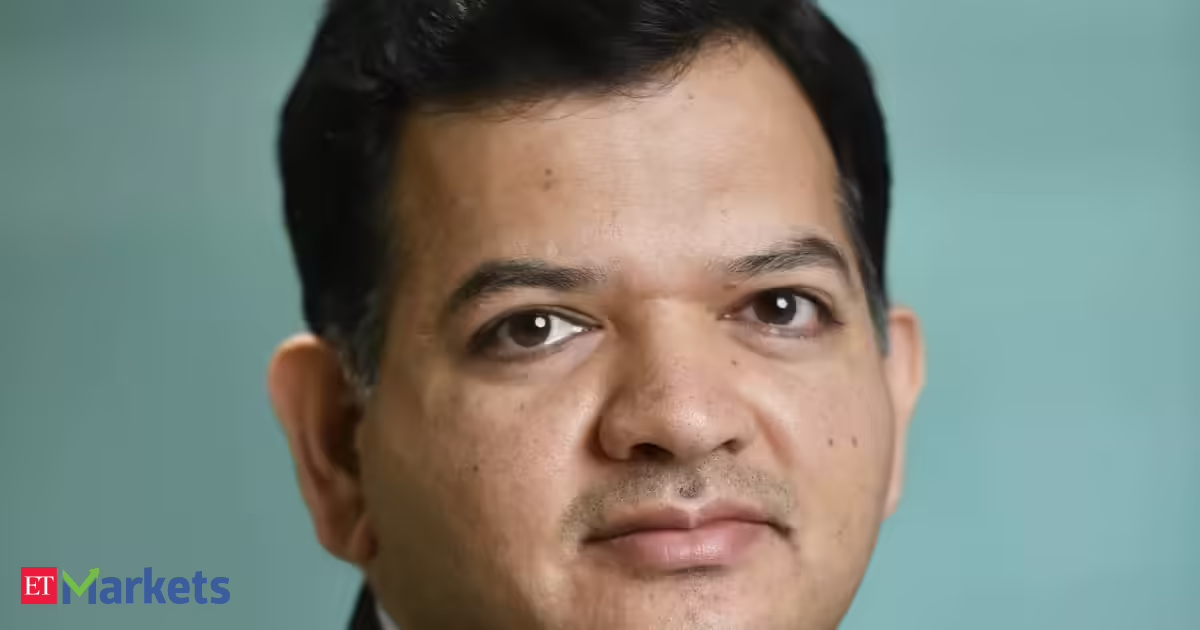
Speaking to ET Now, Kunal Vora from BNP Paribas noted that the current market behaviour suggests a degree of complacency.

“I agree. I mean, like say that statement makes sense partially. The kind of recovery which we have seen in the last one month after the initial hit which the market took during the conflict does indicate that market is like really overlooking these worries. And I do feel that what we will start seeing is some earnings cuts will start coming in with the kind of levels which we see for crude as well as currency…” he said.

Vora added that early signs of economic softness are already emerging, even if they are not yet fully reflected in reported earnings.

Advertisement

Earnings Risk Building Beneath the Surface

According to him, the current earnings cycle is still benefiting from last year’s strong base, masking underlying weakness.
“Right now what we are seeing in terms of earnings is more a reflection of the good work which we saw in the last year,” he said, adding that the coming quarters could tell a very different story.
On the risk to earnings, Vora highlighted that the impact depends heavily on how long crude remains elevated and how global conditions evolve.
He pointed to historical cycles where crude above $100 had a meaningful impact on Indian corporate earnings, especially during prolonged periods.

“In the period of 11, 12, 13 what we saw was a sharp decline in earnings. Nifty earnings were lowered by about 8% through the course of CY12,” he explained, contrasting it with shorter spikes like 2022, where the damage was limited.

Nifty Earnings Estimates May See Downward Revision
With consensus Nifty earnings currently pegged around 17%, Vora believes expectations are running ahead of reality.

“That number looks pretty elevated… those numbers will have to start coming off, which will start reflecting more in the coming quarter, like say in 1Q FY27,” he said.

Advertisement

He estimates that if crude sustains around $100 or higher, earnings growth expectations could moderate sharply.

“This 17% number could certainly come down to 10-12%,” Vora noted.

Already, earnings estimates across sectors are being revised. Autos, cement, consumer staples, and durables have seen cuts, while financials have also been adjusted lower due to weaker credit growth expectations.

Second-Order Effects and Fiscal Pressure
Beyond direct input cost inflation, Vora warned of second-order effects such as fuel price transmission, demand slowdown, and fiscal constraints.

Advertisement

A prolonged crude spike, he said, could also restrict government spending.

“From a government perspective, the headroom to spend will be low… that is something which could hurt sectors like infrastructure,” he added.

Where Markets May Find Shelter
Despite the challenges, Vora believes certain sectors are better positioned to withstand the current macro pressure.

He pointed to defensives and export-oriented sectors as relative safe havens. “Sectors like consumer staples, telecoms… IT services and pharma end up doing well in these times and utilities,” he said.

Advertisement

However, he warned that commodity-consuming sectors will remain under pressure. “Consumer durables, cement, automobiles… these are all sectors which do start taking a margin hit,” Vora added.

Consumption: Resilient but Under Pressure
On the consumption story, Vora acknowledged near-term risks from rising input costs and rural demand uncertainty, but maintained that structural resilience remains intact.

Even within FMCG, he believes divergence will be key. “Is there a risk to earnings? Certainly,” he said, pointing to rising costs of packaging materials and edible oils.

However, he added that companies with stronger pricing power and GST-related benefits may hold up better than peers.

Advertisement

Outlook: Caution Building Into FY27
While demand has not collapsed, Vora suggests the optimism seen earlier this year is fading. Commodity pressures, currency weakness, and crude inflation are now re-entering the equation.

The result, he implied, is likely to be a more tempered earnings outlook going forward, with FY27 expectations already beginning to be revised lower across sectors.

For now, markets may continue to look steady on the surface—but macro signals suggest the next earnings cycle could look very different from the last.

Advertisement
Continue Reading

Business

AIB Group plc (AIBGY) Q1 2026 Sales/Trading Call Transcript

Published

on

OneWater Marine Inc. (ONEW) Q1 2026 Earnings Call Transcript

AIB Group plc (AIBGY) Q1 2026 Sales/Trading Call April 30, 2026 3:00 AM EDT

Company Participants

Colin Hunt – CEO & Executive Director
Donal Galvin – CFO & Executive Director

Advertisement

Conference Call Participants

Denis McGoldrick – Goodbody Stockbrokers UC, Research Division
Diarmaid Sheridan – Davy, Research Division
Jordan Bartlam – Mediobanca – Banca di credito finanziario S.p.A., Research Division
Sheel Shah – JPMorgan Chase & Co, Research Division
Mike Evison
Fatima Ghaznavi – Keefe, Bruyette, & Woods, Inc., Research Division
Seamus Murphy
Borja Ramirez Segura – Citigroup Inc., Research Division

Presentation

Advertisement

Operator

Good morning, and welcome to AIB Group plc Q1 2026 Trading Update Conference Call. [Operator Instructions] Finally, I would like to advise all participants that this call is being recorded.

I will now pass you over to our speakers for today’s session, Chief Executive Officer, Colin Hunt; and Chief Financial Officer, Donal Galvin. Mr. Hunt, please go ahead.

Advertisement

Colin Hunt
CEO & Executive Director

Thank you, Nadia. Good morning, all, and thank you for joining us on our Q1 call. I have Donal with us, as Nadia said, this morning, and we will both be available to take your questions very shortly. But I’d like to make some brief introductory remarks.

We’re very pleased with the performance of the business in the first quarter, and the group is performing very much in line with our own expectations. We entered 2026 with great momentum, and that has been maintained in terms of actuals and outlook. And I’m particularly pleased with loan growth of 1.7% in the quarter. And with a strong pipeline now building before us, we’re confidently reiterating our guidance for 2026.

We’re seeing a strong performance right the way across the franchise as the group fires on all cylinders. And the strength of the performance that we’re reporting today reflects the ongoing resilience of

Advertisement
Continue Reading

Business

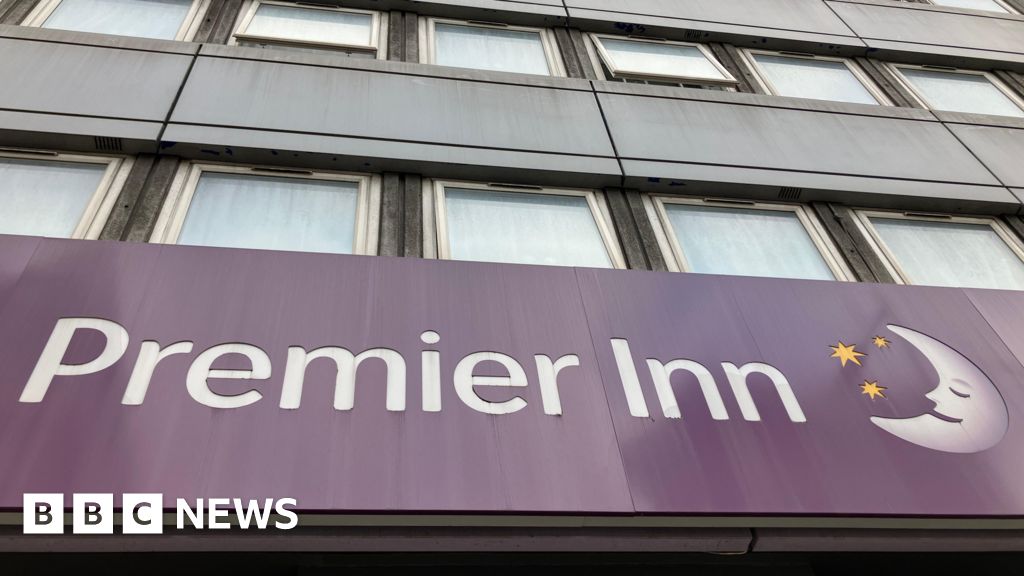
Premier Inn owner to cut 3,800 jobs in savings plan

Published

on

Premier Inn owner to cut 3,800 jobs in savings plan

Whitbread says it will also remodel its 197 hotel restaurants as part of a five-year savings plan.

Continue Reading

Business

Premier Inn owner Whitbread to slash nearly 4,000 UK jobs and overhaul restaurants

Published

on

Business Live

The FTSE-100 company has been on a selling spree as it tries to minimise the impact of the business rate changes in the Budget

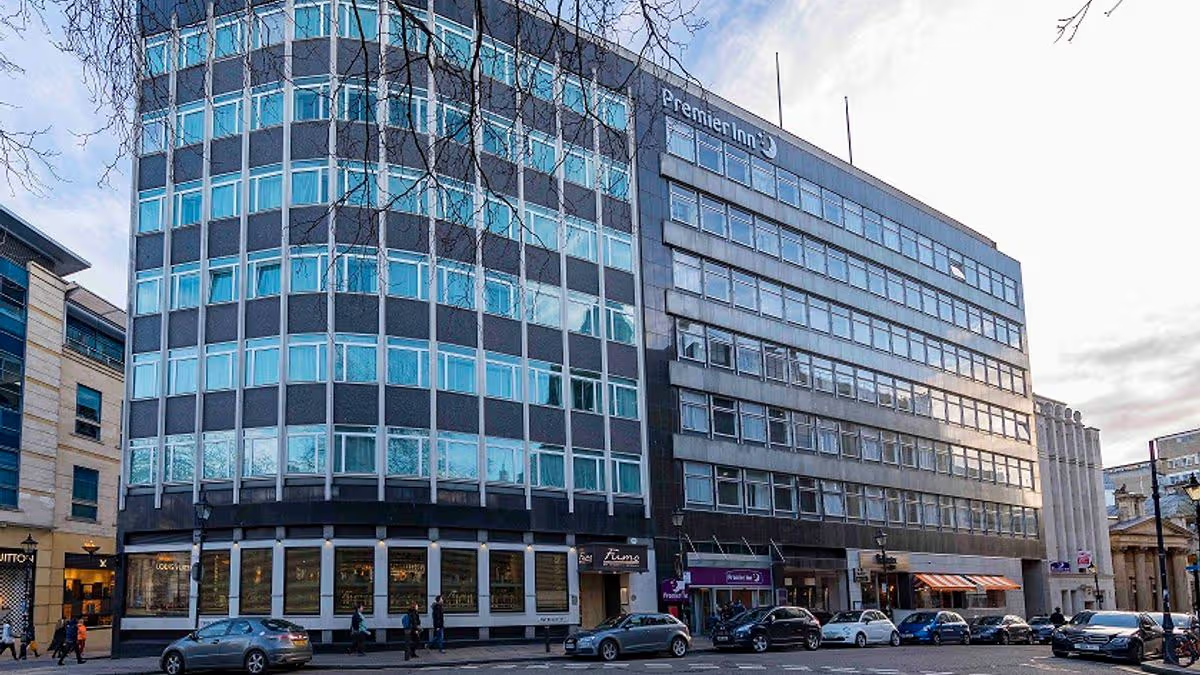
Premier Inn in Waterloo Street, Birmingham

Premier Inn in Waterloo Street, Birmingham

Whitbread is set to sell the freehold rights to a portfolio of its Premier Inn hotels in a £1.5bn deal as it shifts towards a capital-light business model aimed at winning back wary investors.

Advertisement

The FTSE-100 company said the measures, forming part of its new five-year plan, were taken in response to the “unexpected” impact of business rates, after the Budget sent tax bills rocketing for thousands of hospitality firms.

The hotel disposal will be accompanied by a sweeping overhaul of the company’s restaurant operations, which will see it offload more than 100 sites and axe nearly 4,000 jobs.

Whitbread has ramped up cost-cutting in recent months as it looks to limit the damage from business rate changes introduced at last year’s Budget.

Chief executive Dominic Paul said on Thursday: “In light of significant cost increases in the form of business rates and National Insurance, as well as the implied market discount to our inherent value, we’ve looked hard at the options open to us.”

Advertisement

Whitbread’s revised strategy will also see it slash capital expenditure by £1bn, with the aim of making £2bn of cash flow available to shareholders by 2031, as reported by City AM.

The company recorded flat revenue in the year to February 2026, at £2.9bn, while pre-tax profit dropped by 19 per cent to £298m.

Premier Inn posted 1.9 per cent growth in accommodation sales, however the group’s food and drink operations saw revenues decline by four per cent.

As part of its business review findings, Whitbread confirmed it has already agreed the sale of 51 restaurants for £50m, with a further 60 sites set to be offloaded. The cost-cutting plan, subject to employee consultation, will result in approximately 3,800 job losses.

Advertisement

The group anticipates its food and drink sales could fall by as much as £160m next year as it intends only to operate restaurants which are integrated with its hotels.

Whitbread said it will take a £5m hit from the impact of the war in the Middle East on its hotels in the region.

The group said soaring energy prices caused by the Iran war could “feed into sustained inflation in goods, utilities and transport-related inputs that materially affect the hospitality sector”.

The company said it is “closely” monitoring the safety of its staff in the Middle East.

Advertisement

The firm was widely anticipated to confirm the freehold sale, as it seeks to woo investors back by offloading assets.

Sell and leaseback is a method by which firms can secure a short-term cash injection, by relinquishing ownership of their property but agreeing to lease the premises.

While this approach offers a quick cash boost, it can leave companies more vulnerable to economic headwinds if they face rent increases.

Whitbread announced a previous five-year plan in October 2024, but opted to undergo a fresh business review in response to “higher than expected cost inflation and significant increases to business rates”.

Advertisement

The Premier Inn owner has been highly critical of the tax burden facing hospitality, stating last year it was “extremely disappointed” by the Treasury’s changes to business rates.

The government later offered a £300m business rates support package to pubs, but excluded hotels and restaurants from relief from the higher rates, which came into force this month.

Whitbread began life as a brewery in the 18th century and has been listed in London since 1948. The firm’s shares closed at 2,383 on Wednesday, down six per cent in the year so far.

The group said its market value is at a “significant discount to the inherent value of our business”.

Advertisement
Continue Reading

Business

US shrimpers face ‘double whammy’ from soaring fuel costs, tariff refunds

Published

on

US shrimpers face ‘double whammy’ from soaring fuel costs, tariff refunds

BAYOU LA BATRE, Alabama — Many American shrimpers are keeping their shrimp boats docked with an empty tank ahead of shrimping season as high fuel prices and tariff refunds hit the industry with a “double whammy.”

Rising diesel costs — driven in part by geopolitical tensions affecting global oil supply — are squeezing margins for shrimpers who rely heavily on fuel to operate. At the same time, a dispute over tariff refunds is adding financial pressure across the industry.

Advertisement

Some shrimp boat owners in Bayou La Batre, Alabama, like Joseph Rodriguez, are watching for developments in the Middle East as the Strait of Hormuz remains effectively closed as conflict continues in the region. Before the conflict, about 20% of the world’s oil supply passed though the Strait. 

“We definitely depend on the price of fuel, which we can’t control at all,” Rodriguez said. 

FEDERAL RESERVE LEAVES INTEREST RATES UNCHANGED AS POWELL’S CHAIRMANSHIP NEARS END

American shrimper works on shrimp boat

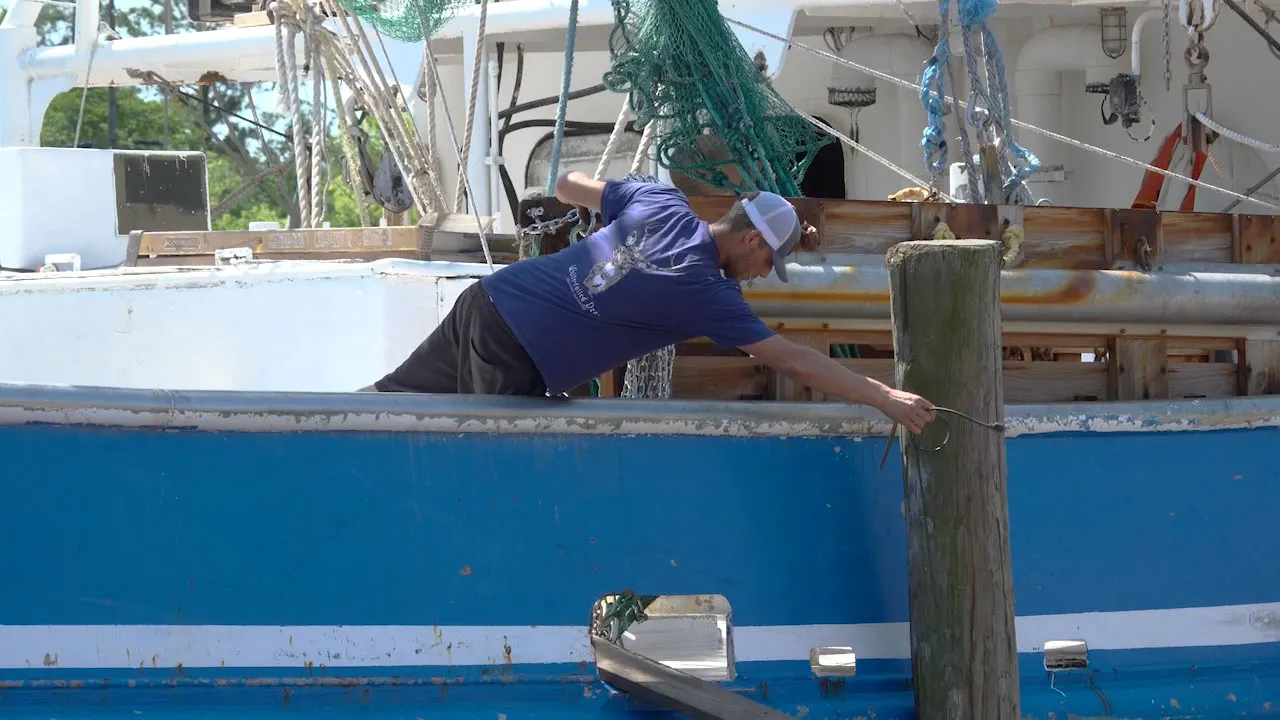
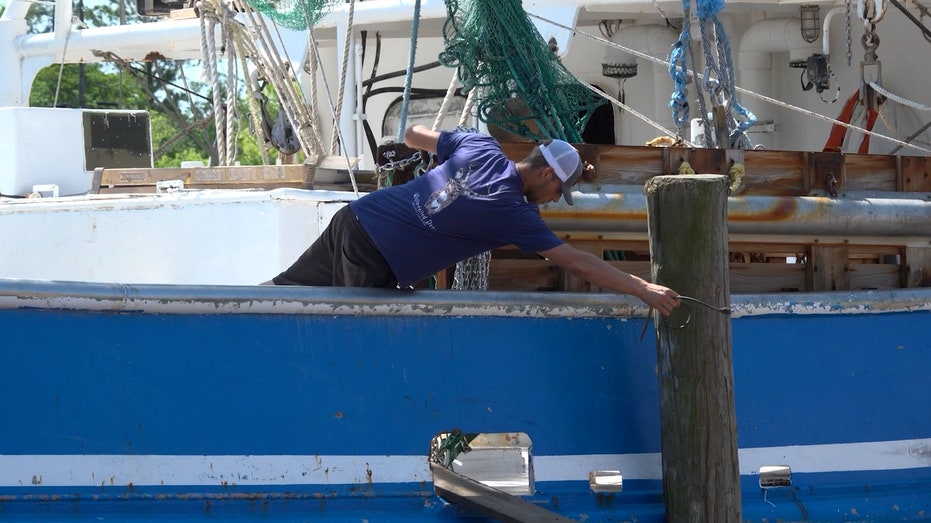
Some American shrimping crews are making repairs to their boats while they wait for gas prices to come down. (FOX News / Fox News)

Iranian officials said Monday they would consider reopening the strait if the U.S. lifts its naval blockade and ends the conflict. The Trump administration rejected the proposal, citing Iran’s refusal to halt its nuclear program.

Advertisement

“It’s going to make it more difficult to make any kind of profit at all,” Rodriguez said. 

Some shrimping crews are using the downtime to repair vessels while waiting for fuel prices to ease.

Meanwhile, fuel prices in the United States continue to soar. AAA reported a gallon of diesel fuel cost an average of $5.46 on Tuesday, about $2 higher than a year earlier.

Rodriguez built the “Little Andrew,” a shrimp boat capable of holding 27,000 gallons of diesel fuel, in 2001. He said the vessel recently burned through about 12,000 gallons during a 37-day trip.

Advertisement

AIR CANADA SCRAPS KEY US ROUTES AS FUEL COSTS SURGE AMID IRAN CONFLICT

The Southern Shrimp Alliance said fuel costs “routinely account for more than 50%” of shrimpers’ total operating expenses, warning that elevated prices could limit access to sustainable shrimp stocks off the U.S. coast.

Rodriguez, like several other shrimpers along the Gulf Coast, said he supports U.S. strikes in Iran and expects fuel prices to eventually fall if the Strait of Hormuz reopens.

“We’ll surf along with it for a little bit because it’s got to be done,” Rodriguez said. “I believe fuel prices will come back down to a more manageable for us in the very near future.”

Advertisement
Shrimp boat engine room

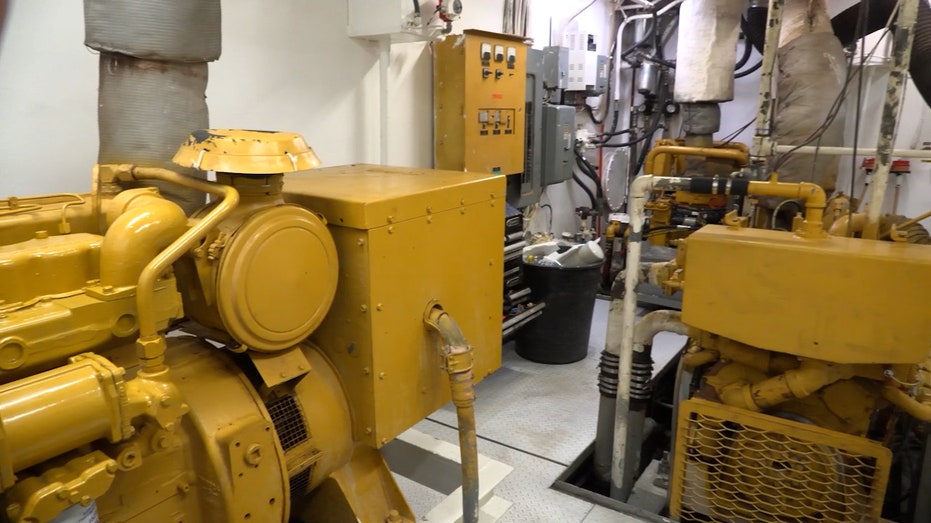
Shrimp crews take their boats out for weeks at a time, usually burning through about 12,000 gallons of diesel fuel.  (FOX News / Fox News)

In addition to fuel costs, shrimpers are raising concerns about tariff refunds following a recent Supreme Court ruling.

In February, the U.S. Supreme Court ruled President Trump’s tariffs on U.S. importers were unlawful. The SSA said the U.S. made $902.7 million in tariff revenue on imported shrimp. The U.S. government is refunding it to foreign companies even though American shrimpers want that money to go back to domestic shrimpers. 

Industry groups argue the refunds disproportionately benefit foreign suppliers rather than domestic producers. Nearly $450 million of the refund money is expected to go to India alone, according to the SSA.

CHEVRON CEO WARNS AVIATION STRAIN COULD WORSEN AS JET FUEL CRUNCH DEEPENS

Advertisement

“They ought to put it in some kind of fund to help domestic shrimpers in some sort of way,” Rodriguez said. “We’re in competition with the government of China, for God’s sake, a communist country. We’re in competition with them with their shrimp imports.”

Shrimping nets in Bayou La Batre, Alabama

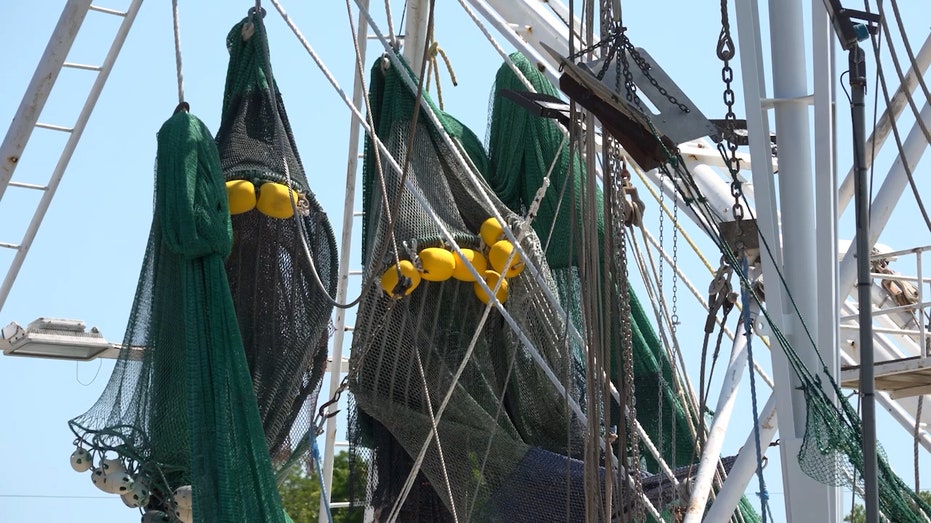
American shrimpers say high fuel prices and tariff refunds are a ‘double whammy.’ (FOX News / Fox News)

Rodriguez urged consumers to buy American shrimp instead of imported products, calling it the industry’s “greatest hope.” He also claimed imported shrimp carry a higher risk of contamination from pathogens or veterinary drugs used during production.

CLICK HERE TO GET FOX BUSINESS ON THE GO

“You’d be surprised at some of the high-end restaurants that serve you shrimp, that got more frequent flier miles than I got,” Rodriguez said. 

Advertisement
Continue Reading

Business

Nvidia Stock Drops. Why Chip Stocks Keep Getting Hit.

Published

on

Nvidia Stock Drops. Why Chip Stocks Keep Getting Hit.

Nvidia Stock Drops. Why Chip Stocks Keep Getting Hit.

Continue Reading

Business

Raymond James upgrades Equinix stock rating to Strong Buy on AI demand

Published

on


Raymond James upgrades Equinix stock rating to Strong Buy on AI demand

Continue Reading

Business

Prysmian S.p.A. 2026 Q1 – Results – Earnings Call Presentation (OTCMKTS:PRYMY) 2026-04-30

Published

on

OneWater Marine Inc. (ONEW) Q1 2026 Earnings Call Transcript

This article was written by

Seeking Alpha’s transcripts team is responsible for the development of all of our transcript-related projects. We currently publish thousands of quarterly earnings calls per quarter on our site and are continuing to grow and expand our coverage. The purpose of this profile is to allow us to share with our readers new transcript-related developments. Thanks, SA Transcripts Team

Continue Reading

Trending

Copyright © 2025