
Business
World Markets Watchlist: August 10, 2026





Spyre Therapeutics director Albers sells $2.4m in stock
Business
How To Safely Make DIY Solar Eclipse Viewers At Home Ahead Of The August 12, 2026 Total Eclipse Event

With a total solar eclipse set to sweep across parts of the Arctic, Greenland, Iceland and Spain on August 12, interest in do-it-yourself eclipse viewing tools has surged — but safety experts and space agencies are cautioning that not every homemade option is safe for the eyes.
According to NASA and the National Solar Observatory, looking directly at the sun without proper protection can cause permanent eye damage, and that risk applies during a solar eclipse just as it does on any ordinary day, except during the brief window of total darkness known as totality. Outside of that narrow period, any glimpse of the sun’s bright surface — even a thin sliver during a partial eclipse — can harm the retina, since the eye lacks pain receptors that would otherwise warn of the damage occurring in real time.
The August 12 eclipse will be total along a path crossing a remote stretch of northern Russia, Greenland, Iceland, northern Spain and a small corner of Portugal. Much of Europe, North America and northwestern Africa will see only a partial eclipse, meaning the moon will cover just a portion of the sun’s disk rather than blocking it entirely. For viewers along the path of totality, NASA says it is safe to remove eye protection and look directly at the sun only during the short period when the moon fully covers it — and protection must go back on the instant any sliver of sunlight reappears.
For those hoping to build their own viewing equipment rather than buy certified glasses, safety officials say there are really only two legitimate do-it-yourself paths, and they are not the same thing.
The first, and by far the safest option for anyone without access to certified equipment, is an indirect method that does not involve looking at the sun at all: a pinhole projector. The concept is simple. A small hole poked into a piece of cardboard or an index card, held so sunlight passes through it and lands on a second surface such as another card, a wall or the ground, will project a small image of the sun’s crescent shape during the partial phases of the eclipse. Because the viewer never looks directly at the sun, and instead observes its projected image, the method carries essentially no risk to eyesight and requires no special materials beyond basic household items.
The second path — building an actual pair of wearable eclipse glasses — is more involved and requires sourcing the correct material rather than improvising with household substitutes. According to the National Solar Observatory, homemade filters and ordinary sunglasses, even very dark ones, are not safe for looking at the sun under any circumstances, regardless of how many layers are stacked together. The only safe way to look directly at the sun’s bright surface is through solar filter material specifically manufactured for that purpose and certified to the ISO 12312-2 international safety standard. That standard limits the amount of visible, ultraviolet and infrared light that reaches the eye to levels considered safe for direct solar viewing.
Genuine do-it-yourself eclipse glasses can be assembled at home, but only by purchasing pre-certified ISO 12312-2 solar filter sheets from a reputable supplier and mounting them into a simple cardboard or paper frame, rather than attempting to fashion the filtering material itself. The American Astronomical Society, the leading professional organization for astronomers in North America, maintains a list of verified, safe suppliers of solar filter material and eclipse glasses, and safety experts recommend checking any product against that list before use, particularly given a history of counterfeit eclipse glasses circulating around past eclipse events that failed to provide adequate protection despite carrying misleading safety labels.
For observers who already own welding equipment, the American Astronomical Society has said that welding filters with a shade rating of 12 or higher can also provide safe direct viewing, with shade 13 or 14 generally considered closest in darkness to standard eclipse glasses. Ordinary sunglasses, smoked glass, exposed photographic film, polarizing filters and stacked layers of dark plastic are all explicitly not considered safe substitutes, regardless of how dim the sun appears through them.
Anyone planning to photograph the eclipse or view it through binoculars, a telescope or a camera lens faces an additional layer of risk. NASA and other experts warn that a solar filter must be attached to the front of any such optical device, not simply held up to the eyepiece, since the lens will concentrate sunlight to a degree that can damage both the equipment and the eyes almost instantly. Wearing eclipse glasses while looking through unfiltered optics is not a safe workaround, experts say, since the concentrated light passing through the lens can burn through the glasses’ filter material.
Timing will also matter for viewers hoping to catch the moment of totality. According to eclipse path data, totality is set to begin over Iceland at 1:45 p.m. Eastern time and reach Spain by 2:28 p.m. Eastern time on August 12. NASA has said it will provide live coverage of the eclipse beginning at 1:15 p.m. Eastern time, including footage from telescopes positioned along the path of totality and from a high-altitude research aircraft tracking the moon’s shadow, for viewers outside the path who want to watch the event unfold in real time.
With demand for certified eclipse glasses expected to rise as the date approaches, safety officials are urging anyone planning to view the event directly to secure verified protective equipment well in advance, rather than relying on last-minute homemade alternatives that may not meet the safety standards needed to protect their eyesight.
Business
Oil Price Today (August 11): Crude oil rises to $88 after Trump’s compensation demand dents Hormuz opening. Here’s why

Brent crude futures were flat at $88 a barrel or 0.35%, while US West Texas Intermediate crude futures stood at $83.50, up 0.40% a barrel. Both benchmarks had jumped more than 5% on Monday, hitting their highest levels since July 31.
The rally came after US President Donald Trump responded to Iran’s conditions for a peace deal by demanding compensation from Tehran for people killed in wars, attacks and protests. The demand is expected to make efforts to reopen the Strait of Hormuz more difficult. Trump later said the US was in control of the strait and had cleared the strategic oil waterway of Iranian mines.
Also read: $48 billion profit! 5 global oil majors cash in on oil surge amid Iran war. Where is money flowing?
Supply concerns were also heightened by developments in Saudi Arabia. Saudi Aramco has pushed back the restart of its 400,000-barrel-per-day Jazan refinery to August 30 after the Houthis claimed responsibility for two attacks on the facility on Sunday.

The UAE’s ADNOC said on Friday that 15 of its vessels had come under attack while transiting the Strait of Hormuz since the conflict began.
The risks around both the Strait of Hormuz and the Bab el-Mandeb remain significant. Even temporary restrictions or the threat of further attacks are keeping insurance costs high and forcing ships to take longer routes, which is likely to keep energy flows constrained in the near term.Where are prices headed?
How long the supply disruption lasts will be crucial for the direction of oil prices. JPMorgan estimates that every additional month of disruption could add about $7 to $8 a barrel to Brent prices. If the disruption continues for three months, the bank expects average monthly Brent prices to reach around $114 a barrel.
Read more: Iran’s Supreme Leader Khamenei fills 6 key military positions
Goldman Sachs has also warned that Brent could climb to $120 a barrel if shipping disruptions through the Strait of Hormuz, the world’s most important oil transit route, persist.
However, Goldman’s base case is that tensions in the Middle East will eventually ease. Under that scenario, it expects Brent to average $80 a barrel in the fourth quarter and $75 a barrel next year. The bank also said risks remain skewed to the upside because of the possibility of prolonged disruptions in the Strait of Hormuz and the Red Sea.
“The direction of our outlook is unchanged; the path and the timeline have shifted. We still expect oil to cool as we move into 2027, for three reasons: supply outside the conflict zone is expanding, with OPEC+ raising production targets, the UAE at record output and non-OPEC barrels responding to price,” said Anindya Banerjee, Head of Commodity Research at Kotak Securities.
(Disclaimer: Recommendations, suggestions, views and opinions given by the experts are their own. These do not represent the views of The Economic Times)
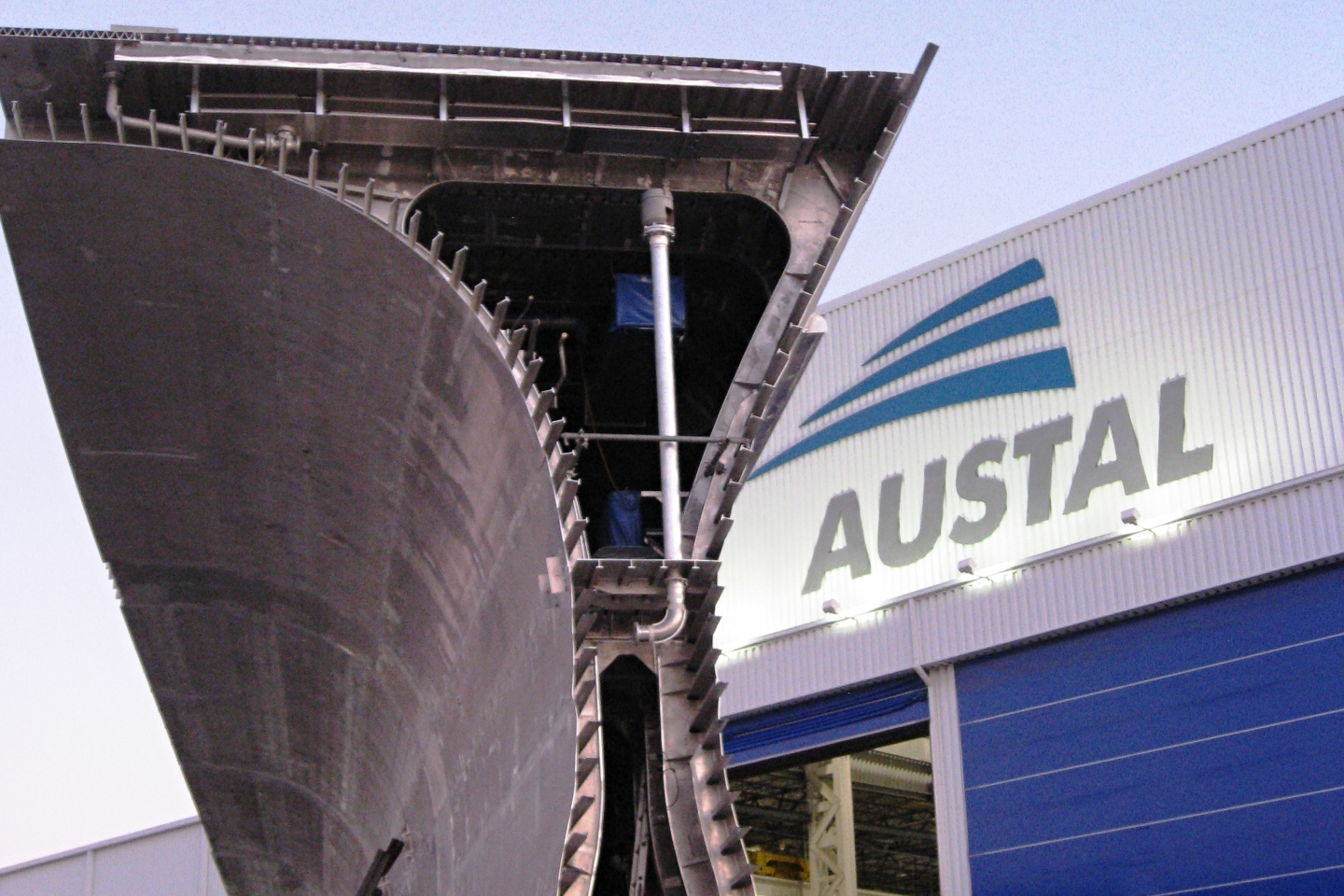
Australia’s sovereign shipbuilder Austal has received a non-binding, $1.7 billion offer for its US subsidiary from South Korean chaebol Hanwha.

Operator
Good day, and thank you for standing by. Welcome to the Proficient Auto Logistics Second Quarter Financial Information Conference Call. [Operator Instructions].
Please be advised that today’s conference is being recorded. I would now like to hand the conference over to your speaker today, Brad Wright, Chief Financial Officer. Please go ahead.
Bradley Wright
CFO & Secretary
Good afternoon, everyone. I’m Brad Wright, Chief Financial Officer of Proficient Auto Logistics. Thank you for joining us for Proficient Second Quarter 2026 Earnings Call. Earlier this afternoon, we issued 2 press releases, one detailing our second quarter 2026 financial results and a second, announcing our definitive agreement to acquire Hansen & Adkins, as well as some financing transactions.
We have also posted on our website, an investor presentation that accompanies today’s discussion. Press releases and the presentation materials can be found under the Investor Relations section of our website at proficientautologistics.com. Our 10-Q when filed can also be found under the Investor Relations section of our website.
During this call, we will be discussing certain forward-looking information. This information is based on our current expectations and is not a guarantee of future performance. I encourage you to review the cautionary statement in 2 press releases describing factors that could cause actual results to differ from those expressed by the forward-looking statements.
Further information can be found in our SEC filings. During this call, we may also
Business
Dow Jones Slips In Early Monday Trading As Wall Street Awaits Key Inflation Data Ahead Of This Busy Week

NEW YORK — The Dow Jones Industrial Average edged lower in early trading Monday, slipping from Friday’s record close as investors braced for a busy stretch of corporate earnings and inflation data expected to shape the market’s next move.
The blue-chip index stood at 53,937.14 as of 9:35 a.m. Eastern time, down 99.79 points, or 0.18%, after opening modestly lower to start the week. The pullback came just two trading days after the Dow closed at an all-time high on Friday, one of several record closes for the index over the past two weeks.
The S&P 500 and Nasdaq Composite were similarly subdued in early trading, with both indexes hovering close to the flatline as investors weighed a mix of geopolitical uncertainty, upcoming inflation figures and the tail end of second-quarter earnings season. Trading desks broadly described Monday’s tone as a pause rather than a reversal, with major averages still within reach of the record levels set at the close of last week.
Monday’s muted open followed a strong finish to last week, when a surprisingly weak U.S. jobs report reshaped expectations for Federal Reserve policy and sent stocks sharply higher into the weekend. The Labor Department’s July nonfarm payrolls report showed the economy unexpectedly shed 23,000 jobs, the first monthly decline since February, while the unemployment rate ticked down to 4.1%. The government also revised down combined job growth for May and June by a total of 103,000 positions, further undercutting the narrative that the labor market had begun to stabilize.
Daniela Hathorn, senior market analyst at Capital.com, said the weak jobs data had shifted investor expectations toward a more cautious Federal Reserve, noting that markets were gaining confidence the central bank “will not need to raise rates after all when it meets next month.” She added that downward revisions to prior months’ figures had further undermined the case for a near-term rate increase, helping U.S. and European equity markets recover earlier losses from the week and finish on a stronger note.
For the week, the major U.S. indexes posted broad gains, with the S&P 500 up roughly 3.6%, the Nasdaq advancing more than 5%, and the Dow gaining nearly 3%, according to figures compiled following Friday’s close. Those gains built on a Dow session Friday in which the index and the S&P 500 both touched fresh record highs, driven largely by the shift in interest rate expectations.
Monday’s session opened against a more cautious geopolitical backdrop, with investors continuing to monitor developments tied to tensions in the Middle East and their potential impact on global oil markets. Crude oil prices were higher early Monday, reflecting ongoing uncertainty around shipping traffic through the Strait of Hormuz, a key global oil transit corridor. While reports over the weekend suggested progress toward a resolution involving Oman, a durable agreement between the U.S. and Iran remained elusive, tempering some of the optimism that had lifted markets at the end of last week.
The early pullback also came as traders looked ahead to a series of economic releases due later in the week, including inflation data that is widely expected to factor into the Federal Reserve’s next policy decision. With the July jobs report having already shifted market expectations toward a pause in rate hikes, upcoming inflation figures are likely to be closely scrutinized for any signs that could either reinforce or challenge that view.
Corporate earnings also remained in focus as the week got underway, with a number of major companies scheduled to report results in the coming days. Trading in early Monday sessions showed a mixed picture across individual stocks, with technology and industrial names among those attracting the most attention from investors positioning ahead of this week’s data-heavy calendar.
Overseas markets provided a broadly positive backdrop for U.S. trading Monday. Japan’s Nikkei 225 added roughly 2.1% to close at a fresh high, while Hong Kong’s Hang Seng index rose about 1%. South Korea’s Kospi gained 0.65%, snapping a two-day losing streak, while the smaller Kosdaq index jumped nearly 7% in the same session. Not all regional markets moved in the same direction, however, with Australia’s S&P/ASX 200 closing down 0.3% despite strong gains among individual gold and resource-sector stocks.
Bond markets showed only modest movement early Monday, with the benchmark 10-year Treasury yield edging slightly lower alongside the 30-year Treasury bond, while the 2-year note traded close to unchanged. The relatively contained moves in fixed income reflected the broader wait-and-see posture among investors ahead of this week’s inflation data, according to market commentary circulating in early trading.
Monday’s slight retreat for the Dow marks a pause following a run that included five consecutive winning sessions before Thursday’s trading, when initial gains gave way to selling amid rising crude oil prices and bond yields tied to the unresolved situation around Middle East shipping routes. Even with Monday’s early dip, the index remains up substantially from levels seen earlier in the year, having repeatedly notched fresh records over the past several weeks.
With inflation data and a fresh wave of corporate earnings both on tap in the days ahead, market participants are expected to remain attentive to any signals that could shift the current outlook for Federal Reserve policy, particularly after last week’s jobs report reset expectations so sharply heading into the new trading week.
Business
AbCellera Stock Soars 30% After Menopause Drug ABCL635 Hits Phase 2 Success In Hot Flash Trial Results

VANCOUVER, British Columbia — Shares of AbCellera Biologics Inc. surged more than 30% Monday after the clinical-stage biotechnology company announced positive top-line results from a Phase 2 trial of its experimental menopause drug, ABCL635, sending the stock to its highest level in months.
The stock closed up 30.32% at $9.03, with volume of more than 12.7 million shares, well above its three-month average of roughly 7.2 million shares, lifting the company’s market capitalization to about $2.76 billion. The rally came after AbCellera said before the market opened that its Phase 2 study evaluating ABCL635 for moderate-to-severe vasomotor symptoms, more commonly known as hot flashes, had met its primary efficacy endpoints.
ABCL635 is an investigational antibody designed to target NK3R, a receptor found on a specific set of neurons in the hypothalamus that plays a role in regulating body temperature. The drug is being developed as a non-hormonal, long-acting, subcutaneous treatment, an approach the company has positioned as a potential alternative to existing hormone-based therapies for menopause symptoms.
The randomized, double-blind, placebo-controlled trial enrolled 92 postmenopausal women who were experiencing an average of roughly 10 moderate or severe hot flashes per day. Participants were randomly assigned to receive either a single 600-milligram subcutaneous dose of ABCL635 or a placebo. At week four, the treatment group saw hot flash frequency drop by a mean of 8.8 events per day from baseline, compared with a 3.5 event reduction in the placebo group, a placebo-adjusted difference of 5.3 events that was statistically significant. In percentage terms, ABCL635 reduced hot flash frequency by 83% on average, compared with a 33% reduction for placebo.
The drug also showed a significant effect on symptom severity, with treated patients seeing severity scores fall by 1.4 points on average compared with 0.3 points for placebo, and meaningful improvements were observed in patient-reported sleep quality and overall impression of symptom change. AbCellera said the drug was well tolerated over the four-week treatment period, with no serious adverse events, severe adverse events, or discontinuations due to side effects. The most common adverse events among patients receiving the treatment were headache, fatigue and injection site reactions.
Dr. JoAnn V. Pinkerton, a professor of obstetrics and gynecology at the University of Virginia School of Medicine who specializes in women’s midlife health, said the four-week data set “a new efficacy benchmark for the reduction of hot flashes both in frequency and severity.” She added that if the results are validated in a larger Phase 3 trial, the drug could offer patients a more convenient dosing option with potentially less toxicity than existing treatments.
Sarah Noonberg, AbCellera’s chief medical officer, described the results as a milestone both for the company and for women’s health more broadly. She said the data show that by targeting the NK3 receptor with an antibody, the company has demonstrated “potential best-in-class vasomotor symptom relief over four weeks with a single subcutaneous dose.”
The trial results carry particular significance for AbCellera because ABCL635 represents the company’s first internally developed drug candidate to advance into Phase 2 testing, marking a shift for a company that built its early business primarily around providing antibody discovery technology and services to pharmaceutical partners rather than developing its own drugs. Vasomotor symptoms affect an estimated 80% of women during menopause, according to figures cited by the company, with the majority describing their symptoms as moderate to severe. AbCellera estimates roughly 12 million women in the United States experience moderate-to-severe hot flashes, of which more than 6 million seek treatment, underscoring the size of the potential market opportunity if the drug advances successfully through later-stage trials and regulatory review.
Monday’s surge builds on a period of already elevated investor interest in AbCellera. The company’s shares had climbed more than 136% year-to-date heading into the results, according to recent analysis of the stock’s performance, reflecting growing attention to the company’s pipeline as it has increasingly emphasized internal drug development alongside its existing antibody discovery partnerships. AbCellera has also struck a series of collaboration deals in recent months, including a multispecific antibody partnership with Vertex Pharmaceuticals and prior agreements with Jazz Pharmaceuticals and AbbVie, deals the company has said brought in more than $110 million in upfront payments combined.
The company reported second-quarter 2026 financial results on August 5, ahead of Monday’s trial data, showing revenue of roughly $4.05 million, down sharply from the prior year, alongside a widened net loss of $55.4 million. AbCellera has said it holds approximately $567 million in cash and more than $675 million in total available liquidity, which the company has said supports at least three years of continued investment across its pipeline.
Following Monday’s results, AbCellera hosted an investor conference call to discuss the Phase 2 data in greater detail and outline next steps for ABCL635’s development, including plans for further validation in a larger Phase 3 trial. Analysts covering the stock had already shown signs of growing optimism ahead of the data release, with several firms raising their price targets on the shares in the days leading up to Monday’s announcement.
With ABCL635 emerging as the company’s most advanced internally developed program, Monday’s results are likely to serve as a key reference point for how investors value AbCellera’s broader pipeline going forward, particularly as the company continues to balance its established antibody discovery business against the larger financial risks and potential rewards associated with advancing its own drug candidates through clinical development.

Anthropic signs $9.1 billion cloud deal with Riot, Bloomberg reports
Intel: Buy The Equity Raise (Rating Upgrade)

Brent crude was steady near $87.70 a barrel on Tuesday after gaining about 10% over the previous four sessions. The advance in oil weighed on Treasuries, pushing the benchmark 10-year yield up six basis points to 4.71% in the previous session. There will be no cash trading in Treasuries during Asian hours Tuesday due to a Japan holiday.
Early focus in Asia is on the yen after the currency weakened 1% on Monday, erasing about half of its recent intervention-led rally. The move is psychologically significant for traders, who remain on alert for further official support. The yen was slightly stronger in early Tuesday trading at about 159.17 per dollar.
Elsewhere, Asian stocks and equity-index futures for US benchmarks edged lower. Australian government bonds fell ahead of an expected policy-rate hold by the central bank. Gold extended its advance for a third day, trading at about $4,400 an ounce.
Read more: IPO Rush: 34 companies race to launch issues worth Rs 45,000 crore by September 30
Oil’s rally over the past week, amid little progress toward easing tensions in the Middle East, has revived worries over price pressures after Friday’s softer US jobs data tempered expectations for an immediate Federal Reserve interest-rate hike. Attention now turns to Wednesday’s US consumer price index report, which may offer fresh signals on the path for interest rates.
“The jobs report may have eased some anxieties about a Fed rate hike next month, but those concerns could hit new highs without cooler-than-expected inflation numbers this week,” said Chris Larkin at E*Trade from Morgan Stanley.
While stocks had seen a burst of enthusiasm about a possible reopening of Hormuz, markets may be less likely to respond positively to vague reports about progress in talks, he said.
President Donald Trump lashed out against Iran’s demands for compensation as part of talks to wind down the conflict, dimming hopes of a quick agreement that would reopen the strait. Trump had signaled on Sunday that he was prepared to let economic pressure on Iran build, rather than launch fresh strikes.
The closely watched consumer price index is seen rising 0.1% in July following a 0.4% decline in the prior month, based on the median projection in a Bloomberg survey of economists ahead of Wednesday’s Bureau of Labor Statistics release.
Fed Bank of Cleveland President Beth Hammack told Yahoo Finance it’s possible that a number of rate hikes may be needed to bring inflation down to the target.
“I would say in general, one 25-basis-point move probably doesn’t do a whole lot for the economy,” Hammack said Monday in an interview with Yahoo Finance. “So it’s probably some number,” but “I don’t want to prejudge what that number is going to be.”

H100 acquires 2,455 Bitcoin, holdings rise to 3,506

Nigeria Beat Gambia to Record First Win at U18 Beach Volleyball Cup

Valve Slowly Expands SteamOS Support On Non-Valve Hardware


-

 Fashion3 days ago
Weekend Open Thread: Mattifying Sunscreen
-

 Fashion4 days ago
Frugal Friday’s Workwear Report: Cap-Sleeve Pointelle Crewneck Sweater
-

 Sports5 days ago
Jordan Coyle & Cordiamo take Laya Arena Stakes at RDS
-

 News Videos3 days ago
Can Astrology Help Find Gold and Silver Trends? A Financial Astrology Guide
-
 Business5 days ago
US stocks: Dow closes at record on Mideast optimism; SpaceX, AMD drag Nasdaq
-

 Politics5 days ago
Reform UK And Greens Sink To Lowest Favourability Ratings To Date
-

 Tech6 days ago
OpenAI, Anthropic AI agents targeted real people and systems in cyber tests
-

 Business6 days ago
Nvidia Stock Climbs 2.5% as Chip Sector Rally Builds Ahead of AMD Earnings, Nvidia’s Own Report Looms
-

 Crypto World6 days ago
Polymarket targets $20 billion valuation as competition heats up in prediction market sector
-

 Business5 days ago
Supply chain issues impact Ingredion
-
 Crypto World7 days ago
CLARITY Act Senate Vote Locked In, But 60-Vote Hurdle Looms Large
-

 Tech3 days ago
Rinn Pharma & Biopharma to join NordicPharmaTrain network
-
 Crypto World6 days ago
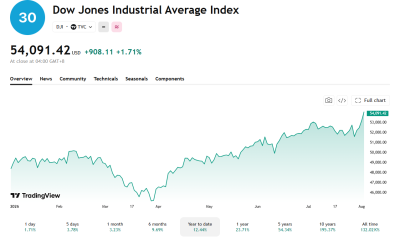
Dow and S&P 500 Hit Records on AI Earnings: When Will the Bubble Burst?
-

 Business2 days ago
How to Start a Cleaning Business: A Step-by-Step Guide
-

 Business2 days ago
Datadog: Best Of Breed For Multiple Reasons
-

 Business2 days ago
BDC Weekly Review: Private BDC Q2 Numbers Are Strong
-
 Crypto World6 days ago
Dollar Index Trapped at 100 as Hawkish Fed Meets Official Selling
-

 Business6 days ago
McDonald’s (MCD) Q2 2026 earnings
-
Crypto World7 days ago
Trump Administration Plans Ban on New Chinese AI Data Center Components: Report
-

 Fashion6 days ago
The Bright Side of Black and White
You must be logged in to post a comment Login