
Tech & AI
Anthropic warns small AI models could self-replicate through IoT devices

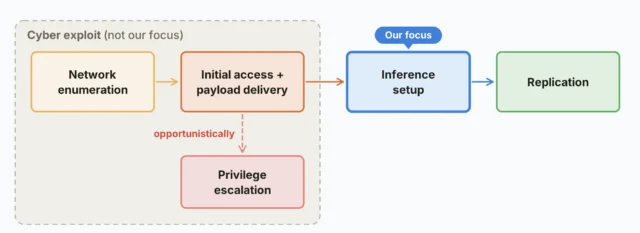
This finding was the starting point for further research that asked: Would it be possible for small models to create self-replicating infections that run themselves on IoT devices the way traditional IoT worms, like Mirai, install DDoS code and other payloads? Unlike Mirai, these AI worms could pose a much higher threat, since the models could tailor exploits and payloads dynamically, depending on the target. Once such an infection chain began, it might also be harder for defenders to stop it.
“Such an ‘AI worm’ could carry its model weights with it as it reproduces (or re-download them from a public hub), and then run inference directly on compromised hardware,” Anthropic said. “Effectively, the weights would become part of the malware payload.”
Anthropic called these autonomous worms small weight-based replicators. The models ran agents that had access to common exploitation tools, like reverse shells. The flow of the attacks was (1) finding targets, (2) gaining code execution, (3) establishing inference, and (4) propagating to new hosts. A key benefit over traditional worms is what Anthropic said is the agents’ ability to learn on the job. Each time an AI replicator fails to compromise a specific platform device, it can leave a list of prompts, code, and notes to future replicators so they don’t waste time reusing the same ineffective steps.
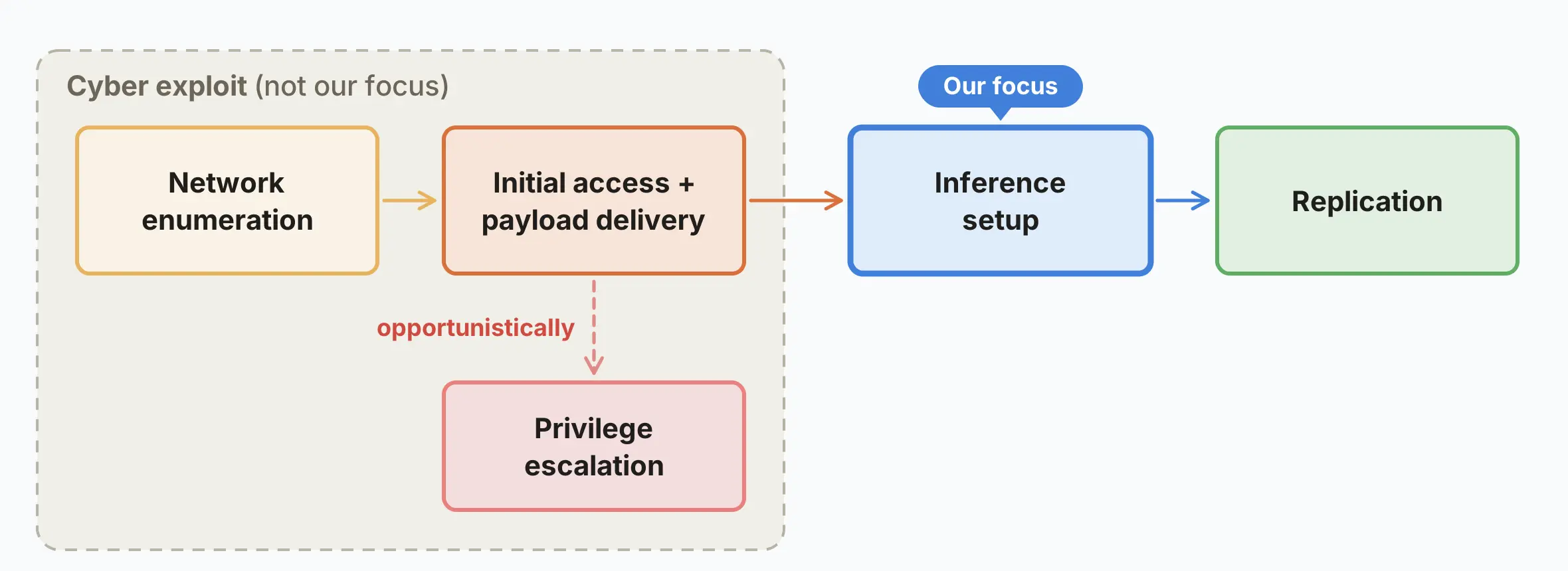
Anthropic said the dynamic inference setup is the least studied and likely most challenging stage in the replication cycle. It requires a long sequence of decisions based on the specific hardware and software of each target and involves selecting compatible inference software, installing dependencies, and debugging platform-specific bugs.
“These steps are serially dependent, and failures are difficult to recover from,” Anthropic said.
The experiment shows that small models are becoming increasingly capable at solving those problems autonomously. At the moment, however, none of the light-weight models tested are able to mount end-to-end replication, meaning discovering new devices, using an exploit to gain access to them, infecting them with a payload, configuring an inference server, and repeating the process. The process is also painfully slow; Gemma4-26B-A4B, distributed over the 15 Android TV boxes, performed at just 0.39 tokens per second. That translates to a full-inference setup time of 71 to 150 hours for an unoptimized Gemma4-26B-A4B and 29 to 51 hours for Qwen3.5-9B. (The researchers said that the large model GLM-5.2 appears to be able to do so reliably.)


The climate just got its annual checkup, and the results aren’t looking so hot.
“If Earth were a patient coming in for an annual physical, I would say its condition is serious and getting worse,” Oregon State University researcher Bill Ripple says.
Ripple is the lead author of a new paper chronicling the state of the climate, published on Wednesday in BioScience. The findings show that seven of the 16 planetary vital signs tracked by the researchers have never been in a more extreme state.
That includes the amount of carbon dioxide in the atmosphere, which is 50 percent higher than preindustrial levels due to burning fossil fuels, as well as symptoms of burning all that oil, coal, and gas. Greenland and Antarctic ice sheets have shrunk to record lows, while ocean heat has soared to record highs.
Climate change has already quickened the pace of warming from about 0.05 degrees Celsius per decade from 1880 through 1970 to 0.36 degrees Celsius per decade since 2010, according to the analysis. While the global average temperature, including land, isn’t at a record extreme, that may change by the end of the year as El Niño strengthens. The natural climate pattern is characterized by a hotter-than-normal Pacific Ocean, but it also boosts global heat levels by pouring more energy into the atmosphere. This year’s El Niño is shaping up to be one for the record books.
“A strong El Niño could temporarily push global temperatures even higher, while bringing additional heat and drought to vulnerable regions,” says Ripple. He adds that “El Niño is a natural phenomenon, but it’s now occurring on top of a much warmer planet. That makes its impacts potentially more dangerous.”
Of particular concern are ecosystems such as coral reefs and tropical forests. The spread of ocean heat is likely to fuel a mass coral die-off, known as coral bleaching. With each successive wave of bleaching, reefs become less resilient. Corals are among the ecosystems most threatened by climate change; if the planet warms beyond 1.5 degrees Celsius, most of the world’s coral will be unlikely to survive.
Tropical forests also face pressure from El Niño. This is especially true of the Amazon, which tends to see dry weather during this climate pattern. The timing couldn’t be more dire: The region, dubbed “the world’s lungs,” is already under intense pressure from logging and mining interests and the possible return of a right-wing government in Brazil that prioritizes extraction and land clearing over conservation.
The new report also warns that the Amazon is among the ecosystems at risk of crossing a tipping point—that is, reaching a threshold where it shifts from a tropical rainforest into something more resembling savanna. It’s highly unlikely that crossing that tipping point is imminent, let alone something that will happen this year. But this year’s blast of El Niño–influenced weather will edge it closer.
“Warming, drought, and deforestation could push the Amazon toward widespread forest degradation,” Ripple says. “My concern is that these changes could interact, making them increasingly difficult to stop.”
The report is an avalanche of bad news for the climate, though it does note that carbon-free forms of energy are playing a bigger role in the power grid. The report calls it a sign we’re in the “Age of Electricity.” Despite that, annual greenhouse gas emissions are at record highs. In other words, the world is still smoking a pack a day, even at the risk of losing a lung.
“There are some encouraging signs, especially the growth of renewable energy, but they aren’t yet enough to reverse the overall deterioration,” Ripple says. “The climate emergency is not something waiting for us in the future. We are already living through it.”


The headline feature of the HomePod mini 2 is its impending support for Siri AI, which will be rolled out via a future update in the US, Australia, Canada, India, New Zealand, Singapore, South Africa, and the UK.
Read Entire Article
Source link

AI tools can now generate a lesson in seconds, and the result usually sounds convincing. But teachers and district leaders still lack a reliable way to confirm that generated content aligns with state standards or what research says about how students learn. Learning Commons, a nonprofit backed by the Chan Zuckerberg Initiative, believes it has built that missing foundation through a newly launched open platform. More than 70 partners, including OpenAI and Anthropic, have joined the effort. But as open infrastructure enters the classroom, some educators are asking a critical question: who gets to lay the groundwork for K-12 AI?
Who Gets to Build the Tracks?
Sandra Liu Huang, president of Learning Commons, spent years building product teams at Google, Facebook, and Quora before she turned her attention to K-12 education. She joins EdSurge editorial director Ira Apfel to explain how the platform’s open knowledge graphs and AI evaluators work, and why some districts are choosing to build their own custom tools on this infrastructure rather than waiting for commercial vendors. Ira also presses her on governance, on who decides what goes into these models, and how open platforms can prevent a few major players from dominating school technology.
What Should Districts Ask Vendors?
Sandra also shares the essential questions she believes every district leader should ask an AI vendor claiming state standards alignment — from data origin and update frequency to whether state standards serve as the core foundation for their tools.
Disclosure: Learning Commons is a financial supporter of EdSurge. This episode was produced independently by EdSurge and Learning Commons had no editorial role or influence over its recording, production or editing.
Stories Mentioned in This Episode
Learning Commons Launches Open Platform for K-12 Edtech by Ira Apfel
This Week with EdSurge is a weekly podcast from EdSurge. Subscribe to the EdSurge newsletters for more news and analysis on education and technology.

The U.S. Department of Justice is warning that hackers working for the North Korean regime are increasingly relying on Americans to facilitate the hacking of U.S. companies.
In an announcement on Tuesday, prosecutors said they have indicted and arrested at least two people, and conducted searches across dozens of suspected “laptop farms” in Texas. The computers were allegedly used by North Koreans to remotely hack into American companies and steal sensitive data.
According to the DOJ, federal authorities seized over 180 computers that they believe American companies had shipped out to their newly hired employees, not realizing that they were sanctioned North Korean spies who had used stolen identities of U.S. citizens to gain employment. The DOJ said that it raided over 40 laptop farms across Texas, the largest disclosed number of homes and residences used for facilitating North Korean hacks, which were owned by at least two American facilitators.
CrowdStrike, which helped the FBI investigate and disrupt the latest North Korean operations, said that laptop farms are “vital” to North Korea in helping its hackers overcome physical, financial, and legal challenges of not physically being in the United States.
The prosecutors said at least 70 U.S.-based companies had been infiltrated by the hackers, who are believed to have generated around $3 million in stolen funds. The DOJ did not name the affected companies, but described them as healthcare, cyber support, retail, communications, and manufacturing sectors across Ohio and 16 other states, including the District of Columbia.
“Increasingly, North Korean IT workers are turning to recruiting American facilitators to counter improved private sector detections and law enforcement actions. These workers are hiring facilitators to complete a wider variety of tasks, and in some cases subcontracting entire jobs to third-party foreign nationals,” the Justice Department said.
Oftentimes, North Korean hackers use real-looking email addresses, spoofed LinkedIn profiles, and extensive online and social media accounts as cover for their activities.
In a separate public service announcement, the FBI said that there are “thousands” of North Korean-state controlled IT workers working at Western companies, which “pose a significant national security and intellectual property theft insider threat.”
This is the latest wave of arrests, indictments, and enforcement action targeting North Korean activities in the United States in recent years. The breakaway regime has used this “remote IT workers” scheme to allow North Koreans to gain employment with U.S. and European companies, earn a wage, and then steal sensitive information and intellectual property while as employees. The victim companies are then extorted into paying the hackers further.
The remote IT workers’ scheme is one of several strands of illicit revenue that the North Korean regime aims to generate, including hacking crypto exchanges and open-source developer projects, with the aim of funding its internationally sanctioned nuclear weapons program. The regime is thought to have stolen at least $2 billion in crypto during 2025 alone.
Experts on North Korea have put the number of hacked companies and the amount of stolen crypto as likely much higher than reported.
Earlier this year, CrowdStrike said in a separate report that North Korean hackers were behind around half of all documented “hands-on-keyboard” intrusions over the past year, referring to hacks that are carried out by humans and not automated tools or AI.
When you purchase through links in our articles, we may earn a small commission. This doesn’t affect our editorial independence.
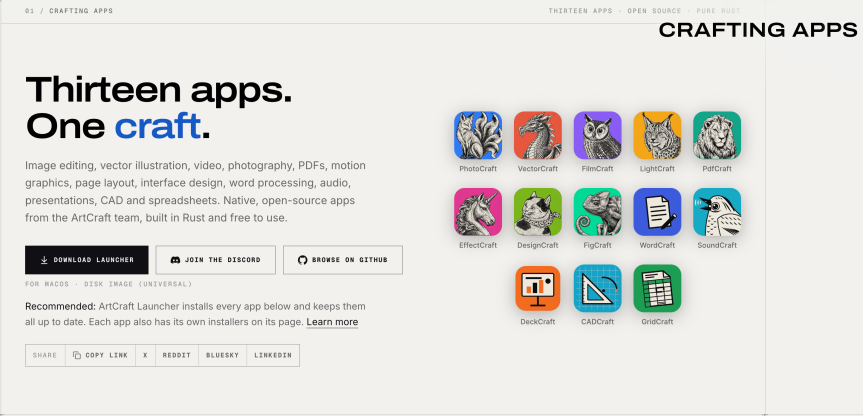
In this current era of vibe coding — using AI to create mobile and desktop apps — it was probably only a matter of time until someone made free versions of popular apps. That happened this month when a Reddit user announced that he did so with popular but expensive Adobe and Microsoft programs.
The person behind the project is Brandon Thomas, a software engineer who uses the handle “u/ai_art_is_art” on Reddit, where the tools first caught AI enthusiasts’ attention. Thomas has released 13 free, open-source apps on his website, called ArtCraft. These apps aim to replicate the core functionalities of Adobe and Microsoft programs, including Photoshop, Word and PowerPoint — or, as Thomas calls them, PhotoCraft, WordCraft and DeckCraft.

Vibe coding has taken off for software developers and AI enthusiasts, leading to AI-made apps flooding Apple and Google’s app stores. However, significant concerns persist about the overall usefulness, security and long-term viability of vibe-coded apps. Apple removed some apps that help people vibe code this year because the apps didn’t comply with Apple’s developer rules.
But in the US’s current affordability crisis — and with legacy tech companies constantly raising their prices — a cheaper, AI-created alternative to Photoshop or Microsoft Word can be an attractive option for a subscription-weary consumer.
This certainly isn’t the first time a startup has tried to compete with legacy software companies like Adobe and Microsoft. Canva, Affinity and CapCut are extremely popular Adobe alternatives for content creation and editing. Google and Apple each have their own versions of Microsoft’s core business apps.
But ArtCraft’s vibe-coded apps and other potential AI-made apps allow individual users to avoid handing over their cash and data to a major tech company. Using an open-source AI model on your own device, for example, gives you more control over your data than using a cloud-based app through a subscription.

As with all apps, CNET recommends you inspect the privacy and safety policies before using them. This is especially important for vibe-coded apps.
“Vibe coding can make it super easy to swap out old software tools, but it’s legally questionable,” said CNET’s Blake Stimac, a vibe coding expert. “What works great for you as a quick fix could easily turn into a legal battlefield the second you try to share it with the world.”
Representatives for ArtCraft and Adobe did not immediately respond to requests for comment. Microsoft declined to comment.
Will vibe coding kill legacy software?
It’s unlikely that vibe-coded apps will be the sole downfall of legacy software companies like Adobe and Microsoft. But they do highlight the growing frustration with those companies, particularly as subscriptions become even more expensive and their programs become bloated with AI features.
In March, Adobe reached a $150 million settlement with the US government to resolve a federal lawsuit alleging that the software giant trapped consumers in subscription plans with hidden fees and an intentionally convoluted cancellation process. Under the terms of the agreement, Adobe will pay a $75 million civil penalty and provide $75 million in free services to affected users, though the company continues to deny any wrongdoing.
Microsoft has embedded its Copilot AI throughout its software ecosystem, despite notable user backlash. While the company recently removed a few Windows AI features due to negative feedback, it is still plowing ahead with billions of dollars in AI development.
The appeal of ArtCraft and other open-source vibe-coded apps is their ability to let individuals customize programs and avoid hefty subscriptions. The pitch is tailor-made for tech enthusiasts: If you only need limited access to these programs and can set them up yourself for free, why would you pay for Adobe Creative Cloud or Microsoft Office?
But that certainly won’t be the case for everyone. For one, many folks won’t want to take the time to figure out how to download and configure an open-source AI app. Meanwhile, businesses and professional creators will likely prefer the safety and privacy guarantees that Adobe and Microsoft offer, even if they aren’t always ironclad. Better the devil you know…



Kirigami, the Japanese practice of cutting paper in addition to folding it, opens possibilities that pure folding alone cannot reach. Matthew Lim applied the method to a series of objects that shift from a completely flat sheet into a usable three-dimensional form and back again, relying on carefully placed cuts and folds rather than fasteners or adhesives. One result is a compact phone grip that springs into place when needed. Another is a side table large enough to hold everyday items, assembled from plywood panels linked by printed hinges.
An early demo in Lim’s film references an old Japanese text from 1797 about folding cranes. That book contains one of the earliest known examples of a single sheet of paper being cut so that a smaller crane emerges from the back of a larger one. The same book also demonstrates how to make a whole bunch of cranes out of a single flat piece by cutting it in a grid pattern. That’s basically the early trials that gave rise to the term ‘kirigami,’ and they provide a good starting point for what modern origami is about. By making strategic cuts to a flat shape, you can transform it into something that can actually hold weight or grip things, which is exactly what recent studies like Liu and colleagues’ 2024 paper on making origami tubes got right, as you can change how the thing responds to pressure simply by changing how you cut it.

Bambu Lab A1 mini 3D Printer + LED Lamp Kit, Ready-to-Use for Beginners
- A1 mini + LED Lamp Kit for Creative Light Projects: Bring your ideas to life with the included LED Lamp Kit. Simply print compatible lamp models and…
- The Perfect 3D Printer for Beginners: A1 mini 3D Printer is designed to make 3D printing easy from day one with automatic calibration, simple setup…
- Experience the Bambu Lab Ecosystem: Access MakerWorld’s huge library of ready-to-print models, manage prints through the Bambu Handy app, and enjoy…

Lim spent hours toying with a laser cutter and a 3D printer, testing various iterations of his pop-up mechanism. Each one allowed him to fine-tune the positioning of the cuts and the way the hinges worked, ensuring that the entire thing rose smoothly and remained in shape. Once the little models were working properly, he was able to apply the same concepts to full-size furniture. Plywood panels replaced the original paper, and he employed printed hinges rather than simply cutting the board to create the creases. After he built the table, the various sections could be modified to fit different forms, and once moved, the geometry would sort themselves out and produce a sturdy surface without the need for any further hardware.

These types of devices are particularly relevant in robotics, where joints must frequently change shape while providing little more bulk. They’re also handy for creating flat-pack furniture that can be shipped in extremely thin stacks while yet assembling into a substantial piece of kit. Actually, it matters a lot in space travel, where every last gram and cubic millimeter of space counts, but what’s really fascinating is that it’s entirely based on geometry rather than complicated actuators. As a result, the same cuts and folds that allow you to build a second small crane are also capable of creating a table that can stand on its own.
[Source]
Tech & AI
New Apple Home Collection includes smart cameras, door lock, and thermostats made by LG and Schneider Electric


The Apple Home Collection is a lineup of smart-home devices built in collaboration with LG and Schneider Electric, including several cameras with full iCloud+ integration, as well as thermostats, a doorbell, and a door lock. Apple also introduced the second-generation HomePod mini, a new Apple TV 4K, and the HomeView…
Read Entire Article
Source link
Tech & AI
You only have a few hours left to get over 50% off the new Fire TV Stick 4K before it jumps in price

Tonight is the last chance to buy the newest Fire TV Stick 4K for £32.99 before it moves to its full £69.99 price.
Against a £69.99 RRP, the Fire TV Stick 4K is £32.99 until 23:59 tonight, a saving of £37 or 53% on the newest 4K streaming stick from Amazon, complete with Wi-Fi 6, Alexa+ and an all-new Fire TV Remote.
Amazon’s new Fire TV Stick 4K more than doubles in price tomorrow
Packing Wi-Fi 6, HDR10+ and Alexa+, Amazon’s newest Fire TV Stick 4K is £32.99 until 23:59 tonight before rising to £69.99, a 53% saving.
The £32.99 price has been in place since launch at the end of September, so everyone who has bought one so far has paid the introductory rate. From tomorrow, the same stick costs more than double, and the offer can close even earlier should stock run out before midnight.
Paying the introductory rate gets you 4K picture with HDR10+ support, so your 4K TV shows off the rich colours, deep contrast and sharp detail it was built for, whether you are watching a nature documentary or a favourite rom-com.
Wi-Fi 6 keeps that picture streaming smoothly even when everyone in the house is online, and setup takes a single USB-C cable, because the Fire TV Stick 4K draws power from your TV and needs no wall adaptor.
From there, the all-new Fire TV Remote puts TV power and volume, a navigation ring and dedicated Live TV and shortcut buttons in a layout that sits comfortably in your hand, so play, pause, rewind and switching to live channels all happen from one place.
Press the voice button on that remote and Alexa+ lets you talk naturally to find your next favourite show by actor, plot or even an iconic quote, while also answering quick questions about whatever is already playing on screen.

Whatever you settle on lives in a single home screen that brings together BBC iPlayer, Netflix, Prime Video, YouTube, ITVX, Disney+ and thousands more apps, with up to 20 favourites pinned on the Fire TV Stick 4K and plenty of free, ad-supported content too.
If your 4K TV is still waiting on a proper streaming upgrade, buying the Fire TV Stick 4K before 23:59 tonight saves you £37 on a streaming stick that goes up to £69.99 from tomorrow.
SQUIRREL_PLAYLIST_10148964

“Many clients are looking … at this [as] a wake-up call to how dependent they had become on a single vendor and are looking for more diversity in their on-premises environments,” Tony Harvey, a senior director analyst at Gartner, previously told Ars, referring to Broadcom’s acquisition.
Rimini reported that 60 percent of the organizations it surveyed are considering a multi-hypervisor strategy, which is indicative of “growing interest in more flexible, mixed environments that support both operational and financial goals.”
“In addition, 47 percent are favoring a hybrid IT virtualization environment consisting of hypervisors and containers for ‘best of both worlds’ workload placement,” the announcement said.
Rimini noted that 48 percent of respondents aren’t planning to move any of their assets to VMware’s hybrid cloud platform, Cloud Foundation.
“The trend shows increasing diversification in enterprise virtualization strategies with a longer-term transition toward bespoke, multi-platform IT virtualization environments. As organizations reevaluate their paths to modernization, they are increasingly adopting approaches that combine on-premises infrastructure, private cloud, public cloud and alternative hypervisors to support workload flexibility, operational efficiency and better cost control,” the announcement says.
In its “Magic Quadrant for Distributed Hybrid Infrastructure” released last month, Gartner predicted that 55 percent of enterprises will make “proofs of concept for alternative distributed hybrid infrastructure products to replace their VMware-based deployments and embrace hybrid cloud infrastructure delivery” by 2029, which is an increase from 25 percent in 2026.
In a statement today, Joe McKendrick, lead analyst at Unisphere Research, pointed to interest among VMware users to do more than just replace their virtualization vendor.
“[The survey] reflects a broader effort by enterprises to reduce dependency on a single provider, maintain continuity for mission-critical systems and modernize at a pace that fits their own business requirements,” he said. “For many organizations, that means balancing support for existing environments with new investments designed to improve resilience, security and scalability over time.”

“Toptracer … pushes about 40TB of network data from the cameras in a typical 102-bay venue per day. That’s a lot of bandwidth, and the VergeIO team helped us solve some latency and pathing issues with that traffic to spread the load more effectively across the nodes in the cluster,” he said.
VergeOS also appealed to Topgolf because its end-to-end automation didn’t require Topgolf to retool its infrastructure-as-code. VergeOS being “API-first” was key here, Forehand explained, and its employees helped Topgolf develop support for infrastructure-as-code tools Terraform and Ansible early in migration.
Topgolf’s biggest challenge in ditching VMware has been coordinating all the projects it had to do alongside the server stack replacement. Forehand explained:
On VxRail, Topgolf gaming was powered by the servers. With VergeIO, we simplified the gaming stack and moved everything to the edge game panels in the bay. That meant we had to replace all of the game panels, rewire the columns, replace the server stack, and swap to our new Kubernetes gaming architecture. We also piled a few other projects in there with all of that to eliminate even more technical debt.
As Topgolf reduced its use of VMware, it also encountered challenges trying to integrate its new virtualization platform with third-party software, like Rubrik and LogicMonitor, which Topgolf uses to monitor its overall infrastructure.
VMware has been a leader in virtualization for decades, resulting in a wide range of enterprise products. This differs from newer competitors, which may not yet offer the same level of compatibility.
“Overall, the challenges have been pretty minimal,” Forehand said. “The real challenge has been a hearts-and-minds campaign to educate leadership on the gaps that do exist. With Rubrik, we moved to the VergeIO snapshotting to fill the data protection gap that not being able to use Rubrik left us, but we didn’t have an immediate answer for some of the Rubrik security features, like threat hunting and ransomware protection, so we’ve pivoted to Veeam to fill those gaps for us.”
VergeIO’s strategy for addressing product integration challenges includes building the capabilities delivered through third-party offerings into VergeOS and partnering “on the ones that matter most,” Crump said.
“Integration is the most common friction point, and it shows up after the migration. … A customer wants to keep using a tool it has already paid for and trained staff on. If that vendor doesn’t support VergeOS yet, the customer has to switch tools or run a workaround,” he said.

Anthropic warns small AI models could self-replicate through IoT devices

Bitcoin Drops Under $82K as US CPI Rises Amid Higher Oil Prices

Earth’s Condition Is ‘Serious and Getting Worse’ as Climate Change Intensifies


-

 Fashion4 days ago
Weekend Open Thread: Quince – Corporette.com
-

 Sports6 days ago
Saracens’ Venter Brands Premiership Rugby ‘Autocratic’ Over £5,000 Media Fine
-

 Business & Hustles4 days ago
PwC: Supply-Chain Diversification, AI and Energy Transition Open New Growth Paths for Thailand
-
 Entertainment6 days ago
10 Flawless Movies With the Cleverest Protagonists
-

 Sports6 days ago
Enzo Maresca all smiles as Man City return to training after guilty verdict
-

 Sports6 days ago
Southampton’s Eckert Spared Ban as FA Suspends Six-Week Sentence Over Spygate
-

 Sports5 days ago
Multiple Power Four programs face College Sports Commission investigations over alleged NIL cap evasion
-
 Sports6 days ago
Asiad selection row: Para-shooters allege corruption; PCI denies claims | Asian Games 2026
-

 Crypto3 days ago
XRP Ledger Defends Emergency Patch Amid Criticism
-

 Crypto6 days ago
Crypto.com Teams Up With Insilico Terminal to Give Traders Free Pro-Level Tools
-

 Crypto2 days ago
Rep. Omar Says She Will ‘Not Be Silenced’ After Federal Agents Raid Her Home
-

 Sports4 days ago
College Football Week 6 Bets: Three Picks for Saturday’s Biggest Games
-
 Crypto4 days ago
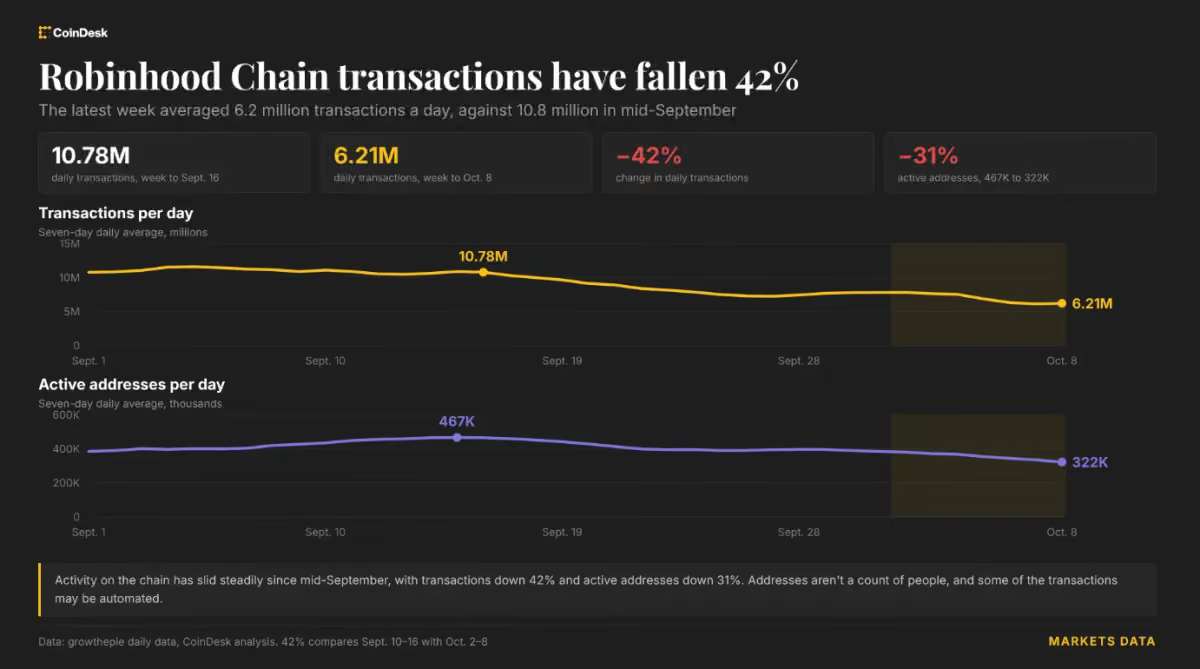
Robinhood Chain slowdown spreads from fees to trading as transactions fall 40%
-

 Sports3 days ago
Duke receives encouraging update regarding top prospect from class of 2028
-

 Crypto2 days ago
KuCoin unveils 5.0 upgrade with AI tools and unified trading account – CoinJournal
-

 Crypto5 days ago
Mashinsky Accepts Lifetime Industry Ban and Up to $35 Million in Conditional Payments | The Defiant
-

 Tech & AI6 days ago
ICE Emails Discuss Using Palantir-Supported Tool to Investigate Voter Fraud
-

 Crypto3 days ago
Saylor Signals Next Bitcoin Buying Plan After September STRC Buybacks
-

 Sports5 days ago
Morocco and Senegal await AFCON final verdict after arbitration hearing – Sports
-

 Sports5 days ago
Saudi oil crisis affects Neom project, 2034 World Cup plans
You must be logged in to post a comment Login