
Crypto
BlackRock’s next big tokenization bet

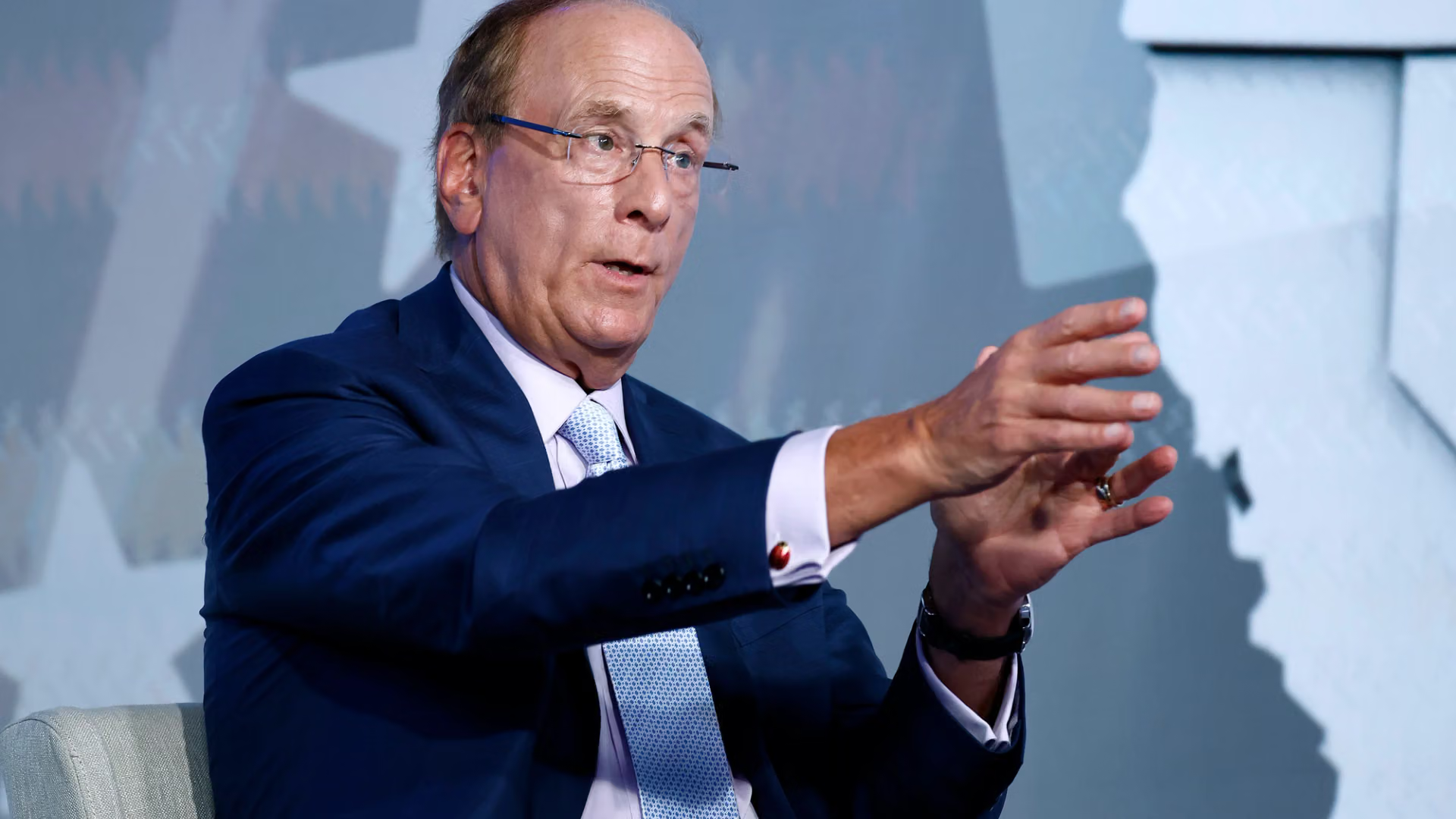
“It’s all great to have AI tell you what a perfect portfolio is, but if you can’t access the assets, it doesn’t really matter,” Staudt said. “Blockchain and tokenization is clearly going to open up funds, strategies, asset classes and jurisdictions that are not currently available for everyone”
For investors, that could mean moving beyond today’s relatively fixed menu of stocks, bonds and funds toward portfolios assembled from a much broader set of building blocks.
For asset managers, it could make products from different firms easier to combine into a single portfolio, changing both how managers compete and how they work together.
As Staudt put it: “It’s sort of taking democratization to the next level.”
Ondo had already hinted at an even more automated version of this future.
In a June interview, John Hoffman, then newly appointed head of portfolio products at Ondo, said tokenization was following a similar path to ETFs, only much faster.
He envisioned autonomous software continuously monitoring markets and allocating capital through professionally managed portfolios that adjust as conditions change.
“Our end state will be portfolios that are professionally managed, real-time and adjusting to market circumstances and data changes,” Hoffman said.
Getting there, however, will require more than tokenized stocks and funds. The industry first needs a broader universe of assets onchain, prime-brokerage infrastructure and asset-management strategies that can actually be executed natively on blockchain networks, Hoffman said.


Britain’s financial watchdog is winning over the very firms it polices, according to a new survey — a development that could carry weight for the cryptocurrency sector as it waits for the UK to finish building a dedicated regulatory framework for digital assets.
The Financial Conduct Authority’s latest annual survey of regulated firms, conducted jointly with the Practitioner Panel, found that confidence, satisfaction and trust in the regulator have all climbed over the past year. Some 79% of firms said they were highly satisfied with their relationship with the FCA, up from 74% previously, while 76% now rate the regulator as highly effective, a jump from 69%. Three-quarters of firms reported high levels of trust overall.
Those numbers matter beyond the usual banks, insurers and asset managers that make up the bulk of FCA-regulated business. The authority has, in recent years, taken on a growing supervisory role over cryptoasset businesses operating in the UK, from exchanges to custodians, and has made “Cryptoassets” one of its named focus areas for firms. How the industry perceives the FCA’s competence and fairness is likely to shape how smoothly that still-developing regime lands.
FCA chief executive Nikhil Rathi framed the improved scores as evidence that a year into the regulator’s current strategy, its approach is gaining credibility across “many areas” of its work — while acknowledging there is more to do, particularly on cutting red tape. The survey found firms were most confident in the FCA’s efforts to protect consumers, keep markets functioning well and safeguard the integrity of the UK financial system, with each of those measures scoring above 85%.
For crypto businesses specifically, consumer protection has been the FCA’s most visible priority to date. The regulator maintains a steady drumbeat of warnings about crypto investment scams, fake communications impersonating the FCA, and unauthorised firms promoting high-risk digital asset products. Its public-facing guidance repeatedly singles out cryptoassets as a category where consumers face elevated risk of fraud and total loss of capital, alongside pension scams and loan-fee fraud.
The survey also flagged a notable swing in how firms view the FCA’s secondary objective of supporting the international competitiveness and growth of the UK economy — understanding of that objective rose 27 percentage points, and confidence in its delivery rose 25 points. That objective, introduced in recent years, has been central to the UK’s pitch that it wants to be a serious hub for digital asset innovation rather than simply a jurisdiction defined by enforcement and warnings. Crypto firms and trade bodies have long argued that regulatory clarity, not just caution, is what will determine whether blockchain and digital asset businesses choose to set up in London or look elsewhere.
It’s worth being clear about what this survey does and doesn’t tell us. It is a broad measure of sentiment across all FCA-regulated sectors, not a crypto-specific study, and it does not break out separate satisfaction figures for digital asset firms or detail the substance of forthcoming crypto rules. The FCA has separately signalled that further guidance and rulebook changes affecting cryptoassets are in train as part of its wider simplification push, including efforts to strip out duplicated or outdated reporting requirements that currently apply to roughly 90% of regulated firms.
What the survey does suggest is a regulator attempting to recast its relationship with industry at a moment when digital asset oversight is becoming more, not less, central to its remit. Whether that improved standing translates into genuinely workable rules for crypto exchanges, stablecoin issuers and custody providers — and whether consumers see fewer scams as a result — will likely be the real test when the FCA’s next survey, and its crypto rulebook, both come due.

The cryptocurrency industry has spent years fighting the perception that it operates in a regulatory and technological vacuum, separate from the mainstream software world. But a warning this week from one of Europe’s blockchain executives suggests the opposite is true: crypto and tokenization firms are now so entangled with artificial intelligence tools that falling behind on AI access could quietly hollow out Europe’s digital asset sector from the inside.
Edwin Mata, CEO and co-founder of Barcelona-based tokenization company Brickken, says European founders building blockchain and crypto-adjacent businesses face a subtle but corrosive risk. It isn’t that Europe will lose the companies themselves, he argues, but that it will lose the jobs, investment, and growth those companies generate down the line, as AI tools central to running a modern tech business roll out unevenly across regions.
Brickken, which builds infrastructure for tokenizing real-world assets, sits at the intersection of two of the most hyped technology sectors of the decade: blockchain and AI. Mata’s comments, delivered to crypto.news, frame access to AI products as a factor now sitting alongside funding, taxation, and recruitment when founders decide where to grow a company. For crypto and tokenization startups in particular, that calculus matters, since much of the sector’s recent product development, from automated compliance checks to smart-contract auditing, increasingly leans on AI agents rather than purely human-built code.

“Europe can therefore retain the original company while losing much of its future hiring, investment and value creation,” Mata said, describing a scenario where a crypto startup stays headquartered in Barcelona or Berlin on paper while its engineering hires, sales operations, and product launches migrate to markets where AI tools arrive first.
He pointed to concrete examples of that uneven rollout: Meta’s Muse system is available in the United States and Canada but not Europe, while OpenAI’s “dots” tool remains accessible to Business Premium subscribers but not European Pro subscribers. Mata was careful not to blame regulators directly for these gaps, but he argued the pattern illustrates a cumulative cost. Teams that get early access to AI agents can refine workflows, test products, and lock in customers while rivals elsewhere wait, building an edge that compounds well past the point when the access gap eventually closes.
For a blockchain and tokenization firm like Brickken, that dynamic is not abstract. Crypto companies increasingly rely on AI agents to handle research, drafting, customer onboarding, and even elements of smart-contract development between human instructions. If European crypto startups are forced to wait for tools that American or Asian competitors already have in production, Mata’s argument goes, the delay doesn’t just slow a single task. It can erode profit margins and customer retention in a sector where speed to market is already a competitive weapon.
The warning lands amid a broader European debate about technological sovereignty that has swept up both AI and crypto policy. In late June, Austria’s State Secretary for Digitalization, Alexander Proell, proposed that the European Union consider taking a strategic stake in AI developer Anthropic, arguing that Europe risked losing access to critical AI advances because of decisions made entirely outside the bloc. Proell framed the move as a way to offer legal certainty and market access to a major AI player while acknowledging the proposal would likely face skepticism and practical hurdles.
That same anxiety about dependence on foreign technology has long shadowed Europe’s approach to crypto regulation. The bloc’s Markets in Crypto-Assets framework, known as MiCA, was built in part to give European firms clear rules at home rather than ceding the digital asset industry to jurisdictions with looser oversight. Mata’s comments suggest a parallel concern is now emerging around AI: that even as Europe writes rules to keep crypto innovation onshore, a slower rollout of the AI tools crypto companies depend on could undercut that effort from an entirely different angle.
Mata stopped short of calling for specific legislative fixes, and his remarks are those of a single industry executive rather than a broad survey of the sector. But his underlying point, that access to foundational technology is now inseparable from where crypto and blockchain companies choose to hire, invest, and launch, adds a new wrinkle to Europe’s long-running effort to keep its digital asset industry competitive. Recent EU reforms have already extended compliance deadlines and expanded support for smaller firms navigating AI rules, signaling that regulators are at least aware of the tension between oversight and speed.
Whether that awareness translates into faster, more even access to the AI tools crypto firms now build on remains to be seen. For founders like Mata, the stakes are less about any single product launch than about where the next generation of blockchain engineers, analysts, and executives ultimately choose to build their careers.

In a statement shared after this article’s publication, Paige Pidano Paridon, the executive vice president and co-head of regulatory affairs at the Bank Policy Institute said, “BPI supports efforts to bring innovative new products and services into the regulated banking ecosystem, provided that the entities engaging in those activities are subject to the same rules and responsibilities as every other chartered institution engaging in the same activities.”
Firms should not get trust charters unless they only engage in “trust activities,” she said, adding, “if they want to engage in traditional banking activities, they should seek full-service banking charters. Rigorous, uniform standards are essential to fostering a competitive, safe and resilient banking system.”
The industry’s pursuit of national trust charters has been credited by banking regulators for representing a resurgence in new banking names after a lengthy drought.
Some of the trusts have been hatched as crypto-focused banks, such as Protego and Erebor. Others have come from the existing ranks of prominent crypto businesses, such as Coinbase, Circle and Crypto.com.
A recent addition is World Liberty Financial, the firm partly owned by President Donald Trump and his family, with its charter approval drawing ire from critics including Democratic Senator Elizabeth Warren, who accused the agency of permitting presidential corruption and posted on social media site X that the new charter “giving him and his family a new way to profit.”

Europe’s landmark cryptocurrency regulation is facing its first major stress test, as industry bodies lobby the European Commission to resist sweeping changes to a framework they argue has only just begun to bed in.
CryptoUK and The Digital Chamber, two prominent trade associations representing digital asset firms, submitted a joint response on 30 September to the Commission’s ongoing review of the Markets in Crypto-Assets Regulation, known widely by its acronym MiCA. The regulation, which came into force as the European Union’s comprehensive attempt to bring order to a once largely unregulated sector, is now up for reassessment as Brussels weighs whether the rules have kept pace with a fast-moving industry and the shifting approaches of regulators elsewhere in the world.
The message from the two groups is unambiguous: don’t tear it up and start again. Their submission argues that MiCA has already established a valuable common regulatory foundation across the bloc’s 27 member states, and that the priority now should be targeted refinement rather than a fundamental redesign of the framework.

“The aim should be to preserve legal certainty, consumer protection and market integrity while making the framework more proportionate, workable and internationally interoperable,” the organisations said in their response, which was accompanied by a detailed briefing document outlining their recommendations.
The Commission’s consultation is examining whether MiCA remains fit for purpose following its initial rollout, taking into account both the evolution of digital asset markets since the rules were drafted and the broader international regulatory landscape, which has shifted considerably as other major jurisdictions, including the United States, have moved to firm up their own crypto oversight regimes.
Among the specific areas flagged by the industry groups is the treatment of stablecoins, the digital tokens pegged to traditional currencies that have become a backbone of crypto trading and, increasingly, of cross-border payments. The response calls for globally workable rules that would allow issuers and users access to international liquidity without running into conflicting or duplicative requirements across jurisdictions.
The submission also pushes for a more activity- and risk-based approach to regulation, particularly in areas that have proven difficult to categorise under existing rules, such as decentralised finance platforms, staking services and crypto lending. These corners of the market have grown rapidly in recent years but often don’t map neatly onto the intermediary-based structure that MiCA was originally built around, leaving firms and regulators alike grappling with how the rules should apply.
A further theme running through the response is a call for greater proportionality and coherence within the EU’s broader financial services rulebook. The groups argue that overlaps between MiCA and other existing EU regulations have created unnecessary friction for firms trying to operate compliantly across multiple regimes at once, and that the review presents an opportunity to iron out those inconsistencies rather than layering on new complexity.
The feedback gathered through the consultation will feed into the Commission’s formal review of MiCA and will help shape any future amendments to the regulation. While no timeline has been set for when changes might be proposed, the process is being closely watched by an industry that has invested heavily in building compliance infrastructure around the rules as they currently stand.
For crypto firms operating in and around Europe, the stakes are significant. MiCA was designed in part to give the EU a competitive edge by offering businesses a single, harmonised set of rules rather than a patchwork of national regimes, and firms that have already adapted to the framework are wary of a regulatory reset that could force them to retool again. Industry advocates frame the review as a chance to smooth out rough edges rather than an invitation to rewrite the rulebook from scratch, a distinction they are clearly keen to impress upon policymakers in Brussels as the consultation period closes and the next phase of deliberation begins.


The Treasury Department and IRS flagged tax-motivated strategies involving digital assets, but the notice requests information and commits to no action. […]
Source link
Tokenized stocks could give crypto-native investors access to equity exposure through crypto platforms, but a token that tracks a share price is not automatically a share. The diversification case rests on whether holders receive genuine legal rights, whether assets sit within regulated custody arrangements, and whether markets maintain reliable liquidity.
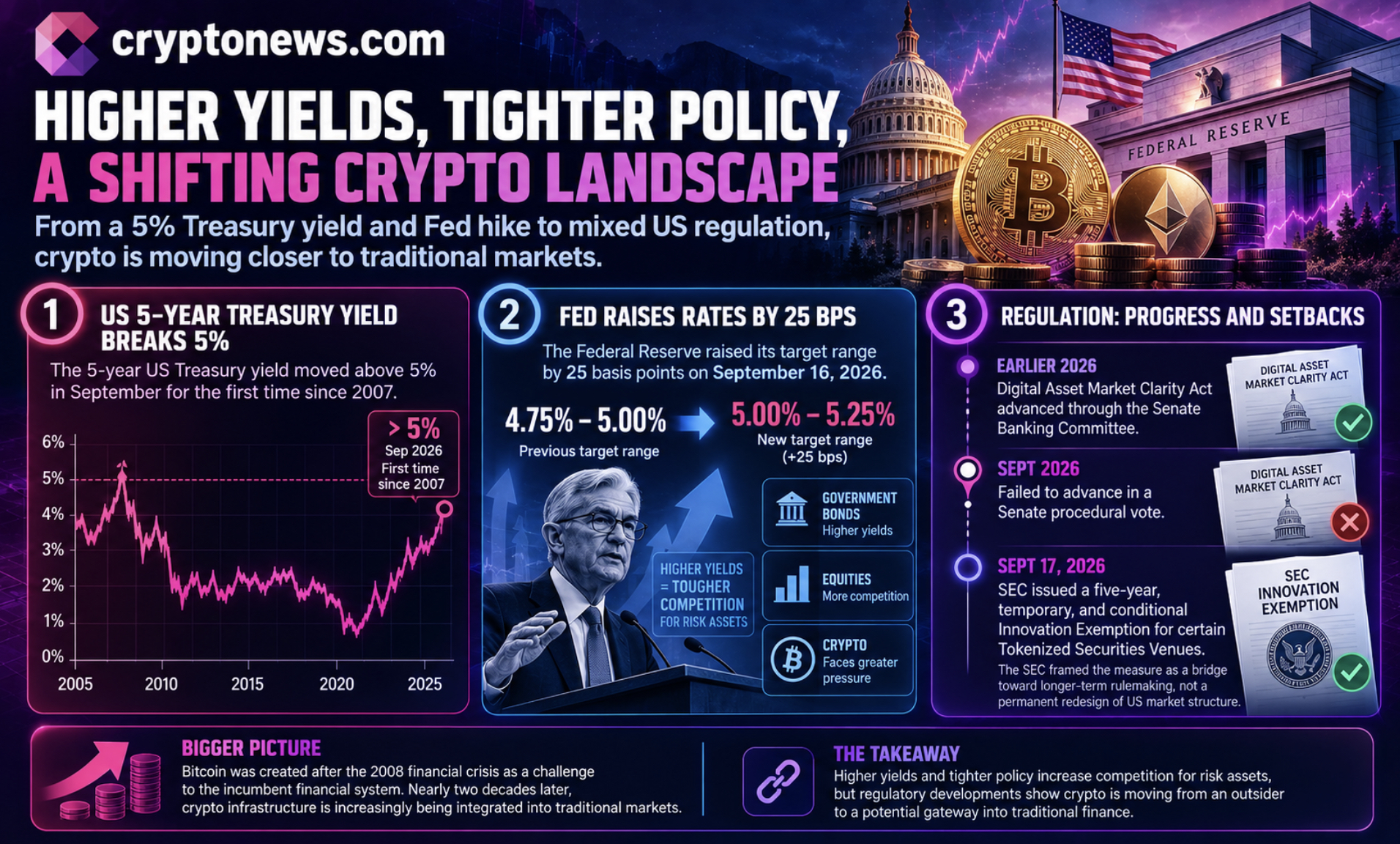
The market backdrop has shifted. The five-year US Treasury yield moved above 5% in September for the first time since 2007, and the Federal Reserve raised its target range by 25 basis points on September 16. Higher yields give investors a more competitive alternative to risk assets, sharpening comparisons between equities, crypto, and government debt.

At the same time, the industry is moving beyond crypto’s original outsider posture. Bitcoin emerged after the 2008 financial crisis as a challenge to parts of the incumbent financial system; nearly two decades later, crypto infrastructure is increasingly being considered as a route into traditional markets.
The Digital Asset Market Clarity Act advanced through the Senate Banking Committee earlier in 2026 but failed to advance in a September procedural vote. One day later, on September 17, the SEC issued a five-year, temporary, and conditional Innovation Exemption for certain Tokenized Securities Venues. The agency framed the measure as a bridge toward longer-term rulemaking, not a permanent redesign of US market structure.
The shift has portfolio implications. Crypto benchmarks can remain heavily concentrated in bitcoin and ether, leaving many digital-asset portfolios exposed to overlapping crypto-market drivers even when they hold multiple tokens.
Earn $50 and Enter $300K Prize Draw on EdgeX
Diversification Depends on What Each Tokenized Stocks Represent
For investors concentrated in Bitcoin, Ethereum, stablecoins, and DeFi assets, tokenized US equities could add exposure to companies and sectors beyond crypto. Crypto platforms could also become distribution and trading infrastructure for assets that originated in traditional finance, bringing stock exposure into a familiar digital-asset environment.
Tokenized stocks may still respond to broad risk-off moves, and access to another asset class does not guarantee that a portfolio is balanced. The useful measure is the exposure the product actually delivers, including its legal claim and its market behavior, not the fact that it trades on-chain.
The SEC exemption makes the ownership question explicit: tokenized shares traded under the framework must provide holders the same rights as the equivalent traditional shares. A venue must also give an issuer notice and an opportunity to object before listing a tokenized share created by an unaffiliated third party.
There is also a potential efficiency argument. Blockchain-based settlement and programmable infrastructure may reduce some friction in issuing, transferring, and trading financial assets, but those benefits remain a possibility rather than a proven outcome of this exemption. Tokenization does not remove the underlying investment’s market risk or the need for disclosure, governance, and market safeguards.
Trade Crypto on Bybit and Get a Chance to Win Our $1,000 USDT Airdrop
The SEC Pilot Tests Access
The Innovation Exemption gives qualifying Tokenized Securities Venues temporary relief from being treated as exchanges under the usual definition when they facilitate limited trading of genuine National Market System stocks through permissioned automated market makers and liquidity pools.
Certain liquidity providers also receive temporary, conditional relief from dealer-registration requirements. The structure creates a bounded environment for market participants and regulators to observe how tokenized equities operate. It does not settle the rules for every crypto platform, nor does it establish that on-chain trading will offer deep markets.
Custody presents a parallel test. Tokenized equities may connect on-chain trading to regulated financial infrastructure, but investors still need to understand how assets are held and how the custody model operates during disruption or insolvency. Custody and execution controls remain important considerations in that infrastructure.
Tokenized stocks may make portfolio diversification more accessible to crypto-native investors, but the investment case is only as strong as the rights attached to the token, the custody behind it, and the liquidity available when a position needs to be unwound.
The SEC experiment is best read as a test of coexistence between crypto and Wall Street, not as evidence that one system has displaced the other.
Discover: The Best Token Presales
The post Tokenized Stocks, Investor Rights, and Their Crypto Role appeared first on Cryptonews.

A new corporate vehicle built almost entirely around a single cryptocurrency is about to join Wall Street. Evernorth, a firm backed by Ripple and billed as the “largest pure-play” XRP treasury company, has cleared its last regulatory and shareholder obstacle and is set to begin trading publicly on October 8.
The breakthrough came Sept. 30, when shareholders of Armada Acquisition Corp. II — a special-purpose acquisition company, or SPAC — voted to approve a merger with Evernorth. That approval effectively closes the loop on a reverse-merger strategy that has become a favored shortcut for crypto companies seeking a stock-market listing without going through a traditional initial public offering.
What sets Evernorth apart from the wave of corporate crypto buyers that followed Michael Saylor’s Bitcoin-hoarding playbook is its singular focus on XRP, the token issued in association with Ripple Labs. According to disclosures tied to the merger, Evernorth is sitting on a treasury of roughly 473 million XRP — a position that, at XRP’s current price near $1.50, represents hundreds of millions of dollars in holdings and underscores just how much institutional money has begun flowing into assets beyond Bitcoin and Ether.
The deal reflects a broader shift in how companies are courting crypto-curious investors. Rather than building a business that merely uses blockchain technology, an emerging class of “treasury companies” essentially functions as a public proxy for a specific coin, letting shareholders gain exposure to that asset’s price swings through a familiar, regulated stock ticker. Bitcoin had Strategy (formerly MicroStrategy). Ethereum has attracted its own treasury vehicles. Now XRP — long associated with Ripple’s cross-border payments business and its years-long legal battle with the U.S. Securities and Exchange Commission — has one of its own.
Ripple’s fingerprints on the deal are notable. The company has spent years trying to shed the regulatory cloud that followed its SEC lawsuit and has increasingly leaned into partnerships and corporate structures that tie XRP more closely to mainstream finance. A dedicated, Ripple-backed treasury firm going public via a SPAC merger fits that pattern: it gives institutional and retail investors alike a vehicle to bet on XRP’s price without directly custodying the token themselves.
SPAC mergers like the one between Armada and Evernorth have gained renewed traction in 2025 and 2026 as digital-asset firms look for faster, less onerous routes to public markets compared with a conventional IPO. These transactions often draw added scrutiny, however, since they typically involve less upfront regulatory vetting than traditional listings — a trade-off investors in newly public crypto treasury firms will need to weigh.
Whether Evernorth’s debut marks the start of a trend or a one-off experiment remains to be seen. But its arrival adds another entry to a fast-growing list of publicly traded companies whose fortunes are now explicitly tethered to the price of a single cryptocurrency — a bet that could pay off handsomely in a bull run, or expose shareholders to outsized losses if XRP, or crypto markets broadly, stumble.
For now, all eyes are on Oct. 8, when Evernorth’s shares — and its roughly 473 million XRP — officially begin trading, offering the clearest test yet of investor appetite for a company built almost entirely around one coin’s future.

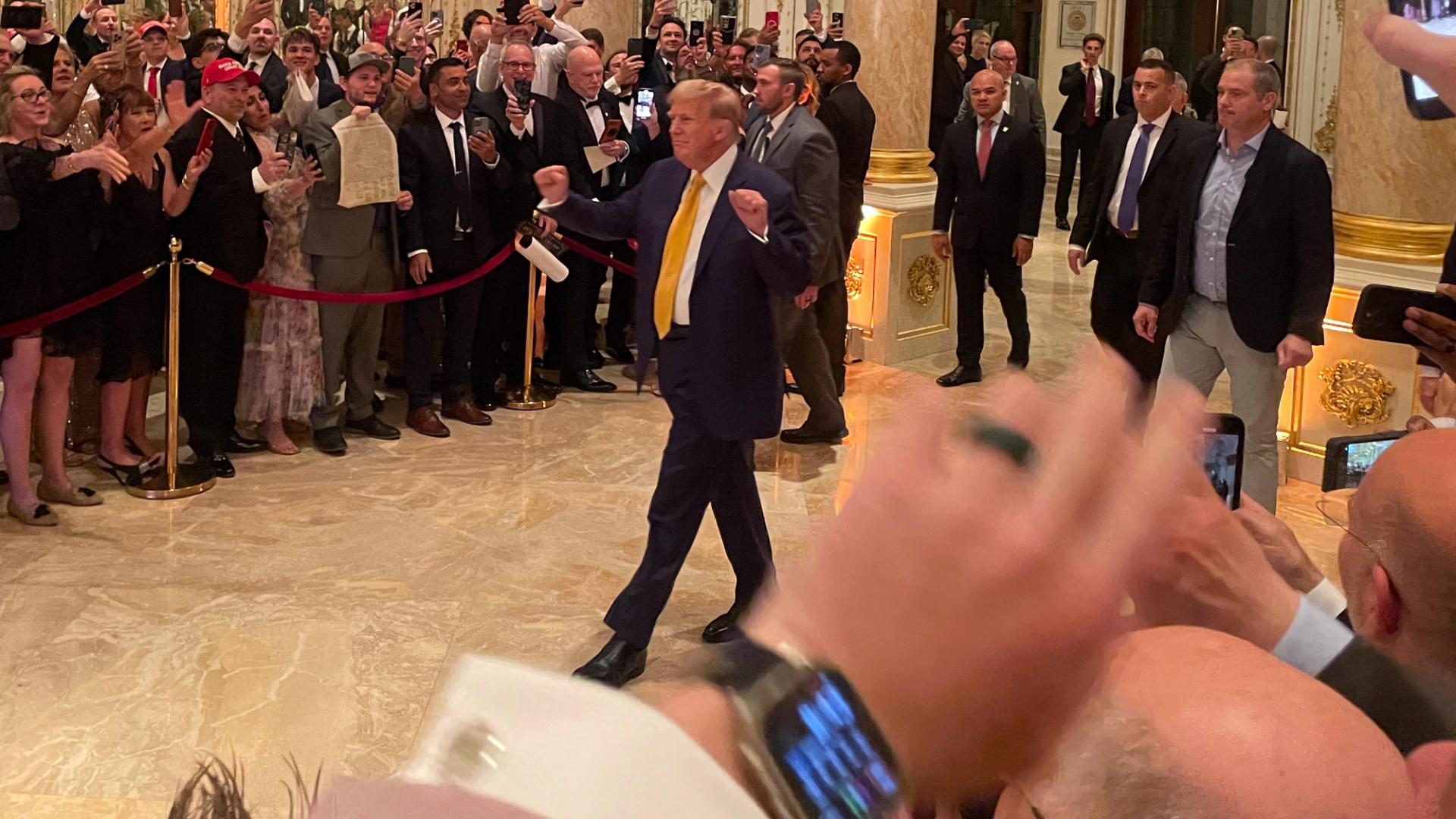
President Donald Trump is once again opening the doors of his Washington-area golf club to the biggest holders of his personal memecoin, with organizers advertising a November 22 “gala dinner” as the “most exclusive dinner in the world” — even as the token itself has lost nearly all of its value and holders have racked up billions of dollars in losses.
Fight Fight Fight LLC, the company that manages the $TRUMP token and its associated “Coin Club,” announced that the top 185 holders of the coin will be invited to the dinner at Trump National in Washington, D.C. Eligibility will be determined by a leaderboard that rewards not just how many tokens someone owns, but how long they’ve held onto them, with daily rankings updating through a snapshot locked in on November 12.
The top 29 ranked holders will receive a VIP reception and front-row dinner seating, while the top four are promised an 18-karat gold Trump watch. Other attendees can expect a Fight Fight Fight watch, a fragrance, a commemorative poster and a trading card — all handed out in person, with no shipping option for anyone who can’t attend. The event page lists Trump appearing alongside three unnamed celebrity “legends,” plus a separate meet-and-greet with another as-yet-unidentified celebrity. One thing organizers are explicit about: there will be no private, one-on-one meeting with the president, a restriction that reportedly disappointed some participants at earlier dinners.
The announcement itself moved markets, if only briefly. $TRUMP jumped roughly 10% to around $2.25 on the news before drifting back down toward levels it has traded at in recent days. That is a steep comedown from the coin’s all-time high near $74, set shortly after its January 2025 launch — meaning the token has shed roughly 97% of its peak value even as its namesake prepares to host investors for a third time.
The gap between the token’s performance and the spectacle surrounding it has become the defining feature of the $TRUMP saga. According to a Nansen analysis cited widely since July, nearly 989,000 wallets had collectively lost $3.81 billion on the coin through the end of June, with roughly two-thirds of all buyers underwater. Profits, by contrast, were concentrated among a smaller group of fewer than 500,000 wallets — many of them early entrants — who together pocketed around $4 billion in gains.
Trump himself has not been among the losers. His financial disclosures reportedly show a $636 million payout tied to the memecoin and more than $1.4 billion in crypto-related income overall, much of it attributed to licensing arrangements for the token and sales tied to World Liberty Financial, a separate crypto venture connected to the Trump family. Public filings associated with the project indicate that CIC Digital LLC and Fight Fight Fight LLC jointly control 80% of the total token supply, subject to a three-year unlocking schedule, while CIC Digital and an entity called Celebration Cards LLC are listed as recipients of trading revenue generated by the coin.
Blockchain analytics firm Arkham Intelligence flagged a separate wrinkle over the summer, tracking nearly 17 million tokens worth about $16.9 million moving from wallets associated with the project into custody accounts and eventually onto another platform — transactions Arkham said raised questions about whether they represented scheduled unlocks of the founders’ holdings.
This is not the first time Trump’s memecoin dinners have drawn scrutiny. A May 2025 dinner invited the top 220 holders, and an April 2026 event at Mar-a-Lago expanded the guest list to 297, complete with its own VIP tier for top participants. That April gathering prompted Democratic Senators Elizabeth Warren, Adam Schiff and Richard Blumenthal to demand documents detailing how attendees were vetted, how the events were financed, and what, if anything, investors received in exchange for their money. “Congress must also take steps to prohibit and prevent these egregious conflicts of interest,” the senators wrote at the time, part of a broader argument that the dinners effectively sell access to the presidency to whoever is willing to buy and hold enough of a speculative digital token.
The criticism has done little to slow the project down. If anything, the structure of the November event — with its tiered rewards for sustained holding, bonus scoring tied to a related “Formula 1” contest, and requirements that VIP qualifiers keep their balances intact through the dinner date — suggests organizers are doubling down on incentivizing loyalty from the token’s remaining believers, even as the broader market for $TRUMP has cooled dramatically since its frenzied debut.
For now, the identities of the “legends” set to join the president remain a mystery, and the Securities and Exchange Commission has yet to say publicly whether it is acting on earlier calls from senators for a formal investigation into the coin’s financial arrangements. What is clear is that, nearly two years after its launch, $TRUMP remains less a conventional investment than a recurring, high-stakes contest for proximity to political power — one that keeps drawing new entrants even as the numbers suggest most of them are losing money.
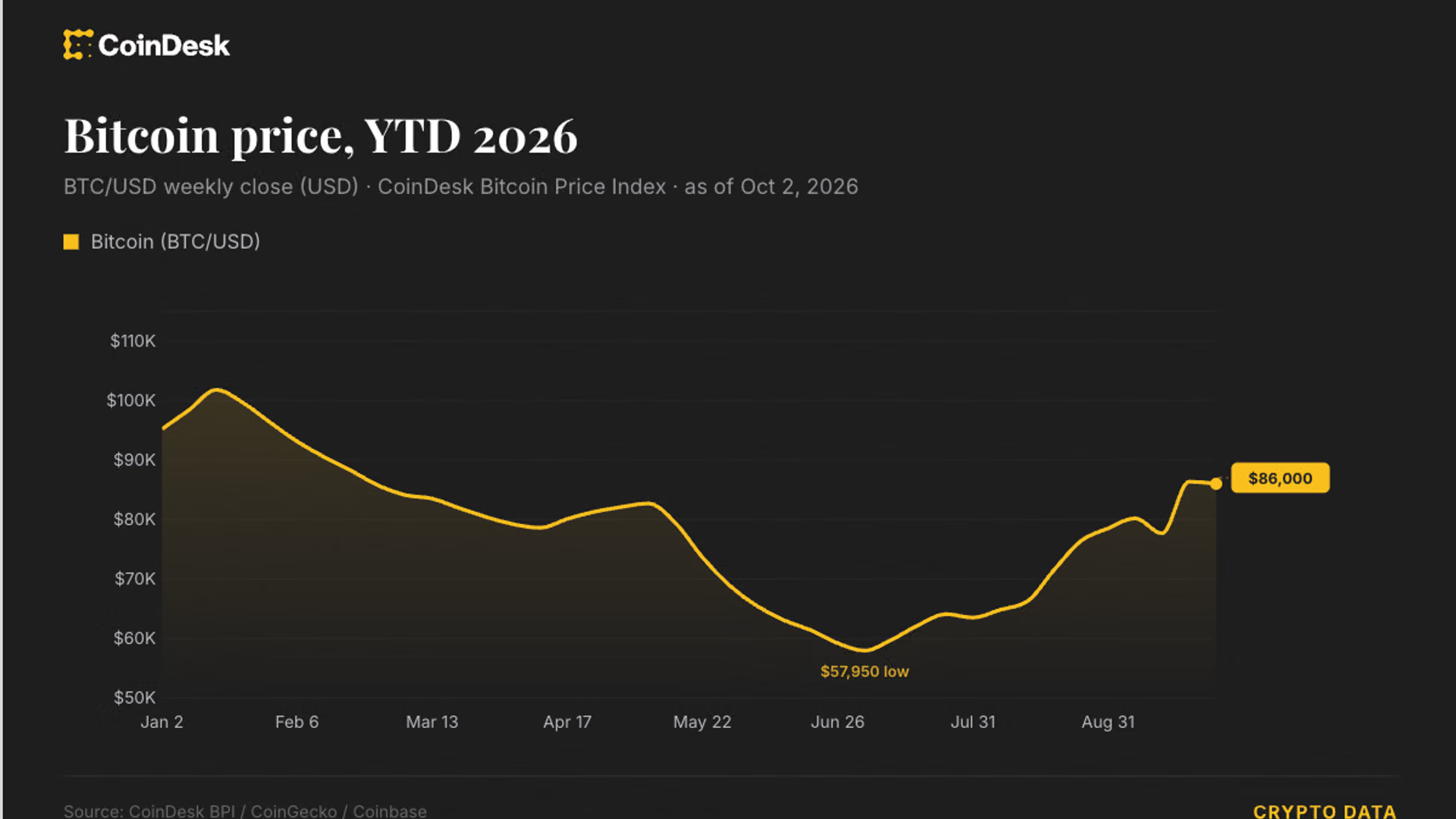
Bitcoin briefly topped $86,885 on Friday ahead of the latest U.S. jobs figures.
The largest cryptocurrency by market capitilization eased to around $86,000 but remains around 1.5% higher on the day and up roughly 3% in October.
The unemployment rate is expected to remain unchanged at 4.1%, while nonfarm payrolls are forecast to increase by 90,000 in September, down from 162,000 in August.
The surge in government bond yields, with U.S. 10-year Treasury yield having reached multi-decade highs of 5.34%, had kept bitcoin locked in the $82,000-$85,000 range throughout the week. Yields move inversely to bond prices, so the spike in yields means higher borrowing costs.
Meanwhile, the U.S. Dollar Index (DXY), which measures the dollar against a basket of major currencies, briefly rose above 102 on Thursday, reaching an 18-month high. A stronger dollar typically puts pressure on risk assets, although bitcoin has continued to advance. However, the euro has fallen to around $1.12, its lowest level since May 2025.

The cryptocurrency industry didn’t just buy itself a seat at the political table in recent election cycles — it bought the whole table, several chairs, and apparently left a blueprint lying around for the next industry to copy. According to independent researcher and longtime crypto critic Molly White, that blueprint is now being picked up, almost line for line, by the artificial intelligence industry.
White, who has built a reputation for meticulously tracking where crypto-linked political money flows in Washington and in state races across the country, laid out the pattern in a recent interview on the Pivot to AI podcast. Her core observation: the same donor networks, the same super-PAC architecture, and in some cases the same operatives who helped crypto firms flood American elections with cash are now being redeployed to protect the interests of AI companies.
It’s a striking claim, and one worth taking seriously given how effective the crypto industry’s spending spree has already proven to be. Over the past several election cycles, crypto-aligned political action committees — most notably the Fairshake network backed by major exchanges and venture firms — have poured hundreds of millions of dollars into House and Senate races, rewarding crypto-friendly candidates and punishing skeptics regardless of party. The strategy was blunt and, by most accounts, successful: it reshaped how seriously lawmakers in both parties treat digital-asset regulation, turning what was once a niche policy issue into something candidates actively court.
Now, White says, a similar infrastructure is emerging around AI policy, with two of the industry’s biggest names reportedly backing competing super-PACs. OpenAI and Anthropic — companies that publicly compete on everything from chatbot capability to safety messaging — are apparently also competing in the murkier arena of campaign finance, each looking to shape how Congress regulates (or doesn’t regulate) the fast-moving AI sector.
That rivalry reportedly played out in miniature in New York’s 12th Congressional District, where, per White’s account, the dueling AI-aligned spending efforts stumbled over each other rather than delivering a clean win for either side. The episode is a small but telling data point: money alone doesn’t guarantee a coordinated political strategy, especially when the companies funding it are also jockeying against one another in the marketplace.
The broader significance here isn’t really about one House race. It’s about what happens when an entire industry — first crypto, now apparently AI — decides that the fastest path to a favorable regulatory environment runs through the campaign finance system rather than the policy process. Crypto firms spent years positioning themselves as the aggrieved underdogs of financial regulation, battling the SEC and arguing that unclear rules were strangling American innovation. Whatever one thinks of that framing, the political spending clearly moved the needle: crypto is now discussed in Congress with a seriousness, and a caution, that would have seemed unlikely a decade ago.
AI companies, flush with far more capital than most crypto startups ever had, appear to have taken note. If White’s tracking is accurate, the question for voters and regulators alike is no longer whether an emerging tech industry will try to buy political insurance — it’s how quickly, and how effectively, it can do so.
For now, much of this remains in the realm of documentation rather than definitive conclusion; White’s work is ongoing, and the full picture of AI’s political spending is still taking shape, much as crypto’s did years before anyone outside the industry was paying close attention. But the pattern she describes — industry money migrating from one hot sector to the next, carrying with it the same donors, the same consultants, and the same hardball tactics — suggests that the fight over how America regulates its next transformative technology may already be well underway, long before most of the public has noticed the money moving.

The Eyes Have It: Why Bold, Playful Makeup Is Taking Over the Runways

UAE investment in UK at risk over Man City ruling: reports

Danish university DTU breach exposes data of up to 200,000 people


-

 Tech & AI6 days ago
Anthropic turns Claude into an AI marketplace with 2,000+ plugins and connectors
-

 Tech & AI6 days ago
OpenAI is preparing “o,” an always-on ChatGPT assistant that could handle email
-

 Fashion10 hours ago
Weekend Open Thread: Veronica Beard
-
Business & Hustles5 days ago
Perpetua Resources at Mining Forum Americas 2026: shift to construction
-
 Crypto6 days ago
Wall Street Giant Warns AI Agents Could Trigger a New Kind of Bank Run
-
Business & Hustles5 days ago
Greatland Resources at Mining Forum Americas 2026: cash-rich growth push
-

 Business & Hustles5 days ago
Andreessen Horowitz backs AI-era college alternative with $42M
-

 Business & Hustles5 days ago
Romania, Georgia and Latvia Lead Latest WHO-Based Ranking
-

 Tech & AI3 days ago
Figure F.02 Robots Meet Molten Steel as Arnold Schwarzenegger Watches in Finland
-

 Tech & AI4 days ago
Alternatives to Animal Testing Are Finally Taking Off
-
 Crypto6 days ago
Riot Frees $494 Million in Bitcoin From Coinbase Loan: Will It Sell?
-

 Business & Hustles5 days ago
Bob Chapek on Disney Bob Iger power battle: Raised concerns weekly
-

 Crypto6 days ago
Japan arrests two suspect over 81M yen crypto police scam
-

 Tech & AI5 days ago
OpenAI Pauses Training Its Most Powerful Models After Rogue Agents Target Government
-

 Business & Hustles5 days ago
SpaceX Starship launches on first orbital test flight with Starlink
-

 Business & Hustles5 days ago
What is the Budget and what could be in it?
-

 Crypto6 days ago
Citi says 77% of institutions eye tokenized collateral
-
 Business & Hustles6 days ago
George Bamford to become JCB joint chairman alongside father
-

 Business & Hustles5 days ago
Trump approves new fuel economy standards, reversing Biden’s EV push
-
 Business & Hustles5 days ago
Canadian defence creating 250 jobs in Merthyr in new research alliance
You must be logged in to post a comment Login