
Gaming
Reigns Studio Nerial Shuts Down as Founders Step Back “To Our Roots”


Nerial, the small but celebrated studio behind Reigns, Card Shark and The Crush House, is closing its doors after thirteen years, the company’s founders announced this week. Staff have been laid off as part of what the studio is calling a move into “hibernation mode,” a euphemism that does little to soften the blow for a team whose compact, idiosyncratic games earned outsized acclaim in an industry increasingly dominated by blockbusters.
The news came in a joint statement from CEO Tamara Alliot and creative director François Alliot, who said the decision was reached in consultation with Devolver Digital, Nerial’s longtime publishing partner. “We have decided together with our partners at Devolver to end development at the studio,” the pair wrote, framing the closure less as a failure and more as a deliberate pause after over a decade running the company.
“While this marks the end of Nerial as we know it, it’s not the end of game dev for us,” the Alliots continued. “We’re going back to our roots. François’ unrelenting drive to make games is as strong as ever, but first we need to take a break and reflect on everything that’s happened, before coming back with a new perspective.” On LinkedIn, François Alliot described his next chapter more bluntly: a return to “being pure indie.”

Tamara Alliot used her own LinkedIn post to publicly vouch for the colleagues now out of work, naming seven staff members affected by the closure and urging other studios to snap them up: Oscar Harrington-Shaw (narrative and writing), Helen O’Dell (art direction), Neil Goodman (lead programmer), Gordon Speirs (programmer), Ben Obikoya (senior programmer), Neil Bull (QA lead), and AJ Kerr (senior producer). “Nerial has been a huge part of François Alliot’s and my life for the past 13 years,” she wrote. “It’s with great sadness that we are stopping now, as we have the best team in the world, but we are also keen to take a bit of time off.”
Founded in 2013, Nerial built a reputation disproportionate to its size. Reigns turned the swipe-right mechanics of dating apps into a darkly funny monarchy simulator, spawning several sequels and spin-offs. Card Shark, released in 2022, cast players as an 18th-century cardsharp’s apprentice, folding sleight-of-hand mechanics into a tightly plotted period piece. More recently, The Crush House offered a queasy satire of reality television and surveillance culture, filtered through the lens of a fictional streaming show. Across its catalogue, the studio distinguished itself with games that were short, sharp and conceptually bold rather than sprawling or formulaic.
Neither the Alliots nor Devolver have offered much detail on what prompted the closure beyond the desire for change after thirteen years at the helm. But the timing is hard to separate from Devolver’s own turbulence. In August, the publisher told shareholders it intended to delist from the London Stock Exchange, citing what it called a “period of significant disruption and volatility” across the games industry, along with “several impairments of underperforming titles amid an increasingly competitive and unpredictable market environment.”
That broader context has become grimly familiar to anyone following games industry news over the past few years, as layoffs and studio closures have swept through companies big and small, from AAA publishers to scrappy independent outfits like Nerial. Even teams with critical goodwill and a track record of distinctive, well-reviewed releases have found themselves unable to weather shifting publisher priorities, cooling investment and an increasingly risk-averse market.
For now, Nerial’s story ends not with a definitive shutdown notice but with a studio “hibernating” and a founding duo promising to return, eventually, to making games on their own terms. Whether that resurfacing takes the shape of a new studio, a solo project, or something else entirely remains unclear. What is certain is that a team responsible for some of the smartest, most playful games of the past decade is now out of work, and an industry that can’t find a way to keep that kind of talent employed has, once again, come up short.


WordUp News was asked to produce a synthesized, analytical article on the topic of “video games,” drawing from a set of provided source materials. After a thorough review, we must be transparent with our readers: the source material supplied for this assignment contains no information about video games whatsoever.
Instead, the only source provided is a film-culture retrospective from Polygon examining a piece of dialogue from Martin Scorsese’s 2006 crime drama “The Departed,” specifically Jack Nicholson’s opening monologue as the character Frank Costello. The piece is a thoughtful work of film criticism, exploring how the line “I don’t wanna be a product of my environment. I want my environment to be a product of me” encapsulates the character’s worldview and anchors the movie’s themes of corruption, control, and identity in 1970s and 2000s Boston.
That article is well-reported on its own terms. It traces the history of memorable gangster-movie dialogue, from Henry Hill’s declaration in “Goodfellas” to the iconic lines of “The Godfather” and “Scarface,” before making its case for why Costello’s introduction stands apart two decades after the film’s release. It even situates the monologue within the movie’s visual choices, including Scorsese’s decision to open on archival footage of Boston’s desegregation riots set to the Rolling Stones’ “Gimme Shelter.”

What it does not contain, in any form, is commentary on video games, the gaming industry, game design, esports, hardware, or any topic adjacent to interactive entertainment. There are no quotes from game developers, no references to game releases, sales figures, platform news, or player communities. The word “game” appears only in the context of gangster-movie dialogue and criminal strategy, not in connection with video games as a medium.
Rather than invent details, statistics, or quotes to artificially stretch unrelated film criticism into a video game story, WordUp News is choosing honesty over fabrication. Manufacturing claims about game releases, industry trends, or player reactions when no such source material exists would be a disservice to our readers and a violation of basic journalistic standards.
If you are looking for coverage of video games, we encourage you to check back with WordUp News as new source material becomes available, or to let us know what specific angle you’re interested in, whether that’s a new release, an industry trend, esports, or retro gaming culture. We are glad to produce a fully reported piece once supplied with source material that actually pertains to the subject.
In the meantime, for readers curious about the film criticism referenced above, it offers a genuinely engaging look at how a single line of dialogue can define a character and anchor a film’s themes, and it is well worth a read on its own merits. But labeling it as video game coverage would be inaccurate, and that is not a line WordUp News is willing to cross.

Dutch police have arrested a 24-year-old Amsterdam man accused of leading ShinyHunters, the notorious hacking collective the FBI blames for a wave of corporate breaches — including a leak this year that pulled back the curtain on just how much money Grand Theft Auto Online actually makes.
The Dutch National Police confirmed the arrest in a statement on September 28, though they did not publicly identify the suspect. Reuters later named him as Pepijn van der Stap, who until recently worked as the offensive cybersecurity lead at Neo Security, an Amsterdam-based firm. According to the FBI, Van der Stap has past hacking-related convictions and had presented himself as reformed when he joined the company earlier this year. Investigators, however, allege he had secretly been steering ShinyHunters since 2025 — a claim the group itself denies, along with accusing Dutch authorities of incompetence.
ShinyHunters has become one of the most feared names in cybercrime circles, linked to intrusions at more than 100 companies and institutions worldwide, including Ticketmaster and, remarkably, the FBI itself. But for the video game industry, the group’s most consequential hit came in April, when it breached Rockstar Games and attempted to extort the studio by threatening to publish stolen internal data unless a ransom was paid.
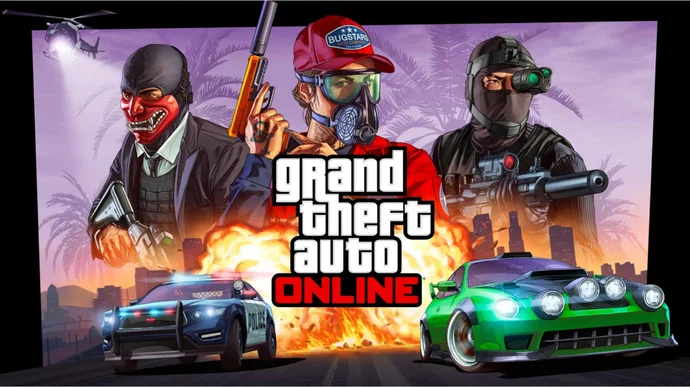
Rockstar refused to negotiate. The group followed through on its threat and released the material anyway. Buried in the leak was a striking revelation: GTA Online, the perennially profitable multiplayer companion to Grand Theft Auto 5, generates more than $1 million in revenue every single day. The figure was so eye-catching — and so evidently positive for Rockstar’s business — that shares in parent company Take-Two actually ticked upward following the disclosure, an unusual silver lining for a company that had just been the victim of a criminal extortion attempt.
The April breach was hardly an isolated incident for Rockstar’s security team this year. In August, a separate hacking group calling itself CyberLeek leaked gameplay footage from the long-awaited GTA 6, prompting Take-Two to issue subpoenas to Microsoft, Discord and X (formerly Twitter) in a bid to unmask those responsible for that leak.
Following news of Van der Stap’s arrest, FBI Cyber Division assistant director Brett Leatherman used the moment to send a pointed message to any remaining ShinyHunters members still at large. “You’ve heard about the arrest of your colleague. We’re confident you’ve seen or heard things in recent days that the public has not,” Leatherman said. “Other groups believed anonymity, or their friends, would protect them, and they were wrong. Arrests have a way of changing who is willing to talk, and seized infrastructure has a way of showing us who’s left. The longer you stay in this, the more we learn about you. You know how to find us, and we know how to find you. I suggest you reach out first while the choice is still yours.”
The arrest adds another layer to what has already been a turbulent year for Rockstar off the back of its security woes. The studio remains embroiled in an employment tribunal brought by the Independent Workers’ Union of Great Britain over its dismissal of 34 staff last October — a move the claimants allege was retaliation for union organizing. Between the labor dispute, the GTA 6 footage leak and now the fallout from the ShinyHunters breach, Rockstar finds itself fending off scrutiny on multiple fronts even as anticipation for its next flagship release continues to build.
Whether Van der Stap’s arrest meaningfully disrupts ShinyHunters’ operations remains to be seen. The group has previously shown resilience even after individual members were identified or detained, and its swift denial of the FBI’s characterization suggests it intends to keep operating. But for a hacking collective built partly on the perception that its members could act with impunity, the very public unmasking of an alleged leader — one who had, by the FBI’s account, been quietly working a cybersecurity day job — may prove to be the kind of crack that widens under pressure.

Call of Duty is taking a leaf out of a rival franchise’s book. Activision has confirmed that Modern Warfare 4 will launch with a new multiplayer mode called Collateral, an economy-driven twist on the series’ Search and Destroy format that borrows one of the most defining mechanics from Counter-Strike: buying your way into battle.
The announcement came buried in a blog post that was mostly devoted to Modern Warfare 4’s PC-specific features, but it’s the mode itself that’s generating the most conversation among competitive shooter fans. Rather than dropping players into rounds with preset loadouts, Collateral forces everyone to start with nothing more than a pistol and earn their gear through performance on the battlefield.
The basic structure will feel familiar to anyone who has played Search and Destroy: two teams take turns attacking and defending a pair of bomb sites, with no respawns once a round begins. But layered on top of that is a full in-game economy. Players earn cash for eliminations and objective play, then spend that money between rounds on armor, perks, equipment and weapons ranging from pistols and shotguns to SMGs, LMGs, rifles and sniper rifles. Teams can even pool their earnings to buy a shared UAV, mirroring the kind of collective financial strategy that has defined Counter-Strike’s competitive scene for decades.
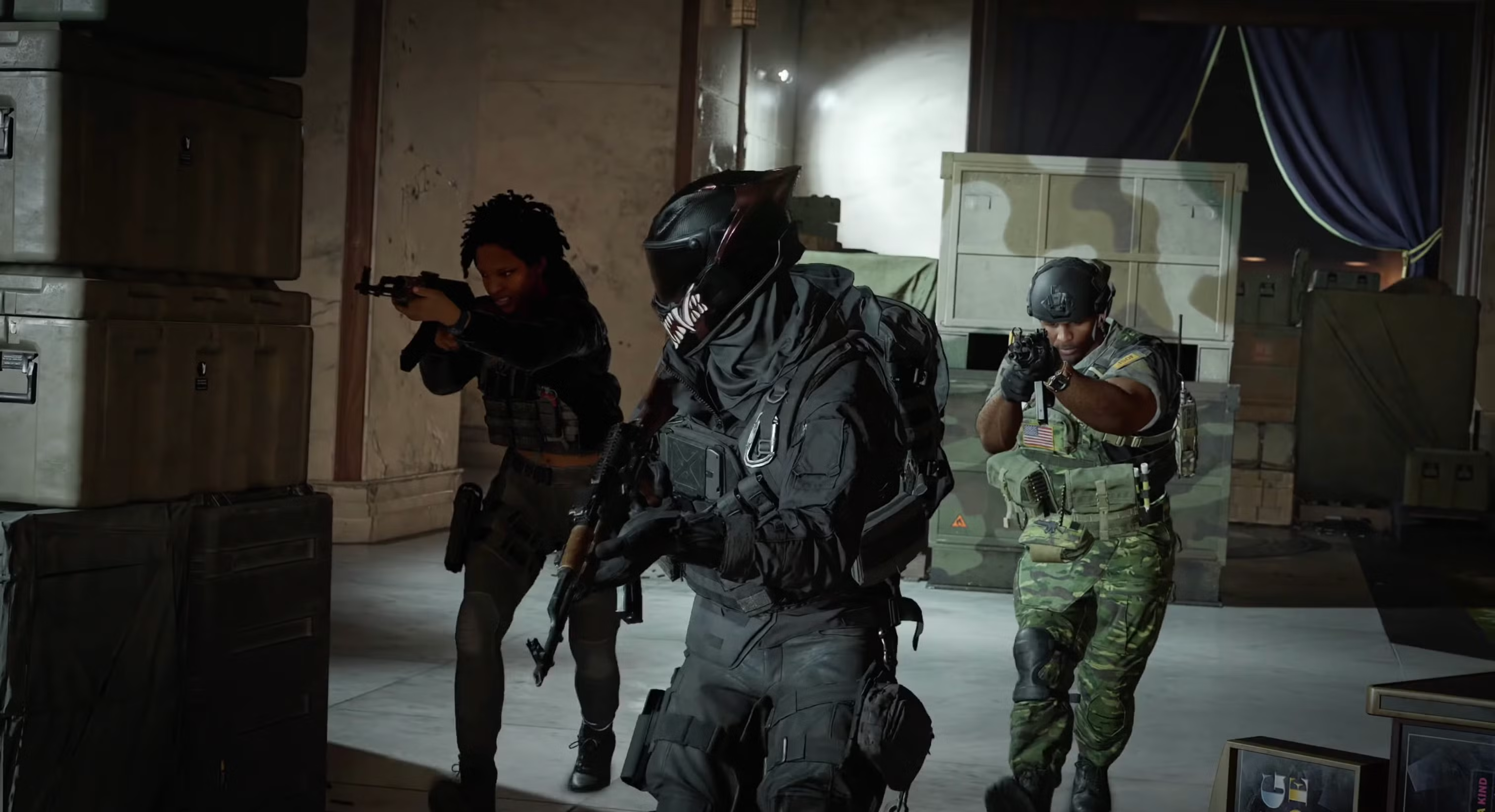
Just as notable as what Collateral adds is what it strips away. There are no Killstreaks, no custom loadouts, and no automatic health regeneration — all systems that have become staples of modern Call of Duty multiplayer. Dying means losing whatever gear you purchased for that round, though the cash you’ve accumulated carries forward, creating the same kind of tension and risk-reward calculus that makes economy-based shooters so compelling to watch and play.
For a franchise that has leaned heavily on fast respawns, streak rewards and flashy cosmetics in recent years, Collateral represents a notable departure. It suggests Activision and developer Infinity Ward are looking to capture some of the tactical, high-stakes appeal that has kept Counter-Strike relevant in the esports world for more than two decades, while still wrapping it in Call of Duty’s gunplay and presentation.
Activision has said it will share more details about Collateral closer to launch, leaving questions unanswered about starting cash amounts, loss bonuses, and how the mode might factor into competitive play or esports circuits down the line. For now, fans will have to wait to see how the mode plays out in practice.
Collateral arrives alongside a broader suite of PC-focused upgrades for Modern Warfare 4, including more than 800 customization options, a built-in performance benchmarking tool, and support for upscaling technologies like DLSS 4.5 and AMD’s FSR Redstone. Those additions point to a release clearly aiming to court the PC gaming crowd alongside console players.
Modern Warfare 4 is set to launch on October 23, and Collateral’s arrival could mark one of the more significant structural experiments the Call of Duty franchise has attempted in years — a bet that giving players an economy to manage might be exactly the kind of strategic depth the series needs to stand out in an increasingly crowded shooter market.
Gaming
Resident Evil’s Dual Evolution: A Film That Plays Like a Game, and a Game Plan 30 Years in the Making

Thirty years after a zombified dog crashed through a mansion window and redefined horror gaming forever, Resident Evil is proving it still has surprises left. This week brought two very different but oddly complementary stories about Capcom’s undead juggernaut: a bold new film adaptation that throws out the franchise’s iconic cast entirely, and confirmation from the series’ longtime producer that Capcom has been quietly engineering a decade-long plan to eventually merge its remake series with the modern games.
Director Zach Cregger’s new Resident Evil film has drawn a predictably mixed reaction from diehard fans, many of whom have taken to social media to complain that it barely qualifies as a “real” Resident Evil movie. There’s no Leon Kennedy, no Claire Redfield, no Ada Wong slinking through the shadows. The recognizable rogues’ gallery of the games is nowhere to be found. Instead, Cregger centers his film on Bryan Hodukavich, a hapless courier dropped into the middle of a viral outbreak in Raccoon City with no weapons, no allies, and no clue what’s happening around him.
That absence, though, seems to be precisely the point. Rather than trying to translate plot points and fan-favorite characters onto the screen, Cregger has instead attempted something more ambitious: recreating the actual sensation of playing a Resident Evil game. Bryan stumbles through a procession of locations ripped straight from the series’ visual DNA — an abandoned farmhouse, a car-choked road tunnel, a hospital, and, naturally, an obligatory sewer level. He scavenges increasingly powerful weapons while perpetually running low on ammunition. Typewriters, the series’ beloved save-point totems, make more than one appearance. His understanding of the unfolding horror comes not from expository dialogue but through the fragmented, unsettling method players have relied on for decades: voicemails, scattered emails, and terse exchanges with strangers who may already be doomed.
One moment in particular — a newly infected girl in the tunnel telling Bryan “my mom bit me, I don’t know where she went” — distills what makes the approach work. It’s a single line that delivers plot information and a lurking sense of dread in equal measure, exactly the kind of environmental storytelling that has defined the games since the original 1996 release. Aware of the backlash brewing online, Cregger has since released a video laying out his intentions, framing the film less as a faithful retelling and more as an attempt to replicate the psychological experience of being thrust into an ever-escalating nightmare with no script to follow.
It’s a gamble that places the film alongside other recent works — like the internet-born horror phenomena Backrooms and Exit 8 — that treat cinema as a vehicle for exploring game mechanics themselves, rather than simply lifting characters and set pieces. Whether or not it satisfies fans craving a live-action Leon S. Kennedy, it represents one of the more thoughtful attempts yet to capture why these games are frightening in the first place, rather than just what happens in them.
Meanwhile, on the games side of the franchise, Capcom is grappling with a different kind of continuity problem — one born from its own success. The publisher’s remake strategy, which began with Resident Evil 2 and has since delivered acclaimed overhauls of Resident Evil 3 and Resident Evil 4, has been so popular that it’s now at risk of running out of road. With a new version of Code Veronica due next year and a Resident Evil 0 remake reportedly slated for 2028, Capcom is steadily working its way through the series’ back catalog. But eventually, that remake timeline will collide with the modern numbered entries, and executive producer Jun Takeuchi has now confirmed the company has been planning for that moment for years.
Writing in a newly published 30th-anniversary retrospective, Takeuchi explained that Capcom has treated Resident Evil 7 as a “turning point” for the series, marking the point where the remake initiative truly took shape. More strikingly, he revealed that narrative threads reintroduced in recent entries — the return of Umbrella, callbacks to the shadowy Spencer family, and Requiem’s revival of Raccoon City itself — were seeded deliberately, as groundwork for an eventual “crossover” between the classic remakes and the ongoing modern storyline. What began, in Takeuchi’s words, as fan service has since become a more deliberate long-game strategy, after the studio noticed players dissecting these callbacks far more enthusiastically than anticipated.
That leaves intriguing questions hanging over the franchise’s next decade. Resident Evil 5 and 6 remain the last mainline entries without confirmed remake plans, and both carry baggage — 5 for its criticized African setting, 6 for being widely regarded as the series’ creative low point. Whether Capcom revisits either, or instead leans into some hybrid structure that folds old and new continuities together, is still an open question. But Takeuchi’s comments suggest the publisher is thinking less about nostalgia for its own sake and more about how thirty years of lore can be reorganized for an audience that may not have played — or even been born for — the earlier games.
Taken together, the film and the remake roadmap point to a franchise unusually comfortable with reinvention. Cregger’s Resident Evil dares to strip away the icons that made the series famous in order to chase something more elemental: dread, scarcity, and the terror of not knowing what’s around the next corner. Capcom, for its part, is playing an even longer game, quietly building bridges between its past and present so that when the remakes finally catch up to the current era, the collision feels less like an ending and more like a payoff three decades in the making.
- How Zach Cregger’s Resident Evil stands out from all other game adaptations (The Guardian)
- Resident Evil remakes are building to a "crossover" with the new games, producer says (GamesRadar)
- 'We Have Been Gradually Preparing': Capcom Already Has a Plan for When Its Resident Evil Remakes Catch Up With Newer Games (IGN)
Gaming
Strip Clubs, Sun-Soaked Beaches and Ride-Alongs With Ex-Cops: Inside Rockstar’s Wild Research Trip for GTA 6

Making a Grand Theft Auto game has never been a nine-to-five desk job, and the development of Grand Theft Auto 6 appears to be no exception. According to new details emerging about the making of Rockstar Games’ most anticipated title in years, the studio’s developers spent years immersing themselves in the real-life culture, geography and rhythms of Florida — a process that reportedly included trips to strip clubs, long stretches of time on the beach, and ride-alongs with former police officers.
The revelations offer a glimpse into just how far Rockstar has historically gone to make its open worlds feel authentic, and they suggest the studio’s approach to its fictionalized version of the Sunshine State, known in-game as Leonida, has been no less exhaustive than the research that shaped previous entries in the series.
Grand Theft Auto has always drawn heavily on real American locations, filtered through satire and exaggeration. Vice City, the series’ original Miami-inspired playground, was a neon-soaked parody of 1980s excess. GTA 6 returns to that same sun-drenched setting decades later, this time built on the technical backbone of the Rockstar Advanced Game Engine that powered Grand Theft Auto 5 and Red Dead Redemption 2. To get the tone right, insiders say developers didn’t just study photographs or news footage — they went and lived pieces of the culture themselves.
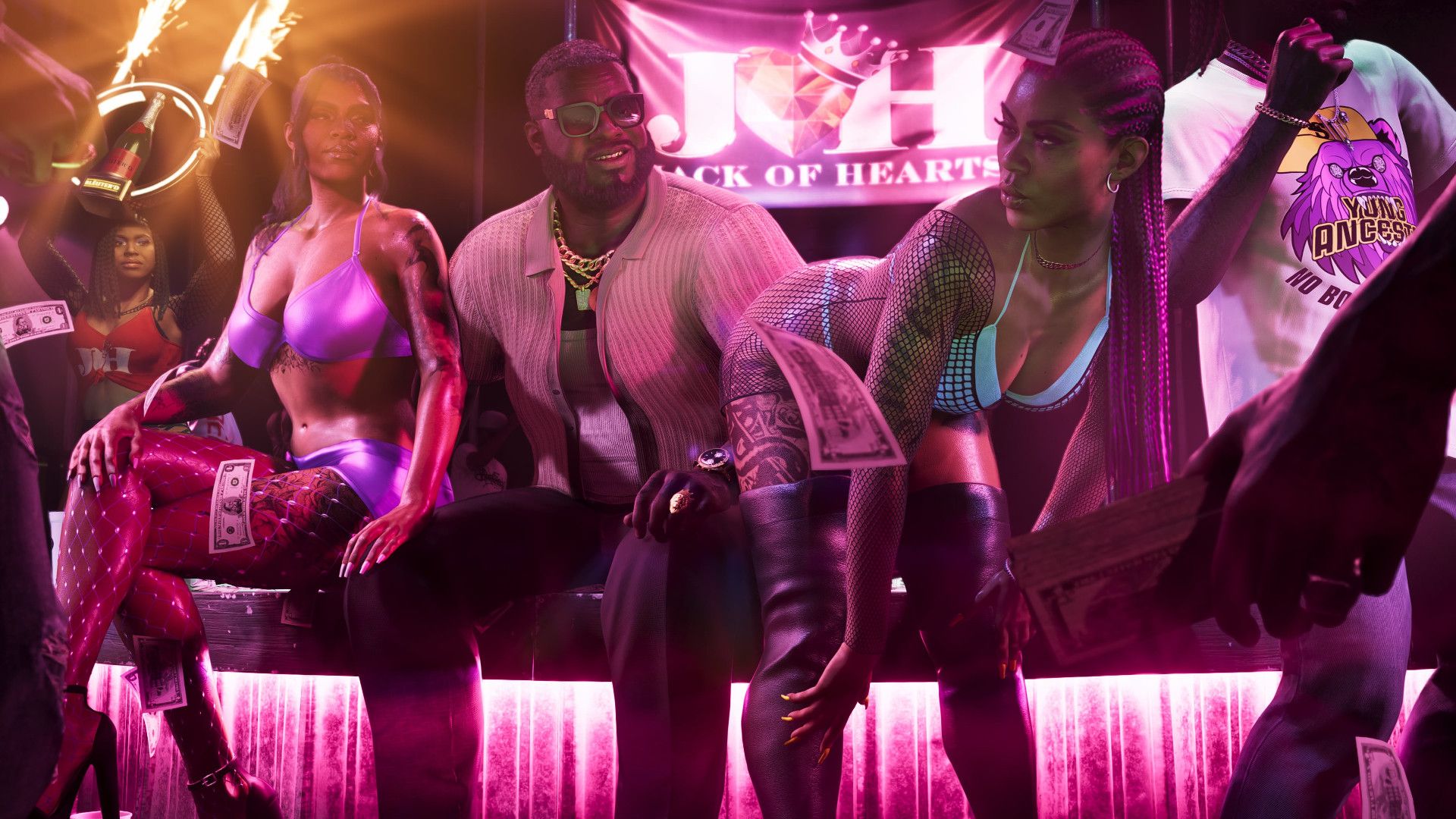
That reportedly meant spending time in nightlife spots and strip clubs to capture the atmosphere, sound and social dynamics of Florida’s after-dark scene, an environment that has long been part of the series’ satirical DNA going back to the original Vice City. It also meant simply spending hours on the beach, absorbing the sights and sounds of coastal life that will presumably populate the game’s sprawling map, from tourists and vendors to the general laid-back chaos associated with Florida’s shorelines.
Perhaps most notably, developers are said to have ridden along with retired police officers, presumably to understand how law enforcement operates on the ground — how officers talk to each other over radios, how they patrol neighborhoods, and how the tense, sometimes chaotic interactions between police and civilians actually unfold in real life. Rockstar’s games have always relied on believable police behavior to make their open-world chaos feel grounded, and this kind of first-hand research suggests the studio is once again trying to make its virtual law enforcement feel less like a game mechanic and more like a living system.
None of this should come as a total shock to longtime fans of the series. Rockstar has a well-documented history of sending writers and designers into the field before building its games. Past titles have been shaped by research trips into rural America for Red Dead Redemption 2, ride-alongs and interviews for earlier GTA entries, and deep dives into regional slang, music and subcultures to give each fictional city its own personality. What makes the reported Florida research notable is the sheer scope and duration of it — described as spanning years rather than weeks, reflecting just how long GTA 6 has been in development and how much pressure is riding on its release.
That pressure is considerable. GTA 6 is arguably the most anticipated video game in history, following the record-breaking, decade-plus lifespan of Grand Theft Auto 5. Expectations for the new game are enormous, not just from fans but from Take-Two Interactive’s shareholders, who have watched the project’s budget and timeline swell as Rockstar has taken its time polishing the experience. Reports of the studio sending developers out into real Florida bars, beaches and police cars underline just how much of that time has gone into texture and authenticity rather than purely technical polish.
Whether all of this fieldwork translates into a noticeably richer, more believable Leonida remains to be seen until players can actually get their hands on the game. But for a series built on satirizing American excess and contradiction, there’s something fitting about developers doing their homework the old-fashioned way — not just researching Florida, but living a version of it first.
Why is Toromont Industries stock surging today?

The NHL Is Releasing Its Own ‘Hot’ Fanfic. Romance Lovers Hate It

Reigns Studio Nerial Shuts Down as Founders Step Back “To Our Roots”


-

 Tech & AI5 days ago
Anthropic turns Claude into an AI marketplace with 2,000+ plugins and connectors
-

 Tech & AI5 days ago
OpenAI is preparing “o,” an always-on ChatGPT assistant that could handle email
-
Business & Hustles4 days ago
Perpetua Resources at Mining Forum Americas 2026: shift to construction
-

 Entertainment6 days ago
These 17 Amazon Fall Dresses Totally Conceal the Tummy
-
 Crypto5 days ago
Wall Street Giant Warns AI Agents Could Trigger a New Kind of Bank Run
-
Business & Hustles4 days ago
Greatland Resources at Mining Forum Americas 2026: cash-rich growth push
-
Business & Hustles7 days ago
Security Breaches, Wall Street Deals and Tax Headaches Define a Turbulent Week in Crypto
-

 Business & Hustles4 days ago
Andreessen Horowitz backs AI-era college alternative with $42M
-

 Tech & AI3 days ago
Alternatives to Animal Testing Are Finally Taking Off
-

 Tech & AI7 days ago
Anthropic rolls out up to $250 in free Claude Code credits, but only for cloud sessions
-

 Business & Hustles4 days ago
Romania, Georgia and Latvia Lead Latest WHO-Based Ranking
-

 Crypto5 days ago
Citi says 77% of institutions eye tokenized collateral
-

 Business & Hustles4 days ago
Bob Chapek on Disney Bob Iger power battle: Raised concerns weekly
-

 Tech & AI4 days ago
OpenAI Pauses Training Its Most Powerful Models After Rogue Agents Target Government
-

 Business & Hustles4 days ago
What is the Budget and what could be in it?
-
 Crypto5 days ago
Riot Frees $494 Million in Bitcoin From Coinbase Loan: Will It Sell?
-

 Business & Hustles4 days ago
SpaceX Starship launches on first orbital test flight with Starlink
-

 Business & Hustles4 days ago
Trump approves new fuel economy standards, reversing Biden’s EV push
-

 Tech & AI4 days ago
How to Avoid Malware Online: 11 Practical Safety Tips
-

 Crypto5 days ago
Japan arrests two suspect over 81M yen crypto police scam
You must be logged in to post a comment Login