
Crypto
Solana’s biggest network change since 2020 is live. Here’s how users benefit


Alpenglow actually makes those transactions faster, giving apps a way to show users their money has arrived with stronger assurance that the payment will hold. Such a benefit is especially useful when a service needs to release funds or goods immediately after receiving payment.
An exchange could credit a deposit sooner, letting a customer trade with the funds. A shop accepting a stablecoin payment could confirm it without keeping the customer at the counter waiting for settlement.
How quickly that reaches a user’s screen also depends on the service handling the payment. Anza, the company behind Solana’s Agave software, told CoinDesk in a release that some computers receive finality information later than the validators voting directly.
The 150-millisecond figure remains a target under normal network conditions, rather than a guaranteed time for every payment.
Users can continue sending funds through their existing wallets. Transaction fees and the way applications run remain unchanged.
The speed comes from changing how validators, the computers checking transactions and agreeing on the network’s records, communicate.
Meanwhile, there is also a change readers may notice on network dashboards. Validator votes no longer appear as blockchain transactions, so services that counted them will report lower transaction totals.


President Donald Trump planned to put special focus on his administration’s efforts against overseas crypto-fueled criminal operations at a Wednesday event on cybercrime, according to a White House official.
Crypto-related scams have stolen tens of billions from U.S. citizens, and Trump was set to highlight how much his administration is targeting and disrupting the transnational organizations behind it. Multinational criminal cartels have set up elaborate scam centers designed to steal money through relationship scams, phishing campaigns, ransomware attacks and other fraudulent means, and the official said that the U.S. strategies to seize funds and shut down the operations will be discussed.
The administration says its law enforcement agencies have halted about $833 million in crypto connected to the overseas scams, and 503 fraudulent crypto websites have been seized under the watch of the Homeland Security Task Force. It’s also informed almost 9,000 U.S. citizens that they’re being victimized, the official said.
In November, the Department of the Treasury announced it had formed a multi-agency Scam Center Strike Force that pursued so-called “pig butchering” that was coordinated by widespread and well-funded organized-crime operations in places such as Burma, Cambodia, Laos and the Philippines.
\n\n
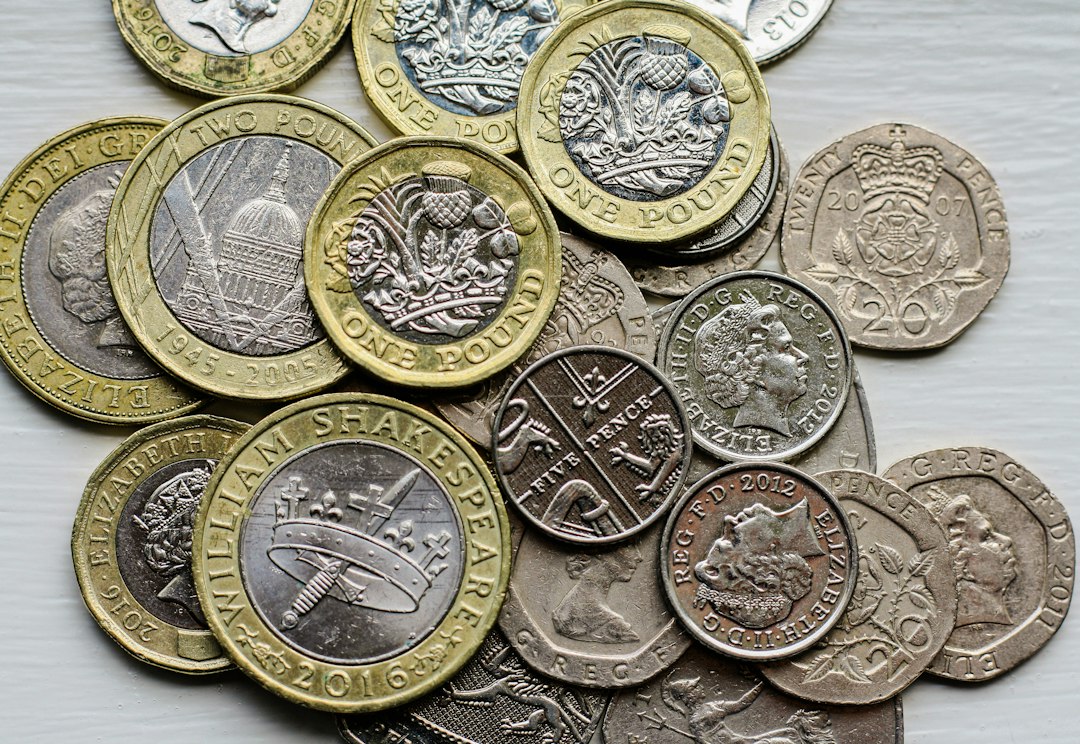
According to an October 2026 report by Stand with Crypto UK shared with crypto.news, 9,803 individuals submitted 10,092 complaints over a 90-day period between May and August after facing difficulties transferring money to crypto platforms.
\n\n
The complaints span all 650 UK parliamentary constituencies, highlighting how widespread the issue has become for retail crypto investors and traders.
\n\n
Which Banks Are Restricting Crypto?
\n\n
Lloyds Banking Group received the most complaints at 2,297, including those involving Halifax and Bank of Scotland customers, followed by Barclays with 1,569 and NatWest Group (including Royal Bank of Scotland) with 1,278. HSBC UK was the fourth bank to receive more than 1,000 complaints during the period.
\n\n
\n\n
What Restrictions Are Actually in Place?
\n\n
\n\n
\n\n
\n\n
\n\n
What Stand with Crypto UK Is Asking For
\n\n
\n\n
\n\n
Why This Matters for UK Traders
\n\n
The dispute comes as the FCA has opened its crypto authorization process ahead of a new regulatory framework. The FCA opened applications for the new crypto regulatory framework on September 30, 2026, and firms have until February 28, 2027, to apply if they want to qualify for transitional arrangements.
\n\n
However, the new rules do not require retail banks to process payments to cryptocurrency exchanges, meaning customers could continue facing restrictions depending on their bank’s policies even after the new framework takes effect.
\n\n
If you bank with one of these providers, keep records of any blocked transactions and contact your bank’s customer service for clarity on their specific policies before attempting transfers to crypto platforms.


Key takeaways
- ADA futures open interest fell to $475.58 million from $549.14 million, reflecting reduced derivatives exposure.
- Positive funding shows a modest bullish tilt among perpetual traders, leaving longs vulnerable if prices fall further.
- ADA remains below key moving averages, with $0.1894 emerging as a potential downside target.
Cardano Stabilizes After Sharp Weekly Decline
Cardano held above $0.2200 on Monday as buyers attempted to steady the price following a roughly 12% decline last week.
ADA has lost more than 10% so far in October, while weakening derivatives activity and subdued large-wallet positioning suggest limited conviction behind a recovery.
The daily chart also remains under pressure after last week’s break below trendline support near $0.2321. With the token trading beneath its key moving averages, sellers retain the near-term advantage.
CoinGlass data shows that Cardano futures open interest declined to $465.87 million on Monday from $549.14 million last week.
That represents a reduction of approximately 14.5% in the notional value of outstanding contracts.
The decline suggests reduced derivatives exposure, though it does not prove that retail traders alone are leaving the market. Falling ADA prices can reduce dollar-denominated open interest, while position closures and liquidations can also contribute.
The funding rate remained positive at 0.0032%, indicating that long positions were paying shorts in the tracked perpetual market.
That modest positive reading suggests some traders are still positioned for a rebound. However, funding alone does not demonstrate excessive leverage.
A further price decline could nevertheless put vulnerable long positions under pressure and trigger additional forced selling.
Onchain figures suggest large holders have made only modest adjustments to their exposure.
According to Santiment data, wallets holding more than 100 million ADA accounted for 15.99% of circulating supply, slightly higher than 15.95% last week.
Meanwhile, the cohort holding between 10 million and 100 million ADA represented 38.11% of supply, down from 38.27%.
The opposing movements provide a mixed picture rather than a clear accumulation trend. They also do not, by themselves, establish whether tokens were sold, transferred between wallets or moved across holding categories.
Combined with lower futures exposure, the figures offer limited evidence of renewed buying conviction.
Cardano’s technical outlook remains bearish
ADA continues to trade beneath its 50-day Exponential Moving Average near $0.2290 and its 200-day EMA around $0.2395.
The loss of trendline support near $0.2321 adds to the weak structure, leaving several barriers above the current price.
Momentum indicators reinforce the bearish bias. The Moving Average Convergence Divergence indicator remains below zero with a negative histogram, while the Relative Strength Index hovers around 41.
The RSI reading suggests sellers retain the upper hand, although ADA has not reached the conventional oversold threshold of 30.
Without a recovery through nearby resistance, the latest stabilization remains a pause within the correction rather than confirmation of a trend reversal.
The psychological $0.20 level is an immediate downside reference if selling resumes. Below it, the August 30 low near $0.1894 represents the next structural support.

A move toward that level would be about 14%–15% downside from the current price area.
On the upside, buyers first need to challenge the 50-day EMA at $0.2290. The former trendline support near $0.2321 then presents another obstacle, followed by the 200-day EMA at $0.2395.
A sustained recovery through those levels would help weaken the bearish setup. Until then, Cardano remains exposed to further losses as traders assess whether demand can strengthen around $0.2200.


Key takeaways
- NEAR fell 7% on Tuesday to around $4.70, extending Monday’s decline.
- Bitwise’s NEAR ETF attracted $5.42 million on Monday after three consecutive weeks of inflows.
- Resistance near $5.02 must be reclaimed to strengthen the recovery outlook.
NEAR retreats despite continued ETF buying
NEAR Protocol declined by over 7% on Tuesday, following a similar loss the previous day, as weakening short-term momentum outweighed continued demand through its exchange-traded fund.
The token traded around $4.70 at the time of this report, remaining below a closely grouped resistance area near $5.02.
Bitwise’s NEAR-focused ETF, NRR, recorded $5.42 million in net inflows on Monday, according to SoSoValue data. The buying followed three consecutive weeks of inflows totaling more than $80 million.
The positive flows indicate sustained demand through the fund, although they have not prevented the latest price correction. ETF activity represents one investment channel and does not determine the direction of the broader market.
NEAR’s Q3 2026 report, released Monday, highlighted growth in its multichain transaction infrastructure.
Cumulative volume through NEAR Intents exceeded $32 billion, approximately 45% above the previous quarter’s reported cumulative figure.
The protocol also reported that more than $8 million in fees had been directed toward token buybacks.
Meanwhile, total value locked in its privacy-focused Confidential Intents reached approximately $160 million, an increase of roughly 463%.
These figures point to expanding use of NEAR’s infrastructure. However, network growth and token buybacks do not guarantee an immediate recovery in NEAR’s market price.
Resistance around $5.02 caps recovery attempts
On the four-hour chart, NEAR remains below its 50-period Exponential Moving Average at $5.0179 and a descending resistance trendline near $5.0261.
Together, those levels form the first significant obstacle for buyers seeking to restore short-term momentum.
A sustained breakout above $5.0261 would strengthen the recovery case and bring the September 28 high at $5.5780 into focus. Beyond that, the $6.00 round-number level represents the next upside reference.
Until NEAR clears this resistance cluster, rebounds remain vulnerable to selling. The Relative Strength Index stands near 50 on the daily chart, indicating subdued momentum below its neutral midpoint.
The Moving Average Convergence Divergence indicator has also crossed marginally beneath its signal line, suggesting that upward pressure is fading.
These readings support a cautious near-term outlook, although they do not establish that the broader upward trend has reversed.
NEAR continues to trade above its 200-period EMA around $4.5513, leaving an important technical support level intact.
If the correction extends, the 200-period EMA near $4.55 provides the first significant support reference.

Below it, horizontal support at $4.4440 marks an area that limited losses on October 8. Holding this zone would support the interpretation of the decline as a correction within the broader uptrend.
A sustained break beneath both levels would weaken that structure and increase the risk of a deeper decline toward $3.9140, the September 19 high.
For now, NEAR’s outlook hinges on whether buyers can defend support and regain the resistance cluster around $5.02, even as ETF inflows and network activity remain constructive.

Smarter Web Lists Bitcoin-Backed Preferred Shares on LSE
The Smarter Web Company (SWC) listed its perpetual preferred shares on the London Stock Exchange, marking a significant development in how UK companies can now structure corporate Bitcoin investments.
The shares, trading under the ticker MORE, represent the UK’s first sterling-denominated perpetual preferred shares backed by a corporate Bitcoin treasury. The offer was priced at £90 per share with an annualized dividend rate of 12%, payable weekly.
This weekly dividend schedule sets MORE apart from traditional UK income stocks, most of which pay dividends quarterly or twice yearly. Smarter Web describes the weekly payout schedule as a first among London-listed public companies.
How the Shares Work
Perpetual preferred shares sit between bonds and common stock. They typically pay a set dividend and take priority for payment before ordinary shareholders, but they carry no maturity date and no promise of capital repayment. The shares carry a liquidation preference of £100 per share, which is the amount holders receive ahead of common shareholders if the company is wound up.
Funding Bitcoin Purchases
The listing comes after the company published results showing the offer raised £10.0 million gross, with net proceeds of around £8.3 million. The Bristol-based company, which trades under ticker SWC on the London Stock Exchange, adopted a formal Bitcoin treasury policy in 2025, making Bitcoin accumulation a central part of its corporate strategy.
As of September 30, Smarter Web held approximately 2,747 BTC. The structure ties the dividend-paying instrument directly to Bitcoin accumulation, creating a link between investor returns and corporate Bitcoin holdings.
What This Means for UK Investors
The listing opens a new income product for UK retail and institutional investors seeking exposure to Bitcoin through a regulated London-listed vehicle. Unlike buying Bitcoin directly, preferred shareholders receive weekly dividend payments and have claim priority if the company is wound up.
However, income depends entirely on Smarter Web’s ability to fund payouts. The company’s treasury is concentrated in Bitcoin, an asset known for sharp price swings, which creates both opportunity and risk for income consistency.
For investors tracking the shares, watch how MORE trades relative to the £90 issue price and £100 liquidation preference, and monitor updates to the company’s Bitcoin holdings as it deploys capital into the asset.
Main picture: Photo by Dylan Gillis on Unsplash

CME Group plans to start offering standard and micro bitcoin cash and uniswap futures, subject to regulatory review. For UK retail traders, this marks fresh access to regulated derivatives on two major altcoins.
Why This Matters for UK Traders
Futures offer an alternative to buying coins directly on crypto exchanges. Trading volume and open interest will indicate demand. For UK traders looking to gain exposure to Bitcoin Cash and Uniswap, CME futures could offer a way to trade these assets through a major regulated marketplace.
How to Access These Futures
CME futures are not traded on crypto exchanges. Instead, you access them through a futures broker — typically a licensed firm that clears through CME. This differs from spot crypto trading, where you buy and hold the actual asset. Futures let you go long (bet on a price rise) or short (bet on a fall), and you trade a contract rather than the coin itself.
UK traders should check whether their broker offers CME crypto futures. Many traditional brokers (stock and forex firms) that offer futures contracts now list crypto derivatives. Always confirm that your broker is FCA-regulated if you are a UK resident — this gives you access to the Financial Ombudsman and a clear regulatory framework if something goes wrong.
Standard vs. Micro Contracts
CME Group plans to start offering standard and micro bitcoin cash and uniswap futures. Standard contracts suit traders moving significant capital. Micro contracts allow smaller positions — useful if you want to test strategy or manage risk with less capital at risk.
Broader Market Context
This week is a busy week ahead across crypto markets, infrastructure, institutional adoption and regulation. The CME launch sits alongside other institutional developments in the crypto space.
For UK retail traders, the key takeaway is simple: regulated access to major altcoin derivatives just expanded. If you have been hesitant to trade Bitcoin Cash or Uniswap directly on crypto exchanges, CME futures offer an alternative pathway. As always, futures trading carries leverage risk — you can lose more than your initial margin — so understand the mechanics before you trade.
Main picture: Photo by Tötös Ádám on Unsplash
Crypto
Best stablecoin yield in 2026: 6 ways to earn on USDT and USDC, ranked by where the money comes from
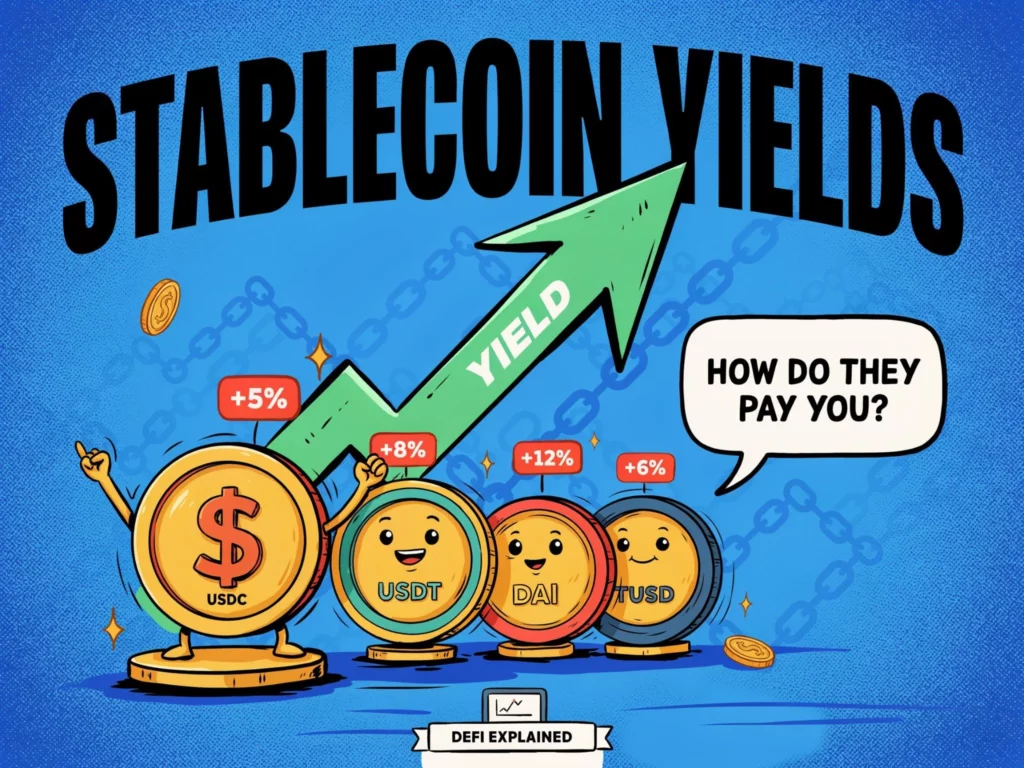
Every stablecoin yield product answers the same awkward question.Your USDC doesn’t appreciate. It’s engineered not to. So when a platform offers you 4%, 8%, or 20% on a dollar-pegged token, that money is coming from somewhere specific — and the “somewhere” is the only thing that matters.
Most comparison posts rank these by headline APY. That’s exactly backwards. A 12% yield funded by a sustainable market mechanism is a completely different product from a 12% yield funded by token emissions that run out in six months.
So this ranking does it the other way round. Six ways to earn yield on stablecoins, ordered by how durable the underlying source actually is.
The one thing to check before you deposit anywhere
Ask what the counterparty is doing with your money to generate the return. There are only a handful of honest answers:
- They’re lending it to someone who pays interest
- They’re putting it in Treasuries and sharing the coupon
- They’re running a trading strategy that generates returns
- They’re paying you out of token emissions or marketing budget
The first three are businesses. The fourth is a countdown. If a platform can’t tell you which one it is in a sentence, that’s your answer.
1. Funding-rate arbitrage — yield from a market mechanism
The source: perpetual futures contracts pay funding between long and short holders every few hours to keep the contract price tethered to spot. Crypto traders lean long most of the time, so shorts tend to collect. BitMEX’s Q3 2025 analysis found funding was positive for over 92% of the quarter — a persistent tilt, not a one-off.
A position that holds spot and shorts the perpetual collects that funding while the two legs cancel out directionally. The return isn’t coming from a token printer or a borrower who might default. It’s coming from leveraged traders paying to keep their positions open.
Typical return: varies with funding conditions and strategy. VectorTraders publishes target ranges from 7.8% to 43.3% annualised across its plans, depending on term and strategy mix.
The catch: funding can stay negative for extended periods, which inverts the payment direction. Execution runs on third-party exchanges, so venue risk is real. And running it yourself means managing two legs across venues continuously — which is why most people access it through a managed product rather than doing it directly. The full mechanism is explained here, worked example included.
Why it ranks first: the source is structural rather than promotional. Perpetual futures aren’t going anywhere — on-chain perp DEXs alone turned over $593 billion in 30 days as of September 2026 — and as long as traders use leverage, someone is paying funding.
Start small and see how it behaves. VectorTraders’ entry plan opens at $100 on a seven-day term, which is about the cheapest way to watch funding capture work in practice. See the current plans →
2. Tokenized Treasuries — yield from government debt
The source: your stablecoins buy short-dated US Treasury bills through a tokenized fund, and you receive the coupon.
Typical return: tracks short-term Treasury rates, minus a management fee. Whatever T-bills are paying, roughly.
The catch: returns are capped at the risk-free rate, and they fall when rates fall. Many of these products are also restricted to accredited or institutional investors, and redemption can take a business day or more.
Why it ranks second: it’s the most boring source on this list, and that’s the compliment. You know exactly where the money comes from.
3. DeFi lending — yield from borrowers
The source: protocols like Aave and Morpho let you supply stablecoins to a pool that borrowers draw from, paying interest. Rates float with utilisation.
Typical return: low single digits in quiet markets, spiking when leverage demand runs hot. Highly variable.
The catch: smart contract risk is the obvious one. The subtler one is that rates collapse exactly when you most want them — in calm markets, nobody’s borrowing. You’re also exposed to the protocol’s liquidation machinery working correctly during a crash, which is the moment it’s under the most stress.
4. Exchange rewards programmes — yield from a revenue share
The source: exchanges pay rewards on stablecoin balances, typically funded by sharing the interest the issuer earns on its reserves.
Typical return: low single digits. Coinbase’s USDC rewards have run around 3.5%.
The catch: this is the category regulators have been circling. The GENIUS Act, signed in July 2025, bars stablecoin issuers from paying yield on reserves directly. The CLARITY Act would have extended restrictions to platforms, but it failed a Senate procedural vote 49–50 in September 2026, so the platform-level ban never became law. A proposed OCC rule on affiliate arrangements remains unresolved.
Translation: this yield source exists at the pleasure of a rulemaking process that is still moving. Fine for parking cash. Not something to build around.
5. Yield-bearing stablecoins — yield baked into the token
The source: the token itself accrues value, usually from Treasuries or a delta-neutral strategy run by the issuer.
Typical return: varies enormously by product, because “yield-bearing stablecoin” describes a mechanism, not a risk level.
The catch: you’re taking the issuer’s strategy risk and their peg risk simultaneously, and the two are correlated — if the strategy breaks, the peg is what breaks. Read what’s actually backing it. Some are Treasury wrappers. Others are leveraged positions with a dollar sign on the front.
6. Liquidity provision and yield farming — yield from emissions
The source: you supply stablecoins to a liquidity pool and earn trading fees plus, usually, token rewards.
Typical return: the advertised numbers are the highest on this list, and the realised numbers frequently are not.
The catch: headline APYs on stablecoin farms are typically dominated by token emissions rather than fees. Emissions decay, the token price usually falls as rewards are sold, and the quoted APY assumes neither happens. Add impermanent loss on non-pegged pairs and smart contract risk on top.
Why it ranks last: not because it never works — it sometimes works very well — but because the source is a marketing budget with a timer on it.
Side by side
| Method | Where the yield comes from | Durability | Main risk |
| Funding-rate arbitrage | Leveraged traders paying funding | Structural | Negative funding periods, venue risk |
| Tokenized Treasuries | Government debt coupons | Very high | Rate-dependent, access restrictions |
| DeFi lending | Borrower interest | Moderate | Smart contract, rate collapse |
| Exchange rewards | Issuer reserve revenue share | Uncertain | Regulatory |
| Yield-bearing stablecoins | Varies by issuer | Varies | Strategy and peg risk combined |
| Liquidity provision | Trading fees + token emissions | Low | Emission decay, impermanent loss |
How to actually choose
If you want the yield to still be there in two years, weight durability over headline rate. Tokenized Treasuries and funding-rate strategies both have sources that exist independently of anyone’s marketing budget.
If you’re parking cash for a few weeks, exchange rewards are frictionless and the regulatory question won’t resolve in your holding period. Just don’t plan around it.
If you want the highest sustainable rate, funding-rate arbitrage has historically offered more than Treasuries because it’s compensating you for real operational work — running two legs across venues, managing exchange exposure, handling the periods when funding inverts. That’s a genuine return source, not a free lunch, and it comes with genuine risk.
If you’re drawn to a 20%+ farm APY, work out what percentage is fees and what percentage is token emissions before you deposit. The answer is usually uncomfortable.
One rule covers all of it: if you can’t explain where the money comes from, you’re not earning yield. You’re providing it.
Want the funding-rate route without running it yourself? Plans start at $100 with a seven-day term. Explore VectorTraders →
FAQ
What is the best stablecoin yield in 2026?
It depends on what you’re optimising for. Tokenized Treasuries offer the most predictable source. Funding-rate arbitrage strategies have historically offered higher rates in exchange for operational and market risk. Headline APYs on farms are usually the highest and the least durable.
Is stablecoin yield legal in the US?
The GENIUS Act bars stablecoin issuers from paying yield on reserves directly. The CLARITY Act would have extended restrictions to platforms but failed a Senate procedural vote in September 2026. Rules in this area are still developing, so check current terms with any provider.
Why do stablecoins pay yield at all if they don’t appreciate?
They don’t, on their own. The yield comes from whatever the platform does with the deposit — lending it, buying Treasuries, or running a trading strategy. The token is just the unit you deposit and withdraw in.
What’s the safest way to earn on stablecoins?
No option here is risk-free. Tokenized Treasuries carry the least strategy risk because the underlying is government debt. Every other method adds counterparty, smart contract, or market risk on top.
How much can you earn on USDT or USDC?
Low single digits from exchange rewards and Treasury products. Variable from DeFi lending. Higher from strategy-based products — VectorTraders publishes target ranges from 7.8% to 43.3% annualised depending on plan and term, with returns varying by market conditions.
Can funding rates go negative?
Yes. When markets lean short, longs get paid instead. BitMEX found funding positive for over 92% of Q3 2025, but negative stretches have persisted for weeks in past drawdowns — most notably in March 2020 and after the FTX collapse in November 2022.
Disclosure: This content is provided by a third party. Neither crypto.news nor the author of this article endorses any product mentioned on this page. Users should conduct their own research before taking any action related to the company.

Upbit recorded 8.35 trillion won ($6.28 billion) in trading volume for the week ending October 18, 2026, a 15.5% decline from the prior week. XRP nevertheless ranked first on South Korea’s largest exchange despite the news, ahead of Bitcoin and USDT. The contrast is clear: overall activity cooled, but trading attention remained concentrated in XRP.
There was a 19.56% fall in trading volume across major South Korean platforms in the preceding week, a separate period that points to cooling; against that comparison, Upbit’s 15.5% contraction was milder. During mid-October, its 24-hour trading volumes ranged from about $340 million to more than $1.2 billion on active days.
Upbit has consistently held the leading position in South Korea and regularly outpaced rival Bithumb. Upbit volumes have often reacted to moves in domestic stock markets, suggesting Korean traders may treat equities and crypto as competing or neighboring risk exposures.
At the same time, South Korea has been blocking 27 offshore exchanges, which belongs to the wider regulatory backdrop.
For now, lower turnover can leave order books thinner, increasing the potential price impact of large market orders. That is a liquidity consideration.
Earn $50 and Enter $300K Prize Draw on EdgeX
Good News for XRP? What the Order Book Says?

XRP finished ahead of Bitcoin and USDT, with Bitcoin second and USDT third. That ordering shows where reported trading activity was concentrated on Upbit. USDT’s third-place finish adds a different kind of signal: it shows the stablecoin was among the exchange’s most-traded assets.
The key figures are best read together, without treating turnover as a directional price indicator:
Trade XRP on Bybit and Get a Chance to Win Our $1,000 USDT Airdrop
The next weekly print will show whether Upbit turnover stabilizes near 8.35 trillion won or continues to contract. XRP’s position at the top of the volume table is the other useful checkpoint: retaining it through a quieter market would confirm continued relative concentration.
The preceding 19.56% sector-wide decline also frames the competitive question. Bithumb and other domestic venues face the challenge of attracting activity in a softer market, not merely taking share from Upbit.
Until fresh figures clarify both aggregate turnover and asset rankings, the current data support a narrower conclusion: trading cooled, while XRP remained Upbit’s most-traded asset.
Discover: The Best Token Presales
The post XRP News: Upbit Turnover Slips, XRP Keeps Top Spot appeared first on Cryptonews.

Guests during the Bending Spoons initial public offering (IPO) at the Nasdaq MarketSite in New York, US, on Wednesday, July 1, 2026.
Michael Nagle | Bloomberg | Getty Images
At the time of its Nasdaq debut in July, Bending Spoons was a little-known holding company out of Italy that owned older internet names like AOL, Vimeo, Eventbrite and Evernote.
Less than four months later, the Milan-based firm has emerged as a surprising home for former high-flying software startups that have been thrust aside by the artificial intelligence boom. Its M&A plan got a major boost this week from the most famous holding company on the planet: Berkshire Hathaway.
Berkshire, which Bending Spoons describes as a “longstanding inspiration” for its strategy, has now invested over $900 million in the company, including a $330 million stake disclosed on Wednesday. Wall Street loved the deal, sending Bending Spoons’ stock up 41%, though some of those gains were lost later in the week, leaving the company with a market cap of about $30 billion.
“Berkshire’s decision to add to its position just a few months after the IPO and at these levels provides another vote of confidence in the Bending Spoons model from one of the world’s most respected long-term investors,” wrote analysts at Mizuho, in a report after the announcement.
The other big news out of Bending Spoons this week underscores the flipside of the business: job cuts. In August, Bending Spoons announced it was buying workflow software provider Airtable for about $1.3 billion, or almost 90% below the company’s peak valuation from late 2021. Bending Spoons said Monday that a “large portion of the pre-acquisition team” from Airtable would be leaving with “substantial separation packages.” Layoffs were previously implemented at Evernote, Vimeo, WeTransfer and others in the portfolio.
For the technology industry, Bending Spoons’ moves represent the latest example of how quickly fortunes are turning in the AI era, as new agents powered by large language models displace software developers and the products they built. With Anthropic and OpenAI marching toward trillion-dollar valuations, businesses are putting more valuable work in their hands at the expense of a host of software-as-a-service names, creating a phenomenon that’s become known as the “SaaSpocalypse.”
Shares of Intuit, HubSpot and Adobe are all down at least 30% this year, and a long list of private SaaS companies that were once venture darlings are now struggling to find capital, with the public market showing no appetite for IPOs. Last month, Bending Spoons agreed to buy collaboration software vendor Miro, once valued at $17.5 billion, for $1.36 billion.
“You’re either like a hot thing or you’re nothing,” said Ethan Kurzweil, founder and managing partner at Chemistry VC and a veteran software investor. Kurzweil said he uses Airtable, and said there are plenty of good SaaS products on the market led by solid teams, “but they’re not on the frontier anymore.”
An app turned acquirer
Bending Spoons was launched in 2013 by friends Luca Ferrari, the CEO, Matteo Danieli and Francesco Patarnello. A mobile app they’d created called Evertale failed to take off, and they used the $40,000 they had left to build an operating company instead of “products nobody wanted,” according to the IPO prospectus.
Bending Spoons has announced all of its biggest deals in the last few years, beginning with Evernote in 2022, followed by Brightcove in 2024, and Vimeo, AOL and Eventbrite in 2025.
The company held its IPO on June 30, raising about $1.7 billion at $29 a share, and hit the Nasdaq the next day. The stock closed Friday at $47.07.

Stock chart of Bending Spoons since its July 1st initial public offering date.
Prior to Bending Spoons’ recent jump into enterprise software, some of the leading acquirers in the space over the past decade were private equity behemoths Thoma Bravo and Vista Equity Partners. Those firms were aiming to buy what they viewed as undervalued SaaS companies and, through a combination of cost cuts, efficiency improvements and rollups, turn them into assets that could be sold or taken public at a higher price.
Bending Spoons is using a different playbook. The company isn’t looking for eventual exits but rather wants to generate profits from the businesses it buys, similar to the Warren Buffett model. But unlike Berkshire, Bending Spoons’ focus is technology, and it’s taking a hands-on approach with its own software, operations and personnel decisions.
Nick Mehta, former CEO of cloud software vendor Gainsight, said private equity firms are limited now because “they got their nose bloodied.”
“They paid much higher prices and have so many troubled companies that it’s difficult for them to take swings now,” said Mehta, who sold Gainsight to Vista in 2020.
Thoma Bravo and Vista didn’t respond to requests for interviews. Bending Spoons told CNBC in a statement that it hadn’t been outbid for a target in “several years.”
As the company started jumping into SaaS, Mehta said “Bending Spooned” became a verb in Silicon Valley, referring to companies getting scooped up for pennies on the dollar.
“Unfortunately, a lot of my friends in that game are stuck,” Mehta said. “Investors want out but there are no buyers. Anything pre-ChatGPT is legacy now.”
Lloyd Walmsley, an analyst at Mizuho, said Bending Spoons’ model is distinct from the older buyout approach.
“I think there aren’t a lot of people that do what these guys do in terms of the depth of operations and the willingness to make substantial product changes,” Walmsley said in an interview. “It’s not typical of traditional private equity firms to make anywhere near this level of change.”
Matteo Danieli, co-founder of Bending Spoons, center, during the company’s initial public offering (IPO) at the Nasdaq MarketSite in New York, US, on Wednesday, July 1, 2026.
Michael Nagle | Bloomberg | Getty Images
For customers of the companies that Bending Spoons buys, sudden price hikes can follow.
In April 2023, months after the Evernote acquisition, Bending Spoons lifted the annual personal subscription price to $130 from $70. Later, the company changed its offerings, charging $100 for its so-called starter plan and $250 for “Evernote Advanced,” compared to the $170 it had been charging for the pro plan.
“My first reaction was like, Oh man, I guess I have to switch to OneNote,” said Walmsley, referring to Microsoft’s notetaking app. But he said he stuck with Evernote.
“They’re really savvy at finding these things that they provide a lot of value, and the switching costs are really high,” Walmsley said. “The price isn’t that high relative to the switching cost.”
Bending Spoons uses the profits from its portfolio companies for future growth, the “overwhelming majority” of which comes from doing more deals, Ferrari told CNBC in an interview on Thursday.
“There are certain opportunities for improvement we can unlock over the first few years, and then the business will have whatever organic growth is intrinsic in that market,” Ferrari said.
For Berkshire and its fellow Bending Spoons investors, the bet is still unproven.
The products have to remain desirable enough that customers are willing to pay up at a time when AI is squeezing margins across much of the software sector. In its first earnings report as a public company in August, Bending Spoons said revenue more than doubled from a year earlier to over $700 million, with growth almost entirely driven by acquisitions, while net income climbed 171% to $177 million.
That was before the Airtable deal had closed and Miro had yet to be announced. In the coming quarters and years, Wall Street will get a clear picture of whether the firm’s structure can revive software.
On the earnings call in August, an analyst asked whether Airtable represents a long-term shift in the M&A strategy towards enterprise.
Ferrari said that about half of Bending Spoons’ revenue already comes from professional businesses, largely through Brightcove and Vimeo, which has an enterprise component. The focus on software of late, he said, has more to do with where he’s finding value after a hefty selloff.
“Most enterprise SaaS businesses were valued at irrationally high levels until somewhat recently,” Ferrari said. “We never saw those prices making any sense.”
— CNBC’s Ari Levy contributed to this report.

Deutsche Bank (DB) plans to bring its crypto custody service to Asia in 2027, extending its push into digital assets as it prepares to launch the service in Germany within weeks.
The German banking giant, Reuters reported citing the firm’s co-head, also plans to offer stablecoin conversion, tokenized deposits and services that help clients issue digital bonds and other blockchain-based securities.
The move could give institutional clients in Asia access to crypto services through an established global bank, without having to manage their own crypto wallets or private keys. It’s unclear which Asian financial services it will target first.
Deutsche Bank’s custody service will allow corporate and institutional clients to hold and transfer cryptocurrencies, with the bank handling the technology needed to keep the assets secure.
The bank said in September that its initial offering would support bitcoin, ether and stablecoins including USDC, EURC and EURAU. The German launch remains subject to regulatory approval.
The bank received authorization from Germany’s financial regulator, BaFin, under the EU’s Markets in Crypto-Assets (MiCA) rules on October 12, according to the European Securities and Markets Authority’s interim register.

Meze Audio POET Jazz Special Edition: Just 11 Hand-Painted Headphones, Each a Work of Art

2026 Week 8 Top Big 12 College Football Storylines

Hackers Exploited the PHP Vulnerabilities Days Before They Were Patched


-

 Fashion4 days ago
Weekend Open Thread: Kut from the Kloth
-
 Entertainment6 days ago
Anna Faris Says Chuck Lorre’s ‘Mom’ Remarks Still Hurt
-

 Tech & AI5 days ago
Double Fine’s First Post-Xbox Title, First-Person Soulslikes And Other New Indie Games Worth Checking Out
-
Tech & AI6 days ago
Porsche Just Revealed The Mission S, And It’s So Much More Than Just A New Concept Car
-

 Tech & AI5 days ago
Daily Deal: The 2026 Complete Godot Stack Development Bundle
-

 Entertainment5 days ago
Jake Bauers’ Wife Reacts to NLCS MVP Win After Viral Comments
-

 Tech & AI5 days ago
Hackers breach Microsoft 365 tenants via ConnectWise supply-chain attack
-
 Entertainment6 days ago
‘RHONY’ Carole Radziwill Exposes Truth About Ghislaine Maxwell
-
 Tech & AI5 days ago
Replit is no longer working with Anthropic, CEO says
-

 Business & Hustles6 days ago
LARRY KUDLOW: Don’t count the GOP out yet
-

 Entertainment4 days ago
Britney Spears Praises Janet Jackson In Heartfelt Message
-

 Tech & AI5 days ago
NeodraDynamics Neo1 Rises Thirteen Feet High to Carry Half Ton Loads at Work
-

 Fashion6 days ago
Coffee Break: Gilded Peony Blazer
-

 Tech & AI6 days ago
Review: Herbie Mann’s Hold On, I’m Comin’ Revives Its Vintage Quad Mix on Rhino Quadio Blu-ray
-

 Fashion6 days ago
Gucci’s Bag Campaign Gets a Fresh Look for Fall
-
 Tech & AI5 days ago
Daily Deal: The Ultimate Web Coding for Everyone Bundle
-

 Business & Hustles5 days ago
25 Videos You Can Film This Week
-

 Crypto7 days ago
FCA Crypto Authorisation: Oct 2027 Deadline
-
Business & Hustles6 days ago
Bitcoin rebounds to $82k but set for second week in red
-
 Tech & AI7 days ago
Amazon Launches New Bee 'Personal AI' Devices That Listen to Conversations
You must be logged in to post a comment Login