
Crypto World
2 Major Ripple (XRP) Updates: Mastercard Gets Involved, ETF Changes Announced


A recent update from the XRP Ledger Foundation welcomed the TradFi giant, which has a long history with Ripple, to a hackathon taking place just ahead of the major conference, Ripple Swell.
Meanwhile, 21Shares’s XRP ETF has changed how it prices the underlying token amid renewed inflows into all such funds.
Mastercard Joins
The XRP Ledger Foundation said it was “thrilled” to welcome the global technology behemoth in the payments industry as a sponsor of the XRP Ledger Hackathon, scheduled for late October. It’s a 36-hour pre-event to the Ripple Swell 2026 conference, which runs from October 27 to October 29, while the hackathon is open on October 24-25.
“With a decade of proven robustness and architecture, the XRP network is ideally suited for payment use cases. Register, build, and connect with industry leaders like Mastercard. It’s your time to shine,” said the team.
This announcement comes just a few months after Mastercard expanded its relationship with the broader Ripple ecosystem, as well as other crypto giants. As reported in March, the TradFi firm enlisted several industry companies, such as Binance, Gemini, PayPal, Paxos, Circle, and Ripple, in a new partnership program aiming at connecting blockchain with its own vast global payments infrastructure.
In June, Mastercard took it a step further, expanding the blockchain integration with new support assets like Ripple’s own stablecoin, RLUSD, and Circle’s USDC.
ETF Changes to TOXR
An SEC filing showed that 21Shares has switched the pricing of the underlying assets for its XRP ETF (TOXR), moving from the CME Group to the new FTSE XRP Index, effective today.
The other notable change to their financial vehicle means the sponsor will be paid once every three months instead of every week. More importantly, the sponsor will be paid in XRP.
21Shares XRP ETF ($TOXR) just switched how it prices XRP moving from CME to the new FTSE XRP Index starting Aug 27.
They also changed how the sponsor gets paid now once every 3 months instead of every week, and paid in $XRP. https://t.co/I1dHswlJ9t pic.twitter.com/U6oHwAVlzi
— 𝗕𝗮𝗻𝗸XRP (@BankXRP) August 26, 2026
Meanwhile, the spot XRP ETFs have extended their impressive streak of net inflows, attracting $13.82 million on Monday, $24 million on Tuesday, and just over $28 million on Wednesday.
TOXR, however, remains the only XRP ETF in the red, with cumulative net flows of -$20.06 million. In contrast, Bitwise’s XRP ETF remains the largest of the bunch, currently holding $575 million in cumulative net inflows.
The post 2 Major Ripple (XRP) Updates: Mastercard Gets Involved, ETF Changes Announced appeared first on CryptoPotato.



South Korean cryptocurrency exchange Bithumb has reportedly won first-instance rulings in two lawsuits against its users to recover proceeds from Bitcoin it mistakenly credited to their accounts.
The Seoul Central District Court ruled for Bithumb on Wednesday and Thursday in two of four lawsuits against users who sold Bitcoin mistakenly credited to their accounts, according to a Chosun Biz report.
Thursday’s ruling concerned a claim for 194 million won ($140,000), while Wednesday’s covered a claim for 5 million won ($3,600). Two other lawsuits seeking about 14.8 million won ($10,700) and 500 million won ($362,000) remain pending.
Both cases proceeded through service by public notice because court documents could not be delivered to the defendants through ordinary methods, the report said.
The reported rulings advance Bithumb’s efforts to recover funds from its February error, when the exchange mistakenly credited 620,000 BTC, worth more than $40 billion at the time.
Bithumb goes after Bitcoin sale proceeds
Bithumb said the error occurred during a promotional event on Feb. 6, 2026, when it planned to distribute 620,000 won, or about $420 at the time, in rewards to 249 users. An employee mistakenly selected Bitcoin instead of Korean won as the payment unit and credited customer accounts with 620,000 BTC.
The exchange subsequently said it recovered 618,212 BTC, or 99.7% of the mistakenly credited amount. However, some users had already sold 1,788 BTC worth of the credited balances before Bithumb froze the affected accounts.
Related: Bithumb sets 2028 IPO timetable as it overhauls internal controls
Bithumb filed four unjust enrichment lawsuits in March against users who sold the mistakenly credited Bitcoin and did not return the proceeds. The company was reportedly seeking cash from those sales rather than Bitcoin.
FSS begins sanctions process over Bithumb error
South Korea’s Financial Supervisory Service (FSS) investigated Bithumb over the Feb. 6 Bitcoin error, focusing on how the exchange could credit customers with Bitcoin it did not hold. The regulator reportedly sent Bithumb an inspection opinion in early August, formally beginning sanctions proceedings, but no final penalty has been announced.
Cointelegraph approached South Korea’s Financial Services Commission (FSC), which oversees the FSS, for an update on the investigation and potential sanctions against Bithumb but did not receive a response by the time of publication.
Bithumb has faced other legal scrutiny this year. South Korean police raided its offices in June as part of an unrelated investigation into alleged hiring favoritism involving lawmaker Kim Byung-ki, while the company is challenging a separate six-month partial business suspension over Anti-Money Laundering violations. A Seoul court stayed the suspension in April pending a ruling in Bithumb’s challenge.
Magazine: Korean bank taps Ripple for payments, Pakistan opens crypto licensing: Asia Express
Crypto World
BlackRock's Mitchnick says macro case for bitcoin is strengthening after record trading in positive week
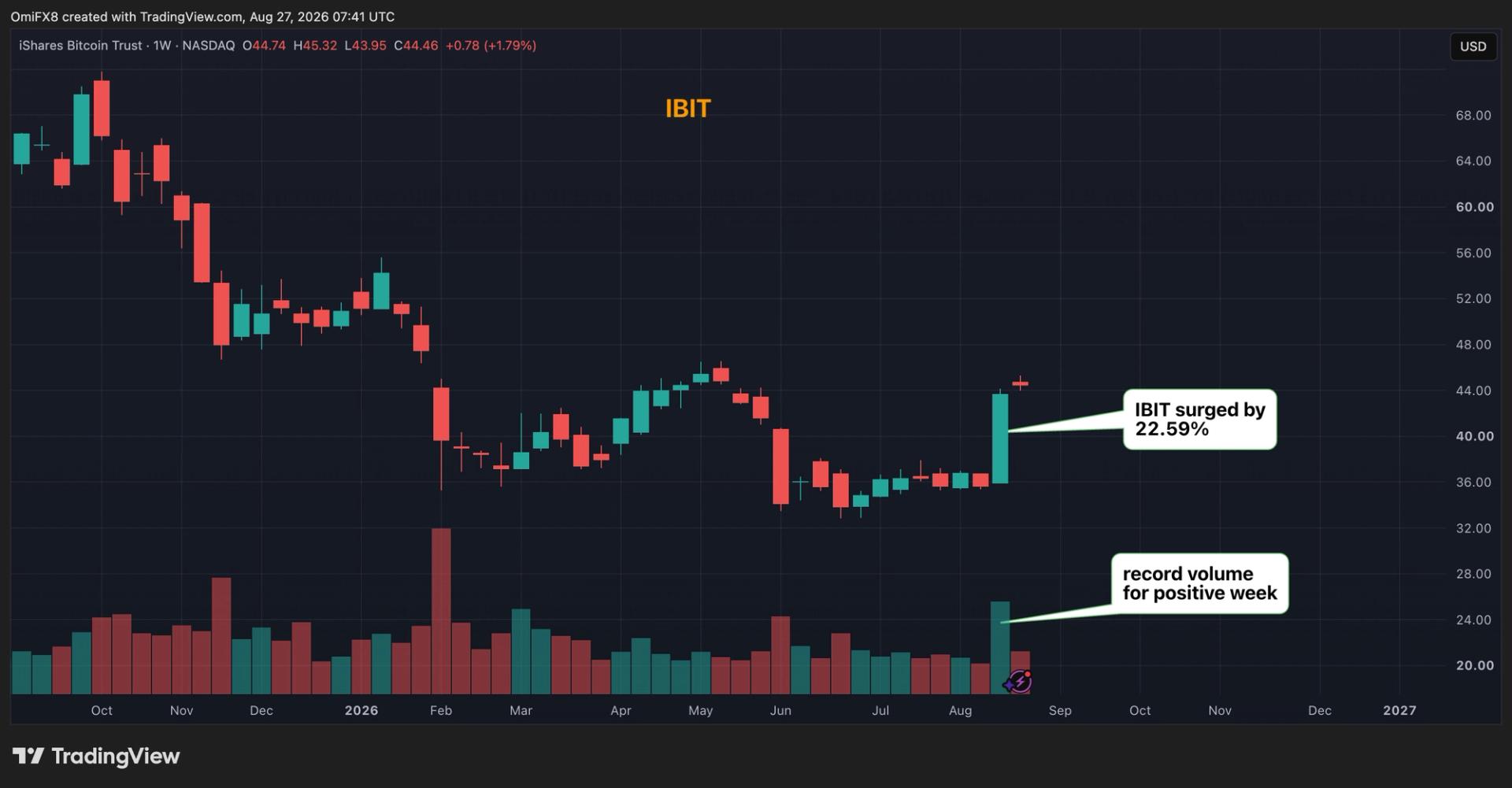
BlackRock’s head of digital assets shared his outlook for bitcoin after the company’s spot BTC ETF, IBIT, hit record volume for a positive week.


Binance founder Changpeng “CZ” Zhao backed Hong Kong as a potential Web3 and real-world asset hub during an August 27 book meeting in the city.
Summary
- CZ described Hong Kong and Web3 as a strong combination during August 27 book meeting.
- Hong Kong regulators had authorized thirteen tokenized products by March 2026, according to SFC data.
- CZ predicted tokenized securities and other real-world assets will become a major Web3 development direction.
- CZ said easing U.S. regulatory pressure could accelerate decentralized exchange growth, without announcing specific projects.
- Hong Kong’s Project Ensemble is testing transactions involving tokenized deposits, funds, bonds and other assets.
The event took place at Exchange Square in Central, according to the organizer. CZ discussed Hong Kong’s financial sector, tokenized securities and the development of decentralized exchanges. His comments represented personal forecasts rather than new Binance projects or investment commitments.
CZ says Hong Kong can connect finance with Web3
CZ said Hong Kong benefits from its status as a financial center, access to professionals from mainland China and established institutional relationships. He described Hong Kong and Web3 as a “powerful combination.”
He also named Dubai, Abu Dhabi and the U.S. as markets positioned to benefit from more supportive digital asset policies. These comments were assessments of their prospects. They did not include new licensing applications or expansion plans from Binance.
Hong Kong has introduced a broader regulatory structure covering exchanges, stablecoins and tokenized products. Its approach differs from mainland China, where authorities maintain tight restrictions on cryptocurrency trading and related activities.
The city’s policy direction has attracted financial institutions and asset managers. As crypto.news reported in its coverage of Hong Kong’s stablecoin and custody rules, regulators have sought to expand tokenized finance while retaining licensing and investor-protection requirements.
Hong Kong’s RWA market supports part of CZ’s forecast
CZ predicted that real-world assets would become a major area of Web3 development. He focused on tokenized securities, which can provide wider access beyond traditional market hours and national account systems.
He also described stablecoins as a form of RWA because they place claims linked to fiat currencies on blockchains. That description reflects a common industry classification, although the legal treatment of stablecoins differs between jurisdictions.
Hong Kong has already moved beyond small technical tests. The Securities and Futures Commission said 13 tokenized products were offered to the public as of March 2026. It subsequently introduced a framework covering tokenized products and their secondary-market trading.
The Hong Kong Monetary Authority is also operating EnsembleTX, the pilot phase of Project Ensemble. The pilot supports real-value transactions involving tokenized deposits and digital assets. It is scheduled to operate throughout 2026.
In related coverage, Franklin Templeton recently brought a tokenized U.S. government fund to HashKey, adding another distribution channel for regulated tokenized investments.
CZ expects DEX growth if U.S. pressure continues easing
CZ said decentralized exchanges have progressed from early platforms such as Uniswap and PancakeSwap to newer markets including Hyperliquid. He argued that better infrastructure and stronger user awareness have made DEXs more competitive.
He added that U.S. regulatory pressure appeared to have eased and said continued policy changes “may accelerate” DEX and broader crypto growth. That remains a forecast. Decentralized services can still face securities, commodities, sanctions and anti-money-laundering requirements, depending on their structure and operations.
The SEC and CFTC issued a joint crypto asset interpretation effective March 23. The agencies said clearer classifications could reduce perceived regulatory risk and encourage more U.S. activity. The document did not create a blanket exemption for DEX developers or interface operators.
Market data nevertheless show growing usage. As previously reported, DEX spot volume reached about 24% of covered centralized exchange volume in July. The comparison depends on the exchanges and methodology included.
Regulatory milestones will determine what happens next
Hong Kong’s next steps include implementing its tokenized product framework, continuing EnsembleTX and developing its licensed stablecoin market. Those programs will offer measurable evidence for or against CZ’s RWA forecast.
In the U.S., further SEC and CFTC rulemaking will determine whether decentralized platforms receive specific compliance routes. Until those rules are settled, claims that international DEXs can operate without full customer checks require jurisdiction-specific legal review.
Crypto World
StarkWare Quantum Bitcoin Transaction: First Quantum-Resistant BTC Transaction Hits Mainnet

StarkWare said researcher Avihu Levy tested an experimental quantum resistant Bitcoin transaction on mainnet. It is reported that the TX spent a 10,000-satoshi output in block 964,199 without altering Bitcoin’s consensus rules.
StarkWare described it as the first transaction of its kind. MARA Pool mined the block after receiving the transaction directly through its Slipstream service, since the nonstandard format meant ordinary nodes would not relay it through the public mempool.
StarkWare spokesperson Nathan Jeffay said the transaction cost around $150 to $200 in computation, and StarkWare said the process took hours. The demonstration shows a way to protect a single output under Bitcoin’s current rules, but at a material computational and operational cost.
Discover: The Best Crypto to Diversify Your Portfolio
How StarkWare Quantum Bitcoin Transaction Works
Levy’s Quantum-Safe Bitcoin (QSB) scheme, first proposed in April, combines hash-based one-time signatures with computational searches that bind authorization to a specific transaction. The construction is intended to prevent forgery even if a sufficiently capable quantum computer breaks the elliptic-curve cryptography used by Bitcoin.
In March, Google researchers estimated that a sufficiently capable quantum computer could theoretically derive a Bitcoin private key nine to 12 minutes after a public key becomes visible. Google said this could allow an attacker to replace a pending transaction during Bitcoin’s confirmation window.
Levy’s April proposal estimated that generating a transaction would require $75 to $150 in GPU computation; StarkWare put the cost of the completed transaction at around $150 to $200.

QSB applies to individual Bitcoin transactions rather than upgrading cryptography across the network. It allows coins to be moved into an output with additional protection without changing the Bitcoin protocol, but it does not protect coins whose public keys were exposed before migration. In that case, a potential attacker could have time to analyze those keys before a protected transaction is sent.
The transaction’s nonstandard classification under Bitcoin Core’s default relay policy is a practical constraint. Ordinary nodes do not propagate the transaction before confirmation, so it must be submitted directly to a cooperating miner through a service such as MARA’s Slipstream. The method, therefore, requires prepared transactions and direct miner access.
StarkWare CEO Eli Ben-Sasson said QSB provides a safety net while protocol-level protections are developed. The demonstration establishes a workaround under the existing rules, rather than changing Bitcoin’s underlying cryptography across the network.

Trade Bitcoin on Bybit and Get a Chance to Win Our $1,000 USDT Airdrop
The Protocol-Level Alternative
Bitcoin developers are separately considering proposals, including BIP-360, a proposed soft fork that would introduce a Pay-to-Merkle-Root output type while removing Taproot’s quantum-vulnerable key-path spend. That approach would require network-wide coordination and activation.
QSB does not wait for a protocol change. The mainnet test shows that Bitcoin’s existing consensus rules can accommodate one form of quantum-resistant spending, while broader protocol-level protections remain under consideration.
Discover: The Best Token Presales
The post StarkWare Quantum Bitcoin Transaction: First Quantum-Resistant BTC Transaction Hits Mainnet appeared first on Cryptonews.
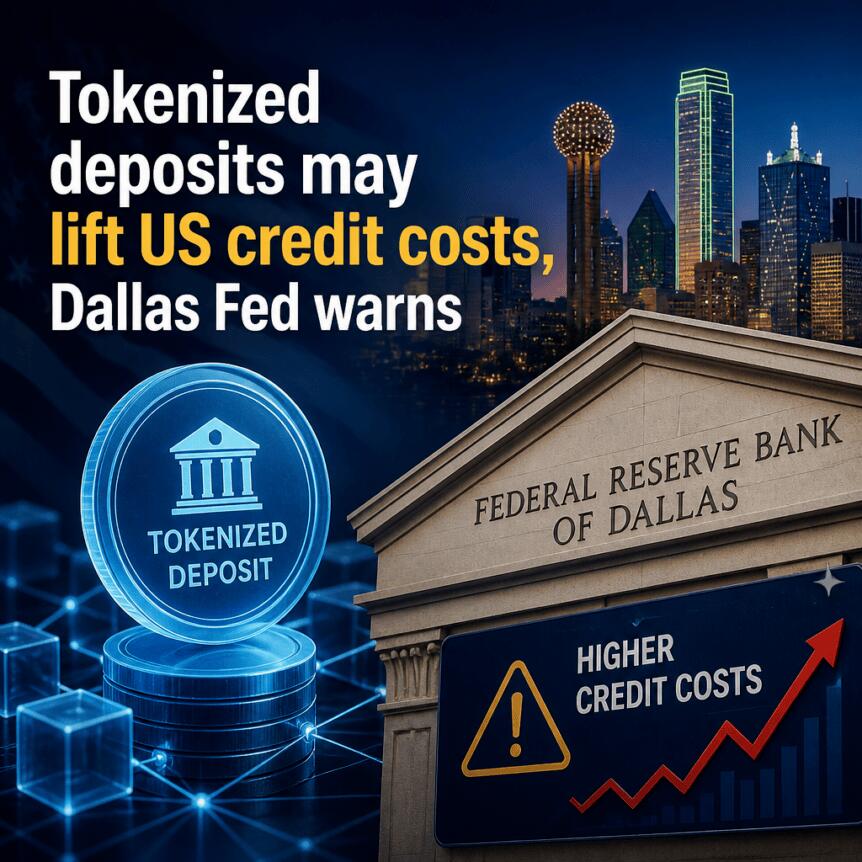
Tokenized bank deposits—made possible by instant settlement and automated transfers—could destabilize bank funding and eventually raise borrowing costs for US households and businesses, according to an analysis by economists at the Federal Reserve Bank of Dallas.
In a report by Rosie Levy and Srini Ramaswamy, the authors argue that technologies enabling deposits to move more quickly between banks would make funding portfolios more sensitive to interest-rate changes. They frame their work as scenario-based modeling rather than a forecast of immediate outcomes, but the conclusions add a new risk lens as the banking sector accelerates shared infrastructure for tokenized settlement.
Key takeaways
- The Dallas Fed economists warn that instant settlement could let depositors chase higher yields faster, increasing deposit “rate sensitivity.”
- In their scenarios, a 10% increase in deposit sensitivity to interest rates could reduce banks’ capacity to hold long-term loans and assets by about $700 billion in 10-year equivalents.
- A separate scenario—deposits staying at banks for 10% less time—could lower that capacity by about $580 billion (also in 10-year equivalents).
- The analysis emphasizes that the figures are not direct, dollar-for-dollar reductions in lending, but reflect changes in banks’ balance-sheet room over time.
- Banks are already building networks intended to move tokenized deposits around the clock while keeping funds within regulated banking channels.
Why tokenized deposits may change bank funding dynamics
Levy and Ramaswamy’s central point is that deposit behavior could shift if tokenized deposits make it easier—potentially near-instantly—for customers to move their money between institutions. They note that programmable “deposit tokens” and automation tools, including agentic artificial intelligence, could reduce the friction typically associated with switching banks.
That, in turn, could affect the stability of deposit funding—a key input for how banks manage long-term lending. Traditional banking relies on the assumption that many depositors do not change banks immediately when yields move. If tokenized settlement shortens the window in which deposits remain with a particular bank, banks may face funding profiles that respond more rapidly to interest-rate changes.
What the Dallas Fed model suggests—interest-rate sensitivity and liquidity trade-offs
To illustrate potential impacts, the economists quantify two hypothetical scenarios. First, they estimate the effect if deposits become 10% more sensitive to interest rates. In their modeling, that increased sensitivity could reduce banks’ capacity to hold long-term loans and other assets by roughly $700 billion, expressed in 10-year equivalents.
Second, they model a situation where deposits remain at banks for 10% less time. Under that scenario, the reduction in banks’ capacity to hold long-term assets is estimated at about $580 billion in 10-year equivalents.
Levy and Ramaswamy stress that these are scenarios designed to capture balance-sheet sensitivity; they do not claim a direct dollar-for-dollar drop in lending. Still, their work connects funding volatility to potential credit tightening pressures: if banks cannot rely on stable deposits, they may need to adjust asset and funding structures to manage risk.
How banks could respond: more liquidity, more wholesale funding
Rather than predicting an inability to lend, the report outlines likely adjustments banks might make when facing more volatile deposits. The authors suggest banks could increase holdings of highly liquid assets—such as reserves and US Treasurys—to ensure they can meet withdrawal or transfer demands.
They also point to the possibility of relying more heavily on term debt to sustain lending portfolios. However, the report indicates that funding loans through wholesale debt could increase credit costs for consumers and businesses, which is where the consumer impact implied by “higher credit costs” enters the analysis.
In other words, even if tokenized deposits do not immediately shrink lending totals, they may alter the cost and structure of funding in ways that propagate to borrowers over time.
Infrastructure is already moving: networks for tokenized deposits and real-world linking
The analysis lands as the banking industry builds mechanisms intended to support tokenized deposits and automated settlement. On Tuesday, 39 US state banking associations formed the BankChain Alliance to develop a nationwide network for tokenized deposits, stablecoins, and automated settlement. Separately, The Clearing House is developing another network backed by major banks including JPMorgan Chase, Bank of America, Citi, BNY, and Wells Fargo.
Beyond broad network planning, banks have also started connecting systems across institutions. On Aug. 20, Standard Chartered and HSBC reported completing a live cross-border transaction using Swift’s blockchain ledger, which linked their respective tokenized-deposit systems and recorded obligations prior to settlement through existing payment infrastructure.
This matters for the Dallas Fed’s thesis because the practical goal of these networks is to enable rapid, potentially continuous movement of deposits within the regulated banking perimeter. The more that implementation reduces settlement delays and operational friction, the more relevant the scenario of increased deposit mobility becomes.
Lessons from instant payments—comparisons and limits
To ground the discussion, Levy and Ramaswamy look to instant-payment systems as a partial analogy. They cite Brazil’s Pix, while noting that it is not identical to tokenized deposits. The report references a 2025 study from Brazil’s central bank that found heavier Pix usage was associated with banks holding more liquid assets and reducing credit intermediation.
That comparison doesn’t prove tokenized deposits will replicate Pix’s effects. But it supports the broader mechanism the Dallas Fed economists emphasize: when money moves faster and more easily, banks may rebalance toward liquidity and away from activities that require stable funding, at least relative to the counterfactual.
What to watch next
As tokenized-deposit networks advance from pilots to wider rollouts, the key unknown is how quickly depositors actually alter behavior when transfers become easier and settlement is effectively “always on.” Investors, borrowers, and regulators should watch whether banks respond primarily by shifting to more liquid asset buffers or by leaning more on term funding—both of which could influence credit conditions and the broader cost of capital.
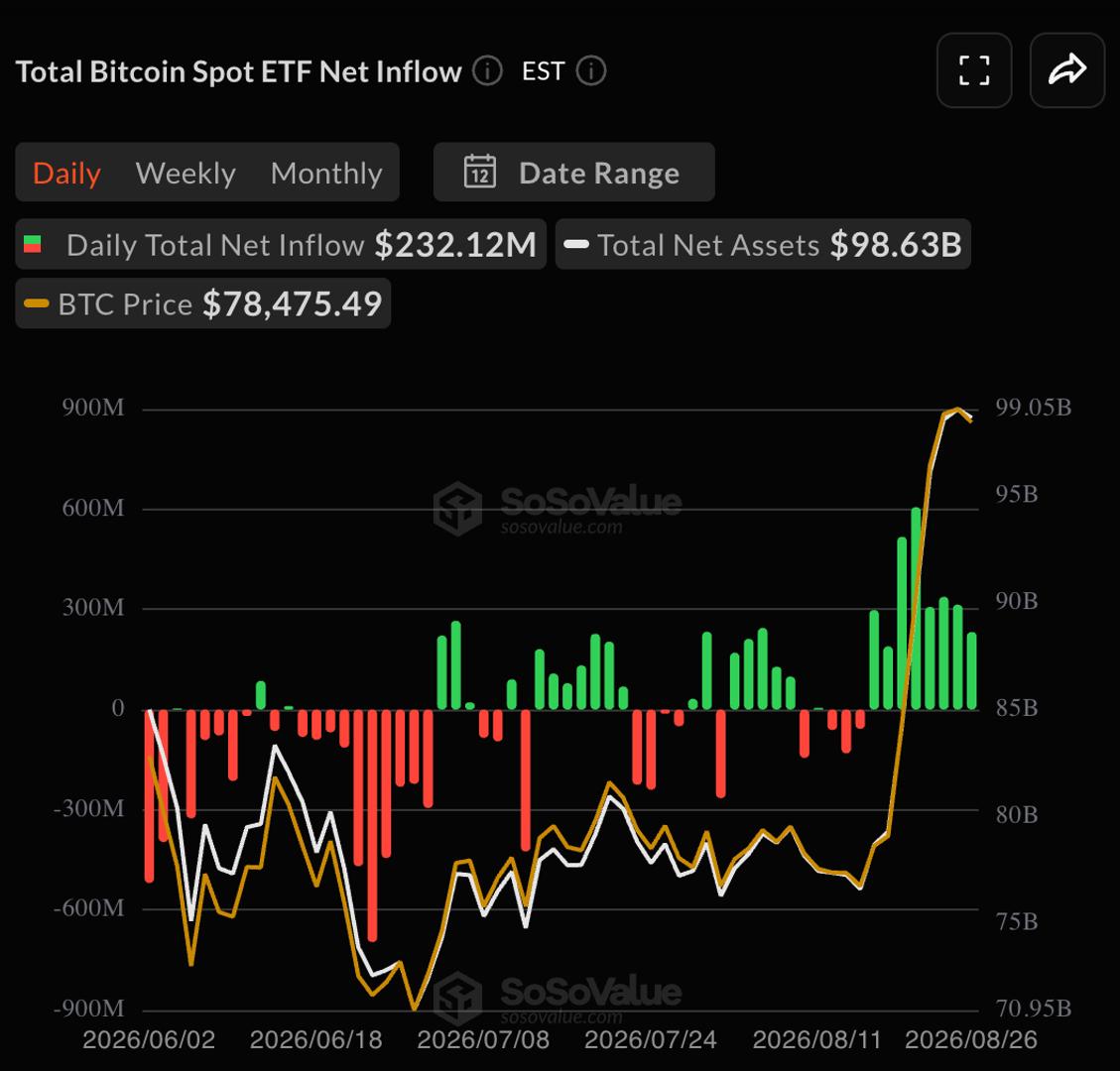
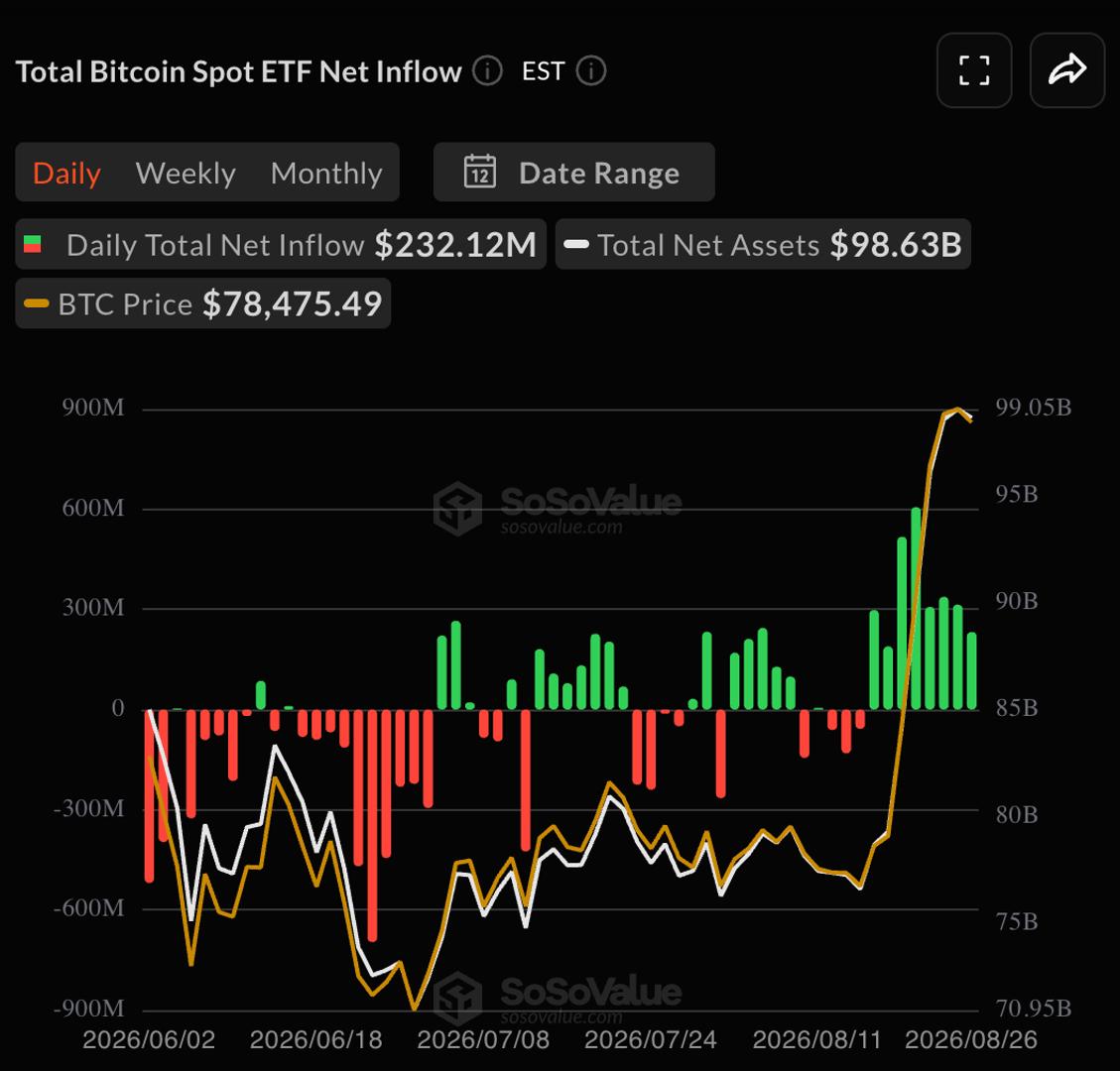
U.S. spot bitcoin funds have taken in $2.8 billion since the run began, and ether ETFs are matching it day for day. Three sessions are left to make August their best month since October 2025.

XRP is trading at $1.44, but the number that matters is buried in regulatory filing news. A new SEC document has holders re-reading escrow math they thought was settled. What Ripple could do with that supply changes the liquidity conversation.
The filing, discussed across multiple market outlets, pegs XRP’s approximate portfolio weight at 4.88%. It also suggests Ripple may release additional XRP from escrow to support on-ledger liquidity for stablecoin and FX pairs, contingent on the CLARITY Act clearing Congress.
What’s happening is a meaningful shift from the historical pattern of re-locking unused monthly tranches. Notably, Ripple’s own press center shows no dated release confirming this on Aug. 26 or 27, meaning the market is trading on secondary reporting.
Community reaction has been cautiously bullish, unexpectedly, as traders want confirmation. With network activity and regulatory timing both in play, the price setup deserves a closer look.
Discover: The Best Crypto to Diversify Your Portfolio
Can XRP Price Hit $1.70 This Week?
XRP sits at $1.44, and is still carrying a 27% seven-day gain from its recent breakout run. Volume has cooled from last week’s spike, a sign the rally is digesting gains rather than extending them.
The immediate technical battle is at $1.20–$1.25, the zone analysts flag as the line between consolidation and confirmed trend continuation. For it to run, a clean hold above $1.25 is needed to open a path to $1.50 resistance, especially if Senate momentum on CLARITY builds ahead of the Sept. 15 cloture vote.

XRP could also move in a range-bound chop between $1.20 and $1.40 while traders wait on macro signals. But a break below $1.00 psychological support would invalidate the current structure entirely.
One model set even put average August targets near $1, a reminder that momentum can fade fast. For a deeper breakdown of these levels, see this technical analysis.
Trade XRP on Bybit and Get a Chance to Win Our $1,000 USDT Airdrop
Bitcoin Hyper Targets Early Mover Upside as XRP Braces for Unlock News
XRP holders riding the 27% weekly pop have a legitimate win on paper. But here’s the uncomfortable math: at a market cap already pricing in years of regulatory optimism, doubling from here requires a genuinely outsized catalyst.
XRP needs a heavier lift than most large-cap assets pull off twice in one cycle. Capital chasing asymmetric upside is increasingly rotating toward earlier-stage infrastructure plays instead.
Bitcoin Hyper ($HYPER) is positioning as the first Bitcoin Layer 2 with native SVM integration, aiming for execution speeds that outpace Solana itself while settling back to Bitcoin’s base security.
The presale has raised $33 million at a current token price of $0.0136853, with a huge 35% staking rewards on offer for early participants. Its Decentralized Canonical Bridge targets the long-standing programmability gap that’s kept BTC largely idle as smart contract collateral.
Research Bitcoin Hyper before the next raise tier locks in.
Discover: The Best Token Presales
The post XRP News: Ripple Latest SEC Filing Shakes Holders appeared first on Cryptonews.
Core Lightning advised operators to use offline mode if they do not install the forthcoming update, keeping their nodes active but disconnected.
Crypto World
First Quantum-Resistant Bitcoin Transaction Confirmed on Mainnet Without Protocol Change

Bitcoin got its first known quantum-resistant transaction on mainnet today, mined through MARA’s private Slipstream mempool using a method called Quantum Safe Bitcoin, built by StarkWare’s Avihu Levy.
It closes a real gap in how Bitcoin protects funds in transit, without asking the network to change a single consensus rule, though even the people behind it call it a stopgap rather than a fix.
How Quantum-Safe Bitcoin Closes the Mempool Gap
Bitcoin held behind a hashed address, the P2PKH format most wallets use, is already considered safe from quantum attacks. The problem shows up the moment someone spends it.
Sending Bitcoin means revealing the wallet’s public key, and that key sits exposed in the mempool for roughly the ten minutes it takes to confirm, exactly the window a quantum computer could exploit.
Levy built Quantum Safe Bitcoin to close that window without touching consensus rules. The scheme modifies Binohash, a technique from BitVM creator Robin Linus, wrapping each transaction in a proof-of-work puzzle whose security rests on hash functions believed to resist quantum attacks rather than on the signature itself.
Levy first published the approach in an April paper, putting its security at around 118 bits under Shor’s algorithm, roughly half that under Grover’s, with an estimated extra cost of a few hundred dollars in GPU time.
It fits inside Bitcoin’s existing script limit, so no soft fork is needed, though it does require a non-standard transaction format that only private mempools like Slipstream will accept. MARA Foundation head Isabel Foxen Duke framed the mining of the transaction as a stopgap rather than an endorsement of private mempools long-term.
“We don’t believe private mempools are an appropriate long-term solution for Bitcoin quantum resistance,” she said, adding that MARA is willing to keep supporting Slipstream for break-glass cases while the network works toward a consensus-level change.
Levy credited StarkWare’s Tom Giladi with finishing the execution, building on earlier work from Linus and Ethan Heilman, but was careful to call the result “a research quirk and not the straightforward way for Bitcoin to become” quantum-ready.
Why the Rest of the Industry Is Racing on This
The urgency traces back to a Google paper from earlier this year, which found that a sufficiently powerful quantum computer could break the private keys behind Ethereum’s 1,000 richest wallets in under nine days, as CryptoPotato reported in March.
Researchers at Project Eleven flagged the same mempool-stage vulnerability Quantum Safe Bitcoin is targeting, warning that funds could be intercepted from a transaction before it even clears. But Bitcoin developers have their own fix in the works too, including a proposal called BIP-361 that would freeze old, quantum-vulnerable addresses in stages, starting with new deposits and eventually blocking withdrawals.
Blockstream has taken a different route, running post-quantum signatures on its Liquid sidechain since April so users can opt into protection without waiting on Bitcoin’s own upgrade path.
The post First Quantum-Resistant Bitcoin Transaction Confirmed on Mainnet Without Protocol Change appeared first on CryptoPotato.


An 80 million user fintech started distributing EURR in three European countries on August 26. Tether has been locked out of the same market since July 1. The stablecoin war is no longer about which token is biggest. It is about which one is allowed to exist.
Summary
Tether has spent a decade building the most widely used stablecoin in the world. As of August 2026, USDT commands 59% of the global stablecoin market, with $186 billion in circulation across every major blockchain and exchange. By any conventional measure, it is the most successful cryptocurrency product ever created.
On July 1, 2026, it ceased to exist in Europe.
That is not an exaggeration. When the European Union’s Markets in Crypto Assets regulation reached full enforcement, every MiCA licensed exchange in the European Economic Area was required to delist tokens that had not obtained e money authorization. Tether never applied. The company publicly objected to MiCA’s requirement that 60% of stablecoin reserves be held in EU bank deposits, arguing that it would reduce the yield on reserves and create unnecessary counterparty risk. The result was immediate: Binance, Coinbase, Kraken, and every other regulated exchange in Europe removed USDT trading pairs for EEA users.
Less than two months later, Revolut announced the rollout of EURR, a euro backed stablecoin, to customers in Denmark, Poland, and Portugal. The timing was not coincidental. Tether’s absence created a vacuum, and the largest fintech in Europe moved to fill it with a product designed from day one to comply with the regulation that Tether refused.
What EURR actually is
EURR is not Revolut’s creation. The token is issued by Bridge Building S.A., the Luxembourg based entity of Bridge, a stablecoin infrastructure company acquired by Stripe in 2024 for $1.1 billion. Bridge handles the token issuance, reserve management, and MiCA compliance. Revolut provides the distribution channel.
The arrangement mirrors how traditional finance has always worked: a regulated issuer creates the product, and a distribution partner brings it to customers. In this case, Bridge builds and manages the stablecoin, and Revolut integrates it into an app that 80 million people already use. The partnership gives EURR something no other euro stablecoin has: instant access to a massive, pre existing user base that already has verified identities, linked bank accounts, and familiarity with buying digital assets.
EURR launched initially on Ethereum with plans to expand to additional blockchain networks. It is designed to maintain a one to one peg with the euro, backed by reserves held and managed by Bridge in accordance with MiCA requirements. Revolut’s standard crypto trading limits apply, and fiat conversions carry no fees or spreads, a pricing decision that positions EURR as a gateway product meant to expand Revolut’s crypto ecosystem rather than generate direct stablecoin revenue.
The company stated that EURR is “only the first step” in a planned suite of stablecoins denominated in multiple currencies. That language suggests Revolut intends to build a multi currency stablecoin platform leveraging its banking licenses in the UK, EU, and other jurisdictions.
Why Tether walked away from Europe
Tether’s decision to skip MiCA authorization was not impulsive. It was a calculated judgment that the European market was not worth the structural changes MiCA would require.
The core objection centered on the 60% bank deposit requirement. Under MiCA, stablecoin issuers must hold at least 60% of their reserves in bank deposits at EU credit institutions. Tether’s current reserve composition is heavily weighted toward US Treasury bills, which yield approximately 4.5% annually. Shifting 60% of a $186 billion reserve base into bank deposits would reduce Tether’s yield income by billions of dollars per year while introducing counterparty risk to European banks that Tether views as less stable than US government debt.
The math made the decision straightforward. Tether reported $5.2 billion in net profit for the first half of 2026, almost entirely from interest on Treasury holdings. Complying with MiCA would have reduced that figure by an estimated $2 to $3 billion annually (the yield difference between Treasuries and EU bank deposits on $112 billion in reserves), while the European market represents less than 10% of USDT’s global usage.
Tether chose profits over geography. And for its global business, the decision has been vindicated: USDT’s total supply has continued growing since the MiCA deadline, as demand from Asia, Latin America, the Middle East, and Africa more than compensates for the European loss. Research released in July 2026 found that the combined market share of USDT and USDC “barely moved” after the delisting, because European USDT users migrated to decentralized exchanges instead of switching to USDC.
But “barely moved” in market share terms masks a real shift in how European users interact with stablecoins. Moving from regulated exchanges to DEXs introduces smart contract risk, higher fees, and reduced consumer protections. The MiCA deadline did not eliminate USDT demand in Europe. It pushed it underground.
The Circle monopoly problem
With Tether excluded, Circle’s USDC and EURC have become the only large cap stablecoins available on MiCA licensed exchanges. Of the world’s 50 largest stablecoins by market capitalization, only three satisfy MiCA requirements: USDC, EURC (both issued by Circle under French authorization), and USDG (issued under a Paxos linked structure). Everything else, from DAI to FDUSD to PayPal’s PYUSD, lacks the e money token authorization required for distribution in the EEA.
Circle obtained its Electronic Money Institution license from France’s Autorite de Controle Prudentiel et de Resolution on July 1, 2024, a full two years before the deadline, giving it time to build the compliance infrastructure that competitors scrambled to replicate. That head start has translated into a meaningful competitive advantage: USDC’s European transaction volume grew 340% in the first six weeks after the MiCA deadline as users migrated from delisted alternatives.
The near monopoly is uncomfortable for regulators who designed MiCA to increase competition in digital payments. A regulation intended to protect consumers and ensure financial stability has, in practice, concentrated the European stablecoin market in the hands of a single US issuer. Circle is incorporated in Delaware, regulated by French authorities, and now serves as the default stablecoin infrastructure for a continent of 450 million people.
EURR’s entry partially addresses this concentration, but with a critical difference: EURR is denominated in euros, not dollars. That makes it complementary to USDC rather than competitive. European users who need dollar denominated stablecoins for trading, remittances, or DeFi still have only one compliant option: Circle.
Revolut’s distribution advantage
The most significant aspect of the EURR rollout is not the token itself but the channel through which it reaches users. Revolut has over 50 million European customers and 16 million crypto users worldwide. By comparison, the largest euro stablecoin by market capitalization (Circle’s EURC) has approximately 240,000 unique holders on chain.
That gap is the distribution advantage. When EURR becomes available across Revolut’s full European user base, it will have a potential reach that dwarfs every existing stablecoin’s European distribution by an order of magnitude. Even a single digit conversion rate among Revolut’s European users would generate millions of stablecoin holders, creating a user base large enough to challenge EURC’s position within months of launch.
The initial rollout in Denmark, Poland, and Portugal covers approximately 2 million Revolut customers. Those three countries were chosen for their market characteristics: Denmark has high digital payment penetration, Poland has one of Europe’s most active crypto trading communities, and Portugal has historically favorable crypto tax policies (though a new capital gains tax took effect in 2025). The selection suggests Revolut is testing EURR with user bases that have high propensity to adopt crypto products.
The planned expansion across the EEA later in 2026 would bring EURR to users in Germany (Revolut’s second largest European market), France, Spain, and Italy. At that scale, EURR would not just be a stablecoin. It would be a feature within an app that tens of millions of Europeans already use for their daily banking.
The neobank stablecoin thesis
Revolut is not the only fintech eyeing stablecoins. Forbes reported in June 2026 that “every neobank will want its own stablecoin,” and the logic is straightforward: stablecoins allow fintechs to extend their product ecosystems into on chain finance without building blockchain infrastructure from scratch.
For Revolut specifically, EURR serves three strategic purposes. First, it keeps users inside the Revolut ecosystem for crypto activities that would otherwise require external wallets and exchanges. A Revolut user who wants euro denominated crypto exposure can now get it without leaving the app. Second, it generates data on how Revolut’s customers use on chain products, which informs the company’s broader crypto strategy. Third, it positions Revolut to capture yield from stablecoin reserves, a business model that Tether has proven can generate billions in annual profit.
The multi currency stablecoin plan is the most ambitious element. If Revolut launches stablecoins denominated in British pounds, Swiss francs, Swedish kronor, and other currencies it already supports in its banking app, it would become the first platform to offer a suite of fiat backed stablecoins covering multiple jurisdictions, all integrated into a single consumer application.
That model is fundamentally different from Circle’s (infrastructure focused, selling compliance and APIs to institutions) or Tether’s (yield maximizing, operating outside regulatory perimeters). Revolut’s model is consumer distribution first, with stablecoins as a product feature rather than a standalone business.
The DEX migration and what it costs European users
MiCA’s architects intended the regulation to bring stability and consumer protection to the stablecoin market. For USDT users specifically, it has done the opposite.
Since July 1, European traders who relied on USDT have not stopped using it. They have moved to decentralized exchanges where MiCA enforcement does not reach. On chain data shows that DEX volume from European IP ranges (as estimated by analytics firms tracking swap origins) increased 47% in the six weeks following the deadline, with Uniswap V3 and Curve Finance absorbing the majority of displaced volume.
The migration carries real costs. DEX users bear smart contract risk that centralized exchanges absorb. They pay gas fees on Ethereum (averaging $3 to $8 per swap in August 2026) that centralized exchanges internalize. They lose access to the consumer protections (dispute resolution, account recovery, fiat off ramps) that regulated exchanges provide. And they interact with liquidity pools that can be manipulated through MEV extraction, a problem that does not exist on centralized order books.
The irony is measurable. MiCA was designed to protect consumers from unregulated stablecoin risk. Its practical effect on USDT users has been to push them from regulated venues with consumer protections into unregulated venues without them. The regulation did not reduce USDT usage in Europe. It made USDT usage more dangerous.
Revolut’s EURR addresses this problem for users who are willing to switch from a dollar denominated stablecoin to a euro denominated one. For users who specifically need USDT, whether for dollar denominated trading pairs, cross border remittances to dollar economies, or participation in DeFi protocols that price assets in dollars, EURR is not a substitute. The regulatory squeeze has created a two tier European stablecoin market: compliant euro stablecoins on regulated exchanges, and non compliant dollar stablecoins on unregulated DEXs. Both markets are growing, and neither is solving the problem MiCA was designed to fix.
The competitive landscape beyond Circle and Revolut
The European stablecoin market is attracting entrants beyond the current leaders. As of Q1 2026, approximately 35 regulated e money tokens have been issued by 21 entities under MiCA across France, the Netherlands, Finland, Malta, Luxembourg, and Germany. Most are small (under $50 million in circulation), but the regulatory infrastructure is in place for rapid scaling.
SocieteGenerale’s FORGE platform issued EUR CoinVertible (EURCV), a institutional grade euro stablecoin targeting corporate treasury and trade finance applications. Deutsche Bank has announced plans for a euro stablecoin through its digital asset subsidiary. Banking Circle, a payments bank headquartered in Luxembourg, has launched EURI with direct settlement into the TARGET2 payment system.
None of these competitors have Revolut’s consumer distribution. EURCV is designed for institutional use cases that individual users will never touch. EURI is a payments infrastructure product, not a retail token. The European stablecoin market is developing along two parallel tracks: institutional grade tokens for wholesale finance, and consumer grade tokens for retail adoption. Revolut’s EURR is positioned on the consumer track where distribution matters more than institutional relationships.
The wildcard is Stripe itself. Bridge, the company issuing EURR, is a Stripe subsidiary. Stripe processes payments for millions of internet businesses globally. If Stripe integrates EURR (or future Bridge stablecoins) directly into its merchant payment flows, the distribution channel extends far beyond Revolut’s app into the checkout pages of every Stripe merchant in Europe. That integration has not been announced, but the corporate structure makes it possible, and the potential scale would dwarf anything the stablecoin market has seen.
The GENIUS Act connection
The European stablecoin shakeout is happening simultaneously with stablecoin regulation evolving in the United States. The GENIUS Act, signed into law in 2025, set a one year deadline for federal agencies to write implementing rules for stablecoin issuance. That deadline was missed by four months, with the OCC now targeting November 2026 for a final rule.
The GENIUS Act’s requirements bear a family resemblance to MiCA’s: on demand redemption at par, one to one reserve backing, and regular attestation of reserves. But the GENIUS Act does not include MiCA’s 60% bank deposit requirement, which means Tether could potentially comply with US rules while remaining non compliant in Europe. If Tether obtains a US federal or state license under the GENIUS Act framework, it would create a bifurcated regulatory landscape in which USDT is legal in the United States but illegal in the European Union.
That bifurcation would have consequences for global crypto markets. Exchanges operating in both jurisdictions would need to maintain separate USDT liquidity pools, with European users unable to access the same trading pairs as American users. The fragmentation would increase costs, reduce liquidity, and create arbitrage opportunities that sophisticated traders would exploit at the expense of retail participants.
Revolut’s position in this landscape is unusually strong. With banking licenses in the UK, EU licensing under MiCA, and a growing US presence, the company is one of the few entities that could potentially distribute stablecoins across all three major regulatory jurisdictions. Whether it chooses to do so depends on how quickly it can build out its multi currency stablecoin suite and navigate the licensing requirements in each market.
The regulatory fragmentation also creates an opening for geopolitical competition. If the US finalizes stablecoin rules before Europe fully enforces MiCA’s exchange provisions, American stablecoin issuers will have a regulatory moat that European competitors cannot easily cross. Conversely, if European issuers like Bridge scale faster under MiCA’s clearer framework, the EU could become the first jurisdiction where regulated stablecoins achieve mass consumer adoption. The race is no longer about which stablecoin is biggest. It is about which regulatory framework produces the most usable products for the most people, and Revolut’s 50 million European users are the largest prize on the board.
What to watch
EURR daily transaction volume in the first 30 days will indicate whether Revolut users treat it as a holding asset, a trading pair, or a payments tool. The use case determines the stablecoin’s velocity and, by extension, its economic impact.
Revolut’s EEA expansion timeline beyond the initial three countries. If the full rollout reaches Germany and France by Q4 2026, the distribution advantage becomes structural. If regulatory delays push it to 2027, Circle’s head start consolidates.
Tether’s GENIUS Act compliance filing would signal that Tether is pursuing a US first regulatory strategy, permanently conceding Europe. Absence of a filing by November 2026 would suggest Tether intends to remain entirely outside regulated markets.
EURR supply crossing $500 million would place it among the top 15 stablecoins globally and confirm that consumer fintech distribution can compete with crypto native issuance channels.
Additional Revolut stablecoin denominations (GBP, CHF) launching in 2026 would validate the multi currency thesis and position Revolut as the first global stablecoin supermarket.
Disclaimer: This article is for informational purposes only and does not constitute investment advice. Cryptocurrency investments carry significant risk. Always conduct your own research before making investment decisions. Published August 27, 2026.

What time is Champions League draw today? Confirmed pots, TV channel and how it works
Why is Pernod Ricard stock tumbling today?

Bithumb Wins First-Instance Rulings Over $40B Bitcoin Error





-

 Fashion6 days ago
Weekend Open Thread: Madewell – Corporette.com
-

 Crypto World1 day ago
SpaceX stock could rise 75% to $240, JPMorgan says
-

 Business5 days ago
Musk’s Tesla, SpaceX Confirm $16.8 Billion ‘Terafab’ Chip Plant as World’s Largest Building in Texas
-

 Crypto World5 days ago
anatomy of crypto’s biggest liquidation event since 2021
-

 Crypto World2 days ago
A $30 Billion AI Fund Implodes, Now the SEC Is Investigating Wall Street’s Role
-

 Politics5 days ago
6 months on, Irish renters crushed by effects of government housing bill
-

 Crypto World1 day ago
Did Trump Just Move SpaceX Stock With One Truth Social Post?
-
 NewsBeat5 days ago
The ‘Lucky Dip Gang’ causing carnage for clicks: After five thugs were killed speeding in the wrong direction on a motorway, GUY ADAMS investigates a sick new trend… and why police aren’t even allowed to pursue them
-

 Business4 days ago
Mystery AI Model ‘Ox Alpha’ Draws Developers With Free Access as Chinese Lab Origins Remain Debated
-

 Business3 days ago
Moderna CEO warns China is pouring state money into mRNA technology
-

 Business7 days ago
Five Below: Kids Discount Retailer Reaps Rich Rewards
-

 Business2 days ago
NVIDIA Stock Drops Nearly 2 Percent to $210 on Seventh Losing Day Ahead of Critical AI Earnings
-
 Crypto World5 days ago
Nvidia Stock Suffers Longest Losing Streak Since 2022: Will Q2 Earnings End It?
-

 Sports4 days ago
Deshaun Watson fires back at Browns fans after being booed: ‘It’s a disrespectful thing’
-

 Business6 days ago
UK firms in critical financial distress rise 9% to 53,756
-
 Crypto World4 days ago
Google Gemini AI Predicts Ethereum Could Become the Trade Retail Misses in 2026
-

 Tech5 days ago
Unitree’s New Superman Robot Claims to Outjump and Outrun Every Human, Usain Bolt Included
-

 Crypto World7 days ago
Optimism-funded team's deciding vote shifts $49 million in OP tokens away from users
-

 Tech6 days ago
Faster chip in a familiar form factor
-
 Crypto World7 days ago
Japan 225 Analysis: Index Declines Amid Rising BoJ Rate Expectations
You must be logged in to post a comment Login