

Crypto World
A New Staked Ether ETF for Yield-Seeking Investors (Report)


The financial vehicle will begin trading on Nasdaq today under the ticker ETHB.
Nearly two years since the debut of the traditional exchange-traded funds tracking the performance of the largest altcoin, the world’s biggest asset manager is reportedly launching a staking version on Nasdaq today.
BlackRock’s iShares Staked Ethereum Trust ETF (ETHB) will hold spot ETH and stake a portion of the AuM to benefit from staking rewards.
According to the report, ETHB will be BlackRock’s first and only cryptocurrency fund incorporating staking rewards alongside spot exposure.
Consequently, the asset manager will now have three spot crypto ETFs after the debut of IBIT in January 2024 and ETHA six months later. Both spot ETFs tracking the two largest cryptocurrencies are the leaders in their highly competitive markets, with AuM of over $55 billion for IBIT and $6.5 billion for ETHA.
ETHB will stake a portion of the ether holdings on the Ethereum network, which will allow it to potentially generate additional yield through staking rewards while still tracking the asset’s market price.
Jay Jacobs, BlackRock’s US head of equity ETFs, commented on the new product, indicating that it’s “really about investor choice,” before he added:
“While ETHA has developed liquidity and a growing derivatives market, some investors are focused on maximizing total returns by combining ether price exposure with staking rewards.”
After Ethereum’s merge from proof of work to proof of stake, the network allows ether holders to lock the asset up to help validate transactions and secure the blockchain. They receive rewards for their participation in the form of a feature similar to yield in traditional finance.
You may also like:
Jacobs further noted that certain investors who already hold ETH directly were staking it and weren’t ready to move into an ETF because they would lose that possibility. Now, though, ETHB will allow them to “keep the benefits of staking while gaining the operational advantages of an ETF structure.”
All Ethereum ETFs have attracted more than $11.6 billion in cumulative net inflows since their debut in July 2024. That figure is down from the early October 2025 all-time high of more than $15 billion.
Binance Free $600 (CryptoPotato Exclusive): Use this link to register a new account and receive $600 exclusive welcome offer on Binance (full details).
LIMITED OFFER for CryptoPotato readers at Bybit: Use this link to register and open a $500 FREE position on any coin!



JPMorgan faces a U.S. class action for allegedly enabling Goliath Ventures’ $328M crypto Ponzi via Chase accounts and exchange transfers.
Summary
- Investors claim Goliath raised $328M from 2,000+ victims through JPMorgan business accounts, routing $123M to Coinbase while paying out only $50M in “profits.”
- The suit alleges JPMorgan ignored AML red flags on high‑velocity, circular transfers, effectively extending the scheme’s life and investor losses.
- The case could set precedent on when banks become liable as “enablers” of crypto fraud, tightening KYC/AML expectations on fiat rails into exchanges.
JPMorgan is facing a new class-action lawsuit in the U.S. over its alleged role in banking a $328 million crypto Ponzi scheme that funneled investor funds through Chase accounts and onto major exchanges, according to recent court filings and monitoring data.
JPMorgan sued over alleged $328M crypto Ponzi exposure
A group of investors has filed a class-action complaint in federal court in Northern California, accusing JPMorgan Chase of knowingly or negligently providing banking services to a large-scale crypto Ponzi scheme operated by Goliath Ventures. The lawsuit alleges that roughly $253 million in investor funds were first deposited into Chase accounts controlled by the scheme’s operators, before approximately $123 million was routed to Coinbase and other exchanges, while only about $50 million was returned to investors as purported “profits.”
According to the complaint, plaintiffs claim JPMorgan failed to act on multiple anti–money laundering red flags, including rapid, large-value transfers inconsistent with declared business activities and repeated inflows from retail investors. They argue that the bank’s alleged failure to file or escalate suspicious activity reports allowed the scheme to continue far longer than it otherwise would have, dramatically increasing total losses. The case seeks damages for investors and aims to hold one of the world’s largest banks liable for what plaintiffs frame as willful blindness to obvious fraud patterns.
Potential precedent for banking rails in crypto fraud
If the case proceeds, it could become a test of how far U.S. courts are willing to extend liability to traditional financial institutions that provide fiat on- and off-ramps to crypto-related investments. Plaintiffs are effectively arguing that banks cannot treat crypto fraud as an external problem while continuing to profit from deposit flows and payment processing tied to suspicious schemes.
For the broader digital asset sector, the lawsuit underscores a growing regulatory and legal focus on “enablers” of fraud, not just token issuers or platform operators. Exchanges and custodians already sit under heavy scrutiny; extending that lens to global banks that process billions in flows for crypto investment products could reshape compliance expectations around KYC/AML, transaction monitoring, and de-banking of high-risk promoters. The outcome is likely to be closely watched by both Wall Street and major crypto venues, given the central role of banking rails in market structure and liquidity.
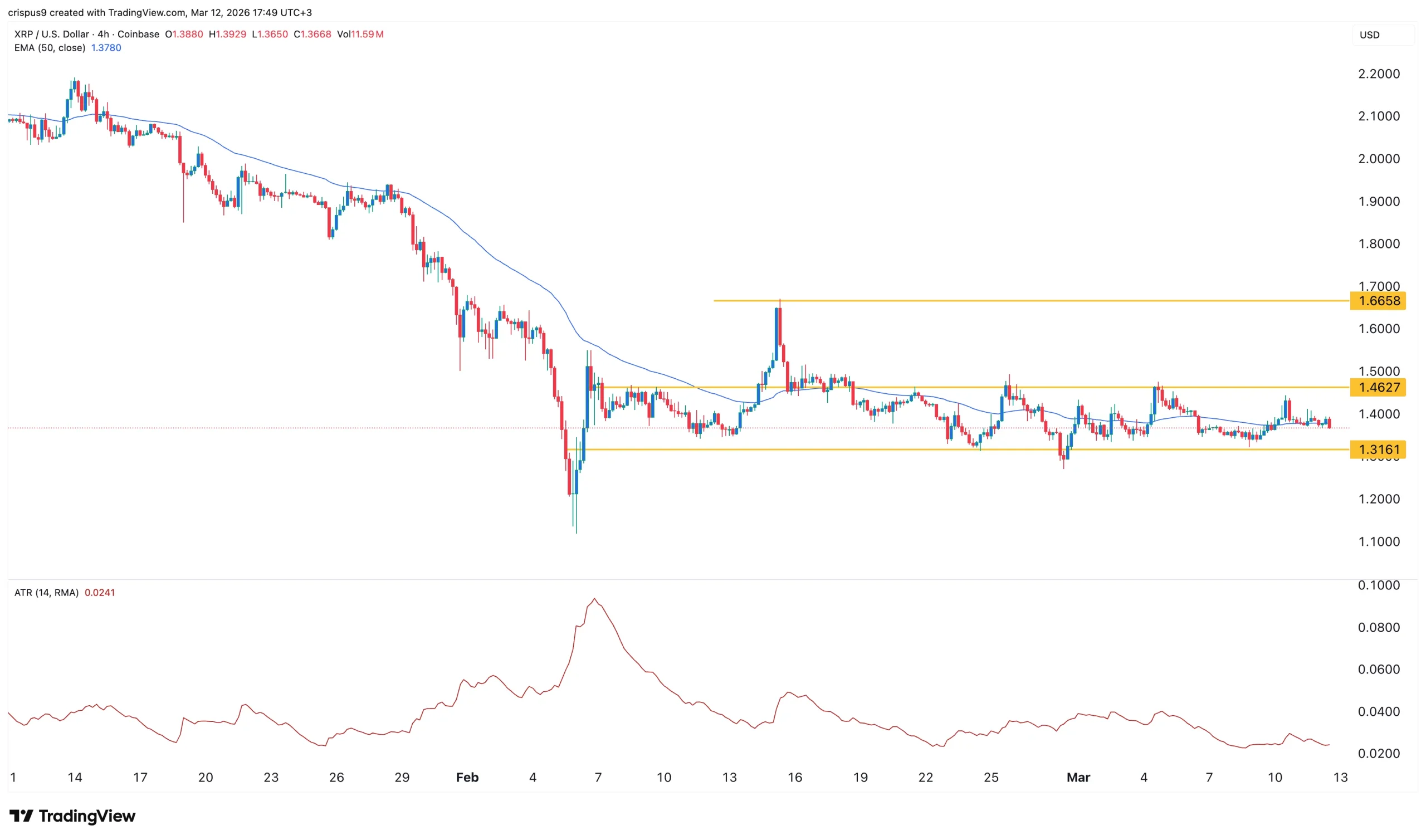
XRP price has gone nowhere in the last 30 days as third-party data reveals that demand from Wall Street investors has stalled.
Summary
- XRP price has remained in a narrow range in the last 30 days.
- Demand from Wall Street investors has waned in this period.
- The coin could be in the accumulation phase of the Wyckoff Theory.
Ripple (XRP) token was trading at $1.3825 today, March 12, inside a range it has remained at in the past few weeks. This price is 63% below its highest point last year.
Data compiled by SoSoValue shows that spot XRP ETFs have shed over $26 million in assets this month. This is the first month that these funds have experienced outflows since they were launched in November.
The numbers show that the funds did not experience any inflow on Wednesday. Before that, they experienced outflows in the previous four consecutive days. They now hold $985 million in assets under management.
A recent report showed that some of the biggest companies in Wall Street holds XRP ETFs. Goldman Sachs holds XRP ETFs worth $154 million, and is followed by top companies like Millennium Management, Logan Stone Capital, Citadel, and Jain Global.
More data shows that demand for XRP has dropped in the past few weeks. For example, according to CoinGecko, the daily volume stood at $2.3 billion today, down from over $4 billion the same day last week.
XRP’s futures open interest has dropped in the past few months, moving from last year’s high of over $10 billion to $2.4 billion today. The same has happened in the CME, where futures contracts are seeing weak demand.
XRP price technical analysis
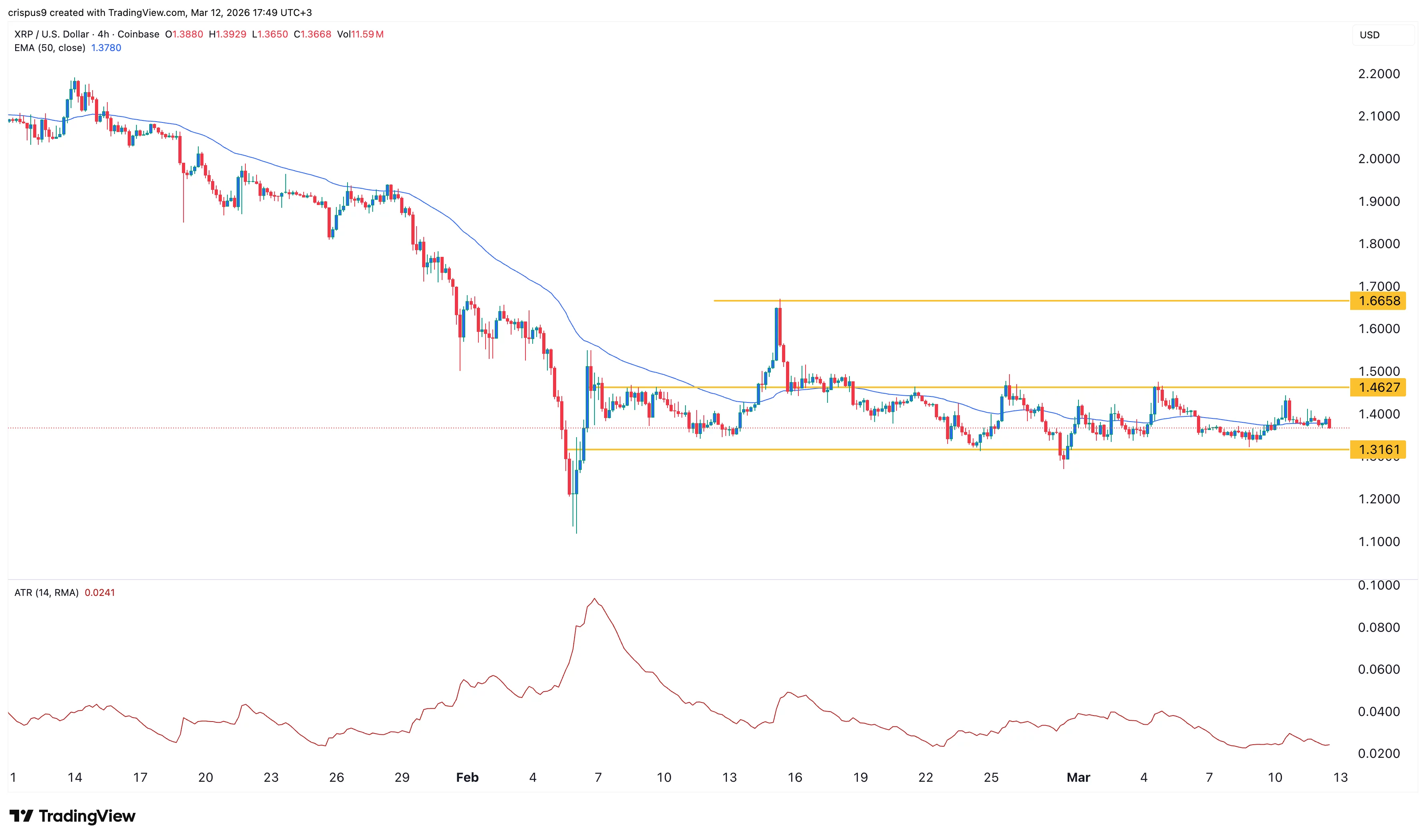
The four-hour chart shows that the Ripple token has remained in a narrow range in the past few months. It has remained inside the key support and resistance levels at $1.3160 and $1.4627.
The volatility has dropped, with the Average True Range has remained in a downward trend. It is also oscillating at the 50-period and 100-period moving averages.
On the positive side, this is a sign that coin is in the accumulation phase of the Wyckoff Theory. This phase is usually characterized by sideways movements.
Therefore, while its too early to predict, there is a possibility that the coin will have a strong bullish breakout. Its initial target will be at $1.4627, the upper side of the channel. A move above that price will point to more gains, potentially to the psychological level at $1.6658, its highest point in February this year.

Key Takeaways
- NIO has successfully broken above both its 50-day and 200-day simple moving averages, with both trend lines now pointing upward
- Technical indicators show bullish RSI divergence alongside significant volume increases during rallies, suggesting diminishing bearish pressure
- Chart analysis reveals a double bottom formation with a breakout level at $5.79, projecting a move toward $8 by late 2026
- Call option volume reached 58,591 contracts with an exceptionally low put/call ratio of 0.30, indicating bullish sentiment
- Fellow Chinese EV competitor XPeng (XPEV) climbed 14% this week, reinforcing sector-wide momentum
Holding NIO shares has tested investors’ patience considerably. Following its peak above $60 in the first quarter of 2021, the Chinese electric vehicle maker endured a prolonged decline that ultimately bottomed in single-digit territory. However, recent price action suggests a potential turning point.
Shares were changing hands near $5.60 on Thursday, marking an approximate 19% weekly advance — positioning this week as the strongest performance since late August 2025, assuming momentum holds through Friday’s trading session.
The technical configuration is capturing market attention. NIO has successfully recaptured both its 50-day and 200-day simple moving averages during this week’s rally, with both indicators now trending upward. This represents a significant departure from the stock’s positioning just a few months earlier.
Technical analysts have identified a bullish RSI divergence, characterized by ascending RSI lows despite the stock printing lower price lows. This divergence typically indicates weakening downside momentum. Trading volume corroborates this interpretation — pronounced volume surges accompanying upward price movement represent a textbook indication of institutional accumulation.
The stock has also successfully retested a bull flag breakout pattern that originated in August. A double bottom formation has emerged with a pivot point established at $5.79. The catalyst for this pattern was a bearish island reversal that concluded with a 7.3% downward gap on December 31. NIO subsequently printed a bullish hammer candlestick on March 3, followed immediately by a bullish island reversal to the upside in the next trading session.
Analysts are projecting an upside objective of $8 by the latter half of 2026 — representing a 42% appreciation from current price levels. The bullish scenario remains viable above support at $4.75.
Extended Time Frame Analysis
Examining the five-year weekly chart provides greater clarity regarding the bottoming process. Since early 2024, NIO has been trading within what appears to be a base-building consolidation pattern. Beginning in October, the right shoulder of a bullish inverse head-and-shoulders formation has been developing.
Should the stock clear the $8 resistance threshold later in 2026, the extended-term projection based on this pattern suggests a potential move toward $13 by early 2027.
Accumulation patterns have been evident since the previous summer, with buyers consistently defending lower price levels.
Options Activity Reflects Bullish Positioning
The derivatives market is reflecting the underlying momentum. Thursday saw 58,591 call contracts trade hands in NIO. Short-dated contracts expiring March 13 and March 26 comprised approximately 19,900 of that total. The put/call ratio currently stands at just 0.30 — an unusually low figure indicating traders are purchasing call options at more than three times the rate of protective puts.
Implied volatility has also expanded, reflecting heightened speculative interest in the name.
NIO’s upcoming quarterly earnings announcement is scheduled for June 2, which may be contributing to the increased options positioning.
On a year-to-date basis, NIO has advanced 7.25%. The company’s current market capitalization is $12.48 billion.
XPeng is experiencing similar strength this week, climbing 14% as of Thursday afternoon and positioned to break a three-week losing streak.



Vitalik Buterin reframes Ethereum as censorship‑resistant “global shared memory,” with PeerDAS scaling its data layer for voting, identity, and on‑chain coordination.
Summary
- Vitalik says Ethereum’s main role is an open, readable and writable data availability layer, more than a smart contract or payments platform.
- He casts ETH as core Sybil resistance and collateral securing this shared memory, with DeFi and apps built on top of that base.
- PeerDAS is already boosting Ethereum’s data capacity, with plans for 10–100x gains to support voting, identity, and governance use cases.
Ethereum (ETH) co-founder Vitalik Buterin says the network’s real value lies in acting as a globally shared “bulletin board” for data availability, rather than just a smart contract or payments platform, sharpening the narrative around Ethereum’s role in the broader crypto stack.
Vitalik reframes Ethereum’s core value
In a new post on X, Buterin argued that Ethereum’s fundamental contribution is providing a publicly readable and writable data layer that cryptographic protocols can reliably anchor to. He highlighted that many high-value use cases—secure online voting, software version control, certificate revocation and more—depend on having an open, persistent data space rather than purely on complex smart contract logic.
Buterin framed ETH not only as a payment asset, but as a core instrument for Sybil resistance and as collateral for smart contracts, positioning it at the center of a decentralized, privacy-preserving, open-source technology stack. In his view, smart contracts and DeFi are extensions built atop this shared memory, not the base value proposition itself.
PeerDAS, scaling, and “global shared memory”
Buterin also pointed to Ethereum’s PeerDAS upgrade as a key step in scaling this data availability layer, saying it already increases Ethereum’s data capacity by about 2.3x, with a path toward 10–100x gains over time. Improved data throughput, combined with lower fees, is meant to support a broader range of applications beyond DeFi, including governance systems, identity, and new classes of on-chain coordination tools.
He summed up Ethereum as a kind of “global shared memory,” where applications can reliably publish and read data in a neutral environment secured by ETH-based economic incentives. For developers and protocols, the message is clear: treat Ethereum first as a durable, censorship-resistant data availability layer, and only secondarily as a smart contract execution chain.

BlackRock’s staked Ethereum exchange-traded fund has tallied $15.5 million in trading volume on its first trading day, which a market analyst described as “very, very solid” despite falling short of two similar Solana staking products that launched last year.
Nasdaq data shows the iShares Staked Ethereum Trust (ETHB) had 592,804 shares traded on its debut on Thursday, with Bloomberg ETF analyst James Seyffart noting on X that the product turned over around $15.5 million.
“Very, very solid for a day 1 ETF launch,” Seyffart said.
The ETF invests and stakes Ether (ETH), locking up the tokens on the blockchain with the aim of providing a yield. The fund relies on network validators to capture staking rewards, typically offering a yield of 4% annually.

ETHB’s $15.5 million in debut trading volume trailed similar staking funds tied to the Solana (SOL) token, including the $55.4 million in volume recorded by the Bitwise Solana Staking ETF (BSOL) when it debuted in October. Another similar fund, the REX-Osprey SOL + Staking ETF (SSK), also recorded $33.7 million on its debut in July.
ETHB adds to BlackRock’s crypto product lineup, which includes its two flagship crypto funds, the iShares Bitcoin Trust ETF (IBIT) and iShares Ethereum Trust ETF (ETHA).
Related: Basic adds VanEck crypto ETFs to 401(k) plans amid US retirement shift
The two ETFs have respectively attracted over $62.8 billion and $11.9 billion worth of inflows since launching in 2024, Farside Investors data shows.
BlackRock is also looking to offer a Bitcoin Premium Income ETF, which would sell covered call options on Bitcoin futures, collecting premiums to generate yield.
ETHB is backed by 80% staked Ether and 20% Ether, according to BlackRock’s website. It launched with $106.7 million in net assets, which is being custodied by Coinbase.
Staking rewards will be distributed on a monthly basis and will be obtained from Ethereum network validators run by Figment, Galaxy Digital and Bitwise-owned Attestant.
ETHB offers a 0.25% sponsor fee with a one-year waiver, reducing the fee to 0.12% on the first $2.5 billion assets under management.
Magazine: What’s a ‘Network State’ and are there real-life examples? Big Questions

TLDR
- The U.S. Senate passed the housing bill in an 89 to 10 bipartisan vote.
- The bill blocks the Federal Reserve from issuing CBDCs until at least 2030.
- The measure prohibits the Fed from creating a digital dollar directly or through intermediaries.
- Lawmakers included the CBDC ban in the 21st Century ROAD to Housing Act.
- House members signaled they may seek changes before advancing the bill.
The U.S. Senate approved a housing bill that bars the Federal Reserve from issuing a digital dollar. Lawmakers passed the measure in an 89-10 bipartisan vote and attached the CBDC ban to the broader package. However, House lawmakers signaled they may challenge parts of the bill and delay its path forward.
Senate Blocks CBDCs Through 2030 in Housing Package
The Senate inserted language that blocks the Federal Reserve from issuing CBDCs until at least 2030. Lawmakers placed the provision in the final section of the 302-page 21st Century ROAD to Housing Act. The text states that the Fed may not create a central bank digital currency directly or indirectly.
The bill also bars the Fed from issuing any digital asset that resembles a central bank digital currency. It prohibits issuance through financial institutions or other intermediaries. As a result, the measure restricts both direct and indirect government-backed digital dollar efforts.
Republican lawmakers have long opposed CBDCs and have pushed to prevent their launch. However, the U.S. government has only studied digital dollar models and has not launched a token. Other jurisdictions, including China, continue to pursue central bank digital currencies.
Digital Chamber CEO Cody Carbone welcomed the Senate vote. He said, “Financial privacy is a cornerstone of American freedom.” He added that Congress and the public must decide on any authorization of a central bank digital currency.
Carbone also stated that digital innovation should remain private sector-led. He said the Senate reinforced the need to protect individual liberty. His comments followed the overwhelming bipartisan approval in the chamber.
House Review and Political Conditions Create Uncertainty
House lawmakers have indicated they may seek revisions to the Senate’s housing bill. Some members oppose provisions that limit how many homes large investors can own. The bill requires private equity firms and other large buyers to reduce their housing holdings.
The Senate measure targets institutional investors that control large housing inventories. Lawmakers aim to expand home access by capping ownership levels. However, the House may demand changes before advancing the legislation.
President Donald Trump has supported efforts to increase housing availability. He has also backed limits on large investors purchasing single-family homes. This overlap places him in partial agreement with some Democratic lawmakers.
However, Trump recently stated he will not sign legislation without new voter identification requirements. He said Congress must pass a bill requiring proof of citizenship for voters. This condition applies to legislation tied to this year’s midterm elections.
The demand for voter identification legislation adds complexity to the housing bill’s progress. Lawmakers must reconcile differences between the chambers before sending the bill to the president. Meanwhile, the Senate version includes the CBDC ban through 2030 as written.
Separately, Congress continues work on crypto legislation. Lawmakers are also reviewing the Digital Asset Market Clarity Act. The housing bill’s next steps now depend on House consideration and potential revisions.


A new report digs dip into short-term Bitcoin price trajectory, citing the U.S. mid-term elections as a key catalyst that could spark a rally.
Summary
- Bitcoin price could rise after U.S. mid-term elections as political uncertainty fades, Binance Research says.
- Historically, the S&P 500 gained about 19% in the year following mid-terms.
- Bitcoin has also rallied after past mid-term cycles, posting average gains of about 54%.
Bitcoin (BTC) could see a strong move higher after the next U.S. mid-term elections, according to a March 11 report from Binance Research. The firm said market history shows that both stocks and Bitcoin often rally once political uncertainty surrounding the elections fades.
Data cited in the report shows the S&P 500 has gained an average of 19% in the 12 months after mid-term elections. The index has not posted a negative return during that window since 1939.
Bitcoin has shown a similar tendency, though the data set is much shorter. Since the crypto market became more liquid around 2014, the three completed mid-term cycles were followed by strong Bitcoin performance. On average, the asset climbed about 54% over the three years after the election.
Election cycles often bring market swings
According to the report, mid-term election years are usually the most volatile period in the four-year political cycle. Investors often turn cautious as policy direction and economic priorities remain unclear.
Historically, the S&P 500 has recorded average drawdowns of around 16% during mid-term years. In many cases, the market correction happens before the vote, when uncertainty is highest.
Bitcoin has tended to follow a similar pattern but with larger moves. Binance Research said past mid-term years saw average declines of roughly 56% for BTC, reflecting the asset’s higher sensitivity to shifts in risk sentiment.
Once election results are known, the environment usually changes. Investors gain more clarity on fiscal policy and regulation, and capital often moves back into risk assets. That shift has helped drive strong rallies in the year following mid-term elections.
Macro risks still shaping the Bitcoin price
While the election cycle offers a longer-term perspective, the report notes that global events are currently driving markets.
Rising geopolitical tensions have added uncertainty across financial markets. Disruptions near the Strait of Hormuz, a key global oil shipping route, have already affected energy prices and investor sentiment.
Oil markets have been highly volatile in recent days, and Bitcoin has moved alongside broader macro assets. According to Binance Research, price action in BTC, crude oil, and U.S. equities has followed similar patterns, although crypto usually shows larger swings.
At the same time, activity from U.S. investors appears to be increasing. Trading linked to spot Bitcoin ETFs has risen over the past week, suggesting renewed interest from traditional market participants.
Even so, ETF volume still represents a relatively small portion of total Bitcoin spot trading. That gap indicates there may still be room for greater institutional participation over time.
For now, the report describes the market as fragile, with macro risks still unresolved. Still, past cycles suggest that periods of uncertainty have often been followed by strong opportunities for long-term investors, particularly once the political cycle moves past the mid-term elections.


The agency issued an advance rulemaking notice and a staff advisory encouraging innovation.
The Commodity Futures Trading Commission (CFTC) on Thursday issued a pair of actions signaling its intent to build a comprehensive regulatory framework for prediction markets, an industry that has exploded in popularity over the past year.
The agency published an Advance Notice of Proposed Rulemaking (ANPRM) seeking public comment on how existing derivatives law should apply to prediction markets, alongside a staff advisory from the Division of Market Oversight offering guidance to exchanges that list event contracts.
The moves come as the CFTC faces a surge of interest from would-be prediction market operators. Applications for designation as a contract market have more than doubled over the past year, largely from entities looking to run prediction markets exclusively, the agency said.
The CFTC’s regulatory push arrives amid a period of unprecedented growth for the sector. Open interest across crypto prediction markets surpassed $1 billion for the first time in February, fueled by Super Bowl-related activity. Spot volume hit a record $1.4 billion on Super Bowl Sunday alone, with Kalshi generating $800 million and Polymarket about $311 million.
Monthly volumes across on-chain prediction markets jumped to more than $27 billion in February from under $100 million in early 2024.
The industry has also attracted heavyweight backing. Intercontinental Exchange, the owner of the New York Stock Exchange, invested $2 billion in Polymarket, while Kalshi raised $300 million, deals that have helped transform prediction markets from a niche crypto experiment into a mainstream trading category.
Fresh Start
The ANPRM effectively opens a new chapter for prediction market regulation. In February 2026, the Commission withdrew a set of proposed rules from 2024 that would have further specified which event contracts are contrary to the public interest, a legal standard that gives the CFTC authority to ban certain types of contracts. The withdrawal cited ongoing state regulatory actions and litigation over the agency’s jurisdiction.
Rather than re-propose those rules, the Commission is now casting a wider net, posing 40 detailed questions to the public on topics ranging from manipulation risks and margin trading to the treatment of blockchain-based prediction markets and the role of inside information.
The staff advisory struck a pro-innovation tone, describing prediction markets as “a proven source of reliable information for news media, sports leagues, financial institutions, and everyday Americans.”
The advisory focused heavily on sports-related event contracts, urging exchanges to engage with professional sports leagues and their integrity units when designing contracts. Staff flagged heightened concerns about manipulation in contracts that settle based on the actions of a single individual, such as a referee or a player, rather than on aggregate outcomes over extended periods of play.
The advisory also reminded exchanges of existing anti-manipulation and insider trading rules, noting that misappropriation of confidential information already constitutes a violation under CFTC regulations.
Key Questions
Among the most consequential issues raised in the ANPRM is whether prediction markets should be allowed to offer margin trading. Currently, event contracts are fully collateralized. The Commission asked for input on how initial margin should be calculated, whether daily variation margin should be required, and what additional disclosures retail customers would need.
The ANPRM also probes the boundaries of the “gaming” category, one of five activities that can trigger a public interest ban on event contracts. The Commission asked whether gaming is synonymous with gambling, whether sports competitions should be treated differently from award shows, and whether the demographics of prediction market participants should factor into its analysis.
On blockchain-based prediction markets, the Commission asked whether existing rules present unique challenges or advantages and which areas would benefit from tailored guidance, a question with direct implications for platforms like Polymarket that operate on decentralized infrastructure.
This article was written with the assistance of AI workflows. All our stories are curated, edited and fact-checked by a human.
Crypto World
DeepSnitch vs Pepeto: $8M Bought Pepeto Hype, $2M Bought DeepSnitch AI a Product Traders May Actually Use Every Day

Ethereum is hitting highs on active addresses and smart contract calls. However, the price of Ether has fallen by over 35% over the past three months, highlighting a disconnect between network activity and price performance.
The lag in the price of Ether is mainly triggered by capital rotation into high-beta tokens such as DeepSnitch AI (DSNT). Now this AI crypto is winning against Pepeto as investors compare DeepSnitch Vs Pepeto.
DeepSnitch AI is a blockchain analytics platform that is powered by a suite of five AI crypto trading tools. These tools work in sync, turning raw on-chain data into tradable insights. In just 6 presale stages, DeepSnitch AI has raised nearly $2.1 million and is going for $0.04399 per token.
Ethereum’s network activity surges, but the price and network fees lag
CryptoQuant’s latest weekly report shows that Ethereum’s network activity is surging, but the price performance has yet to reflect the jump. The report daily highlights that active addresses on Ethereum approached 2 million in February 2026, exceeding peaks seen during the 2021 bull market.
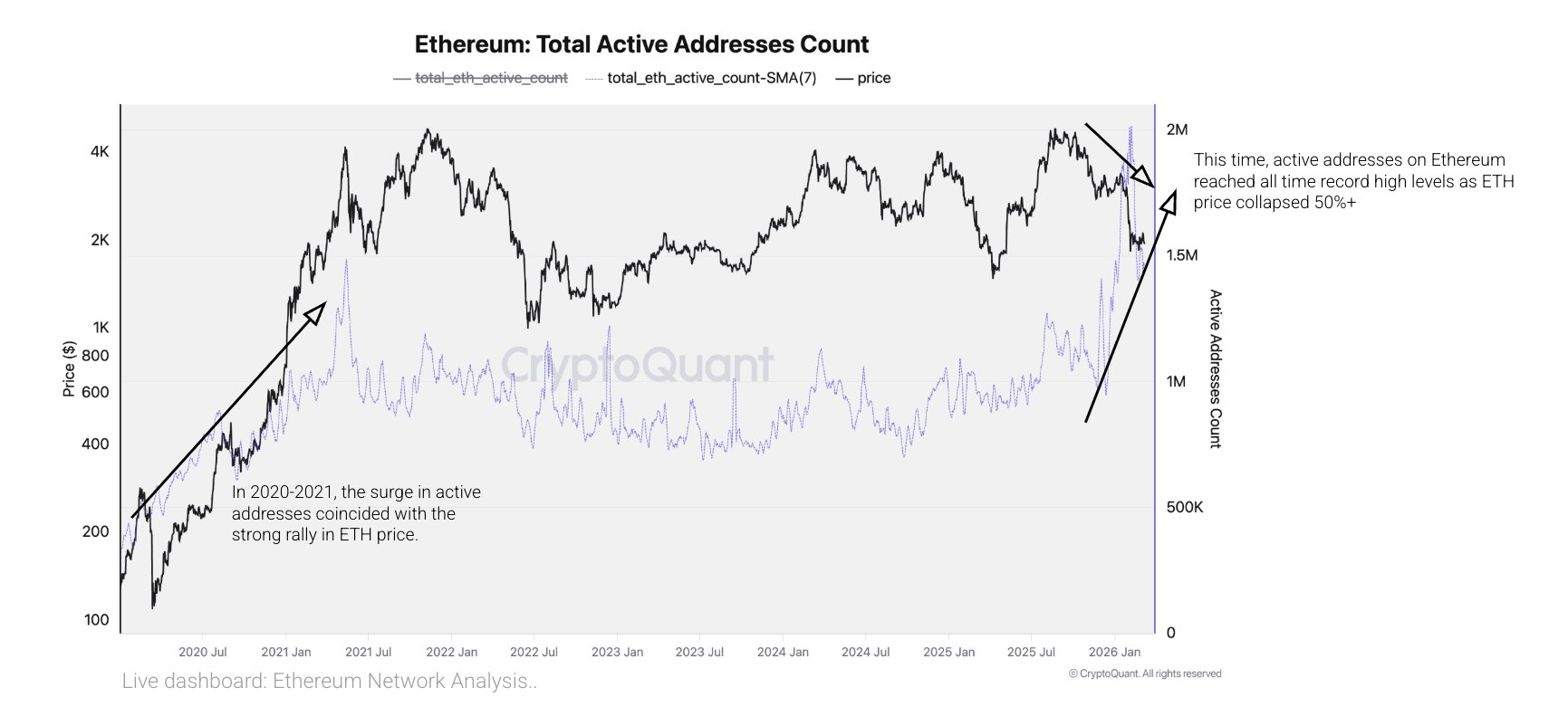
On the other hand, Smart contract calls also reached 40 million per day, setting a new record as users continue to leverage the Ethereum network. However, Ether’s price has remained subdued, with data from TradingView showing that ETH traded at $2,050 on March 11, moving within a descending channel since August 2025.
Deepsnitch vs Pepeto vs Little Pepe comparison to help you pick the best coin for maximum returns this year
1. DeepSnitch AI: The blockchain analytics platform that captures moves before the market swings
The DeepSnitch vs Pepeto comparison shows that DeepSnitch AI is designed to solve a real issue in crypto trading. Instead of hype, DeepSnitch AI delivers tools that process live blockchain activity and turn it into usable insights.
DeepSnitch AI offers a functioning platform with five agents that process real-time crypto data and improve research before capital is deployed. SnitchFeed, SnitchGPT, AuditSnitch, SnitchCast, and SnitchScan all work together 24/7, making sure investors have all the intel to make life-changing bets.
What’s even more interesting is that DeepSnitch AI is not selling a promise but working AI crypto tools. By buying DSNT at $0.4399, you get access to all these tools from a single dashboard.
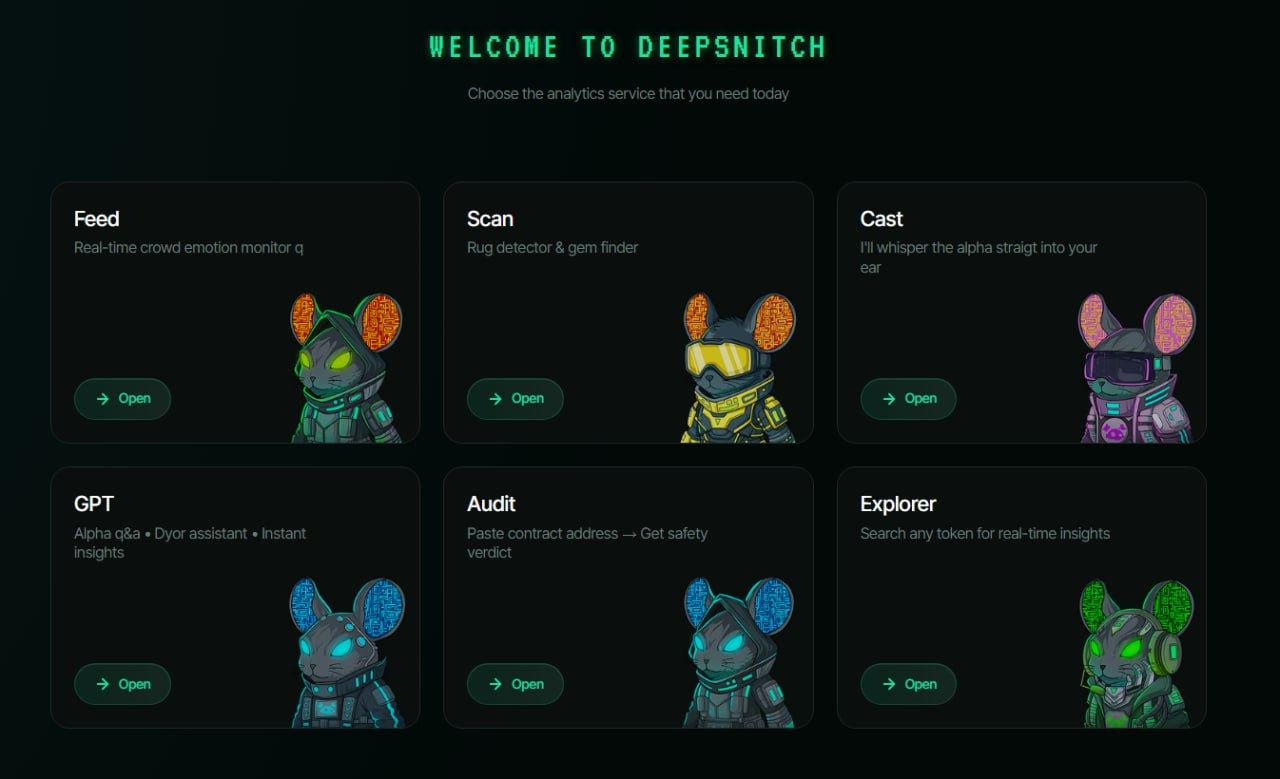
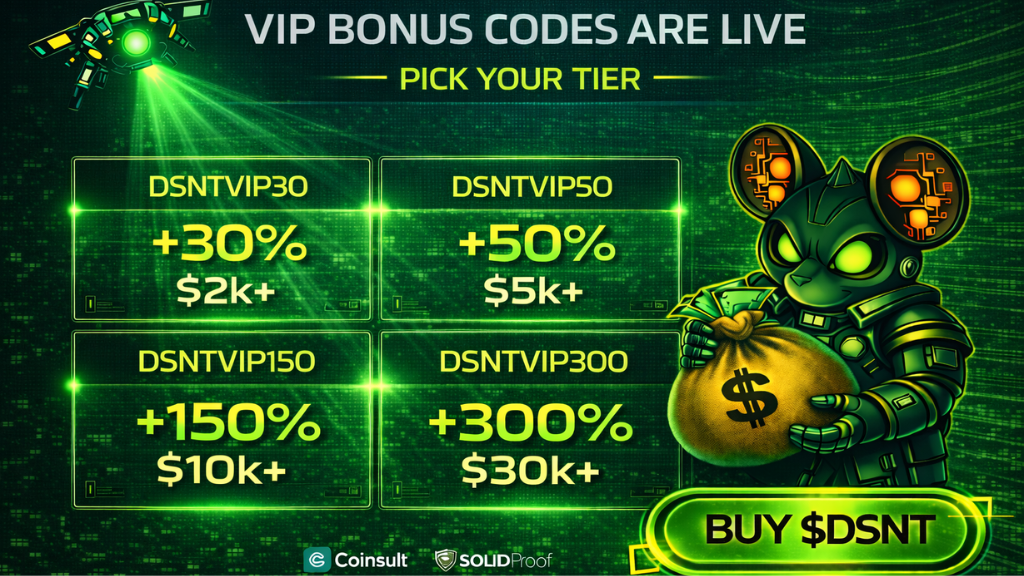
Strong demand shows that DeepSnitch AI’s 1000x returns narrative is gaining traction. Across six presale stages, more than $2 million has been raised. Bonus tiers add further incentive. A $10,000 purchase receives a 150% bonus, expanding allocation, and potential upside.
The DeepSnitch AI presale is set to end on March 31, with UniSwap trading set to follow soon after. Once the presale window closes, it will be too late to jump in, and the opportunity will be long gone.
2. DeepSnitch Vs Pepeto: Does Pepeto only sell promises?
Pepeto is a new crypto token piggybacking on the back of the hype around the Pepe meme coin. Currently, Pepeto is selling at $0.000000186 in the ongoing presale round, with more than $7.9 million raised.
However, Pepeto is highly speculative, making investors opt for DeepSnitch AI because of its live AI crypto trading tools and clear utility. The 1000x projections also make DSNT better than PEPETO.
3. Little Pepe vs DeepSnitch AI comparison
Besides Pepeto, Little Pepe (LILPEPE) vs DeepSnitch AI is another presale comparison heating up. Little Pepe is now selling at $0.0022, with more than $28 million raised.
This crypto markets itself as the next evolution of meme coins, claiming to be engineered for faster and cheaper transactions. But crypto investors are now after tokens with clear utility, unlike LILPEPE, which is speculative in nature.
The bottom line
The Deepsnitch vs Pepeto debate is already over, with DeepSnitch AI miles ahead of Pepeto. While Pepeto sells promises, DeepSnitch AI, on the other hand, has delivered five working AI crypto trading tools.
This positions DeepSnitch AI as the best crypto presale to buy now, over Pepeto. DeepSnitch AI is set to launch soon, meaning you have less than 3 weeks to make your purchase.
Visit the official website for more information, and join X and Telegram for community updates.
FAQs
1. Which is the best blockchain analytics platform?
DeepSnitch AI tops the list of the best blockchain analytics platforms. This platform leverages five AI agents, which power clear and real-time market analysis.
2. What does the Deepsnitch VS Pepeto comparison show?
DeepSnitch vs Pepeto highlights a clear gap between DeepSnitch AI and DeepSnitch. Pepeto only sells promises, while DeepSnitch AI focuses on providing investors with accessible tools.
3. Which is better, DeepSnitch AI or Pepeto?
DeepSnitch AI is better than Pepeto. Instead of hype, DeepSnitch AI is utility-backed and has working AI crypto trading tools. These aspects align it for the 1000x rally.
Disclaimer: This is a Press Release provided by a third party who is responsible for the content. Please conduct your own research before taking any action based on the content.

A committee that advises the U.S. Securities and Exchange Commission recommended the agency move forward on a tokenized-securities policy that would allow traders to cut out the kind of go-between settlement that Wall Street investment firms have relied on for decades.
The SEC’s Investor Advisory Committee voted Thursday to recommend narrow exemptions for the blockchain-based innovation for the trading of stocks, as long as the activity comes with mandatory disclosures, routine outside supervision and “a requirement that the trading of tokenized equity securities seeks to ensure that all investors receive the best terms for their orders.”
These crypto assets still meet the definition of securities under the law, as SEC Chairman Paul Atkins has regularly contended, which means the activity needs parallel safeguards to the traditional system. Atkins said his agency is working toward formal regulations on tokenization. Now this work has the backing of an official recommendation from the committee, whose members include veterans from major trading firms, institutional investors and academics.
The traditional approach to stock trading features brokers, transfer agents and centralized settlement databases and can take a day or more to execute, but in placing that same stock on-chain, “the delivery of the tokenized security and the payment can happen as a single transaction, with ownership records embedded directly into a single blockchain.”
The group told the commission that the newer approach doesn’t come without risks:
“The most significant risk associated with the tokenization of equity securities is that these reforms or grants of exemptive relief could introduce new risks that investors do not understand and impose higher costs that outweigh the benefits of tokenization,” according to the recommendation document approved by the committee.
In remarks on Thursday, Atkins praised the committee for its “recognition that tokenization can enhance settlement efficiency, reduce settlement risk, and eliminate unnecessary intermediaries.
“I expect the Commission to soon consider an innovation exemption to facilitate limited trading of certain tokenized securities with an eye toward developing a long-term regulatory framework,” he said.

JPMorgan faces test on bank liability in $328M Goliath Ponzi case
Zendaya pays homage to Whitney Houston, Carrie Bradshaw in white floral minidress

The Apprentice’s Lord Sugar slams ‘slimy’ decision as star used as ‘scapegoat’

Smart energy pays enters the US market, targeting scalable financial infrastructure

Why Israel is blocking foreign journalists from entering

Bitcoin: We’re Entering The Most Dangerous Phase

BITCOIN WARNING: Bearish Target Revealed (Prepare Now)!!! – Bitcoin News Today, Ethereum & Altcoins

XRP RIPPLE CEO CONFIRMS !!! DAVID SCHWARTZ THIS IS A TEST !!! SWIFT INSOLVENT BY 2027 !!!

XRP – They Just End It! (MASSIVE News!)
-
Business6 days ago
Form 8K Entergy Mississippi LLC For: 6 March
-

 News Videos4 days ago
10th Algebra | Financial Planning | Question Bank Solution | Board Exam 2026
-

 Fashion6 days ago
Weekend Open Thread: Ann Taylor
-

 Crypto World3 days ago
Paradigm, a16z, Winklevoss Capital, Balaji Srinivasan among investors in ZODL
-
 Tech2 days ago
A 1,300-Pound NASA Spacecraft To Re-Enter Earth’s Atmosphere
-

 Tech2 days ago
ChatGPT will now generate interactive visuals to help you with math and science concepts
-

 Politics7 days ago
Top Mamdani aide takes progressive project to the UK
-

 Business2 days ago
ExxonMobil seeks to move corporate registration from New Jersey to Texas
-

 Sports5 days ago
Three share 2-shot lead entering final round in Hong Kong
-

 Sports5 days ago
Braveheart Lakshya downs Lai in epic battle to enter All England Open final | Other Sports News
-

 NewsBeat1 day ago
Residents reaction as Shildon murder probe enters second day
-

 Entertainment6 days ago
Hailey Bieber Poses For Sexy Selfies In New Luscious Lip Thirst Traps
-

 Business4 days ago
Search for Nancy Guthrie Enters 37th Day as FBI Probes Wi-Fi Jammer Theory
-

 Business2 days ago
Search Enters Sixth Week With New Leads in Tucson Abduction Case
-
 NewsBeat3 days ago
Pagazzi Lighting enters administration as 70 jobs lost and 11 stores close across Scotland
-

 Tech4 days ago
Despite challenges, Ireland sixth in EU for board gender diversity
-

 Business3 days ago
Search Enters 39th Day with FBI Tip Line Developments and No Major Breakthroughs
-

 NewsBeat2 days ago
I Entered The Manosphere. Nothing Could Prepare Me For What I Found.
-

 Business6 days ago
Iran war enters second week as Trump demands ’unconditional surrender’
-

 Sports4 days ago
Skateboarding World Championships: Britain’s Sky Brown wins park gold