

Crypto World
AI Labs Ditch Models for Consultants as SaaS Market Loses $Billions in Value


TLDR:
- OpenAI raised $4B to launch a consulting firm competing directly with Deloitte, PwC, and Ernst & Young
- Anthropic countered with a $1.5B consulting venture backed by Blackstone and Goldman Sachs within weeks
- Goldman Sachs reports software P/E multiples fell to 20x, the lowest absolute reading recorded since 2014
- 88% of organizations running AI agents reported at least one security incident over the past twelve months
The enterprise software sector is undergoing a structural shift as artificial intelligence reshapes how businesses buy and deploy technology.
Valuations across public SaaS companies have declined sharply, with 90% of stocks trading 30–80% below their 52-week highs.
Meanwhile, leading AI labs are moving beyond model development into hands-on consulting. The combined moves signal a broader realignment of where value is created in the software industry.
Low-End SaaS Tools Are Being Replaced by AI Workflows
The first segment to feel the pressure has been lightweight, single-function software products. Tools priced around $49 per seat per month are losing ground to AI agents that replicate their functions automatically.
Businesses no longer purchase a dedicated tool for a narrow task — they describe what they need, and AI builds and executes it.
Milk Road AI noted on X that “the low end of the market is basically finished,” citing investor Chamath Palihapitiya’s recent diagnosis of the sector.
The seat-based pricing model that built the SaaS industry does not translate to this new transaction type. As a result, the economic foundation of many small business software products is eroding.
Goldman Sachs data reflects the broader damage. Software forward price-to-earnings multiples dropped from 35x to 20x — the lowest level since 2014.
That multiple is also the smallest premium to the S&P 500 since 2010, pointing to a sector-wide reassessment of growth prospects.
Mid-market point solutions without proprietary data assets face a similar trajectory. Products that lack defensible data flywheels or deep vertical integration are increasingly vulnerable to displacement by general-purpose AI systems.
AI Labs Are Now Competing Directly With Top Consulting Firms
At the high end of the market, the challenge is different — but no less serious. OpenAI recently raised $4 billion from investors including TPG, Brookfield, Bain, and McKinsey to launch a consulting division. The venture targets direct competition with firms like Deloitte, PwC, Ernst & Young, and Accenture.
The structure of the deal is notable. Investors were guaranteed a 17.5% annual return — roughly $700 million per year — from a company projected to lose $14 billion in 2026.
The move came after OpenAI’s enterprise LLM market share dropped from 50% to 25% between late 2023 and mid-2025, with Anthropic rising to 32%.
Anthropic responded almost immediately with a competing $1.5 billion consulting venture, backed by Blackstone, Goldman Sachs, and Hellman & Friedman.
Together, the two labs committed $5.5 billion to human-powered enterprise deployment within a single month. The scale of that spending reflects how difficult real-world AI implementation remains.
Data supports that difficulty. Some 88% of organizations running AI agents reported a security incident in the past year.
Additionally, 42% of C-suite executives said AI adoption is generating internal organizational conflict. Average year-one implementation costs through consulting run $228,000 — nearly three times the platform-based alternative.


TLDR:
- Strategy tracker update revived speculation that Michael Saylor may be signaling new BTC purchases
- Strategy holds 818,869 BTC worth about $64B, making it a dominant corporate Bitcoin holder globally
- Earnings call comments introduced possible BTC sales for dividends, shifting investor expectations
- Traders link Saylor’s “Big Dot Energy” post with historical accumulation signals and market timing
Michael Saylor’s Bitcoin “big dot energy” has stirred debate across crypto markets. Traders are watching for signs of renewed Bitcoin accumulation.
Social signals, past purchase patterns, and earnings have converged into growing speculation around the firm’s next move.
Tracker Activity Fuels Accumulation Speculation
Market attention increased after Strategy released its latest tracker update, showing renewed visual signals tied to previous Bitcoin acquisition cycles. The recurring orange markers continue to guide trader expectations around potential accumulation windows.
Historical behavior shows that these updates often precede official corporate announcements within short timeframes while reinforcing sentiment around institutional buying activity across the market.
Market participants also compare current tracker patterns with earlier accumulation phases seen since 2020 across multiple macro cycles, a periodic review.
Strategy currently holds one of the largest corporate Bitcoin positions, totaling 818,869 BTC, which reinforces its role as a major market influence.
The scale of holdings continues to shape liquidity expectations and trading sentiment across both spot and derivatives markets, with investors closely tracking treasury movements for directional cues. Market reaction remains sensitive to any perceived change in accumulation pace or treasury allocation strategy by the company, signaling a shift.
Market observers continue monitoring Michael Saylor’s Bitcoin purchase, which references as part of broader sentiment tracking across institutional flows.
These signals are not confirmations, yet they often coincide with subsequent on-chain accumulation activity and updated treasury disclosures.
Both remain the primary verification method for Strategy Bitcoin movements. Traders rely heavily on filings and official statements before positioning around large-scale Bitcoin treasury actions.
Earnings Call Shift and Market Positioning
Recent earnings call remarks introduced a shift in Strategy’s communication around Bitcoin management, including the possibility of periodic sales to support dividend obligations for credit instrument holders.
This marks a notable departure from earlier messaging centered on uninterrupted accumulation policies. Market participants now reassess potential supply-side effects linked to corporate treasury flexibility.
During the earnings discussion, Michael Saylor’s Bitcoin purchase sentiments continued circulating across trading platforms as participants evaluated the balance between accumulation and potential liquidation scenarios.
Trading desks adjusted positioning strategies based on updated corporate treasury guidance and historical accumulation behavior patterns. Volatility expectations increased slightly following clarification around possible Bitcoin sales for dividend funding.
Strategy CEO Phong Le clarified that Bitcoin sales would be limited to specific financial scenarios, including dividend payments and tax-related adjustments. He added that such actions should not be interpreted as directional market positioning decisions.
Average Bitcoin trading volumes above sixty billion dollars continue to absorb institutional flows without structural disruption. These conditions maintain focus on official disclosures as the primary reference point for market interpretation.
TLDR:
- Dormant Dream Market wallets allegedly moved $2M crypto into new consolidated blockchain addresses.
- Funds were routed through regulated crypto services, later used to purchase gold bullion abroad.
- Investigators linked blockchain tracing with shipment records tied to gold bars sent to Germany.
- US and German authorities coordinated the seizure of assets, including gold, cash, and crypto holdings.
US authorities have charged an alleged Dream Market administrator over a crypto laundering scheme tied to gold bars, revealing how dormant darknet wallets were allegedly reactivated and routed through regulated services, creating a cross-border financial investigation spanning blockchain and physical assets.
Dormant wallet activity and blockchain tracing patterns
Investigators in the Dream Market crypto-to-gold laundering case focused on dormant wallet activity that resurfaced years after the marketplace shutdown in 2019.
Blockchain analysts reportedly tracked fund movements from legacy addresses into consolidated wallets believed to be newly structured systems.
Weak points emerged when funds allegedly moved from dormant infrastructure into regulated conversion channels used for gold acquisition.
Authorities indicated that a regulated Atlanta-based crypto service played a central role in converting digital assets into physical bullion.
Each transaction reportedly created compliance records that later helped investigators map cross-border fund flows across multiple jurisdictions.
Investigators also reviewed shipping documentation linked to gold bar deliveries allegedly sent directly to addresses in Germany under monitored procedures.
Financial intelligence units coordinated between US and German agencies to verify the origin of seized bullion and associated accounts.
Law enforcement agencies stated that the conversion from crypto to gold complicated traditional blockchain tracing methodologies significantly.
Despite attempts to obscure origin points, analysts reconstructed transaction paths using exchange records and wallet clustering techniques. These findings contributed to the broader indictment timeline issued months before public disclosure of the case.
Authorities maintained surveillance over dormant wallet clusters while preparing coordinated enforcement actions across jurisdictions involving both financial and digital asset recovery teams during the ongoing investigation process review.
Gold conversion channels and international enforcement response
Prosecutors described the gold conversion process as a structured attempt to move cryptocurrency proceeds outside blockchain visibility.
Funds allegedly passed through intermediary services before being used to purchase bullion from international dealers operating under regulated frameworks.
Authorities in Germany executed coordinated searches that resulted in the seizure of gold bars, cash, and digital asset evidence. The seized materials formed part of a broader evidence pool tied to alleged Dream Market operations and transactions.
Investigators emphasized that regulated conversion channels provided traceable entry points despite attempts to obscure fund origins.
Cross-border cooperation between US and German authorities enabled synchronized enforcement actions across multiple jurisdictions.
Financial records from service providers were incorporated into the investigative timeline supporting the laundering allegations.
Blockchain mapping techniques allowed analysts to reconstruct wallet clusters linked to dormant marketplace infrastructure activity.
Shipping records associated with bullion deliveries provided additional corroboration for alleged asset conversion pathways identified by investigators.
Each data point contributed to mapping financial flows that spanned both digital wallets and physical asset acquisition channels.
Authorities noted that structured laundering patterns often rely on converting liquid crypto assets into less traceable commodities.
These methods have been observed in multiple darknet investigations involving asset diversification across jurisdictions and financial systems. Investigations continue across multiple jurisdictions and agencies involved.
Crypto World
Hyperliquid Founder Holds Washington Talks to Push Onchain Derivatives into the U.S. Market
TLDR:
- Hyperliquid founder Jeff Yan visited Washington during the Clarity Act’s advancement to meet U.S. crypto policymakers.
- Discussions covered both technical DeFi fundamentals and global user demand for onchain derivatives trading platforms.
- ICE and CME Group previously pressured U.S. regulators to restrict Hyperliquid, adding hurdles to its U.S. expansion.
- Yan confirmed the team is actively working toward compliant U.S. access, signaling a structured regulatory engagement strategy.
Hyperliquid founder Jeff Yan recently traveled to Washington, D.C., to meet with U.S. policymakers. The discussions centered on bringing onchain derivatives markets into the United States through proper regulatory frameworks.
Yan confirmed that the team engaged in both technical and introductory conversations with legislators. The meetings took place during the advancement of the Clarity Act, a key moment for crypto regulation in Congress.
Hyperliquid Engages Washington During Clarity Act Advancement
Jeff Yan shared details of the Washington visit through a post on X. He noted that the team met with policymakers alongside the Hyperliquid Policy Council. The timing aligned with the historic progress of the Clarity Act on Capitol Hill.
Some conversations were highly technical in nature. Policymakers demonstrated a strong baseline understanding of how Hyperliquid operates.
This reflected a growing level of crypto literacy among U.S. legislators. Yan described the experience as encouraging overall.
Other discussions took a broader approach, covering the fundamentals of decentralized finance. These sessions introduced the promise of onchain markets from the ground up.
Policymakers were receptive to learning about the global demand for onchain trading. The conversations helped frame DeFi as a financial innovation with real user traction.
Bipartisan support for thoughtful crypto regulation was visible throughout the meetings. Yan noted this was a positive development for the industry.
He expressed a commitment to continuing these conversations in Washington. His goal remains making Hyperliquid accessible to American users through compliant channels.
Regulatory Path for U.S. Users Remains a Key Priority
The road to U.S. access for Hyperliquid has faced notable resistance from traditional financial institutions. Intercontinental Exchange and CME Group previously lobbied U.S. regulators to restrict the platform.
These two legacy derivatives giants viewed Hyperliquid as a competitive threat. Their pressure added complexity to the regulatory conversation.
Despite the opposition, Yan remains focused on building a compliant path forward. The team is actively working toward enabling U.S. users to access the platform legally.
The Washington meetings were part of that broader effort to engage regulators directly. Progress depends on establishing a clear legal framework for onchain derivatives.
The Clarity Act’s advancement in Congress offers a potential opening for platforms like Hyperliquid. Clear legislation could define how onchain markets operate within U.S. jurisdiction.
This would benefit both consumers and platforms seeking regulatory certainty. The timing of Yan’s visit was therefore strategically important.
Yan wrapped up his post by reaffirming his dedication to the regulatory process. He stated he looks forward to continued discussions in D.C. and working hard to make American access to Hyperliquid a reality. The team appears committed to working within the system rather than around it.
TLDR:
- DroppRWA will digitize Saudi real estate into programmable on-chain assets
- Blockchain deed transfer in 2026 cut settlement time from days to seconds across property markets
- Stablecoin-based real estate settlement is targeted for rollout in Saudi Arabia by late 2026
- Sovereign digital infrastructure aims to extend into energy and manufacturing under regulated systems
Saudi Arabia is advancing a large-scale shift toward digitized financial infrastructure through real-world asset systems.
The initiative led by droppRWA targets regulated settlement rails for property and broader economic sectors, positioning the Kingdom within emerging sovereign on-chain finance frameworks.
Real Estate Digitization and Institutional Buildout
The Kingdom’s digital asset program is gaining structure through droppRWA, which has secured $12.5 billion in mandates tied to property markets and investment zones.
The framework is designed to convert physical ownership into programmable financial units under regulated conditions.
A completed blockchain property deed transfer in early 2026 demonstrated near-instant settlement, reducing traditional processing delays from days to seconds. This execution is being used as a reference model for scaling across larger real estate pipelines.
The broader system is aligned with national financial modernization efforts led by Faisal Monai, who previously helped architect Saudi Arabia’s digital payments infrastructure.
That network now processes billions of transactions annually, forming a base layer for further financial digitization.
Institutional engagement is increasing as global markets expand tokenized instruments. Tokenized US Treasuries reached $15.5 billion in May 2026, reflecting growing demand for digitally settled financial assets across regulated markets.
Plans also include extending digital settlement structures beyond property into energy and industrial assets. These sectors are being evaluated for structured on-chain representation under compliance-driven frameworks.
Stablecoin Settlement and Sovereign Financial Architecture
A regulated rollout of stablecoin-based real estate settlement is targeted for late 2026 under coordination between financial authorities and central banking institutions. The system is designed to enable faster capital flows while maintaining legal asset backing.
Monai has outlined a long-term transition toward sovereign-grade digital infrastructure by 2030, where settlement, issuance, and transfer mechanisms operate through unified financial rails. The model integrates blockchain-based execution with regulatory oversight.
Rather than replacing existing global currency systems, the framework is structured to operate alongside them through multi-rail settlement channels. This approach maintains dollar connectivity while improving transaction speed and liquidity access.
Global stablecoin markets have surpassed $300 billion in capitalization, with transaction volumes exceeding $30 trillion in 2025. These figures indicate rising institutional reliance on programmable settlement layers across financial systems.
The architecture also reflects broader G20 discussions on digital asset regulation and cross-border settlement standards. Several jurisdictions are studying Gulf-led frameworks as reference models for sovereign financial digitization.
Crypto World
SEC’s Reg Crypto Framework: New Rules on Wallets, Fundraising, and Tokenized Securities
TLDR:
- The SEC clarified that crypto wallets relaying user decisions to the blockchain may avoid broker-dealer registration.
- Reg Crypto for fundraising mirrors Hester Peirce’s Safe Harbor, offering crypto projects a clear decentralization pathway.
- The SEC’s Crypto Task Force applies the Howey Test to determine when digital tokens qualify as securities.
- An innovation exemption is being explored to allow tokenized stock trading on automated market makers without exchange registration.
The SEC is moving forward with new crypto regulatory guidance under the Reg Crypto framework. Landon Zinda, counsel to the chairman and senior advisor for the SEC’s Crypto Task Force, outlined these developments at the Solana Policy Institute Summit.
His remarks covered broker-dealer registration, fundraising pathways, and tokenization. The agency is taking steps to bring clarity to the digital assets space without yet issuing formal rulemaking.
SEC Addresses Broker-Dealer Registration for Crypto Wallets
On Monday, the 13th, the SEC’s Division of Trading and Markets released new guidance on crypto wallets. The statement clarified when wallets, interfaces, and front ends would not need to register as broker-dealers.
Platforms that simply relay user decisions to the blockchain fall outside that registration requirement. The key factor is whether the platform receives transaction-based compensation, which would classify it as a broker.
According to Zinda at the Solana Policy Institute Summit, the guidance focuses on platforms acting “as tools for users to execute their own decisions.”
He noted that these platforms relay messages to the blockchain without engaging in the kind of compensation that triggers broker classification.
This distinction is central to how the SEC is drawing the line for registration. It offers a practical framework for developers and platform operators to assess their obligations.
The SEC’s Crypto Task Force consists of around 15 dedicated staffers working on regulatory pathways. The group has issued several statements clarifying the security status of different digital assets.
Their work also involves applying the Howey Test to determine when tokens qualify as securities. This analysis remains central to how the SEC approaches crypto asset classification.
Zinda noted that the task force’s approach has relied on staff statements and commission interpretations rather than formal rules. Formal rulemaking is, however, expected to follow in the future.
The SEC is also coordinating with Congress and other regulators, including the CFTC. These efforts aim to support market structure and provide flexibility for the industry.
Reg Crypto for Fundraising Mirrors Hester Peirce’s Safe Harbor Proposal
Reg Crypto for fundraising is one of the more anticipated elements of the SEC’s emerging framework. The concept closely mirrors Commissioner Hester Peirce’s long-proposed safe harbor.
It aims to give crypto projects a clear path for conducting fundraising activities. Projects would eventually decentralize to a point where they are no longer considered securities.
Zinda described the initiative as providing clarity on how crypto projects “can conduct fundraising and eventually decentralize.”
He added that decentralization reaches a meaningful threshold by “ceasing essential managerial efforts,” at which point the token may no longer meet Howey Test criteria.
This gives projects a defined window to build and transition responsibly. It addresses one of the most persistent uncertainties in crypto fundraising.
On tokenization, the SEC staff is reviewing methods for tokenizing securities that carry rights similar to traditional stocks. They are also looking at tokens that simply represent value without those attached rights.
An innovation exemption is being explored to allow trading of tokenized stocks on automated market makers. This could reduce the need for traditional exchange or broker registration in certain cases.
Congress has also held hearings specifically focused on tokenization, showing growing legislative interest. The Clarity Act remains part of the broader legislative effort being tracked alongside SEC work.
Zinda described its passage as “an arduous but ongoing process involving significant effort from many individuals in Congress.” The SEC’s regulatory framework is being designed to align with that legislative direction.
TLDR:
- The Bitcoin head and shoulders pattern shows neckline pressure near $80K after repeated rejection attempts across key trading sessions
- Market structure reflects weakening momentum as the Bitcoin head and shoulders pattern forms following a failed breakout above prior highs
- Measured move from the Bitcoin head and shoulders pattern places potential downside extension toward $40K if the breakdown continues
- Price action around $80K remains decisive as the Bitcoin head and shoulders pattern structure depends on reclaim or rejection
Bitcoin trades near the $80K neckline zone, where repeated rejections have emerged. Market structure shows weakening momentum after a strong rally phase, drawing focus on potential trend continuation or breakdown scenarios.
Neckline Pressure at $80K Zone
The $80K region continues to act as a critical neckline within the Bitcoin head and shoulders pattern, shaping short-term price reactions across multiple sessions.
Price movement around this zone has shown repeated rejection attempts, with buyers struggling to maintain control after each recovery effort near resistance.
During the prior rally phase, Bitcoin established the left shoulder as momentum carried the price toward higher liquidity areas above previous trading ranges.
The head formation emerged near the all-time high, marking exhaustion in bullish continuation within the Bitcoin head and shoulders pattern structure.
Following that peak, momentum weakened and failed breakout attempts confirmed distribution behavior, setting conditions for a developing right shoulder formation.
Market participants have noted that each retest of the neckline has produced diminishing bullish strength, suggesting reduced buying pressure at elevated levels.
Repeated failure to sustain breakouts above resistance has reinforced the structural importance of the $80K zone in current trading conditions.
Technical structure suggests that sustained rejection at this level may continue to limit upside momentum, keeping price compressed below resistance while volatility increases across intraday sessions.
Traders’ current behavior reflects hesitation typical of late-cycle consolidation phases in volatile markets across major assets.
Measured Move and Potential $40K Projection
The measured move derived from the Bitcoin head and shoulders pattern is calculated using the vertical distance between the head and neckline.
This projection method maps potential downside by extending the same distance below the breakdown zone after confirmation of resistance failure.
With the neckline near $80K and the head formed at peak valuation levels, the structural range expands toward lower liquidity zones.
Market calculations place the extended target near $40K, aligning with historical accumulation areas from previous market cycles.
Price action around the neckline remains decisive, as sustained rejection could maintain downward pressure within the existing structure.
Traders observing the Bitcoin head and shoulders pattern continue to evaluate whether a reclaim of $80K can invalidate bearish continuation scenarios.
Failure to regain this level would keep the market structure tilted toward sellers in the short term. Liquidity conditions typically weaken during extended retests, as participants reduce exposure amid uncertain directional momentum.
Historical market behavior shows that breakdowns from major neckline levels often lead to accelerated volatility across both Bitcoin and altcoin markets.
Crypto World
Aave Restores WETH LTVs to Pre-Incident Levels Across Six Networks in rsETH Recovery Plan
TLDR:
- Aave has restored WETH LTV ratios to pre-incident levels across all six affected V3 network deployments.
- Users can now borrow against WETH again, including through collateral and debt swap functions on Aave.
- The restoration covers Ethereum Core, Ethereum Prime, Arbitrum, Base, Mantle, and Linea networks.
- Aave founder Stani Kulechov confirmed the milestone, noting the phased rsETH recovery plan is progressing.
Aave has completed a major step in its rsETH technical recovery plan by restoring WETH loan-to-value ratios across all affected networks.
The update allows users to borrow against WETH once again, including through collateral and debt swap functions.
The restoration covers Aave V3 deployments on Ethereum Core, Ethereum Prime, Arbitrum, Base, Mantle, and Linea. This move brings WETH back to normal operating conditions across the protocol’s key deployments.
WETH Borrowing Resumes Across Multiple Networks
Aave’s restoration of WETH LTV ratios marks a clear turning point in the protocol’s recovery process. Users across six major networks can now access WETH borrowing functions without restrictions. The change directly affects those who rely on collateral and debt swap features within the Aave ecosystem.
Aave’s official account confirmed the update on X, stating that WETH LTVs on Aave V3 Ethereum Core, Ethereum Prime, Arbitrum, Base, Mantle, and Linea have returned to pre-incident values.
The post further noted that WETH now operates as normal across all affected V3 deployments. This confirmation provided users with clarity on the current status of the protocol.
The networks covered in this update serve a broad base of DeFi participants. Arbitrum, Base, Mantle, and Linea are among the most active Layer 2 ecosystems in the space. Restoring LTV ratios across all of them at once reflects a coordinated and structured recovery approach.
Aave Founder Confirms Recovery Milestone
Aave founder Stani Kulechov addressed the community directly following the update. He confirmed that the next step in the rsETH technical recovery plan had been completed successfully. His statement reinforced confidence in the protocol’s ability to manage and resolve technical challenges.
Kulechov noted that users can now borrow against WETH on Aave, including through collateral and debt swaps. This brings back key functionality that had been restricted during the incident period. The restoration of these features is a practical benefit for active Aave users managing their positions.
The recovery plan itself reflects the structured way Aave approaches protocol-level incidents. Rather than rushing fixes, the team implemented phased steps to restore operations responsibly.
As each phase completes, users regain access to features in a controlled and transparent manner.


The U.S. Department of Justice indicted Owe Martin Andresen, 49, over an alleged $2 million crypto laundering scheme. Prosecutors say the German citizen converted darknet proceeds into gold bars shipped to his home.
Authorities arrested Andresen in Germany on May 7. Investigators seized roughly $1.7 million in gold bullion and $23,000 in cash. Another $1.2 million in bank and crypto accounts was linked to the marketplace.
How the Alleged Scheme Worked
Prosecutors say Andresen operated under the moniker Speedstepper. He was the long-unidentified main administrator of Dream Market, which shut down voluntarily in 2019 amid law enforcement pressure.
According to the indictment, Andresen accessed dormant marketplace wallets in late 2022. He then routed the funds into new consolidated addresses.
Beginning August 2023, he allegedly used an Atlanta-based crypto service to buy gold bars from international dealers. The dealers shipped the bullion directly to his German home address.
A Familiar Darknet Enforcement Pattern
Dream Market operated from 2013 to 2019 and hosted close to 100,000 listings at its peak. Buyers paid in Bitcoin (BTC) to obscure transaction trails.
Reportedly, the site facilitated sales of more than 450 kilograms of cocaine and 90 kilograms of heroin. DOJ figures also cite 36 kilograms of fentanyl moved through the platform.
Earlier prosecutions convicted Dream Market admins using the handles Oxymonster, KITT3N, and GOWRON. Speedstepper, however, remained unidentified for years.
The indictment fits a broader crackdown on dormant darknet proceeds, including the recent recovery of $1 billion in Bitcoin tied to Silk Road.
Each of the 12 US counts carries up to 20 years in prison, while parallel German charges add up to five years each.
The case suggests that wallets once controlled by Dream Market’s senior administrators are finally back in circulation.
The post US DOJ Accuses Dream Market Admin of Turning Crypto Into $1.7 Million in Gold Bars appeared first on BeInCrypto.
Japan’s largest online brokerages are moving into digital assets. SBI Securities and Rakuten Securities are building in-house Bitcoin and Ethereum investment trusts for retail customers.
The shift could reshape how millions of Japanese investors reach crypto. Here is what the plan involves and why it matters now.
SBI and Rakuten Are Building In-House Bitcoin and Ethereum Bitcoin Investment Trusts in Japan
A crypto investment trust is a regulated fund that holds digital assets like Bitcoin, letting investors buy units instead of the coins themselves.
Today, most Japanese users still need a separate exchange account or wallet to buy crypto directly.
According to Nikkei, these trusts remove that friction. Investors could gain Bitcoin and Ethereum exposure through brokerage accounts they already use for stocks, bonds and funds. The product would feel closer to buying a mutual fund than trading on an exchange.
SBI Securities plans to sell products developed by group company SBI Global Asset Management. That firm is targeting roughly ¥5 trillion yen (nearly $32 billion), in assets within three years of launch.
SBI intends to manage the full chain internally, from product design to distribution.
Follow us on X to get the latest news as it happens
Rakuten Securities is following a similar path through Rakuten Investment Management. The company wants customers to trade these products directly inside its smartphone apps, matching how retail crypto activity already works.
Both groups already run licensed exchanges, so the infrastructure and regulatory relationships are largely in place.
The momentum reflects clearer rules ahead. In a Nikkei survey of 18 firms, 11 others, including Nomura, Daiwa and Mizuho Securities, said they would consider entering once the regulatory framework is finished.
That response shows broad interest from TradFi, even before the rules are complete.
Nomura and Daiwa have signaled plans to develop crypto trusts once the framework becomes clear. SMBC Group has formed a task force, while Asset Management One under Mizuho has started early research.
Japan’s Financial Services Agency is driving this change. It is reportedly weighing rules that would let investment trusts and exchange-traded funds hold crypto under the Investment Trust Act.
Spot crypto ETFs could be approved by 2028, with analysts estimating the market could reach around 6.4 billion dollars.
The reform connects to a wider policy shift. Japan recently reclassified crypto as a financial instrument, adding stronger market rules.
Those include annual disclosure requirements and insider trading restrictions, which bring digital assets closer to regulated securities.
What This Means for Investors and the Market
The timing follows a global pattern. Spot Bitcoin ETFs launched in the United States in early 2024, and those funds now hold tens of billions of dollars in assets. Hong Kong added its own Bitcoin and Ethereum products soon after.
Japan now wants to bring crypto closer to its mainstream wealth management industry.
For retail investors, that means familiar protections around custody, disclosure and reporting, handled through regulated financial groups they already trust.
The benefits are practical. Millions of people who already hold SBI or Rakuten accounts could add Bitcoin or Ethereum exposure without new signups.
There is no learning curve around exchanges and no anxiety about security breaches on unfamiliar platforms.

The trade-off is real, too. Holding units in a trust means investors do not own the Bitcoin directly.
That structure adds management fees and counterparty considerations that do not exist with direct ownership.
Fees will be a key factor to watch. In the United States, competition among ETF issuers drove costs down quickly and boosted adoption.
How the FSA responds to filings, and what fees SBI and Rakuten attach, could shape how fast Japanese investors move in.
The post Japan’s Biggest Brokerages Open a New Door for Bitcoin and Ethereum Investment appeared first on BeInCrypto.

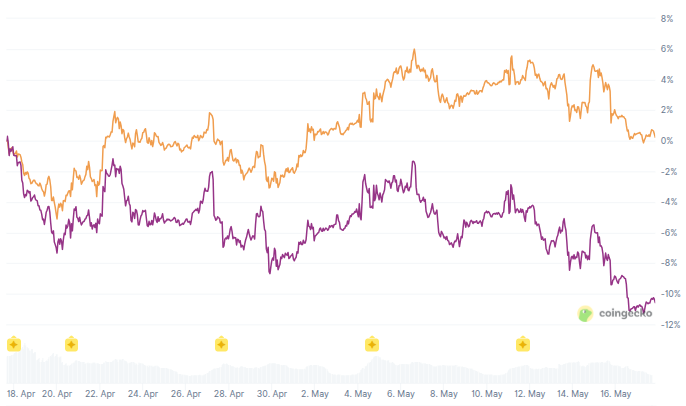
Strategy Software chairman Michael Saylor signaled on Sunday that the Bitcoin treasury company intends to buy more BTC in the coming week, while pushing Strategy shareholders to vote on a proxy that could enable semi-monthly dividend payouts on the firm’s STRC perpetual preferred stock. The message arrived with a familiar backdrop: a bubble chart tracking Strategy’s BTC purchases over the past nearly six years, sourced from StrategyTracker.com, and widely shared by Saylor on social media.
According to StrategyTracker, Strategy’s Bitcoin holdings sit at 818,869 coins. At the time of publication, that stash represented a market value of about $67.2 billion, based on a Bitcoin price near $77,997. The ongoing accumulation—paired with a governance push—highlights how Strategy’s treasury strategy remains intertwined with the company’s equity and dividend policy ambitions.
In parallel with the買BTC signal, Strategy’s official channels amplified a proxy vote aimed at changing STRC’s dividend cadence. Retail investors, who own roughly 80% of STRC’s perpetual preferred stock, are being urged to back a measure that would allow semi-monthly rather than strictly monthly payouts. The campaign underscores a broader effort to improve liquidity, market efficiency, and price stability for STRC, in the eyes of its supporters.
The push to mobilize retail holders comes as Strategy’s leadership stresses that the change would benefit ordinary investors—the same group that comprises the majority of STRC ownership. In a Sunday post, Saylor described the upcoming vote as a potential milestone for “Digital Credit,” urging STRC shareholders to participate in the proxy process before the June 8 deadline. “If you are a $STRC shareholder and have not already voted, please take a moment to do it now. Together, we can make history and establish the $100 standard for Digital Credit,” he wrote.
Strategy’s social feeds echoed the retail emphasis, noting that 80% of STRC is held by retail investors and framing the amendment as a retail-focused measure. The company has also scheduled a live Q&A session with Saylor and STRC CEO Phong Le for May 20 at 5 PM Eastern Time, moderated by Natalie Brunell, host of the Coin Stories podcast. The session will be streamed on YouTube and on Strategy’s X page, with a form available for shareholders to submit questions in advance.
Beyond the immediate proxy vote, the discussion touches on a longer-term question for Strategy’s corporate treasury approach: how much influence a dividend policy change can have on investor engagement, liquidity, and the broader reception of a BTC-backed treasury strategy. A note from The Harvard Law School Forum on Corporate Governance cited by critics and supporters alike shows retail investors historically cast a smaller portion of their voting power—roughly 29% of owned shares—compared with institutional holders, which have voted around 77%. The ongoing STRC campaign, therefore, hinges on whether Strategy can mobilize retail voting power to influence a governance proposal with tangible liquidity and payout implications.
Key takeaways
- Michael Saylor signals further BTC purchases for Strategy in the coming week, continuing a multi-year accumulation path tracked by StrategyTracker.com.
- STRC’s dividend amendment would shift STRC payouts from monthly to semi-monthly, a change Strategy argues would reduce reinvestment lag, improve liquidity, and enhance market efficiency.
- Retail investors own about 80% of STRC, making their proxy votes pivotal for the proposed dividend change; historical retail voting turnout has lagged institutional participation, according to governance research.
- A May 20 live Q&A with Saylor and STRC CEO Phong Le — moderated by Natalie Brunell — aims to address retail questions and drive engagement ahead of the June 8 proxy deadline.
- The developments illuminate how BTC treasury strategies intersect with governance and retail-driven equity actions, and they raise questions about the practical impact on STRC liquidity and Strategy’s BTC treasury management long term.
Strategy’s BTC accumulation and the governance gambit
The Sunday post from Saylor, paired with the StrategyTracker chart, reinforces that Strategy remains actively engaged in expanding its BTC treasury. The tracker has long provided a public ledger of purchases and holdings, effectively offering investors a transparent view of Strategy’s accumulation pattern over years. The latest signal—potential purchases this week—fits within a broader narrative: Strategy uses its BTC holdings not only as a treasury asset but as a strategic axis around which governance and shareholder value discussions revolve.
With 818,869 BTC on its books, Strategy’s treasury carries a weighty value in the market. The current approximate valuation—about $67.2 billion at the cited price—adds an asset base that can influence liquidity and market perception for both Bitcoin and the company’s STRC stock. While the news cycle frequently treats BTC purchases and dividend policy as separate topics, in Strategy’s case they appear interconnected: a larger BTC treasury can support a more ambitious, liquidity-forward strategy for STRC holders and may influence how the market prices the stock and the preferred.
Retail voting dynamics and the anti-friction dividend proposal
The STRC dividend amendment represents a governance mechanism with tangible implications for retail shareholders. By moving to semi-monthly distributions rather than a single monthly cadence, Strategy argues that it would shorten reinvestment lags and improve liquidity. Such an outcome could, in theory, reduce price volatility and align STRC payouts more closely with market dynamics, though it remains to be seen how the market will respond in trading and pricing across the STRC spectrum.
Strategy emphasizes retail ownership as the focal point of the campaign, noting that 80% of STRC is held by retail investors. The proxy vote, therefore, is not merely a corporate governance formality but a potential shift in how STRC markets and distributes value to its holders. However, retail participation in proxy voting has historically lagged. A Harvard Law School Forum on Corporate Governance note highlighted that retail investors globally have tended to vote at far lower rates than institutional holders. This creates a tension: a governance change that could benefit retail holders may depend on their willingness to engage in the proxy process despite historically lower turnout.
To mitigate the participation gap, Strategy has scheduled a live Q&A with Saylor and Le ahead of the vote. The May 20 event will be livestreamed on YouTube and Strategy’s X channel, and shareholders can submit questions in advance. The format underscores a deliberate effort to mobilize retail engagement and address concerns directly from leadership, which could potentially translate into higher turnout on or before the June 8 deadline.
Context, risk, and what to watch next
Placed within the wider crypto market and corporate treasury discourse, Strategy’s plan illustrates a broader trend: companies that build Bitcoin treasuries are increasingly exploring governance levers to optimize shareholder value and liquidity. For investors, several questions loom:
- How much traction will the semi-monthly payout proposal gain among retail holders, given historical voting patterns?
- If the proxy passes, will semi-monthly STRC payouts meaningfully improve liquidity and trading activity, or will other factors weigh more heavily on STRC price dynamics?
- What does continued BTC accumulation mean for Strategy’s capital allocation and ability to fund future strategic moves, including any potential shifts in dividend policy alignment?
- How will the market interpret Strategy’s dual narrative of a growing BTC treasury and a dividend policy adjustment—as a signal of long-term confidence in BTC as a treasury asset or as a governance-driven liquidity optimization?
Analysts and investors will be watching the June 8 proxy vote results closely, alongside any disclosures about actual weekly BTC purchases in the run-up to the vote. The May 20 Q&A session could offer early insights into management’s interpretation of retail feedback and the practical mechanics of implementing semi-monthly distributions if the measure passes.
In the meantime, readers should monitor StrategyTracker’s BTC-tracking updates and Strategy’s official communications for any new signals or voting milestones. These elements—together with the evolving dialogue around BTC-backed treasuries and retail governance—will shape not only Strategy’s trajectory but also the broader narrative around how crypto assets intersect with corporate finance and shareholder rights.
As the proxy vote nears, the most consequential question remains: will retail participation rise enough to catalyze a tangible shift in STRC’s dividend policy and liquidity profile? The answer will reveal whether governance clarity and active dialogue with retail investors can translate into real-market impact for a Bitcoin-centered treasury strategy.

George Noble On Bonds, Private Credit, Consumer Stocks (& Tesla) Falling Apart
Michael Saylor Hints at Another Bitcoin Purchase After 18th Tracker Update

Get Over Here—Because Mortal Kombat 2 Is Worth Watching! : Coastal House Media

Manchester United reach agreement with Casemiro over contract clause amid transfer speculation

US brings back mandatory military draft registration

Steven Gerrard disagrees with Gary Neville over ‘shock’ Chelsea and Arsenal claim | Football


-

 Crypto World2 days ago
BloFin War of Whales 2026 Grand Prix opens registration for $5M trading championship
-

 Fashion2 days ago
Weekend Open Thread: Theory – Corporette.com
-

 Crypto World2 days ago
E-Estate Announces 1 Year Live: Washington DC Summit as Real Estate Tokenization Enters Its Next Phase
-

 Fashion6 days ago
Coffee Break: Travel Steam Iron
-

 Fashion7 days ago
What to Know Before Buying a Curling Wand or Curling Iron
-

 Politics6 days ago
What to expect when you’re expecting a budget
-

 Tech3 days ago
Tech Moves: Microsoft AI leader jumps to OpenAI; former AI2 exec joins Meta; and more
-

 Tech7 days ago
GM Agrees To Pay $12.75 Million To Settle California Lawsuit Over Misuse Of Customers’ Driving Data
-
Crypto World5 days ago
Bitcoin Suisse expands with Digital Asset License and Investment Business Act Registration Approval in Bermuda
-

 Tech6 days ago
GM agrees to $12.75M California settlement over sale of drivers’ data
-

 Politics5 days ago
Pakistan to enter Chinese capital market as war inflation bites
-

 Crypto World5 days ago
Bitcoin Suisse expands with Digital Asset License and Investment Business Act Registration Approval in Bermuda
-
 Crypto World3 days ago
Google’s Gemini AI Predicts Incredible Solana Price by the End of 2026
-

 Business2 days ago
H&R Real Estate Investment Trust (HR.UN:CA) Q1 2026 Earnings Call Transcript
-

 Tech2 days ago
Google reimburses Register sources who were victims of API fraud
-
 Entertainment7 days ago
Prime Video’s Forgotten but Brilliant 2-Part Horror Anthology Is a Perfect Binge
-
 Entertainment7 days ago
‘Rivals’ Season 2 Is Bigger, Better, and Raunchier Than Ever
-
 Tech7 days ago
University of Michigan’s $20M early OpenAI investment now worth $2B as Musk trial documents reveal endowment bet
-
 Tech6 days ago
Over-Engineered Cardboard PC Case Houses a Full Computer Without Compromising Style or Performance
-

 Sports2 days ago
Napoleonic enters 2026 Doomben 10,000 field via Abounding withdrawal
You must be logged in to post a comment Login